
Chitosan, a natural polysaccharide obtained from chitin, is a biostimulant that is low-impact and is becoming more commonly utilized in sustainable agriculture. Our study was designed to measure the effects of three concentrations of shrimp-derived chitosan (5%, 10%, and 15% v/v) on maize seed (Zea mays L.) germination and early vigor under non-stressful, controlled conditions. Germination rates were measured by hydro-priming or soaking seeds in the chitosan solution for 12 hr. Germination rate measures included Germination Percentage (GP), Mean Germination Time (MGT), Germination Rate Index (GRI), and Coefficient of Velocity of Germination (CVG). Following treatment, all chitosan treatments showed slightly improved results over the hydro-primed control due to relatively short MGT values and significantly greater GRI and CVG values, with all treatments having final GP values that were very close to 100%. The chitosan at the 10% concentration showed the greatest average value of all measurements, while the chitosan at the 15% concentration showed a slight decrease in bioactivity, indicating that a 10% chitosan concentration would be most effective and that 15% would be the transition point or transitional optimal concentration.These results support the potential of shrimp‑based chitosan formulations as seed biostimulants compatible with marine by‑product valorization, and justify further evaluation across maize genotypes and under field and abiotic stress conditions, including additional physiological and biochemical traits.
Research Article · Volume 43, Issue 2, 2027, Pages 324–332, published online 27 November 2026 · Open Access
Chitosan-Based Biostimulant Improves Maize (Zea mays L.) Seed Germination and Early Vigor
, , , , , ,
Affiliations & Notes ⌄
- 1Department of Biology, Faculty of Sciences, University Ibn Tofail, B.P 242. Kenitra, Morocco
- *Correspondence | Hassna Leknizi
Article Info ⌄
- Journal:
- Sarhad Journal of Agriculture
- Submitted Date:
- 5 February 2026
- Accepted Date:
- 1 March 2026
- Published Date:
- 27 November 2026
Abstract
Introduction
Chitin is a natural high‑molecular‑weight polysaccharide composed of N‑acetyl‑D‑glucosamine and D‑glucosamine units, and its deacetylated derivative, chitosan, is a natural cationic polysaccharide widely used in agricultural applications . Biodegradable and non‑toxic, chitosan occurs mainly in the exoskeletons of crustaceans such as shrimp, crabs and lobsters, in insect cuticles, mollusk radulae, cephalopod and fish beaks, lissamphibian scales, and in the cell walls of certain fungi ; Rojas‑Pirela et al., 2024).
Chitosan has attracted increasing interest as a tool to improve crop productivity and agro‑environmental sustainability, and it has been reported to act as a biostimulant and plant growth promoter by enhancing stomatal regulation, reducing water loss and improving nutrient use efficiency ; . In addition, chitosan contributes to plant resilience under biotic and abiotic stresses by activating natural defense responses and functioning as an elicitor that triggers a cascade of biochemical reactions leading to induced resistance ; ; Rojas‑Pirela et al., 2024).
Numerous studies have documented the bioactivity of chitosan against fungal, bacterial, viral and nematode pathogens, mainly through its cationic nature, which disrupts microbial cell membranes, interferes with gene expression and inhibits nucleic acid and protein synthesis ; ; El‑Aziz and Khalil, 2020). Beyond its antimicrobial effects, chitosan also acts as an efficient chelating agent capable of binding both cationic and anionic heavy metals, thereby contributing to the remediation of contaminated soils and improving soil conditions for plant growth ; ; Cartaya‑Rubio et al., 2023).
More recently, chitosan has been highlighted as a promising seed‑treatment biopolymer, since it can enhance water uptake, stimulate enzyme activities, strengthen inherent protective mechanisms and mitigate the impact of environmental stress during germination and early seedling development ; .
Chitosan-based formulations used for coating or soaking seeds improve seed germination rates and initial plant health for many crops grown in both ideal and sub-optimal environments, making them classified as low-impact biostimulants. The potential to use chitosan produced from shrimp waste as a biostimulant would allow for an integrated waste management approach to producing these sustainable biostimulants; thus, the objective of this study was to formulate a shrimp processing waste chitosan-based biostimulant to evaluate its effect on the rate of germination and early seedling growth in maize (Zea mays L.) seeds in a controlled, non-stressed laboratory environment.
Materials and Methods
Experimental site
The experiment was conducted under controlled laboratory conditions at the Plant and Animal Production and Agro‑Industry Research Laboratory, Faculty of Sciences and Techniques, Ibn Tofail University, Kenitra, Morocco.
Plant material
Seeds of a commercial yellow maize hybrid, Zea mays L. (Pioneer brand from Valtech Maroc), commonly grown in irrigated production systems, were purchased from a certified seed vendor in Kenitra, Morocco. These seeds were visually inspected and selected based on uniformity of size, physical integrity and freedom from visible mechanical/physical damage or pathogen infection to ensure homogeneity within experimental lots.
Chitosan-based biostimulant
Biostimulant based on the chitosan produced via the biotechnological valorisation of shrimp processing by-products via fermentation as described by Leknizi et al. (2026), was diluted using distilled water to produce three working concentrations of 5, 10 and 15 % (v/v) to conduct the seed soaking experiments.
Seed pre-treatment and disinfection
Seeds were washed thoroughly in running tap water prior to the application of the biostimulant in order to remove commercial coatings and surface residues. Seeds were disinfected on the surface by soaking them in 10% hydrogen peroxide solution (H2O2) for 20 minutes, then rinsed several times with distilled water to remove all residual hydrogen peroxide after the disinfection process was complete. To synchronize physiological status and minimize the likelihood of any residual dormancy, seeds were held at 4°C for 24 h prior to being primed/germinated. All experimental treatments received identical pre-treatments.
Seed priming treatments
After pre-treatment, seeds were subjected to hydropriming or biostimulant priming according to four treatments:
T₀: control, seeds soaked in distilled water;
T₁: seeds soaked in 5% chitosan solution;
T₂: seeds soaked in 10% chitosan solution;
T₃: seeds soaked in 15% chitosan solution.
Each of the treatments were exposed to the appropriate solution for twelve hours at room temperature, ensuring that the seeds were completely submerged and thoroughly agitated at regular intervals during that time, ultimately keeping the seeds in uniform contact throughout their treatment time. When the 12-time period was up, the seeds were drained onto sterile filter paper briefly and then were used in germination tests directly, without allowing for any drying back, consistent with the reported short-term protocols for priming of maize.
Germination test and experimental design
Seeds were germinated in 9 cm sterile Petri dishes lined with two pieces of filter paper saturated with distilled water. The seeds were evenly distributed (20 seeds/dish) among five replicates (n=100 seeds/treatment) and seeded in a completely randomised manner (four treatments x five replicates). Germination occurred without light in the growth chamber maintained at 25 ± 1 °C and watered with distilled water twice daily to maintain adequate and consistent moisture conditions during the entire test.
Germination assessment and calculated parameters
Final seed germination was tallied each day until three consecutive days without any new germination and final germination rates were constant at that point. Seeds were counted as germinated when the radicle visibly emerged through the seed coat (Benmahioul etal., 2010). From the daily counts, the following parameters were calculated:

where G is the total number of germinated seeds and N is the total number of seeds sown .

where ni is the number of seeds germinated at time ti (days after sowing), and ∑ni is the total number of germinated seeds .

where Gi is the cumulative number of germinated seeds on day i, and Ti is the corresponding time in days, expressing the intensity of germination per day.

which expresses germination speed as the proportion of germinated seeds per unit time .
Cumulative germination curves (germination percentage as a function of time) were plotted for all treatments to visualize differences in germination dynamics.
Statistical analysis
All germination parameters (GP, MGT, GRI and CVG) were calculated for each Petri dish and expressed as mean ± standard deviation for each treatment. Data were subjected to one‑way analysis of variance (ANOVA) to test the effect of chitosan concentration on germination variables, and treatment means were compared using Tukey’s HSD test at a significance level of α = 0.05. Statistical analyses were performed using IBM SPSS Statistics v25.0.
Results
Effect of a chitosan‑based biostimulant on maize seed germination
To evaluate the performance of the formulated biostimulant, the effect of increasing chitosan concentrations on maize seed germination was assessed through germination kinetics and associated germination parameters (GP, MGT, GRI and CVG).
Germination percentage (GP)
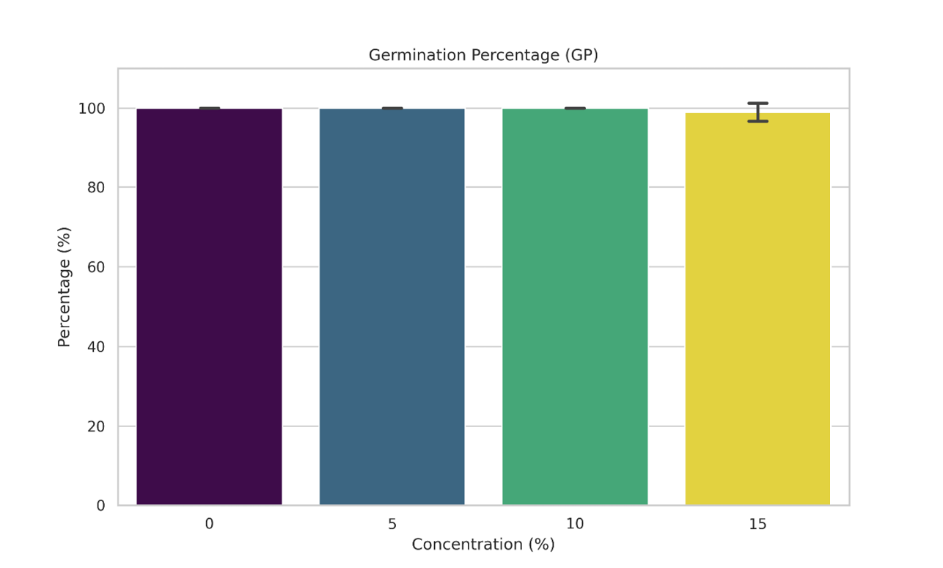
The summary table shows that the final germination percentage (GP) remained maximal in the control, 5% and 10% treatments (100.0 ± 0.0%) (Figure 1), and was only slightly reduced at 15% (99.0 ± 2.2%), indicating that the chitosan-based biostimulant did not impair the final germination capacity, even at the highest concentration (Table 1). This confirms that the effect of the biostimulant is expressed mainly through germination speed rather than through the proportion of seeds able to germinate.
Mean germination time (MGT)
In contrast to GP, MGT was significantly reduced in all chitosan treatments in comparison to the control (2.73 ± 0.13 days) (Figure 2). The MGT values were reduced to 2.19 ± 0.14, 2.01 ± 0.02, and 2.19 ± 0.11 days in 5, 10, and 15% solutions, respectively. The 10% chitosan concentration was found to be the most effective in reducing the MGT (Table 1). It can be noted that there was a slightly lower efficiency in lower and higher chitosan concentrations.
Table 1: Germination percentage (GP), mean germination time (MGT), germination rate index (GRI) and coefficient of velocity of germination (CVG) of maize seeds as influenced by chitosan-based biostimulant concentrations (mean ± standard deviation).
| Concentration (%) | GP (%) | MGT (days) | GRI (seed/day) | CVG (%) |
| 0 (Témoin) | 100.0 ± 0.0 a | 2.73 ± 0.13 c | 12.52 ± 1.51 c | 36.69 ± 1.73 c |
| 5 | 100.0 ± 0.0 a | 2.19 ± 0.14 b | 18.97 ± 1.78 b | 45.82 ± 2.98 b |
| 10 | 100.0 ± 0.0 a | 2.01 ± 0.02 a | 21.43 ± 0.37 a | 49.76 ± 0.55 a |
| 15 | 99.0 ± 2.2 a | 2.19 ± 0.11 b | 18.83 ± 0.73 b | 45.74 ± 2.22 b |
Values are means ± standard deviation (n = 5). Different letters within a column indicate significant differences at p < 0.05 according to Tukey’s HSD test.
Germination rate index (GRI)
Dynamic germination indices corroborated these trends. The germination rate index (GRI) increased from 12.52 ± 1.51 seed day-¹ in the control to 18.97 ± 1.78, 21.43 ± 0.37 and 18.83 ± 0.73 seed day-¹ at 5, 10 and 15%, respectively (Figure 3). This marked rise in GRI under biostimulant treatments indicates a higher daily germination rate and a more intense germination process, particularly at 10% (Table 1).
Coefficient of velocity of germination (CVG)
Likewise, the velocity of germination coefficient (CVG) was increased from 36.69 ± 1.73% for the control to 45.82 ± 2.98%, 49.76 ± 0.55%, and 45.74 ± 2.22% for 5%, 10%, and 15% concentrations, respectively (Figure 4). The increased CVG for treated seeds indicates that germination was not only faster but also more synchronous for the chitosan-based biostimulant-treated seeds, with the highest velocity again observed for 10% (Table 1).
The germination kinetics
The germination kinetics indicated that all treatments, including the control, reached a final percentage of germinated seeds close to 100%, thus supporting the high viability of the seed lot employed in this research (Figure 5). However, for seeds subjected to the chitosan-based biostimulant, a faster onset and development of germination were observed compared to those of the control, as indicated by a more rapid increase in the percentage of germinated seeds starting on the second day of the experiment. This shift in the germination curve indicates a clear acceleration of the process, as a consequence of the application of the biostimulant.
Overall response to the biostimulant
This observation demonstrates a typical bell-shaped curve for a dose-response relationship, showing reduced gains at the 15% level compared to the optimum concentration of 10%.
The posthoc tests showed that all chitosan
Effect of chitosan-based biostimulant concentrations on cumulative germination percentage of maize seeds over time.
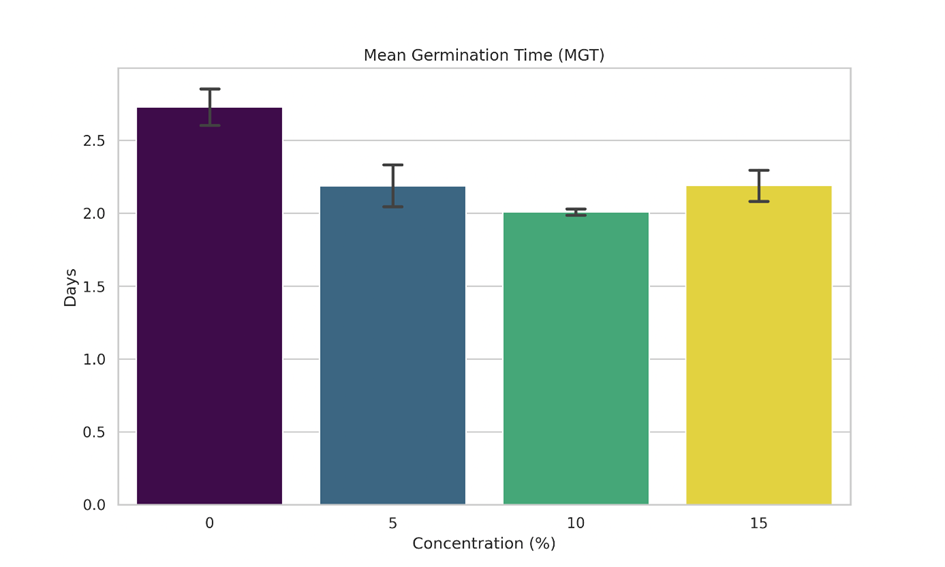
Mean germination time (MGT) of maize seeds as affected by different concentrations of chitosan-based biostimulant.
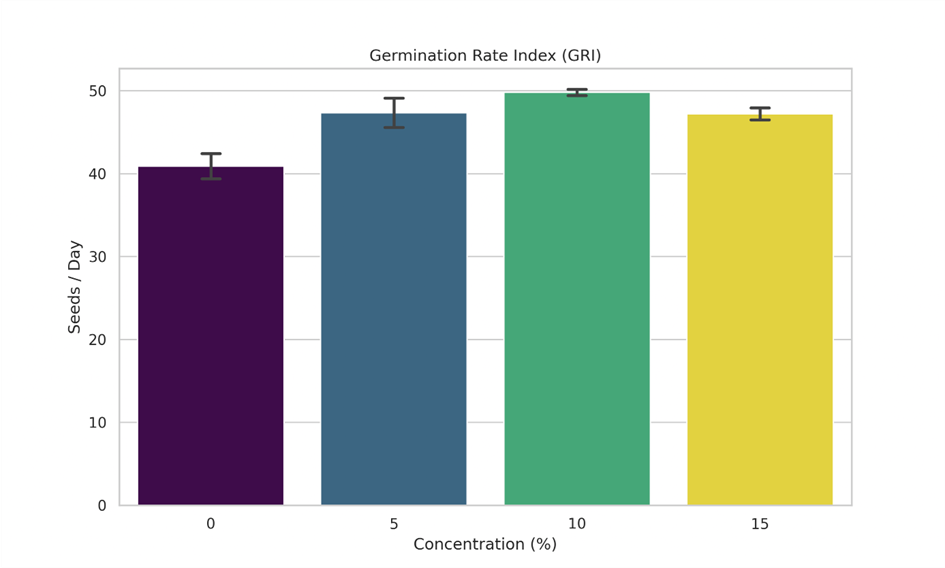
Germination rate index (GRI) of maize seeds in response to chitosan-based biostimulant treatments.
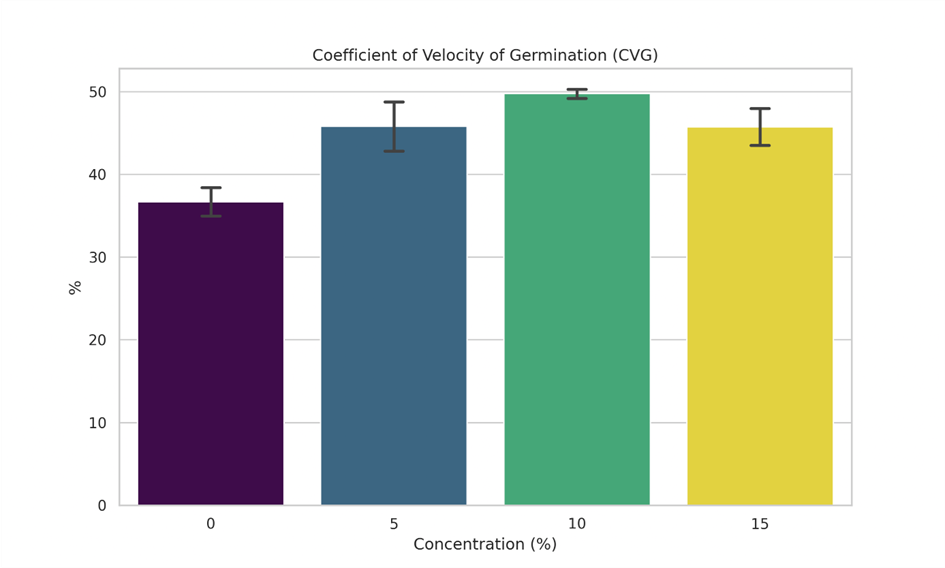
Coefficient of velocity of germination (CVG) of maize seeds treated with increasing concentrations of chitosan-based biostimulant.
concentrations were effective in reducing MGT compared to the control, while the 10% concentration offered the best combination of reduced MGT with high values for GRI and CVG. No significant differences were observed between the 5% and 15% concentrations for most parameters. Therefore, these results demonstrate that the chitosan-based biostimulant does not affect the final percentage germinated but increases germination speed and vigor significantly, with the optimum concentration at 10%. This demonstrates that the formulation has good potential as a biological tool for optimizing the pre-germination process for the establishment of a fast-growing stand in maize crops.
Discussion
The present study confirms that chitosan can act as an effective seed biostimulant by improving maize germination dynamics and early vigor without negatively affecting final germination percentage as noted by Benmahioul et al. (2010); Riseh et al. (2024), which remained close to 100% in all treatments. Although differences in GP were small, chitosan‑treated seeds showed reduced mean germination time and increased germination rate index and coefficient of velocity of germination , parameters that are particularly relevant under field conditions where rapid and synchronized emergence contributes to stand establishment and yield stability ; . These findings are consistent with previous reports demonstrating that chitosan seed priming or coating enhances germination and early growth, and can improve seedling performance under suboptimal temperatures or other stresses in maize and other crop species.
A clear concentration‑dependent response was observed, with the 10% chitosan treatment providing the best combination of faster and more uniform germination, while a slight decline in performance at 15% suggests that excessively high doses may reduce biostimulant efficiency or induce mild stress. Similar non‑linear dose–response patterns have been reported for chitosan in seed technology, where low to moderate concentrations are generally optimal and higher levels may impair germination or seedling growth, depending on molecular weight, degree of deacetylation, formulation and application rate ; ; ; . In our study, the characterization of shrimp‑derived chitosan and the selection of an intermediate concentration as the most effective treatment support the need for careful dose optimization when developing practical seed‑treatment protocols.
Mechanistically, the positive effects of chitosan‑based priming on germination have been attributed to enhanced water uptake, improved membrane integrity and increased activity of hydrolytic enzymes, which accelerate reserve mobilization and radicle protrusion . In addition, chitosan is known to function as an elicitor of plant defense responses, modulating antioxidant systems and helping seeds cope with oxidative stress during imbibition and early seedling establishment ; ; . The faster germination and higher vigor observed in our chitosan‑treated maize seeds are likely the combined result of these processes, although further physiological and biochemical studies will be required to elucidate theunderlying mechanisms in detail
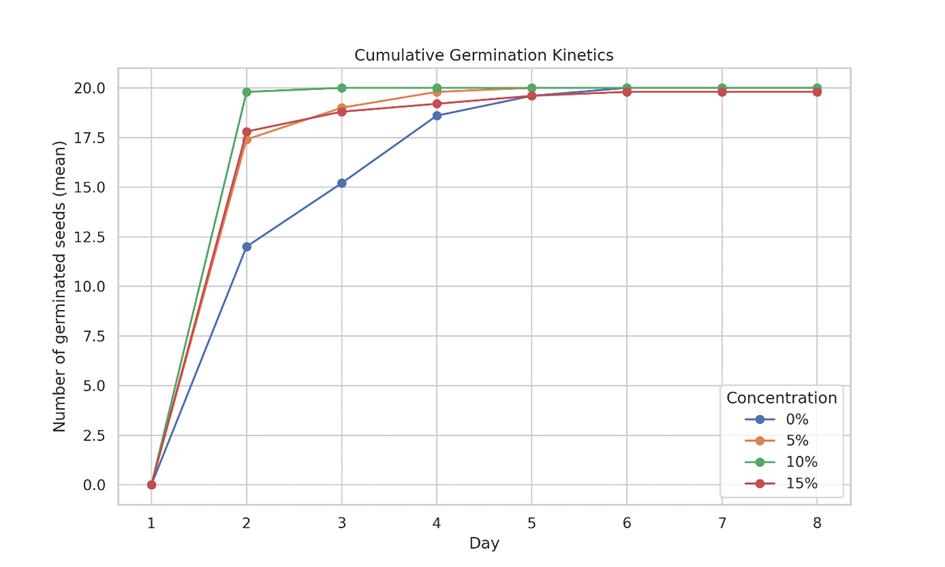
Germination kinetics of maize seeds treated with different concentrations of chitosan-based biostimulant, expressed as cumulative germination percentage over time.
; .
Beyond its immediate effect on germination, chitosan is increasingly considered a key tool in green farming strategies, with demonstrated benefits on plant growth and stress tolerance when applied as coatings ; ; , sprays or nano‑formulations in maize and other crops; . The use of shrimp processing residues as a source of chitosan adds an additional dimension of interest by coupling waste valorization with the development of low‑impact biostimulants that fit within sustainable intensification and integrated crop management approaches ; .
This study, however, has many limitations and should be given recognition to those limitations. The first limitation is that the study was performed on one local variety of maize that did not grow under stressed conditions. As a result of these non-stressed conditions, the level of germination seems to be much higher than expected and this will limit our overall ability to generalize these results and may be partially credited with the issue of larger treatment effects masking themselves due to being too small for there to be any indication of a difference with germination. The second limitation of this study was that there were only a few indices of germination used in evaluating the seeds; none of the other information associated with the seedlings after germination was recorded or assessed in this study; nor was the number of seeds used in each treatment (of which all of them were low) sufficient for making this comparison by using any variation in the number of seeds used in this trial.
Other factors such as pre treatments (the use of H₂O₂ for disinfection, exposing seed to cold, and the fact that there was no drying back will have affected the germination in this study), may impede the direct comparison of the results found in the current study and their use of standard priming protocols for seeds. In spite of these factors, the improvement of the dynamics and effects of germination at a 10% level using chitosan seems to indicate that chitosan from shrimp may have an ability to function as a biostimulant of maize seeds and should be further tested under field and abiotic stress conditions, using multiple genotypes as well as additional physiological and biochemical descriptors.
Conclusions and Recommendations
The germination dynamics and early vigor of maize seeds that were hydroprimed (primed overnight in water) or treated with different concentrations of shrimp chitosan were evaluated under laboratory conditions. The treatments consisted of 3 different concentrations (5%, 10%, and 15%, v/v), and all chitosan treatments improved the germination performance of the seeds compared to the hydroprimed seed controls, primarily by reducing the mean germination time and increasing some indexes associated with the rate of germination, while the final percentage of germination was approximately 100% for all treatments. For example, seeds treated with 10% shrimp chitosan exhibited the best overall germination while the seeds treated with 15% showed a slight decline in performance, indicating an intermediate optimum concentration for chitosan. The results of this experiment suggest that shrimp-derived chitosan formulations have potential as low-impact seed biostimulants in sustainable agricultural systems and for the valorization of marine by-products. However, because this study was conducted using only one variety of maize and solely under laboratory conditions that would not be considered “stressful,” more research under field and abiotic stress conditions with different maize varieties and additional physiological and biochemical measurements is needed to determine the agricultural significance of the current findings and to optimize the protocol for using shrimp chitosan as a seed biostimulant.
Acknowledgements
The authors declare that there are no acknowledgements for this work.
Novelty Statement
This study demonstrates, for the first time, that a chitosan‑based biostimulant formulated from shrimp by‑products through biotechnological valorization can significantly accelerate maize seed germination and enhance early vigor without affecting final germination percentage. By identifying an optimal intermediate concentration (10%) that maximizes germination speed indices (MGT, GRI, CVG), the work provides new, dose‑responsive evidence supporting chitosan seed priming as a low‑impact strategy to improve stand establishment in maize.
Author’s Contribution
Hassna Leknizi: Conducted research, data collection and write-up
Siham Belkacemi: Study design and provided general supervision.
Soukaina Njili: Interpretation of data.
Aicha Rossafi: Conceptualization, statistical analysis
Safaa Rhaimi: Analysis of data and arrangement of tabulated data.
Mohamed Elyachioui: Supervision, guiding the structuring of the study, assisting with manuscript preparation
Brahim Bourkhiss: Validation of the manuscript.
Generative AI and AI-assisted technology statement
The authors declare that no generative AI and AI assisted technology was used in the creation of this manuscript.
Conflict of interest
The authors have declared no conflict of interest.
References
- Abdelrahman, M., R.A. Metwally, et al. 2023. Zn nutrients-loaded chitosan nanocomposites and their efficacy as nanopriming agents for maize (Zea mays) seeds. Front. Plant Sci.,14: 1217964. [CrossRef]
- Ana Maria de Oliveira, Enio Nazaré de Oliveira Junior. 2020. « Antifungal and Filmogenic Properties of Micro- and Nanostructures of Chitosan and Its Derivatives ». 2020. In Nanomycotoxicology. Academic Press. https://doi.org/10.1016/B978-0-12-817998-7.00017-3. [CrossRef]
- Backer, R., J.S. Rokem, G. Ilangumaran, et al. 2018. Plant growth-promoting rhizobacteria: context, mechanisms of action, and roadmap to commercialization of biostimulants for sustainable agriculture. Front. Plant Sci., 9:1473. https://doi.org/10.3389/fpls.2018.01473 [CrossRef]
- Benmahioul, B., B. Khelil, M. Kaïd-Harche, and F. Daguin. 2010. Germination study and substrate effect on the growth of young seedlings of Pistacia vera L. Acta Bot. Malacitana., 35: 107–114. https://doi.org/10.24310/abm.v35i0.2865 [CrossRef]
- Cartaya-Rubio, O.E., A.M. Moreno-Zamora, and F. Guridi-Izquierdo. 2023. Influencia de Quitomax en plantas de girasol (Helianthus annuus L.) cultivadas en suelo con altos niveles de iones metálicos. Cultiv. Tropical., 44(2). https://cu-id.com/2050/v44n2e07.
- Chakraborty, M., M. Hasanuzzaman, M. Rahman, et al. 2020. Mechanism of plant growth promotion and disease suppression by chitosan biopolymer. Faculty Staff Scholarship, West Virginia University, Paper 3024. https://doi.org/10.3390/agriculture10120624 [CrossRef]
- El-Aziz, M.H.A. and M.S. Khalil. 2020. Antiviral and antinematodal potentials of chitosan: review. J. Plant Sci. Phytopathol., 4(2): 55–59 https://doi.org/10.29328/journal.jpsp.1001051. [CrossRef]
- Farooq, M., S.M.A. Basra, H. Rehman, et al. 2009. Seed priming with chitosan improves maize germination and seedling growth in relation to physiological changes under low temperature stress. J. Plant Growth Regul., 28(4): 330–339. [CrossRef]
- Hamaydah, S. et al. 2022. Germination performance and vigor of tobacco seeds coated with a chitosan-based bioproduct. Res. Soc. Dev., 11(14): e37064137064. https://doi.org/10.33448/rsd-v11i15.37064 [CrossRef]
- Heidari, J., R. Amooaghaie, and S. Kiani. 2020. Impact of chitosan on nickel bioavailability in soil, the accumulation and tolerance of nickel in Calendula tripterocarpa. Int. J. Phytoremed., 22(11):1175–1184. https://doi.org/10.1080/15226514.2020.1748564 [CrossRef]
- Khairy, A.M., M.R.A. Tohamy, M.A. Zayed, et al. 2022. Eco-friendly application of nano-chitosan for controlling potato and tomato bacterial wilt. Saudi J. Biol. Sci., 29(4): 2199–2209. https://doi.org/10.1016/j.sjbs.2021.11.041 [CrossRef]
- Labouriau, L.G. 1983. Seed Germination Organization of American States. Regional Program for Scientific and Technological Development. Biology Series. Monograph 24
- Leknizi H., W. Zain, A. Sahraoui, A. Azian M. Elyachioui, B. Bourkhiss. 2026. Biotechnological Valorisation of Shrimp Waste: Physicochemical and Microbial Quality. Trop J Nat Prod Res., 2026; 10(1): 6725 – 6734 https://doi.org/10.26538/tjnpr/v10i1.42 [CrossRef]
- Li, R., J. He, H. Xie, et al. 2019. Effects of chitosan nanoparticles on seed germination and seedling growth of wheat (Triticum aestivum L.). Int. J. Biol. Macromol., 126: 91–100. https://doi.org/10.1016/j.ijbiomac.2018.12.118 [CrossRef]
- Malerba, M. and R. Cerana. 2020. Chitin- and chitosan-based derivatives in plant protection against biotic and abiotic stresses and in recovery of contaminated soil and water. Polysaccharid., 1(1): 21–30. https://doi.org/10.3390/polysaccharides1010003 [CrossRef]
- Mathie, C., N. Joly, P. Martin, B. Randoux, and M. Magnin‑Robert. 2024. Le chitosane : une molécule biosourcée d’intérêt pour la protection des cultures. Communication / conference paper, projet ChitoProtect (ANR‑19‑ECOM‑0008).
- Paparella, S., S.S. Araujo, G. Rossi, M. Wijayasinghe, D. Carbonera, and A. Balestrazzi. 2015. Seed priming: state of the art and new perspectives. Plant Cell Rep., 34(8): 1281–1293. https://doi.org/10.1007/s00299-015-1784-y [CrossRef]
- Ranal, M.A. and D.G. Santana. 2006. How and Why to Measure the Germination Process? Revista Brasileira de Botanica, 29: 1-11. https://doi.org/10.1590/S0100-84042006000100002 [CrossRef]
- Riseh, R.S., M. Gholizadeh Vazvani, M. Vatankhah, and J.F. Kennedy. 2024. Chitosan coating of seeds improves the germination and growth performance of plants: a review. Int. J. Biol. Macromol., 278: 134750. https://doi.org/10.1016/j.ijbiomac.2024.134750 [CrossRef]
- Rojas-Pirela, M., P. Carillo, C. Lárez-Velásquez, and G. Romanazzi. 2024. Effects of chitosan on plant growth under stress conditions: similarities with plant growth promoting bacteria. Front. Plant Sci., 15: 1423949. https://doi.org/10.3389/fpls.2024.1423949 [CrossRef]
- Saberi Riseh, R., M. Gholizadeh Vazvani, M. Vatankhah, and J.F. Kennedy. 2024. Chitosan coating of seeds improves the germination and growth performance of plants: a review. Int. J. Biol. Macromol., 278:134750. https://doi.org/10.1016/j.ijbiomac.2024.134750 [CrossRef]
- Shahrajabian, M.H., C. Chaski, N. Polyzos, N. Tzortzakis, and S.A. Petropoulos. 2021. Sustainable agriculture systems in vegetable production using chitin and chitosan as plant biostimulants. Biomolecul., 11(6):819. https://doi.org/10.3390/biom11060819 [CrossRef]
- Sharkawy, A., M.F. Barreiro, et A.E. Rodrigues. 2020. Chitosan-based pickering emulsions and their applications: A review. Carbohydrate Polymers 250 (décembre): 116885. https://doi.org/10.1016/j.carbpol.2020.116885. [CrossRef]
- Sheteiwy, M.S., H. Shen, J. Xu, et al. 2013. Maize seed coatings and seedling sprayings with chitosan and hydrogen peroxide: their influence on some phenological and biochemical behaviors. Acta Physiol. Plant., 35: 783–791. [CrossRef]
- Torres, I.C., et al. 2022. Effects on germination and plantlet development of sesame (Sesamum indicum L.) and bean (Phaseolus vulgaris L.) seeds with chitosan coatings. Agron., 12(3): 666. https://doi.org/10.3390/agronomy12030666 [CrossRef]
- Xiong, J., et al. 2022. Chitosan oligosaccharide alleviates the growth inhibition caused by physcion and synergistically enhances resilience in maize seedlings. Sci. Rep., 12: 239. https://doi.org/10.1038/s41598-021-04153-3 [CrossRef]
- Younes, N.A., et al. 2017. Nanochitosan supports growth of Zea mays and also maintains soil health following growth. J. Plant Growth Regul., 36(2): 566–581.

Services
Article usage statistics
Loading…
Related articles
- Seed Conditioning Effects on Germination Performance, Seedling Vigor and Flower Production of Zinnia elegansSarhad Journal of Agriculture · 2020
- Growth and Haematological Response of Broilers Raised at High-Density Pens and Fed Germinated Papaya Seed and Chitosan BlendJournal of Animal Health and Production · 2022
- ALLELOPATHIC EFFECT OF Cyperus rotundus AND Echinochloa crus galli ON SEED GERMINATION, AND PLUMULE AND RADICLE GROWTH IN MAIZE (Zea mays L.)Pakistan Journal of Weed Science Research · 2005
- Salicylic Acid Improves Rice Seed Germination under Induced Drought StressJournal of Innovative Sciences · 2021
- Seed Halopriming Enhances Germination Performance and Seedling Vigor of Gerbera jamesonii and Zinnia elegansSarhad Journal of Agriculture · 2017
- Application of Insect-Derived Chitosan as a Biostimulant to Improve Growth and Resistance in Iraqi Wheat VarietiesPakistan Journal of Agricultural Research · 2026