
This study examines how Corporate Social Responsibility (CSR) can be integrated into halal animal feed production using the Triple Bottom Line (TBL) framework and explores how Shariah-compliant animal feed production aligns with social, environmental, and economic responsibilities. A systematic literature review was conducted using the Scopus database. The literature search was performed in January 2026 and covered publications published between 2009 and early 2026. Following predefined eligibility criteria and PRISMA-guided study selection, 27 studies were included and synthesised through qualitative thematic analysis based on the TBL framework. The review demonstrates that CSR provides a comprehensive framework for integrating Islamic ethical principles into halal animal feed production while advancing sustainability objectives. The synthesis identified three interrelated responsibility dimensions. Social responsibility emphasises Shariah-compliant ingredient screening, animal welfare, and consumer trust. Environmental responsibility focuses on feed contamination prevention, resource stewardship, and environmentally responsible production practices. Economic responsibility highlights ethical sourcing, supply chain risk management, operational resilience, and long-term competitiveness. Collectively, these dimensions reflect the Islamic principles of maslahah (public interest), amanah (trust), adl (justice), and the prevention of harm while supporting the Sustainable Development Goals (SDGs). The study proposes an integrated TBL-based CSR framework that positions halal animal feed as a strategic upstream governance mechanism for safeguarding halal integrity, strengthening sustainable halal supply chains, and guiding industry practitioners and policymakers toward more responsible and resilient halal feed production systems.
Research Article · Volume 14, Issue 4, Pages 1674–1689, 24 November 2026 · Open Access
Corporate Social Responsibility in Halal Animal Feed: A TBL-Based Framework for Social, Environmental, and Economic Responsibility
, , ,
Affiliations & Notes ⌄
- 1Institute of Halal Management, Islamic Business School, Universiti Utara Malaysia, Kedah, Malaysia
- 2Department of Islamic Management and Finance, Academy of Islamic Studies, Universiti Malaya, Kuala Lumpur, Malaysia
- 3Faculty of Education and Social Sciences, Seri Begawan Religious Teacher University College, Bandar Seri Begawan, Brunei Darussalam
- *Correspondence | Issa Khan; Email: issa@um.edu.my
Article Info ⌄
- Journal:
- Journal of Animal Health and Production
- Submitted Date:
- 6 March 2026
- Accepted Date:
- 2 September 2026
- Published Date:
- 24 November 2026
From the article
- Across the reviewed literature, CSR-related responsibilities in halal feed systems were primarily associated with ingredient integrity, feed safety, ethical sourcing, transparency, animal welfare, and supply-chain accountability.
- CSR-based environmental governance through halal feed production.
- The reviewed evidence suggests that CSR-based ethical sourcing may help reduce exposure to regulatory, reputational, and supply-chain risks and thereby potentially support the long-term economic sustainability of halal feed producers.
- The study suggests that TBL-based CSR may provide a strategic approach to supporting halal integrity at all levels of the supply chain when applied to halal animal feed.
Selected from the article's own text.
Abstract
INTRODUCTION
The halal animal feed constitutes a critical foundation of halal-sourced meat production for the Muslim-majority countries and global halal export economies. Increasingly, halal assurance extends beyond slaughtering practices to encompass the entire supply chain, including upstream inputs such as animal feed. Halal certification is increasingly required by global halal producers to be supported by certification beyond slaughtering practices throughout the supply chain for all aspects of halal certification; therefore, upstream production inputs such as animal feed formulation are now paramount to comply with halal (Saidin et al., 2022a, b). There are significant potential impacts on the halal status of animal-based food products to be produced by the animals from their diets such as through providing feed that is derived from haram or najis (unlawful) sources.
Islamic law defines halal not only as the technical avoidance of haram (prohibited) ingredients but as the broader principle of halalan tayyiban lawful, safe, wholesome and ethically produced . Halalan tayyiban integrates four considerations: (1) lawful ingredients, (2) safety and health, (3) environmental integrity, and (4) animal welfare. For example, toxic minerals (arsenic, cadmium, lead, mercury) in feed jeopardise animal health and downstream food safety , while waste-based or industrial by-product feeds raise linked halal, sustainability and health questions.
Problem statement
Halal integrity can be affected at the animal feed stage, particularly when feed contains prohibited or doubtful ingredients or contaminants that may raise concerns about Shariah compliance, food safety, and animal welfare , b; . Feed contamination and the use of waste-based or industrial by-products may also create safety and environmental concerns . At the same time, halal feed production is not only a matter of avoiding prohibited ingredients. It also involves responsible sourcing, environmental protection, supply chain risk, and the long-term sustainability of feed production. These responsibilities are consistent with Islamic principles such as maslahah, amanah, adl, and la darar (avoidance of harm) . Therefore, there is a need to consider these responsibilities together rather than separately. CSR and the social, environmental, and economic dimensions of the TBL provide a useful basis for examining how such an integrated approach can be applied to halal animal feed production.
Research gap
Although there is increasing research on halal supply chains, sustainability, and Islamic governance, most of the research and literature hold their focus on the downstream aspects of the issues, including halal slaughter; control systems; consumers’ perceptions; and certification governance ; ; . However, there is a lack of research on the upstream feed aspect. Among the 267 identified Scopus records, only 27 studies address CSR-related aspects of the halal animal feed issue, thus making it clear that hardly any attention has been paid to this vital upstream issue. At the same time, no unified or structured framework exists that merges CSR and sustainability dimensions in halal animal feed production, thus being both an empirical and conceptual gap from governance perspective.
Research questions and objectives
RQ1: How is social responsibility addressed in halal feed literature?
Objective 1: To examine social responsibility in halal feed literature, focusing on Shariah screening, animal welfare, and trust.
RQ2: How is environmental responsibility addressed in halal feed literature?
Objective 2: To examine environmental responsibility in halal feed literature, focusing on contamination prevention, stewardship, and circular economy practices.
RQ3: How is economic responsibility addressed and integrated into a TBL-based CSR governance model?
Objective 3: To examine economic responsibility in halal feed literature, focusing on ethical sourcing, risk mitigation, and long-term viability, and to synthesise a TBL-based CSR governance model.
To address these objectives, this study employed a systematic literature search and thematic synthesis informed by PRISMA 2020 guidelines. The Scopus search, conducted in January 2026, identified literature published from 2009 to early 2026. Following screening and eligibility assessment, 27 studies were synthesised using the TBL framework to propose a conceptual CSR governance model. The model is presented as a complementary, integrated approach to existing compliance practices and is subject to future empirical validation.
Study contribution
This research adds to the body of literature by mapping CSR-related evidence pertaining to halal animal feed to the social, environmental, and economic aspects of the TBL framework and Islamic ethics. Furthermore, the research synthesizes all of these aspects into a conceptual model of CSR governance in the little-explored upstream halal feed segment. This model complements and provides an integrated approach to existing halal compliance practices.
Materials and Methods
Study design
This study employed a systematic literature review approach informed by the PRISMA 2020 guidelines to enhance transparency, clarity, and reproducibility in the identification and selection of relevant literature. Given the multidisciplinary and heterogeneous nature of the included studies, a formal risk-of-bias assessment was not undertaken; this is acknowledged as a methodological limitation. To support reproducibility, the database, search field, search terms, study period, eligibility criteria, screening stages, and synthesis procedure are reported below.
Search methods, data source, and study period
The systematic literature analysis was performed using the Scopus database because of its extensive scope of peer-reviewed literature in agricultural sciences, sustainability studies, environmental management, Islamic studies, and business-related fields. The study was limited to Scopus because this is the only available database through institutional subscription held by the authors. Nonetheless, the use of only one database may increase the risk of database selection bias since studies related to halal and Islamic studies may be found in other databases.
The search was conducted within the TITLE-ABS-KEY fields in Scopus using the following Boolean search string: ((“animal feed” OR “livestock feed” OR “halal animal feed” OR “halal feed”) AND (halal OR shariah OR “halal supply chain” OR “Islamic law” OR “shariah compliance” OR “Islamic ethics”) AND (“corporate social responsibility” OR CSR OR sustainability OR “triple bottom line”)).
The search conducted in January 2026 retrieved 267 Scopus-indexed records published between 2009 and January 2026. The period was selected to capture the development of contemporary literature connecting halal production and animal-feed systems with CSR, sustainability, responsible supply-chain practices, and relevant Islamic ethical considerations. January 2026 represented the final date of the systematic search.
An exploratory search using the same terms in Google Scholar returned approximately 2,610 results. Because of differences in indexing standards, document types, and duplication risks, the Google Scholar results were not included in the PRISMA study-selection process. Instead, five relevant peer-reviewed articles identified through Google Scholar were used only for conceptual and contextual support. They were not included in the 27-study systematic-review dataset or the qualitative thematic synthesis. Accordingly, the systematic evidence synthesis was based exclusively on the 27 studies selected through the Scopus-based procedure.
Study selection: Screening, eligibility, and reproducibility
All 267 records identified through Scopus proceeded to initial screening. As the systematic search used a single database, no cross-database duplicates were identified (n = 0).
Title, keyword, and eligibility screening
The screening process for 267 records was carried out primarily on the basis of the titles and keywords according to the criteria outlined above in Table 1. Furthermore, only peer-reviewed scholarly articles in English were eligible for the inclusion in the review; accordingly, non-English publications and irrelevant document types (such as books, book chapters, conference proceedings and retracted articles) were eliminated from the research. Studies with biomedical, molecular, pharmaceutical, experimental, chemical, or other focuses were also assessed for their relevance to these areas. Thus, articles that were not relevant to the research questions of the current study were excluded. Following the application of these criteria, 191 records were excluded, while 76 records proceeded to abstract analysis.
RESULTS AND DISCUSSION
The thematic synthesis of the 27 studies revealed the existence of three important dimensions of CSR: social, environmental, and economic responsibility. The literature reviewed showed that social responsibility is represented in Sharia compliance, halal integrity, animal welfare, and stakeholder trust; environmental responsibility is connected with feed safety, contamination, resource management, and circular economy practices, and economic responsibility is related to ethical sourcing, risk management, effectiveness, and sustainability. Furthermore, the synthesis indicated a high degree of overlap among these categories, for example, in the area of feed safety and traceability as well as responsible sourcing and halal integrity. However, there is not enough empirical evidence that backs up CSR issues in halal animal feed companies. Accordingly, the subsequent sections of this work will discuss CSR issues with the reference to these three dimensions of TBL.
Halal principle in animal feed and CSR
The thematic synthesis of the included studies indicates that halal animal feed responsibility extends beyond ingredient permissibility to encompass feed safety, ethical accountability, animal welfare, environmental stewardship, and stakeholder trust, providing the conceptual basis for its alignment with CSR. Halal means permissible; halal refers to an aspect of Islam and encompasses all aspects of Muslim life food, finances, pharmaceuticals, cosmetics, logistics, production systems, etc. While halal compliance requires the technical avoidance of haram, or prohibited substances, halal also requires ensuring products/services are produced ethically, transparently, sustainably, and socially responsible. The production process for halal reflects an integrated ethical worldview inherently tied to Islamic values, not merely a series of regulatory compliance measures as noted by Rahman et al. (2024a). Therefore, the halal industry is uniquely situated within the definition
Table 1: Inclusion and exclusion criteria.
| Screening stage / criterion | Inclusion | Exclusion |
| Title and keyword relevance | Titles and keywords indicating relevance to halal animal feed, CSR, sustainability, TBL, or relevant Islamic ethical considerations | Titles and keywords indicating insufficient relevance to the review scope |
| Language | English-language publications | Non-English publications |
| Document type | Peer-reviewed journal articles | Books, book chapters, conference proceedings, retracted articles, and short surveys |
| Topical relevance | Studies relevant to halal animal feed/production and CSR, sustainability, or Islamic ethical considerations | Studies without substantive relevance to halal animal feed and CSR/sustainability/Islamic ethical considerations, including biomedical, molecular, pharmaceutical, experimental, or chemical studies lacking the relevant linkage |
| Abstract relevance | Abstracts demonstrating sufficient alignment with halal animal feed, CSR/sustainability, Islamic ethical considerations, or relevant social, environmental, or economic outcomes | Abstracts not demonstrating sufficient alignment with the review scope |
| Full-text eligibility | Full-text studies providing substantive evidence relevant to CSR, sustainability, and/or Islamic ethical considerations in the halal animal-feed context | Full-text studies lacking sufficient substantive relevance to CSR, sustainability, and/or Islamic ethical considerations in the halal animal-feed context |
| Full-text availability | Full text retrievable through institutional subscriptions, open access, publishers, libraries, or other legitimate academic sources | Full text genuinely unretrievable after reasonable alternative-source searching |
of CSR based on its moral and religious basis. Islamic food concepts, such as food safety or tayyib, create a definition; animal feed containing ingredients that jeopardise safety or health may conflict with the tayyib dimension of halal, particularly its requirements concerning safety and wholesomeness. Islamic principles such as halalan tayyiban (lawful and good), maslahah (public interest), amanah (trust), and adl (justice) align directly with current CSR objectives. Research conducted on halal meat production, animal welfare, feed integrity, and sustainable food systems show that Muslim consumers are increasingly associating halal authenticity with larger ethical conduct, stewardship of the environment, and social responsibility; therefore, within halal industry CSR, it serves not only as a tool of corporate governance, but also as a means of religious accountability and moral legitimacy.
Importance of CSR on halal feed and supply chain’s
Corporate Social Responsibility (CSR) is an important contributor to the halal feed production supply chain because feed is the first and foremost control point in the halal supply chain. Across the reviewed literature, CSR-related responsibilities in halal feed systems were primarily associated with ingredient integrity, feed safety, ethical sourcing, transparency, animal welfare, and supply-chain accountability. These recurring themes indicate that CSR may provide a broader governance perspective for addressing upstream halal feed responsibilities. The governance of animal feed supplies impacts the genuineness of the halal nature of animal products at their biological source, no matter how much focus is placed on halal certification further down the supply chain, such as when an animal is slaughtered or processed. Mistakes in the calculations of the animal feed ingredient blends can lead to potential contamination problems and sources that do not meet halal compliance, which leaves the producers and consumers of the animal products with doubt about whether the final products they purchase or consume are compliant with the many stringent requirements that halal and tayyiban (i.e., lawful and wholesome) require regarding the source of the materials and sanitary processes used to produce the animal feed . Under the halal standards, compliance does not just mean that nonpermissible (haram), materials are absent from the food products, but that compliance also includes compliance with other ethical, social and environmental obligations. In order to ensure that animal feed adheres to principles mandated in Shariah law such as halalan tayyiban, maslahah (i.e., public interest), amanah (i.e., trust), and adl (i.e., justice), the purest, safest, most transparent and accountable animal feed must be produced throughout the complete supply chain.
Thus, CSR is viewed as a method of managing the interests of corporations, as well as a method of ethically governing and aligning the corporate objectives with both Shariah compliance and the expectations of institutions regarding how corporations will behave ethically. Recent studies of halal business management indicate that creating a halal management system for livestock production is analogous to implementing Halal Control Points (HCPs), similar to what is in place for poultry, to reduce contamination and to ensure ongoing Shariah compliance. Although empirical research specifically examining HCPs in halal animal feed remains limited, the reviewed literature suggests that the HCP concept may provide a useful preventive mechanism for identifying Shariah-compliance and contamination risks at critical stages of feed sourcing and production. The integration of halal management systems with operational control systems may contribute to stronger formal institutional accountability for the halal products than has previously existed in the downstream halal certification .
Protecting halal integrity through religious accountability
The link between halal feed production and halal food products produced from livestock feed directly corresponds to a consumer’s religious legitimacy with regard to consuming halal products . As a result of using materials such as swine, blood meals, by-products from the alcoholic beverage industry, and improperly treated waste materials, many consumers have decreased confidence in their halal food purchases because the use of any of these materials presents significant legal issues (fiqh) of concern and other religiously significant issues regarding the authenticity of halal. There are many differing fatwas in the Islamic world regarding whether these types of food items are halal, creating more ambiguity for the consumer about the safety of the non-halal products they may have consumed. As such, there are many additional levels of caution that consumers will institute in the upstream feed supply chain than they would have done otherwise.
Corporate Social Responsibility policies that are specifically designed to address Shariah screening of raw materials, halal assurance production systems, and supplier verification/audit processes, serve as examples of how institutional ethical accountability can be built into the halal feed supply chain. By incorporating Shariah legal principles into the production of animal feed, producers not only demonstrate their commitment to complying with regulatory agencies, but also demonstrate their genuine concern for the Muslim community by meeting their ethical obligations. The measurable impacts from implementing halal assurance systems (HAS) in the livestock production and supply chain addresses the systemic issues of halal compliance through developing documentation, supplier verification, and monitoring plans . The application of systematic methods in the halal feed production process allows for integrating the principles of CSR into the operational functions of the halal feed industry as opposed to remaining on the fringes as a secondary business initiative .
Animal welfare and feed safety protection
Halal feed CSR has major implications for animal welfare and feed safety. As Islamic ethics emphasize compassion (rahmah) and prevention of harm (darar), ethical feed formulations are viewed as moral obligations rather than just technical. Supply chain risks include animal health from contaminated feed, exposure to toxic minerals, and nutritionally imbalanced formulation contradicting Islamic teachings ; ; . Inadequate governance, as addressed in articles on mycotoxin contamination and waste-based feed use, can create environmental pollutants that enter the livestock system ; . As such, CSR-based environmental monitoring, laboratory testing, and risk mitigation strategies support animal welfare and the tayyib (wholesome, safe) nature of halal.
Consumer trust and market confidence improvement
Halal market competitiveness relies heavily on trust. Increasingly, Muslim consumers associate halal authenticity with ethical sourcing, environment-friendly action, and socially responsible behaviour beyond just certification . Transparency in feed sourcing and formulation influences consumer perception of halal products because feed is upstream from halal food products. By decreasing perceived risks of contamination, non-halal ingredients, and unethical sourcing practices, CSR may contribute to increased credibility. Companies with a CSR-compliant governance structure are more likely to build long-term consumer loyalty and retain legitimacy within the halal ecosystem.
Economic sustainability and risk management improvement
While many argue that CSR adds to operational costs, it has been shown that sustainability-focused governance can positively impact financial performance and supply chain resilience . Ethical sourcing and quality assurance may help to reduce the risks of certification loss, reputation damage, and regulatory enforcement risks in halal animal feed systems . Companies with CSR-compliant environmental governance practices may contribute to financial performance and long-term competitive advantages in the halal industry . Hence, CSR serves as a means of economic governance, bringing together profitability and Shariah compliance. By aligning procurement, environmental safeguards, and transparency measurement practices with Islamic ethical standards, halal feed producers may strengthen their potential for sustainable competitive advantage in the local and global markets.
Integration of TBL based CSR in halal animal feed
The review of the literature suggests that CSR based on TBL provides an integrated conceptual framework for halal animal feed production, utilizing three recurring constructions: social responsibility in connection with halal integrity, ethical accountability, welfare of the animals, and trust of the stakeholders; environmental responsibility in the context of safety of the feed, as well as the process of restraining contamination, utilizing resources for stewardship, and circular practices; and economic responsibility concerning ethical sourcing, risk management, resilience, and sustainability. The above-mentioned aspects were identified with the help of qualitative coding of the studies included in the review and were mapped on the TBL social, environmental, and economic perspective. Thus, the themes brought together from the reviewed literature across the social, environmental, and economic dimensions of the triple bottom line (TBL) serves to build the proposed CSR governance framework depicted in Figure 2. The framework highlights conceptual connections arising from the thematic framework synthesis and, hence needs to be confirmed empirically in the future.
TBL based CSR framwork for halal animal feed
Halal Animal Feed Manufacturers should put TBL based CSR practices into effect for both compliance to halal integrity and also possibly address other social, environmental and/or financial issues. Halal Animal Feed Manufacturers should focus on CSR practices to ensure their product is halal compliant while also meeting growing halal demand in the halal marketplace. By implementing CSR in their business operations, Halal Animal Feed Manufacturers can build trust, be sustainable and take position in the halal market place, through adding a social, environmental and economic perspective.
Social responsibility
Integrity of halal in animal feed
For a food source to be considered halal (allowable) for Muslims to consume, it must meet defined Islamic standards; animal sources, including mammal and bird-derived products (meat, milk, eggs, etc.) can only be considered halal if they meet specific Islamic guidelines
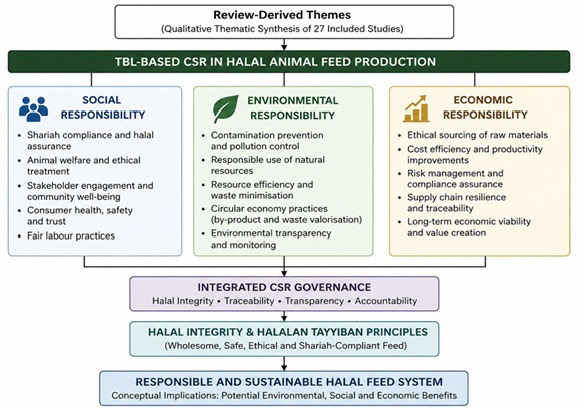
TBL-based CSR as a bridge to halal integrity in animal feed production.
. Animals that are considered halal generally consist of species that are herbivores (e.g., sheep, goats, cattle, camels), and the ability for an animal to be classified halal or not also relates to the feed they receive (e.g., clean, allowable, and Tayyib) which are animal feed criteria. This supports the health and well-being of animals when they receive the appropriate feed, and therefore supports the halal or tayyib (pure and wholesome) status of animal-derived and fish-derived products or by-products.
Feed containing prohibited, najis, or doubtful ingredients may raise concerns regarding the halal status of animal-derived products; however, the jurisprudential implications vary according to the nature of the ingredient, feeding practice, and applicable scholarly interpretation. Examples of items commonly thought of as prohibited (or doubtful) include by-products of brewing or alcohol production (e.g., enzymes, flavourings), swine/porcine-derived fats or proteins (including hydrolysed protein), animal-derived blood (or blood products), animals that have been euthanized, and waste products that have not been properly processed. One empirical example of the halal feed system identifies how a variety of feed inputs may expose the halal food system to risk (non-compliance to religious standards), ethical standards, and reputational standards associated with the halal food system. In order to uphold a CSR reputation, establishing the integrity of halal and tayyib feed and feeding systems provides evidence of a producer’s ethical obligations, consumer confidence, and consideration for religious beliefs, thereby increasing the socially legitimate nature of halal markets.
Islamic jurisprudence and ethical accountability in animal feeding
The jurisprudential discussion in this subsection supplements the themes identified through the systematic review and draws on the supplementary literature to contextualise variations in Islamic legal interpretations relevant to animal feeding. Islamic scholars have diverse opinions about the permissibility of feeding animals’ non-halal, and these opinions are based on the different schools (madāhib) of Islamic law. For example, the Hanbali school permits feeding animals a najis (impure) feed as long as sufficient time has passed before slaughtering the animal; this way, the effects of this feed will not still be present in the body of the animal. This conclusion is based upon an observation that animals who graze will often inadvertently eat najis materials when grazing outdoors. On the other hand, based upon the principle of blocking the means to do harm to others (saddu al-dharaa’ie), there are more restrictive interpretations of the permissibility of feeding animals najis feed in some Muslim communities. For example, fatwas in the states of Kelantan and Selangor expressly prohibit feeding animals any najis or filth or waste or any form of najis. Majelis Ulama Indonesia (MUI) has prohibited the manufacturing or sales of livestock feed that contains swine or non-halal ingredients. In Brunei, although some form of najis feed will not be permissible, animals must meet strict quarantine requirements before being sold as halal. The plurality of rulings in these matters illustrates the pluralism of Islamic legal opinions; however, they all share an identical ethical objective: protecting the integrity of halal products and maintaining the public’s trust in halal products. In contemporary views on legal matters, there are still examples of religious implications of feeding methods for animals raised for human consumption - include fatwa discussions on halal pet food as evidence of the requirement not to spread impurity, protect confidence in the public’s perception of halal, and uphold the reliability of halal systems from a perspective of law . By integrating these arguments into CSR initiatives for halal feed manufacturers, the approach taken by halal feed manufacturers is expected to progress beyond adherence to mere statutory requirements and become socially accountable through ethical business practices. By engaging in feeding practices that align with relevant fatwas, companies may demonstrate support for Islamic law and potentially support Muslim consumers’ confidence in halal governance.
Animal welfare as an integral part of social responsibility
Animal welfare emerged in the reviewed literature primarily through feed-related concerns involving contamination, nutritional adequacy, toxic exposure, animal health, and responsible feeding practices. While animal welfare is important to halal systems, but this has not always been adequately reflected in CSR. It is important to recognize the importance placed on compassion (rahmah), humane slaughter, and the ethical obligation of preventing undue suffering by both the prophets and the Qur’an for both animals and the quality of meat produced under the philosophy of halalan tayyiban, as well as the finding that sustainable meat systems and halal ethics increasingly associate animal welfare with halal and not merely as a separate ethical issue . The type of feed produced using good CSR practices, such as avoiding feeds that contain contaminants, providing feeds with low toxicity, and producing an adequate amount of nutrients in feed may support the health and well-being of animals. Studies of conditions under which livestock are raised indicate the importance of CSR practices to final product quality by supporting/ensuring carcass quality and tenderness, respectively . Research on feeding practices has documented the impacts of contaminated feed and waste materials on animal cruelty, transmitting disease, and resulting in poor quality meat . In the literature that has been reviewed, concern over animal welfare has come primarily from a worry regarding feed which has raised various issues like contamination, nutritional sufficiency, toxic exposure, health of the animal, and proper feeding methods. These initial concerns differ from final processing factors that may have an impact on quality features of animal products. For instance, in their study Farid et al. (2023) mentioned that in conditions of chilling meat of goats was distinguished by tenderness and color features. Although the finding relates to post-slaughter process rather than animal feed, it indicates the need to separate issues connected with animal welfare involving feed from factors that influence meat quality. Furthermore, improving gut health and immune systems through nutritional additives, such as postbiotics made from Lactiplantibacillus plantarum, has been shown to improve growth rates, feed conversion, and intestinal development of chickens, which may provide a welfare-friendly alternative to using antibiotic growth promoters in the feed of chickens . Therefore, animal welfare should be incorporated into CSR plans in order to substantiate the social legitimacy of the halal feed producer as well as to comply with Islamic and ethical obligations pertaining to production.
Social trust, community sensitivity, and halal governance
The production of halal animal feed involves more than just producing safe feed and complying with regulation; it also encompasses producing feed that reflects community trust and meets community expectations. Although these expectations can vary among different segments of the halal market (i.e., broadly classified as high or low-income communities, by age group, or by type of animal), consumers are demanding an increasing amount of information about where feed comes from, how it is made and whether the feed has been produced ethically. As the global marketplace for halal continues to expand, consumers are looking for information about what to expect from halal products. As livestock production methods become more complex due to globalization and supply chain complexity, CSR initiatives, such as communicating with stakeholders, disclosing feed ingredient information, and aligning with established halal standards, are essential for establishing trust and eventually acceptance in the halal marketplace. Waste management is important not only because of its environmental impact but also because of its role in connecting CSR to transparency, accountability, and stakeholders’ trust. There are many different ways to implement comprehensive waste management frameworks; however, successful waste management frameworks require coordination among institutions, participation among stakeholders, regulatory compliance, and alignment to improve the environmental performance of waste management . Therefore, waste management practices can impact how stakeholders perceive halal feed governance. When the management of waste and by-products is visible and complies with regulations, engages institutions, and involves stakeholders, it may generate positive perceptions of halal feed supply chain governance. Consequently, halal feed manufacturers can promote their ethical stewardship of halal animals by embedding Islamic jurisprudence, animal welfare, and transparency into their CSR frameworks. The following thematic tables (Tables 2-3) comparatively synthesise the included evidence by CSR dimension, key issue, implications for halal integrity, strategic response, and supporting studies.
Table 2, synthesizes the principal social responsibility dimensions identified in this review. It demonstrates that halal integrity, jurisprudential accountability, animal welfare, and consumer trust are related dimensions identified within the reviewed literature that collectively shape the social credibility of halal feed systems. By institutionalizing these CSR-based interventions, feed producers move beyond regulatory compliance toward proactive ethical stewardship within the halal ecosystem.
Table 2: CSR-based social responsibilities for safeguarding halal integrity in animal feed industry.
CSR focus area |
Key issues in halal animal feed | Impact on halal integrity | CSR-based strategic actions |
Key related reference |
| Halal integrity Shariah compliance | Use of non-halal or syubhah ingredients (swine derivatives, blood meal, alcohol-industry by-products) | Direct violation of halalan tayyiban principles; loss of religious legitimacy | Fatwa-aligned sourcing; halal feed assurance systems; Shariah screening of raw materials | Rahim and Masood (2023); Saidin et al. (2022a) |
| Islamic jurisprudence ethical accountability | Divergent fiqh opinions on najis-based feeding practices | Confusion among producers and consumers; weakened public trust | CSR alignment with dominant fatwas; precautionary (sad al-dhara’i) approach | Saidin et al. (2024); Rahman et al. (2024a) |
| Animal welfare | Feed contamination, toxic exposure, poor nutritional balance | Failure to uphold Islamic moral accountability grounded in rahmah (compassion) and amanah (entrusted responsibility) toward animal welfare | Welfare-oriented feed formulation; contamination prevention; alternative feed strategies | Muchenje et al. (2018); Chang et al. (2022) |
| Consumer trust social legitimacy | Limited transparency in feed sourcing and formulation | Reduced confidence in halal certification and meat quality | Disclosure, traceability systems, stakeholder engagement | Verbeke et al. (2013); Rahman et al. (2024a) |
Table 3: CSR-based environmental responsibilities for strengthening halal integrity in animal feed production.
| CSR focus area | Key issues in halal animal feed |
Impact on halal integrity |
CSR-based strategic actions |
Key related reference |
| Toxic mineral contamination | Arsenic, cadmium, lead, and mercury entering feed via soil and waste streams | Compromises the tayyib (purity and safety) dimension of halal | Continuous monitoring; laboratory testing; safe sourcing; remediation strategies | Bampidis et al. (2013); Phang et al. (2024) |
| Waste-based feed utilization | Use of animal waste and agro-industrial by-products as feed ingredients | Environmental risk and halal ambiguity (risk of al-Jallalah) | Circular economy practices with Shariah screening, quarantine, and substrate verification | Saidin et al. (2024); Jamaludin et al. (2024) |
| Land and ecosystem sustainability | Unsustainable grazing and land-use practices | Ecological degradation affecting feed security and halal supply continuity | Sustainable land-use planning; grazing management; ecosystem monitoring | Mor-Mussery et al. (2019); Juhandi et al. (2024) |
| Green operational sustainability | High resource consumption, emissions, and inefficient feed production systems | Weak environmental stewardship undermines halal credibility | Emission reduction, energy efficiency, waste minimization, environmental monitoring systems | Rahman et al. (2024b); Suharni et al. (2021) |
| Environmental transparency stakeholder scrutiny | Limited environmental disclosure and sustainability reporting | Reduced public trust in halal-oriented production systems | Structured sustainability reporting; CSR disclosure; environmental performance indicators | Rahman et al. (2024b); Shen et al. (2025) |
Environmental responsibility
Feed safety, environmental contamination and protecting livestock
Contaminated soils, waters, and air can all have a negative effect on the quality and safety of animal feed. Studies show that mycotoxins, heavy metal contamination, and agro-industrial residues in animal feed can lead to health problems for livestock because of their exposure to cumulative hazards through these contaminated products that derive from the agriculture and the food industry. For halal purposes, feed contamination that threatens animal health or downstream food safety may compromise the safety and wholesomeness associated with the tayyib dimension (purity, cleanliness, and health). Within the reviewed studies, feed safety and environmental contamination emerged through recurring concerns regarding mycotoxins, toxic minerals, agro-industrial residues, and other potentially hazardous feed inputs. Therefore, socially-responsible (CSR) feed manufacturers will need to take a precautionary approach to feed sourcing through supplier screening, testing for contaminants, and traceability of ingredients.
Economically advantageous sources of ingredients for animal feed may be unsafe for the environment and potential harm to the animals if they contain hazardous materials unless properly governed. Therefore, environmentally responsible and CSR activities necessitate balancing the economic viability of production with long-term ecological responsibilities and ethical obligations.
Waste use, circular economy, and halal integrity
Despite the economic advantages of using animal waste and agro-industrial processing by-products in the production of animal feed as recycling and a circular economy, such materials may present different types of risk depending on their origin and processing. It may include Shariah-compliance risks from prohibited or najis sources, safety risks from contaminants or toxic substances, and quality risks affecting feed or animal-derived products . The lack of regulations governing the use of waste feeds from animals to other animal food has the potential to increase the risks of contamination, due to the inclusion of known toxic materials , and possibly changing the sensory characteristics of the products produced from these animals . Within Islam, the accomplishment of maximum economic efficiency can never be justification for any practice that may introduce an element of “harm” (darar) to an animal or compromise the cleanliness or safety of the food or product as defined in the principle of tayyib . However, some the emerging circular practices, such as using black soldier fly larvae (BSFL), provided they are derived from the correct and acceptable substrates, will then allow for a waste-to-feed system to be conditionally acceptable upon completion of quarantine measures, verification of the substrate, and oversight through a Shariah-compliant regulatory body . In Islamic environmental ethics, stewardship (khilafah) and responsible resource management (e.g., natural, human, manufacturing) drive the halal producers’ obligation to achieve sustainable objectives while adhering to all Shariah principles and safety standards. Therefore, developing CSR initiatives that utilize circular economy strategies in combination with halal certification processes will help facilitate increased environmental sustainability throughout the livestock supply chain. Empirical analysis of food waste systems, with emphasis on waste management have demonstrated that poorly coordinated waste management systems can produce greater environmental risks, thereby indicating the need for the implementation of governance-based waste management systems .
CSR alignment with islamic environmental ethics
Islam promotes accountability through economic conduct, engaging in responsible resource use, and protecting the environment. These responsibilities can be interpreted in light of the principles of khilafah (stewardship), amanah (trusteeship), maslahah (public interest), and darar avoidance that together emphasize the significance of responsible resource usage, pollution control, and safeguarding of both animal welfare and human health. The abovementioned principles are particularly important in terms of sourcing raw materials, preventing the contamination, waste utilization, and resource efficiency of halal animal feed production. Halal animal feed production encompasses environmental responsibility that goes beyond adhering to regulations and incorporates broader sustainability governance frameworks. Halal industries’ empirical data demonstrate how companies employing green principles such as emissions reduction, waste reduction, environmental oversight, and responsible sourcing may support their environmental performance and long-term competitiveness . Livestock production systems must utilise prevention of feed contamination, resource efficiency, and animal well-being to align agricultural sustainability with halal integrity. In livestock production systems, public concerns about the environment and social expectations have shown to affect sustainability; therefore, stakeholder pressure is essential to governance of environmental integrity . In halal industries, this reinforces the necessity for environmental responsibility, as it may result in a lack of integrity in both the sustainability objectives and credibility of halal-based businesses.
CSR-based environmental governance through halal feed production
CSR provides halal feed producers with the systems by which environmental responsibility can be inherently included in their practices; including; implementing halal assurance systems, adopting cleaner production technologies, developing monitoring systems, and educating stakeholders on Islamic principles related to environmental responsibility. All of these may support environmental productivity and continue to reinforce halal integrity throughout the entire supply chain. Elements of formalised green criteria and sustainability criteria in poultry production systems (including: resource use efficiency, waste control, and environmental oversight) continue to enhance environmental productivity and sustainability in livestock production . Other sustainable operational practices that may contribute to environmental productivity and develop future competitiveness in halal-based production systems include: Controlling feed contamination, minimising waste, utilising renewable energy, and limiting emissions .
The combination of themes shown in Table 3 indicates that environmental governance of halal feed production comprises the aspects of contamination management, responsible use of resources, circular economy protection and environmental transparency. The mentioned relationships may be considered conceptual implications obtained from the literature review, not actual causal implications. The incorporation of environmental responsibility into CSR practices may help halal feed manufacturers decrease negative ecological influences, enhance halalan tayyiban, and contribute to a better halal food system.
Economic responsibility
Halal animal feed and ethical sourcing of raw materials
In the production of animal feed, it is quite common to combine raw materials sourced from plant and animal sources. However, the halal-related risks of these materials may differ depending on their category and origin. For instance, plant-based ingredients may pose risks of contamination and processing, while animal-derived ingredients raise specific concerns related to the species used and Shariah permissibility. Wong et al. (2025) state, “The identified significant structural issues in poultry production systems include high costs of feed, limited access to quality feed components, and inadequate nutrition management. Therefore, there is a need for more efficient feed usage and management practices geared toward sustainability.” The increasing use of industrial waste/by-products or waste-derived inputs in feed systems has raised several important governance and compliance issues related to halal production chains . While the use of industrial waste by-products or waste-derived inputs presents cost-saving advantages, it creates a need for stringent Shariah-compliant controls to prevent contamination and maintain halal integrity.
While the use of waste materials in production may result in lower production costs, it may also compromise halal and tayyib standards if there is insufficient ethical oversight and traceability. Feed sources should not only comply with permissibility criteria but should also be safe, free from contamination, and free from harmful (darar) substances. The quality of feed items impacts the halal status of animal-derived products . Therefore, if a business makes sourcing decisions strictly based on economics without considering these Islamic criteria, it may be exposed to religious non-compliance, reputational damage, and long-term economic instability.
Incorporation of CSR principles into sourcing decisions allows feed manufacturers to implement sourcing policies to ensure that halal integrity, traceability, and supplier responsibility are considered during procurement processes. Advanced methods for verifying the authenticity and origin of food, such as mass spectrometry and AI/IoT-enabled smart sensing systems, provide robust verification methods regarding the origin of feed ingredients and compliance with halal sourcing standards . Following ethical sourcing requirements in line with Islamic principles may reduce the likelihood of non-permissible ingredients entering the feed supply chain and support clean, safe, and environmentally responsible processing practices. In addition to supporting halal compliance, ethical sourcing may contribute to the long-term economic viability of halal animal feed companies by reducing compliance-related risks and supporting consumer confidence.
Use of resources, mitigating risk, and long-term economic sustainability
CSR frameworks are based on economic responsibility that goes beyond saving costs in the short-term by also taking into account risk in the long-term as well as sustainability. Although the use of feed ingredients derived from waste may look like a better financial option at the time of purchase, studies have shown that issues with quality control and ethical practices can cause increased downstream costs via recalls, loss of certification, and loss of consumer confidence. The consequences of these issues may be even more severe in the halal market because of the consumer’s religious beliefs and the moral responsibility for purchasing halal products. The reviewed evidence suggests that CSR-based ethical sourcing may help reduce exposure to regulatory, reputational, and supply-chain risks and thereby potentially support the long-term economic sustainability of halal feed producers. Empirical data generated by livestock supply chain risk assessment studies show that implementing proactive governance, quality control systems, and ethical procurement practices has had a positive effect on the stability of the supply chain, therefore improving the predictability of costs . For halal animal feed producers, these findings suggest that incorporating CSR into sourcing strategies may provide long-term economic and risk-management benefits, although these outcomes require empirical validation within halal feed firms.
Profitability with halal compliance
The relationship between halal compliance, CSR, and profitability may complement each other but also entail tradeoffs. For example, halal assurance, supplier verification, traceability, laboratory testing, certification and other sustainability initiatives incur extra costs in terms of compliance and operational expenses. However, the evidence from other halal and livestock areas suggests that these investments may pay off in terms of better market acceptance and risk management in the long run.
Halal compliant businesses use CSR strategies based on the principles of Islamic business values, and the combination of halal compliance and the ability to generate profits work together rather than against each other. Studies conducted in industries that are focused on halal products have shown that well-structured governance focused on sustainability has a positive impact on the financial success of the organization, and the overall competitive position an organization has due to being halal compliant. In addition to this, there is research being conducted in other agriculture-related industries that shows there is a significant relationship between establishing integrated logistics systems and governance focused on coordinating efforts among organizations that establish a competitive advantage . Due to the limited availability of direct empirical data from halal animal feed companies, the economics outlined in this work are further supported by information available from the wider livestock supply chains, halal food sector, and other related areas of agriculture. In livestock supply chains, structured risk management combined with management of compliance to halal related standards reduces the impact of operational vulnerabilities on stable supply chains, which directly contributes to the economic sustainability of a halal compliant organization . Studies conducted that focus on environmental governance have also found that organizations that are subject to significant scrutiny by stakeholders, and disclose their sustainability practices, tend to perform better in the marketplace and have a greater level of credibility within that market . Collectively, these studies demonstrate that CSR is not just an ethical obligation but can also be viewed as an economic strategy. For halal animal feed companies, implementing CSR into procurement, supplier verification, traceability control systems, and quality assurance processes may strengthen halal compliance and potentially contribute to greater financial resilience. This, in turn, may create a greater sense of trust with all stakeholders involved in the organization.
The pursuit of economic sustainability for halal animal feed production requires more than simply reducing costs; ethical decisions based upon Shariah compliance, contamination control and circular sustainable safeguards must all be integrated into the procurement process to create long-term value. Table 3 represents several of the economic focal points identified through this research, showing that there are five interdependent areas of economic sustainability (as it relates to halal feed systems): ethical raw material sourcing; control of contamination and toxic risk; integration of Shari’ah compliant circular economies; traceable supply chain; and alignment of profitability and compliance. There is a clear interdependence between the financial viability of halal feed production and the production of halalan tayyiban. The use of CSR-compliant procurement systems, laboratory monitoring processes, substrate verification protocols, digital traceability systems and systematic sustainability disclosure practices may support halal integrity, certification stability, and long-term competitiveness in the global halal industry.
In comparison with each other, the three TBL aspects indicate both diverging and converging focuses. While the social aspect is more engaged in halal authenticity, ethical responsibility, and animal welfare as well as stakeholder confidence, the environmental aspect mainly focuses on the issues of the pollution control, resource management, waste utilization, and environmental visibility. The economic aspect is inclined to the issues of ethical procurement, risk prevention, effectiveness, and sustainability. Yet, there are many topical intersections among the dimensions. For instance, responsible procurement includes Shariah compliance, pollution prevention, traceability, and risk management. The analysis highlights one concern: although the themes related to CSR have been distinguished in the literature, very little empirical evidence has been collected in terms of their simultaneous application in halal animal feed companies.
CONCLUSION
The study suggests that TBL-based CSR may provide a strategic approach to supporting halal integrity at all levels of the supply chain when applied to halal animal feed. Given that feed represents an important upstream control point for livestock production, governance of this upstream stage may contribute to maintaining the halal and tayyiban status of animal products. The systematic synthesis of the literature suggests that CSR can be conceptualised not merely as an ancillary corporate initiative, but, rather, a structured ethical framework incorporating Shari’ah compliance with environmental stewardship and economic sustainability.
Social responsibility may contribute to reinforcing the legitimacy of halal through the Shari’ah screening of ingredients, transparency in sourcing, animal welfare protection, and responsiveness to the various interpretations of law by different schools of thought. Environmental responsibility may contribute to reducing contamination risks and supporting sustainable resource use while observing the Islamic principles of stewardship and prevention of harm. Economic responsibility, when adhering to ethical sourcing and appropriate purchasing practices, may contribute to long-term competitiveness while helping to reduce certification and reputational risks.
By merging Islamic ethical teachings with sustainability-focused governance practices, the TBL-based CSR framework discussed within this article offers a conceptual mechanism through which halal feed producers may support the overall integrity of halal feed production within the increasingly complicated global marketplace. Theoretically, the study expands the use of the TBL framework to the upstream halal animal-feed sector by tying together social, environmental, and economic responsibilities with Islamic ethical tenets and halal governance. In practice, the framework may help feed producers in taking into account ingredient screening, responsible sourcing, contamination control, traceability, animal welfare and environmental accountability in their CSR and halal governance activities. It can also serve as a conceptual framework for policymakers and halal-linked organizations in preparing guidance for more responsible halal feed systems.
Through the careful integration of CSR principles into feed production systems, halal producers may be better positioned to balance their religious obligations, their responsibility to the environment, and their economic viability, potentially contributing to a more sustainable and ethical halal food supply chain.
However, the TBL-based CSR framework that has been presented is still theoretical and it is yet to be tested empirically. There are also limitations of the review due to its focus on Scopus as the only systematic database as well as the availability and number of studies addressing halal animal feed. Therefore, future research should test the framework empirically and work on validating it in different contexts of halal feed and livestock production, including through case studies and quantitative modelling, while examining the relationship among its social, environmental and economic dimensions.
ACKNOWLEDGEMENT
The authors gratefully acknowledge the support provided by Doctors Feed Ltd., Bangladesh along with Department of Islamic Management and Finance, Academy of Islamic Studies, Universiti Malaya, Malaysia and Institute of Halal Management, Islamic Business School, Universiti Utara Malaysia, under research grant number IF082-2021, RMF 0046-2021 and RI 10010030/SO 21153 respectively. Their support contributed to the development and completion of this research.
NOVELTY STATEMENT
This research paper offers a novel approach to integrating Corporate Social Responsibility (CSR) and the Triple Bottom Line (TBL) Framework in relation to the production of halal animal feed. Unlike existing research on halal governance or sustainability, it demonstrates how upstream feed management is an important factor in determining the integrity of halal.
By using Islamic ethical principles, this study proposes a TBL-based CSR model which is based on Shariah compliance, environmental sustainability and economic responsibility. The proposed model provides an integrated framework of how Islamic Jurisprudence, Sustainability Theory and Corporate Accountability can all work together to provide a practical governance model for strengthening the resilience of halal supply chains through improved governance practices.
AUTHOR’s CONTRIBUTION
MMR: Conceptualization, research design, systematic review synthesis, framework development, and manuscript drafting. IK: Contributed to Islamic jurisprudential analysis and integration of Shariah perspectives within the CSR framework. MSS: Contributed to review of environmental literature. MSAR: Provided critical revisions, economic governance insights of the manuscript. All authors reviewed and approved the final version of the manuscript.
Ethical statement
The systematic qualitative review of published academic literature provides the basis of this research. No human participants, no animal experimentations nor new data collections that are primary required ethical approval were conducted; therefore, there was no need for an Institutional Ethics Approval.
Generative AI and AI-assisted technology
The content of the article is not based on generative AI. AI tools were used for thematic analysis and only for the language editing and grammar refinement content of this manuscript.
Conflict of interest
The authors have declared no conflict of interest.
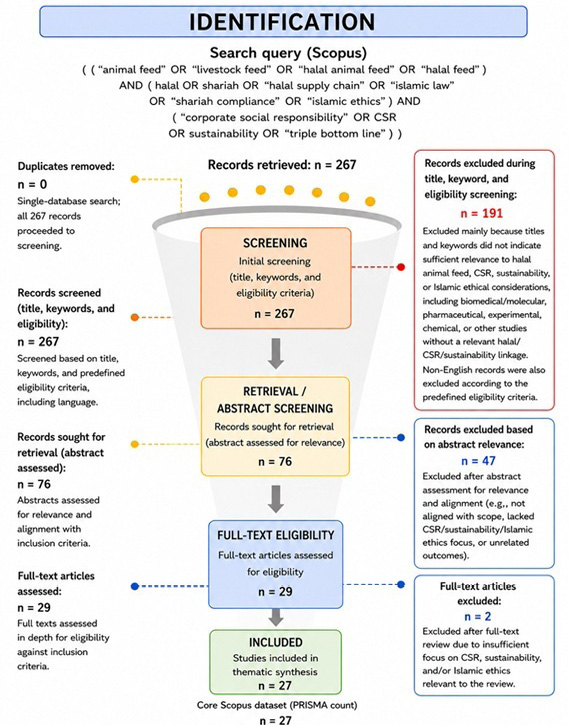
PRISMA flow diagram of the Scopus-based systematic literature selection process.
References
- Ahmad Z, Hidthiir MHB, Rahman MM (2024). Impact of CSR disclosure on profitability and firm performance of Malaysian halal food companies. Discover Sustain., 5: 18. https://doi.org/10.1007/s43621-024-00189-3 [CrossRef]
- Alibekov RS, Alibekova ZI, Bakhtybekova AR, Taip FS, Urazbayeva KA, Kobzhasarova ZI (2024). Review of the slaughter wastes and the meat by products recycling opportunities. Front. Sustain. Food Syst., 8: 1410640. https://doi.org/10.3389/fsufs.2024.1410640 [CrossRef]
- Alzeer J, Rieder U, Abou Hadeed K (2020). Good agricultural practices and its compatibility with halal standards. Trends Food Sci. Technol., 102: 237–241. https://doi.org/10.1016/j.tifs.2020.02.025 [CrossRef]
- Bampidis VA, Nistor E, Nitas D (2013). Arsenic, cadmium, lead and mercury as undesirable substances in animal feeds. Sci. Pap. Anim. Sci. Biotechnol., 46(1): 17–22.
- Bittante G, Pellattiero E, Cecchinato A, Tagliapietra F, Sturaro E, Ramanzin M, Pazzola M, Vacca GM, Schiavon S (2021). Performance, carcass conformation and meat quality of suckling, weaned and heavy lambs, and culled fattened ewes of autochthonous alpine sheep breeds. Ital. J. Anim. Sci., 20(1): 970–984. https://doi.org/10.1080/1828051X.2021.1920484 [CrossRef]
- Bonne K, Verbeke W (2008). Muslim consumer trust in halal meat status and control in Belgium. Meat Sci., 79(1): 113–123. https://doi.org/10.1016/j.meatsci.2007.08.007 [CrossRef]
- Cahyana AS, Vanany I, Arvitrida NI, Gunawan I (2024). Modeling the relationships among the driving factors of food waste in Indonesian city. J. Ind. Eng. Manage., 17(1): 88–114. https://doi.org/10.3926/jiem.6012 [CrossRef]
- Chang HM, Loh TC, Foo HL, Lim ETC (2022). Lactiplantibacillus plantarum postbiotics: Alternative of antibiotic growth promoter to ameliorate gut health in broiler chickens. Front. Vet. Sci., 9: 883324. https://doi.org/10.3389/fvets.2022.883324 [CrossRef]
- Deuraseh N, Asli NA (2022). Issues on halal foods with special reference to fatwa on halal pet food for cats in Islamic law. El-Mashlahah, 12(2): 103–123. https://doi.org/10.23971/elma.v12i2.3534 [CrossRef]
- Farid MU, Jaspal MH, Luqman N, Asghar B, Ijaz M, Yar MK, Ali Taseer MS, Iqbal Z, Naeem MA, Nasir J (2023). Age, sex, and chilling effects on goat meat. Ital. J. Food Sci., 35(4): 12–20. https://doi.org/10.15586/ijfs.v35i4.2195 [CrossRef]
- Jalloh MY, Wan Dahalan WSA, Khalid RM, Wulandari W (2024). Strengthening household solid waste management in Sierra Leone: Lessons from South Korea and Indonesia. J. Indones. Legal Stud., 9(2): 943–984. https://doi.org/10.15294/jils.v9i2.19156 [CrossRef]
- Jamaludin MA, Amid A, Mat Puat NS, Saffine SS (2024). BSFL as alternative halal animal feed. J. Halal Ind. Serv., 7(1): a0000526. https://doi.org/10.36877/jhis.a0000526 [CrossRef]
- Juhandi D, Darwanto DH, Masyhuri M, Mulyo JH, Sasongko NA, Susilawati HL, Meilin A, Martini T (2024). Land use planning strategies for food versus non-food estate sustainable farming. Glob. J. Environ. Sci. Manag., 10(3): 1249–1274.
- Kamble A, Bajaj S, Dhaulaniya AS, Balan B (2025). Analytical advances in food authentication and origin traceability: From mass spectrometry to AI and IoT-enabled smart sensing systems. J. Food Meas. Charact., 19: 5257–5285. https://doi.org/10.1007/s11694-025-03341-3 [CrossRef]
- Khamnurak H, Taeali A, Rahman MM (2025). Integrating halal management systems and control points in poultry processing: A transnational compliance case from Thailand to Malaysia. J. World’s Poult. Res., 15(3): 379–388. https://doi.org/10.36380/jwpr.2025.36 [CrossRef]
- Khamnurak H, Taeali A, Rahman MM (2026). Enhancing halal management system in poultry production and halal control point-based compliance framework for Thailand. J. Anim. Health Prod., 14(1): 161–169. https://doi.org/10.17582/journal.jahp/2026/14.1.161.169 [Full text] [CrossRef]
- Khan W, Khan S, Dhamija A, Haseeb M, Ansari SA (2023). Risk assessment in livestock supply chain using the MCDM method: A case of emerging economy. Environ. Sci. Pollut. Res., 30(8): 20688–20703. https://doi.org/10.1007/s11356-022-23640-2 [CrossRef]
- Mir SA, Farooq S, Drabu S, Kour J, Shah MA, Sunooj KV, Khaneghah AM (2025). An insight into mycotoxins decontamination from corn and corn-based products: An updated review of methods, challenges and perspectives. Qual. Assur. Saf. Crops Foods, 17(3): 61–74. https://doi.org/10.15586/qas.v17i3.1545 [CrossRef]
- Mor-Mussery A, Shuker S, Zaady E (2019). New approach for sustainable and profitable grazing systems in arid open lands of the northern Negev desert (Israel). Geogr. Environ. Sustain., 12(2): 106–127. https://doi.org/10.24057/2071-9388-2019-15 [CrossRef]
- Muchenje V, Mukumbo FE, Njisane YZ (2018). Meat in a sustainable food system. S. Afr. J. Anim. Sci., 48(5): 818–828. https://doi.org/10.4314/sajas.v48i5.3 [CrossRef]
- Muflih BK, Ahmad NS, Jamaludin MA, Nordin NFH (2017). The concept and component of contaminated animals (al-jallalah animals). Int. Food Res. J., 24(Suppl.): S436–S440.
- Phang LY, Mingyuan L, Mohammadi M, Tee CS, Yuswan MH, Cheng WH, Lai KS (2024). Phytoremediation as a viable ecological and socioeconomic management strategy. Environ. Sci. Pollut. Res., 31(38): 50126–50141. https://doi.org/10.1007/s11356-024-34585-z [CrossRef]
- Rahim SF, Masood MAB (2023). Global view of animal feed in halal perspective. Int. J. Halal Res., 5(1): 45–57.
- Rahman MM, Ahmad Z, Mokal MN, Aziz MF, Khotib NAM (2024b). Green sustainability and financial performance of halal food companies: Evidence of Malaysia. J. Islam. Monet. Econ. Finance, 10(4): 709–734. https://doi.org/10.21098/jimf.v10i4.2003 [CrossRef]
- Rahman MM, Razimi MSA, Ariffin AS, Hashim N (2024a). Navigating moral landscape: Islamic ethical choices and sustainability in halal meat production and consumption. Discover Sustain., 5: 225. https://doi.org/10.1007/s43621-024-00388-y [CrossRef]
- Saidin N, Abd Rahman F, Yaakob MAZ (2022a). Developing the halal animal feed standard: Analysis of feed supply chain issues. Al-Qanatir Int. J. Islam. Stud., 28(2): 83–91.
- Saidin N, Abd Rahman F, Yaakob MAZ, Bhari A, Harun HMF (2022b). Animal feed and feeding: Analysis of related Malaysia and international fatwa. J. Posit. Sch. Psychol., 6(2): 1371–1381.
- Saidin N, Yaakob MAZ, Abd Rahman F, Ruzulan Z, Samori Z, Harun HMF (2024). Hadith analysis of al-jallalah: A crucial framework for risk management in halal animal feed studies. J. Ecohumanism, 3(4): 771–777. https://doi.org/10.62754/joe.v3i4.3550 [CrossRef]
- Shen J, Ren X, Feng Z, Nie J (2025). The impact of public environmental concerns on port sustainability: Evidence from 44 port cities in China. Front. Mar. Sci., 11: 1454242. https://doi.org/10.3389/fmars.2024.1454242 [CrossRef]
- Suharni R, Chew BC, Rizal AHMS (2021). Green and sustainability criteria in Malaysia’s poultry production and management. J. Sustain. Sci. Manage., 16(5): 140–163. https://doi.org/10.46754/jssm.2021.07.011 [CrossRef]
- Verbeke W, Rutsaert P, Bonne K, Vermeir I (2013). Credence quality coordination and consumers’ willingness to pay for certified halal labelled meat. Meat Sci., 95(4): 790–797. https://doi.org/10.1016/j.meatsci.2013.04.042 [CrossRef]
- Wong ZY, Napolean AA, Zamani NA, Frederick CLJ, Rasid RA, Candyrine SCL, Rahman MM, Kalam MA, Hartady T, Bhuiyan MSA (2025). Current challenges and prospects of quail farming in Malaysia: A review. Ger. J. Vet. Res., 5(2): 116–132. https://doi.org/10.51585/gjvr.2025.2.0139 [CrossRef]

Services
Article usage statistics
Loading…
Related articles
- Multidimensional Assessment of Feed Corn Farming Sustainability: Ecological, Technological, Social and Economic Insights from South Sulawesi, IndonesiaSarhad Journal of Agriculture · 2025
- Enhancing Halal Management System in Poultry Production and Halal Control Point-Based Compliance Framework for ThailandJournal of Animal Health and Production · 2026
- Effects of Dietary Ginger (Zingiber officinale) Powder on Growth Performance, Feed-Related CO₂e Intensity, Economic Returns, and Management Decisions in African catfish (Clarias gariepinus) FarmingJournal of Animal Health and Production · 2026
- Potato Peels as a Sustainable Animal Feed: Maximizing Environmental Benefits and Nutritional ValueAdvances in Agriculture and Animal Sciences · 2026
- Evaluation of Environmental Impact, Economic Viability, and Performance of Priangan Sheep Fed with Dried Water Spinach (Ipomoea aquatica)Advances in Animal and Veterinary Sciences · 2025
- Potential Use of Insect-Based Feed as an Alternative to Conventional Feeds in Aquaculture: A Sustainable ApproachSarhad Journal of Agriculture · 2025