
The aim of current research was to investigate the diversity and richness of earthworm species of district Neelum, Azad Jammu and Kashmir, Pakistan and impact of earthworm species on soil. Earthworms were collected by hand sorting and digging procedures and study was conducted during July, 2017 to October, 2017 from the cultivated lands on the basis of ecological zones such as ice caps and glaciers (Zone I), very cold non-monsson alpine (Zone II), and cold non-monsoon alpine (Zone III). Soil samples were collected and were analyzed for physio-chemical properties. Population density, Shannon diversity index and encounter rates for each species were calculated. Both epigeic and endogeic species i.e., Allolobophora chlorotica, Aporrectodea caliginosa, Aporrectodea trapezoides, Aporrectodea longa, Apporactodea rosea, Bimastos parvus, Drawida nepalensis, Eisenia fetida, Lumbricus rubellus, Pheretima hawayana, Pheretima lignicola, Pheretima posthuma were identified morphologically. It was observed that various localities especially high elevated areas including ice caps and glaciers (Zone I) decline the earthworm diversity due to snow and cold temperature, low organic matter and other contents such as phosphate 7 ppm, nitrogen 0.01 % and potassium 78 ppm as compared to other zones. Highest earthworm abundance was recorded in various villages of Kern and Athmuqam due to presence of organic matter (4.4%) while minimum in case of Kel, Arang kel up to Taobut localities due to lowest organic matter. The Shannon-Wiener diversity index (H), the species richness (InS) and species evenness (H/lnS) was recorded as 4.568, 2.639, and 1.73. The Apporrectodea species were more dominant species in all localities. The whole observation clearly indicated that the earthworm’s richness improved the soil health.
Research Article · Online First, 25 November 2026 · Open Access
Distribution and Abundance of Earthworm Species in District Neelum, Azad Kashmir, Pakistan and Act as Soil Bioindicator
, , ,
Affiliations & Notes ⌄
- 1Microbial Bioremediation and Vermi-Technology Laboratory, Department of Zoology, University of Azad Jammu and Kashmir, King Abdullah Campus, Chattar Kalass, Muzaffarabad, 13100, Pakistan
- 2Department of Zoology, Government College University, Faisalabad, Pakistan
- *Correspondence | Saiqa Andleeb; Email: drsaiqa@ajku.edu.pk
Article Info ⌄
- Journal:
- Pakistan Journal of Zoology
- Submitted Date:
- 27 July 2022
- Revision Date:
- 15 April 2026
- Accepted Date:
- 26 April 2026
- Published Date:
- 25 November 2026
Abstract
Introduction
Earthworms are an important soil organism and work as a “soil conditioner” to improve the physio-chemical and biological properties of the soil. Earthworms involved in plants decomposition, water infiltration, and enhance the soil productivity. They also play an important role in soil fertility due to secretion of several enzymes such as lipases, proteases, amylases, chitinases and cellulase. These enzymes bring rapid biochemical conversion of organic wastes which originate from gardens, homes dairies and farms . Earthworms are found in all types of soils which showed that diversity of earthworms depends upon the environmental factors such as moisture, temperature and organic carbon supply. Most of the earthworm species divided into three broad groups on the basis of soil horizons such as Epigeic (litter dwelling; Eisenia fetidia, Lumbricus rubellus), Endogeic (soil dwelling; Aporrectodea spp. and Allolobophora spp.) and Anecic (deep burrowing; Lumbricus terrestris) ; ; . Composition and relative abundance of earthworms depend upon soil type, vegetation, topography properties of soil including texture, depth, soil moisture, pH and organic material content ; . Earthworms are hermaphrodite and in ideal condition of moisture, temperature, food and organic matter, they can enhance their population to double in one month . They prefer moisture, shadow and organic matter . Extreme soil conditions such as low pH, low fertility and high disturbance may cause low population density (main
In the agricultural world they are called “Natural Plougher” due to burrowing activities. Aristotle termed them as the “Intestine of Earth” . They improve soil by two ways. Firstly, they ingest soil, causing break down of organic matter and ejecting it in the form of casts. Secondly through their burrowing activities soil mixed and turned over. This bioturbation improves aeration, water holding capacity and mixing of nutrients that enhances fertility . As biodiversity is concerned there are about 4000 species in the world and estimated total could be twice than known . Approximately, 418 species were known in India 418 and 31 species in Pakistan ; . A number of biologists have done work on the biodiversity of earthworms in various parts of the world ; ; but there is no other scientific report available on the diversity, abundance and ecological relationship of earthworms in district Neelum, Azad Jammu and Kashmir, Muzaffarabad, Pakistan. Therefore, the present study was carried out to determine the effect of earthworm distribution and abundance on the organic matter of the study area. This information is essential step to study and work with earthworm species which has great impact in the environment and in our community.
Materials and Methods
Study area and sites
Neelum valley has been divided into various ecological zones on the basis of different environmental conditions that start from the ice caps covered mountains with snow throughout the year in the North of AJK, Pakistan. In current research Neelum valley has been divided into 3 ecological zones such as ice caps and lakes which covered with the snow (Zone I), very cold non-monsson alpine (Zone II), and cold non-monsoon alpine (Zone III), respectively. Zone I includes Chitta Katha Lake, Rati Galli lake, Kalasar lake, Hanss Raaj lake, Dowarian lake, and Shounter Lake, Zone II includes areas of Upper Neelum, keran, Nagdar, Dowarian, Lawat, Dosat, Chnagan, Dudhnial, Jejian, Shardah, Surgan, Seri, Sngam, Jamgarh, Karimabad, Machal, Lower Neelum, kel, Arrang Kel, Jaawaie, Babun, Phulaaie, Sardari, Hilmat, Taobut, and Zone III includes Barian, Jura, Kundal Shahi, Kutton, Jagran, Shahkot, Salkhara, Noseri, Athmaqam etc. The collection and survey were conducted during July, 2017 to Octuber, 2017 in various localities of district Neelum, Muzaffarabad, Pakistan (Fig. 1). Earthworm collection was carried out in forest soil, crop fields, municipal solid waste dumped area, cow dung dumped area, fresh water mud, sewage water canals, and garden soils. Neelum District of Azad Kashmir in the north. District Neelum is a 144 km long thick forest of Azad Kashmir, Pakistan. It is situated in the north-east of Muzaffarabad, running parallel to Kaghan valley. It is located at 34°58′91″N ,73°91′06″E and an elevation is 1,615 m (5299 ft) above sea level. The rocks of Azad Kashmir are sedimentary and metamorphic in nature.
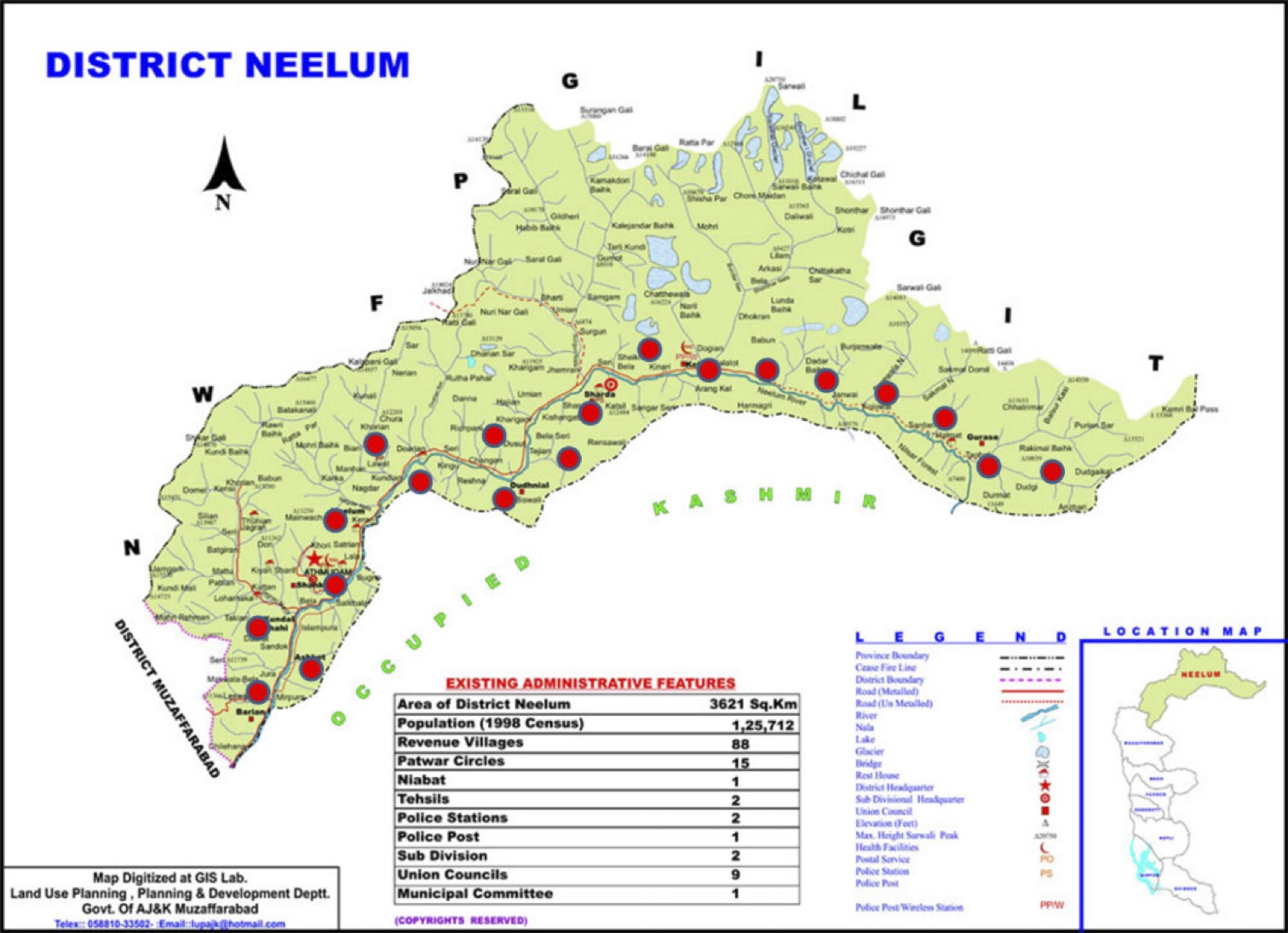
Earthworms sampling sites from district Neelum, Azad Jammu and Kashmir, Pakistan.
Soil sampling
Soil samples (200 gm) were removed from each quadrate by digging and placed in plastic containers. Physical parameters of vermi-compost and cow dung such as texture, appearance, color, electrical conductivity, temperature, moisture, pH, and the smell was recorded. The total organic matter (%), total carbon (%), nitrogen (%) were measured using the Walkley-Black method whereas potassium (%) and phosphorus (%) levels in the vermi-compost and cow dung were measured by ammonium acetate method and modified Olsen method, respectively ; .
Collection of earthworm species
We established five plots in each locality for sampling collection and in total of 545 plots were selected for sampling from 109 localities during the period of collection. They were collected during rainy season and by digging method using quadrate method (square foot). Visible earthworms were collected from the soil by hand sorting method . Each specimen of earthworm was given a number and was labeled with site, locality and date of collection. Collected samples were transported to Biotechnology and Medical Toxicology laboratory, Department of Zoology, University of Azad Jammu and Kashmir, Muzaffarabad, Pakistan. Total number of earthworms collected, and number of species counts were recorded during sampling. Counting of earthworm species was based on the age structure (Juveniles, clitellates, and non-clitellates) as well as depth of soil such as epigeic (1 cm to 25 cm depth), aneceic (10 cm to 30 cm depth), and endogeic (30 cm to 50 cm depth) ; .
Washing and preservation
After collection, earthworms were placed in water for at least 24 h. Washing was performed in order to clean the gut of earthworms. Washing also removed the impurities and mud on the surface of worms. After washing pictures of earthworm were taken by digital camera (Canon, EOS 350D, EF-S18-55, Kit) for record and kept in 10.0 % formalin for 24 h in order to hardened it. Permanent storage was done in 5.0 % formalin .
Identification of earthworms
The preserved earthworms were placed in Petri dishes and their external morphological feature was studied using Stereo microscope having two eye pieces ; . Morphological features included size/length of earthworm, color of dorsal and ventral side, shape of prostomium, shape of clitellum, position of clitellum, number of segments in clitellum diameter of earthworm, total number of segments, setal arrangement, position of clitellum, position of dorsal pores, male and female pores, genital papillae, genital pores, spermathical pores, no. of spermathical pores etc. were recorded ; . Further confirmation was carried out by expert Dr. Fatima Jalal, GC University, Faisalabad, Pakistan.
Statistical analysis
Population density was calculated for each locality using the following formula: Number of earthworms/square foot area. Shannon diversity index (SDI) formula: H = -[∑Pi(logPi)] was used to characterize species diversity in a community. Encounter rate in min per survey effort was also determined using following formula: survey time/plot.
Results
Climate and soil analysis of ecological zones
The maximum and minimum temperatures of district Neelum during the month of July are about 25 °C and 4 °C; and in January below 0 °C, respectively. Humidity remains high throughout the year in this region. The monsoon extends from July and August. Most species were found in loamy soil while localities having fragile sandy soil, sandy soil and snow covered soil lacked earthworms. It may be due to less amount of organic contents in fragile soil and decline temperature as shown in Table I. In the current study, a total of 545 soil samples were collected from various localities of different zones. The results of soil analysis showed a significant difference in both physical and chemical properties of the soil. Highest organic matter was recorded in Zone III, followed by Zone II and Zone I. Similar results were recorded in case of NPK and organic carbon such as greater NPK and organic carbon contents were recorded in the soil of Zone III> Zone II>Zone I, respectively (Table I). During sampling the minimum and maximum temperature were 10°C and 27°C recorded. Some localities like lakes have below 0 °C temperature. Earthworms hibernate or go down to soil in winter season. The soil pH was recorded in the range of 6.5 to 7.1. The moisture contents were recorded in the range from 41% to 70% in the localities of Neelum (Table I).
Table I. Physio-chemical analysis of soil samples.
|
Zones |
Detail of AEZs |
Physio-chemical parameters (Mean ± standard deviation) |
||||||||
|
pH |
T (°C) |
Texture |
MC (%) |
OC (%) |
N (%) |
P (ppm) |
K (ppm) |
OM (%) |
||
|
Ice caps and lakes (Zone I) |
Chitta Katha Lake, Rati Galli Lake, Kalasar Lake, Hanss Raaj Lake, Dowarian Lake, Shounter Lake |
6.5– 7.0 |
10 - 23 |
Snow, fragile sandy, sandy, |
42 – 47 |
0.94 ± 0.03 |
0.07 ± 0.01 |
12.5 ± 0.5 |
356.33 ± 1.527 |
1.57 ± 0.01 |
|
Very cold non-monsson alpine (Zone II) |
Upper Neelum, Keran, Nagdar, Dowarian, Lawat, Dosat, Chnagan, Dudhnial, Jejian, Shardah, Surgan, Seri, Sngam, Jamgarh, Karimabad, Machal Lower Neelum, Kel, Arrang Kel, Jaawaie, Babun, Phulaaie, Sardari, Hilmat, Taobut |
6.5- 7.0 |
19 - 26 |
loamy, fragile sandy, sandy, clay, clay loamy, moist, debris |
41 -51 |
1.24 ± 0.01 |
0.1 ± 0.01 |
14.33 ± 0.57 |
412.33 ± 2.516 |
2.15 ± 0.05 |
|
Cold non-monsoon alpine (Zone III) |
Barian, Jura, Kundal Shahi, Kutton, Jagran, Shahkot, Salkhara, Noseri, Athmaqam |
6.7- 7.1 |
19 - 27 |
Loamy clay soil |
45 -70 |
1.81 ± 0.05 |
0.17 ± 0.02 |
18.33 ± 1.154 |
322.66 ± 2.08 |
3.15.66 ± 0.005 |
OM, organic matter; OC, organic carbon; MC, moisture contetnt; T, temperature; N, nitrogen; P, phosphorus; K, potesium.
Identification of earthworms
A total of 14 earthworm species such as A. chlorotica, A. caliginosa, A. trapezoides, A. longa, A. rosea, B. parvus, D. nepalensis, E. fetida, L. rubellus, A. hawayanus, P. lignicola, M. posthuma, L. terristris, and A. jassyeiensis were identified from district Neelum, Pakistan. These species belong to three families Megascolecidae, Moniligastridae, and Lumbricidae. Lumbricidae representing four genera such as Allolobophora/Bimastos, Aporrectodea, Eisenia, and Lumbricus. Similarly, Megascolecidae also representing four genera such as Perionyx, Pheretima, Polypheretima, and Amynthas while the family Moniligastridae represents only one genus (Drawida). These earthworms belong to three orders (Haplotaxida, Moniligastrida, and Crassiclitellata).
Earthworm distribution and abundance in district Neelum
Highest population density was recorded in Gade (24.8 %), followed by Changan (24.6 %), Hilmat (22.6 %), Dosut (19.8 %), Kern village 1 (19.6 %), Kundal Shai (17.8 %), Seemari (17.8 %), Kel village 1: Neelum (17.6 %), Saonar (17.4 %), Teetwal (17.4 %), Shrogi (15.8 %), Suti (15.6 %), Taobut (15.6 %), Kern village 2 (15.6 %), and Chulyana (15.6 %) while least population density was recorded in Jamgarh and Sardari (2.2 %). On the other hand, earthworm was not recorded in Shahkot, shelibarhn, Mirpura, Muchva, Ratti Gali Lake, Ryali, Salkahal, Sandok, Kharigam, Kulzor, Kalsi, Hanti, Chitta Katha Lake, Chulai, Darra, Dilpae, Doba, Barha, Barhn, Byarhan, and Chagali due to fragile sandy soil and snow-covered area (Table II). From district Neelum, 3243 earthworms were collected from 109 different localities. Shannon Diversity Index was calculated for all localities and the highest values were recorded in Changan (0.0539), Gade (0.0542), Hilmat (0.0508), and lowest values were recorded in Jamgarh (0.0084), Bata (0.0090), Arang Kel 1 (0.0090), Jagran (0.0090), Shundas (0.0096), Nagdra1 (0.0096), and Dudhnial 1 (0.0096) (Table I), encounter rate was also calculated from all the localities. The maximum value was recorded Chichar Mano (27) while the minimum value was recorded in Jagran (10.6) and Gali (11). Species richness was calculated as the maximum value in Gade (0.015), Changan (0.015), and minimum value in Sardari (0.002) and Jamgarh (0.002), respectively. The maximum species (4) were found in Gade (E. fetida, A. trapezoides, M. posthuma, and A. jassyeiensis) and Seemari (A. trapezoides, P. lignicola, M. posthuma, and A. rosea). Similarly, 3 earthworm species were found in different localities of District Neelum such as in Tarbarhn (B. parvus, A. trapezoides, and A. rosea), Suti (A. trapezoides, A. jassyeiensis, and P. lignicola), Shrogi (Aporrectodea trapezoids, Aporrectodea rosea, and Pheretima lignicola), Kel village 1 (L. rubellus, P. lignicola, and A. hawayanus), Hilmat (A. trapezoides, M. posthuma, A. jassyeiensis), Changan (A. trapezoides, A. rosea, and P. lignicola), respectively (Table II).
The encounter rate per plot was also recorded during the survey in the range from 27 min/plot to 10.6 min/plot (Table II). The maximum encounter rate was recorded in Chichar Mano (27 min/plot), Kel village 1 (Neelum) (26.8 min/plot),
Table II. Diversity, abundance, and distribution of earthworm species from different localities of District Neelum.
|
Localities |
Abundance |
No. of species |
Name of species |
SDI |
PD |
ER |
|
Androoth |
125 |
2 |
Allolobophora chlorotica, Amynthas hawayanus |
0.0158 |
4.8 |
15.6 |
|
Arang kel 1 |
45 |
1 |
Amynthas hawayanus |
0.0090 |
2.4 |
15.4 |
|
Arang kel 2 |
47 |
1 |
Amynthas hawayanus |
0.0120 |
3.4 |
14.2 |
|
Arang kel 3 |
67 |
2 |
Amynthas hawayanus Allolobophora chlorotica |
0.0168 |
5.2 |
21.6 |
|
Ashkot |
45 |
1 |
Allolobophora chlorotica |
0.0125 |
3.6 |
14.2 |
|
Athmaqam |
46 |
1 |
Metaphire posthuma |
0.0152 |
4.6 |
21.6 |
|
Bandi |
56 |
1 |
Allolobophora chlorotica |
0.0158 |
4.8 |
25.8 |
|
Barha |
0 |
0 |
Not found |
0 |
0 |
|
|
Barhn |
0 |
0 |
Not found |
0 |
0 |
|
|
Bata |
34 |
1 |
Allolobophora chlorotica |
0.0090 |
2.4 |
17.2 |
|
Batangi |
112 |
2 |
Bimastos parvus, Allolobophora chlorotica |
0.0203 |
6.6 |
18.2 |
|
Byarhan |
0 |
0 |
Not found |
0 |
0 |
20.2 |
|
Chagali |
0 |
0 |
Not found |
0 |
0 |
22.2 |
|
Changan |
210 |
3 |
Aporrectodea trapezoides, Pheretima lignicola, Aporrectodea rosea |
0.0539 |
24.6 |
23 |
|
Chichar Mano |
156 |
2 |
Allolobophora chlorotica, Bimastos parvus |
0.0296 |
10.8 |
27 |
|
Chitta Katha Lake |
0 |
0 |
Not found |
0 |
0 |
21.2 |
|
Chulai |
0 |
0 |
Not found |
0 |
0 |
12.4 |
|
Chulyana |
167 |
2 |
Bimastos parvus, Metaphire posthuma |
0.0389 |
15.6 |
17.2 |
|
Darra |
0 |
0 |
Not found |
0 |
0 |
14 |
|
Dawarian |
56 |
1 |
Allolobophora chlorotica |
0.0158 |
4.8 |
22.4 |
|
Dilpae |
0 |
0 |
Not found |
0 |
0 |
17 |
|
Doarian |
78 |
2 |
Eisenia fetida, Pheretima lignicola |
0.0208 |
6.8 |
26.4 |
|
Doba |
0 |
0 |
Not found |
0 |
0 |
25.4 |
|
Drair Arang Kel Kanari |
67 |
1 |
Allolobophora chlorotica |
0.0108 |
3 |
19.2 |
|
Dudhnial 1 |
78 |
1 |
Lumbricus rubellus |
0.0096 |
2.6 |
19.4 |
|
Dudhnial 2 |
75 |
1 |
Allolobophora chlorotica |
0.0114 |
3.2 |
22.6 |
|
Dusat |
132 |
2 |
Eisenia fetida, Pheretima lignicola |
0.0463 |
19.8 |
26.2 |
|
Gade |
287 |
4 |
Eisenia fetida, Aporrectodea trapezoides Metaphire posthuma, Apporactodea jassyeiensis |
0.0542 |
24.8 |
13.2 |
|
Gai |
46 |
1 |
Bimastos parvus |
0.0158 |
4.8 |
16.8 |
|
Gali |
0 |
0 |
Not found |
0 |
0 |
11 |
|
Garies |
56 |
1 |
Allolobophora chlorotica |
0.0152 |
4.6 |
17.4 |
|
Hanti |
0 |
0 |
Not found |
0 |
0 |
19.2 |
|
Hilmat |
195 |
3 |
Aporrectodea trapezoides, Metaphire posthuma, Apporactodea jassyeiensis |
0.0508 |
22.6 |
20 |
|
Islampur |
78 |
1 |
Allolobophora chlorotica |
0.0102 |
2.8 |
21.2 |
|
Jagran |
56 |
1 |
Aporrectodea caliginosa |
0.0090 |
2.4 |
10.6 |
|
Jamgarh |
67 |
1 |
Allolobophora chlorotica |
0.0084 |
2.2 |
18.2 |
|
Janwai |
57 |
1 |
Aporrectodea trapezoides |
0.0120 |
3.4 |
17.2 |
|
Jura |
98 |
2 |
Eisenia fetida, Pheretima lignicola |
0.0158 |
4.8 |
19.2 |
|
Jura bandi |
56 |
1 |
Allolobophora chlorotica |
0.0114 |
3.2 |
12 |
|
Kalsi |
0 |
0 |
Not found |
0 |
0 |
14 |
|
Karimabad |
87 |
1 |
Allolobophora chlorotica |
0.0163 |
5 |
23 |
|
Katal dhana |
67 |
1 |
Allolobophora chlorotica |
0.0152 |
4.6 |
20.6 |
|
Kayyan shreef |
56 |
1 |
Bimastos parvus |
0.0108 |
3 |
21.8 |
|
Kel army rest house |
78 |
2 |
Lumbricus rubellus, Pheretima lignicola |
0.0217 |
7.2 |
21.4 |
|
Kel village 1 (Neelum) |
115 |
3 |
Lumbricus rubellus, Pheretima lignicola, Amynthas hawayanus |
0.0425 |
17.6 |
26.8 |
|
Kel village 2 (Neelum) |
110 |
2 |
Aporrectodea rosea, Amynthas hawayanus |
0.0296 |
10.8 |
26.6 |
|
Kel village 3 (Neelum) |
75 |
1 |
Pheretima lignicola |
0.0108 |
3 |
25.2 |
|
Kel village 4 (Neelum) |
96 |
2 |
Aporrectodea caliginosa, Pheretima lignicola |
0.0222 |
7.4 |
13.8 |
|
Kel village 5 (Neelum) |
93 |
2 |
Pheretima lignicola, Amynthas hawayanus |
0.0240 |
8.2 |
16 |
|
Keran near river |
112 |
2 |
Bimastos parvus, Pheretima lignicola |
0.0258 |
9 |
15 |
|
Kern rest house |
115 |
2 |
Amynthas hawayanus, Eisenia fetida |
0.0249 |
8.6 |
23 |
|
Kern village 1 |
124 |
2 |
Aporrectodea trapezoides, Aporrectodea rosea |
0.0459 |
19.6 |
18 |
|
Kern village 2 |
135 |
2 |
Aporrectodea trapezoides, Aporrectodea jassyeiensis |
0.0389 |
15.6 |
23.4 |
|
Kern village 3 |
45 |
1 |
Eisenia fetida |
0.0102 |
2.8 |
23.8 |
|
Kern village 4 |
78 |
2 |
Aporrectodea trapezoides, Aporrectodea rosea |
0.0158 |
4.8 |
21.8 |
|
Kharigam |
0 |
0 |
Not found |
0 |
0 |
20.4 |
|
Khawaja seri |
112 |
2 |
Aporrectodea jassyeiensis, Aporrectodea rosea |
0.0217 |
7.2 |
21 |
|
Kulzor |
0 |
0 |
Not found |
0 |
0 |
21 |
|
Kundal Shai |
145 |
2 |
Aporrectodea trapezoides, Aporrectodea rosea |
0.0429 |
17.8 |
19.2 |
|
Kuton |
77 |
2 |
Pheretima lignicola, Eisenia fetida |
0.0253 |
8.8 |
12 |
|
Laiswa bypass |
87 |
2 |
Aporrectodea trapezoides, Aporrectodea rosea |
0.0249 |
8.6 |
14 |
|
Lawat |
57 |
2 |
Drawida nepalensis, Pheretima lignicola |
0.0212 |
7 |
23 |
|
Lower Taobut |
34 |
1 |
Drawida nepalensis |
0.0102 |
2.8 |
20.6 |
|
Machal |
56 |
2 |
Aporrectodea trapezoides, Aporrectodea rosea |
0.0275 |
9.8 |
21.8 |
|
Mandkro |
67 |
1 |
Allolobophora chlorotica |
0.0108 |
3 |
21.4 |
|
Marbel |
34 |
1 |
Bimastos parvus |
0.0102 |
2.8 |
26.8 |
|
Mirpura |
0 |
0 |
Not found |
0 |
0 |
26.6 |
|
Muchva |
0 |
0 |
Not found |
0 |
0 |
25.2 |
|
Nagdar 1 |
26 |
1 |
Aporrectodea trapezoides |
0.0096 |
2.6 |
13.8 |
|
Nagdar 2 |
35 |
1 |
Aporrectodea rosea |
0.0102 |
2.8 |
20.6 |
|
Nori top |
76 |
2 |
Aporrectodea trapezoides, Aporrectodea jassyeiensis |
0.0158 |
4.8 |
21.8 |
|
Oor syedan |
34 |
1 |
Bimastos parvus |
0.0102 |
2.8 |
21.4 |
|
Palari doarian |
98 |
2 |
Aporrectodea trapezoides, Aporrectodea rosea |
0.0217 |
7.2 |
26.8 |
|
Patrin |
45 |
1 |
Allolobophora chlorotica |
0.0147 |
4.4 |
26.6 |
|
Pernai |
32 |
1 |
Drawida nepalensis |
0.0142 |
4.2 |
25.2 |
|
Phulawai |
67 |
2 |
Drawida nepalensis, Pheretima lignicola |
0.0266 |
9.4 |
13.8 |
|
Pyaliyan |
87 |
1 |
Pheretima lignicola |
0.0173 |
5.4 |
16 |
|
Ratti Gali Lake |
0 |
0 |
Not found |
0 |
0 |
15 |
|
Ryali |
0 |
0 |
Not found |
0 |
0 |
23 |
|
Salkahal |
0 |
0 |
Not found |
0 |
0 |
18 |
|
Sandok |
0 |
0 |
Not found |
0 |
0 |
23.4 |
|
Saonar |
123 |
2 |
Aporrectodea trapezoides, Aporrectodea rosea |
0.0422 |
17.4 |
23.8 |
|
Sardari |
45 |
1 |
Bimastos parvus |
0.0084 |
2.2 |
21.8 |
|
Seemari |
245 |
4 |
Aporrectodea trapezoides, Pheretima lignicola, Metaphire posthuma Apporactodea rosea |
0.0429 |
17.8 |
20.4 |
|
Seri |
28 |
1 |
Eisenia fetida |
0.0125 |
3.6 |
26.6 |
|
Shahkot |
0 |
0 |
Not found |
0 |
0 |
25.2 |
|
Sharda 1 |
67 |
1 |
Allolobophora chlorotica |
0.0120 |
3.4 |
13.8 |
|
Sharda 2 |
78 |
2 |
Aporrectodea rosea, Allolobophora chlorotica |
0.0158 |
4.8 |
20.6 |
|
Sharda 3 |
81 |
2 |
Aporrectodea trapezoides, Aporrectodea jassyiensis |
0.0193 |
6.2 |
21.8 |
|
Sharda 4 |
67 |
1 |
Allolobophora chlorotica |
0.0120 |
3.4 |
21.4 |
|
Sharda university |
79 |
2 |
Aporrectodea trapezoides, Aporrectodea rosea |
0.0178 |
5.6 |
26.8 |
|
Sheikh bela |
35 |
1 |
Pheretima lignicola |
0.0108 |
3 |
26.6 |
|
Shelibarhn |
0 |
0 |
Not found |
0 |
0 |
25.2 |
|
Shounter Lake |
0 |
0 |
Not found |
0 |
0 |
13.8 |
|
Shrogi |
79 |
3 |
Aporrectodea trapezoides, Aporrectodea rosea, Pheretima lignicola |
0.0393 |
15.8 |
16 |
|
Shundas |
23 |
1 |
Allolobophora chlorotica |
0.0096 |
2.6 |
26.8 |
|
Subanlla |
56 |
1 |
Bimastos parvus |
0.0114 |
3.2 |
26.6 |
|
Sulehriyan |
57 |
1 |
Allolobophora chlorotica |
0.0152 |
4.6 |
25.2 |
|
Surgen |
35 |
1 |
Pheretima lignicola |
0.0208 |
6.8 |
13.8 |
|
Suti |
134 |
3 |
Aporrectodea trapezoides, Aporrectodea jassyeiensis, Pheretima lignicola |
0.0389 |
15.6 |
16 |
|
Taobut |
67 |
1 |
Allolobophora chlorotica |
0.0389 |
15.6 |
15 |
|
Taobut Fish hatchery |
79 |
1 |
Allolobophora chlorotica |
0.0325 |
12.2 |
23 |
|
Tarbarhn |
154 |
3 |
Bimastos parvus, Aporrectodea trapezoides, Aporrectodea rosea |
0.0262 |
9.2 |
18 |
|
Tarla katha |
54 |
1 |
Allolobophora chlorotica |
0.0108 |
3 |
23.4 |
|
Tawi |
35 |
1 |
Bimastos parvus |
0.0193 |
6.2 |
23.8 |
|
Teetwal |
134 |
3 |
Bimastos parvus, Aporrectodea trapezoides, Aporrectodea rosea |
0.0422 |
17.4 |
21.8 |
|
Tejian |
77 |
2 |
Bimastos parvus, Allolobophora chlorotica |
0.0325 |
12.2 |
20.4 |
|
Upper doarian 1 |
86 |
2 |
Aporrectodea trapezoides, Aporrectodea rosea |
0.0258 |
9 |
26.6 |
|
Upper doarian 2 |
89 |
2 |
Aporrectodea trapezoides, Aporrectodea rosea |
0.0152 |
4.6 |
25.2 |
PD, population density; ER, encounter rate per plot; SDI, Shannon diversity index.
Marbel (26.8 min/plot), Palari (26.8 min/plot), Sharda (26.8 min/plot), Kel village 2 (Neelum) (26.6 min/plot), Mirpura (26.6 min/plot), Subanlla (26.6 min/plot), Sheikh Bela (26.6 min/plot), Patrin (26.6 min/plot), Seri (26.6 min/plot), Doarian (26.4 min/plot), Dusat (26.2 min/plot), and Jheeng (27 min/plot) whereas lowest values recorded from Jagran (10.6 min/plot), and Gali (11 min/plot), respectively.
Abundance of earthworm species in different habitats of Neelum
Fourteen earthworm species were collected from the different habitats of Neelum localities as shown in Table III. Apporrectodea species are highly abundant in all habitats of district Neelum. Most abundant in the crop fields 41.26 % and cow dung dumped area 35.43 % (Table III). The low abundance is shown by water habitat. Similarly, Pheretima species are also highly abundant in the crop fields. Earthworms are not found in the lakes and low abundance was recorded near water (river site) (Table III). A. longa is the most abundant species in all habitats with 14.40 % while the abundance of other species was recorded as A. chlorotica (12.92 %), A. jassyeiensis (12.92 %), A. caliginosa (12.46 %), and A. trapezoides (12.77 %). On the other hand, E. fetida, D. nepalensis, L. terristris, M. posthuma, and B. parvus showed the lowest abundance in all habitats with 3.15 %, 3.08 % and 3.61 %, 3.21 %, 3.18 % respectively. Similarly, the percentage of the abundance of all species in respective habitat was also recorded and it was observed that crop fields were more abundant with 41.26 %, cow dung dumped area with 35.43 %, a municipal solid waste dumped area with 16.65 %. On the other hand, water bodies reduced the number of earthworm species while no earthworms were found in lakes of district Neelum, Azad Kashmir, Pakistan (Table III).
Table III. Comparison of the abundance of earthworm species in different habitats of Neelum.
|
Name of species |
Crop fields |
Municipal solid waste dumped |
Cow dung |
Near water |
Lake |
Percentage (%) of overall abundance of species in all habitats |
|
Allolobophora chlorotica |
157 |
92 |
120 |
25 |
0 |
12.92 |
|
Aporrectodea caliginosa |
187 |
87 |
125 |
20 |
0 |
12.46 |
|
Aporrectodea trapezoides |
167 |
67 |
145 |
25 |
0 |
12.77 |
|
Aporrectodea longa |
192 |
62 |
145 |
15 |
0 |
14.40 |
|
Apporactodea rosea |
192 |
76 |
178 |
21 |
0 |
3.89 |
|
Bimastos parvus |
45 |
15 |
56 |
10 |
0 |
3.18 |
|
Drawida nepalensis |
42 |
20 |
32 |
9 |
0 |
3.08 |
|
Eisenia fetida |
31 |
5 |
56 |
8 |
0 |
3.15 |
|
Lumbricus rubellus |
32 |
11 |
45 |
14 |
0 |
4.72 |
|
Amynthas hawayanus |
65 |
12 |
65 |
11 |
0 |
5.06 |
|
Pheretima lignicola |
67 |
18 |
64 |
15 |
0 |
5.43 |
|
Metaphire posthuma |
72 |
21 |
72 |
11 |
0 |
3.21 |
|
Lumbricus terristris |
38 |
23 |
25 |
18 |
0 |
3.61 |
|
A. jassyeiensis |
51 |
31 |
21 |
14 |
0 |
12.92 |
|
Percentage (%) of abundance of all species in respective habitat |
41.26 |
16.65 |
35.43 |
6.66 |
0.0 |
Ecological interactions with wildlife
Earthworm showed a strong and positive interaction with other organisms such as invertebrates, insects, and nematodes. In grassland ecosystem and the area covered with grasses and moisture, we observed different variety of snails, lobsters, small size spiders and other insects like earwig, stonefly, female scale, crickets, aunts, thrips, beetles, stinkbug, bees, wasps, and butterflies. Various types of nematodes were also observed along with earthworm species belonging to order Tylenchida, Rhabditida, Aphelenchida, and Dorylaimida. Soil dwelling spiders like wolf spiders and centipedes, millipedes were also found to live in and near the burrows of earthworms in sampling areas.
The vegetation character is also very diverse with in survival of earthworm species. As the sampling localities lies from low to high altitudes so variety of flora was also observed. In crop land area, the dominant associated vegetation included Zea maiz, Acacia nilotica, Berberies lyceum, Eucalyptus, Prunus axveniaca, Malus sylvestris, Triticum aestivum, Pinus roxburji, Salix alba, Ficus carica, Romax hastatus, Juglans regia, Punica granatum, Coriandrum sativum, Mentha arvensis, Lycopersicon esculentum, Pinus wallichiana, Mentha longifolia, Rubus furticosus were recorded. In grasses Poa and Bistorta affinis was recorded with the diversity of earthworms. Some other plant species such as Argemone mexicana L. (Papaveraceae), Amaranthus viridis L. (Amaranthaceae), Bauhinia veriegata L. (Caesalpiniaceae), Cissus carnosa (L.) Lamk (Vitaceae) and Cannabis sativa L. (Cannabinaceae) were also recorded along with the diversity of earthworms.
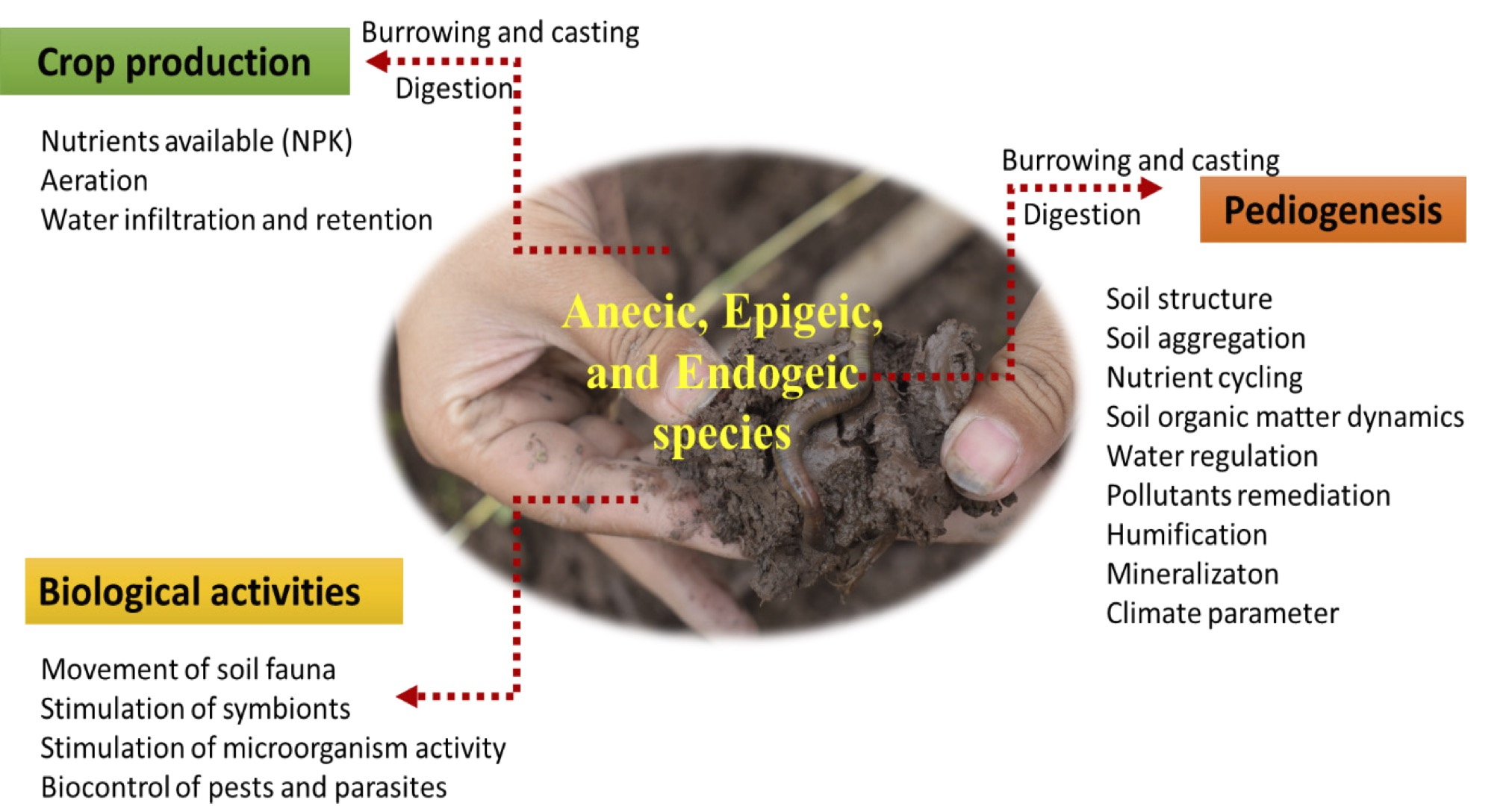
Impact of earthworm species on soil.
Discussion
The finding of current research work is in strong coordination with the work of Briones et al. (2011). They showed that higher carbon, nitrogen and organic matter abundance in soil is related to the presence of various earthworm species in that soil . Earthworms play an important role in pedogenesis i.e. development of soil structure, nutrient cycling, cultural services water regulation, pollution remediation, and climate parameter (Fig. 2). Earthworms modify the soil properties i.e. physical, chemical and biological (act as ecological engineer), helps in soil formation, soil aggregations, nutrient cycling, water holding capacity, and mediate the plant litter effects on soil quality, ; , 2011, 2015; ; (Fig. 2). Hence, earthworm’s population have positive effects on soil fertility, soil health, and plant community composition and productivity . Capowiez et al. (2009) reported that earthworms improve water infiltration, water holding capacity, and enhances soil structure due to the shredding, mixing, and excretion. They remediate the organic pollutants and pesticide detoxification . Many studies reported the earthworm abundance and functions in the soils all over the world and our findings agreed with previous literature ; , 2005; ; ; .
Earthworms play an important role in the formation of soil structure and recycling the nutrients . Earthworms improved the physical, chemical, and biological properties of the soil. They are an important component of soil fertility as it affects physical processes (erosion, runoff, infiltration, aeration, drainage, water retention, soil evaporation, thermal, and mechanical properties of soil), nutrient cycling (mineralization, immobilization, and ion exchange), carbon cycling (respiration, organic inputs, root and microorganism turnover, decomposition, humification, and physical protection of organic matter, and localization of organic matter), and biological activities (movement of soil fauna, and microorganism activity) ; Grdisa et al., 2013; ; (Fig. 2). The soil area is influenced by the earthworms called drilosphere ; and accordingly, in this study, the more earthworm populations also resulted in significant increases in the amount of organic matter in these soil ecological zones. The densities of earthworms belonging to family Megascolecidae and Lumbricidae were positively associated with soil carbon and nitrogen content which have resemblances to our finding .
In the current study, Zone III is rich in nutrients, soil is more porous, aerated and healthy due to presence of earthworm species and our findings agreed with Lavelle et al. (1998) who reported that earthworms are builders of habitats for other organisms. Kernecker et al. (2015) confirmed the effect of soil moisture, vegetation diversity, and soil nutrient concentrations on earthworm species compositions. Therefore, earthworm-induced deviations in the physicochemical properties of soil; modification of soil porosity and aggregation, and greater mineralization of soil oganic matte (SOM), which not only provide the water and oxygen to the plants but also rises the nutrients availability to the plants. It was observed that Lumbricidae, is most important in enhancing the soil quality, which includes the genus Lumbricus, Aporrectodea, Allolobophora, Eisenia, and several others and these findings are in strong accordance with our outcomes showing the soil characteristics from Neelum is due to the presence of Lumbricidae species .
Conclusion
It is concluded from the current research work and field analysis of earthworm species belonging to different families in different soil ecological zones that the distribution and abundance of species vary greatly with the soil formation and structure. Among all the zone the zone with moderate organic matter and contents is suitable for the presence of earthworm species. The effect of temperature also influences the earthworm communities as there were no record of abundance of earthworm was found to be present in cold regions (zone I).
Declarations
Acknowledgements
Authors are thankful to HEC for providing funds for current research work. Rozina Ghulam Mustafa is grateful to HEC that she is doing PhD under the project No 2907 entitled “Diversity and Antimicrobial Activity of Earthworm Species of Azad Jammu and Kashmir”.
Funding
The study received no external funding.
Availability of data and materials
Most of the data generated during this study are included in this article. However, raw data sheets are available from the corresponding as well as co-authors upon reasonable request.
Generative AI and AI assisted technology statement
The authors declare that no generative AI and AI assisted technology was used in the creation of this manuscript.
Statement of conflict of interest
The authors have declared no conflict of interest.
References
- Arancon, N.Q. and Edwards, C.A., 2011. The use of vermicomposts as soil amendments for production of field crops. In: Vermiculture technology: Earthworms, organic wastes, and environmental management (eds. C.A. Edwards, N.Q. Arancon and R. Sherman). CRC Press, Boca Raton. pp. 129–151. [CrossRef]
- Bhatti, H.K., 1962. Earthworms of Lahore. Pak. J. Sci. Res., 14: 16 -33.
- Blakemore, R.J., 2006. Vol. II and Supplemental. Chapters In: A series of searchable texts on earthworm biodiversity, ecology and systematics from various regions of the world (eds. Masamichi T. Ito).
- Blouin, M., Hodson, M.E., Delgado, E.A., Baker, G., Brussaard, L., Butt, K.R., Dai, J., Dendooven, L., Peres, G., Tondoh, J.E., Cluzeau, D. and Brun, J.J., 2013. A review of earthworm impact on soil function and ecosystem services. Eur. J. Soil Sci., 64: 161–182. https://doi.org/10.1111/ejss.12025 [CrossRef]
- Bouche, M.B., 1977. Strategies lombriciennes, In: Soil organisms as components of ecosystems (eds. U. Lohm and T. Persson). Ecol. Bull., 25, Stockholm, Sweden. pp. 122–132. [CrossRef]
- Briones, M.J., Barreal, M.E., Harrison, A.C. and Gallego, P.P., 2011. Earthworm and nitrogen applications to improve soil health in an intensively cultivated kiwifruit orchard. Appl. Soil Ecol., 49: 158-166. https://doi.org/10.1016/j.apsoil.2011.06.002 [CrossRef]
- Brussaard, L., De-Ruiter, P.C. and Brown, G.G., 2007. Soil biodiversity for agricultural sustainability. Agric. Ecosyst. Environ., 121: 233–244. https://doi.org/10.1016/j.agee.2006.12.013 [CrossRef]
- Capowiez, Y., Cadoux, S., Bouchant, P., Ruy, S., Roger-Estrade, J., Richard, G. and Boizard, H., 2009. The effect of tillage type and cropping system on earthworm communities, macroporosity and water infiltration. Soil Tillage Res., 105: 209–216. https://doi.org/10.1016/j.still.2009.09.002 [CrossRef]
- Credie, T.A., Parker, C.A. and Abott, I., 1992. Population dynamics of the earthworm Aporrectodea trapezoides and protein synthesis in reddiosh (Raphanus sativtitu) and lettuce (Lactuca sativa) seedlings. Bio. Fertil. Soils., 9: 288-299.
- Crumsey, J.M., Le, J.M., Capowiez, M.Y., Goodsitt, M.M., Larson, S.C., Kling, G.W. and Nadelhoffer, K.J., 2013. Community-specific impacts of exotic earthworm invasions on soil carbon dynamics in a sandy temperate forest. Ecology, 94: 2827-2837. https://doi.org/10.1890/12-1555.1 [CrossRef]
- Edwards, C.A. and Lofty, J.R., 1982. Nitrogenous fertilizers and earthworm population in agricultural soils. Soil Biol. Biochem., 14: 512-515. https://doi.org/10.1016/0038-0717(82)90112-2 [CrossRef]
- Edwards, W.M., Shipitalo, M.J., Owens, L.B. and Norton, L.D., 1990. Effect of Lumbricus terrestris L. burrows on hydrology of continuous no-till corn fields. Geoderma, 46: 73–84. https://doi.org/10.1016/0016-7061(90)90008-W [CrossRef]
- Frouz, J., Dvorscık, P., Vavrova, A., Dousova, O., Kadochova, S. and Matejıcek, L., 2015. Development of canopy cover and woody vegetation biomass on reclaimed and unreclaimed post-mining sites. Ecol. Engin., 84: 233–239. https://doi.org/10.1016/j.ecoleng.2015.09.027 [CrossRef]
- Frouz, J., Kristufek, V., Liveckova, M., Van-Loo, D., Jacobs, P. and Van-Hoorebeke, L., 2011. Microbial properties of soil aggregates created by earthworms and other factors: Spherical and prismatic soil aggregates from unreclaimed post-miningsites. Folia Microbiol., 56: 36–43. https://doi.org/10.1007/s12223-011-0011-7 [CrossRef]
- Frouz, J., Prach, K., Pizl, V., Hanel, L., Stary, J., Tajovsky, K., Materna, J., Balık, V., Kalcık, J. and Rehounkova, K., 2008. Interactions between soil development, vegetation and soil fauna during spontaneous succession in post mining sites. Eur. J. Soil Biol., 44: 109–121. https://doi.org/10.1016/j.ejsobi.2007.09.002 [CrossRef]
- Ghosh, A.H., 1993. Earthworm resources and vermiculture. Zoological Survey of India, Calcutta.
- Goswami, R., 2015. Determination of ecological diversity indices to assess the interrelationship between earthworm diversity and different habitats of Indian Botanic garden, Howrah, India. Biol. Forum Int. J., 7: 128–136.
- Grdiša, M., Gršić, K. and Grdiša, M.D., 2013. Earthworms role in soil fertility to the use in medicine and as a food. Invert. Surv. J., 10: 38–45.
- Harender, R. and Bhardwaj, M.L., 2001. Earthworms’ role in soil biology. Chandigarh, India.
- Ismail, S.A., 1997. Virmicology: Biology of earthworm. Orient Longman, Hyderabad, India.
- Jalal, F., Qureshi, J.I., Bokhari, S.A., Haque, A., Khalid, Z.M. and Rana, S.A., 2014. Contribution of earthworms to enhance fertility in selected orchards of Faisalabad district. Int. J. Biosci., 5: 75-84. https://doi.org/10.12692/ijb/5.9.75-84 [CrossRef]
- Jimenez, J.J., Mamolarb, E.A., Lavelle, P., 2000. Biometric relationships in earthworms (Oligochaeta). Eur. J. Soil Biol., 36: 45-50. https://doi.org/10.1016/S1164-5563(00)01047-5 [CrossRef]
- Jones, H.D., Santoro, G., Boag, B. and Neilson, R., 2001. The diversity of earthworms in 200 Scottish fields and the possible effect of New Zealand flatworms (Arthurdendyus triangulates) on earthworm populations. Annls appl. Biol., 139: 75–92. https://doi.org/10.1111/j.1744-7348.2001.tb00132.x [CrossRef]
- Julka, J.M., 2001. Earthworm diversity and its role. In: Agroecosystem; VII National symposium on soil biology and ecology. pp. 13-17.
- Julka, J.M., 2005. Earthworms as bio-indicators in conservation areas (Abstract). National Seminar on vermitechnology and waste management. Mangalore University, Mangalore. pp. 28-29.
- Kernecker, M., Whalen, J.K. and Bradley, R.L., 2015. Agricultural management and flooding shape habitats for non-native earthworms in southern Quebec, Canada. Appl. Soil Ecol., 96: 240-250. https://doi.org/10.1016/j.apsoil.2015.08.011 [CrossRef]
- Khan, A.A., 2012. Earthworm- The soil ecosystem engineers. Farm Outlook, 11: 13 -19.
- Lavelle, P., Baroid, I., Blanchart, E., Brown, G., Brussaard, L., Decaens, T., Fragoso, C., Limenez, J.J., Kajondo, K.K., Martinez, M.A., Moreno, A., Pashanasi, B., Senapati, B. and Villenave, C., 1998. Earthworms as a resource in tropical agro ecosystems. Nat. Resour., 34: 26-41.
- Lavelle, P., Spain, A., Blouin, M., Brown, G., Decaëns, T., Grimaldi, M., Jiménez, J.J., McKey, D., Mathieu, J., Velasquez, E. and Zangerlé, A., 2016. Ecosystem engineers in a self-organized soil: A review of concepts and future research questions. Soil Sci., 181: 91–109. https://doi.org/10.1097/SS.0000000000000155 [CrossRef]
- Lavelle, P. and Spain, A.V., 2001. Soil Ecology. Kluwer Academic Publicher, Dordrecht, Netherlands. https://doi.org/10.1007/978-94-017-5279-4 [CrossRef]
- Lu, M.Z., Lv, X.G., Guan, Q. and Wu, H.T., 2015. Effects of earthworm on greenhouse gas emission from soil and its mechanism. Acta Pedol. Sin., 52: 1209–1225.
- Medina-Sauza, R.M., Álvarez-Jiménez, M., Delhal, A., Reverchon, F., Blouin, M., Guerrero-Analco, J.A., Cerdán, C.R., Guevara, R., Villain, L. and Barois, I., 2019. Earthworms building up soil microbiota, a review. Front. environ. Sci., 7: 81. https://doi.org/10.3389/fenvs.2019.00081 [CrossRef]
- Mohan, M. and Shylesh-Chandran, M.S., 2010. Ramasamy, E.V. vulnerable earthworm species identified from Nilgiri biosphere reserve. Int. J. zool. Res., 7: 410-413. https://doi.org/10.3923/ijzr.2011.410.413 [CrossRef]
- Mudrak, O., Uteseny, K. and Frouz, J., 2012. Earthworms drive succession of both plant and Collembola communities in post-mining sites. Appl. Soil Ecol., 62: 170–177. https://doi.org/10.1016/j.apsoil.2012.08.004 [CrossRef]
- Olsen, S.R. and Sommers, L.E., 1982. Phosphorus. In: Methods of soil analysis, Agron (ed. A.L. Page). No. 9, Part 2: Chemical and Microbiological Properties, second ed. American Society Agronomy, Madison, WI, USA. pp. 403–430. https://doi.org/10.2134/agronmonogr9.2.2ed.c24 [CrossRef]
- Pelosi, C., Bertrand, M., Capowiez, Y., Biozard, H. and Estrade, J.R., 2009. Earthworm collection from agricultural fields: Comparisons of selected expellants in oresence/ absences of hand-sorting. Eur. J. Soil Biol., 45: 176-183. https://doi.org/10.1016/j.ejsobi.2008.09.013 [CrossRef]
- Rajiv, K.S., Sunil, H., Sunita, A., Ravi, A. and Emilio, C., 2004. Vermiculture and waste management: Study of action of earthworms Elsinia foetida, Eudrilus euginae and Perionyx excavates on biodegradation of some community wastes in India and Australia. Earthworms Environ. Sci., 22: 261-268. https://doi.org/10.1023/A:1016583929723 [CrossRef]
- Ranson, T.S., Billa, B.J., 2015. Differences in soil characteristics between field and forest may influence the distribution of an invasive earthworm. Inverteb. Biol., 134: 78–87. https://doi.org/10.1111/ivb.12078 [CrossRef]
- Sanchez-Hernandez, J.C., Aira, M., Domínguez, J., 2014. Extracellular pesticide detoxification in the gastrointestinal tract of the earthworm Aporrectodea caliginosa. Soil Biol. Biochem., 79: 1-4. https://doi.org/10.1016/j.soilbio.2014.08.012 [CrossRef]
- Sautter, K.D., Brown, G.G., James, S.W., Pasini, A., Nunes, D.H. and Benito, N.P., 2006. Present knowledge on earthworm biodiversity in the State of Parana, Brazil. Eur. J. Soil Biol., 42: 296–300. https://doi.org/10.1016/j.ejsobi.2006.07.038 [CrossRef]
- Sheu, S., 2003. Effects of earthworms on plant growth patterns and perspecitves. Pedobiologia, 47: 846–856. https://doi.org/10.1078/0031-4056-00270 [CrossRef]
- Sims, R.W. and Gerard, B.M., 1985. Earthworms. Keys and notes to the identification and study of the Species. Synopsis of the British Fauna (New series). Estuarine and Brackish-Water Sci. Assoc., 31: 171.
- Tsai, C.F., Shen, H.P. and Tsai, S.C., 2000. Native and exotic species of terrestrial earthworms (Oligochaeta) in Taiwan with reference to northeast Asia. Zool. Stud., 39: 285–94.
- Watanabe, F.S. and Olsen, S.R., 1965. Test of an ascorbic acid method for determining phosphorus in water and NaHCO3 extracts from soil. Soil Sci. Soc. Am. J., 29: 677-678. https://doi.org/10.2136/sssaj1965.03615995002900060025x [CrossRef]
- Yu, J.G., Hu, F., Li, H.X., Wang, Q.J. and Wang, T., 2010. Effects of earthworm inoculation on distribution, stability and organic carbon storage of soil aggregate. J. Soil Water Conser., 24: 175–179.

Services
Article usage statistics
Loading…
Related articles
- Distribution and Abundance of Vertebrate Pests of Cultivated Maize and their Eco-Friendly Management in District Bagh, Azad Jammu and Kashmir, PakistanPakistan Journal of Zoology · 2020
- Diversity and Distribution of Lizards (Reptilia: Sauria) in District Muzaffarabad, Azad Jammu and Kashmir (Pakistan)Pakistan Journal of Zoology · 2026
- Virulence and Distribution Trends of Root-Knot Nematode (RKN) Fauna on Summer Vegetables in District Bagh, Azad Jammu and Kashmir (Pakistan)Pakistan Journal of Nematology · 2020
- Distribution, Dietary Breadth and Niche Overlap between Two Sympatric Mongoose Species Inhabiting Pir Lasura National Park, Azad Jammu and Kashmir, PakistanPakistan Journal of Zoology · 2019
- Species Distribution, Abundance and Diversity of Mosquitoes (Diptera: Culicidae) in District Jhelum (Punjab, Pakistan)Pakistan Journal of Agricultural Research · 2022
- Systematics, Host Plants and Distribution of Aphids (Hemiptera: Aphididae) Infesting Tree Flora in Azad Kashmir, PakistanSarhad Journal of Agriculture · 2019