
Skincare cosmeceuticals have been in high demand since ancient times and are generally used to improve skin appearance and slow the aging process. As organically derived skincare products are of prime focus these days, the principal objective of this research work was to fabricate and evaluate different water-in-oil and oil-in-water skincare formulations comprising lip balm, face brightening cream, moisturizing cream, and face wash made by the hive products of the honeybee (Apis mellifera L.), including honey, beeswax, and propolis. These naturally derived formulations were evaluated for physicochemical and organoleptic properties, including spreadability, thermal stability, pH, consistency, melting point, fragrance, color, washability, and irritation tests. Formulations were optimized based on pH and other organoleptic parameters. All factors fell within the acceptable/desirable ranges. Among the formulations, F2 of the face brightening cream, lip balm, and moisturizing cream, and F3 of the face wash, showed good viscosity, spreadability, and consistency, along with a neutral pH. Study results clearly demonstrate the promising potential of naturally derived formulations containing a specific ratio of natural honey and beeswax as natural antioxidants, emulsifiers, and emollients. However, future research should further explore the cosmetic benefits of beeswax and honey, their potential incorporation into organic skincare formulations, and their large-scale evaluation.
Research Article · Online First, Pages 1–11, 17 November 2026 · Open Access
Fabrication and Evaluation of Natural Cosmeceutical Formulations Based on Honeybee (Apis mellifera L.) Hive Products
, , , , ,
Affiliations & Notes ⌄
- 1School of Zoology, Minhaj University, Lahore, Pakistan
- 2Department of Zoology, Lahore College for Women University, Lahore, Pakistan
- 3Department of Entomology, University of Sargodha, Sargodha, Pakistan
- 4Department of Veterinary and Animal Sciences, University of Sargodha, Sargodha, Pakistan
- *Correspondence | Muhammad Zeeshan Majeed; Email: zeeshan.majeed@uos.edu.pk
Article Info ⌄
- Journal:
- Pakistan Journal of Zoology
- Submitted Date:
- 1 August 2026
- Revision Date:
- 25 September 2026
- Accepted Date:
- 6 October 2026
- Published Date:
- 17 November 2026

Abstract
Introduction
Human skin serves as the body’s primary protection against external elements, and signs of aging are most pronounced there. Skin aging signs may adversely affect an individual’s psychological well-being . People use many skincare products to mitigate and slow skin aging. Raymond Reed, a founding member of the United States Society of Cosmetic Chemists, coined the term cosmeceuticals in 1961 . Cosmeceuticals are hybrid products that enhance skin health and appearance by affecting its biological texture and function ; . However, cosmetics based on synthetic chemicals are usually harmful to the skin, and rising consumer awareness of herbal or organic products has driven increased demand for natural ingredients used in cosmetic formulations . The growing demand for natural cosmeceuticals has opened up new opportunities in the cosmeceutical business .
Honey is a sweet, syrupy fluid created by the honeybees from floral nectar. It is consumed as a sweetener and has great medicinal value . Naturally, honey consists of 76–80% glucose and fructose, 17–20% water, and mineral salts, wax, and pollen . It includes trace levels of vitamins (B2, B4, B5, B6, B11, and C) and minerals such as iron, calcium, zinc, phosphorus, potassium, selenium, magnesium, manganese, and chromium. Flavonoids, particularly pinocembrin, are unique to bee propolis and honey and are the major antioxidants in honey. Darker honey has high antioxidant levels. Honey contains acetic, formic, butanoic, citric, succinic, gluconic, lactic, malic, pyroglutamic, and aromatic acids. Bee honey does not contain cholesterol ; .
Moreover, beeswax is also a valued product synthesized by the honeybees during the construction of their honeycombs. It is a solid, yellowish, non-glycerin material composed of fats and oils . Pure beeswax is white, but when pollen and other impurities are present, it becomes yellow . Because of its many advantages, beeswax is used as a natural base in various dermatological products such as creams and balms ; . It primarily consists of free fatty acids, esters, hydrocarbons, hydroxy mono- and polyesters, and fatty acid polyesters . It includes natural substances that help the skin retain moisture, which is especially beneficial for dry and chapped lips. Beeswax contains trace levels of natural antibacterial agents that can help prevent unpleasant infection-related inflammation ; . Beeswax is also rich in vitamins, particularly vitamin A, which minimizes wrinkles, protects the skin from UV radiation, aids wound healing, and accelerates skin cell repair . Beeswax is currently used in cosmetics. Since antiquity, basic ointment and cream formulae have combined herbal oils and beeswax in varying quantities to achieve the desired consistency. Beeswax has zero irritation potential and a comedogenicity rating of 0-2, which means that beeswax when used correctly in the cosmetic formulations does not clog the pores or cause any other problem, but will bring a slew of very positive attributes to cosmetic products, such as softening and general healing, antiseptic property, and emollient feels ; .
In addition to honey and beeswax, another resinous material known as bee glue, or propolis, is gathered by honeybees from diverse plant sources and used to repair honeycombs and smooth comb walls . Propolis has many therapeutic and cosmetic uses and is increasingly used as a nutritional supplement . Unlike many ‘natural’ medicines, propolis has a substantial database of its biological activity and toxicity, showing that it may have several antibacterial, antifungal, antiviral, and antitumor effects ; . It is the most significant “chemical weapon” of bees against disease-causing germs, and humans have used it as a medicinally important compound since ancient times. It is used to treat skin burns and wounds, stomach ulcers, sore throat, and other ailments . The primary constituents of propolis include fatty, aliphatic, and aromatic acids, flavonoids, alcohols, esters, sugars, and terpenes ; . Propolis’ antibacterial action should be assessed in two aspects. First, it directly affects microbes; second, it stimulates the immune system, activating the organism’s inherent defenses .
Currently, the skincare and cosmetic sectors increasingly advocate incorporating natural components into the production of natural, organically based cosmetic products. There is a growing need for new natural goods that address consumers concerns about their health and safety, as well as their desire for a decent, pleasing look. To this end, this research aimed to prepare, characterize, and evaluate different skincare products or cosmeceuticals, including lip balm, face brightening cream, anti-inflammatory and anti-acne face wash, and moisturizing cream, from honey, beeswax, propolis, and pollen derived from A. mellifera hives.
Materials and Methods
This research work was conducted at the Entomology Research Laboratory of the Lahore College for Women University, Lahore, and the Pakistan Council of Scientific and Industrial Research (PCSIR) Cosmetic Laboratory, Lahore, Pakistan.
Chemicals
The study procured most chemical ingredients from reputable scientific suppliers. These chemicals included methyl paraben, stearic acid, glyceryl monostearate, paraffin oil, beeswax, honey, propolis, Cetiol® CC, lanoline, borax, xanthan gum, propyl paraben, glycerin, propylene glycol, carbopol, tri-ethanolamine, isopropyl myristate, distilled water, and mineral oils.
Preparations of the beeswax sample
Honeycombs were taken out from the hive and were initially cleaned by removing the bee-brood and other bee-derived materials from each cell. To extract crude beeswax, cleaned honeycombs were immersed in a water bath and gradually heated until the wax melted and rose to the water surface. The molten wax was then filtered through silk screen fabric to remove comb debris from the wax-water mixture. The cloth was pressed to retrieve all the wax. The wax-water combination was cooled to room temperature (25 °C). The raw beeswax was retrieved and further processed by melting it again in water and filtering it through cheesecloth to remove minute particles left over from the previous extraction stage. Before storage, the filtered beeswax was air-dried (Svečnjak et al., 2019).
Preparation of lip balm formulation
Three lip balm formulations were fabricated at room temperature using the protocol described by Kusrini et al. (2020), with minor modifications. In brief, beeswax was cut and grated to get a mesh of uniform, small particles. Then, 10 mL of a 1:1 almond-to-olive oil mixture was placed in a 50 mL beaker and stirred with an electromagnetic stirrer until homogeneous, after which 2.5 mL of honey and 1.0 mL of distilled water were added under continuous stirring. Then, 2.5 g of homogeneous beeswax was slowly poured into the mixture until all beeswax was melted and dissolved. The prepared lip balm was placed in a sterilized plastic container for 10 min. The effect of temperature was evaluated over a range of 25–60 °C to determine the optimal temperature for producing a lip balm with a homogeneous texture and desirable safety characteristics.
Fabrication of brightening cream formulations
With minor adjustments, we used the method of Nong et al. (2023) to prepare an anti-aging whitening face cream. We prepared four distinct cream formulations, each with a different percentage of jojoba oil, olive oil, vitamin E oil, and beeswax (Table I). The olive oil-to-beeswax ratio was set at 1:2. Controls were emulsions without olive oil. To prepare the lipid phase, beeswax and emulsifying wax were melted in a water bath at 80°C before adding dicaprylyl carbonate emollient (Cetiol® CC, BASF) and olive oil. The aqueous phase was heated in a water bath at 80 °C and contained glycerin, guar gum, and ultrapure water. After heating, the lipid phase was progressively mixed into the aqueous phase with steady magnetic stirring to generate a pre-emulsion, which was then exposed to 3 min of high-shear homogenization at 8000 rpm. The emulsion was then cooled to room temperature (25 °C). Once the emulsion appeared homogeneous, vitamin E oil was added and mixed manually.
Preparation of moisturizing cream formulations
Moisturizing cream formulations were prepared extemporaneously following the protocol described by Maru and Lahoti (2019), which exhibited no observable signs of physical instability such as creaming, cracking, bleeding of the cream base from the container, or phase inversion. We assessed physical instability immediately after manufacturing and again after 24 h at room temperature (25 °C). Initial formulation development was performed in 25 g batches, and any formulation that showed evidence of physical instability immediately or after 24 h at room temperature (25 °C) was deemed undesirable and not further investigated. The moisturizing cream formulation evolved from a prototype moisturizing cream formulation based on triethanolamine and employing beeswax and stearic acid alone and in combination. The oil-in-water emulsion cream was prepared by first melting beeswax at 70–80 °C, followed by the addition of liquid paraffin, stearic acid, glyceryl monostearate, and lanoline to the molten mixture. Isopropyl myristate, glycerin, triethanolamine, propylene glycol, and water were heated to the same temperature as that of the oil phase. To make a uniform mixture, both phases were mixed progressively with constant stirring. Perfume was applied when the temperature dropped to 35 °C. Before mixing, stabilizers were added to the water phase. Different formulations were developed by combining variable quantities of ingredients (Table II).
Table I. Composition (%) of different formulations of face brightening cream prepared from honeybee (A. mellifera) beehive products.
| Ingredients | Formulation | Control | |||||
| F1 | F2 | F3 | C1 | C2 | C3 | ||
| Olive oil | 3 | 6.3 | 4.7 | --- | --- | --- | |
| Vitamin E oil | 1 | 1 | 1 | 1 | 1 | 1 | |
| Beeswax | 6 | 12.7 | 9 | 9 | 14 | 19 | |
| Honey | 2 | 2.5 | 3.5 | 3 | 6 | 9 | |
| Jojoba oil | 4.5 | 4.5 | 4.5 | 4.5 | 4.5 | 4.5 | |
| Emulsifying wax | 9 | 9 | 9 | 9 | 9 | 9 | |
| Glycerin | 3 | 3 | 3 | 3 | 3 | 3 | |
| Guar gum | 0.5 | 0.5 | 0.5 | 0.5 | 0.5 | 0.5 | |
| Ultrapure water | 73 | 63 | 68 | 73 | 68 | 63 | |
Table II. Composition (%) of different moisturizing cream formulations made from honeybee (A. mellifera) beehive products.
| Ingredients | Formulations | |||
| F1 | F2 | F3 | F4 | |
| Stearic acid | 1 | 2 | 2 | 1 |
| Beeswax | 1 | 2 | 4 | 2 |
| Honey | 1 | 2 | 3 | 2 |
| Paraffin oil | 8 | 8 | 8 | 8 |
| Lanoline | 1 | 1 | 1 | 1 |
| Glyceryl monostearate | 3 | 3 | 3 | 3 |
| Glycerin | 4 | 4 | 4 | 4 |
| Propylene glycol | 4 | 4 | 4 | 4 |
| White mineral oil | 2 | 2 | 2 | 2 |
| Borax | 0.2 | 0.2 | 0.2 | 0.2 |
| Methyl paraben | 0.03 | 0.03 | 0.03 | 0.03 |
| Propyl paraben | 0.07 | 0.07 | 0.07 | 0.07 |
| Distilled water | 60 | 60 | 60 | 60 |
Formulation of face wash
Neem and mint leaves were obtained from the Botanical Garden of Lahore College for Women University, Lahore, and the propolis was extracted from the honeycomb, and turmeric was obtained from the local market of Lahore. Neem leaves, mint leaves, propolis, and pollen were dried in a hot air oven at 45°C and ground into small pieces with a grinder. Pollen was ground into powder. The desired quantities of materials were weighed, and each was macerated with 100 mL of ethanol in a conical flask and allowed to mingle for 3 days, with gentle shaking of the flask. After 3 days, the contents were filtered using a simple filtration process, and the filtrates were collected in separate containers . The extract was filtered twice using a Whatman No. 1 filter paper funnel. The filtrates were allowed to evaporate in an electronic water bath cum evaporating pan at 60 °C until the necessary extract concentration was reached.
Development of face wash formulation
Carboxymethylcellulose (CMC) was dissolved in distilled water, and the beaker was set aside to allow CMC to expand and form a gel. Distilled water and the required amounts of methyl paraben and propylparaben were dissolved by boiling in a water bath at 80 °C. The solution was cooled before adding propylene glycol and sodium lauryl ether sulfate (SLES). The required quantity of extract was added to the aforementioned combination, and this solution was continuously stirred into the CMC gel. Triethanolamine was added dropwise to adjust the pH and achieve the required gel consistency (Table III).
Table III. Composition of different formulations of moisturizing cream prepared from honeybee (A. mellifera) beehive products.
| S. | Ingredients | F1 | F2 | F3 |
| 1 | Ethanolic extract of propolis, pollens and neem leaves | 0.5 g | 1 g | 0.3 gm |
| 2 | CMC | 0.5 g | 1.5 g | 2 gm |
| 3 | Methyl paraben | 0.03 g | 0.06 g | 0.06 gm |
| 4 | Propyl paraben | 0.03 g | 0.03 g | 0.03 gm |
| 5 | Triethanolamine | 0.25 ml | 0.35 ml | 0.40 ml |
| 6 | Propylene glycol | 1 ml | 2.5 ml | 1.5 ml |
| 7 | Sodium lauryl ethyl sulfate | 1 g | 2.5 g | 3.5 gm |
| 8 | Distilled water | 30 ml | 30 ml | 30 ml |
Evaluations of prepared cosmeceutical formulations
Different parameters, such as pH, spreadability, thermal stability, moisture content, particle size measurement, melting point, microbial and irritant tests, dye tests, homogeneity, appearance, and after-feel tests, were all used to define skincare cosmetics.
The pH of prepared formulations was determined using a pH meter at 25°C . The spreadability of test samples was assessed as follows: about 0.5 g of test formulation was placed within a 1.0 cm diameter circle pre-marked on a glass plate, which was then placed on a second glass plate. For 5 min, a 500 g weight was allowed to rest on the upper glass plate. Spreadability refers to the area on the glass slide covered by a particular volume of cream sample after its uniform distribution. The spread of the tested mixture increased the diameter .
The thermal stability of the prepared formulations at 20, 30, and 40°C was evaluated according to the Indian standards . The SMPI melting point apparatus (Model SMP10) was used to measure the formulations’ melting points. A small amount of lip balm was put in the apparatus’s capillary tube and heated. The melting point was defined as the point at which the first liquid formed . The homogeneity test was carried out by hand contact. The cream’s general appearance was determined by studying its color, opacity, and other characteristics .
The consistency of the formulation was determined by hand . The extent and ease of washing the formulations were assessed manually after applying them to the skin . After applying the herbal cream to the skin, the features such as emollient nature, slipperiness, and the amount of cream remaining on the skin were evaluated . For foamability assessment, a small amount of face wash gel was added to a glass beaker containing water. After recording the initial volume, the mixture was stirred about ten times, and the final volume was then recorded . For the irritation test, a dorsal left-hand surface region was selected. The formulas were applied to the designated area of 50 volunteers representing different age groups, and the time was recorded. Irritation, erythema, and edema were monitored at regular intervals for up to 24 h .
Statistical analysis
GraphPad Prism (version 4) was used to analyze the studied parameters. Mean ± SEM was determined for pH, spreadability, and melting point variables. Graphs were drawn in MS Excel. Normality was confirmed using Kolmogorov–Smirnov and Shapiro–Wilk tests (p > 0.05).
RESULTS
Characterization of lip balm formulations
Physical properties
The effect of three temperature regimes, i.e., room temperature (25°C) and 40 and 60°C, was assessed on the color, shape, texture, and odor of the lip balm formulations during the shelf life. These naturally derived formulations used honeybee (A. mellifera) hive products, including honey and beeswax, which typically serve as preservatives, flavoring agents, and emollients. The manufactured lip balm exhibited different colors based on the ingredients used: yellow (due to yellow beeswax), white (due to white beeswax), and green (due to the addition of a trace amount of green food coloring), as shown in Figure 1. The lip balm maintained a pleasant honey odor and a smooth texture throughout the 8-week observation period. Dyes were used to give the skincare cosmetic products a distinct and appealing appearance. At room temperature, the lip balm formed a decent layer but remained stable after six hours. However, at 50 °C, the applied lip balm developed a thinner layer after six hours. Similarly, at 20°C, the lip balm developed a lumpy texture after six hours.
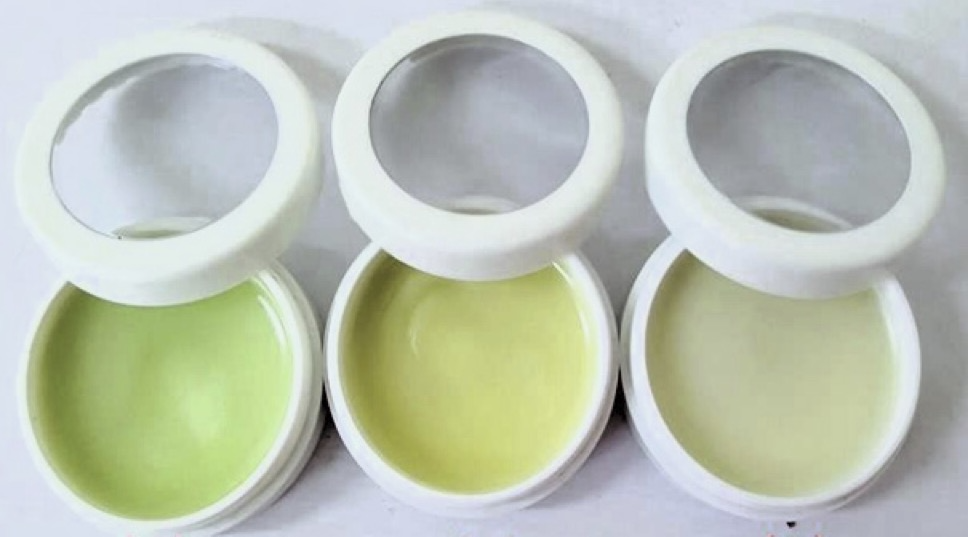
Different lip balm formulations prepared from the honeybee products.
pH value
For the pH of 1.0% aqueous solution of the lip balm formulations, mean ± SEM values were 7.87 ± 0.09, 6.90 ± 0.06, 9.47 ± 0.26, and 10.23 ± 0.14 for formulations F1, F2, F3, and F4, respectively. As shown in Table IV, formulation F2 was the best and safest for the skin, with a mean pH of 6.90 ± 0.06, close to neutral pH.
Melting point
The beeswax content in the formulation usually influences the lip balm’s melting point. Three different beeswax concentrations (1, 2, and 3 g) produced distinct outcomes. The melting point of the lip balm increased with higher beeswax content, as shown in Figure 2.
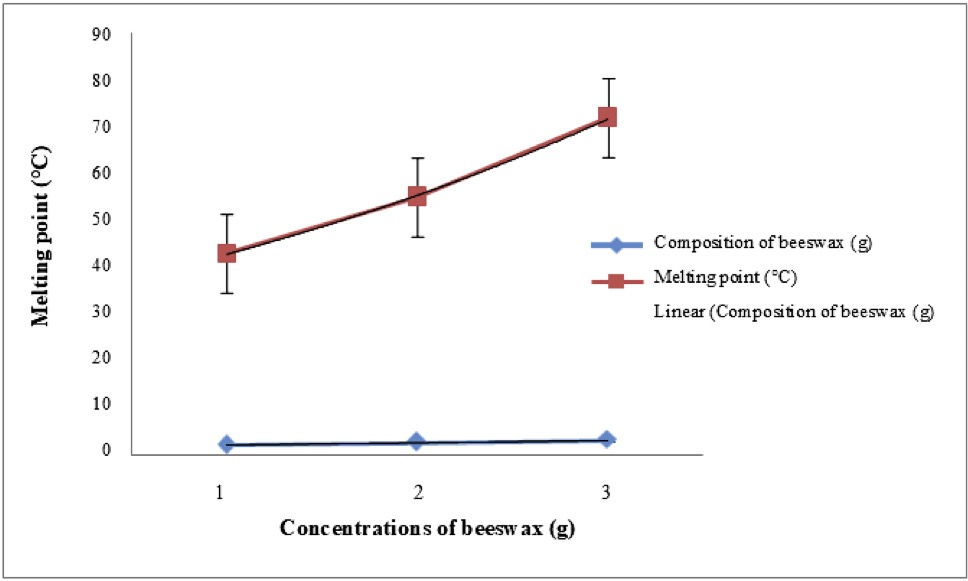
Effect of different concentrations of beeswax on the melting point of lip balm formulation.
Evaluation of brightening cream formulations
pH value
Prepared brightening cream formulations has been shown in Figure 3. Results showed substantial differences among all brightening cream formulations (Table IV). The pH of the samples varied because of the different concentrations of jojoba oil and beeswax used in the 1:2 ratio. F2 had the best pH among the samples, with 4 jojoba oil, vitamin E oil, and beeswax in the formulation. Because beeswax is an acidic component, samples F1 and F3 were acidic and basic, respectively, due to varying amounts of beeswax. However, the F2 brightening cream formulation had a more neutral pH than F1 and F3 because it contained more jojoba oil and less beeswax; the inclusion of oil may have contributed to the formulation’s neutral pH of 6.8, which went beyond beeswax. Because neutral pH helps to delay the adverse effects, the shelf life of a cream formulation can be extended.
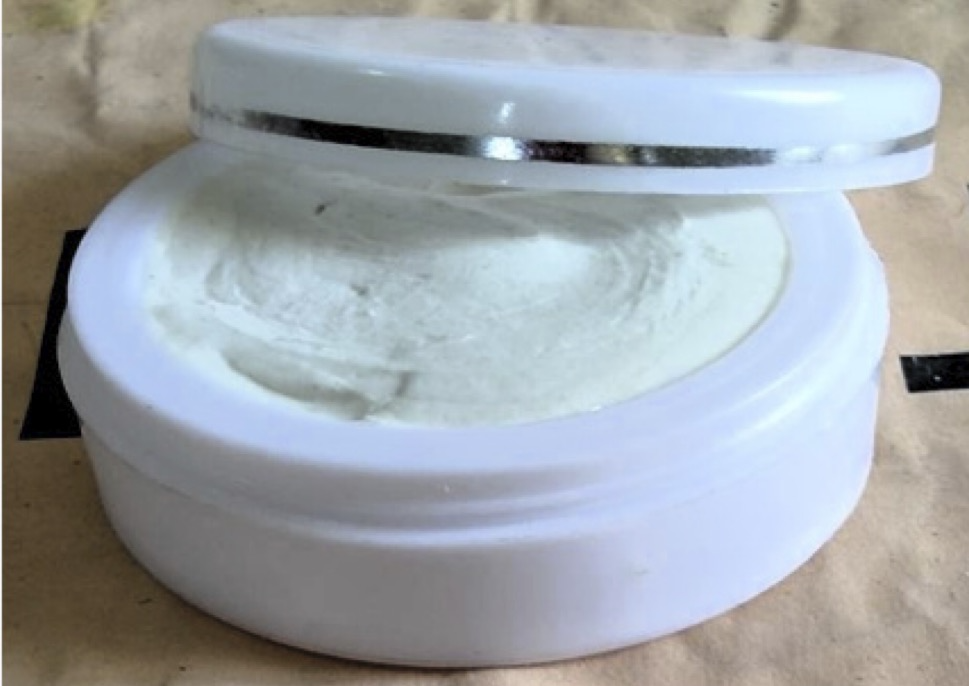
Face brightening cream formulation prepared from the honeybee products.
Table IV. Average pH values (mean ± SEM) of different skincare formulations prepared in this study from honeybee (A. mellifera) beehive products.
| F1 | F2 | F3 | F4 | |
| Lip balm formulations | ||||
| Mean (pH values) | 7.86 | 6.90 | 9.46 | 10.2 |
| Std. Deviation | 0.15 | 0.10 | 0.45 | 0.25 |
| Std. Error of Mean | 0.08 | 0.05 | 0.26 | 0.14 |
| Brightening cream formulations | ||||
| Mean (pH values) | 4.26 | 6.80 | 5.70 | 7.86 |
| Std. Deviation | 0.25 | 0.26 | 0.20 | 0.15 |
| Std. Error of Mean | 0.14 | 0.15 | 0.11 | 0.08 |
| Moisturizing cream formulations | ||||
| Mean (pH values) | 4.86 | 6.70 | 5.70 | 7.86 |
| Std. Deviation | 0.15 | 0.20 | 0.20 | 0.15 |
| Std. Error of Mean | 0.08 | 0.11 | 0.11 | 0.08 |
| Face wash formulations | ||||
| Mean (pH values) | 4.73 | 5.33 | 6.80 | - |
| Std. Deviation | 0.25 | 0.15 | 0.26 | - |
| Std. Error of Mean | 0.14 | 0.08 | 0.15 | - |
Storage stability
No statistically significant difference was found among the formulations F1, F2, and F3 of brightening creams at storage temperatures (25 ± 2°C). All of the controls, on the other hand, demonstrated unstable antioxidant activity at storage temperatures.
Color observation
After 8 weeks of storage, the overall color of the F2 brightening cream showed no discernible variation. The results showed high stability, with no visible color variation across samples at different temperatures. Temperature stability values increased in direct proportion to the jojoba oil content in the formulations. As a result, no formulations showed significant changes in hue.
Irritation and other organoleptic parameters
Table V shows the outcomes of the different applied and organoleptic parameters of the brightening cream formulations. For irritation testing, the prepared samples were applied to a selected surface area on the dorsal side of the left hand, and time was recorded to observe irritancy. The results showed no irritation, erythema, or edema. Irritation, erythema, and edema were evaluated at regular intervals for up to 24 h.
Table V. Organoleptic parameters of brightening cream formulations prepared in this study from honeybee (A. mellifera) beehive products.
| S. | Parameters | Observations |
| 1 | Odor | Slightly aromatic |
| 2 | Washing capability | Easily cleaned |
| 3 | Consistency | Demonstrates good consistency |
| 4 | Grittiness | Non gritty |
| 5 | Homogeneity | Visual and tactile homogeneity |
| 6 | Patch testing | Show no signs of hypersensitivity |
Evaluation of moisturizing cream formulations
pH value
The pH of moisturizing cream formulation F2 (Fig. 4) was determined to be about 6.80 ± 0.15, within the neutral pH range, as shown in Table V.
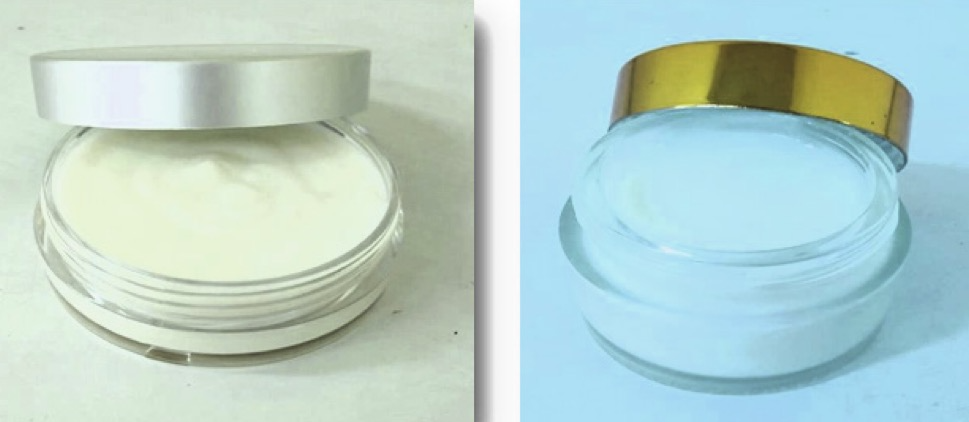
Moisturizing cream formulation prepared from the honeybee products.
Thermal stability, spreadability, and other organoleptic parameters
Thermal stability, viscosity, and spreadability are the primary factors that determine the acceptance of skin care cosmetics during storage and handling. All moisturizing cream formulations demonstrated improved thermal stability at temperatures ranging from 30°C to 39°C and 45°C. The spreadability of all moisturizing cream formulations was measured, and the findings revealed that only the F2 formulation exhibited more spreadability than the other formulations (F1, F3, and F4). Other organoleptic parameters showed that the moisturizing cream formulation had a pleasant odor, smooth application, no skin irritation, and good consistency and stability (Table VI).
Evaluation of face wash formulations
Three different face wash formulations were prepared using different propolis and other ingredients with different characteristics (Table VII). The F3 formulation showed the best results for anti-inflammatory and anti-acne activity and for the assessment parameters among the prepared formulations.
Table VI. Organoleptic parameters of moisturizing cream formulations prepared in this study from honeybee (A. mellifera) beehive products.
| S. No | Parameters | Observations |
| 1 | Color | Cream color |
| 2 | Odor | Pleasant characteristic |
| 3 | Irritability | There should be no irritation |
| 4 | Feel on application | Skin that is smooth and supple |
| 5 | Stability | It was steady after 8 weeks |
| 6 | Consistency | Demonstrates good consistency |
| 7 | Wash ability | Simple to clean |
Table VII. Characteristics of different ingredients used in the preparation of different face wash formulations.
| S. No. | Formulation ingredients | Characteristics |
| 1 | Ethanolic extract of propolis, pollens, mint and neem leaves | Antibacterial |
| 2 | CMC | Gelling agent |
| 3 | Methyl paraben | Preservative |
| 4 | Propyl paraben | Preservative |
| 5 | Triethanolamine | Neutralizer |
| 6 | Propylene glycol | Humectant |
| 7 | Sodium lauryl ethyl sulfate | Foaming agent |
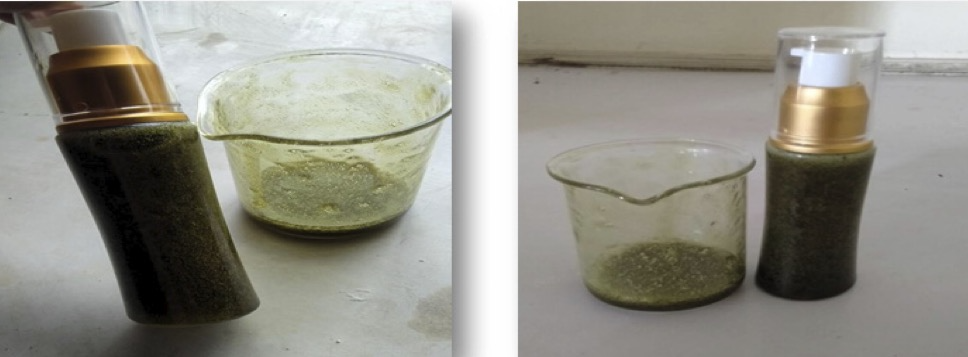
Moisturizing cream formulations prepared from the honeybee products.
The color of the face wash formulations was visually examined and found to be green, as shown in Figure 5. The formulation also had a pleasant odor. The consistency of the face wash formulation was determined manually and was recorded as semisolid. The pH of the formulation, as determined for a 1.0 percent aqueous solution, was 4.73, 5.33, and 6.80 for F1, F2, and F3 formulations of face wash, respectively (Table IV). To evaluate the foamability, a small amount of face wash gel was taken in a beaker filled with water. The beaker was shaken vigorously. After shaking, the results indicated foam formation. The spreadability was determined using the formula given below:
Where S denotes the spreadability, M indicates the weight in the pan, L is the length moved by the glass slide, and T is the time taken to separate the slides from each other. The best spreadability values for face wash formulations were 2.65 ± 0.233 g.cm sec-1 (Table VIII).
Table VIII. Average spreadability values (g.cm sec-1) (mean ± SEM) of face wash formulations prepared in this study from honeybee (A. mellifera) beehive products.
| F1 | F2 | F3 | |
| Mean (Spreadability) | 4.8531 | 6.3634 | 2.6571 |
| Std. deviation | 0.0351 | 0.0513 | 0.0404 |
| Std. error of mean | 0.0203 | 0.0296 | 0.0233 |
DISCUSSION
Humans have always been curious about their skin. Everyone wants young, beautiful skin and takes several measures to tone it up and reduce wrinkles, acne, pimples, and other signs of aging. Nowadays, most of us prefer natural ingredients over synthetic cosmeceutical skincare products. Natural remedies are widely accepted because many believe they are safer and have fewer side effects than synthetic alternatives. A natural skin cosmetic should moisturize, hydrate, and nourish the skin with no or negligible side effects ; .
This research aimed to fabricate and evaluate multipurpose skincare products, including lip balm, brightening cream, anti-acne face wash, and moisturizing cream formulations, using honeybee-derived natural products such as beeswax, honey, propolis, nectar, and pollens. and botanical oils. According to the current literature, all chosen ingredients have demonstrated significant antimicrobial and antioxidant activity ; . Natural cosmetics not only nourish the skin’s inner layer but also protect it from damage . A crucial ingredient in cosmeceuticals is an antioxidant, which the skin needs. This helps to protect skin cell membranes from damage caused by environmental pollution, UV rays, and other external stressors ; .
All skincare formulations prepared in this study were evaluated for their organoleptic parameters. The study evaluated texture, pH, thermal stability, irritation, and melting point for three lip balm formulations prepared with different concentrations of beeswax, honey, olive oil, and almond oil. Results showed that the organic lip balm formulation with an adequate amount of beeswax was the most effective, based on lab testing and volunteers’ satisfaction. These findings are consistent with those of Yusof et al. (2018) and Kusrini et al. (2020). The lip balms also include organic fragrance and colorant, which enhance their pleasant color and scent. These lip balms are specially formulated with organic ingredients to moisturize, relieve, nourish, and repair chapped lips. They can be applied daily to enhance lip brightness, elasticity, and suppleness. These findings align with reports from similar previous studies ; .
Honey and other beehive products, such as beeswax, are well known for their medicinal properties, and their use in skincare cosmetics in both modern and traditional medicine includes ayurvedic preparations. In this study, we developed and formulated an organic face-brightening cream. The moisturizing cream was an oil-in-water (O/W) emulsion, making it easy to wash off with plain water, thus improving customer compliance. Amid the increasing global demand for natural skincare products, such formulations are considered valuable gifts derived from nature. Therefore, we formulated an organic face cream incorporating beeswax, honey in varying concentrations, and jojoba oils.
Formulation F2 of the brightening cream was more stable, with a constant pH; it was non-greasy, emollient, homogeneous, and easily removable after application, and it caused no skin irritation or allergic sensitization. Honey and jojoba oil in the formulation whiten the skin, remove marks, and help heal and soothe irritated skin . Moreover, honey and beeswax act as bactericides, anti-fungal, and anti-inflammatory agents. Jojoba oil increases skin glow and has emollient properties . Therefore, these properties benefit normal human keratinocytes. Rajvanshi et al. (2011) reported similar results, describing the formulation and evaluation of a herbal face cream comprising almond oil and extracts of Cucumis sativus and Cyperus rotundus.
Similarly, formulation F2 of the prepared moisturizing cream appeared to be the most effective and optimized, with a nearly neutral pH, desirable viscosity and spreadability, and greater thermal stability. All formulations showed pseudoplastic flow based on viscosity. Overall occlusivity improved with beeswax in optimized formulation F2 compared with the other formulations. Maru and Lahoti (2018, 2019) reported similar results when preparing and evaluating a moisturizing cream using sunflower wax.
An organic face wash containing propolis and neem extract was successfully formulated using CMC as a gelling agent, and formulation F3 showed better results. Evaluation tests included assessment of formulation pH, consistency, color, foamability, washability, and spreadability, and they showed compatible results, consistent with Koli et al. (2016) and Mane and Dangare et al. (2020).
Conclusion
Organically formulated cosmeceuticals are in growing demand in the global market. This study successfully fabricated different oil-in-water (O/W) and water-in-oil (W/O) naturally derived formulations of lip balm, face whitening and moisturizing creams, and face wash using honey, beeswax, propolis, pollen, and natural oils from neem, jojoba, and almond. These skin care formulations were evaluated for their pH, spreadability, thermal stability, consistency, color, texture, washability, and irritation. Among the tested formulations, F2 of the moisturizing cream and face brightening cream, and F2 of the face wash, showed optimal characteristics, including good viscosity, spreadability, and consistency, and a neutral pH (~ 7.0). The results clearly indicate the considerable potential of naturally derived formulations containing a specific ratio of beeswax and honey as emulsifiers, emollients, and natural antioxidants ; . The use of organically derived constituents in cosmetic preparations may contribute to the safety of the product and reduce exposure to different undesirable materials. Because of their anti-inflammatory, antibacterial, antifungal, antiviral, and antioxidant activities, honey, propolis, bee pollen, and beeswax are highly beneficial for medicinal use and for producing cosmetic skincare products. Future studies should further validate the present findings through large-scale dermatological evaluations, controlled consumer studies, and comprehensive microbiological safety and stability testing. These investigations will help establish the efficacy, safety, consumer acceptability, quality, and shelf stability of the developed product and support its potential practical application.
Declarations
Acknowledgement
Authors are grateful to the Department of Zoology, Lahore College for Women University, Lahore, Pakistan for providing financial support to this research work.
Funding
This study was supported by internal research grants of the Department of Zoology, Lahore College for Women University, Lahore.
Ethical statement and IRB approval
The Institutional Review Board and Ethics Review Committee, Lahore College for Women University, Lahore, Pakistan have evaluated and approved this study.
Data availability
All data that support the findings of this study are available in the published article and/or the supporting information of this article.
Generative AI and AI assisted technology statement
The authors declare that no generative AI and AI assisted technology was used in the creation of this manuscript.
Statement of conflict of interest
The authors have declared no conflict of interest.
References
- Alvarez-Suarez, J.M., 2017. Bee products chemical and biological properties. Springer International Publishing, Basel, Switzerland, pp. 1–306. [CrossRef]
- Aziz, A.A., Taher, Z.M., Muda, R. and Aziz, R., 2017. Cosmeceuticals and natural cosmetics: Recent trends in research into Malaysian medicinal plants research. Penerbit UTM Press, Malaysia, 126: 175.
- Bankova, V., 2005. Chemical diversity of propolis and the problem of standardization. J. Ethnopharmacol., 100: 114–117. https://doi.org/10.1016/j.jep.2005.05.004 [CrossRef]
- Bijauliya, R.K., Alok, S., Kumar, M., Chanchal, D.K. and Yadav, S., 2017. A comprehensive review on herbal cosmetics. Int. J. Pharm. Sci. Res., 8: 4930–4949.
- Burdock, G.A., 1998. Review of the biological properties and toxicity of bee propolis (propolis). Fd. Chem. Toxicol., 36: 347–363. https://doi.org/10.1016/S0278-6915(97)00145-2 [CrossRef]
- Chakrabarty, S., Jigdrel, K., Mukherjee, P., Paul, T., Drakpa, D. and Gupta, J., 2024. Bioactivities of jojoba oil beyond skincare. J. Med. Fd., 27: 579–588. https://doi.org/10.1089/jmf.2023.k.0062 [CrossRef]
- Chauhan, A.S., Chen, C.W., Singhania, R.R., Tiwari, M., Sartale, R.G., Dong, C.D. and Patel, A.K., 2022. Valorizations of marigold waste for high-value products and their industrial importance: A comprehensive review. Resources, 11: 91. https://doi.org/10.3390/resources11100091 [CrossRef]
- Da Silva, M.V., de Moura Jr., N.G., Motoyama, A.B. and Ferreira, V.M., 2020. A review of the potential therapeutic and cosmetic use of propolis in topical formulations. J. appl. Pharm. Sci., 10: 131–141. https://doi.org/10.7324/JAPS.2020.101018 [CrossRef]
- Daugsch, A., Moraes, C.S., Fort, P. and Park, Y.K., 2008. Brazilian red propolis-chemical composition and botanical origin. Evid. Based Complement. Altern. Med., 5: 435–441. https://doi.org/10.1093/ecam/nem057 [CrossRef]
- Degi, J., Herman, V., Igna, V., Dégi, D.M., Hulea, A., Muselin, F. and Cristina, R.T., 2022. Antibacterial activity of Romanian propolis against Staphylococcus aureus isolated from dogs with superficial pyoderma: In vitro test. Vet. Sci., 9: 299. https://doi.org/10.3390/vetsci9060299 [CrossRef]
- Dunaway, S., Odin, R., Zhou, L., Ji, L., Zhang, Y. and Kadekaro, A.L., 2018. Natural antioxidants: Multiple mechanisms to protect skin from solar radiation. Front. Pharmacol., 9: 358049. https://doi.org/10.3389/fphar.2018.00392 [CrossRef]
- Ediriweera, E.R. and Premarathna, N.Y.S., 2012. Medicinal and cosmetic uses of bee’s honey: A review. AYU., 33: 178–182. https://doi.org/10.4103/0974-8520.105233 [CrossRef]
- Fratini, F., Cilia, G., Turchi, B. and Felicioli, A. 2016. Beeswax: A minireview of its antimicrobial activity and its application in medicine. Asian Paci. J. Trop. Med., 9(9): 839-843. [CrossRef]
- González-Montemayor, Á.M., Flores-Gallegos, A.C., Serrato-Villegas, L.E., López-Pérez, M.G., Montañez-Sáenz, J.C. and Rodríguez-Herrera, R., 2019. Honey and syrups: Healthy and natural sweeteners with functional properties. In: Natural beverages. Academic Press, pp. 143–177. https://doi.org/10.1016/B978-0-12-816689-5.00006-7 [CrossRef]
- Hossain, R., Quispe, C., Khan, R.A., Saikat, A.S.M., Ray, P., Ongalbek, D. and Cho, W.C., 2022. Propolis: An update on its chemistry and pharmacological applications. Chin. Med., 17: 100. https://doi.org/10.1186/s13020-022-00651-2 [CrossRef]
- Johnson, R.M., 2013. Skin-friendly skin care: Make your own cleansers, moisturizers and toners. Balboa Press.
- Kačániová, M., Vukovic, N., Chlebo, R., Hascik, P., Rovna, K., Cubon, J. and Pasternakiewicz, A., 2012. The antimicrobial activity of honey, bee pollen loads and beeswax from Slovakia. Arch. biol. Sci., 64: 927–934. https://doi.org/10.2298/ABS1203927K [CrossRef]
- Kang, H. and Kim, H., 2022. Ageism and psychological well-being among older adults: A systematic review. Gerontol. Geriatr. Med., 8: 23337214221087023. https://doi.org/10.1177/23337214221087023 [CrossRef]
- Kasparaviciene, G., Savickas, A., Kalveniene, Z., Velziene, S., Kubiliene, L. and Bernatoniene, J., 2016. Evaluation of beeswax influence on physical properties of lipstick using instrumental and sensory methods. Evid.-Based Complement. Altern. Med., 2016: 3816460. https://doi.org/10.1155/2016/3816460 [CrossRef]
- Koli, D.S., Mane, A.N., Kumbhar, V.B. and Shaha, K.S., 2016. Formulation and evaluation of herbal anti-acne face wash. World J. Pharm. Pharm. Sci., 5: 2001–2007.
- Koo, H., Rosalen, P.L., Cury, J.A., Park, Y.K. and Bowen, W.H., 2002. Effects of compounds found in propolis on Streptococcus mutans growth and on glucosyltransferase activity. Antimicrob. Agents Chemother., 46: 1302–1309. https://doi.org/10.1128/AAC.46.5.1302-1309.2002 [CrossRef]
- Kumari, I., Sharma, A., Sharma, P., Hajam, Y.A. and Kumar, R., 2021. Composition of honey, its therapeutic properties and role in cosmetic industry. In: Honey, CRC Press, pp. 157–178. https://doi.org/10.1201/9781003175964-6 [CrossRef]
- Kurek-Górecka, A., Górecki, M., Rzepecka-Stojko, A., Balwierz, R. and Stojko, J., 2020. Bee products in dermatology and skin care. Molecules, 25: 556. https://doi.org/10.3390/molecules25030556 [CrossRef]
- Kusrini, E., Mawarni, D.P., Wulandari, D.A., Ayuningtyas, K. and Usman, A., 2020. Formulation and characterization of lip balm made from beeswax, almond oil, virgin coconut oil and honey. AIP Conf. Proc., 2255: 070008. https://doi.org/10.1063/5.0014367 [CrossRef]
- Lim, H.W., Kohli, I., Ruvolo, E., Kolbe, L. and Hamzavi, I.H., 2022. Impact of visible light on skin health: The role of antioxidants and free radical quenchers in skin protection. J. Am. Acad. Dermatol., 86: S27–S37. https://doi.org/10.1016/j.jaad.2021.12.024 [CrossRef]
- Liyanage, D. and Mawatha, B., 2017. Health benefits and traditional uses of honey: A review. J. Apither., 2: 9–14. https://doi.org/10.5455/ja.20170208043727 [CrossRef]
- Lukić, M., Pantelić, I. and Savić, S.D., 2021. Towards optimal pH of the skin and topical formulations: From the current state of the art to tailored products. Cosmetics, 8: 69. https://doi.org/10.3390/cosmetics8030069 [CrossRef]
- Maia, M. and Nunes, F.M., 2013. Authentication of beeswax (Apis mellifera) by high-temperature gas chromatography and chemometric analysis. Fd. Chem., 136: 961–968. https://doi.org/10.1016/j.foodchem.2012.09.003 [CrossRef]
- Mane, P.K. and Dangare, A., 2020. Herbal face wash gel of Cynodon dactylon having antimicrobial and anti-inflammatory action. Pharm. Resonance., 3: 36–43.
- Martinello, M. and Mutinelli, F., 2021. Antioxidant activity in bee products: A review. Antioxidants, 10: 71. https://doi.org/10.3390/antiox10010071 [CrossRef]
- Maru, A.D. and Lahoti, S.R., 2018. Formulation and evaluation of moisturizing cream containing sunflower wax. Int. J. Pharm. Pharm. Sci., 10: 54–59. https://doi.org/10.22159/ijpps.2018v10i11.28645 [CrossRef]
- Maru, A.D. and Lahoti, S.R., 2019. Formulation and evaluation of ointment containing sunflower wax. Asian J. Pharm. clin. Res., 12: 115–120. https://doi.org/10.22159/ajpcr.2019.v12i18.33199 [CrossRef]
- Mekky, A.E., El-Barkey, N.M., Abd El Halim, H.M., Nasser, S.A., Mahmoud, N.N., Zahra, A.A. and Nasr-Eldin, M.A., 2025. Exploring the potential of hydroalcoholic crude extract of beeswax as antibacterial, antifungal, antiviral, anti-inflammatory and antioxidant agent. Sci. Rep., 15: 32512. https://doi.org/10.1038/s41598-025-17830-4 [CrossRef]
- Mendhekar, S.Y., Jori, R.R., Shinde, K.R., Jadhav, S.L. and Gaikwad, D.D., 2017. Formulation and evaluation of poly herbal vanishing plus fairness expert cream. Formulation and evaluation of poly herbal vanishing plus fairness expert cream. World J. Pharm. Pharmaceut. Sci., 6: 1268-1277.
- Mishra, N., Rai, V.K., Yadav, K.S., Sinha, P., Kanaujia, A., Chanda, D. and Yadav, N.P., 2016. Encapsulation of mentha oil in chitosan polymer matrix alleviates skin irritation. AAPs Pharm. Sci. Tech., 17(2): 482-492. [CrossRef]
- Mohiuddin, A.K., 2019. Skin care creams: Formulation and use. Dermatol. clin. Res., 5: 238–271.
- Morganti, P. and Coltelli, M.B., 2019. A new carrier for advanced cosmeceuticals. Cosmetics, 6: 10. https://doi.org/10.3390/cosmetics6010010 [CrossRef]
- Mukherjee, P.K., Maity, N., Nema, N.K. and Sarkar, B.K., 2011. Bioactive compounds from natural resources against skin aging. Phytomedicine, 19: 64–73. https://doi.org/10.1016/j.phymed.2011.10.003 [CrossRef]
- Nilforoushzadeh, M.A., Amirkhani, M.A., Zarrintaj, P., Salehi Moghaddam, A., Mehrabi, T., Alavi, S. and Mollapour Sisakht, M., 2018. Skin care and rejuvenation by cosmeceutical facial mask. J. Cosmet. Dermatol., 17: 693–702. https://doi.org/10.1111/jocd.12730 [CrossRef]
- Nong, Y., Maloh, J., Natarelli, N., Gunt, H.B., Tristani, E. and Sivamani, R.K., 2023. A review of the use of beeswax in skincare. J. Cosmet. Dermatol., 22: 2166–2173. https://doi.org/10.1111/jocd.15718 [CrossRef]
- Rajvanshi, A., Sharma, S., Khokra, S.L., Sahu, R.K. and Jangde, R., 2011. Formulation and evaluation of Cyperus rotundus and Cucumis sativus based herbal face cream. Pharmacology Online, 2: 1238–1244.
- Saha, R., 2012. Cosmeceuticals and herbal drugs: Practical uses. Int. J. Pharm. Sci. Res., 3: 59–65.
- Saralaya, S., Jayanth, B.S., Thomas, N.S. and Sunil, S.M., 2021. Bee wax and honey a primer for OMFS. Oral Maxillofac. Surg., 25: 1–6. https://doi.org/10.1007/s10006-020-00893-0 [CrossRef]
- Sazeli, Z.A., Subramaniam, S., Subahar, S., Yan, W.Z. and Nordin, N.A., 2021. Efficiency of organic lip balm containing strawberry, honey and peppermint. Multidiscip. Appl. Res. Innov., 2: 260–265.
- Shahbaz, M., Naeem, H., Hamza, A., Murtaza, S., Noor-ul-Huda, G.A.N., Wachkoo, A.A. and Nanda, V., 2024. Beeswax. In: Honey bees, beekeeping and bee products, (eds. AA. Wachkoo, G.A. Nayik, J. Uddin and M.J. Ansari). CRC Press, pp. 170–188. https://doi.org/10.1201/9781003354116-10 [CrossRef]
- Sharma, A. and Prasar, B., 2013. Formulation and evaluation of herbal cosmetic cream to produce multipurpose effect on skin. Res. J. Topical Cosmet. Sci., 4: 1–4.
- Singh, H.P., Samnhotra, N., Gullaiya, S. and Kaur, I., 2015. Anti-acne synergistic herbal face wash gel: Formulation, evaluation and stability studies. World J. Pharm. Res., 4: 1261–1273.
- Svecnjak, L., Chesson, L.A., Gallina, A., Maia, M., Martinello, M., Mutinelli, F. and Waters, T.A., 2019. Standard methods for Apis mellifera beeswax research. J. Apic. Res., 58: 1–108. https://doi.org/10.1080/00218839.2019.1571556 [CrossRef]
- Yusof, A.A.B., Ajit, A.B., Sulaiman, A.Z. and Naila, A., 2018. Production of lip balm from stingless bee honey. Maldives Natl. J. Res., 6: 57–72. https://doi.org/10.62338/nk4keh87 [CrossRef]

Services
Article usage statistics
Loading…
Related articles
- Efficacy of Essential Oils and Formic Acid in the Management of Tropilaelaps clareae in Apis mellifera Linnaeus Colonies in Relation to Honey ProductionPakistan Journal of Agricultural Research · 2017
- Grafted Larval Age as a Factor Affecting Honeybee (Apis mellifera) Queen Cell Acceptance and Morphometric CharacteristicsPakistan Journal of Zoology · 2025
- BIO-CHEMICAL EVALUATION OF HONEY PRODUCED BY APIS MELLIFERA HONEYBEE COLLECTED FROM JHANG, BAHAWALPUR, MULTAN, JHELUM AND KALAR KAHAR AREASPakistan Journal of Agricultural Research · 2018
- Determinants and Resource Use Efficiency of Honey Production (Apis mellifera) at Chitwan, NepalSarhad Journal of Agriculture · 2021
- Pollen Collection and Pollen Foraging Behaviour of Honeybees (Apis mellifera) during Different Time Intervals from Brassica campestris L.Pakistan Journal of Zoology · 2017
- Evaluation of In Vitro Nutrient Digestibility, Fermentation Characteristics and Methane Production of Agro-industrial Byproducts-based Complete Feed Block Treated with Mixed MicrobesAdvances in Animal and Veterinary Sciences · 2018