
The release of untreated tannery wastewater poses serious environmental and health risks due to the presence of high concentrations of heavy metals and toxic organic compounds in the wastewater. This study aimed to isolate and molecular identification of bacterial strain from tannery effluents collected from Sialkot, Pakistan. Bacteria were isolated and cultured by using serial dilution on Luria Broth agar. Genomic DNA was extracted through the phenol chloroform method PCR amplification and Sanger sequencing of the 16S rRNA gene were performed. Physicochemical analysis of the effluent revealed higher values of pH (09±1), BOD (Biochemical Oxygen Demand) and (107.89±2 mg/L), COD (Chemical Oxygen Demand) (166.43±2 mg/L) and EC (208.17±2 µS/cm). Heavy metal profiling indicated chromium (27mg/L±1), chloride (17.5mg/L±2), Iron (4.7 mg/L±2), Zinc (1.54mg/L±2), Nickle (0.455mg/L±2) and copper (0.3225mg/L±1). Morphological analysis revealed that bacteria are Gram-positive Bacillus species. BLAST analysis of obtained sequence showed 91% similarity to Bacillus tequilensis. Subsequently submitted to NCBI under the accession number PQ141696. The detection of heavy metal–resistant Bacillus tequilensis indicates its potential for absorbing toxic metals including Cr, Cu, Pb, Ni, Fe, and Zn. These results help in understanding native bacterial communities in industrial wastewater and may support the development of eco-friendly treatment approaches in the future.
Research Article · Volume 43, Issue 1, Pages 150–157, 2 November 2026 · Open Access
Isolation and 16S Ribotyping of Heavy Metal Tolerant Bacterial Strain from Leather Industry Effluent
· · · · · · · · · · · ·
Affiliations & Notes ⌄
- 1Department of Botany, Government College University, Lahore, 54000, Pakistan
- *Correspondence | Muhammad Umer Farooq Awan; Email: dr.umerfarooqawan@gcu.edu.pk
Article Info ⌄
- Journal:
- Sarhad Journal of Agriculture
- Submitted Date:
- 9 February 2026
- Accepted Date:
- 12 May 2026
- Published Date:
- 2 November 2026
Abstract
Introduction
Water is an indispensable resource that serves as the foundation for all life on Earth and is vital for the existence of all living organisms, ranging from minuscule microbes to massive mammals . The problem switches when water is being contaminated through different sources. The major contribution of contaminants are industries that release untreated waste water to water bodies and these contaminants become part of food chain. On the other hand, the establishment of industries are essential for the economic and infrastructural development of countries yet the environmental challenges they pose, particularly in wastewater management, cannot be overlooked. The release of untreated tannery wastewater poses serious environmental and health risks due to the presence of high concentrations of heavy metals and toxic organic compounds in the wastewater .
To meet the challenge of cost and sustainability, industries are adopting the biological methods, such as bioremediation or constructed wetlands, which use natural processes to degrade pollutants more efficiently . The origin of harmful metal pollution in rivers is ascribed to companies that release their waste without carrying out recycling activities . The tanning industry, which deals with the processing of animal skin, is identified as one of the most harmful industries to the environment . The leather processing industry uses a substantial quantity of water. It is well known that most leather manufacturers use compounds that contain chromium (Cr), making this industry highly polluted. Chromium (Cr) is a toxic heavy metal that has the potential to cause carcinogenic effects . Tanning waste is highly polluted with many substances such as salt, lime sludge, sulfides, and acids. If the tanning process did not conserve the collagen or protein fibers, then the leather would deteriorate in the closet because it prevents them from being biodegradable .
In contrast to other materials used in fashion, the environmental damage caused by leather is substantial, and it is a major ecological issue. Eutrophication is the consequence of too much plant life in water bodies, which is caused by waste materials, making the water body have less oxygen, thereby asphyxiating organisms. The generation of hypoxic zones, commonly known as dead zones, is a major environmental issue linked to industrial pollution. Such pollution is often associated with activities like cattle rearing and related industrial processing, which contribute to greenhouse gas emissions, land use pressure, and deforestation ; .
Exposure to toxic industrial chemicals, particularly chromium, can cause serious health issues including skin irritation and increased cancer risk among exposed workers ; . In addition, Hexavalent chromium can enter the ecosystem, leading to major contamination of soil and water . heavy metal–contaminated wastewater negatively affects plant systems by reducing seed germination, root growth, and biomass production, while also disturbing normal metabolic activities ; .
tannery and chromium-rich wastewaters are most frequently dominated by chromium- and heavy metal–resistant bacteria, especially Bacillus spp., Pseudomonas spp., Klebsiella spp., and Enterobacter spp., which are widely reported for their survival and bioremediation potential in such environments ; ; .
The study addresses the gap in limited characterization of chromium-resistant bacteria from local tannery effluents, particularly their identity and tolerance potential. This is achieved through isolation of native strains followed by molecular identification (e.g., 16S rRNA sequencing) and assessment of heavy metal tolerance under laboratory conditions. The advantage of this work is the identification of indigenous, adapted bacterial strains with potential application in low-cost and eco-friendly bioremediation of chromium-contaminated wastewater.
Aim of the study
This study aimed to isolate and molecular identification of bacterial strain from tannery effluents collected from Sialkot, Pakistan
Materials and Methods
Sample collection and physicochemical analysis
Wastewater samples were collected from multiple leather tanneries located in Sialkot, Pakistan. Samples were aseptically transferred into sterilized screw-capped bottles and transported to the laboratory at Department of Botany, Government College University, and Lahore. Samples were stored at 4 °C until further analysis. Physicochemical parameters including pH, Electrical Conductivity (EC), Biological Oxygen Demand (BOD), Chemical Oxygen Demand (COD), and heavy metal concentrations (Cr, Ca, Fe, Zn, Ni, Cu) were measured using standard protocols . Heavy metal quantification was performed using Atomic Absorption Spectroscopy (AAS).
Bacterial isolation
Serial dilution plating was employed to isolate culture bacteria from the wastewater samples . Nine serial dilutions were prepared using distilled water as a sterile diluent. From each dilution, 100 µL was plated onto Luria-Bertani (LB) agar prepared with the following composition per liter: tryptone (10 g), yeast extract (5 g), NaCl (10 g), and agar (15 g). The autoclaving process at 121°C for 15 minutes with 15 psi pressure was employed for sterilization of the medium . The plates were cooled before inoculation and incubation at 37°C for 48 hours. Pure culture refers to a culture that contains only one species of bacteria. For isolation of the pure culture, the dominant colony was selected and sub cultured by the streak plate technique .
Morphological and Gram Staining Characterization
Bacterial isolates were differentiated based on the composition of their cell walls using Gram staining. Gram staining was performed using the standard Gram staining protocol Oil immersion was used to examine the slides under a light microscope at 100X magnification .
Genomic DNA Extraction/ Agarose Gel Electrophoresis
Modified phenol-chloroform method was employed for the extraction of genomic DNA . 1% agarose gel electrophoresis was employed for the assessment of DNA integrity. The UV trans illuminator was employed for visualization of the bands .
PCR Amplification/phylogenetic analysis
PCR amplification of the 16S rRNA gene was performed using universal primers: 27F (5′AGAGTTTGATCCTGGCTCAG-3′) and 1492 R (5′-TACGGYTAC CTTGTTA CG ACTT-3′) . Gradient PCR was employed to optimize the annealing temperature for specific amplification . The amplicons were validated by gel electrophoresis. Validated PCR products were submitted to Macrogen, Seoul, South Korea.
The obtained sequences were analyzed by NCBI BLAST for taxonomic identification. Sequence alignment and phylogenetic analysis were conducted by MEGA 11 software. The obtained sequence was submitted to GenBank.
Results
Physicochemical analysis of tannery wastewater
All the effluent samples showed high values of key physicochemical parameters. The values are shown in Table 1. The values are higher than the permissible levels, indicating high organic and ionic content in the wastewater.
Table 1: Physiochemical analysis of waste water.
| Parameters | Standard values | Mean value |
| BOD (mg L-1) | 250 | 571 ±0.01 |
| COD (mg L-1) | 400 | 570 ±0.05 |
| EC (S m-1) | 1000 | 1566.66 ±0.02 |
| T (°C) | 40 | 51.66 ±0.05 |
Heavy metal profiling
Some heavy metals were detected in the following descending order based on atomic absorption spectroscopy: Cr > Ca > Fe > Zn > Ni > Cu. Chromium (Cr) has the highest concentration, and this is expected due to its wide application in leather tanning industries. The need for bioremediation methods is evident by the presence of these metals. pH (09±1), EC (208.17±2 µS/cm), COD (166.43±2 mg/L), and BOD (107.89±2 mg/L). Based on Figure 1, the highest concentration was recorded in chromium (27 mg/L±1), chloride (17.5 mg/L±2), iron (4.7 mg/L±2), zinc (1.54 mg/L±2), nickel (0.455 mg/L±2), and copper (0.3225 mg/L±1) respectively as shown in Figure 1.
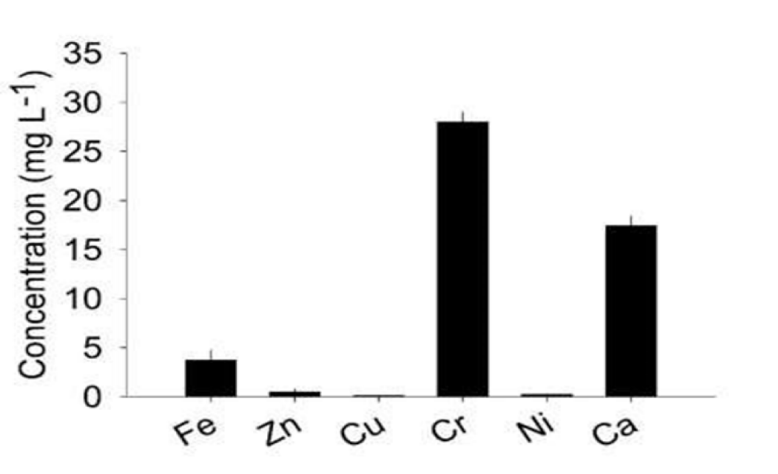
Heavy metals concentration in Tannery waste water by using Atomic absorption spectrophotometer (AAS).
Bacterial isolation and morphological characterization
Serial dilution and plating on LB agar resulted in the growth of distinct bacterial colonies. Dominant colonies were selected and purified using the streak plate method. Gram staining and subsequent microscopic observation revealed rod shaped Gram-positive bacteria as shown in Figure 2. Presumptive genus was Bacillus.
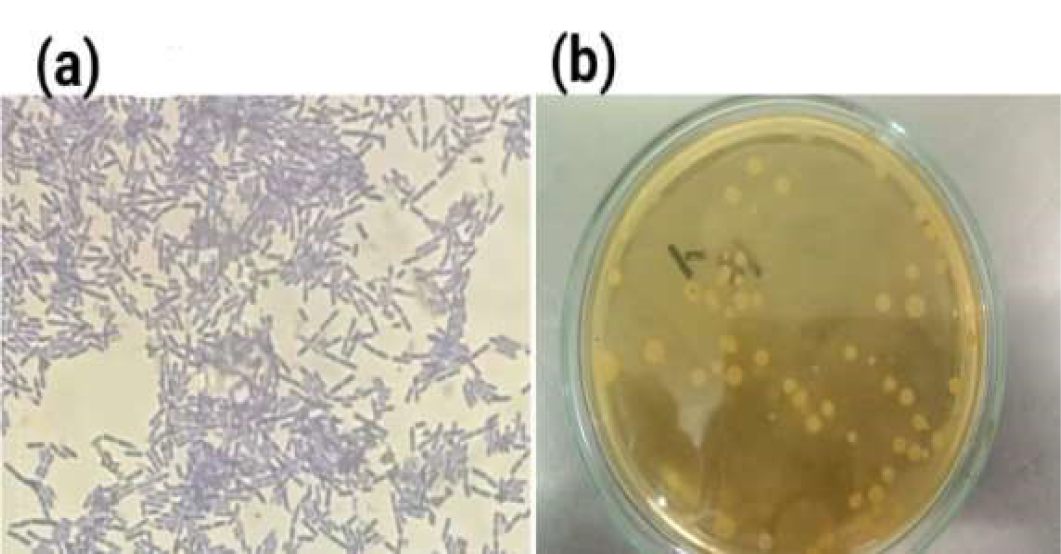
Identification and characterization of bacteria (a) Gram-positive Bacillus tequilensis species observe under Microscopic at 10X (b) growth of bacteria on nutrient agar media
BLAST Analysis for molecular identification via 16s rrna gene sequence
Genomic DNA was successfully extracted using the phenol-chloroform method and verified through 1% agarose gel electrophoresis as shown in Figure 3a. PCR amplification of the 16S rRNA gene using universal primers (27F and 1492R) yielded a clear band of expected size 1348 base pairs. Figure 3a and 3b. NCBI BLAST was used to identify the bacterial strain through obtained gene sequence. Results showed 91% sequence similarity with Bacillus tequilensis.
Gene sequence was deposited in NCBI GenBank under the accession number PQ141696.
Phylogenetic analysis
The phylogenetic tree was constructed using the 16S rRNA gene sequence in MEGA 11 software by the Maximum Likelihood method. The resulting tree is shown in Figure 4.
Discussion
The tannery industry in Sialkot, Pakistan, is a major source of environmental pollution due to the discharge of untreated wastewater containing high concentrations of hazardous materials and heavy metals. In this study, microbiological and molecular techniques were used to isolate and identify bacterial strains from tannery effluent to understand their diversity, adaptability, and potential role in bioremediation.
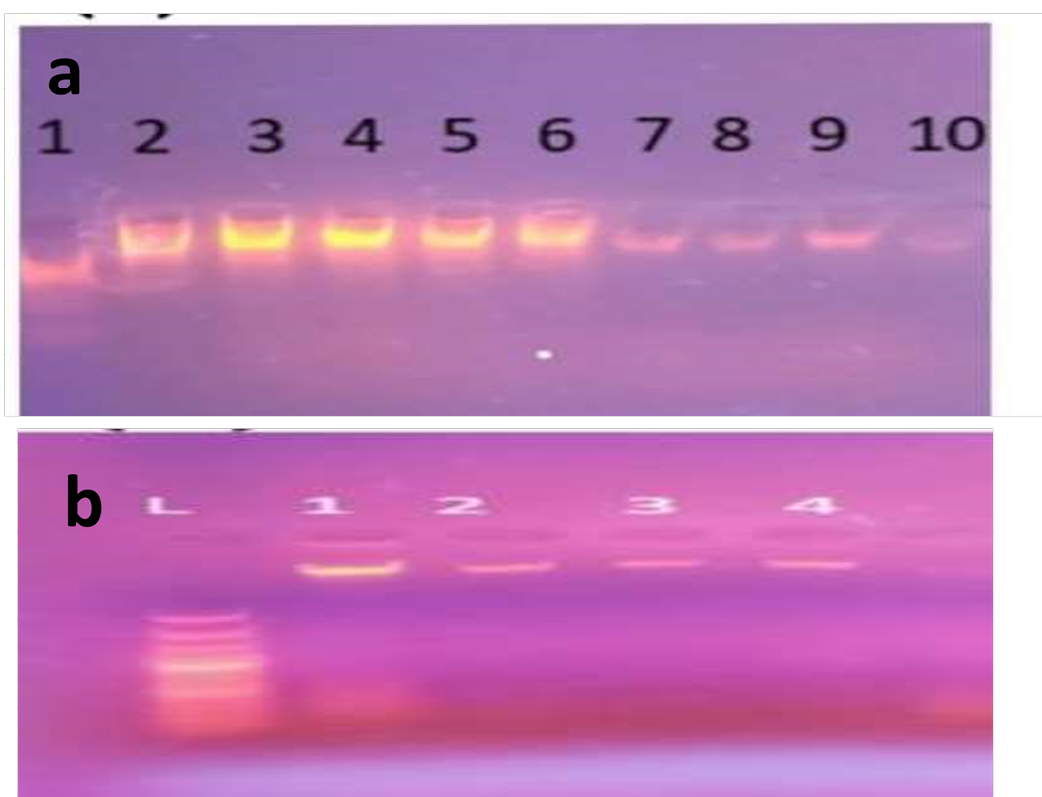
16S rRNA gene amplification from bacterial isolates (a) DNA bands seen on gel electrophoresis (b) polymerase chain reaction (PCR) amplification results
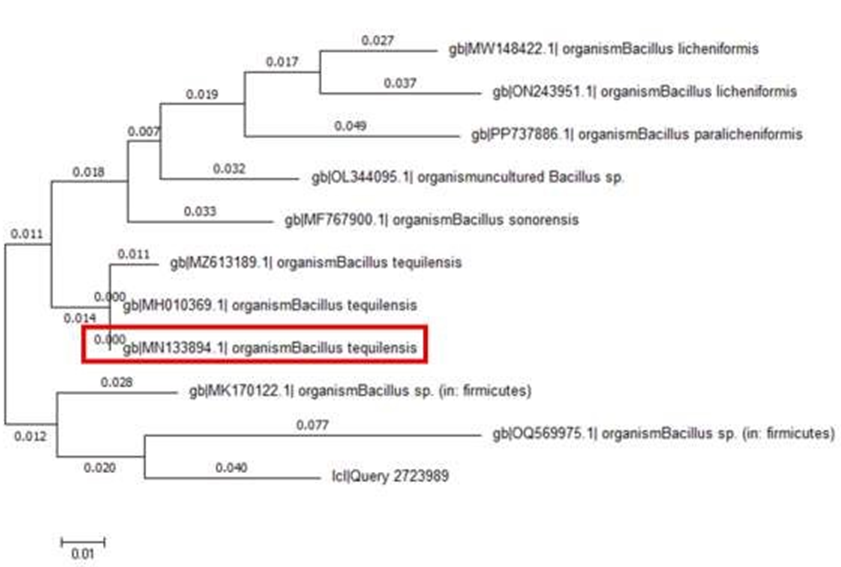
Maximum likelihood phylogenetic analysis of the query isolate based on the Tamura–Nei model using MEGA 11
Gram staining confirmed the presence of Gram-positive Bacillus species in the isolated samples. These findings are consistent with previous studies which reported that Bacillus species are commonly associated with tannery effluents due to their ability to survive in heavy metal-rich environments. Several Bacillus species such as Bacillus subtilis,
Bacillus brevis, Bacillus pumilus, Bacillus alcalophilus, Bacillus badius, Bacillus firmus, and Bacillus lentus have also been documented in similar studies .
Bacillus tequilensis is a Gram-positive, spore-forming bacterium initially found in fermented agave, later identified in contaminated soil. It thrives in harsh environments, including those with heavy metals, and produces industrially important enzymes. Research indicates its potential in bioremediation ; . These traits suggest that the identified strain might survive in tannery effluent and could aid in detoxification and environmental sustainability.
The universal primers (27F and 1492R) targeting the 16S rRNA gene were found to be effective for PCR amplification. These results are in agreement with who successfully identified Bacillus thuringiensis from tannery effluent using the same primer set.
Heavy metal analysis using atomic absorption spectroscopy revealed the presence of Cr, Fe, Ni, Cd, Zn, and Mg in wastewater samples. Among these, chromium was found at the highest concentration. The presence of heavy metals in wastewater poses serious risks to human health and agricultural productivity. Chromium, widely used in leather tanning, is a known carcinogen and has been reported to inhibit seed germination and reduce crop yield .
Several studies have also reported elevated levels of Cr, Cd, Pb, Zn, Cu, Fe, and Ni in tannery effluents, highlighting the need for effective treatment strategies.
Bioremediation is considered a cost-effective and eco-friendly approach for treating such contaminated wastewater. Various bacterial strains, including Citrobacter freundi, Pseudomonas aeruginosa, Bacillus cereus, Bacillus subtilis, Lactococcus lactis, Bacillus megaterium, B. carboniphilus, and B. licheniformis, have shown potential for heavy metal bioabsorption .
As stated by the present study supports that Bacillus tequilensis isolated from tannery effluent possesses physiological and genetic characteristics suitable for bioremediation. The successful amplification and sequencing of the 16S rRNA gene further confirm its molecular identity and adaptability. With increasing industrialization, contamination of freshwater resources is expected to rise, making it essential to explore microbial-based remediation strategies .
Molecular identification through phylogenetic analysis provide taxonomic classification and promotes the discovery of novel strains for potential applications in environmental biotechnology, industrial microbiology, and agriculture. Understanding the microbial diversity of tannery effluents may ultimately support the development of microbial consortia for bioremediation, contributing to environmental restoration and public health protection.
Conclusions and Recommendations
The isolation and molecular identification of a bacterial strain from tannery effluent samples collected from Sialkot, Pakistan, were effectively demonstrated in this study. Physicochemical analysis confirmed the toxic nature of the wastewater with elevated BOD, COD, EC, and heavy metals such as Cr, Ni, Cu, and Zn. The isolated Bacillus tequilensis demonstrated strong adaptability to heavy metal–contaminated environments and potential for bioremediation. Molecular identification confirmed its taxonomic identity. The use of indigenous metal resistant bacteria offers a sustainable and cost-effective approach for wastewater treatment. Future studies should aim at identifying the functional genes responsible for metal resistance and investigating the potential use of these strains in designed bioreactors or microbial communities for wastewater treatment.
Acknowledgments
Authors are highly indebted to Office of Research, Innovation and Commercialization (ORIC), Government College University, Lahore on funding this study (Project No. 72/ORIC/26).
Novelty Statement
This study reports the isolation and 16S rRNA-based molecular identification of a native heavy metal–tolerant bacterial strain from tannery effluent in Sialkot, Pakistan. The identified strain, Bacil-lus tequilensis, demonstrated tolerance to multiple heavy metals, indicating its potential for biore-mediation of industrial wastewater. These findings provide baseline information for the future de-velopment of sustainable and eco-friendly wastewater treatment strategies.
Authors’ Contributions
This work was carried out through the collective efforts of all authors involved.
Muhammad Umer Farooq Awan and Wasim Abbas: supervised and conceptualize the study.
Annum Gul: performed formal analyses and investigation.
Muhammad Khizar Sultan: performed data curation.
Ali Hasnain, Ammara Ahsan, Muhammad Shoib, Ramna Gulzar, Samra Rafiq, Maryam Iqbal, Awais Riaz, Adeel Ahmad and Aqsa Ahmad: Reviewed and edited the manuscript.
All authors reviewed and approved the final manuscript.
Funding
No funding was received from any organization/institution for this study.
Data availability
All data analyzed during this study are included in this article.
Declarations
Generative AI and AI-assisted technology statement
The authors declare that no generative AI and AI assisted technology was used in the creation of this manuscript.
Ethical approval
Ethical approval was waived because the study did not involve human participants or animal experiments.
Conflict of interests
The authors declared no conflicts of interest related to this article.
References
- Ahmed, D., K.M. Maraz and R.A. Khan. 2021. Prospects and challenges of chrome tanning: approach a greener technology in leather industry. Scient. Rev., 7(3): 42–49. https://doi.org/10.32861/sr.73.42.49 [CrossRef]
- Ali, H.Q., M.U. Yasir, A. Farooq, M. Khan, M. Salman and M. Waqar. 2022. Tanneries impact on groundwater quality: a case study of Kasur city in Pakistan. Environ. Monitor. Assess., 194(11): 823. https://doi.org/10.1007/s10661-022-10502-0 [CrossRef]
- Amde, B. 2017. Major factors affecting hide and skin production, quality and the tanning industry in Ethiopia. Advan. Biol. Res., 11(3): 116–125. https://doi.org/10.5829/idosi.abr.2017.116.125 [CrossRef]
- Armstrong, J.A. and J.R. Schulz. 2015. Agarose gel electrophoresis. Curr. Prot. Essent. Laborat. Techniq., 10(1): Unit 7.2. https://doi.org/10.1002/9780470089941.et0702s10 [CrossRef]
- Ashraf, S., M. Naveed, M. Afzal, et al. 2018. Bioremediation of tannery effluent by Cr- and salt-tolerant bacterial strains. Environ. Monit. Assess., 190: 716. https://doi.org/10.1007/s10661-018-7098-0 [CrossRef]
- Ben-David, A. and C.E. Davidson. 2014. Estimation method for serial dilution experiments. J. Microbiol. Meth., 107: 214–221. https://doi.org/10.1016/j.mimet.2014.08.023 [CrossRef]
- Brewster, J.D. and G.C. Paoli. 2013. DNA extraction protocol for rapid PCR detection of pathogenic bacteria. Analyt. Biochem., 442(1): 107–109. https://doi.org/10.1016/j.ab.2013.07.013 [CrossRef]
- Coico, R. 2006. Gram staining. Current Prot. Microb., (1): Appendix 3C. https://doi.org/10.1002/9780471729259.mca03cs00 [CrossRef]
- Gana, A.J., A.A. Okunola and S.O. Ayomide. 2022. Determination of the Biological Oxygen Demand (BOD) and Chemical Oxygen Demand (COD) of Liquid Waste Generated from Landmark University Student’s Cafeteria. Sub-Sahara African Academic Research Publications.
- Gómez-Gil, B., et al. 2008. Bacillus tequilensis sp. nov., isolated from a 2000-year-old mezcal fermentation. Int. J. System. Evolut. Microb., 58(5): 1323–1326.
- Gulzar, R., W. Abbas, I. Akbar, A. Anwer, A. Ahsan, M. Shoib, ... and M.U. Farooq. 2026. Isolation and molecular characterization of root-associated bacteria from Butea monosperma (Lam.) Taub. Narowal, Punjab, Pakistan. Int. J. Agric. Sustain. Develop., 8(1): 165-173.
- Hauwa, H., S.A. Adamu and H. Yakubu. 2023. Isolation and identification of bacteria from soil contaminated with textile dye and tannery effluents in Sokoto metropolis. UMYU J. Microbiol. Res., 8(1): 134–142. [CrossRef]
- Hossain, M.I. and M.N. Anwar. 2016. Isolation and identification of heavy metal tolerant bacteria from tannery effluents. Bangladesh J. Microbiol., 29(1): 23–26. https://doi.org/10.3329/bjm.v29i1.28430 [CrossRef]
- Humayra, S., L. Hossain, S.R. Hasan and M.S. Khan. 2023. Water footprint calculation, effluent characteristics and pollution impact assessment of leather industry in Bangladesh. Water., 15(3): 378. https://doi.org/10.3390/w15030378 [CrossRef]
- Ilyas, M., W. Ahmad, H. Khan, S. Yousaf, M. Yasir and A. Khan. 2019. Environmental and health impacts of industrial wastewater effluents in Pakistan: a review. Rev. Environ. Health., 34(2): 171–186. https://doi.org/10.1515/reveh-2018-0078 [CrossRef]
- James, G. and C.W. Cappuccino. 2017. Microbiology: A Laboratory Manual (11th ed.). Pearson Education. ISBN: 9781292175782.
- Junaid, M., M.Z. Hashmi, Y.M. Tang, R.N. Malik and D.S. Pei. 2017. Potential health risk of heavy metals in the leather manufacturing industries in Sialkot, Pakistan. Sci. Rep., 7(1): 8848. https://doi.org/10.1038/s41598-017-09075-7 [CrossRef]
- Kabir, M.M., A.N.M. Fakhruddin, et al. 2018. Isolation and characterization of chromium(VI)-reducing bacteria from tannery effluents. World J. Microbiol. Biotechnol., 34: 126. https://doi.org/10.1007/s11274-018-2510-z [CrossRef]
- Khalid, N., Z.F. Rizvi, N. Yousaf, S.M. Khan, A. Noman, M. Aqeel, K. Latif and A. Rafique. 2021. Rising metals concentration in the environment: a response to effluents of leather industries in Sialkot. Bull. Environ. Contam. Toxicol., 106(3): 493–500. https://doi.org/10.1007/s00128-021-03111-z [CrossRef]
- Khatun, J., A. Mukherjee and D. Dhak. 2024. Emerging contaminants of tannery sludge and their environmental impact and health hazards. In: Environ. Engineer. Waste Management: Recent Trends and Perspectives, pp. 3–28. Springer Nature, Cham. https://doi.org/10.1007/978-3-031-58441-1_1 [CrossRef]
- Kılıç, Z. 2020. The importance of water and conscious use of water. Int. J. Hydrol., 4(5): 239–241. https://doi.org/10.15406/ijh.2020.04.00250 [CrossRef]
- Koki, I.B., S.N. Taqui, G. Shehu and C.S. Kharisu. 2017. Exposure study and health risk assessment of heavy metals in soils around tanneries in Challawa industrial estate, Kano, Nigeria. Int. J. Chem. Mater. Environ. Res., 2(October): 108–117.
- Kumar, A., R. Kumar, A. Parnian, M. Mahbod and M.A. AbdelRahman. 2025. Bioremediation: a better technique for wastewater treatment and resource recovery. In: Biotechnol. Wastewat. Treat. Resour. Recov., pp. 17–32. Elsevier.m [CrossRef]
- MacWilliams, M.P. and M.K. Liao. 2006. Luria broth (LB) and Luria agar (LA) media and their uses protocol. ASM MicrobeLibrary. American Society for Microbiology, pp. 1-5.
- Malik, S.A., T.Z. Bokhari, A.A. Dasti and S.Z. Abidi. 2003. Effects of wastewater effluents from tannery on the growth of some crop plants. Asian J. Plant Sci., 2(8): 623–626.
- Mammadova, A., M. Masiero and D. Pettenella. 2020. Embedded deforestation: the case study of the Brazilian–Italian bovine leather trade. Forests, 11(4): 472. https://doi.org/10.3390/f11040472 [CrossRef]
- Rahman, M.T., M.S. Uddin, R. Sultana, A. Moue and M. Setu. 2013. Polymerase chain reaction (PCR): a short review. Anwer Khan Mod. Med. Coll. J., 4(1): 30–36. https://doi.org/10.3329/akmmcj.v4i1.13682 [CrossRef]
- Rahman, S.U. and N.A. Bakar. 2019. Manufacturing sector in Pakistan: A comprehensive review for the future growth and development. Pak. J. Human. Soc. Sci., 7(1): 77–91. https://doi.org/10.52131/pjhss.2019.0701.0073 [CrossRef]
- Rameshkumar, N., S. Dhanapaul, M. Krishnan and N. Kayalvizhi. 2017. Bacillus tequilensis: a novel thermotolerant strain for effective bioremediation of melanoidin pigment in its natural environment. In: Bioremed. Sustain. Technol. Clean. Environ., pp. 329–345. Springer Nature, Cham. [CrossRef]
- Rivela, B., M.T. Moreira, C. Bornhardt, R. Méndez and G. Feijoo. 2004. Life cycle assessment as a tool for the environmental improvement of the tannery industry in developing countries. Environ. Sci. Technol., 38(6): 1901–1909. https://doi.org/10.1021/es034316t [CrossRef]
- Saha, M.L., T. Khan, M.M. Kamal and M.N. Islam. 2015. Proteolytic Bacillus spp. associated with tannery industries: conventional and molecular identification. Bangladesh J. Bot., 44(4): 557–564. https://doi.org/10.3329/bjb.v44i4.38570 [CrossRef]
- Sarker, B.C., B. Basak and M.S. Islam. 2013. Chromium effects of tannery wastewater and appraisal of toxicity strength reduction and alternative treatment. Int. J. Agron. Agric. Res., 3(11): 23–35.
- Singh, R., et al. 2019. Characterization of Bacillus species and their potential applications in bioremediation. Environ. Sci. Pollut. Res., 26: 1–12.
- Srivastava, D., M. Tiwari, P. Dutta, P. Singh, K. Chawda, M. Kumari and D. Chakrabarty. 2021. Chromium stress in plants: Toxicity, tolerance and phytoremediation. Sustaina., 13(9): 4629. https://doi.org/10.3390/su13094629 [CrossRef]
- Sujatha, P., B.N. Kumar and V. Kalarani. 2012. Isolation, characterization and molecular identification of bacteria from tannery effluent using 16S rRNA sequencing. Curr. Biotica, 6(2): 185-193.
- Thomas, S., R.L. Orozco and T. Ameel. 2017. Microscale thermal gradient continuous-flow PCR: a guide to operation. Sens. Actuat. B: Chem., 247: 889–895. https://doi.org/10.1016/j.snb.2017.03.005 [CrossRef]
- Wróbel, M., W. Śliwakowski, P. Kowalczyk, K. Kramkowski and J. Dobrzyński. 2023. Bioremediation of heavy metals by the genus Bacillus. Int. J. Environ. Res. Public Health, 20(6): 4964. [CrossRef]

Services
Article usage statistics
Loading…
Related articles
- Multiple Metal Resistant Bacillus cereus 3.1S Isolated from Industrial Effluent has Promising Arsenite Oxidizing PotentialPakistan Journal of Zoology · 2020
- Antibacterial Activity and Tolerance towards Heavy Metals by Endolithic and Epilithic Bacteria Isolated from Rocks of Nathiagali, Lower Himalaya, PakistanPakistan Journal of Zoology · 2020
- Heavy Metals Induced Oxidative Stress in Multi-Metal Tolerant Yeast, Candida sp. PS33 and its Capability to Uptake Heavy Metals from WastewaterPakistan Journal of Zoology · 2017
- Sugar industry effluents as a source of soil fertility and potential toxicological risk of heavy metals in food cropBiologia (Lahore) · 2024
- Appraisal of the effect of industrial effluents on the chlorophyll, protein and heavy metals contents in water hyacinth (Eichhornia crassipes L.)Biologia (Lahore) · 2023
- Molecular Identification and Characterization of Lactic Acid producing Bacterial Strains Isolated from Raw and Traditionally Processed Foods of Punjab, PakistanPakistan Journal of Zoology · 2019