
The knowledge, attitudes, and practices (KAP) of commercial broiler farmers regarding the use of probiotics and antibiotics, including their purpose, routes of administration, and frequency of use, play an important role in the poultry farming sector. The present study aimed to assess the KAP of commercial poultry farmers in the Peshawar and Charsadda districts of Khyber Pakhtunkhwa, Pakistan, regarding the use of probiotics in poultry production. A structured and pre-validated questionnaire was developed to evaluate farmers’ knowledge, attitudes, and practices concerning the use of probiotics and antibiotics in poultry farms. The questionnaire assessed farmers’ demographics, knowledge, usage, perceptions, and management practices regarding probiotics and antibiotics. The results revealed that 76.6% of the surveyed farmers reported using probiotics, of whom 69.5% had completed secondary school education. Among probiotic users, 65.2% administered probiotics through both drinking water and feed, while 54.05% used multi-strain commercial formulations, primarily to improve gut health in chickens. Although many farmers expressed confidence in their understanding of probiotics, only 56.0% believed that probiotics could reduce the need for antibiotics. Nevertheless, 84.0% indicated a willingness to increase probiotic use in their poultry farms. All surveyed farmers reported using antibiotics, with 86.6% administering them primarily for therapeutic purposes, whereas only 3.3% used antibiotics as growth promoters. This study identified gaps in poultry farmers’ knowledge and practices regarding probiotic and antibiotic use, highlighting the need for targeted training, awareness programs, and improved antimicrobial stewardship in the poultry sector. However, the small sample size, convenience sampling, and reliance on self-reported data limit the generalizability of the findings. Larger, multicenter studies are warranted to confirm these findings.
Research Article · Volume 12, Issue 2, Pages 278–293, 5 November 2026 · Open Access
Knowledge, Attitudes, and Practices Regarding Antibiotic and Probiotic Usage Among Commercial Poultry Farmers in Districts Peshawar and Charsadda, Pakistan
· · · · ·
Affiliations & Notes ⌄
- 1Department of Zoology, Islamia College Peshawar, Peshawar
- 2International Center for Chemical and Biological Sciences (ICCBS), University of Karachi, Karachi 75270, Pakistan
- *Correspondence | Abrar Hussain; Email: abrarhussain0307@gmail.com
Article Info ⌄
- Journal:
- Veterinary Sciences: Research and Reviews
- Submitted Date:
- 31 August 2026
- Accepted Date:
- 8 October 2026
- Published Date:
- 5 November 2026
Abstract
Introduction
The poultry sector is a vibrant area of livestock production, providing high-quality animal proteins and poultry products to the growing human population, which is estimated to reach 9 billion by 2050 . Globally, the poultry sector has observed significant expansion due to growth in the human population, rising incomes, urbanization, and greater demand for affordable, high-quality animal proteins . The consumption of poultry products is projected to increase in the coming decades as these products are an effective and nutritionally valuable source of different dietary sources . Therefore, world poultry production has become one of the fastest- growing and emerging agricultural sectors, driven by the need to fulfill the increasing demand for poultry meat and eggs . It is indicated by the Food and Agriculture Organization (FAO) that meat, eggs, and milk consumption is expected to increase by 23-30% globally, with 2-6% growth in developed countries and 60% in developing countries. Global poultry meat production was approximately 132 million tons in 2019, which reflects this trend and accounts for about a 37% share of total global meat production ; . United States is the largest poultry producer globally, producing 17% of global poultry output . The raising period and feed conversion ratio for a 6-Ib chicken are typically 42 days and 1.8, respectively. Improving disease control, raising productivity, improving product quality, and maintaining appropriate production costs are all top concerns for the modern poultry industry, making it more ecologically friendly and sustainable .
Globally, the poultry sector is growing and makes a significant contribution to the economy. Poultry production in Pakistan is one of the most vibrant and active sectors of agriculture, playing a vital role in meeting the growing demands for affordable animal proteins and eggs. During the 1960s, commercial poultry production started in Pakistan and expanded rapidly. The industry then became a major contributor to food security, employment, and the national economy (approximately contributing 1.5 % of the national Gross Domestic Product) and supplying a substantial share of the country’s meat production (40–45% of the country’s total meat consumption) ; ; . The estimated number of commercial chickens was 1,022 million birds during 2017, with production of 17,083 million eggs and 1,270,000 tons of meat, employing 1.5 million people directly or indirectly ; ; .
Throughout its development, the sector encountered government promotional measures, but it also had to deal with a number of difficulties, such as disease outbreaks and changes in retail prices. Infectious diseases such as Hydropericardium Syndrome (HPS), Infectious Bursal Disease (IBD), and avian influenza viruses (H7N3 and H9N2) have caused substantial economic losses by increasing mortality, reducing productivity, and disrupting poultry production ; . These diseases have resulted in high mortality rates, decreased egg production, and considerable financial losses for producers . When an animal is not treated well during stress, it leads to devastating impacts on the animal’s health and production system, leading to financial loss and disease spread . Since 2000, the poultry industry has witnessed significant investment from new partners, which has led to a change in chicken farming from traditional methods to contemporary, ecologically friendly, and regulated facilities .
Antibiotics have long been used in poultry production to prevent and treat diseases, improve feed efficiency and growth performance, and increase productivity, thereby enhancing the economic profitability of poultry farming . Antibiotics have a known positive impact on chicken growth, but their effectiveness is found to be lower due to their excessive use for therapeutic purposes, growth promotion, better feed conversion efficiency, dysbiosis of gut microflora, hypersensitivity, etc. ; . The emergence and spread of antimicrobial resistance (AMR) threaten the effectiveness of existing antibiotics, increasing the risk of treatment failure and raising concerns about a return to conditions resembling the pre-antibiotic era, when bacterial infections caused substantial morbidity and mortality . Antimicrobials are essential in protecting animals’ health, but their misuse creates a favorable niche for antimicrobial-resistant bacteria, which might transmit to humans through contaminated food or direct contact ; .
In response to the growing threat of antimicrobial resistance, the European Union banned the use of antibiotics as antimicrobial growth promoters in animal feed in 2006, while allowing their therapeutic use under veterinary supervision (Anadon, 2006; ; . However, banning antibiotics usage, there is growing interest in the use of novel, economical, and suitable alternatives for the enhancement of growth, prevention of diseases, and betterment of feed conversion efficiency . Natural feed additives like probiotics have the potential to be used instead of antibiotics, and several farmers are using them already in their poultry farms ; . Probiotics are live microorganisms that confer health benefits to their host when administered in an adequate quantity. The term probiotic was coined by Lilley and Stillwell in 1965 and describes substances secreted by one organism that alter the host microbiota, modulating immune function and improving intestinal barrier function , 2025a). Most probiotic microorganisms belong to the lactic acid bacteria (LAB) group, including species of Lactobacillus, Bifidobacterium, and Enterococcus, although certain yeasts, such as Saccharomyces boulardii, are also used as probiotics . Probiotics provide multiple health benefits, including antimicrobial activity against pathogens, immunomodulatory and anti-inflammatory effects, and improved lactose digestion in individuals with lactose intolerance. The minimum number of probiotics showing positive health effects should be at least 109 colony-forming units (CFU) per day or per serving ; .
Probiotic supplementation may improve meat quality and tenderness and can influence the lipid composition and oxidative stability of poultry meat. These effects may contribute to improved nutritional and sensory characteristics of meat, although the extent of these benefits depends on the probiotic strain, supplementation strategy, and production conditions ; . It also improves intestinal microbial balance by competitive exclusion, pathogen antagonism, and immune system stimulation, besides causing an increase in the height of villi and crypt depth in the ileum of broilers . Probiotics inhibit pathogen growth by competing for nutrients, producing antimicrobial compounds, competing for binding sites on intestinal epithelium, and stimulating the immune system . In the management of poultry production, probiotics have shown promising results by improving the overall health of chickens and reducing the risk of enteric diseases . Successful colonization of probiotics within the gastrointestinal tract depends upon the probiotic strain, their survivability and stability, dosage and frequency of administration, health and nutritional state of the host, stress, and genetics of the host ; .
In livestock, probiotics improve feed conversion ratios, alleviate gastrointestinal issues, and reduce stress through the gut-brain axis, aligning with sustainability goals . In addition, probiotics can also be able to synthetize vitamins, molecules contributing to cellular metabolism, and food-degrading enzymes, thus affecting host health positively . Despite their positive effects, there is concern over probiotics carrying and spreading antimicrobial resistance genes (ARGs), posing a public health risk, thus requiring comprehensive validation studies to ensure the non-transferability of ARGs .
Current evidence indicates that probiotics represent a viable alternative to antibiotic growth promoters, with demonstrated benefits for poultry health, intestinal microbiota, and growth performance . Similarly, supplementation of probiotics to laying hen diets leads to an increase in egg production and improved egg qualities . The inappropriate use of antibiotics in poultry production, coupled with limited awareness and inadequate antimicrobial stewardship, has contributed significantly to the emergence and spread of antimicrobial resistance in Pakistan. Globally, antibiotics and probiotics in poultry production have been widely studied, but information on farmers’ knowledge, practices, and perceptions remains limited, particularly in Pakistan. Specifically, there is a scarcity of data on the frequency, purpose, and route of antibiotic and probiotic administration by poultry farmers. Proper knowledge about these factors is essential for promoting the cautious use of antibiotics and encouraging the adoption of probiotics as sustainable alternatives in Pakistan’s poultry sector .
Therefore, this study aimed to assess knowledge, practices, and perceptions of poultry farmers regarding antibiotic and probiotic use, their frequency, purpose, and routes of administration, as well as their willingness to adopt probiotics and to reduce dependence on antibiotics in poultry production. Poultry farmers from the districts of Charsadda and Peshawar in Khyber Pakhtunkhwa, Pakistan, were the study’s target population. The purpose of the study was to assess chicken farmers’ knowledge, management techniques, and attitudes on the use of probiotics and antibiotics. The results of this study offer insightful information on present practices and emphasize the necessity of focused awareness campaigns and antimicrobial stewardship tactics in the poultry sector.
Materials and Methods
Study area and farm selection
The districts of Peshawar and Charsadda in Khyber Pakhtunkhwa (KP), Pakistan, were the sites of the current study. District Peshawar, which is roughly 1,286 km2 in area, is situated at latitude 34.0151° N and longitude 71.5249° E. Peshawar, which has a semi-arid climate with scorching summers and mild winters, is located close to the eastern entrance to Khyber Pass. According to the 2017 census, there were about 4.76 million people living there. District Charsadda is located 29 kilometers northeast of Peshawar in the Peshawar valley. This district is 996 km2 and is located between latitudes 34.0 and 34.5° N and longitudes 71.5 and 72.0° E. According to the 2017 census, there were 1.84 million people living in this district. This region has a predominantly rural population, experiencing a semi-arid climate, with hot summers, cool winters, and average annual rainfall. Both of these districts represent important poultry-producing regions, having numerous commercial broiler and layer farms contributing significantly to the supply of poultry meat and eggs for the local population.
The use of probiotics has gained considerable attention due to increasing demand for poultry products and growing interest in alternatives to antibiotics for improving poultry health and productivity. Therefore, poultry farms in the districts of Peshawar and Charsadda were selected as a study population to assess farmers’ knowledge, attitudes, and practices (KAP) regarding the use of antibiotics and probiotics in poultry production.
Study design
The present study employed a cross-sectional design to assess the knowledge, attitudes, and practices of commercial poultry farmers regarding antibiotic and probiotic use in poultry production. Data were collected at a single point in time from participating poultry farms in the selected study areas, describing farmers’ reported knowledge, perceptions, and practices related to antibiotic and probiotic utilization. The study specifically assessed farmers’ awareness and knowledge regarding the use of antibiotics and probiotics, their reported use of probiotics as alternatives to antibiotic growth promoters, the types of probiotic formulations used, frequency of administration, and the purposes for which probiotics were applied in poultry production. Information related to antibiotic-use practices and disease management was also collected to provide a broader assessment of antimicrobial and probiotic utilization among the participating farms.
Participant consent
Formal consent was obtained from the farm owners and/or workers involved in the survey before collecting data. Ethical approval for the study was obtained before data collection from the university ethics committee.
Sampling and study population
The target population of this study was commercial poultry farms (n=30) located across different tehsils of Peshawar and Charsadda districts, including broiler farms. Respondents from whom data were collected included farm owners, managers, or responsible personnel involved in poultry farm management and daily operations, who served as candidates for assessing knowledge, attitudes, and practices regarding antibiotic and probiotic use.
Inclusion and exclusion criteria
Inclusion criteria
All poultry farms were eligible for inclusion within the selected districts if they had a minimum flock size of ≥10 birds and an owner, manager, or responsible farm representative available and willing to participate in the interview. To obtain comprehensive information regarding antibiotic and probiotic usage practices, farms were included regardless of their production type (e.g., broiler, layer, or breeder farms).
Exclusion criteria
All farms whose managers or owners declined participation, were unavailable during the data collection period, or if strict biosecurity protocols restricted access to the farm premises and prevented completion of the interview were excluded from the study. For selection of poultry farms, convenience sampling technique (a type of non-probability sampling method) was employed. All those poultry farms that met the inclusion criteria, were easily accessible, and were willing to participate in the study were selected. Furthermore, this approach facilitated data collection from available poultry farmers within the selected districts; however, the findings should be interpreted considering the potential limitations associated with non-random sampling .
Questionnaire introduction
A structured questionnaire was developed based on the objectives of the study and information obtained from relevant published literature on antibiotic and probiotic use in poultry production. Data were gathered using a standardized questionnaire created especially for this purpose. Prior to the main survey, the questionnaire was reviewed by researchers with relevant expertise in poultry health, microbiology, probiotics, and antimicrobial use to assess the relevance, clarity, and comprehensibility of the questions. The questionnaire had closed-ended and multiple-choice questions to facilitate responses and to ensure accuracy in data collection. The questionnaire consisted of several sections that were designed to obtain data regarding the different aspects of probiotics and antibiotics in poultry production. Briefly, the first section was about the farm demographics, consisting of fourteen questions such as age, education, and the role of the respondent in the farm, and the size, source, and type of the feed used for chickens. The second section was about the usage of antibiotics, consisting of eleven questions. The third section was about probiotics usage on the farm, having eight questions related to frequency, route of administration, and source of probiotics. The fourth and fifth sections were about management of disease and knowledge, attitude, and perception, respectively. The last section was about economic considerations and was made optional but recommended.
Data collection procedure
Data regarding antibiotic and probiotic use, such as routes of administration, frequency, withdrawal periods, etc., were collected through self-reported responses during face-to-face interviews. During this process, the researcher personally visited different poultry farms to ensure the reliability of the collected data. However, these responses were not independently verified against veterinary prescriptions, farm treatment records, product labels, or direct observations. During data collection, the researcher tried his best to explain every question using easy, simple, and native language, so that the respondents understood each question and did not face any difficulty in this regard. Before collecting data from the respondents, the purpose and objective of the research were clearly explained to them. This method was employed to ensure that the respondents understood every question and answered accurately. The participation of respondents was voluntary, and all their information was used only for academic purposes. The study data were collected from February to May 2026.
Data analysis
Questionnaire responses were coded, entered into a spreadsheet, and systematically organized for analysis after data collection. To summarize the data and identify patterns in probiotic and antibiotic usage practices among poultry farms, descriptive statistical methods, including frequencies and percentages, were used. Descriptive analysis was selected because the study involved a relatively small sample of n= 30 commercial poultry farms, with limited observations across several demographic and practice-related categories. The findings were then presented in tabular and graphical formats using Microsoft Excel 2016. The findings were then displayed as tables, charts, and graphs to show trends in farmer preferences, usage frequency, and awareness of probiotics and antibiotics, as well as to give a clear picture of the distribution of responses. The role and adoption of probiotics rather than antibiotics in poultry farming techniques within the study area were clarified by these analyzes.
Results
Poultry farm and participants’ demographics
At first, data were collected from 33 poultry farms; however, three questionnaires were excluded from the final analysis because of incomplete responses and failure to meet the predefined inclusion criteria. As a result, only 30 poultry farms were included in the final analysis. About 76.67% of poultry farms were surveyed in District Peshawar, whereas 23.33% were from the Charsadda region. Respondents in our research were all male. The majority of farmers had secondary-level education (66.67%), followed by those with higher education (26.67%). Regarding production cycles, most farmers (68.18%) reported managing approximately six flocks per year, whereas 31.82% reported five flocks annually. Such observations show relatively consistent flock management practices among the surveyed poultry farmers, with most farms following similar patterns of production cycles. All poultry farms included in the study were broiler farms. The majority of farmers (79.41%) practiced a deep litter housing system, whereas the remaining (20.59%) used a semi-intensive production system. Regarding farm ownership, 66.67% of respondents were farm owners, while 33.33% were farm workers or managers employed at the surveyed farms. Further details regarding the demographic characteristics of poultry farmers and farm management practices are presented in Table 1.
Table 1: Demographic and socioeconomic information of the poultry farmers and farm characteristics.
| Variables | Categories | Outcomes (%) |
| District | Peshawar | 23 (76.67%) |
| Charsadda | 7 (23.33%) | |
| Gender | Male | 100% |
| Female | 0% | |
| Education | No education | 0% |
| Primary class (1-5) | 2 (6.67%) | |
| Secondary school (6-10) | 20 (66.67%) | |
| Higher | 8 (26.67%) | |
| Role in the farm | Owner | 20 (66.67%) |
| Worker | 10 (33.33%) | |
| Rearing system | Deep litter | 27 (79.41%) |
| Semi-intensive | 3 (20.59%) | |
| Antibiotics vs probiotics administration | Antibiotic users | 30 (100%) |
| Probiotic users | 23 (76.7%) | |
| Knowledge about probiotics and antibiotics | Very confident | 5 (16.67%) |
| Somewhat confident | 23 (76.67%) | |
| Not confident | 2 (6.67%) |
Knowledge and practices of poultry farmers related to antibiotics and probiotics
Among the surveyed poultry farmers, 76.7% reported using probiotics for various purposes, whereas antibiotic use was reported by all participants (100%). Among antibiotic users, 66.67% reported using antibiotics primarily during disease outbreaks. On the other hand, 26.7% used antibiotics on a daily basis, whereas 6.7% used them every week. About (86.7%) were using antibiotics for therapeutic purposes, whereas (10.0%) farmers were using them for prophylactic purposes.
Usage and route of administration of antibiotics
Findings of our survey showed that poultry farmers differed in their antibiotic administration routes, frequency of use, and intended purposes, reflecting variations in antibiotic use practices across the surveyed farms. Water was the primary route of antibiotic administration among the surveyed poultry farms, reported by 86.67% of respondents, while 13.33% administered antibiotics through both water and feed (Figure 1A).
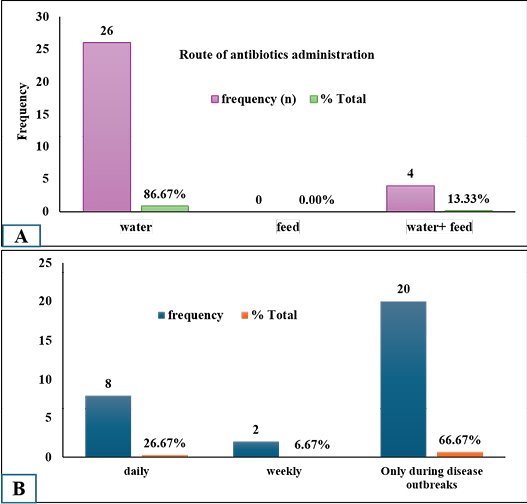
Antibiotic use practices among the surveyed poultry farms. (A) Routes of antibiotic administration. (B) Frequency of antibiotic use.
Regarding antibiotic use, doxycycline was the most frequently administered antibiotic on a daily basis (43.48%), followed by enrofloxacin (21.74%). Doxycycline was also the only antibiotic reported to be administered on a weekly basis (Table 2). During disease outbreaks, tylosin was the most commonly used antibiotic (36.36%) among the surveyed farms. However, 26.67% and 6.67% of farmers reported administering antibiotics on a daily and weekly basis, respectively (Figure 1B). Antibiotics were primarily obtained from pharmacies (63.33%), followed by veterinarians (30.0%), while only 6.67% of farmers obtained antibiotics through feed suppliers.
Table 2: List of the common antibiotics used in poultry farms.
| Type of antibiotics | Daily n (%) | Weekly n (%) | Only during disease n (%) |
| Doxycycline | 10(43.48) | 2 (100) | 6 (27.27) |
| Enrofloxacin | 5(21.74) | 0 (0.00) | 2 (9.09) |
| Tylosin | 3(13.04) | 0 (0.00) | 8 (36.36) |
| Neomycin | 0 (0.00) | 0 (0.00) | 3 (13.64) |
| Amoxicillin | 3(13.04) | 0 (0.00) | 1 (4.55) |
| Norfloxacin | 2 (8.70) | 0 (0.00) | 2 (9.09) |
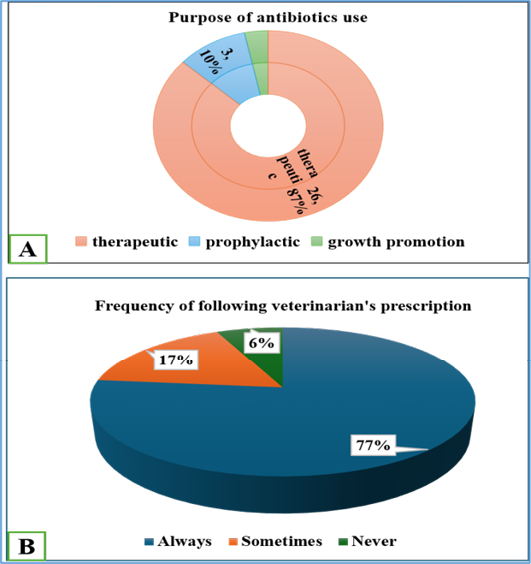
(A) Purposes of antibiotic use in poultry production. (B) Frequency with which poultry farmers followed a veterinarian’s prescription before administering antibiotics.
The results further showed that the majority of poultry farmers (76.67%) never observed the recommended antibiotic withdrawal period before selling chickens, whereas only 3.33% reported always complying with the withdrawal period. Furthermore, 76.67% of farmers reported experiencing antibiotic-resistant infections on their farms. Most poultry farmers n= 23 reported always following a veterinarian’s prescription before administering antibiotics, whereas 16.67% reported doing so occasionally. Antibiotic use was predominantly therapeutic, with 66.67% of poultry farmers reporting antibiotic administration only during disease outbreaks (Figure 2AB).
Waste disposal and spreading of antibiotics: The value of farmers’ education
Regarding the entry of antibiotic residues into the human food chain, the majority of poultry farmers (76.67%) believed that antibiotic residues do not enter the human food chain through poultry products. Nevertheless, 83.33% of respondents were aware of the health risks associated with the overuse of antibiotics. Educational level was positively associated with awareness of antibiotic residues, as all highly educated farmers correctly recognized that antibiotic residues could enter the human food chain if withdrawal periods are not properly observed (Table 3). In contrast, awareness was considerably lower among farmers with lower educational levels, highlighting the need for targeted educational and antimicrobial stewardship programs. Furthermore, results showed that Infectious Bursal Disease, Newcastle disease, infectious bronchitis, and enteritis were the most frequently reported diseases among the surveyed poultry farms.
Table 3: Educational level of poultry farmers using probiotics and antibiotics.
| Education level | No n (%) | Probiotic use n (%) | Not used n (%) | Antibiotic use n (%) | Not used n (%) |
| Primary school (1-5) | 2 (6.67) | 2 (8.70) | 0 (0.00) | 2 (6.67) | 0 (0.00) |
| Secondary school (6-10) | 20 (66.67) | 16 (69.57) | 4(57. 14) | 20 (66 .67) | 0 (0.00) |
| Higher | 8 (26.67) | 5 (21.74) | 3(42 .86) | 8 (26 .67) | 0 (0.00) |
Approximately 53.33% of poultry farmers reported burying poultry carcasses, whereas the remaining farmers disposed of dead birds by discarding them in open fields or allowing scavenging by dogs and other animals. Such results show that a substantial proportion of farms do not follow recommended carcass disposal practices. Disposing of poultry carcasses improperly may facilitate the transmission of infectious pathogens to other poultry flocks, wildlife, domestic animals, and humans, while also contributing to environmental contamination. Such findings highlight the need for improved farmer awareness and the implementation of appropriate
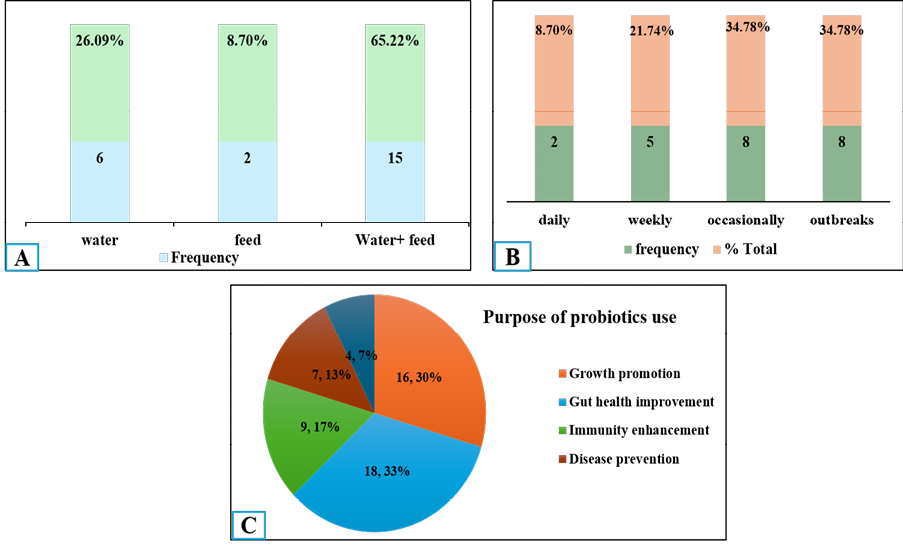
. Practices about probiotic use among surveyed poultry farms. (A) Routes of administration of probiotics. (B) Probiotic usage frequency. (C) Purposes of probiotic usage in poultry production.
biosecurity measures and standardized carcass disposal practices to minimize disease transmission and protect public and environmental health.
KAP of farmers toward probiotics in the surveyed poultry farms
Regarding probiotic use, knowledge, attitudes, and practices of poultry farmers were evaluated to assess their awareness, perceptions, and utilization of probiotics in the surveyed farms. The majority (65.22%) of poultry farmers provided probiotics through both water and feed, whereas only about 26.09% of farmers administered probiotics through water alone (Figure 3A). Additionally, findings showed that probiotics were most commonly administered during disease outbreaks or on an occasional basis (34.78%), while 21.74% of farmers reported weekly probiotic supplementation (Figure 3B). Furthermore, probiotics were primarily used for improving gut health (33.33%), promoting growth (29.63%), and enhancing immunity (16.67%). Farmers’ observations suggested that probiotic supplementation was associated with improved growth (38.89%), reduced disease incidence (24.07%), and better feed conversion efficiency (22.22%) in poultry (Figure 3C).
About 56% of farmers, which is more than half of the respondents, believed that probiotics could reduce the need for antibiotics, while 40% were uncertain. Likewise, about 88% of farmers believed that probiotic supplementation could reduce overall farm expenses, and 84% expressed willingness to increase probiotic use if it reduced antibiotic consumption. In general, the majority of farmers (76.67%) reported being somewhat confident in their knowledge of antibiotics and probiotics (Table 4).
Table 4: Farmers’ attitude toward probiotic use
| Probiotics use | Yes n (%) | No n (%) | Not sure n (%) |
| Do you believe that probiotics can reduce the need for antibiotics | 14 (56. 00) | 1 (4.00) | 10 (40.00) |
| Do probiotics reduce overall farm expenses | 22 (88. 00) | 1 (4.00) | 2 (8.00) |
| Willing to increase use of probiotics if they reduce antibiotic usage | 21 (84 .00) | 2 (8.00) | 2 (8.29) |
The most commonly used probiotics among the surveyed poultry farms were multi-strain commercial probiotic products, accounting for 54.05% of all reported probiotic products. In comparison, LAB-based and yeast-based probiotics were less frequently used as standalone formulations, accounting for 24.32% and 21.62% of reported probiotic use, respectively. Utilization of commercial multi-strain formulations extensively by farmers suggests a preference for products containing multiple beneficial microorganisms, likely due to their broader
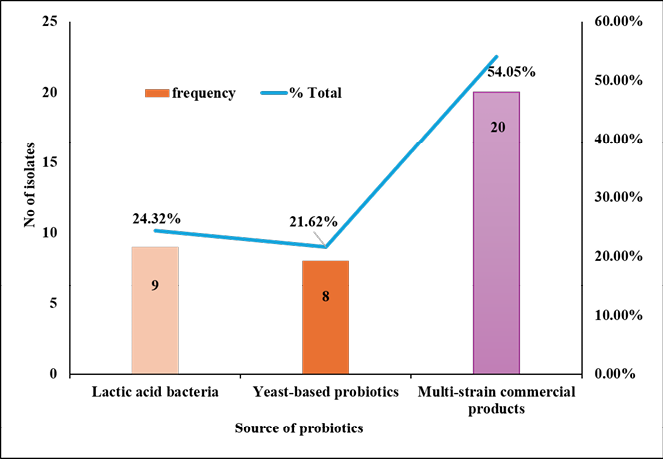
Probiotic types commonly used in poultry production
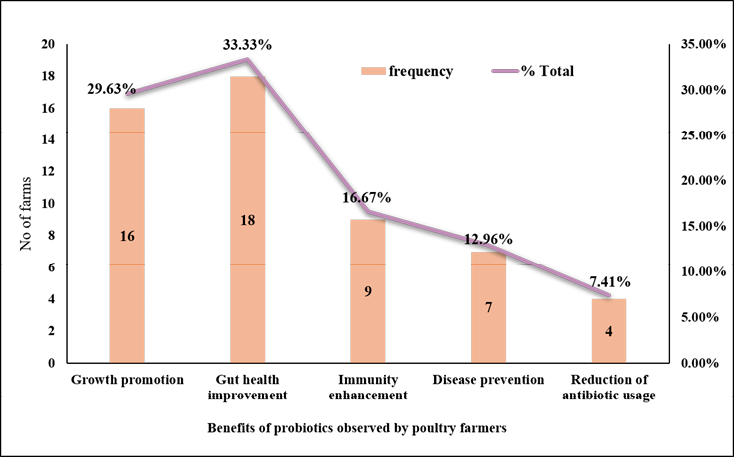
Purposes of probiotic use among the surveyed poultry farms.
functional benefits and commercial availability. An extensive distribution of the types of probiotics used is presented in Figure 4.
Furthermore, the survey findings showed that probiotics were used for a variety of purposes in poultry production. Frequently, the most reported reason for supplementation of probiotics was gut health improvement (33.33%), followed by growth promotion (29.63%). Additionally, 16.67% of farmers reported using probiotics to enhance immunity, while 12.96% administered probiotics for disease prevention. Only about 7.41% of respondents reported using probiotics specifically to reduce antibiotic use (Figure 5). Overall, such findings suggest that poultry farmers primarily recognize probiotics as feed additives that support intestinal health and improve production performance, whereas their role in antimicrobial stewardship and reducing antibiotic dependence is less widely observed in the surveyed farms.
Discussion
The poultry sector of Pakistan continues to grow in order to meet the growing demands for poultry products in the markets. Pakistan ranks among the world’s leading poultry producers, with annual production exceeding 1 billion broilers, 48 million layers, 11 billion table eggs, and 1.2 million tonnes of poultry meat, with more than 15,000 commercial poultry farms. Pakistan ranks as the 11th largest chicken producer, with annual investment exceeding USD 3.7 billion (average annual growth rate of about 7.3% to 8%) ; ; . In this regard, using probiotics instead of antibiotic growth promoters has shown promise as a way to strengthen gut health, boost growth performance, and lower the need for antibiotics in chickens.
The present study aimed to assess the knowledge, attitudes, and practices (KAP) of poultry farmers in Peshawar and Charsadda districts of Khyber Pakhtunkhwa, Pakistan, regarding the use of probiotics and antibiotics in the selected poultry farms. Specific attention was given to the frequency, routes, purposes, types, and perceived benefits of probiotic use, as well as farmers’ perceptions of probiotics as an alternative to antibiotic use. Regarding probiotics and antibiotic usage, the findings provide an overview of current practices and awareness among poultry farmers in the studied area. The gaps observed in knowledge, attitude, and antimicrobial use practices highlight the immediate need for targeted farmer education, improved antimicrobial stewardship, and greater awareness of the potential role of probiotics in supporting poultry health and reducing unnecessary antibiotic use. These types of measures may contribute to more responsible antibiotic use, improved food safety, and better poultry production practices.
The findings showed that all poultry farmers participating in this study were male, which is consistent with a recent study conducted across Punjab, Sindh, Balochistan, and Khyber Pakhtunkhwa among 386 poultry farmers, which also reported that all study participants were male . The results’ consistency may indicate that poultry farming, especially in the commercial farming sector, is still primarily run by men in Pakistan. However, both the current study and the referenced studies might not accurately reflect all Pakistani poultry farmers; this observation should be examined and interpreted cautiously.
All surveyed poultry farmers in the present study reported using antibiotics in their poultry farms. Habiba et al. (2023), in rural Punjab, Pakistan, conducted a study with a consistent finding with our study, which similarly reported antibiotic use among all surveyed poultry farmers; colistin sulfate and amoxicillin trihydrate were among the most frequently used antibiotics, accounting for 60% of reported use. The consistency of these findings across different regions of Pakistan suggests that antibiotic use is a widespread practice in commercial poultry production. Regularly, about 72.5% of poultry farmers were using antibiotics, as shown by the study (conducted in Punjab, Pakistan), whereas only 27.5% of farmers used them occasionally . However, the frequent use of antibiotics, particularly in the absence of appropriate veterinary guidance, adherence to withdrawal periods, and antimicrobial stewardship practices, may increase the risk of antimicrobial resistance and antibiotic residues in poultry products. Given the relatively small sample size and the self-reported nature of the data, these findings should be interpreted cautiously and should not be considered direct evidence of antimicrobial resistance or antibiotic residues. Nevertheless, the findings highlight the potential need for improved farmer education, veterinary oversight, and responsible antibiotic-use practices in the poultry sector.
We observed in our study that on a daily basis, doxycycline (43.48%) was the most commonly used antibiotic, followed by enrofloxacin (21.74%). Doxycycline was the only antibiotic reported to be used on a weekly basis. During disease outbreaks, tylosin (36.36%) was the antibiotic of choice. Previously, Wongsuvan et al. (2018) found that amoxicillin, colistin, doxycycline, oxytetracycline, and tilmicosin were used routinely for prophylaxis in surveyed poultry farms . Likewise, Rasheed et al. (2024) found that 48.4% of poultry farmers were using amoxicillin, 28.2% were using gentamycin, and 36.3% were using neomycin on their farms . Colistin, currently considered the last defense against multidrug-resistant bacteria, and the increasing use of colistin in China have resulted in a ban on its use as a growth promoter . Additionally, the European Union banned the use of antibiotics as growth promoters in animal production and introduced stricter controls on antimicrobial use .
In the present study, Gumboro disease, Newcastle disease, infectious bronchitis, and enteritis were reported by poultry farmers as the most common diseases affecting the surveyed farms. These findings are partly consistent with previous findings, which showed that Newcastle disease, avian influenza, and fowl typhoid were among the frequently reported diseases in poultry farms . The occurrence and persistence of poultry diseases may be influenced by multiple interacting factors, including inadequate biosecurity, poor hygiene and sanitation, high stocking density, insufficient disease prevention, and inappropriate antimicrobial use. However, the present study did not directly investigate the causes of disease occurrence; therefore, these factors should be considered as potential contributors rather than definitive explanations for the disease patterns observed in the surveyed farms .
Sattar and colleagues summarized the existing research on poultry farmers’ KAP regarding antimicrobial use and antimicrobial resistance. The meta-analysis showed that 65% poultry farmers used antimicrobials for therapeutic purposes, whereas 45% used them to prevent disease or boost growth (29%). This is because most of the poultry farmers used antibiotics only when the chicken became sick to treat them and to prevent the spread of disease to other birds .
The use of antibiotics under a veterinarian’s prescription is considered to reduce misuse and enhance antibiotic efficacy ; . Regarding the use of antibiotics, about 77% of poultry farmers always followed the veterinarian’s prescription before administering antibiotics to chickens, whereas 16.67% of farmers sometimes followed the veterinarian’s prescription. Another study observed that about 60% of poultry farmers do not follow veterinary prescriptions for getting antibiotics, whereas 40% of farmers use a veterinary doctor’s prescription . The possible reason for this difference maybe as poultry farmers in rural Punjab may have started poultry farming earlier; therefore, they have more experience using antibiotics on their farms compared to poultry farms that have started poultry farming recently, have not much experience, and are relying on a veterinarian’s prescription. Furthermore, our study revealed that the majority of poultry farmers (76.67%) never practiced a withdrawal period before selling chickens after antibiotics were used, while only 3.33% of farmers followed a withdrawal period after antibiotic use. In contrast to the earlier study, which showed that 52.5% of poultry farmers followed a withdrawal period while 47% did not . However, as stated earlier, due to the limited data size, such results cannot be generalized.
This study showed that 76.66% of poultry farmers believed that the use of antibiotics for treating diseases in chickens cannot enter the human food chain, and they were unaware of antibiotic resistance. Only educated farmers were aware that antibiotic residues can enter the human food chain. Understanding and knowledge about antibiotic usage vary among individuals, including the farmers. Kahn et al. (2022) assessed the practices, knowledge, and awareness related to antibiotic use and resistance among household members of the districts of Swat and Shangla and reported that about 72.9% of households did not know about antibiotic resistance, while 35.5% were aware of the misuse of antibiotics .
Researchers are increasingly exploring alternatives and complementary strategies to reduce reliance on antibiotics in both human and animal health, including poultry production. Probiotics are live microorganisms that, when administered in adequate amounts, confer a health benefit on the host, and they have attracted considerable attention from researchers, poultry producers, and other stakeholders. They are increasingly being investigated as a potential alternative to antibiotic growth promoters in poultry production because of their reported beneficial effects on gut health, growth performance, and pathogen control. Therefore, using probiotics will reduce unnecessary antibiotic use while supporting poultry health and production ; ; .
Regarding the awareness and use of probiotics in the poultry industry, the present study found that farmers reported several perceived benefits following probiotic use. The most frequently reported outcome was improved growth performance (38.39), followed by reduced disease incidence (24.07%) and improved feed conversion (22.22%). These findings demonstrate that probiotics are mainly seen by chicken producers as helpful for enhancing productivity and aiding in disease control. However, these results should be viewed as perceived benefits rather than direct proof of probiotic efficacy because they were based on farmers’ reports rather than empirically evaluated performance metrics. Therefore, the present findings cannot establish a causal relationship between probiotic use and improved poultry performance. Controlled experimental and well-designed field studies are needed to independently evaluate the efficacy of specific probiotic strains and determine their effects on production and health-related outcomes.
Additionally, previous experimental studies have reported beneficial effects of specific probiotic strains on immune and production-related parameters in broiler chickens. A study conducted by Bai et al. (2013) reported that supplementation with a combination of Lactobacillus fermentum and Saccharomyces cerevisiae enhanced T-cell-related immune responses without adversely affecting broiler growth performance . Likewise, Muhammad et al. (2019) showed that dietary supplementation with Lactobacillus acidophilus improved immune responses in broiler chickens, including increased production of cytokines . Overall, these studies support the potential of selected probiotic preparations to improve immune responses and production performance in broiler chickens; however, the effects may vary depending on the probiotic strain or combination, dose, duration of supplementation, and experimental conditions .
Cumulatively, this study highlights the perception of poultry-related personnel and their awareness of antibiotics, antibiotic resistance, probiotics, and their importance. Although this is a survey-based study, conducted on a limited number of farms (n= 30) in two districts, the study offers an important insight into the alternative use of antibiotics. Awareness, education, importance, and proper usage of probiotics instead of antibiotics in the poultry sector might greatly reduce the burden of antibiotics. Further studies are warranted to experimentally validate these findings and to collect more data on large populations across different regions.
Limitations of the study
This study has several limitations. First, the small sample size (30 commercial poultry farms) and inclusion of farms from only Peshawar and Charsadda limit statistical power and the generalizability of the findings. The use of convenience sampling may also have introduced selection bias; therefore, the findings should be interpreted as region-specific rather than nationally representative. Second, although the questionnaire underwent expert review, formal psychometric validation was not performed. Third, the use of face-to-face interviews and self-reported information may have introduced interviewer, recall, and social-desirability biases. Antibiotic and probiotic use was not independently verified through farm records, prescriptions, product labels, or direct observation. Future multicenter studies with larger samples, probability-based sampling, formally validated questionnaires, and independently verified antimicrobial-use data are warranted.
Conclusions and Recommendations
The use of probiotics across the poultry sector is growing rapidly due to their health-related properties. Poultry farmers frequently employ different probiotics for various purposes, including disease mitigation and other health-related properties. The present study was conducted to evaluate the use of probiotics and antibiotics in poultry farms of Peshawar and Charsadda districts of Khyber Pakhtunkhwa, Pakistan. Findings of the study revealed the widespread use of antibiotics in poultry disease management and production practices, as it was used in all surveyed poultry farms. Contrary to antibiotics, probiotics are used by the majority of farms, although a smaller proportion of farmers still did not employ probiotics in their poultry farms. The majority of poultry farmers reported using antibiotics mainly for therapeutic purposes and commonly administered through drinking water, while probiotics are used occasionally or during disease outbreaks rather than on a regular daily basis. Additionally, farmers’ educational background appeared to influence the adoption of probiotic use among poultry farms. Overall, the study indicated awareness and use of probiotics among poultry farmers in the surveyed area, while antibiotic use remained common. The findings highlight the need for responsible antibiotic use, improved farmer education, and appropriate veterinary guidance. Probiotics may serve as supportive tools within integrated poultry health-management strategies; however, these findings should be interpreted cautiously because of the small sample size, convenience sampling, and reliance on self-reported data. Larger, multicenter studies with representative sampling and independently verified antimicrobial-use data are warranted to confirm these findings and assess the broader applicability of probiotics in sustainable poultry production.
Acknowledgements
Not Applicable.
Novelty Statement
The novelty of this study lies in its integrated assessment of commercial poultry farmers’ knowledge, attitudes, and practices concerning both probiotic and antibiotic use in Peshawar and Charsadda, Pakistan. It provides region-specific evidence on probiotic adoption, administration practices, perceived benefits, and farmers’ willingness to adopt probiotics as potential alternatives or complementary strategies to antibiotic use. By identifying knowledge gaps and discrepancies between perceptions and actual practices, the study offers a foundation for targeted awareness initiatives and improved antimicrobial stewardship in Pakistan’s poultry sector.
Author Contribution
Mian Sana Ullah: Methodology, Writing – original draft, Formal analysis, Data curation.
Abrar Hussain: Investigation. Visualization, Validation, Writing – review & editing.
Sana Ullah: Writing – original draft, Methodology. Software.
Hussain Shah: Writing – review, Formal analysis, Investigation.
Syed Abid Ali: Validation, Writing – review & editing.
Muhammad Zahid: Supervision, Resources, Project administration, Funding acquisition.
Generative AI and AI-assisted technology statement
The authors declare that no generative AI and AI assisted technology was used in the creation of this manuscript.
Conflict of interest
The author declares no conflict of interest.
References
- Ahmad, R., Y.H. Yu, F.S.H. Hsiao, A. Dybus, I. Ali, H.C. Hsu, Y.H. Cheng. 2022. Probiotics as a Friendly Antibiotic Alternative: Assessment of Their Effects on the Health and Productive Performance of Poultry. Fermentat., 8: 672. https://doi.org/10.3390/fermentation8120672 [CrossRef]
- Ahmad, Z., A.U. Rehman, S.K. Shah, H. Gul, A.G. Khan, Z.U. Rehman, Q. Ullah, A. Rahman, T. Ahsan, M.S. Uzair. 2025. Impact of Probiotic Supplementation on Growth Performance and Gut Health in Poultry. Indus J. Biosci. Res., 3: 205–213. https://doi.org/10.70749/ijbr.v3i9.2367 [CrossRef]
- Al Sattar, A., N.N. Chisty, N. Irin, M.H. Uddin, F.M.Y. Hasib, M.A. Hoque. 2023. Knowledge and practice of antimicrobial usage and resistance among poultry farmers: A systematic review, meta-analysis, and meta-regression. Vet. Res. Commun., 47: 1047–1066. https://doi.org/10.1007/s11259-023-10082-5 [CrossRef]
- Alaqil, A.A., A.O. Abbas, H.S. El-Beltagi, H.K.A. El-Atty, G.M.K. Mehaisen, E.S. Moustafa. 2020. Dietary Supplementation of Probiotic Lactobacillus acidophilus Modulates Cholesterol Levels, Immune Response, and Productive Performance of Laying Hens. Animal., 10: 1588. https://doi.org/10.3390/ani10091588 [CrossRef]
- Ali Khan, E., M. Rizwan, Y. Wang, F. Munir, J. Hua. 2025. Challenges and Future Prospects of Pakistan’s Animal Industry: Economic Potential, Emerging Trends, and Strategic Directions. Vet. Sci., 12: 733. https://doi.org/10.3390/vetsci12080733 [CrossRef]
- Amin, M.T., M. Usman, H.M. Ishaq, A. Ali, M. Tariq, M.M. Saleem, S.G. Mohayud Din Hashmi, K. Saleem, S. Ahmad. 2025. Comparative evaluation of management practices among large-scale broiler farms of Punjab, Pakistan. Heliyon., 11: e42381. https://doi.org/10.1016/j.heliyon.2025.e42381 [CrossRef]
- ANADÓN, A. 2006. WS14 The EU ban of antibiotics as feed additives (2006): alternatives and consumer safety. J. Vet. Pharmacol. Ther. 29, 41–44. https://doi.org/10.1111/j.1365-2885.2006.00775_2.x [CrossRef]
- Andrade, F.F., D. Silva, A. Rodrigues, C. Pina-Vaz. 2020. Colistin Update on Its Mechanism of Action and Resistance, Present and Future Challenges. Microorgan. 8: 1716. https://doi.org/10.3390/microorganisms8111716 [CrossRef]
- Anggriawan, R., W. Paramita Lokapirnasari, S. Hidanah, M. Anam Al Arif, D. Ayu Candra. 2024. The Role of Probiotics as Alternatives to Antibiotic Growth Promoters in Enhancing Poultry Performance. J. Anim. Heal. Prod., 12: 610–620. https://doi.org/10.17582/journal.jahp/2024/12..4.610.620 [CrossRef]
- Aslam, H., Bin, P. Alarcon, T. Yaqub, M. Iqbal, B. Häsler, 2020. A Value Chain Approach to Characterize the Chicken Sub-sector in Pakistan. Front. Vet. Sci., 7. https://doi.org/10.3389/fvets.2020.00361 [CrossRef]
- Ayana, G.U., R. Kamutambuko. 2024. Probiotics in Disease Management for Sustainable Poultry Production. Adv. Gut Microbiome Res., 2024. https://doi.org/10.1155/2024/4326438 [CrossRef]
- Bai, S.P., A.M. Wu, X.M. Ding, Y. Lei, J. Bai, K.Y. Zhang, J.S. Chio. 2013. Effects of probiotic-supplemented diets on growth performance and intestinal immune characteristics of broiler chickens. Poult. Sci., 92: 663–670. https://doi.org/10.3382/ps.2012-02813 [CrossRef]
- Bist, R.B., Bist, K. Poudel, S. Subedi, D. X. Yang, B. Paneru, S. Mani, D. Wang, L. Chai. 2024. Sustainable poultry farming practices: a critical review of current strategies and future prospects. Poult. Sci. 103, 104295. https://doi.org/10.1016/j.psj.2024.104295 [CrossRef]
- Capan, B. and A. Bağdatlı. 2022. Usage of Probiotics in the Poultry Industry and Effects on Meat Quality. Selcuk J. Agric. Food Sci., 36: 120–126. https://doi.org/10.15316/SJAFS.2022.017 [CrossRef]
- Castanon, J.I.R. 2007. History of the Use of Antibiotics as Growth Promoters in European Poultry Feeds. Poult. Sci., 86: 2466–2471. https://doi.org/10.3382/ps.2007-00249 [CrossRef]
- Channa, A.A., N.H. Kalhoro, Z.A. Nizamani, A.H. Mangi, J. Soomro. 2020. Prevalence of Newcastle Disease Virus and Avian Influenza Virus (H7N3) in Poultry at Karachi. RADS J. Biol. Res. Appl. Sci., 11: 9–14. https://doi.org/10.37962/jbas.v11i1.260 [CrossRef]
- Chichlowski, M., J. Croom, B.W. McBride, G.B. Havenstein, M.D. Koci. 2007. Metabolic and Physiological Impact of Probiotics or Direct-Fed-Microbials on Poultry: A Brief Review of Current Knowledge. Int. J. Poult. Sci., 6: 694–704. https://doi.org/10.3923/ijps.2007.694.704 [CrossRef]
- Endale, H., S. Tilahun, E. Mekonnen. 2026. Knowledge, attitudes and practices regarding antimicrobial use, resistance and antimicrobial residues among poultry producers in Southern Ethiopia. Food Saf. Risk., 13: 18. https://doi.org/10.1186/s40550-026-00141-5 [CrossRef]
- Fiore, W., S. Arioli, S. Guglielmetti. 2020. The Neglected Microbial Components of Commercial Probiotic Formulations. Microorgan. 8: 1177. https://doi.org/10.3390/microorganisms8081177 [CrossRef]
- Goel, A. 2021. Heat stress management in poultry. J. Anim. Physiol. Anim. Nutr. (Berl). 105: 1136–1145. https://doi.org/10.1111/jpn.13496 [CrossRef]
- Habiba, U.E., A. Khan, E.J. Mmbaga, I.R. Green, M. Asaduzzaman. 2023. Use of antibiotics in poultry and poultry farmers: a cross-sectional survey in Pakistan. Front. Public Heal., 11: 1–10. https://doi.org/10.3389/fpubh.2023.1154668 [CrossRef]
- Hafez, H.M., Y.A. Attia. 2020. Challenges to the Poultry Industry: Current Perspectives and Strategic Future After the COVID-19 Outbreak. Front. Vet. Sci., 7: 516. https://doi.org/10.3389/fvets.2020.00516 [CrossRef]
- Halder, N., J. Sunder, A.K. De, D. Bhattacharya, S.N. Joardar. 2024. Probiotics in poultry: a comprehensive review. J. Basic Appl. Zool., 85: 23. https://doi.org/10.1186/s41936-024-00379-5 [CrossRef]
- Hassan, M.M., M.A. Kalam, M.A. Alim, S. Shano, M.R.K. Nayem, M.R. Badsha, M.A. Al Mamun, A. Hoque, A.Z. Tanzin, C. Nath, H. Khanom, S.A. Khan, M.M. Islam, M.B. Uddin, A. Islam. 2021. Knowledge, Attitude, and Practices on Antimicrobial Use and Antimicrobial Resistance among Commercial Poultry Farmers in Bangladesh. Antibiot., 10: 784. https://doi.org/10.3390/antibiotics10070784 [CrossRef]
- Hussain, A. and S. Abid Ali. 2025. The Emergence and Prevalence of Antibiotic Resistance in Genus Enterococcus and Their Implications on Probiotics, in: Antimicrobial Resistance -New Insights. Intech. Open., p. 13. https://doi.org/10.5772/intechopen.1009648 [CrossRef]
- Hussain, A., S. Akram, D. Ahmad, M. Rehman, A. Ahmed, S. Abid. 2023. Molecular Assessment and Validation of the Selected Enterococcal Strains as Probiotics. Probiotics Antimicrob. Proteins. https://doi.org/10.1007/s12602-023-10163-6 [CrossRef]
- Hussain, A., A.N. Arifa, S.R. Qureshi, S. Parveen, U.H. Nisa, S.A. Ali. 2024. The Potential Use of Probiotics as Medicine. In Gut Health, Microbiota and Animal Diseases. Sci., 30–43. https://doi.org/10.47278/book.CAM/2024.058 [CrossRef]
- Hussain, A., N. Mojgani, N. Koser, M.F. Siddiqui, S.A. Ali. 2025a. Deciphering the anti-aging potential of probiotics: A narrative review on gerobiotics. Microbe., 9: 100607. https://doi.org/10.1016/j.microb.2025.100607 [CrossRef]
- Hussain, A., N. Rabbani, M. Areeb, S. Malik, S.A. Ali. 2025b. Fungi as Probiotics: Properties and Applications, in: Fungal Biotechnology. CRC Press, Boca Raton, pp. 245–258. https://doi.org/10.1201/9781003594840-22 [CrossRef]
- Hussain, J., I. Rabbani, S. Aslam, H.A. Ahmad. 2015. An overview of poultry industry in Pakistan. Worlds. Poult. Sci. J., 71: 689–700. https://doi.org/10.1017/S0043933915002366 [CrossRef]
- Islam, M.A., P. Bose, M.Z. Rahman, M. Muktaruzzaman, P. Sultana, T. Ahamed, M.M. Khatun. 2024. A review of antimicrobial usage practice in livestock and poultry production and its consequences on human and animal health. J. Adv. Vet. Anim. Res. 11, 675–685. https://doi.org/10.5455/javar.2024.k817 [CrossRef]
- Jeni, R. El, D.K. Dittoe, E.G. Olson, J. Lourenco, N. Corcionivoschi, S.C. Ricke, T.R. Callaway. 2021. Probiotics and potential applications for alternative poultry production systems. Poult. Sci., 100: 101156. https://doi.org/10.1016/j.psj.2021.101156 [CrossRef]
- Kerek, Á., I.L. Román, Á. Szabó, M. Papp, K. Bányai, G. Kardos, E. Kaszab, K. Bali, L. Makrai, Á. Jerzsele. 2024. Comprehensive Metagenomic Analysis of Veterinary Probiotics in Broiler Chickens. Anim., 14: 1–21. https://doi.org/10.3390/ani14131927 [CrossRef]
- Khan, F.U., Mallhi, T.H. Khan, Q. Khan, F. Ullah, K. Hayat, Y.H. Khan, T. Ahmad, Y. Fang. 2022. Assessment of antibiotic storage practices, knowledge, and awareness related to antibiotic use and antibiotic resistance among household members in post-conflict areas of Pakistan: Bi-central study. Front. Med., 9. https://doi.org/10.3389/fmed.2022.962657 [CrossRef]
- Khan, N.A., M. Ali, N. Ahmad, M.A. Abid, S. Kusch-Brandt. 2022. Technical Efficiency Analysis of Layer and Broiler Poultry Farmers in Pakistan. Agric., 12: 1742. https://doi.org/10.3390/agriculture12101742 [CrossRef]
- Khan, S., A. Sattar, S.S. Lodhi, A. Abbas, F. Ali, S.U. Rahman, A. Ahmad, M. Abbas, N. Ahmad, K. Ullah, M.U. Shoukat, Z. Ullah, I. Tauseef, M. Naveed. 2023. Individual and Combined Efficacy of Antibiotics and Probiotics on the Growth of Broiler Chicken. Pakistan J. Med. Heal. Sci., 17: 698–702. https://doi.org/10.53350/pjmhs2023172698 [CrossRef]
- Khomayezi, R. and D. Adewole. 2022. Probiotics, prebiotics, and synbiotics: an overview of their delivery routes and effects on the growth and health of broiler chickens. World. Poult. Sci. J., 78: 57–81. https://doi.org/10.1080/00439339.2022.1988804 [CrossRef]
- Kleyn, F.J. and M. Ciacciariello. 2021. Future demands of the poultry industry: will we meet our commitments sustainably in developed and developing economies? Worlds. Poult. Sci. J., 77: 267–278. https://doi.org/10.1080/00439339.2021.1904314 [CrossRef]
- Limaye, D., P. Ziesenis, V. Limaye, M. Ahmad, F. Saeed, R. Rizvi, A. Kapadi, S. Sathe, G. Fortwengel. 2019. Knowledge, attitude, and practices of antibiotic usage among university students from Karachi, Pakistan. Int. J. Res. Med. Sci., 7: 519. https://doi.org/10.18203/2320-6012.ijrms20185502 [CrossRef]
- Liu, C., Y. Hou, R. Su, Y. Luo, L. Dou, Z. Yang, D. Yao, B. Wang, L. Zhao, L. Su, Y. Jin. 2022. Effect of dietary probiotics supplementation on meat quality, volatile flavor compounds, muscle fiber characteristics, and antioxidant capacity in lambs. Food Sci. Nutr., 10: 2646–2658. https://doi.org/10.1002/fsn3.2869 [CrossRef]
- Mârza, S.M., C. Munteanu, I. Papuc, L. Radu, R.C. Purdoiu. 2025. The Role of Probiotics in Enhancing Animal Health: Mechanisms, Benefits, and Applications in Livestock and Companion Animals. Anim., 15: 2986. https://doi.org/10.3390/ani15202986 [CrossRef]
- Mazzantini, D., M. Calvigioni, F. Celandroni, A. Lupetti, E. Ghelardi. 2021. Spotlight on the Compositional Quality of Probiotic Formulations Marketed Worldwide. Front. Microbiol., 12: 1–16. https://doi.org/10.3389/fmicb.2021.693973 [CrossRef]
- Mohamed, F., M. Thabet, M. Ali. 2019. The use of probiotics to enhance immunity of broiler chicken against some intestinal infection pathogens. SVU-International J. Vet. Sci., 2: 1–19. https://doi.org/10.21608/svu.2019.23141 [CrossRef]
- Muñoz-Gómez, V., A.P.M. Shaw, K. Abdykerimov, M. Abo-Shehada, F. Bulbuli, D. Charypkhan, M. Delphino, A. Léger, Y. Li, P. Rasmussen, S. Rittem, B.V. Ahmadi, P.R. Torgerson. 2025. Economic impact of chicken diseases and other causes of morbidity or mortality in backyard farms in low-income and middle-income countries: a systematic review and meta-analysis. BMC Vet. Res., 21: 151. https://doi.org/10.1186/s12917-025-04549-7 [CrossRef]
- Naeem, M. and D. Bourassa. 2025. Probiotics in Poultry: Unlocking Productivity Through Microbiome Modulation and Gut Health. Microorgan., 13: 257. https://doi.org/10.3390/microorganisms13020257 [CrossRef]
- Ogwuche, A., A.B. Ekiri, I. Endacott, B.-V. Maikai, E.S. Idoga, R. Alafiatayo, A.J.C. Cook. 2021. Antibiotic use practices of veterinarians and para-veterinarians and the implications for antibiotic stewardship in Nigeria. J. S. Afr. Vet. Assoc., 92: 1–14. https://doi.org/10.4102/jsava.v92i0.2120 [CrossRef]
- Rasheed, M., W. Chaisowwong, P. Ong-artborirak, A. Thongprachum. 2024. The Use of Critically Important Antimicrobials for Human Use in Poultry Farming in Pakistan: A Cross-sectional Study Among Different Types of Farmers. Vet. Integr. Sci., 23: 1–12. https://doi.org/10.12982/VIS.2025.026 [CrossRef]
- Reuben, R.C., S.L. Sarkar, P.C. Roy, A. Anwar, M.A. Hossain, I.K. Jahid. 2021. Prebiotics, probiotics and postbiotics for sustainable poultry production. Worlds. Poult. Sci. J., 77: 825–882. https://doi.org/10.1080/00439339.2021.1960234 [CrossRef]
- Saleem, F., A. Ameer, F. Afzal, M. Usman, H. Irshad, S. Sattar. 2025. A cross ‑ sectional survey of poultry management systems, practices and antimicrobial use in relation to disease outbreak in Pakistan. BMC Res. Notes. https://doi.org/10.1186/s13104-025-07220-4 [CrossRef]
- Sharma, G., T.K. Dey, R.A. Hazarika, B.R. Shome, R. Shome, V.P. Singh, R.P. Deka, D. Grace, J.F. Lindahl. 2024. Knowledge and practices related to antibiotics among poultry producers and veterinarians in two Indian states. One Heal., 18: 100700. https://doi.org/10.1016/j.onehlt.2024.100700 [CrossRef]
- Sousa, A., L. de Rago, J.O. Pinho, M. Estrela, A.C. Coelho, P.A. Oliveira, A. Figueiras, F. Roque, M.T. Herdeiro. 2025. Understanding how veterinarians’ knowledge, attitudes, and practices influence antibiotic prescription: a systematic review of survey studies. BMC Vet. Res., 21: 543. https://doi.org/10.1186/s12917-025-05001-6 [CrossRef]
- Uzundumlu, A.S. and M. Dilli. 2023. Estimating Chicken Meat Productions of Leader Countries for 2019-2025 Years. Ciência Rural 53. https://doi.org/10.1590/0103-8478cr20210477 [CrossRef]
- Wongsuvan, G., V. Wuthiekanun, S. Hinjoy, N.P. Day, D. Limmathurotsakul. 2018. Antibiotic use in poultry: a survey of eight farms in Thailand. Bull. World Health Organ.l 96: 94–100. https://doi.org/10.2471/BLT.17.195834 [CrossRef]
- Yaqoob, M.U., G. Wang, M. Wang. 2022. An updated review on probiotics as an alternative to antibiotics in poultry — A review. Anim. Biosci., 35: 1109–1120. https://doi.org/10.5713/ab.21.0485 [CrossRef]
- Yue, T., Y. Lu, W. Ding, B. Xu, C. Zhang, L. Li, F. Jian, S. Huang. 2025. The Role of Probiotics, Prebiotics, Synbiotics, and Postbiotics in Livestock and Poultry Gut Health: A Review. Metabolit.,15: 478. https://doi.org/10.3390/metabo15070478 [CrossRef]

Services
Article usage statistics
Loading…
Related articles
- Antimicrobial Use Practices and Resistance Awareness Among Commercial Broiler Farmers in Cumilla District, Bangladesh: A Cross-Sectional SurveyVeterinary Sciences: Research and Reviews · 2026
- Knowledge Attitude Practice Regarding Pesticide Application among Vegetable Growers of Dadu Canal Irrigated Areas of Northern Sindh PakistanPakistan Journal of Agricultural Research · 2020
- Assessment of Knowledge, Attitudes, and Practices Towards Toxoplasmosis among Small Scale Farmers in Mogadishu, SomaliaPakistan Journal of Agricultural Research · 2025
- The Level of Knowledge, Attitude and Practice Toward Organic Fertilizer Adoption among Almond Smallholder Farmers in Uruzgan, AfghanistanSarhad Journal of Agriculture · 2023
- The Relationship Between Farmers’ Knowledge and Practices Regarding Antibiotic Use and Escherichia coli Resistance in Broiler Chicken Farms in Tabanan Regency, Bali, IndonesiaAdvances in Animal and Veterinary Sciences · 2025
- Farmer’s Knowledge, Attitude and Practice toward Lumpy Skin Disease in Bangladeshi Cattle: A KAP StudyAdvances in Animal and Veterinary Sciences · 2025