
In Côte d’Ivoire, a country located in west Africa between 4° and 11° Nord latitude and 2° and 9° West longitude, sugarcane production is significantly affected by plant-parasitic nematodes, particularly Xiphinema spp. and Pratylenchus spp., which are widely distributed throughout the country’s sugarcane growing areas. This study aimed to evaluate the efficacy of three Bionematicides: Bionem 4 and Bionem 5, both based on Purpureocillium lilacinum, and Prod 1, formulated from a mixture of active ingredients against these nematodes. In vitro assays were conducted at different concentrations using nematode juveniles extracted from infested sugarcane soils and roots. Nematode mortality was assessed after 48 hours, 72 hours, and 7 days of exposure. The data were subjected to analysis of variance (ANOVA), followed by Duncan’s multiple range test at the 5% significance level. Overall, the three products exhibited moderate efficacy, with mortality rates remaining below 50% in most treatments. However, Prod 1 exhibited the highest efficacy, achieving mortality rates of up to 57.33% at the highest concentrations, while maintaining relatively stable activity over time. In contrast, the efficacy of Bionem 4 and Bionem 5 decreased after 48 hours of exposure. A dose-dependent response was observed for some treatments. These findings suggest that, although bionematicides hold considerable promise for the management of plant parasitic nematodes, their efficacy needs to be further improved through optimization of application conditions. Prod 1 appears particularly promising; however, further studies under semi-controlled conditions, followed by field trials, are required to validate its efficacy and evaluate its potential for sustainable integration into local sugarcane production systems.
Research Article · Volume 44, Issue 2, Pages 130–139, 1 November 2026 · Open Access
Sustainable Alternatives to Chemical Nematicides: Evaluating Three Biopesticides Against Sugarcane (Saccharum officinarum L.) Parasitic Nematodes
· · · ·
Affiliations & Notes ⌄
- 1Sugarcane Programme, Ferkessédougou Research Station, National Center of Agricultural Research, BP 121 Ferkessédougou, Côte d’Ivoire
- 2Department of Biosciences, Pedagogical and Research Unit on Plant Physiology and Pathology, Laboratory of Biotechnology, Agriculture and Valorization of Biological Resources, University Félix Houphouët-Boigny, 22 BP 582 Abidjan 22, Côte d’Ivoire
- 3National Center of Agronomic Research (CNRA), Regional Directorate of Korhogo, BP 856 Korhogo, Côte d’Ivoire
- *Correspondence | Fouha Bi Nady Delphin; Email: delphin.fouabi@cnra.ci
Article Info ⌄
- Journal:
- Pakistan Journal of Nematology
- Submitted Date:
- 29 September 2026
- Accepted Date:
- 21 October 2026
- Published Date:
- 1 November 2026
From the article
- Unlike the two biological formulations, Prod 1 maintained comparatively high mortality through the seventh day, suggesting greater persistence of its nematicidal activity under the experimental conditions.
- Corrected mortality of Pratylenchus spp. varied significantly among the tested concentrations and application rates (Table 3).
- These results indicate that Prod 1, particularly at the highest tested application rate, had greater activity against Pratylenchus spp. than the other treatments under the experimental conditions.
- Prod 1 consistently showed comparatively high activity against both nematode genera, whereas Bionematicide 4 generally produced the lowest mortality, particularly at its lowest concentration.
Selected from the article's own text.
Abstract
Introduction
Sugarcane (Saccharum spp.) is one of the world’s most important industrial crops, serving as the primary source of sugar while increasingly contributing to the production of bioethanol, bioenergy, bioplastics, and other bio-based products that support sustainable agricultural and industrial development . Maintaining high sugarcane productivity is therefore essential to meet growing demands for food and renewable bioresources. However, sugarcane production is constrained by numerous biotic stresses, including fungal diseases, insect pests, and plant-parasitic nematodes (PPNs), which substantially reduce cane yield and quality .
Among these constraints, plant-parasitic nematodes have emerged as major yield-limiting pathogens in sugarcane production systems worldwide ; . More than 300 nematode species have been reported from sugarcane-growing regions, with severe infestations causing yield losses of up to 30% . Ectoparasitic nematodes such as Xiphinema spp. and migratory endoparasites such as Pratylenchus spp. damage the root system by feeding on root tissues, thereby reducing water and nutrient uptake, limiting tillering and stalk elongation, and ultimately decreasing cane productivity in both cane and ratoon crops ; . Because above-ground symptoms are generally nonspecific, nematode damage is frequently underestimated until significant economic losses have occurred.
In Côte d’Ivoire, sugarcane represents one of the most important agro-industrial crops, particularly in the northern production areas surrounding Ferkessédougou of the Tchologo region in northern Côte d’Ivoire at 9°35′N and 5°11′W. Current nematode management relies mainly on preventive measures, including hot-water treatment of planting material, together with the application of synthetic nematicides during the establishment of plant cane . Although these approaches contribute to nematode suppression, repeated reliance on chemical nematicides raises increasing concerns regarding environmental contamination, adverse effects on non-target organisms, disruption of soil microbial communities, and the potential development of resistance .
Consequently, there is growing interest in environmentally friendly alternatives that can be integrated into sustainable nematode management programs. Recent advances in biological control have demonstrated that microbial based nematicides formulated with beneficial bacteria and fungi represent promising alternatives to conventional chemical nematicides. Species of Bacillus, Pseudomonas, and Purpureocillium have shown significant potential to suppress populations of economically important nematodes, particularly Pratylenchus zeae, while simultaneously preserving rhizosphere microbial diversity and improving plant performance ; ; . These biological products act through multiple mechanisms, including the production of nematicidal metabolites, secretion of hydrolytic enzymes, competition for ecological niches, and induction of plant defense responses, making them attractive components of integrated nematode management strategies.
Despite these encouraging advances, relatively little information is available on the efficacy of biological nematicides against the plant-parasitic nematode communities associated with sugarcane production in West Africa, particularly in Côte d’Ivoire. Moreover, comparative evaluations of different commercial biological formulations against the predominant genera Xiphinema and Pratylenchus under controlled experimental conditions remain scarce. Generating such information is essential before large-scale field validation and eventual integration into local nematode management programs. Therefore, the present study evaluated the in vitro nematicidal activity of three biological nematicides against Xiphinema spp. and Pratylenchus spp. isolated from sugarcane fields in northern Côte d’Ivoire. Specifically, the study aimed (i) to determine the most effective concentrations or application rates of the tested biological products and (ii) to assess their nematicidal efficacy against both nematode genera under controlled laboratory conditions. The findings provide a scientific basis for the future development of environmentally sustainable biological control strategies for nematode management in sugarcane production systems.
Materials and Methods
Study site
The study was conducted at the experimental station of the Centre National de Recherche Agronomique (CNRA), located southwest of Ferkessédougou (9°35’ N, 5°12’ W; 323 m a.s.l.) in the Tchologo Region of northern Côte d’Ivoire. This region is one of the country’s principal sugarcane-producing areas and includes the Ferké 1 and Ferké 2 industrial estates managed by SUCAF-CI. SUCAF-CI (Sucrerie Africaine de Côte d’Ivoire) is an agro-industrial company specialized in sugarcane cultivation, production, and commercialization of white and brown sugar, operating extensive plantations around Ferkessédougou in the Tchologo region. The study area has a sub-humid tropical (sub-Sudanian) climate characterized by a distinct dry season from November to April and a rainy season from May to October . Mean annual rainfall is approximately 1200 mm and follows a unimodal distribution, with nearly half of the annual precipitation occurring during August and September.
The dominant soils are Ferralsols (ferralitic soils) with a shallow cultivated horizon (40–60 cm) overlying ironstone hardpans . These soils are generally hydromorphic, nutrient-poor, and acidic to slightly acidic, with pH values ranging from 4.5 to 6.5.
Collection of samples and nematode extraction
Soil and root sampling
Sugarcane root and rhizosphere soil samples were collected from both commercial fields in the Ferké 1 production area and experimental plots at the CNRA research station in Ferkessédougou. Sampling was carried out around randomly selected sugarcane stools exhibiting symptoms suggestive of nematode infestation. Soil samples were collected from the 0–20 cm layer within a 30 cm radius of each stool, together with fine root samples from the same plants. Ferralitic soils are the most representative, with a shallow arable layer (40–60 cm) limited by indurations . They are predominantly hydromorphic, nutrient-poor, and have a pH ranging between 4.5 and 6.5.
Extraction and identification of plant-parasitic nematodes
Plant-parasitic nematodes were extracted separately from soil and root samples using a modified Baermann funnel technique . Briefly, 50 g of rhizosphere soil and 50 g of finely chopped sugarcane roots were processed independently. After 48 hours of incubation, the nematode suspension was recovered and filtered through a 5 µm mesh sieve. Nematodes retained on the sieve were gently rinsed with distilled water and transferred to a counting dish. The recovered nematodes were examined under a compound light microscope. Individuals belonging to the genera Xiphinema and Pratylenchus were isolated and identified based on diagnostic morphological characteristics, including body shape, body length, stylet morphology, oesophageal structures, and tail morphology, using standard taxonomic keys. The extracted nematodes were subsequently used to prepare inoculate for the bioassays (Figures 1 and 2).
In vitro evaluation of bionematicidal activity
The nematicidal activity of the tested biological products was evaluated in vitro against second-stage juveniles (J2) of Xiphinema spp. and Pratylenchus spp. Approximately 100 juveniles of each genus were transferred into sterile 90 mm Petri dishes containing the appropriate treatment solution.
Three biological nematicides were evaluated at three concentrations or application rates:
• Bionem 4: 13.5, 67.2 and 134.5 mg L⁻¹ (B4C1, B4C2 and B4C3);
• Bionem 5: 12.6, 63.1 and 126.2 mg L⁻¹ (B5C1, B5C2 and B5C3);
• Product 1: 0.75, 1.0 and 2.0 L ha⁻¹ (P1C1, P1C2 and P1C3).
• Sterile distilled water served as untreated control.
Each treatment was arranged in a completely randomized design with five replicates. Following treatment application, Petri dishes were incubated in darkness at 25 ± 2 °C. Nematode mortality was assessed after 48 h, 72 h, and 7 days of exposure. Corrected mortality (%) was calculated for each nematode genus using Abbott’s correction to account for natural mortality observed in the untreated control:
MC (%)=(M2-M1) / (100-M1) X 100
Results
Efficacy of bionematicides against Xiphinema spp.
The three tested bionematicides exhibited variable levels of activity against Xiphinema spp., with mortality responses differing according to product, concentration or application rate, and exposure duration (Table 1). Overall, Prod 1 showed the highest mean efficacy, with an overall corrected mortality of 46.48%. Its activity remained relatively stable throughout the experimental period, with mean mortality increasing from 40.57% at 48 h to 50.24% after 7 days of exposure. Substantial differences were observed among treatments. At 48 h, the highest mortality was recorded with Prod 1 at an application rate of 1 L ha⁻¹ (P1C2), reaching 68.02%, followed by Bionematicide 5 at 63.1 mg L⁻¹ (B5C2; 61.85%) and Bionematicide 4 at 67.2 mg L⁻¹ (B4C2; 58.95%). In contrast, the lowest mortality was observed with Bionematicide 4 at 13.5 mg L⁻¹ (B4C1), with only 10.75% mortality.
Table 1: Mortality rates of Xiphinema spp. nematodes, adjusted for concentration/dose, products, and time periods following nematicide application.
| Periods | Products | Concentration/ Dose | Codes | Mortality adjusted for Xiphinema spp. nematodes (%) |
| 48 h | Bionematicide 4 | 13.5 mg/L | B4 C1 | 10.75 |
| 67.2 mg/L | B4 C2 | 58.95 | ||
| 134.5 mg/L | B4 C3 | 53.91 | ||
| Bionematicide 5 | 12.6 mg/L | B5 C1 | 49.88 | |
| 63.1 mg/L | B5 C2 | 61.85 | ||
| 126.2 mg/L | B5 C3 | 41.67 | ||
| Product 1 | 0.75 L/Ha | P1 C1 | 18.52 | |
| 1 L/Ha | P1 C2 | 68.02 | ||
| 2 L/Ha | P1 C3 | 35.19 | ||
| 72 h | Bionematicide 4 | 13.5 mg/L | B4 C1 | 2.90 |
| 67.2 mg/L | B4 C2 | 32.14 | ||
| 134.5 mg/L | B4 C3 | 53.13 | ||
| Bionematicide 5 | 12.6 mg/L | B5 C1 | 32.14 | |
| 63.1 mg/L | B5 C2 | 40.10 | ||
| 126.2 mg/L | B5 C3 | 27.46 | ||
| Product 1 | 0.75 L/Ha | P1 C1 | 47.92 | |
| 1 L/Ha | P1 C2 | 33.33 | ||
| 2 L/Ha | P1 C3 | 64.58 | ||
| 7 days | Bionematicide 4 | 13.5 mg/L | B4 C1 | 15.25 |
| 67.2 mg/L | B4 C2 | 28.81 | ||
| 134.5 mg/L | B4 C3 | 40.07 | ||
| Bionematicide 5 | 12.6 mg/L | B5 C1 | 56.78 | |
| 63.1 mg/L | B5 C2 | 43.64 | ||
| 126.2 mg/L | B5 C3 | 42.19 | ||
| Product 1 | 0.75 L/Ha | P1 C1 | 37.29 | |
| 1 L/Ha | P1 C2 | 55.81 | ||
| 2 L/Ha | P1 C3 | 57.63 |
After 72 h, Prod 1 at 2 L ha⁻¹ (P1C3) produced the highest mortality (64.58%), followed by Bionematicide 4 at 134.5 mg L⁻¹ (B4C3; 53.13%). The lowest mortality was again recorded with Bionematicide 4 at 13.5 mg L⁻¹, with only 2.90% mortality. After 7 days, the highest mortality was obtained with Prod 1 at 2 L ha⁻¹ (57.63%), closely followed by Prod 1 at 1 L ha⁻¹ (55.81%) and Bionematicide 5 at 12.6 mg L⁻¹ (56.78%).
The results therefore indicate substantial variability in the response of Xiphinema spp. to the tested formulations. Although several treatments produced mortality rates exceeding 50%, no consistent linear relationship was observed between concentration and mortality. For example, Bionematicide 5 produced 61.85% mortality at 63.1 mg L⁻¹ after 48 h, whereas mortality decreased to 41.67% at the higher concentration of 126.2 mg L⁻¹. Similarly, Prod 1 at 1 L ha⁻¹ produced greater mortality after 48 h (68.02%) than the higher rate of 2 L ha⁻¹ (35.19%). These results indicate that increasing the nominal concentration or application rate did not necessarily result in a proportional increase in mortality under the experimental conditions.
The relatively consistent activity of Prod 1 over time is noteworthy. Unlike the two biological formulations, Prod 1 maintained comparatively high mortality through the seventh day, suggesting greater persistence of its nematicidal activity under the experimental conditions. Taken together, these findings indicate that Prod 1 was the most consistently effective formulation against Xiphinema spp. among the products evaluated. However, its overall efficacy remained moderate, and the results obtained under in vitro conditions should be considered preliminary.
Efficacy of bionematicides against Pratylenchus spp. over time
The response of Pratylenchus spp. to the three tested bionematicides varied according to product and exposure duration (Table 2). Prod 1 exhibited the highest overall efficacy, with a mean corrected mortality of 48.04%, whereas Bionematicide 4 showed the lowest overall efficacy, with a mean mortality of 32.66%. Bionematicide 5 displayed an intermediate response. Prod 1 maintained relatively stable activity throughout the assessment period, with mean mortality remaining close to 50% between 48 h and 7 days after treatment. In contrast, the mean mortality associated with Bionematicide 5 decreased from 50.96% to 41.05%, whereas that of Bionematicide 4 decreased from 42.18% to 27.51% over the same period.
Table 2: Results of the analysis of variance for corrected mortality of Pratylenchus spp. nematodes as a function of incubation time.
| Source | DDL | Sum of squares | Mean of the squares | F | Pr > F |
| Model | 8 | 1949.072 | 243.634 | 0.850 | 0.573 |
| Error | 18 | 5160.639 | 286.702 | ||
| Adjusted total | 26 | 7109.712 |
Importantly, the analysis of variance showed that incubation time did not significantly affect corrected mortality (F= 0.850; P= 0.573; Table 2). Thus, despite the numerical differences observed among assessment periods, these temporal variations were not statistically significant at the 5% probability level.
The relatively stable response observed with Prod 1 may indicate greater persistence of its nematicidal activity, whereas the decline observed for Bionematicides 4 and 5 may reflect reduced biological activity over time. The differences observed among products, therefore, highlight the importance of evaluating both nematicidal activity and persistence when screening candidate bionematicides. A formulation capable of maintaining moderate activity over several days may have greater potential for subsequent development than a formulation exhibiting high initial activity followed by a rapid decline.
Effect of bionematicide concentration/application rate on Pratylenchus spp. mortality
Corrected mortality of Pratylenchus spp. varied significantly among the tested concentrations and application rates (Table 3). The analysis of variance revealed a significant effect of treatment level on nematode mortality (F = 4.735; P = 0.003), indicating that the tested products and their respective concentrations or application rates did not produce equivalent nematicidal responses. The lowest overall mortality was observed with Bionematicide 4 at 13.5 mg L⁻¹ (B4C1), with a value of 8.66%. In contrast, the highest mean mortality was obtained with Prod 1 at 2 L ha⁻¹ (P1C3), reaching 58.56%. These results indicate that Prod 1, particularly at the highest tested application rate, had greater activity against Pratylenchus spp. than the other treatments under the experimental conditions. The temporal data presented in Table 4 further illustrates the variability of the response. After 48 h, Prod 1 at 1 L ha⁻¹ (P1C2) produced the highest mortality, reaching 72.21%, followed by Bionematicide 4 at 67.2 mg L⁻¹ (60.84%) and Bionematicide 5 at 63.1 mg L⁻¹ (58.97%). After 72 h, the highest mortality was recorded with Prod 1 at 2 L ha⁻¹ (P1C3), reaching 64.37%. At 7 days, the same treatment remained among the most effective, with a mortality of 56.11%. Conversely, Bionematicide 4 at 13.5 mg L⁻¹ consistently produced very low mortality, with values of 13.14%, 0.85%, and 11.99% after 48 h, 72 h, and 7 days, respectively. This treatment therefore showed limited activity against Pratylenchus spp. at the lowest tested concentration. Although the ANOVA demonstrated a significant treatment effect, the mortality response was not strictly proportional to concentration. For example, Bionematicide 5 produced 58.97% mortality at 63.1 mg L⁻¹ after 48 h, whereas the higher concentration of 126.2 mg L⁻¹ resulted in only 41.42% mortality. Similarly, Prod 1 at 1 L ha⁻¹ produced the highest mortality after 48 h (72.21%), whereas the 2 L ha⁻¹ treatment resulted in a lower mortality of 55.21% at the same time point. The relatively high activity of Prod 1, particularly at 2 L ha⁻¹, identifies this formulation as a promising candidate for further evaluation.
Table 3: Results of the analysis of variance for corrected mortality of Pratylenchus spp. nematodes according to the concentrations/doses of the tested nematicides.
| Source | DDL | Sum of squares | Mean of the squares | F | Pr > F |
| Model | 8 | 4819.494 | 602.437 | 4.735 | 0.003 |
| Error | 18 | 2290.218 | 127.234 | ||
| Adjusted total | 26 | 7109.712 |
Comparative response of Xiphinema spp. and Pratylenchus spp.
The comparative results demonstrate that Xiphinema spp. and Pratylenchus spp. responded differently to the tested bionematicides (Table 4). Prod 1 consistently showed comparatively high activity against both nematode genera, whereas Bionematicide 4 generally produced the lowest mortality, particularly at its lowest concentration. The magnitude and temporal dynamics of mortality nevertheless differed between the two nematode groups. For Pratylenchus spp., the concentration/application-rate effect was statistically significant (P= 0.003), whereas incubation time did not have a significant effect (P= 0.573). These results indicate that treatment level was a more important source of variation in mortality than exposure duration under the conditions tested.
Table 4: Mortality adjusted for Pratylencus spp. nematodes by concentration/dose, product, and time period following nematicide application.
| Periods | Products | Concentration/ Dose | Codes | Mortality adjusted for Pratylencus spp. nematodes (%) |
| 48 h | Bionematicide 4 | 13.5 mg/L | B4 C1 | 13.14 |
| 67.2 mg/L | B4 C2 | 60.84 | ||
| 134.5 mg/L | B4 C3 | 52.56 | ||
| Bionematicide 5 | 12.6 mg/L | B5 C1 | 52.49 | |
| 63.1 mg/L | B5 C2 | 58.97 | ||
| 126.2 mg/L | B5 C3 | 41.42 | ||
| Product 1 | 0.75 L/Ha | P1 C1 | 23.84 | |
| 1 L/Ha | P1 C2 | 72.21 | ||
| 2 L/Ha | P1 C3 | 55.21 | ||
| 72 h | Bionematicide 4 | 13.5 mg/L | B4 C1 | 0.85 |
| 67.2 mg/L | B4 C2 | 32.24 | ||
| 134.5 mg/L | B4 C3 | 51.75 | ||
| Bionematicide 5 | 12.6 mg/L | B5 C1 | 40.28 | |
| 63.1 mg/L | B5 C2 | 35.99 | ||
| 126.2 mg/L | B5 C3 | 25.97 | ||
| Product 1 | 0.75 L/Ha | P1 C1 | 41.19 | |
| 1 L/Ha | P1 C2 | 33.44 | ||
| 2 L/Ha | P1 C3 | 64.37 | ||
| 7 days | Bionematicide 4 | 13.5 mg/L | B4 C1 | 11.99 |
| 67.2 mg/L | B4 C2 | 32.77 | ||
| 134.5 mg/L | B4 C3 | 37.79 | ||
| Bionematicide 5 | 12.6 mg/L | B5 C1 | 44.68 | |
| 63.1 mg/L | B5 C2 | 43.85 | ||
| 126.2 mg/L | B5 C3 | 34.63 | ||
| Product 1 | 0.75 L/Ha | P1 C1 | 41.62 | |
| 1 L/Ha | P1 C2 | 44.38 | ||
| 2 L/Ha | P1 C3 | 56.11 |
The differential susceptibility of the two genera may be related to their distinct biological characteristics. Xiphinema spp. are predominantly ectoparasitic nematodes that feed externally on plant roots, whereas Pratylenchus spp. are migratory endoparasites capable of penetrating and migrating within root tissues. Differences in feeding behavior, cuticle characteristics, physiology, and interaction with the active compounds may consequently influence their susceptibility to nematicidal treatments. The identification of Prod 1 as the most consistently active formulation against both genera is therefore of particular interest. Rather, its potential should be investigated as one component of an integrated nematode management strategy.
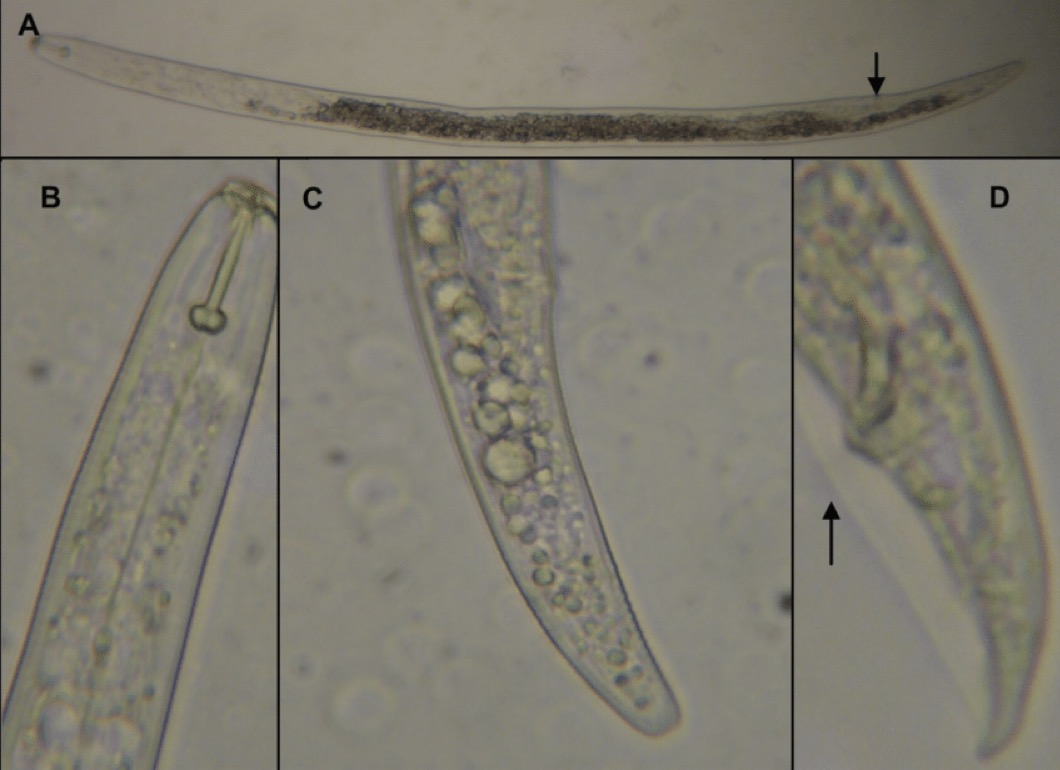
Photomicrograph of the body of Pratylenchus sp. (De Jesus et al., 2020).
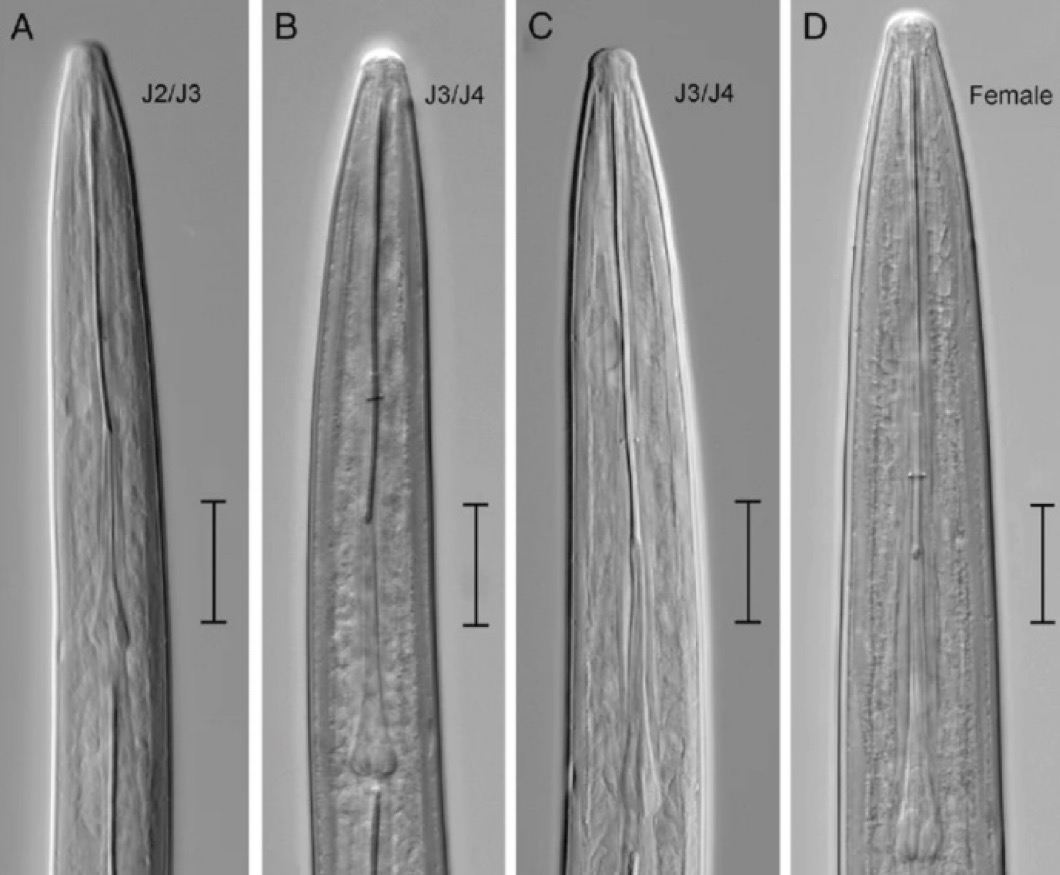
Photomicrographs of Xiphinema sp. (Munawar et al., 2018).
Implications for integrated nematode management
The present study provides preliminary evidence that the tested formulations possess nematicidal activity against Xiphinema spp. and Pratylenchus spp. associated with sugarcane in northern Côte d’Ivoire. However, the substantial variability among treatments and the generally moderate overall efficacy highlight the importance of interpreting these results within the limitations of the in vitro experimental system. The relatively stable activity of Prod 1 over the seven-day assessment period is nevertheless noteworthy. Its comparatively persistent effect, together with the relatively high mortality recorded at selected application rates, supports its selection for subsequent greenhouse experiments.
Overall, the present findings suggest that biological and formulated nematicides could contribute to integrated management of plant-parasitic nematodes in sugarcane. Prod 1 appears to be the most promising candidate among the formulations tested, while the activity of Bionematicides 4 and 5 may require optimization of concentration, formulation, or application conditions.
Discussion
The present study demonstrated that the three biological nematicides tested exhibited variable levels of activity against Xiphinema spp. and Pratylenchus spp. under in vitro conditions. Overall, mortality rates were generally moderate, with substantial variation according to product, concentration or application rate, and exposure time. These findings are consistent with previous reports indicating that the efficacy of biological control agents against plant-parasitic nematodes can be highly variable and is strongly influenced by experimental and environmental conditions ; . The relatively moderate mortality observed in the present study may reflect the limitations inherent to vitro assays, in which the complex interactions occurring in the rhizosphere are not reproduced. In soil, microbial antagonism, organic matter content, pH, moisture, temperature, root exudates, and the physical characteristics of the soil can substantially influence the survival, establishment, and activity of biological control agents.
The efficacy of microbial-based nematicides is particularly dependent on environmental conditions and on the concentration of viable propagules. Zhan et al. (2021) emphasized the importance of factors such as pH and inoculum concentration in determining the performance of fungal biocontrol agents. Similarly, Paes et al. (2026) reported that the germination and subsequent activity of Purpureocillium lilacinum can be influenced by the characteristics and homogeneity of the surrounding microenvironment. These observations may help explain, at least in part, the differences in efficacy observed among Bionem 4 and Bionem 5 in the present study. Costa et al. (2025) also emphasized the importance of maintaining suitable environmental and microbial conditions for achieving effective suppression of Pratylenchus spp.
The concentration of fungal propagules may represent another important determinant of nematicidal activity. El-Marzoky et al. (2023) reported substantially greater nematode mortality at a high concentration of P. lilacinum spores (5 × 10⁷ spores/mL), reaching approximately 89%. In the present study, the concentrations of viable propagules differed substantially between the biological products. Bionem 4 was applied at concentrations ranging from 1.35 × 10⁴ to 1.345 × 10⁷ spores/mL, whereas Bionem 5 was applied at concentrations ranging from 1.512 × 10⁶ to 1.514 × 10⁷ spores/mL. The comparatively lower propagule concentrations, particularly those used for Bionem 4, may therefore have contributed to the lower mortality observed for this product.
The activity of fungal biocontrol agents against nematodes is generally associated with a combination of direct and indirect mechanisms. These may include adhesion and penetration of the nematode cuticle, production of extracellular hydrolytic enzymes, secretion of secondary metabolites, and competition for resources. Recent studies have highlighted the role of proteases and chitinases in the degradation of nematode cuticular components by P. lilacinum and other nematophagous fungi . However, the expression and activity of these mechanisms are strongly dependent on environmental conditions and nutrient availability. Consequently, the absence of a suitable nutrient source or an unfavorable physicochemical environment may limit fungal growth and reduce nematicidal activity during prolonged exposure. The temporal response observed in the present experiment provides additional insight into the behavior of the tested products. Bionem 4 and Bionem 5 did not show a consistent increase in mortality throughout the seven-day assessment period. For Pratylenchus spp., for example, mean mortality decreased from approximately 42.18% to 27.51% for Bionem 4 and from 50.96% to 41.05% for Bionem 5 between 48 h and seven days. Such a decrease may reflect the progressive reduction in the activity or viability of the biological agents under experimental conditions. In a closed in vitro system, the absence of continuous nutrient inputs and the accumulation of metabolic products may progressively modify the physicochemical environment and consequently reduce biological activity. In contrast, Prod 1 displayed a different response pattern from the two microbial formulations. For Xiphinema spp., the highest mortality recorded during the experiment was 68.02% at 1 L/ha after 48 h, whereas mortality of 64.58% was observed at 2 L/ha after 72 h. After seven days, mortality remained relatively high, reaching 55.81% and 57.63% at 1 and 2 L/ha, respectively.
A comparable pattern was observed against Pratylenchus spp., for which Prod 1 produced the highest mortality at 1 L/ha after 48 h (72.21%) and at 2 L/ha after 72 h (64.37%). These results indicate that Prod 1 exhibited the highest overall activity among the tested products, although its response was not strictly proportional to concentration or exposure time. The comparatively persistent activity of Prod 1 may be related to its formulation and chemical composition. Unlike Bionem 4 and Bionem 5, which are microbial-based products, Prod 1 consists of a formulation containing benzisothiazole, sodium hydroxide, glutaraldehyde, and cellulose. The presence of compounds with direct antimicrobial or biocidal properties could contribute to the relatively rapid mortality observed during the first 48–72 h. However, studies dedicated to the formulation and mode of action of these biopesticides must be conducted. The results also revealed considerable variability in the response of the two nematode genera to the tested products. Pratylenchus spp. generally exhibited a response pattern similar to that of Xiphinema spp., but some treatments produced markedly different mortality levels between the two groups. Such differences may be related to the biological and morphological characteristics of the nematodes. Xiphinema spp. are ectoparasitic nematodes with a relatively robust stylet and distinct feeding behavior, whereas Pratylenchus spp. are migratory endoparasites that penetrate and migrate within plant roots. Differences in body structure, cuticle characteristics, feeding behavior, and physiological tolerance may influence their susceptibility to biological or chemical compounds.
The concentration-response analysis further demonstrated that nematicidal activity was influenced by the concentration or application rate of the tested products. For Pratylenchus spp., the analysis of variance indicated a significant effect of treatment concentration/application rate on corrected mortality (F= 4.735; P= 0.003). The highest mortality was recorded for Prod 1 at 2 L/ha (58.56% when averaged across the assessment periods), whereas the lowest value was observed for Bionem 4 at 13.5 mg/L (8.66%). These results indicate that increasing the concentration or application rate can enhance nematicidal activity, although the relationship was not strictly linear for all products. Similar concentration-dependent responses have been reported for microbial and other biological nematicides ; .
Importantly, the absence of a significant effect of exposure time on Pratylenchus spp. mortality should also be considered. The analysis of variance showed that the effect of the experimental model associated with incubation time was not significant (F= 0.850; P= 0.573). This result suggests that, when considered across the tested treatments, mortality did not systematically increase with prolonged exposure. This finding contrasts with studies in which nematicidal activity increased progressively with exposure time . The discrepancy may be explained by differences in experimental design, biological material, product formulation, nematode species, and environmental conditions. The lack of a consistent temporal increase in mortality also suggests that prolonged exposure alone may not necessarily enhance the efficacy of the tested biological products under in vitro conditions. In particular, the decline observed for Bionem 4 and Bionem 5 after 48 h may indicate that the active microorganisms require suitable environmental conditions to maintain their activity over time. Conversely, the relatively sustained activity of Prod 1 suggests greater persistence of its active components under the conditions used in this experiment. An important finding of this study is therefore the differential performance of the tested formulations. Prod 1 consistently showed the greatest activity against both Xiphinema spp. and Pratylenchus spp., whereas Bionem 4 generally exhibited the lowest efficacy. Bionem 5 showed an intermediate response. These differences demonstrate that the efficacy of biological nematicides cannot be inferred solely from their classification as biological products; formulation, active ingredient concentration, viability, and compatibility with the target nematode are likely to be critical determinants of performance.
From an applied perspective, the results indicate that Prod 1 may represent a promising candidate for further evaluation against the two nematode genera associated with sugarcane production in Côte d’Ivoire. However, the mortality levels obtained in vitro, although encouraging for some treatments, should not be directly interpreted as evidence of field efficacy. Greenhouse and field experiments are required to determine whether the observed nematicidal activity can be reproduced under more complex conditions and whether reductions in nematode populations translate into improved root development and sugarcane growth. Such experiments should also evaluate phytotoxicity, persistence in soil, effects on non-target microorganisms, and interactions with existing crop-management practices.
Conclusion
Overall, the present findings demonstrate that the tested bionematicides differ substantially in their efficacy against Xiphinema spp. and Pratylenchus spp. under controlled in vitro conditions. Prod 1 exhibited the highest and comparatively most persistent activity, whereas the two microbial formulations showed more variable responses over time. The significant concentration effect observed for Pratylenchus spp., combined with the absence of a significant overall effect of exposure time, highlights the importance of optimizing both product dose and formulation rather than relying solely on prolonged exposure. Further greenhouse and field studies are therefore warranted to validate these findings and determine the practical potential of these products within integrated nematode management programs for sustainable sugarcane production in Côte d’Ivoire.
Acknowledgement
The authors wish to thank the National Center for Agricultural Research for providing the trial site and laboratory facilities. They also express their gratitude to the anonymous participants who generously donated their time to this study, making this research possible.
Novelty Statement
This study makes a novel contribution to the integrated management of phytonematodes by evaluating, for the first time under comparative conditions, the nematicidal potential of three distinct biopesticide formulations against parasitic populations of sugarcane (Saccharum officinarum L.). The quantitative data generated provide an essential empirical basis for the development of robust biological alternatives, aimed at reducing the critical dependence on synthetic nematicides in industrial agroecosystems.
Author’s Contribution
Yeo Gnénakan: Designed the study, conducted the trials, performed the statistical analysis and wrote the manuscript.
Fouha Bi Nady Delphin, N’cho Frejus Jolivet, Kassi Koffi Fernand Jean-Martial and Fondio Lacina: Provided assistance, supervised and proofread the manuscript.
Generative AI and AI assisted technology statement
The authors declare that no generative AI and AI assisted technology was used in the creation of this manuscript.
Conflict of interest
The authors have declared no conflict of interest.
References
- Antil, S., Kumar, R., Pathak, D.V. and Kumari, A., 2023. Recent advances in utilizing bacteria as biocontrol agents against plant parasitic nematodes emphasizing Meloidogyne spp. Biol. Contr., 183: 105-244. https://doi.org/10.1016/j.biocontrol.2023.105244 [CrossRef]
- Bhuiyan, S., Kylie, S. and Jason, E., 2024. Parasitic nematodes of sugarcane: A major productivity impediment and grand challenges in management. Plant Dis., 108(10): 2945-3207. https://doi.org/10.1094/PDIS-11-23-2479-FE [CrossRef]
- Bigot, S., Brou, T.Y., Oszwald, J. and Diedhiou, A., 2005. Facteurs de la variabilité pluviométrique en Côte d’Ivoire et relations avec certaines modifications environnementales. Sécheresse, 16(1): 5–13.
- Costa, M.K.L., Silva, J.M., Rocha, S.M.B., Costa, R.M., Neto, F.A., Puerari, H.H., Bonifacio, A., Melo, V.M.M., Pereira, A.P.A. and Araujo, A.S.F., 2025. Potentiel des bionématicides pour la suppression de Pratylenchus zeae et la modification de la communauté bactérienne de la rhizosphère de la canne à sucre (Saccharum officinarum). J. Natl. Pestic. Res., 14: 100-156.
- De Jesus, A., Pedrosa, E., Reis, J. and Chaves, A., 2020. Morphological and morphometric characte Declaration rization of pratylenchus species in sugarcane cropping areas of pernambuco state. Rev. Caatinga, 33: 599-607. https://doi.org/10.1590/1983-21252020v33n303rc [CrossRef]
- El-Marzoki, A., 2019. Étude comparative de trois méthodes courantes d’extraction de nématodes phytoparasites à partir d’échantillons de sol. Egypt. J. Agronematol., 18(2): 81-89.
- El-Marzoky, A.A., Elnahal, A., Jghef, M., Abourehab, M., El-Tarabily, K. and Ali, M., 2023. Purpureocillium lilacinum souche AUMC 10620 comme agent de biocontrôle contre le nématode des agrumes Tylenchulus semipenetrans en conditions de laboratoire et de terrain. Eur. J. Plant Pathol., 167(1): 59-76. https://doi.org/10.1007/s10658-023-02684-1 [CrossRef]
- Finney, D.J., 1971. Analyse Probit. 3e édition, Cambridge University Press, Cambridge.
- Kouamé, K.D., Nandjui, J., Kassi, K.F.J-M., Kouassi, K.C., Bringa, K.G., Dove, J.H. and Seelavarn, G., 2018. Étude du peuplement des nématodes associés à la culture de la canne à sucre dans les périmètres sucriers de Côte d’Ivoire. J. Anim. Pl. Sci., 37(1): 5985-5996.
- Melo, T.S., Silva, R.A. and Santos, L.C.M., 2025. Stability of soil suppressiveness and evaluation of biological agents against root-knot nematodes in crop systems. Biol. Contr., 192: 106-132.
- Mitu, A.H. and Kayess, M.O., 2025. Application of Paecilomyces lilacinus to suppress Meloidogyne incognita and promote vegetable growth. J. Plant Dis. Prot., 132: 455-468. https://doi.org/10.1007/s44279-025-00210-x [CrossRef]
- Mokrini, F., Laasli, S.E., Dababat, A.A., Mayad, E., Hari, A., Li, H., El-Hamss, H., İmren, M., Ali, M.A., Baloch, F.S. and Lahlali, R., 2024. Diversity, distribution, and biological control strategies of plant parasitic nematodes: Insights from Morocco within a global context a comprehensive review and future research perspectives. J. Plant Dis. Prot., 114(1): 89-104. [CrossRef]
- Munawar, M., Ye, W., Yu, Q. and Gu, J., 2018. Description of Xiphinema parachambersi sp. n. (Nematoda: Longidoridae) from imported ornamental plants in Japan with a Key to Xiphinema species in Group 1. J. Nematol., 50: 369-386. https://doi.org/10.21307/jofnem-2018-027 [CrossRef]
- Paes, B.S.J., Geraldo, H.F.B. and de Oliveira, C.M.G., 2026. Purpureocillium lilacinum and Metarhizium anisopliae isolates for biocontrol against lesion and root-knot nematodes infecting sugarcane in greenhouse conditions. Rev. Agric., 101(1): 41–50. https://doi.org/10.37856/revistadea.v101i1.4404 [CrossRef]
- Péné, Bi, C. and Kéhé, M., 2005. Performances de trois variétés de canne à sucre soumises au rationnement hydrique en prématuration au nord de la Côte d’Ivoire. Agron. Afr., 17(1): 7–18. https://doi.org/10.4314/aga.v17i1.1653 [CrossRef]
- Rajendran, J., Dubey, J., Kumar, V. and Sujayanand, G.K., 2024. Nematode egg parasitic fungus, Purpureocillium lilacinum: Efficacy of indigenous strains for the management of Meloidogyne incognita in chickpea. Egypt. J. Biol. Pest Cont., 34(1): 4. [CrossRef]
- Sikora, R., Helder, J., Molendijk, P.G.L., Desaeger, J., Eves-van den, A.S. and Mahlein, A.K., 2023. Integrated nematode management in a world in transition: Constraints, policy, processes, and technologies for the future. Ann. Rev. Phytopathol., 61: 209–230. https://doi.org/10.1146/annurev-phyto-021622-113058 [CrossRef]
- Spaull, W.V. and Cadet, P., 1990. Nematode parasites of sugarcane. Dans M. Luc, R.A. Sikora and J. Bridge (Eds.), Plant Parasitic Nematodes in Subtropical and Tropical Agriculture. CAB International. pp. 461–491.
- Suresh, R., Sengottayan, S.N., Saji, F., Shibu, T. and Kandaswamy, K., 2024. Purpureocillium lilacinum as a biocontrol agent: ecophysiological traits supporting its biocontrol potential. Biocontr. Sci. Technol., 34(3): 211-229.
- Swibawa, I.G., Solikhin, S., Fitriana, Y., Suharjo, R. and Purnomo, B., 2024. Effectiveness of bionematicide from Purpureocillium lilacinum in controlling root-knot nematodes (Meloidogyne spp.). J. Nematol., 56(1): 181-192. https://doi.org/10.23960/jhptt.224181-189 [CrossRef]
- Zhan, J., Qin, Y., Gao, K., Fan, DZ, Wang, L., Xing, R., Liu, C. and Pengcheng, L., 2021. Efficacy of a chitin-based water-soluble derivative in inducing Purpureocillium lilacinum against nematode disease (Meloidogyne incognita). Int. J. Mol. Sci., 22(13): 68-70. https://doi.org/10.3390/ijms22136870 [CrossRef]

Services
Article usage statistics
Loading…
Related articles
- Nutritional and Anti-Nutritional Evaluation of Alternative Feed Ingredients for Sustainable Poultry Farming in Central and Southern EthiopiaAdvances in Animal and Veterinary Sciences · 2025
- Assessment of Genetic Variability in Sugarcane (Saccharum officinarum L.) Genotypes for Better Yield, Quality and Sugarcane Mosaic Virus Resistance in Central Punjab, PakistanSarhad Journal of Agriculture · 2023
- Multivariate Analysis in Determining Morphologically Diverse Sugarcane Genotypes (Saccharum officinarum L.) and their Flowering Response at Arja, Azad KashmirSarhad Journal of Agriculture · 2017
- Productivity and Brix Content of Several Sugarcane (Saccharum officinarum) Varieties under Various Concentrations of Liquid Nano-silica FertilizerSarhad Journal of Agriculture · 2025
- Comparison of Eco-Friendly Control Strategies against Root-Knot Nematode in Relation to Growth and Fruit Yield of Pomegranate Orchards, with Special Reference to Structure of Plant-Parasitic Nematodes CommunityPakistan Journal of Nematology · 2022
- Evaluation of Sugarcane Genotypes for Different Ecologies of Pakistan by Employing Gge-Biplot TechniquePakistan Journal of Agricultural Research · 2019