
Modern broiler production systems maximize productivity but often induce oxidative stress, negatively impacting bird performance, immunity, and meat quality. This study provides a comprehensive bibliometric mapping of global research on antioxidants and oxidative stress in broiler chickens from 1957 to 2025. Data from 5,346 articles retrieved from the Scopus database were analyzed using Biblioshiny and VOSviewer. Results indicate a robust annual growth rate of 10.2%, with Poultry Science and Animals serving as leading publication venues. China emerges as the primary research hub, contributing 32.4% of the total output, while institutional leaders such as Nanjing Agricultural University drive global collaboration. Thematic evolution reveals a significant shift in research focus: research has transitioned from early descriptive studies on Vitamin E and lipid peroxidation to modern investigations into sophisticated molecular mechanisms, including gene expression, apoptosis, autophagy, and intestinal barrier health. Selenium and vitamin E remain the most prominent, well-established antioxidant compounds in this literature (occurring in 9.2% and 4.4% of documents, respectively), while newer phytogenic compounds such as curcumin remain a small but distinct niche (under 1% of documents), together pointing to a still-diversifying set of nutritional strategies for stress mitigation. This analysis offers a structured baseline for future research, highlighting that contemporary poultry science increasingly integrates cellular redox regulation and gut physiology alongside established nutritional approaches to optimize broiler resilience and production efficiency.
Review · Volume 14, Issue 12, Pages 2741–2754, 5 November 2026 · Open Access
Bibliometric Insights into Antioxidants and Oxidative Stress Management in Broilers
· · ·
Affiliations & Notes ⌄
- 1Department of Animal Nutrition and Feed Technology, Faculty of Animal Science, IPB University, Bogor 16680, Indonesia
- 2Center for Tropical Animal Studies (Centras), IPB University, Bogor 16153, Indonesia
- *Correspondence | Muhammad Ridla; Email: hmridla@apps.ipb.ac.id
Article Info ⌄
- Journal:
- Advances in Animal and Veterinary Sciences
- Submitted Date:
- 6 August 2026
- Accepted Date:
- 14 October 2026
- Published Date:
- 5 November 2026

Abstract
INTRODUCTION
The poultry industry has become one of the most important sectors in global animal production due to its significant contribution to food security and the increasing demand for affordable animal protein. Among poultry species, broiler chickens are widely recognized for their rapid growth rate, efficient feed conversion, and short production cycle. Modern broiler production systems are highly intensive and designed to maximize productivity; however, such systems often expose birds to numerous environmental, nutritional, and physiological stressors. Factors such as high stocking density, heat stress, pathogen exposure, transportation, and imbalanced nutrition can induce oxidative stress, which negatively affects broiler performance, health status, immune responses, and meat quality ; .
Oxidative stress is characterized by an imbalance between the generation of reactive oxygen species (ROS) and the body’s antioxidant defense mechanisms. Excessive ROS production can damage lipids, proteins, and nucleic acids, leading to impaired cellular function and metabolic disturbances. In broiler chickens, oxidative stress has been associated with reduced feed intake, poor growth performance, lower feed efficiency, weakened immunity, and increased susceptibility to disease ; . Furthermore, oxidative damage may reduce carcass quality and shelf life of poultry products, resulting in economic losses for the poultry industry . Therefore, strategies to improve antioxidant status have become an important area of research in poultry nutrition and physiology.
Dietary antioxidants have received considerable attention as potential nutritional interventions to mitigate oxidative stress in broilers. Various antioxidant compounds, including vitamins, selenium, zinc, polyphenols, flavonoids, phytogenic additives, and plant extracts, have been extensively studied for their beneficial effects on physiological and metabolic functions ; ; . Within the present dataset, vitamins and phytogenic compounds/plant extracts/essential oils are each present in approximately 10% of documents, selenium in 9.5%, zinc in 8.0%, and polyphenols/flavonoids collectively in 5.3%, indicating that no single compound class dominates the literature and that these classes have received broadly comparable, rather than sharply unequal, research attention. These compounds can enhance antioxidant enzyme activity, improve redox balance, stabilize immune function, and reduce lipid peroxidation ; . Some literature on natural antioxidants derived from medicinal plants and phytogenic sources has proposed them as potentially safer and more sustainable alternatives to antibiotic growth promoters ; ; whether the present bibliometric data actually support this positioning, rather than merely reflecting growing publication interest, is examined in the discussion.
The increasing scientific interest in antioxidants has led to a substantial growth in publications related to oxidative stress and broiler production over recent decades, but this growth itself creates a problem that a conventional narrative review is not well suited to solve: Across nearly seven decades and thousands of documents, it is difficult to identify, in a reproducible and quantifiable way, which compounds, countries, institutions, and mechanistic themes have received disproportionate attention, which remain under-explored, and when thematic transitions actually occurred. Bibliometric analysis addresses these questions directly by quantifying publication patterns, collaboration networks, citation structures, and thematic developments within a research field ; , providing insights that a qualitative synthesis of individual studies cannot easily replicate or update . The resulting map is intended primarily for researchers and funding bodies deciding where to direct new primary studies, and for editors and reviewers assessing whether a proposed study addresses a saturated or an under-explored niche within broiler antioxidant research. Therefore, this study aimed to conduct a bibliometric analysis of global research on antioxidants, oxidative stress, and physiological responses in broiler chickens to map publication trends, research hotspots, collaboration patterns, and thematic evolution in this field.
MATERIALS AND METHODS
Data source, search strategy, and bibliometric analysis
Bibliometric data were obtained exclusively from the Scopus database on 1 February 2025. Scopus was selected for its extensive coverage of peer-reviewed scientific literature in animal science, veterinary medicine, nutrition, and agricultural research, as well as its standardized bibliographic and citation metadata, which are widely used in bibliometric and science mapping studies ; . The retrieved records included information on authors, article titles, abstracts, keywords, publication years, source journals, citation counts, and institutional affiliations, providing a comprehensive dataset for subsequent bibliometric analyses.
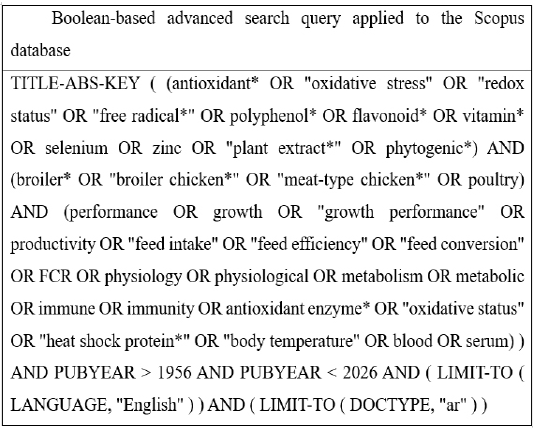
A systematic search was conducted using predefined keyword combinations related to antioxidants and broiler chickens. Search terms covered antioxidants, oxidative stress, redox balance, phytogenic compounds, vitamins, minerals, immune responses, metabolism, growth performance, and feed efficiency. Boolean operators were applied to improve retrieval precision, and the complete Boolean search string used to build the primary dataset is provided in Table 1. The search was limited to English-language research articles (DOCTYPE= “ar”) published between 1957 and 2025 (PUBYEAR > 1956 AND PUBYEAR < 2026). Conference proceedings, editorials, and book chapters were excluded at the database-filter stage; records subsequently identified as review articles during title-and-abstract eligibility screening were also excluded, as shown in the PRISMA flow diagram (Figure 1).
The extracted records were downloaded in CSV format and then screened for eligibility. This screening followed the PRISMA 2020 framework to maintain transparency, uniformity, and reproducibility ; the number of records identified, excluded (with reasons), and included at each stage is reported in Figure 1. Two reviewers independently assessed titles, abstracts, and full-text articles according to predefined inclusion and exclusion criteria. Any discrepancies between the reviewers were resolved through consensus, and when required, a third reviewer was consulted to make the final decision.
Table 1: Syntax of an advanced search query on antioxidants and oxidative stress management in broilers.
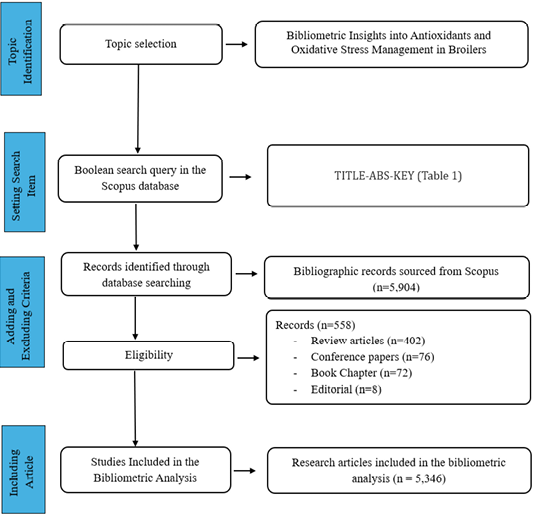
PRISMA on antioxidants and oxidative stress management in broilers.
Bibliometric analyses were performed primarily using Biblioshiny (an R-based interface for the bibliometrix package), which generated all descriptive, productivity, citation, and collaboration statistics and visualizations reported in Figures 2-9 and 11 . VOSviewer was used specifically to construct the keyword co-occurrence network (Figure 10; , whose force-directed layout and label-density controls produced a more legible visualization of the large number of co-occurring keywords than Biblioshiny’s equivalent output. Descriptive indicators included annual publication output, leading authors, institutions, countries, and journals; co-authorship, citation, and keyword co-occurrence networks were generated to identify scientific collaborations, influential contributors, and emerging research themes. Several summary figures (Figures 2-6 and 8) were additionally rendered as infographics from the underlying Biblioshiny statistics using an AI-assisted visualization tool, consistent with the Generative AI and AI-Assisted Technology Statement; these present the same underlying numbers in a stylized format and are not independent software outputs. These visualization techniques provided a comprehensive overview of the intellectual structure and evolution of antioxidant research in broiler chickens .
RESULTS
Key information
The bibliometric dataset spans publications from 1957 to 2025, reflecting the long-term development of antioxidant research in broiler chickens. A total of 5,346 articles were retrieved from 747 sources, with an annual growth rate of 10.2%, indicating increasing scientific interest. The average document age was 8.21 years, and the mean citations per document were 21.59, indicating strong research influence. The dataset included 33,746 references, highlighting a well-established knowledge base. A total of 18,866 authors contributed, with 6.09 co-authors per document, while international collaboration measured as the percentage of multiple-country publications (MCP), the same metric reported per country in Figure 2 accounted for 21.92% of publications. Additionally, 15,892 Keywords Plus and 8,302 author keywords were identified, demonstrating broad thematic diversity in this research field (Figure 2).
Annual scientific production trends
The annual scientific production shows a gradual increase from 1957 to around 2000, with very limited publications in the early decades (Figure 3). From 2000 onwards, research output has risen steadily, indicating growing scientific interest in the field. A more pronounced increase is observed after 2010, when publication numbers accelerate significantly. The most dramatic growth occurs after 2018, showing an exponential rise in research activity. The peak is reached in recent years (2023-2025), indicating strong and growing global attention. Overall, the trend shows a shift from low, stable output to rapid growth in antioxidant-related broiler research.
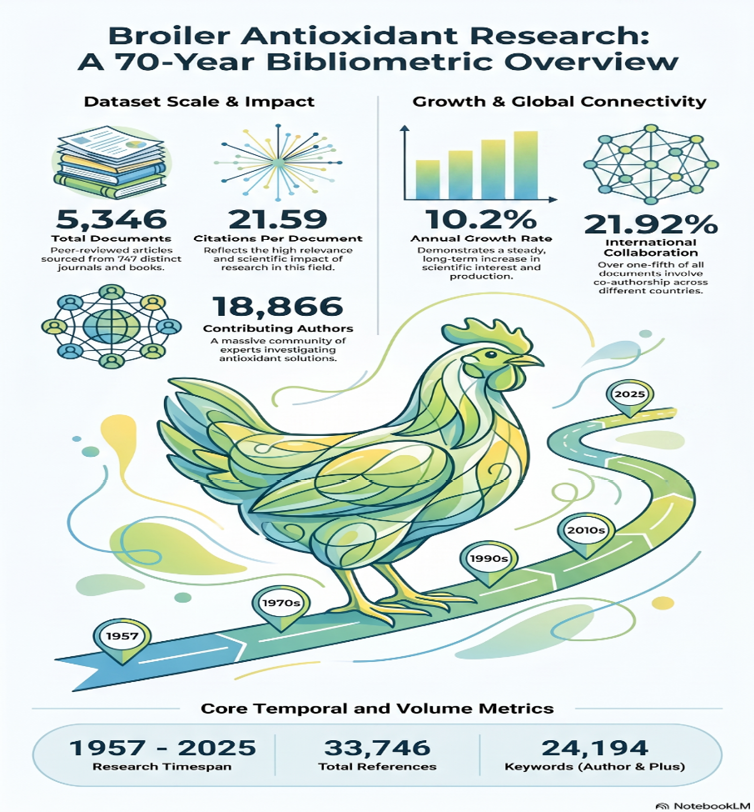
Descriptive characteristics of the bibliographic dataset on antioxidants and oxidative stress management in broilers.
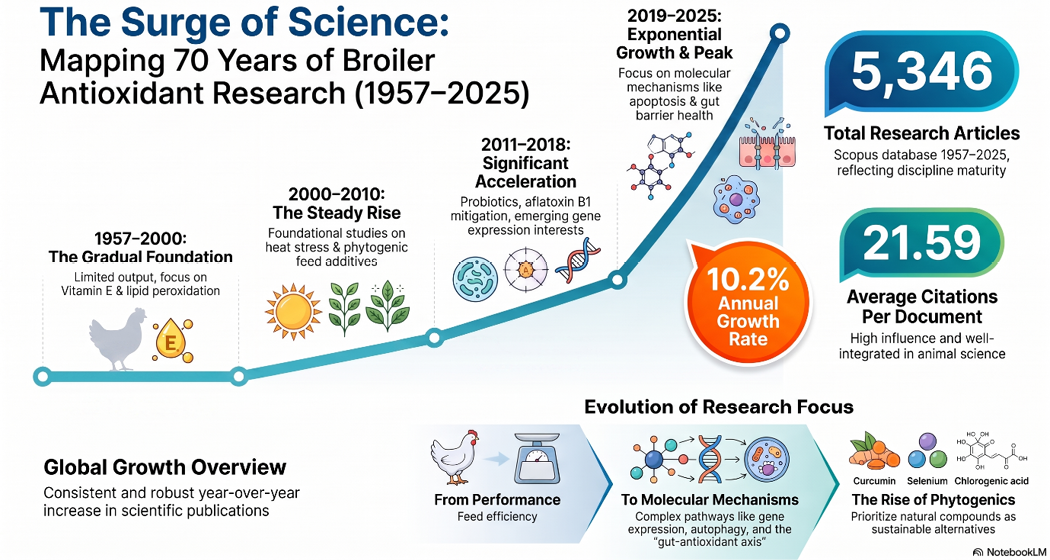
Annual scientific production on antioxidants and oxidative stress management in broilers.
Most relevant sources
Publication output is concentrated in Poultry Science (760 articles), followed by Animals (347) and Biological Trace Element Research (142). Other influential journals include British Poultry Science (131), Frontiers in Veterinary Science (123), Italian Journal of Animal Science (80), and Journal of Animal Physiology and Animal Nutrition (71). Ecotoxicology and Environmental Safety (63) and Antioxidants (58) also contribute substantially. Additional sources include Tropical Animal Health and Production (54), Journal of Animal Science (50), Veterinary Medicine and Science (50), Indian Journal of Animal Sciences (49), Journal of Applied Poultry Research (49), and Veterinary World (49), indicating a broad dissemination across poultry, veterinary, and animal nutrition research journals overall, with a globally recognized literature base (Figure 4).
Most productive authors
The most productive author is Abd El-Hack, Mohamed E., with 58 publications- approximately 1.08% of the 5,346-document corpus- followed closely by Wang, Tian (55) and Zhou, Yanmin (54). Other highly contributing researchers include Alagawany, Mahmoud Mohamed (42), Chen, Yueping (40), and Seidavi, A. R. (39). Additional influential authors are Guo, Yuming (35), Khan, Rifat Ullah (34), Wen, Chao (33), and Zhang, Lili (32). Ashour, Elwy Ali contributes 30 articles, while Şahin, Kâzim (27), Sahin, Nurhan (25), Swelum, Ayman (25), and Tufarelli, Vincenzo (24) also shows steady research output; cross-checking the raw Scopus export directly by Scopus Author ID confirms Şahin, Kâzim and Sahin, Nurhan are indeed distinct individuals, and no unmerged near-homonym issues were found among the top 15 most productive authors. Within this dataset, these top authors’ citation-weighted impact (h-index) ranges from 14 to 32 (e.g., Wang, Tian h=32; Zhang, Lili h=25; Abd El-Hack, Mohamed E. h=24; Alagawany, Mahmoud Mohamed and Ashour, Elwy Ali h=14-15), indicating that high raw productivity is generally, though not perfectly, accompanied by high citation impact. Overall, the data indicates a strong concentration of productivity among a core group of poultry and animal nutrition researchers, reflecting active international collaboration and consistent scholarly contributions in the field (Figure 5).
Author citation performance
The analysis of the most cited publications identified several highly influential studies that have shaped research on antioxidants and broiler production. The article by Windisch et al. (2008) in the Journal of Animal Science was the most influential publication, receiving 1,162 total citations, 61.16 citations per year, and the highest normalized citation score (17.41). The publication trend also showed notable peaks in 2003 and 2013, indicating periods of increased research activity in this field. Other highly cited studies included Lin et al. (2006) with 476 citations and Ramachandran et al. (2007) with 459 citations.
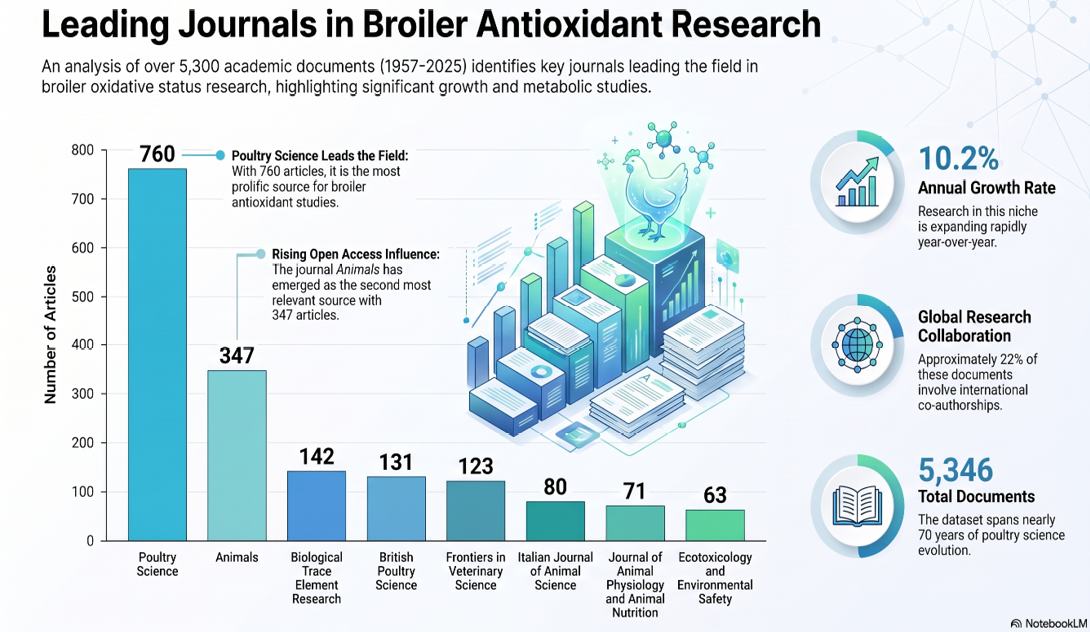
Most relevant sources on antioxidants and oxidative stress management in broilers.
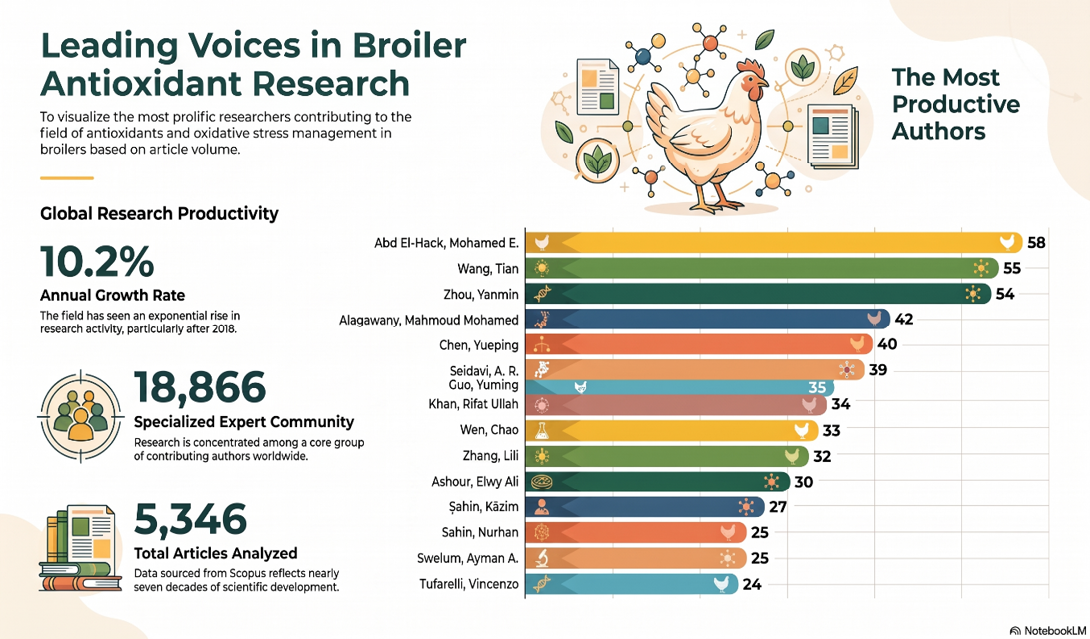
Most productive authors on antioxidants and oxidative stress management in broilers.
Foundational poultry nutrition studies by Altan et al. (2003), Hashemipour et al. (2013), and Bartlett and Smith (2003) also accumulated substantial citation counts, indicating their long-term scientific impact. More recent publications, such as Zhang et al. (2022) and Aziz et al. (2018), showed high annual citation rates and normalized citation scores, reflecting their growing influence. The citation patterns demonstrate that research on antioxidant supplementation, oxidative stress mitigation, feed additives, and poultry performance has attracted sustained scientific attention and continues to evolve as an important area of broiler nutrition research (Figure 6).
Affiliations, authors, and country relationships
The figure presents a three-field bibliometric Sankey diagram (Figure 7) illustrating relationships among author affiliations (AU_UN), authors (AU), and research keywords (DE). On the left side, institutional contributors such as Nanjing Agricultural University, Chinese Academy of Agricultural Sciences, China Agricultural University, Huazhong Agricultural University, Northeast Agricultural University, and several faculties of agriculture and veterinary medicine are shown as primary sources of publications. These institutions are strongly connected through collaboration flows to a central group of authors in the middle panel, including Abd El-Hack, Mohamed E., Wang Tian, Zhou Yanmin, Chen Yueping, Wen Chao, Zhang Lili, and others, indicating active international and interdisciplinary research networks. On the right side, the dominant research themes include broiler, broilers, growth, growth performance, meat quality, immunity, heat stress, antioxidant capacity, oxidative stress, and poultry-related terms. The thickness of connecting streams reflects the strength of associations between institutions, authors, and topics, highlighting a strong focus on broiler production performance, physiological stress responses, and meat quality improvement in poultry science research.
Most productive countries
China dominated the country’s scientific production, contributing 1,731 publications (32.4% of the total output), substantially exceeding those of all other countries (Figure 8). Iran ranked second with 397 publications (7.4%), followed by Egypt with 377 publications (7.1%), India with 237 publications (4.4%), and the United States with 224 publications (4.2%). China also recorded the highest number of single-country publications (SCP = 1,478), reflecting strong domestic research capacity. Egypt (MCP= 170), China (MCP= 253), and the United States (MCP= 72) showed notable levels of international collaboration. Saudi Arabia had the highest proportion of multiple-country publications (MCP% = 63.3%), followed by Italy (47.1%) and Egypt (45.1%), while Iraq had the lowest MCP% (1.3%). These findings indicate substantial disparities in research productivity and varying degrees of international engagement among countries.
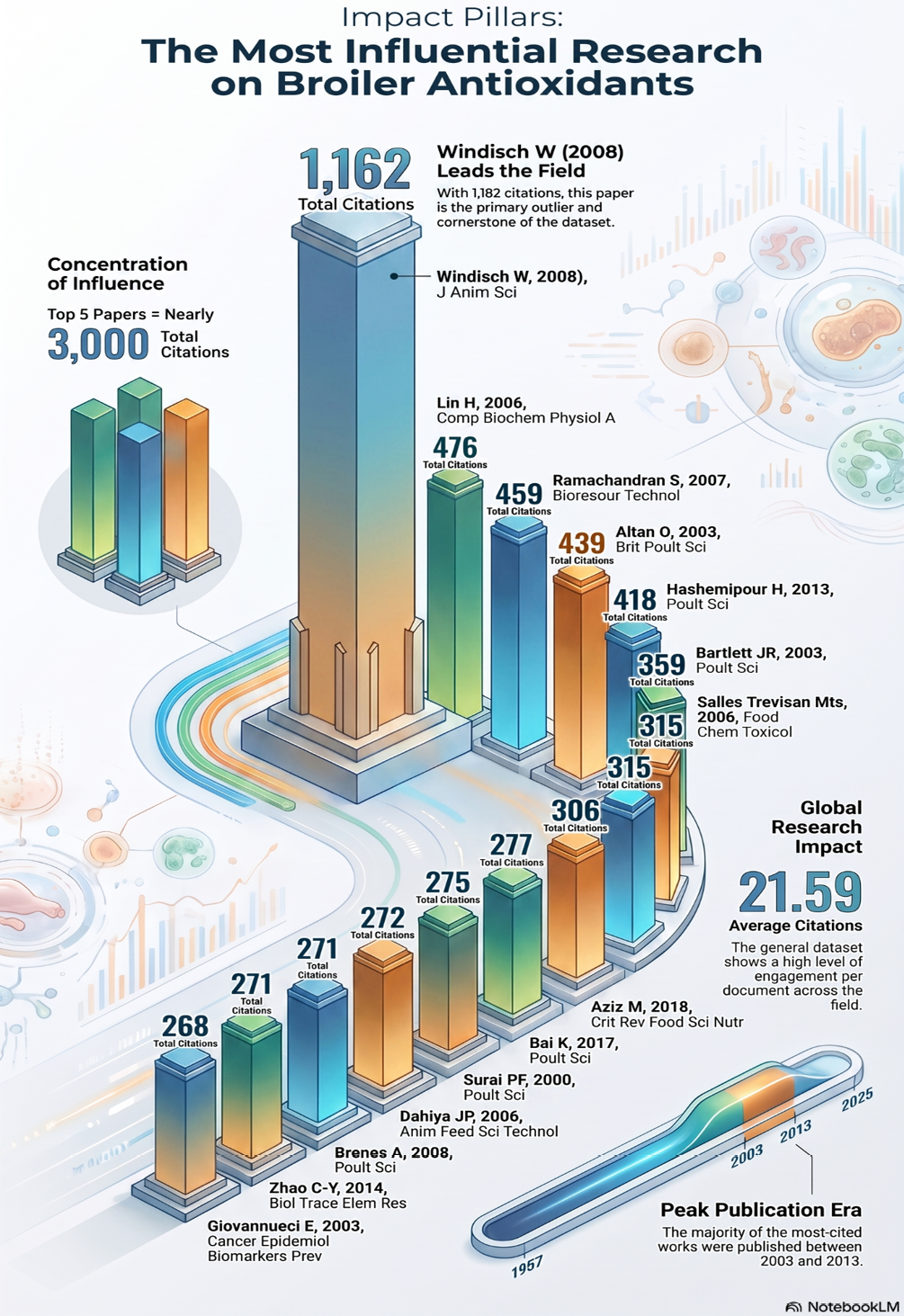
Most cited publications on antioxidants and oxidative stress management in broilers.
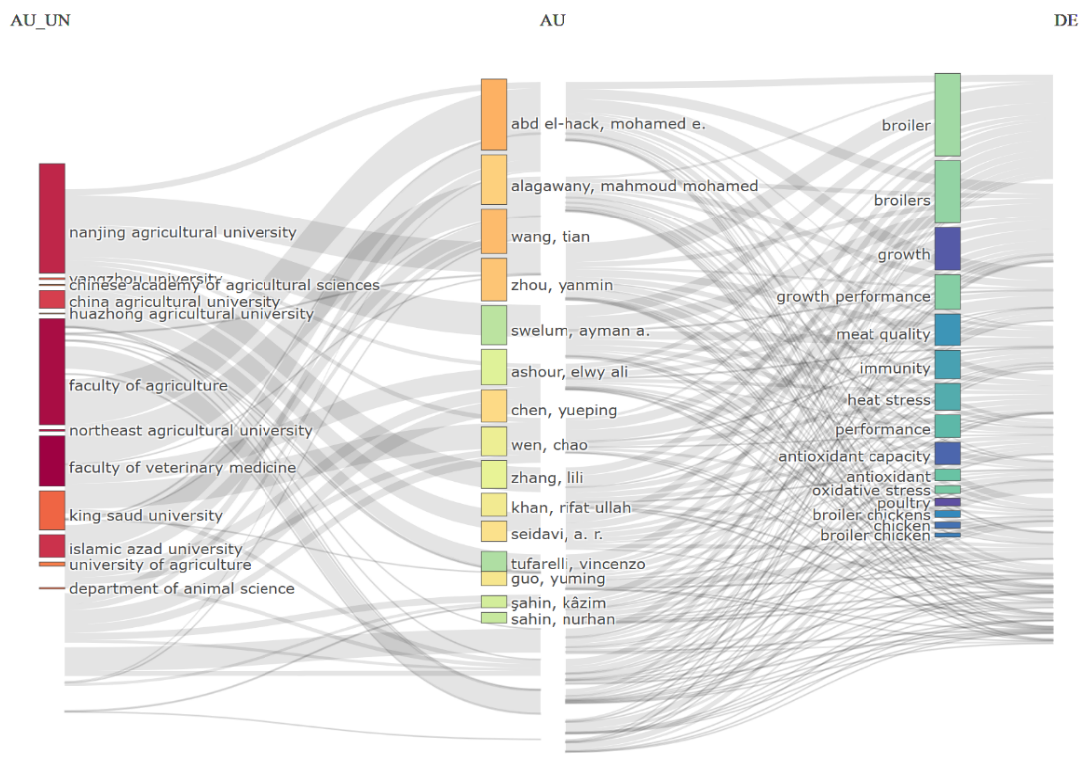
Three-field collaboration network among affiliations, authors, and countries on antioxidants and oxidative stress management in broilers.
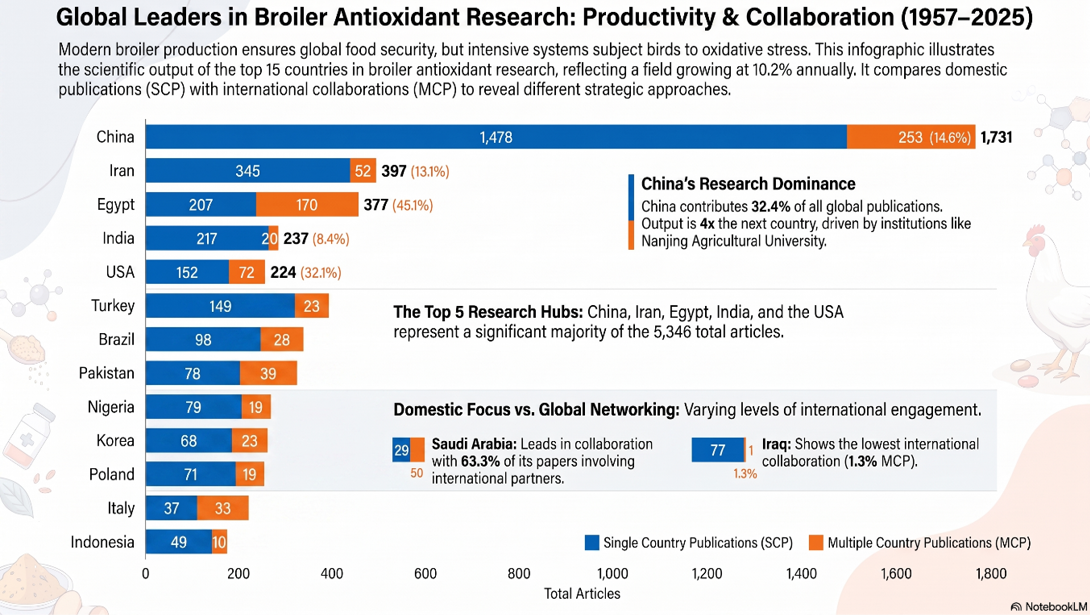
Most productive countries on antioxidants and oxidative stress management in broilers.
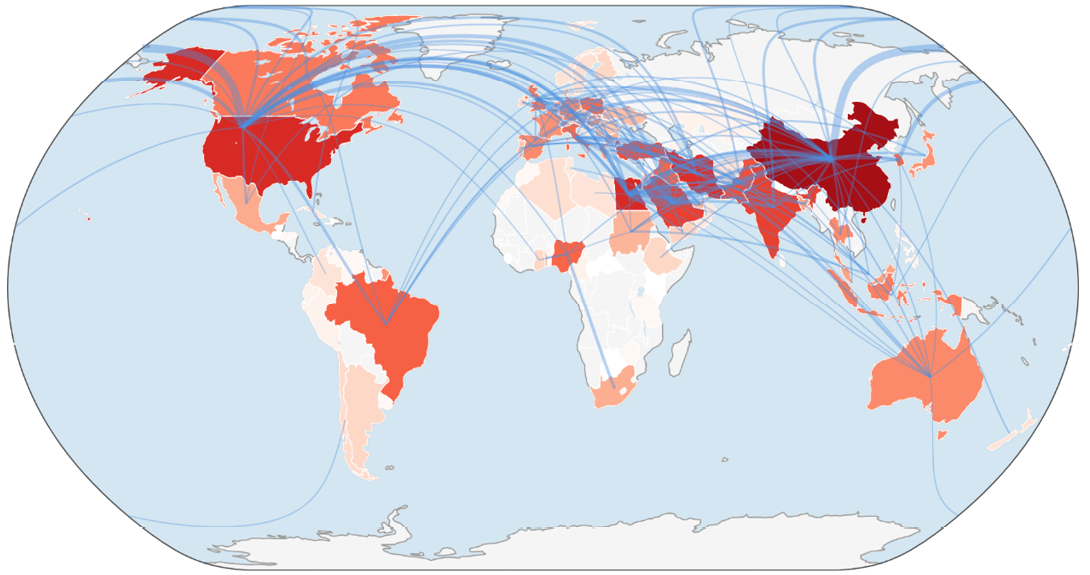
International collaboration network in antioxidants and oxidative stress management in broilers.
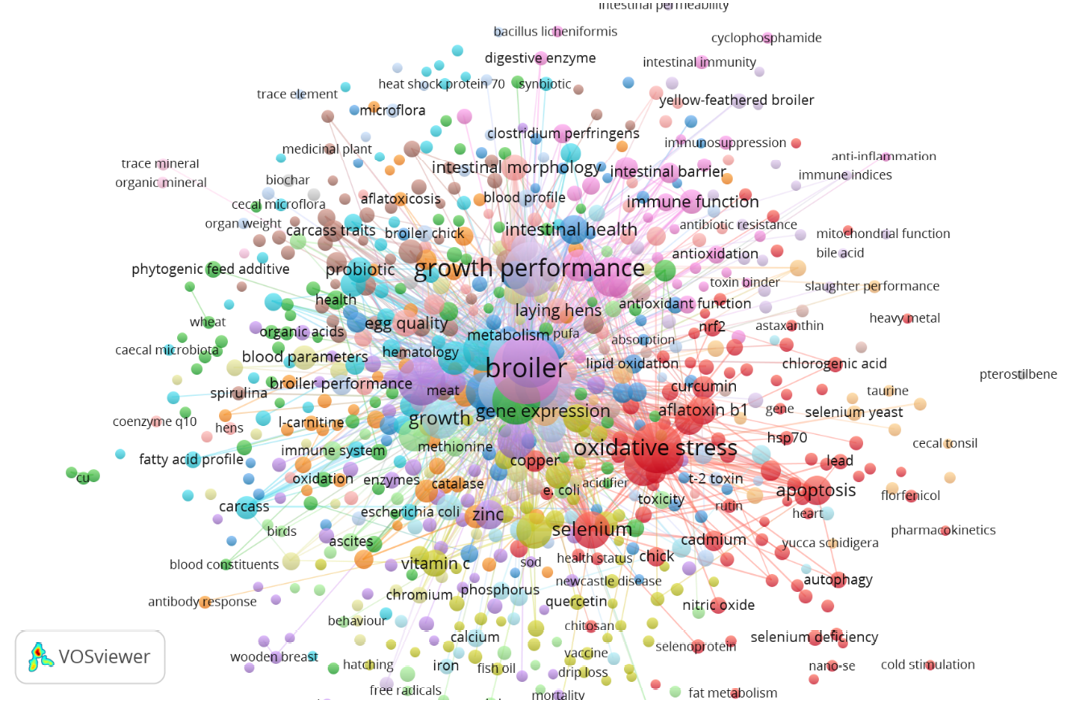
Keyword co-occurrence network in antioxidants and oxidative stress management in broilers.
International collaboration networks
The country collaboration map revealed extensive international research partnerships across continents (Figure 9). China emerged as the central hub of the global collaboration network, maintaining strong links with countries in Asia, Europe, North America, and Oceania. The United States also demonstrated broad international connectivity, serving as a major partner for collaboration. Strong collaboration patterns were observed among China, the United States, Egypt, Iran, Saudi Arabia, India, and several European countries. The thickness and density of collaboration links indicate the intensity of joint publications, highlighting the increasing globalization of phytogenic feed additive research in broiler nutrition. Countries with high MCP percentages, such as Saudi Arabia, Egypt, and Italy, occupied prominent positions within the international collaboration network, confirming the importance of cross-border scientific partnerships in advancing the field.
Keyword co-occurrence
The keyword co-occurrence network reveals that broiler, growth performance, and oxidative stress are the most prominent and highly connected research themes, indicating their central role in the scientific literature (Figure 10). This is confirmed numerically: a network analysis of the underlying keyword co-occurrence data shows broiler, growth performance, antioxidant, performance, and oxidative stress rank among the highest-degree and highest-betweenness-centrality nodes, substantiating their centrality beyond visual impression. Growth performance is a core topic, linking nutritional interventions to physiological and health-related outcomes. Several interconnected clusters are evident, including antioxidant-related compounds most frequently selenium (9.2% of documents), followed by vitamin C (1.3%), chlorogenic acid (0.5%), and curcumin (1.0%) which are associated with the mitigation of oxidative stress, though at markedly different frequencies from one another. Another major cluster focuses on intestinal health, intestinal morphology, immune function, and the intestinal barrier, reflecting growing interest in gut health as a mechanism underlying improved performance. Keywords related to apoptosis, autophagy, gene expression, and antioxidant function suggest an increasing emphasis on molecular and cellular mechanisms within this single, cross-period network, though each remains a comparatively small fraction of the corpus. The temporal shift from traditional performance evaluation toward these mechanistic themes is examined separately, using the time-sliced thematic evolution analysis presented in the next section and Figure 11, rather than inferred from this static, all-years network alone.
Evolution of thematic research
The thematic evolution analysis illustrates a clear shift in research priorities related to oxidative stress management in broilers over time, using period boundaries (1957-2010, 2011-2015, 2016-2020, 2021-2025) chosen to keep each of the earliest, sparsely-published decades within a single interval while giving finer resolution to the more densely published recent period; a uniform 5-years windowing
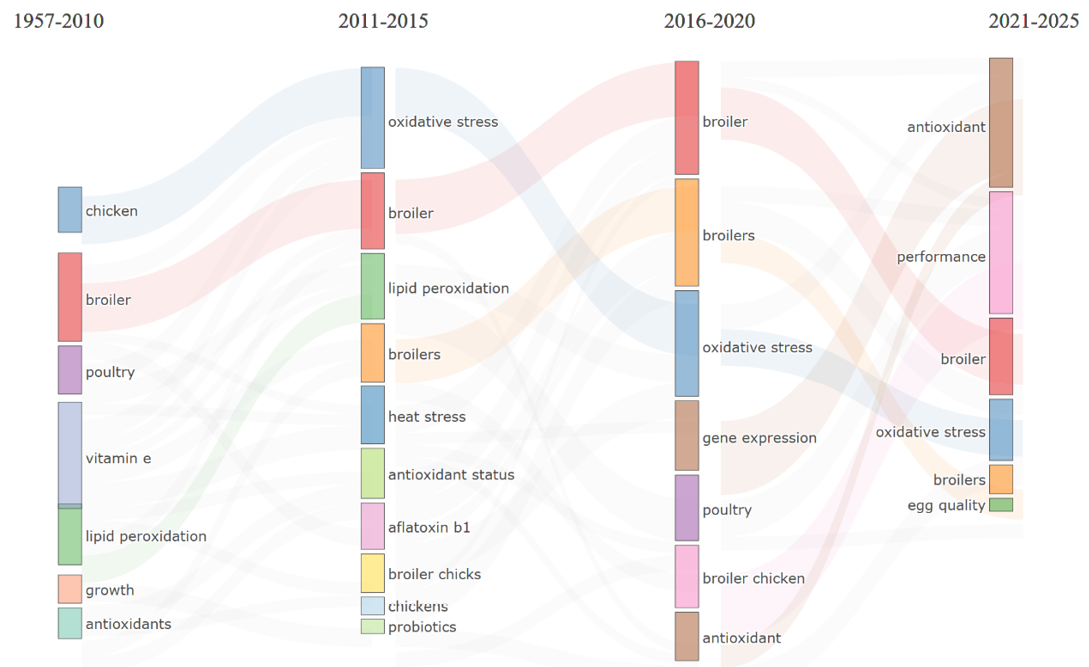
Thematic evolution of research on antioxidants and oxidative stress management in broilers.
was not used because publication volume before 2010 is too low per 5-year bin to yield reliable keyword-frequency estimates. During 1957-2010, studies were primarily focused on broad topics such as broiler chickens, poultry, vitamin E, and lipid peroxidation, reflecting an emphasis on antioxidant supplementation and oxidative damage. Between 2011 and 2015, research expanded to include oxidative stress, heat stress, antioxidant status, aflatoxin B1, and probiotics, indicating growing interest in stress mitigation and feed additives. In 2016-2020, themes such as gene expression, antioxidant, and broiler chicken emerged, highlighting a transition toward mechanistic investigations. During 2021-2025, the dominant topics became antioxidant, performance, and oxidative stress, demonstrating a strong focus on improving productivity through antioxidant-based nutritional strategies while exploring underlying physiological and molecular mechanisms.
DISCUSSION
Rather than simply reporting how much has been published, the bibliometric patterns identified here indicate where scientific attention has concentrated and where it has not: A small number of countries, institutions, and journals account for a disproportionate share of output, and the field’s vocabulary has moved from describing damage (lipid peroxidation, Vitamin E) toward explaining mechanism (gene expression, apoptosis, autophagy, intestinal barrier). This discussion interprets these patterns what they plausibly do and do not indicate about the field’s scientific maturity, and where the evidence is too thin to support a stronger claim rather than restating the quantitative results from a field that has transitioned from basic nutritional supplementation to complex molecular and physiological investigations.
The imperative for antioxidant research in modern poultry science
The rapid expansion of the poultry industry, a cornerstone of global food security, has necessitated highly intensive production systems. While these systems maximize growth rates and feed conversion efficiency, they simultaneously expose broiler chickens to significant environmental, nutritional, and physiological stressors. Factors such as high stocking density, heat stress, and pathogen exposure disrupt the balance between reactive oxygen species (ROS) production and the bird’s natural defense mechanisms, leading to oxidative stress.
The consequences of this imbalance are far-reaching, leading to damage of essential cellular components like lipids, proteins, and nucleic acids. For the industry, this translates into economic losses due to reduced feed intake, impaired growth performance, weakened immunity, and diminished meat quality. The sustained growth in publications on vitamins, minerals, and phytogenic compounds is consistent with growing scientific and industry attention to redox balance and broiler health, but publication volume alone cannot distinguish deliberate research prioritization from other drivers of publication growth, such as increased funding availability, a larger active researcher population, or easier access to open-access publishing venues; nor does an increase in publications by itself demonstrate that scientific understanding of oxidative stress has actually advanced, as opposed to simply being written about more often. We treat the patterns below as indicative of research attention and its direction, not as direct evidence of either research priority or scientific progress.
Quantitative growth and scholarly influence
The bibliometric data reveal a robust annual growth rate of 10.2%, with a total of 5,346 articles published between 1957 and 2025. This growth indicates that oxidative stress management has evolved from a niche topic into a central theme of poultry research. The impact of the field is further highlighted by a mean citation rate of 21.59 per document, suggesting that these publications are highly integrated into the broader scientific discourse.
The citation architecture reveals several “cornerstone” studies that have shaped the discipline. Most notably, the work by Windisch et al. (2008) in the Journal of Animal Science has garnered 1,162 citations, emphasizing the foundational role of phytogenic feed additives in broiler nutrition. Other highly cited works, such as those by Lin (2006) and Altan et al. (2003), reflect a long-standing academic interest in the physiological responses to heat stress and the biochemical pathways of antioxidant defense. The average document age of 8.21 years indicates that the field has a well-established research foundation, while recent publications continue to contribute new findings and perspectives.
The global scientific landscape and collaboration dynamics
The research output is characterized by a high degree of geographic concentration and varying levels of international cooperation. China stands as the undisputed global leader, contributing 1,731 articles, which accounts for 32.4% of the total output. This dominance is supported by a strong domestic research capacity, evidenced by the high number of single-country publications (1,478). Institutional hubs such as Nanjing Agricultural University (205 documents, 31.78 average citations/document), China Agricultural University (223 documents, 29.26 average citations/document), and the Chinese Academy of Agricultural Sciences (167 documents, 23.76 average citations/document) have emerged as primary engines of this productivity, each with average citation rates at or above the dataset-wide mean of 21.59, indicating these institutions combine high output with above-average, not merely high-volume, impact.
Beyond China, countries such as Iran (7.4%), Egypt (7.1%), and India (4.4%) are significant research clusters, often focusing on the application of local plant-based antioxidants under challenging environmental conditions. An interesting trend observed in the data is the variation in international collaboration. While China produces the most volume, countries such as Saudi Arabia (63.3% MCP), Italy (47.1% MCP), and Egypt (45.1% MCP) exhibit much higher rates of cross-border co-authorship. A high MCP% can reflect either strong outward-facing scientific networking or reliance on external partners in the absence of a large domestic pool of specialists in this field; across the 15 countries listed in Figure 2, we find a positive but not statistically significant correlation between a country’s MCP% and its average citations per document (Pearson r= 0.49, p= 0.061), so this dataset does not provide clear evidence that internationally co-authored output is more cited than domestically authored output in this field. This highlights a “central hub” model of collaboration where the United States and China serve as major partners for a diverse array of nations across Europe, Asia, and North America; network analysis of the country-collaboration data confirms China (betweenness centrality 0.195, collaborating with 56 partner countries) and the United States (0.141, 50 partner countries) as the two highest-betweenness countries, i.e., the two most common bridging points between otherwise less-connected countries in this network. Community detection on this network further reveals partial regional clustering - for example, a distinct Middle East/Gulf cluster (Egypt, Iraq, Saudi Arabia, Jordan, Kuwait, UAE, Yemen, Libya) and a Sub-Saharan Africa cluster (Nigeria, Ghana, Cameroon, South Africa, Zimbabwe)- alongside broader, less geographically coherent clusters built around the highly connected China/USA hub countries.
Leading publication venues
The dissemination of this research is concentrated in high-impact, specialized journals. Poultry Science is the primary venue, with 760 articles, followed by Animals (347) and Biological Trace Element Research (142). The presence of journals such as Ecotoxicology, Environmental Safety, and Antioxidants among the top-ranking sources indicates that the field is interdisciplinary, bridging animal production, environmental science, and molecular biology. The concentration of work among a core group of productive authors, including Abd El-Hack (58 publications), Wang, Tian (55), and Zhou, Yanmin (54), further demonstrates a specialized and highly active community of experts.
Thematic evolution: from performance to molecular mechanisms
Perhaps the most significant insight from the bibliometric analysis is the evolution of research themes. By mapping keyword co-occurrences and chronological shifts, the study identifies three broad, literature-informed eras; these period boundaries were chosen heuristically, consistent with shifts noted in prior antioxidant/poultry literature, rather than derived from a formal statistical change-point or topic-modeling procedure, which we note as a direction for methodological refinement in future bibliometric work on this topic:
The Early Phase (1957–2010): Initial research focused on foundational concepts, including Vitamin E, poultry physiology, and lipid peroxidation. Vitamin E is, in fact, the second
most frequent author keyword in this period (7.9% of keyworded documents, behind only “broiler” itself), consistent with this characterization. During this period, the primary goal was understanding the basic biological damage caused by oxidative stress and the protective role of standard vitamins.
The Expansion Phase (2011–2020): The scope widened to include heat stress, probiotics, and aflatoxin B1, reflecting an industry need to address complex environmental and dietary challenges. There was also an emerging interest in gene expression, marking the beginning of the field’s shift toward molecular biology.
The Modern Phase (2021–2025): Current research increasingly explores intestinal health, the intestinal barrier, apoptosis, and autophagy, though it is worth noting these remain a small share of documents even in this period (apoptosis 2.0%, intestinal barrier 1.0%, autophagy 0.3% of author keywords) compared with persistently dominant terms such as broiler, growth performance, and oxidative stress (each above 25%); we therefore describe these mechanistic themes as fast-emerging niches rather than dominant hotspots. The focus has nonetheless moved from “what” happens (e.g., reduced growth) to “how” it happens at the cellular level in a growing subset of studies. Modern studies increasingly explore how specific antioxidants - most frequently selenium, and to a lesser extent curcumin and chlorogenic acid - influence the immune function and gut morphology of broilers.
The rise of phytogenics and gut health
Phytogenic feed additives are among several antioxidant classes named in the Introduction alongside vitamins, minerals, selenium, zinc, polyphenols, and flavonoids, and the search for natural, sustainable alternatives to antibiotic growth promoters is part of the broader literature that motivates this field. In the keyword co-occurrence network (Figure 10), phytogenic-related terms appear as one cluster among several rather than as the dominant theme; we therefore discuss this class here as one illustrative example of the field’s broader move toward natural, multi-compound antioxidant strategies rather than as the paper’s central finding.
Within this cluster, current research trends place a notable emphasis on the gut-antioxidant axis: The keyword co-occurrence network shows strong links between “oxidative stress” and “intestinal health”, consistent with the view that the gastrointestinal tract functions not only as a site for nutrient absorption but also as an immunological and antioxidant barrier relevant to overall broiler performance and health.
Conclusions and Recommendations
This bibliometric analysis shows that research on antioxidants in broiler nutrition continues to develop, with increasing attention to their roles in poultry health, physiological regulation, and production performance. The findings provide an overview of the field’s major contributors, influential publications, and thematic patterns, highlighting the growing interest in understanding antioxidant functions beyond general productivity outcomes. In particular, further investigation into the mechanisms through which antioxidants influence gene expression, cellular health, and physiological responses may help clarify their contributions to broiler health and performance. Future research could extend the present analysis by incorporating citation-normalized indicators to determine whether countries, journals, and institutions with the highest publication output also demonstrate greater scientific impact. Longitudinal analyses of keyword frequencies across different antioxidant classes could further clarify how research attention to phytogenic additives is evolving relative to established antioxidant sources, such as vitamins and minerals. In addition, the concentration of publications among a limited number of countries and institutions highlights the need for greater research participation from under-represented broiler-producing regions. Broader geographical representation would help establish the applicability of current findings across different production systems, environmental conditions, and management practices. Strengthening international collaboration and expanding research networks could provide a more balanced understanding of antioxidant use in broiler nutrition. Future studies should also prioritize mechanistic investigations and evaluate the effectiveness of different antioxidant sources under diverse production conditions. Together, these efforts could identify emerging research priorities, address existing knowledge gaps, and support the development of evidence-based nutritional strategies to improve broiler health, productivity, and sustainability.
Acknowledgement
The authors would like to express their sincere gratitude to their institution for providing academic support and an enabling research environment throughout the preparation of this manuscript. The authors also appreciate the contributions of researchers whose published studies provided the scientific foundation for this work. Their efforts have contributed significantly to the advancement of knowledge in this field. The authors further acknowledge the use of bibliographic databases and analytical tools that facilitated the literature collection, data processing, and analysis presented in this manuscript.
NOVELTY STATEMENT
Unlike prior bibliometric analyses in this research group that focused on a single antioxidant/feed-additive class - phytogenic feed additives in broiler nutrition, or tropical legumes in ruminant nutrition this study maps the full breadth of antioxidant classes (vitamins, minerals, selenium, zinc, polyphenols, flavonoids, and phytogenic compounds) studied in relation to oxidative stress in broilers, and explicitly times the transition from descriptive, vitamin-focused research to molecular and mechanistic investigation across a nearly 70-year span.
China leads global output (32.4%), with Nanjing Agricultural University acting as a central institutional hub, though this reflects raw publication volume rather than a citation-impact-adjusted ranking. By mapping these trends across the full range of antioxidant classes rather than a single compound family, the study offers a broader baseline against which future, more targeted bibliometric or primary studies in this field can be compared.
AUTHOR’S CONTRIBUTION
RM contributed to conceptualization, data curation, formal analysis, visualization, and original draft preparation. MR contributed to conceptualization, methodology, supervision, validation, and manuscript review and editing. WH contributed to data curation, software, investigation, and manuscript review and editing. AF contributed to software, investigation, and manuscript review and editing. All authors have read and approved the final version of the manuscript.
Generative AI and AI-assisted technology statement
The authors declare that generative AI and AI-assisted technologies were used exclusively to assist with language editing and infographic preparation, with the sole purpose of improving the clarity, readability, and presentation of the manuscript. No AI tools were used to generate, interpret, or validate the scientific content, including the study design, data analysis, results, or conclusions. All scientific content was developed, critically reviewed, and approved by the authors, who assume full responsibility for the accuracy, integrity, and originality of the published work.
Conflict of interest
The authors declare that they have no known competing financial interests or personal relationships that could have influenced the research, data analysis, or conclusions presented in this paper. There are no conflicts of interest associated with the publication of this study.
References
- Altan O, Pabuçcuoğlu A, Altan A, Konyalioğlu S, Bayraktar H (2003). Effect of heat stress on oxidative stress, lipid peroxidation, and some stress parameters in broilers. Br. Poult. Sci., 44(4): 545-550. https://doi.org/10.1080/00071660310001618334 [CrossRef]
- Aria M, Cuccurullo C (2017). Bibliometrix: An R-tool for comprehensive science mapping analysis. J. Informetr., 11(4): 959-975. https://doi.org/10.1016/j.joi.2017.08.007 [CrossRef]
- Aziz M, Karboune S (2018). Natural antimicrobial/antioxidant agents in meat and poultry products as well as fruits and vegetables: A review. Crit. Rev. Food Sci. Nutr., 58(3): 486-511. https://doi.org/10.1080/10408398.2016.1194256 [CrossRef]
- Bartlett JR, Smith MO (2003). Effects of different levels of zinc on the performance and immunocompetence of broilers under heat stress. Poult. Sci., 82(10): 1580–1588. https://doi.org/10.1093/ps/82.10.1580 [CrossRef]
- Brenes A, Viveros A, Goñi I, Centeno C, Sáyago-Ayerdy SG, Arija I, Saura-Calixto F (2008). Effect of grape pomace concentrate and vitamin E on digestibility of polyphenols and antioxidant activity in chickens. Poult. Sci., 87(2): 307-316. https://doi.org/10.3382/ps.2007-00297 [CrossRef]
- Donthu N, Grewal D, Kumar S (2021). How to conduct a bibliometric analysis: An overview and guidelines. J. Bus. Res., 133: 285-296. https://doi.org/10.1016/j.jbusres.2021.04.070 [CrossRef]
- Hashemipour H, Kermanshahi H, Golian A, Veldkamp T (2013). Effect of thymol and carvacrol feed supplementation on performance, antioxidant enzyme activities, fatty acid composition, digestive enzyme activities, and immune response in broiler chickens. Poult. Sci., 92(8): 2059-2069. https://doi.org/10.3382/ps.2012-02685 [CrossRef]
- Lin H, Decuypere E, Buyse J (2006). Acute heat stress induces oxidative stress in broiler chickens. Comp. Biochem. Physiol. A Mol. Integr. Physiol., 144(1): 11-17. https://doi.org/10.1016/j.cbpa.2006.01.032 [CrossRef]
- Lin H, Decuypere E, Buyse J (2004). Oxidative stress induced by corticosterone administration in broiler chickens (Gallus gallus domesticus): 1. Chronic exposure. Comp. Biochem. Physiol. B Biochem. Mol. Biol., 139(4): 737-744. https://doi.org/10.1016/j.cbpc.2004.09.013 [CrossRef]
- Page MJ, McKenzie JE, Bossuyt PM, Boutron I, Hoffmann TC, Mulrow CD, Shamseer L, Tetzlaff JM, Akl EA, Brennan SE, Chou R, Glanville J, Grimshaw JM, Hróbjartsson A, Lalu MM, Li T, Loder EW, Mayo-Wilson E, McDonald S, McGuinness LA, Stewart LA, Thomas J, Tricco AC, Welch VA, Whiting P and Moher D (2021). The PRISMA 2020 statement: An updated guideline for reporting systematic reviews. Br. Med. J., 372: n71. https://doi.org/10.1136/bmj.n71 [CrossRef]
- Ramachandran S, Singh SK, Larroche C, Soccol CR, Pandey A (2007). Oil cakes and their biotechnological applications: A review. Bioresour. Technol., 98(10): 2000-2009. https://doi.org/10.1016/j.biortech.2006.08.002 [CrossRef]
- Saracila M, Panaite TD, Papuc CP, Criste RD (2021). Heat stress in broiler chickens and the effect of dietary polyphenols, with special reference to willow (Salix spp.) bark supplements: A review. Antioxidants, 10(5): 686. https://doi.org/10.3390/antiox10050686 [CrossRef]
- Surai PF (2000). Effect of selenium and vitamin E content of the maternal diet on the antioxidant system of the yolk and the developing chick. Br. Poult. Sci., 41(2): 235-243. https://doi.org/10.1080/713654909 [CrossRef]
- Van Eck NJ, Waltman L (2010). Software survey: VOSviewer, a computer program for bibliometric mapping. Scientometrics, 84(2): 523-538. https://doi.org/10.1007/s11192-009-0146-3 [CrossRef]
- Windisch W, Schedle K, Plitzner C, Kroismayr A (2008). Use of phytogenic products as feed additives for swine and poultry. J. Anim. Sci., 86(14 Suppl): E140-E148. https://doi.org/10.2527/jas.2007-0459 [CrossRef]
- Pu X, Liang Y, Lian J, Xu M, Yong Y, Zhang H, Zhang L, Zhang J (2025). Effects of dietary dihydroartemisinin on growth performance, meat quality, and antioxidant capacity in broiler chickens. Poult. Sci., 104(1): 104523. https://doi.org/10.1016/j.psj.2024.104523 [CrossRef]
- Liu M, Chen R, Wang T, Ding Y, Zhang Y, Huang G, Huang J, Qu Q, Lv W, Guo S (2024). Dietary Chinese herbal mixture supplementation improves production performance by regulating reproductive hormones, antioxidant capacity, immunity, and intestinal health of broiler breeders. Poult. Sci., 103(1): 103201. https://doi.org/10.1016/j.psj.2023.103201 [CrossRef]
- Zhang Y, Yin K, Wang D, Wang Y, Lu H, Zhao H, Xing M (2022). Polystyrene microplastics-induced cardiotoxicity in chickens via the ROS-driven NF-κB-NLRP3-GSDMD and AMPK-PGC-1α axes. Sci. Total Environ., 840: Article 156727. https://doi.org/10.1016/j.scitotenv.2022.156727 [CrossRef]

Services
Article usage statistics
Loading…
Related articles
- Effect of Dietary Dried Stevia rebaudiana Leaf Powder on Growth Performance, Antioxidant Status, and Heat Stress Tolerance in Ross 308 Broiler ChickensJournal of Animal Health and Production · 2026
- Dietary Moringa Leaf Supplementation Affects Heat-Stressed Broilers: II-Blood Metabolites, Antioxidant Activity and Meat QualityAdvances in Animal and Veterinary Sciences · 2024
- Unveiling the Mysteries of Oxidative Stress: An Insightful Review of Recent StudiesJournal of Animal Health and Production · 2024
- The Role of Aloe vera L. Extract in Modulating Oxidative Stress and Inflammation in Wistar Rats on a High-Fat Diet: Insights from In Vivo and In Silico StudiesAdvances in Animal and Veterinary Sciences · 2024
- Antioxidants Profile, Oxidative Stress status, Leukogram and Selected Biochemical indicators in Dairy Cows affected with MastitisJournal of Animal Health and Production · 2020
- Adaptation to Heat Stress in Broilers Using Dried Tomato Pomace and Zinc: Effects on Growth Performance, Oxidative Stress, Intestinal Features and Humoral ImmunityPakistan Journal of Zoology · 2025