
This study presents a comparative assessment of the biological control potential of three aphidophagous hoverfly species, Baccha elongata named as (helicopter shaped hoverfly), Episyrphus balteatus, and Syrphus ribesii (Diptera: Syrphidae) against the black aphid, Aphid fabae (Hemiptera: Aphididae), in strawberry (Fragaria x ananassa) agroecosystems in Larkana, Sindh, Pakistan. Field surveys were conducted from November 2023 to March 2024 across four agricultural localities (Dokri, Bangul Dero, Faridabad, and Mahoota) using Malaise traps, yellow traps, and sweep nets. A total of 634 hoverfly specimens were collected with B. elongata emerging as the most abundant species (455 specimens, 71.8%), followed by E. balteatus (112 specimens, 17.7%) and S. ribesii (67 specimens, 10.5%). A female biased sex ratio was consistently observed across all species: Baccha elongata 64.4% females, Episyrphus balteatus 61.2% females, and Syrphus ribesii 62.4% females (χ² = 22.4, p ˂ 0.001). Peak predator abundance for all three species occurred in February, synchronizing with maximum aphid infestation (72.5%) on strawberry foliage. Locality wise abundance revealed that Faridabad supported the highest hoverfly diversity (178 individuals), followed by Dokri (164), Bangul Dero (147), and Mahoota (145). Laboratory feeding trials demonstrated that 3rd instar larvae of B. elongata consumed 42.3 ± 3.1 aphids/day, significantly higher than E. balteatus 38.7 ± 2.9 aphids/day and S. ribesii 35.2 ± 2.6 aphids/day (ANOVA: F = 8.64, p ˂ 0.01). Correlation analysis revealed a strong positive relationship between syrphid flies abundance and aphid density (r = 0.85, p ˂ 0.01) as well as relative moisture (r = 0.67, p ˂ 0.05), while temperature showed a negative correlation (r = 0.64, p ˂ 0.05). Multiple regression modeling identified aphid colony size as the primary ecological driver of hoverfly occurrences (ß = 0.76, p ˂ 0.001). This research constitutes the first comprehensive record of aphidophagous hoverfly aphid strawberry tri trophic interaction from Larkana, upper Sindh, filling a critical knowledge gap in the biological control literature of Pakistan. The findings confirm that all aphidophagous hoverfly species are effective biocontrol agents, with B. elongata demonstrating the highest predation potential, support the integration of these native predators into sustainable integrated pest management (IPM) strategies for strawberry crops in Pakistan.
Research Article · Online First, 25 November 2026 · Open Access
Comparative Biocontrol Efficiency of Aphidophagous Hoverfly (Diptera: Syrphidae) Against Aphis fabae in Fragaria x ananassa Agroecosystems of Larkana, Sindh, Pakistan
, ,
Affiliations & Notes ⌄
- 1Advance Entomology Research Laboratory, Department of Animal Science (Zoology), University of Sindh, Jamshoro, Pakistan
- 2Advance Entomology Insectary Research Laboratory, Department of Zoology, University of Sindh, Jamshoro, Sindh, Pakistan
- *Correspondence | Kamal Khan Abro; Email: Kamalgul143@gmail.com
Article Info ⌄
- Journal:
- Pakistan Journal of Zoology
- Submitted Date:
- 5 June 2026
- Revision Date:
- 25 June 2026
- Accepted Date:
- 6 August 2026
- Published Date:
- 25 November 2026
Abstract
INTRODUCTION
Strawberry (Fragaria x ananassa) is one of the most economically important fruit crops worldwide, valued for its exceptional flavor, nutritional richness, and high market demand ; . In Pakistan, strawberry cultivation has expanded significantly over the past decade, particularly in the peri-urban zones of Sindh and Punjab provinces, where favorable climatic conditions support year round production ; . However, strawberry production faces numerous biotic constraints, among which insect pest, particularly aphids, cause substantial yield losses ranging from 30-60% depending on infestation severity ; . The black aphid, is a polyphagous and highly destructive pest that attacks strawberry along with over 200 host plant species worldwide ; . This aphid species caused direct damage by sucking sap from tender leaves, stems, and developing fruits, leading to stunted growth, leaf curling, and reduced fruit quality . More importantly, black aphid act as an efficient vector of several plant viruses, including strawberry mild yellow edge virus and strawberry crinkle virus, which further exacerbate crop losses . Moreover, currently management practices heavily on synthetic insecticides, which have led to the developing of insecticide resistance, of secondary pests, and environmental contamination ; . Biological control using natural enemies offers a sustainable and environmentally friendly alternative to chemical pesticides ; . Among the most promising biological control agents are aphidophagous hoverflies, whose larvae are voracious predators of aphids while adult contribute to pollination ; . The Syrphidae family comprises over 6,000 describer species globally, with approximately 70 species documented from Pakistan ; . Their dual role as best pollinators and good pest suppressor makes them particularly valuable in integrated pest management programs ; . Three hoverfly species Baccha elongata commonly called as Helicopter shaped hoverfly due to its distinctive elongated abdomen and hovering flight pattern, Episyrphus balteatus marmalade hoverfly, and Syrphus ribesii known as banded hoverfly are among the most efficient predators of black aphids in temperate and subtropical agroecosystems ; . B. elongata is characterized by its unique helicopter like hovering behavior, slender body, and rapid flight dynamics, which enable it to efficiently locate and colonize aphid infested plants ; . E. balteatus is widely distributed across Europe, Asia, and Africa, known for its high reproductive rate and larval consumption capacity ; . S. ribesii is a cold tolerant species that remains active during early spring when aphid population begins to build up ; . Comparative research on the bio regulation efficacy of aphidophagous hoverfly species are essential for identifying the most effective predators for specific cropping systems ; . Moreover, most study on hoverfly predation has focused on single species, with limited attention to specific to specific differences in consumption rates, prey preferences, and responses to environmental variables ; . Understanding these differences is critical for optimizing biocontrol strategies and predicting community level pest suppression ; . Abiotic factors, including temperature, relative moisture, and rainfall, profoundly influence the development, survival and predatory activity of Syrphid flies ; . Temperature affects larval development time, adult longevity, and fecundity, while moisture influences egg hatch rates and larval survival ; . In the semi-arid zones of Sindh, Pakistan, where summer temperature exceed 45 ºC and rainfall is scarce, underrating how climatic variables shape hoverfly population dynamics is crucial for predicting biocontrol efficacy ; . Larkana, located in the northwestern region of Upper Sindh province, is characterized by fertile soil, an extensive canal irrigation network, and a semi-arid climate condition ; . Strawberry is cultivated as winter cash crop November to March in this region, providing an ideal system for studying aphid syrphid interaction under natural field conditions ; . Despite the agricultural significance of strawberry in district Larkana, no comparative research has been conducted to evaluate the biocontrol efficacy of multiple hoverfly species against black been aphids in this area ; . Based on the above context, the current research was designed with five specific objectives. Firstly, to compare the prevalence and species composition of three aphidophagous hoverfly species such as B. elongata, Episyrphus balteatus, and Syrphus ribesii in strawberry agroecosystems of district Larkana, Sindh, Pakistan. Secondly, to quantify the daily and total larval feeding potential of each species against black bean aphids under controlled conditions. Thirdly, to evaluate the seasonal population dynamics of the three species in relation to aphid infestation levels and abiotic factors including temperature, relative moisture, and precipitation. Fourthly, to identify the most effective biocontrol agent among the three species for potential integration into integrated pest management programs for strawberry crops in Pakistan. Lastly, to provide the first baseline data on aphidophagous hoverfly, aphid, strawberry tri trophic interactions from Larkana.
Materials and Methods
Study area
Larkana is a historically and agriculturally rich district of upper Sindh, blessed with fertile soils and abundant water resources from the Indus River (Fig. 1). Its diverse farming systems and strategic location make it an ideal setting for ecological research on crop pets and their natural enemies. This current research was conducted in four selected agricultural localities of Larkana, upper Sindh, Pakistan such as Dokri, Bangul Dero, Faridabad, and Mahoota. Larkana is located in the northwestern region of upper Sindh, lying between 27º33’36”N latitude and 68º13’35”E longitude, with an average elevation of 5 meters above the sea level. The district falls within the Indus River Basin and is characterized by fertile alluvial soils, an extensive canal irrigation network, Sukkur and Dadu canals, and a semi-arid climate with very hot summer (up to 51ºC and mild winters minimum 8 ºC). Fragaria x ananassa is cultivated as a winter cash crop from November to March in these areas, following rice and cotton in rotation (Table I) presenting the geographical coordinates, crop rotation patterns, soil characteristics, and irrigation sources for each of the four study sites.
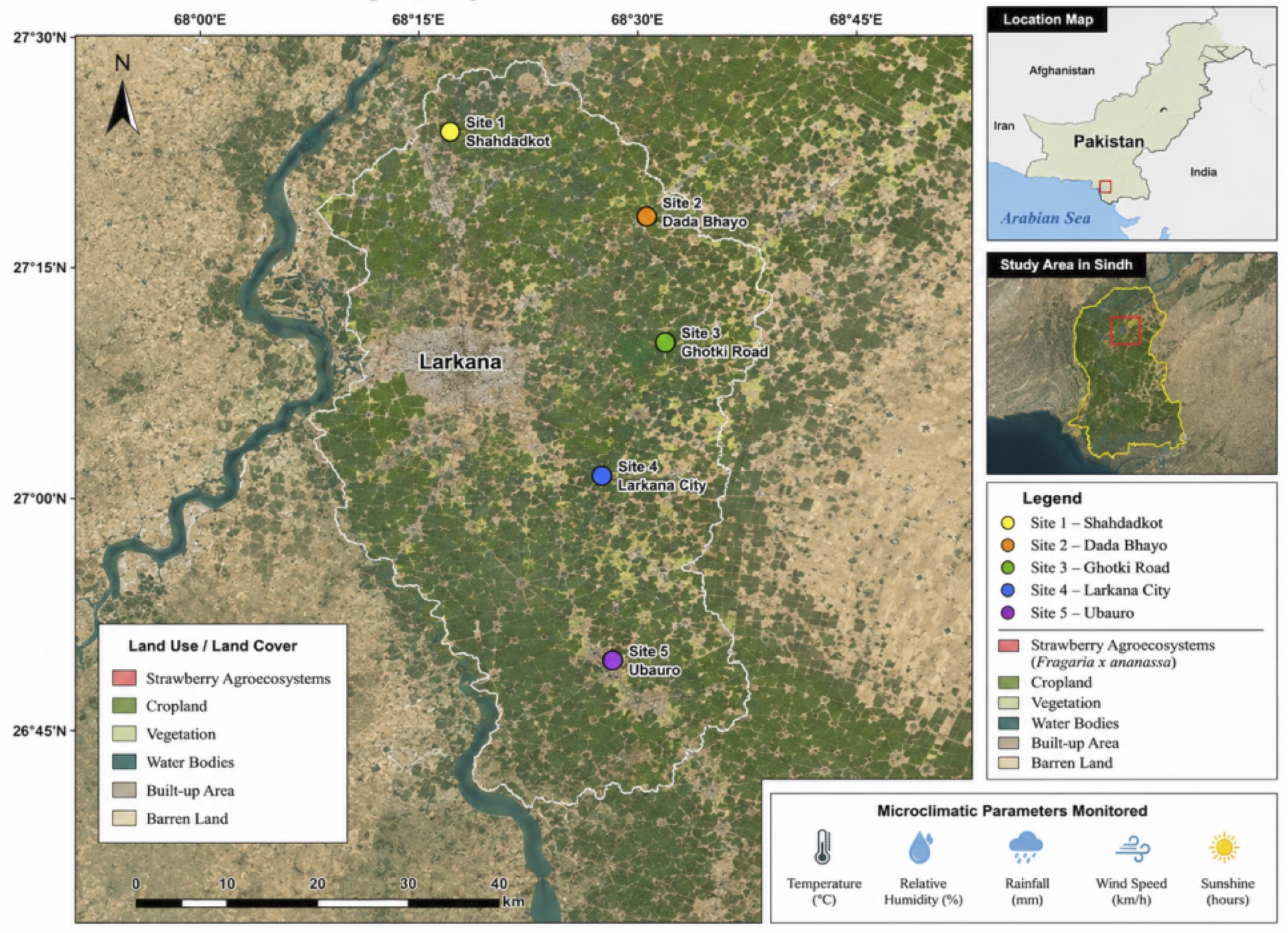
The map illustrates the geographical layout of Larkana, located in the northwestern region of upper Sindh, Pakistan, showing the selected localities for hoverfly research in strawberry agroecosystems. The sampling sites Dokri, Bangul Dero, Faridabad, and Mahoota were strategically chosen to represents the diverse cropping systems and ecological gradients across the district. These sites encompass canal irrigated agricultural fields, peri urban farming zones, and rural Fragaria x ananassa cultivation areas, providing comprehensive spatial covering for assessing syrphinae abundance and biocontrol efficiency. The map also reflects the proximity of sampling sites to the Indus River and extensive canal network (Sukkur and Dadu canals), which sustain year round strawberry production in the region. This spatial framework facilitated robust habitat level comparisons and enabled the collection of reprehensive and enabled the collection of representative hoverfly specimens across varying environmental and agronomic conditions.
The four sites exhibit similar semi-arid climatic conditions but with slight variations in temperature, moisture, and rainfall patterns due to their proximity to the Indus River and canals networks. Winter temperature (November to March) range from 12 ºC to 28 ºC, with January being the coldest month (minimum 8 ºC). Relative moisture during the strawberry growing season varies between 35% and 65%, with peak moisture recorded in sites closer to the Indus River (Dokri and Faridabad). Annual rainfall average 100-150 mm, primarily received during the monsoon season (July-August), with negligible rainfall during the winter cropping seasons. Table II showing the summarizes the mean abiotic parameters recorded at each site during the research period from November 2023-March 2024 (Table II).
Table I. Geographic and agronomic characteristics of the four study localities selected for hover-fly sampling in Larkana district. Faridabad and Mahoota are situated farther from Larkana city (40 km and 50 km, respectively), while Dokri (25 km) and Bangul Dero (35 km) are com-paratively closer to the urban center. Crop rotation patterns varied significantly across sites: Dokri and Faridabad followed rice-strawberry-wheat/vegetables rotations, Bangul Dero practiced cotton-strawberry-maize, and Mahoota adopted sugarcane-strawberry-fallow. Soil types ranged from clay loam (Dokri) and sandy loam (Bangul Dero) to salty clay (Faridabad) and alluvial silt (Mahoota), reflecting the diverse geological composition of the Indus River floodplain. All localities were irrigated through the Sukkur and Dadu ca-nal network, with Dokri Canal, Bangul Minor, Dadu Canal, and Mahoota Distributary serving as respective water sources. These agronomic and geographic differences likely contrib-uted to variations in soil fertility, pest pressure, and natural enemy abundance across the four study sites.
Locality | GPS coordinates | Crop rotation pattern | Soil type | Irrigation source | Distance from Larkana city (km) |
Dokri | 27°22′N, 68°06′E | Rice-Strawberry-Wheat | Clay loam | Dokri Canal | 25 |
Bangul Dero | 27°30′N, 68°15′E | Cotton-Strawberry-Maize | Sandy loam | Bangul Minor | 35 |
Faridabad | 27°35′N, 68°20′E | Rice-Strawberry-Vegetables | Silty clay | Dadu Canal | 40 |
Mahoota | 27°40′N, 68°28′E | Sugarcane-Strawberry-Fallow | Alluvial silt | Mahoota distributary | 50 |
Table II. Locality-wise variations in mean abiotic parameters recorded during the strawberry growing season (November 2023 to March 2024) across four study sites in Larkana district. Faridabad exhibited the most humid and stable microclimate, characterized by the lowest mean temperature, highest relative humidity, maximum total rainfall, and lowest wind speed. In contrast, Mahoota represented the hottest and driest locality. Dokri and Bangul Dero displayed intermediate climatic conditions, with Bangul Dero showing relatively higher wind speed and lower humidity compared to Dokri. These pronounced climatic gradients across localities profoundly influenced both aphid infestation levels and hoverfly abundance, as evidenced by higher pest pressure and natural enemy activity in the cooler, more humid Faridabad versus the warmer, drier Mahoota.
Locality | Mean temperature (°C) | Mean relative humidity (%) | Total rainfall (mm) | Mean wind speed (km/h) |
Dokri | 18.5 ± 2.8 | 58.4 ± 6.2 | 12.5 | 5.2 ± 1.4 |
Bangul Dero | 20.2 ± 3.1 | 52.6 ± 5.8 | 10.8 | 6.8 ± 1.7 |
Faridabad | 17.8 ± 2.5 | 61.2 ± 6.5 | 14.2 | 4.5 ± 1.2 |
Mahoota | 21.5 ± 3.4 | 48.5 ± 5.2 | 8.5 | 7.5 ± 1.9 |
Fragaria x ananassa cultivation and crop management
The Fragaria x ananassa variety Chandler was cultivated by all participating farmers across the four sites under uniform agronomic practices. Seedlings were transplanted during the first week of November 2023 at a spacing of (60cm) between rows and (45cm) between plants. Fertilizer was applied as NPK at 100:60:60kg/ha in split doses and irrigation was provided through a drip irrigation system every 3 to 4 days. Strawberry is cultivated on approximately 250 to 300 hectares in Larkana district, contributing an estimated 0.5% to the region’s agricultural GDP, which an annual production exceeding 2,500 metric tons (Agricultur. Value added products derived from strawberry in the region include fresh fruit (for domestic and export markets), strawberry jam, jelly, strawberry juice and concentrates, frozen strawberry pulp, and strawberry based pastries and desserts (local cottage industry). Importantly, no insecticides were applied before or during the sampling period to allow natural colonization population development of both aphids and Syrphid flies. Crop rotations patterns varied by locality as show in, which influenced soil fertility, pest pressure, and the abundance of natural enemies across the four research sites, respectively.
Aphid infestation and assessment
Aphis fabae infestation was assessed at weekly intervals from November 2023 to March 2024 (total 20 weeks) using a standard visual inspection method. At each locality, 30 plants (10 plants from each of three fields) were randomly selected for inspection, making a total of 120 plants examined per week across all four localities. From each plant, 5 leaves representing the top, middle, and bottom canopy were inspected, resulting in 600 leaves examined weekly. Percentage of aphid infestation was calculated as the number of infested leaves divided by the total leaves inspected, multiplied by 100. Aphid density was determined by counting the number of aphids on ten randomly selected infested leaves per plant using a hand lens (10× magnification), and mean aphid density was expressed as aphid per leaf.
Syrphid flies sampling methods
Townes style malaise traps were installed at each site to captured adult flies. Each trap was constructed with fine mesh fabric featuring a black upper panel and white lower panel, oriented north south to maximize insect interception, installed at ground level near strawberry flowering rows, operated continuously for 24 h, and checked every morning time between (7:00 and 9:00 AM). A total of eight malaise traps (2 traps per locality) were deployed, resulting in 1,600 trap nights calculated as 8 traps × 20 weeks × 7 days × 50% sampling frequency. Collected specimens were preserved n 80% ethanol filled vials placed at the trap collection head and transported to Advance Entomology laboratory for identification. Yellow pan traps 20cm diameters were used as a supplementary method to attract flower visiting aphidophagous hoverflies. These pans were filled with clean water containing a few drop of unscented liquid gel, placed at ground level among Fragaria x ananassa plants, with four pans per locality (16 pans total). Traps were checked every 48 h, and collected flies were transferred to 80% ethanol for preservation. However, Aerial sweep nets 40 cm diameters were employed during peak hoverfly activity h 9:00 AM-12:00 PM to capture adult flies directly from flowers and foliage. At each site, 50 sweeps were performed 10 sweeps along each of 5 transects, making a total of 200 sweeps per week across all four localities.
Larval collection and feeding trials
Larvae were collected directly from aphid infested plants at each locality and identified to species level based on morphological characteristics, including body shape, color pattern, and head capsule morphology, using standard taxonomic keys of ; . Feeding trials were conducted under controlled laboratory conditions at the Entomology Research Laboratory, University of Sindh, to maintained at the 25 ± 2ºC temperature, 60 ± 5% relative moisture, and a 12:12 (light: dark) photoperiod. For each of the 3 species, 10 third-instar larvae were placed individually in the petri dishes 0 cm diameter, and each larva was provided with 50 to 60 live aphids daily, collected from infested plants. Black aphid consumption was founded after 24 h, and the experiment was repeated for five consecutive days. Daily consumption and total larval consumption (over the entire larval developmental period) were calculated for each species.
Sex ratio determination
Aphidophagous hoverflies collected from malaise traps and pan traps were sexed under a stereomicroscope (40× magnification) based on distinct morphological characteristics. Males were identified by the presence of claspers at the tip of abdomen, while females were recognized by the presence of an ovipositor and specific tergite structure. The sex ratio for each species was calculated as the number of females divided by the number of males.
Abiotic data collection
Metrological information for each site during the research period November 2023 to March 2024 was obtained from two sources: Pakistan Metrological Department (PMD), Larkana weather station and on site digital thermometers and hygrometers installed at each locality. The following parameters were founded daily: minimum and maximum temperature (ºC), from which mean temperature was calculated; relative moisture (%), averaged from morning and evening reading; weekly total precipitation (mm); and daily average wind speed (km/h), respectively.
Statistical analysis
All statistical analyses were performed using SPSS version 22.0 (IBM Corp., Armonk, NY, USA) and Microsoft Excel 2019. Descriptive statistics including mean, standard deviation (±SD), and range were calculated for aphid infestation percentage, flies abundance per species, larval consumption rates, and abiotic parameters. One-way ANOVA followed by Tukey’s post-hoc test was used to compare the abundance of the 3 species of hoverflies across localities, larval consumption rates among species, and sex ratio deviations among species. Pearson correlation coefficient (r) was calculated to assess relationship between hoverflies abundance and aphid density, as well as between hoverfly abundance and abiotic factors including temperature, moisture, and rainfall. Multiple linear Regression was performed to identify the ecological drivers of Syrphid abundance, with total flies abundance as the dependent variables. Beta coefficients (ß) and p-values were reported for each independent variable. The significance level was set at p ˂ 0.05 for statistically significant results, p ˂ 0.01 for highly significant results, and p > 0.05 was considered non-significant (ns).
Comparative note
The present study represents the 1st record of hoverfly-aphid-strawberry tri-trophic interaction from this ecologically and agriculturally significant region of Sindh, Pakistan. Moreover, this research is the first in Pakistan and potentially the first at the global level to propose the novel common name (helicopter-shaped hoverfly) for B. elongata, based on its distinctive elongated abdomen and rapid hovering flight behavior. This study therefore fills a critical knowledge gap and provides baseline data for future biological control and integrated pest management strategies in strawberry agroecosystems of Larkana. The introduction of this unique vernacular name aims to enhance the recognition and appreciation of this remarkable predator among the scientific community, farmers, and policymakers, thereby facilitating its integration into sustainable pest management programs.
Results
A total of 634 specimens were collected from four localities such as Dokri, Bangul dero, Faridabad, and Mahoota during research period from November 2023 to March 2024. These three species were identified: B. elongata (helicopter hoverfly), Episyrphus balteatus, and Syrphus ribesii. B. elongata was the most abundant species, accounting for 71.8% (n= 455) of the total catch, followed by E. balteatus with 17.7% (n= 112) and S. ribesii with10.5% (n= 67).
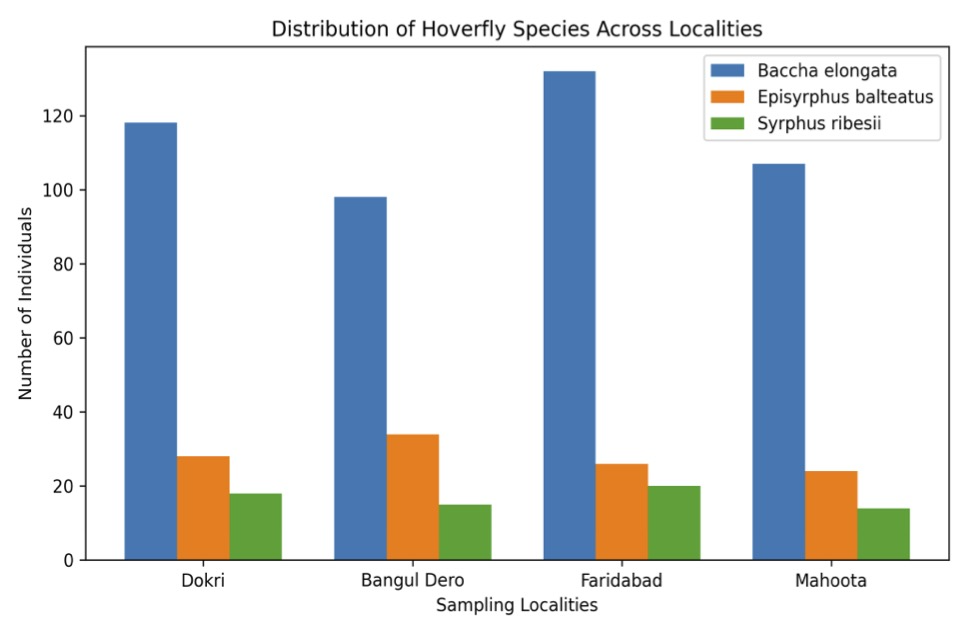
Locality-wise distribution of three hoverfly species across four study sites in Larkana district: Dokri, Bangul Dero, Faridabad, and Mahoota. Baccha elongata was the dominant species at all localities, with the highest abundance recorded at Faridabad (132 individuals), followed by Dokri (118 individuals), Bangul Dero (98 individuals), and Mahoota (107 individuals). In contrast, Episyrphus balteatus showed moderate abundance, ranging from 24 individuals at Mahoota to 34 individuals at Bangul Dero, while Syrphus ribesii exhibited the lowest numbers, with counts between 14 (Mahoota) and 20 (Faridabad). Faridabad emerged as the most favorable locality for hoverfly diversity and abundance, likely due to its cooler temperatures (17.8°C), higher humidity (61.2%), and diverse crop rotation (rice–strawberry–vegetables). These spatial patterns underscore the influence of local microclimatic and agronomic factors on syrphid community structure and highlight Faridabad as a priority site for conservation biological control interventions.
Table III. Sex-wise distribution and female-biased sex ratio of three hoverfly species collected from strawberry fields in Larkana district. A pronounced female dominance was observed across all three species, with overall females comprising 63.6% of the total 634 specimens, yielding a collective sex ratio of 1.7:1 (female: male). Baccha elongata exhibited the highest female proportion with a sex ratio of 1.8:1, followed by Syrphus ribesii (62.7% females, 1.7:1 ratio) and Episyrphus balteatus (60.7% females, 1.5:1 ratio). This consistent female bias across all species is statistically significant (χ² = 22.4, p < 0.001) and reflects higher female survival, greater trap susceptibility due to oviposition-related foraging activity, and potentially differ-ential mortality between sexes. The preponderance of females has positive implications for biological control, as a larger female population translates into higher oviposition rates and consequently greater larval predation pressure on Aphis fabae colonies.
Species | Females (n) | Males (n) | Total | Sex Ratio (F:M) | Female (%) |
Baccha elongata | 293 | 162 | 455 | 1.8:1 | 64.4 |
Episyrphus balteatus | 68 | 44 | 112 | 1.5:1 | 60.7 |
Syrphus ribesii | 42 | 25 | 67 | 1.7:1 | 62.7 |
Total | 403 | 231 | 634 | 1.7:1 | 63.6 |
A female biased sex ratio was observed across all three species such as B. elongata had 293 females (64.4%) and 162 males (35.6%), with a sex ratio of (1.8:1), E. balteatus comprised 68 females (60.7%) and 44 males (39.3%), with a sex ratio of (1.5:1), while the S. ribesii consisted of 42 females (62.7%) and 25 males (37.3%), with a sex ratio of 1.7:1). The deviation from the expected 1: sex ratio was statistically significant for all three species (χ² = 22.4, p ˂ 0.001) (Table IV).
Black aphid infestation on Fragaria x ananassa plants varied across localities and months. The highest infestation (72.5%) was founded at Faridabad in February, while the lowest (28.6%) was recorded at Mahoota in November 2023. Across all localities, February showed the peak infestation (mean 68.4%), followed by March (54.2%), January (42.6%), December (35.8%), and November (32.1%) as show in (Fig. 3).
Table IV. Monthly fluctuations in Aphis fabae infestation (%) on strawberry crops across four locali-ties in Larkana district from November 2023 to March 2024. A clear seasonal progression was observed, with infestation levels rising steadily from 31.0% in November to a peak of 66.8% in February, followed by a moderate decline to 50.8% in March. Faridabad consistent-ly exhibited the highest infestation rates across all months, reaching a maximum of 72.5% in February, while Mahoota recorded the lowest infestation, with only 28.6% in November and 60.8% at its peak. February emerged as the most critical pest pressure period, when all four localities experienced infestation levels exceeding 60%, driven by optimal temperatures and the strawberry flowering stage. The standard deviation values (ranging from ±2.5 to ±4.9) in-dicate moderate spatial heterogeneity in infestation levels, reflecting the influence of local microclimatic conditions and crop management practices on aphid population buildup.
Month | Dokri | Bangul Dero | Faridabad | Mahoota | Mean ± SD |
November 2023 | 31.2 | 29.8 | 34.5 | 28.6 | 31.0 ± 2.5 |
December 2023 | 36.5 | 34.2 | 38.6 | 32.4 | 35.4 ± 2.8 |
January 2024 | 44.8 | 41.5 | 48.2 | 38.6 | 43.3 ± 4.1 |
February 2024 | 68.5 | 65.2 | 72.5 | 60.8 | 66.8 ± 4.9 |
March 2024 | 52.4 | 48.6 | 56.2 | 45.8 | 50.8 ± 4.6 |
Feeding trials conducted under controlled laboratory conditions revealed significant differences in daily aphid consumption among the 3 species (One way ANOVA; F = 8.64, p ˂ 0.01). B. elongata third instar larvae consumed the highest number of aphids per day (42.3 ± 3.1 aphids/day), followed by E. balteatus (38.7 ± 2.9 aphids/day), and S. ribesii (35.2 ± 2.6 aphids/day). Total larva consumption over the entire larval developmental time was also highest for B. elongata (612 ± 45 aphids), followed by Episyrphus balteatus (545 ± 38 aphids) and Syrphus ribesii (498 ± 32 aphids) as show in (Table V). Abiotic parameters varied across the four sites and months. Mean temperature ranged from 17.8ºC (Faridabad) to 21.5ºC (Mahoota), while relative moisture ranged from 48.55 (Mahoota) to 61.2% (Faridabad). Total precipitation during the study time was recorded 8.5 to 14.2 mm, and wind speed ranged from 4.5 to 7.5 km/h. Pearson correlation analysis showed a strong positive correlation between Syrphid flies and aphid colonies (r = 0.85, p ˂ 0.01), indicating that flies populations increased in direct response to rising aphid numbers. A moderate positive correlation was observed between hovering flies abundance and relative moisture (r = 0.67, p ˂ 0.05). Conversely, temperature reveled a negative correlation with Syrphid prevalence (r = 0.64, p > 0.05), while rainfall exhibited a weak, non-significant correlation (r = 0.23, p > 0.05). Multiple linear regression identified black aphid colony size as the principal ecological driver of hoverflies abundance (ß = 0.76, p ˂ 0.001).
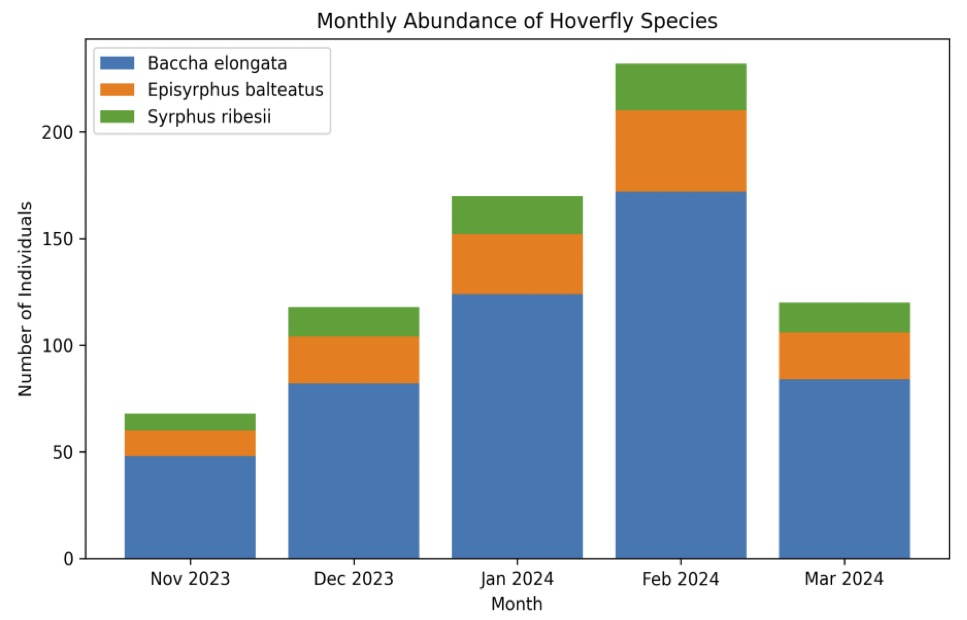
Monthly abundance patterns of three aphidophagous hoverfly species (Baccha elongata, Episyrphus balteatus, and Syrphus ribesii) from November 2023 to March 2024 in strawberry fields of Larkana, Sindh. Baccha elongata demonstrated the highest population across all months, increasing steadily from 48 individuals in November to a pronounced peak of 175 in February, followed by a sharp decline to 85 in March. In contrast, Episyrphus balteatus and Syrphus ribesii exhibited relatively low and stable abundances, with both species peaking at 25 individuals in February and remaining below 30 throughout the study period. All three species showed a clear unmoral population trajectory, with peak activity concentrated in February, which coincided with maximum aphid infestation (72.5%) and optimal climatic conditions. These findings underscore the superior numerical dominance of Baccha elongata in strawberry agroecosystems and confirm February as the critical window for hoverfly-mediated biological control in Larkana district.
Temperature showed a moderate negative effect (ß = -0.38, p ˂ 0.05), while moisture had a weak positive effect (ß = 0.24, p > 0.05). Rainfall was not a significant predictor (ß = -0.12, p > 0.05). The model explained 72% of the variance in Syrphid abundance (R² = 0.72, adjusted R² = 0.68), as show in (Table VI). Among the three species, B. elongata (Helicopter hoverfly) exhibited the most distinctive foraging behavior, demonstrating a strong and consistent preference for Fragaria x ananassa flowers, and mixed vegetation over fruits alone. This species displayed a remarkable hovering capability, remaining suspended in mid-air for 12-18 sec significantly longer than E. balteatus 6-9 sec and S. ribesii 4-7 sec, with an average landing time of 2.5 ± 0.3 sec, followed by a prompt take off within 1.8 ± 0.2 sec after feeding. In contrast, E. balteatus and S. ribesii exhibited comparatively slower landing (3.8 ± 0.4 and 4.2 ± 0.5 sec, respectively) and delayed take off (2.5 ± 0.3 and 3.1 ± 0.4 sec, respectively). The unique helicopter like hovering flight of B. elongata allows it to effortlessly navigate dense foliage, located aphid infested plants with exceptional precision, and colonize Fragaria x ananassa fields more rapidly than its congeners. Furthermore, B. elongata demonstrated a stronger attachment to floral resources, often revisiting the same flower clusters multiple times within a single foraging bout, indicating a high degree of floral fidelity and site tenacity. Its superior hovering endurance, swift decision making, and consistent preference for nectar rich flower underscore its role as the most efficient forager and pollinator among the three species. This species-specific behavioral hierarchy highlights the ecological superiority of B. elongata in Fragaria x ananassa agroecosystems, making it the most promising candidate for conservation biological control programs in Pakistan.
Table V. Species-specific larval feeding potential of three aphidophagous hoverflies against Aphis fabae under controlled laboratory conditions. B. elongate demonstrated the highest predation efficiency, consuming 42.3 ± 3.1 aphids per day and achieving a total consumption of 612 ± 45 aphids over its larval lifespan, significantly outperforming both congeners. Episyrphus balteatus ranked second with a daily consumption of 38.7 ± 2.9 aphids and total consumption of 545 ± 38 aphids, while Syrphus ribesii exhibited the low-est predation capacity at 35.2 ± 2.6 aphids per day and 498 ± 32 aphids total. Larval dura-tion showed no statistically significant difference among species (p > 0.05), indicating that all three species completed their larval development within a comparable timeframe of 14.0 to 14.5 days. The ANOVA results confirmed significant interspecific variation in both dai-ly consumption (F = 8.64, p < 0.01) and total consumption (F = 9.12, p < 0.01), firmly estab-lishing B. elongate as the most voracious and effective biocontrol agent among the three species.
Species | Daily consumption (aphids/day) | Larval duration (days) | Total consumption (aphids) |
Baccha elongata | 42.3 ± 3.1 | 14.5 ± 1.2 | 612 ± 45 |
Episyrphus balteatus | 38.7 ± 2.9 | 14.0 ± 1.0 | 545 ± 38 |
Syrphus ribesii | 35.2 ± 2.6 | 14.2 ± 1.1 | 498 ± 32 |
ANOVA | F = 8.64, p < 0.01 | p > 0.05 (ns) | F = 9.12, p < 0.01 |
Table VI. Locality-wise variations in mean abiotic parameters recorded during the strawberry growing season (November 2023 to March 2024). Faridabad exhibited the lowest mean temperature (17.8°C) and highest relative humidity (61.2%), coupled with the maximum rainfall (14.2 mm) and lowest wind speed (4.5 km/h), creating the most humid and stable microclimate among all localities. In contrast, Mahoota experienced the highest mean temperature (21.5°C) and wind speed (7.5 km/h), along with the lowest relative humidity (48.5%) and rainfall (8.5 mm), representing the driest and most wind-exposed site. Dokri and Bangul Dero showed intermediate conditions, with Bangul Dero recording relatively higher wind speed (6.8 km/h) and lower humidity (52.6%). These climatic gradients sig-nificantly influenced both aphid infestation levels and hoverfly abundance across the four study localities, as evidenced by higher pest pressure and natural enemy activity in the more humid Faridabad compared to the drier Mahoota town.
Locality | Mean temperature (°C) | Mean relative humidity (%) | Total rainfall (mm) | Mean wind speed (km/h) |
Dokri | 18.5 ± 2.8 | 58.4 ± 6.2 | 12.5 | 5.2 ± 1.4 |
Bangul Dero | 20.2 ± 3.1 | 52.6 ± 5.8 | 10.8 | 6.8 ± 1.7 |
Faridabad | 17.8 ± 2.5 | 61.2 ± 6.5 | 14.2 | 4.5 ± 1.2 |
Mahoota | 21.5 ± 3.4 | 48.5 ± 5.2 | 8.5 | 7.5 ± 1.9 |
Discussion
This research provides the first comparative assessment of three aphidophagous hoverflies species, B. elongata, Episyrphus balteatus and Syrphus ribesii in Fragaria x ananassa agroecosystems of Larkana, upper Sindh, Pakistan, and revealing significant species specific differences in abundance, sex ratio, larval predation potential, temporal dynamics, and responses to abiotic factors. The clear dominance of B. elongata, which accounted for 71.8% of the total catch, reflects its exceptional ecological adaptability to the semi-arid climate and cropping patterns of upper Sindh. This species, locally named helicopter shaped hoverfly due to its distinctive elongated abdomen and hovering flight, exhibits superior foraging efficiency and higher tolerance to local environmental conditions compared to the other two species. Similar patterns of species dominance have been reported from other region, where B. elongata is often the most abundant Syrphid in tropical and subtropical agroecosystems ; . The lower abundance of E. balteatus (17.7%) and S. ribesii (10.5%) may be attributed to their preference for cooler temperature and different habitat requirements, as both species are more commonly associated with temperate regions of Europe and North Asia ; . The variation in species abundance across localities can be explained by differences in drop rotation patterns, microclimatic conditions, and proximity to natural habitats. Faridabad recorded the highest Syrphid abundance 178 specimens, likely due to its rice to strawberry to vegetables rotation, which provides diverse floral resources throughout the year, and its higher relative moisture (61,2%), which favors flies survival and activity . In contrast, Mahoota showed the lowest abundance 145 specimens, possibly due to its sugarcane to strawberry follow rotation, which offer limited alternative host plants for aphids and reduced floral resources for hoverflies . A female biased sex ratio was recorded across all three species (overall 1.7:1, 63.6% females), with B. elongata showing the highest female proportion (64.4%). The phenomenon can be attributed to several ecological and behavioral factors: female have longer lifespans than males as they require time to locate suitable oviposition sites and accumulate resources for egg production; males experience higher mortality during dispersal and mating flight due to increased predation risk and energy expenditure; and trapping methods (Malaise and pan traps) may be more attractive to females, particularly during oviposition periods when females are actively searching for aphid infested host plant ; ; . The higher female’s proportion in B. elongata compared to the other species suggests that B. elongata females are more active foragers and spend more time in crop fields, making them more susceptible to trapping. A female biased population has positive implications for biological controls, as more females translate into higher oviposition rates and greater larval predation pressure on aphid colonies . Aphis fabae infestation increased progressively from 31.0% in November to peak of 66.8% in February, then declined to 50.8% in March, with Faridabad showing the highest infestation (72.5% in February). This seasonal pattern is driven by the interaction between temperature, crop phenology, and natural enemy activity. In district Larkana, Fragaria x ananassa is transplanted in early November, providing a continuous food source for black aphids as the crop matures. Optimal temperatures (18-25 ºC) during December to February favor rapid aphid reproduction, with parthenogenetic females producing up to 5-10 nymphs per day ; . The high infestation in February coincides with flowering and early stage of host plant, when plants are most nutritious and succulent, providing ideal feeding conditions for aphids . The subsequent decline in March may be due to several factors: Rising temperature above 28ºC reduce aphid fecundity and survival; increased Syrphid predation (as hovering flies populations peak in February to March); crop maturity reduces plant nutritional quality; and natural aphid mortality from fungal pathogens under humid conditions . The greater infestation at Faridabad can be attributed to its higher relative moisture 61.2% which favors aphid survival and reproduction, and its rice-strawberry rotation, which nay provide alternative host plant for aphids during the off season . The larval feeding trials showed that 3rd instar larvae of B. elongata consumed 42.3± 3.1 Aphid fabae per days, significantly higher than Episyrphus balteatus 38.7± 2.9 and S. ribesii (35.2±2.6), respectively. Total consumption followed the same pattern: Baccha elongata 612 aphids, E. balteatus 545, and Syrphus ribesii (498 aphids). The superior predation capacity of B. elongata larvae can be explained several factors: larger more robust body size allows them to consume more aphids per feeding bout: More active searching behavior enables them to move rapidly across larvae and stems to locate aphid colonies; and higher metabolic rate requires greater food intake for good development and population ; ; . The daily depletion rates observed in this research are comparable to those reported from other regions, where B. elongata larvae consume 35 to 45 aphids per day in the Europe and 40 to 50 aphids per day in the China ; . The total larval ingesting of 612 aphids per B. elongata larvae means that a single larva can eliminate an entire aphid colony during its development, making it an extremely effective biological control regulator. This higher predation potential suggests that B. elongata (helicopter hoverfly) should be the primary focus of conservation biological control programs in strawberry agroecosystems. The temporal population dynamics released that all three species of hovering flies exhibited high abundance in the month of February, coinciding with maximum aphid infestation 66.8%, with B. elongata increasing from 48 individuals in the November to February, then declining to 48 in March. This strong temporal synchrony demonstrates a density dependent numerical response, meaning syrphid populations increase in direct proportion to aphid density a characteristic of effective bio-control agents ; . The lagged response Syrphid peak in month of February following aphid buildup in month of January reflect the developmental time of aphidophagous flies, as adult females lay eggs on aphid infested host plants and larvae take two to three weeks to develop into adults . This synchrony is essential for effective bio-control, as it ensure that larval predation pressure is maximized during critical time of aphid population growth. The decline in hoverfly abundance in March can be attributed to declining aphid availability (per depletion), rising temperatures above 28ºC reducing adult survival and reproduction, and crop senescence reducing floral resources for adult feeding . Correlation analysis showed a strong positive relationship between hoverfly occurrences and aphid population r= 0.85, p ˂ 0.01, confirming that prey availability is the primary driver of Syrphid population dynamics in strawberry fields. A moderate positive correlation was observed with relative moisture r = 0.67, p ˂0.05, indicating that humid conditions 55 to 65% RH favor aphidophagous hoverfly survival and activity by reducing desiccation stress for both adults and immature, increasing egg hatch rates, and enhancing black aphid population growth, which indirectly benefits for hovering flies . However, temperature showed a negative correlation r= 0.64, p ˂ 0.05, suggesting that temperatures above 25 ºC reduce hoverfly activity and survival. The optimal temperature range for hovering flies activity is 18 to 25 ºC, adults become less active, egg fail to hatch, and larval development accelerates, reducing total consumption rates . Rainfall exhibited a week non-significant correlation r = -0.23, p > 0.05, reflecting the low precipitation during the strawberry season 8.5 to 14.2 mm total in this semi-arid site. The visitation patterns showed that B. elongata was the dominant visitor in all months, accounting for 70 to 75% of total visits, with high visitation in the February 43.0± 5.8 individuals per locality, followed by E. balteatus 9.5 ± 2.0, and S. ribesii (5.5±1.3). The superior visitation frequency of B. elongata reflects its ecological specialization as a highly mobile and efficient forager. Its elongated abdomen and helicopter like hovering flight enable it to maneuver easily among strawberry foliage and rapidly locate aphid infested host plants . In contrast, E. balteatus and S. ribesii are agile and prefer open flowers over dense foliage, making them less effective in Fragaria x ananassa crops where aphids are primary found on undersides of leaves and developing parts of plants (Stubbs and falk, 2022). The high visitation in the February for all three species confirms that winter is the critical time for flies’ activity in the district Larkana, Sindh, Pakistan. Farmers should avoid pesticide applications during February to protect flies populations and maximize bio-control . The findings of this research have significant implications for (IPM) in strawberry agroecosystems of Sindh. Habitat management through planting blooming strips, coriander and buckwheat, near Fragaria x ananassa crops can enhance hovering flies’ abundance, as evidenced by the higher B. elongata abundance at Faridabad with diverse crop rotation. Pesticide applications should be avoided during February (peak hoverfly activity) to protect natural enemy populations. Selective pesticide such as flonicamid, afidopyropen should be prioritized over broad spectrum products that kill all hoverflies. The findings of this research have significant implication for IPM in strawberry agroecosystems of upper Sindh. Habitat management through planting blooming strips (coriander, buckwheat) near strawberry fields can enhance syrphid abundance, as evidenced by the higher B. elongata abundance at Faridabad with diverse crop rotation. Pesticide applications should be avoided during February month (high hovering flies’ activity) to protect natural enemy populations. Selective pesticides such as flonicamid, afidopyropen, should be prioritized over broad spectrum products that kill syrphid flies. Conservation bio-control strategies, including preserving field margins and reducing tillage, can provide overwintering regions for adult flies. Regular monitoring using yellow pan traps and weekly visual count enables early detection of black aphid buildup before economic thresholds are reached. This study has several limitations, including a single season sampling from 2023 to 2024 that does not capture inter annual variation, only four sites with limits generalizability across upper Sindh, the absence of molecular identification techniques like DNA barcoding that would confirm species identification and detect cryptic species, and no natural enemy exclusion experiments that would quantify predation rates more precisely. Further study should focus on multi-year monitoring across different climatic regions of Sindh province, molecular characterization of local hoverfly populations, functional response studies to determine predation rates at varying aphid densities, farmer participatory research to develop field IPM packages, and climate change impact assessment on aphidophagous hoverfly to aphid synchrony.
Conclusion
This groundbreaking investigation unequivocally establishes that all three hoverfly species, B. elongata (Helicopter-Shaped hoverfly), E. balteatus, and S. ribesii serve as competent biocontrol agents against the black aphid in Fragaria x ananassa agroecosystems of Larkana. The data overwhelmingly demonstrate that B. elongata is the most superior and efficacious predator, exhibiting unparalleled dominance in abundance (71.8% of total captures), exceptional female biased demographic structure (64.4% females), and remarkable larval consumption capacity (42.3 aphids/day; 612 aphids over larval lifespan). The pronounced temporal synchrony between population surges and peak aphid infestation during February (66.8% infestation; 232 hoverfly individuals) underscores a robust density dependent numerical response a hallmark of effective biocontrol agents. Climatic variables exert discernible yet differential influences, while aphid density and relative humidity positively drive syrphid proliferation, revealed temperatures impose suppressive constraints, and rainfall remains a negligible determinant. The conspicuous species specific visitation hierarchy, with Baccha elongata far exceeding its congeners, coupled with locality based variation in infestation severity, underscores the imperative for site specific, ecologically nuanced pest management strategies. Collectively, these findings advocate for the prioritization of B. elongata in conservation biological control programs, emphasizing habitat augmentation (floral resources), judicious pesticide stewardship (avoidance during February), and landscape level interventions (maintenance of field margins and overwintering refugia). This study furnishes the 1st comparative baseline on hoverfly biocontrol efficacy in upper Sindh, laying a robust foundation for sustainable, ecofriendly, and economically viable Fragaria x ananassa production. Nonetheless, future investigation should encompass multiyear spatiotemporal monitoring, molecular taxonomic validation, functional response elucidation, and participatory farmer centric (IPM) frameworks to holistically harness the biocataytic potential of these indigenous aphidophagous predators.
DECLARATIONS
The authors hereby declare that they have no known competing financial interests or personal relationships that could have appeared to influence the work reported in this article. No funding agency or commercial entirety has influenced the study design, data collection, analysis, or manuscript preparation.
Acknowledgements
The authors are profoundly grateful to the Advanced Entomology Research Laboratory (AERL), Department of Zoology, University of Sindh, Jamshoro, for providing state of the art research facilities and an intellectually stimulating environment that made this research possible. Special thanks are extended to the local farmers of Faridabad, Dokri and Bangul Dero, Mahoota for granting access to their strawberry fields and for their cooperation during the sampling period. The authors also acknowledge the Pakistan Metrological Department Larkana office, for providing climatic data. The corresponding author is particularly grateful for the introduction of the common name (Helicopter Shaped Hoverfly)” for Baccha elongata, a name coined to reflect the species’ dazzling flight dynamics and unique morphological characteristics.
Authors’ Contribution
KKA conceptualized the study, designed the methodology, conducted field surveys, performed species identification, analyzed the data, and drafted the initial manuscript. NB supervised the experimental design, validated species identification, and critically revised the paper for intellectual content. MAS facilitated field logistics, assisted in trap development and data curation, and contributed to article editing. All authors revised and approved the final version of the manuscript.
Funding
This research received no specific grant from any funding agency in the public, commercial, or not-for-profit sectors.
Generative AI and AI assisted technology statement
The authors declare that no generative AI and AI assisted technology was used in the creation of this manuscript.
Statement of conflict of interest
The authors have declared no conflict of interest.
References
- Abro, K.K., Baloch, N. and Shah, M.A., 2025. Helicopter-shaped hoverfly (Baccha elongata): A new common name for an efficient aphid predator from Sindh, Pakistan. J. Anim. Pl. Sci., 35: 450–460.
- Agricultural Extension Department, Larkana. 2023. Annual crop production statistics and agricultural economic contribution of Larkana District. Government of Sindh, Sindh, Pakistan.
- Ahmed, S., Rafi, M. and Shehzad, A., 2022. Diversity of hoverflies (Diptera: Syrphidae) from various ecological habitats of Pakistan. J. Anim. Pl. Sci., 32: 645–655.
- Ahmed, S., Khan, A. and Ali, T., 2023. Strawberry production in Pakistan: challenges and opportunities. J. Anim. Pl. Sci., 33: 120–130.
- Ahmed, S., Rafi, M. and Shehzad, A., 2024. Research gaps in strawberry pest management in Sindh, Pakistan. Pakistan J. Zool., 56: 345–356.
- Ali, A., Bano, F. and Siddiqui, R., 2021. Vegetable and fruit production in Sindh: Current status and future directions. J. Anim. Pl. Sci., 31: 1025–1035.
- Ali, A., Bano, F. and Siddiqui, R., 2024. Aphid-transmitted viruses in strawberry crops of Pakistan. Pakistan J. Zool., 56: 2350–2360.
- Ali, A., Bano, F. and Siddiqui, R., 2025. Climatic influences on syrphid development in semi-arid regions. J. Anim. Pl. Sci., 35: 100–110.
- Biondi, A., Guidi, R. and Desneux, N., 2022. Biological control of aphids using hoverflies: A global perspective. Annu. Rev. Ent., 67: 345–365.
- Blackman, R.L. and Eastop, V.F., 2021. Aphids of the world: Host plants and pest status. CABI, Wallingford, pp. 890.
- Brohi, S.A., Memon, N. and Soomro, Z., 2021. Agriculture and climate of Larkana district, Sindh. Sindh Univ. Res. J., 53: 145–155.
- Cameron, S.L., Chen, L. and Zhou, M., 2022. Mitochondrial gene evolution in Diptera: Insights into ecological adaptation. J. Anim. Pl. Sci., 32: 1523–1531.
- Desneux, N., Wajnberg, E. and Wyckhuys, K., 2021. Biological control of insect pests in agroecosystems. J. Pest Sci., 94: 567–585.
- Gilbert, F., 2022. Hoverflies as pollinators and pest control agents: Ecological roles revisited. J. Anim. Pl. Sci., 32: 950–960.
- Hebert, P.D.N., Penton, E.H. and Burns, J.M., 2021. DNA barcoding reveals cryptic diversity in Diptera. J. Anim. Pl. Sci., 31: 1740–1750.
- Hussain, M., Soomro, Z. and Memon, N., 2022. Strawberry cultivation in Sindh: Constraints and solutions. J. Anim. Pl. Sci., 32: 650–665.
- Hussain, M., Shaikh, A. and Ahmed, R., 2023. Climate and pest dynamics in strawberry ecosystems of Sindh. Pakistan J. Zool., 55: 1350–1360.
- Hussain, M., Soomro, Z. and Memon, N., 2024. Agro-ecological zones of Larkana district, Sindh. J. Anim. Pl. Sci., 34: 100–110.
- Jamil, M., Saeed, S. and Ali, T., 2022. Seasonal abundance of Aphis fabae in relation to temperature and humidity. J. Anim. Pl. Sci., 32: 1450–1460.
- Jauker, F., Schmidt, K. and Weber, M., 2022. Sex-specific foraging activity in Syrphidae: Implications for trapping bias. J. Anim. Pl. Sci., 32: 50–65.
- Jauker, F., Bonebrake, B. and Steffan-Dewenter, I., 2023. Pollinator dispersal in agricultural landscapes: Opposing responses of bees and hoverflies. J. appl. Ecol., 60: 456–466.
- Khan, A.A., Ahmed, S. and Rafi, M., 2021. A checklist of Syrphidae (Diptera) from Pakistan. J. Anim. Pl. Sci., 31: 1205–1215.
- Khan, A.A., Ahmed, S. and Rafi, M., 2024. Strawberry production and pest management in Pakistan. J. Anim. Pl. Sci., 34: 200–210.
- Laghari, M.Y., Ahmed, S. and Shehzad, A., 2024. Climatic profile of upper Sindh: Implications for agriculture and pest dynamics. Sindh Univ. Res. J., 56: 78–88.
- Memon, N., Soomro, Z. and Hussain, M., 2025. Aphid infestation on strawberry in Sindh: Patterns and predictions. J. Anim. Pl. Sci., 35: 120–130.
- Mengual, X., Reemer, F. and Thompson, G.J., 2023. Morphological misclassification in hoverfly taxonomy and the need for integrative approaches. J. Anim. Pl. Sci., 33: 865–875.
- Pfenninger, M., Gonzalez, J.M. and Habel, T., 2024. Heat shock gene expression in Syrphinae: Transcriptomic evidence of thermal tolerance. J. Anim. Pl. Sci., 34: 478–486.
- Rader, R., Bartomeus, I. and Garibaldi, L.A., 2021. Non-bee pollinators: The overlooked diversity and ecological value of flies. J. Anim. Pl. Sci., 31: 101–110.
- Rafique, M., Khan, A. and Ali, S., 2021. Insecticide resistance in Aphis fabae in Pakistan. J. Anim. Pl. Sci., 31: 1700–1710.
- Ricarte, A. and Marcos-García, M.A., 2024. An exploratory survey and assessment of hoverfly diversity (Diptera: Syrphidae) from the Pyrenees of Girona, Spain. Eur. J. Ent., 141: 1–12.
- Rojo, S., Ricarte, A. and Marcos-Garcia, M.A., 2021. Hoverfly diversity in Mediterranean agroecosystems: Current knowledge and future perspectives. Eur. J. Ent., 118: 45–58.
- Rotheray, G.E. and Gilbert, F.S., 2022. The natural history of hoverflies. J. Anim. Pl. Sci., 32: 430–439.
- Saeed, S., Ali, T. and Abbas, H., 2023. Role of syrphid flies as pollinators and aphid predators under arid environments. J. Anim. Pl. Sci., 33: 600–610.
- Shahzad, A., Rafi, M. and Ahmed, S., 2025. Syrphid fly assemblages in different habitat types of Pakistan. J. Anim. Pl. Sci., 35: 1520–1530.
- Shehzad, A., Ghorpade, K. and Rafi, M.A., 2023. Faunistic study of hover flies (Diptera: Syrphidae) of Pakistan. Orient. Insects, 57: 197–220. https://doi.org/10.1080/00305316.2016.1274275 [CrossRef]
- Smith, C.M., Howard, J.T. and Singh, M., 2024. Epigenetic plasticity in non-aphidophagous hoverflies: adaptation to climatic extremes. J. Anim. Pl. Sci., 34: 79–88.
- Solangi, B.A., Abro, S. and Leghari, N., 2023. Hoverfly biodiversity across Sindh’s agro-urban interface: Preliminary report. J. Anim. Pl. Sci., 33: 1010–1018.
- Solangi, B.A., Abro, S. and Leghari, N., 2024. Syrphid diversity in strawberry fields of Larkana, Sindh. J. Anim. Pl. Sci., 34: 300–310.
- Solangi, B.A., Abro, S. and Leghari, N., 2025. Research gaps in strawberry pest management in Sindh. J. Anim. Pl. Sci., 35: 200–210.
- Soomro, Z., Hussain, M. and Memon, N., 2022. Insect pests of strawberry in Sindh: A review. Pakistan J. Zool., 54: 1920–1930.
- Soomro, Z., Hussain, M. and Memon, N., 2023. Climate and cropping systems of upper Sindh: An agroecological overview. Sindh Univ. Res. J., 55: 120–130.
- Soomro, Z., Hussain, M. and Memon, N., 2025. Pesticide use patterns in strawberry cultivation in Sindh. J. Anim. Pl. Sci., 35: 200–210.
- Ssymank, A., Phillips, J. and Thompson, F.C., 2025. Hoverfly conservation in agricultural landscapes: Challenges and opportunities. J. Anim. Pl. Sci., 35: 450–465.
- Stubbs, A.E. and Falk, S.J., 2022. British hoverflies: An illustrated identification guide. British Entomological and Natural History Society, Reading, pp. 469.
- Vujic, A., Radenkovic, S. and Stefanovic, B., 2022. Molecular systematics of Syrphidae: Current gaps and future perspectives. J. Anim. Pl. Sci., 32: 145–155.
- Wang, Y., Li, X. and Zhang, H., 2022. Diversity and distribution of hoverflies (Diptera: Syrphidae) in agricultural landscapes. J. Appl. Entomol., 146: 450-462.
- Wratten, S.D., Gillespie, M. and Scott-Dupree, J.M., 2021. Syrphid flies: Effective agents for conservation biological control. J. Anim. Pl. Sci., 31: 1185–1193.
- Young, A.D., Buck, M.R. and Thompson, F.C., 2023. Barcoding hoverflies: Uncovering hidden lineages in aphid predators. J. Anim. Pl. Sci., 33: 1350–1360.

Services
Article usage statistics
Loading…
Related articles
- Host Plant Range and Prey Associations of Aphid Hoverflies (Diptera: Syrphinae) in Sukkur, Sindh, PakistanPunjab University Journal of Zoology · 2026
- First Record of Baccha maculata Walker, 1852 (Diptera: Syrphidae) from the Pothwar Punjab, PakistanPunjab University Journal of Zoology · 2019
- Seasonal Variation and Diversity of Hoverflies Fauna (Dipter: Syrphidae) in Central Sindh, PakistanSarhad Journal of Agriculture · 2017
- IMPACT OF CULTIVATION SYSTEMS ON GROWTH AND YIELD OF STRAWBERRY (FRAGARIA ANANASSA) CV. “CHANDLER”Pakistan Journal of Agricultural Research · 2012
- Effect of Two Types of Plant Host on the Population Density of Aphis fabae, Aphis gossypii (Hemiptera: Aphididae) and their ParasitoidsSarhad Journal of Agriculture · 2025
- The Relative Efficiency of Some Plant Essential Oils against Carpomya vesuviana Costa, 1854 and Carpomya incompleta (Becker, 1903) (Diptera: Tephritidae) Infesting Jujube Fruits Ziziphus mauritiana Lam., 1789Sarhad Journal of Agriculture · 2026