
Seafood safety is severely threatened by foodborne pathogens like Vibrio parahaemolyticus, while traditional plastic packaging practices aggravate the pollution of the environment. Edible films based on biopolymers present a more eco-friendly alternative that effectively integrates potential biodegradability with protective properties. The albumen is a promising source of novel food preservatives due to its strong antimicrobial properties. Carry out the response surface methodology (Box-Behnken design) for optimizing formulation with carrageenan, gelatine, and glycerol concentrations as independent variables. We also evaluated the mechanical and physical properties like tensile strength, elongation, colour uniformity, and water vapour transmission rate (WVTR). The parameters reported tensile strengths from 5 to 29.55 MPa, elongation of 19.67% to 56.47%, and WVTR from 3.85 to 6.63 g/m²·day, all within the range acceptable by Japanese Industrial Standards (JIS). They differed from the standard with regard to color values but had no pronounced effect on mechanical performance. The use of bacteriophages at 10⁸ PFU/mL exhibited robust antimicrobial activity, inhibiting Vibrio parahaemolyticus growth in vitro as well as during shrimp storage in vivo. Antibacterial efficiency is maintained with optimal antibacterial formulation at desirable mechanical strength, flexibility, and barrier properties. The innovation of the current study is the incorporation of bacteriophages in carrageenan–gelatin–glycerol edible films, a blueprint for a targeted and eco-friendly solution for addressing both safety and sustainability of food packaging. This method offers a new use for bacteriophages in food systems and is a promising replacement for traditional plastics and synthetic antimicrobials.
Special Issue: Innovations in Sustainable Fisheries, Marine Resources, and Food Systems for Food Security and Human Well-being · Volume 42, Issue 2, Pages 61–72, 28 November 2026 · Open Access
Eco-Friendly Edible Film with Carrageenan, Gelatin, Glycerol, and Bacteriophage for Antimicrobial Food Packaging
, , ,
Affiliations & Notes ⌄
- 1Department of Fisheries Product Technology, Faculty of Fisheries and Marine Sciences, Universitas Brawijaya, Jl. Veteran, Malang 65145, East Java, Indonesia
- 2Faculty of Food Science and Nutrition, Universiti Malaysia Sabah, Jl. UMS, Kinabalu 88400, Sabah, Malaysia
- *Correspondence | Asep Awaludin Prihanto; Email: asep_awa@ub.ac.id
Article Info ⌄
- Journal:
- Sarhad Journal of Agriculture
- Submitted Date:
- 1 April 2026
- Accepted Date:
- 15 October 2026
- Published Date:
- 28 November 2026
From the article
- The p-value of ANOVA analysis using the quadratic model was 0.018 (p < 0.05), which means that carrageenan, gelatin, and glycerol concentrations significantly affected the edible film color.
- Edible films will show improved performance in preventing bacterial growth, with higher levels of bacteriophage.
- Compared with bacteriophage-encapsulating films, shrimp wrapped with bacteriophage coated films showed a progressive decrease in bacterial counts over time: 2.65 log CFU/mL on day 0, 2.6 log CFU/mL on day 4 and 1.9 log CFU/mL on day at day seven.
- Therefore, though bacteriophage-treated edible films significantly reduce the bacterial loads present on tested food surfaces, they do not seem to eliminate bacteria from these surfaces, and their action seems maximally effective within seven days of being stored.
Selected from the article's own text.
Abstract
Introduction
Microbial safety poses a significant concern in the food industry because of the potential occurrence of foodborne diseases. The Food products that were not properly handled can cause pathogenic bacteria to spread, which can have health problems such as diarrhea, food poisoning, and other serious infections in vulnerable people like children, older adults, and immunocompromised individuals ; . Vibrio parahaemolyticus is a ubiquitous foodborne pathogen commonly linked to seafood products such as raw or lightly cooked fish, shellfish, and other marine foods. Infection of it generally occurs in the form of acute gastrointestinal disorders that consist of symptoms typical of diarrhea, gastroenteritis, nausea, vomiting, headache, and fever ; .
The function of packaging is to protect food products from contamination with microorganisms. Despite the prevalence of this type of plastic packaging, it is not considered environmentally friendly as plastics are not easily biodegraded, resulting in the buildup of plastic waste . One alternative to non-compostable packaging is edible films, which can be used sustainably. Edible films are thin, edible layers of natural polymers, polysaccharides, proteins, or starches that help in protecting food while reducing the usage of conventional plastics. Biodegradable and safe, they are an innovative solution with positive sustainability aspects ; .
Edible film production uses common polymers such as carrageenan and gelatin. Carrageenan is a gelling and thickening agent that helps stabilize and improve texture and product quality by forming protective layers that inhibit oxidation . Gelatin is a structural protein known for its unique properties, including providing flexibility, tensile strength, low water vapor permeability, and antibacterial properties, making it an ideal secondary packaging material in the food industry . To overcome these deficiencies, plasticizers like glycerol are frequently incorporated in order to enhance the elasticity and flexibility of edible films .
In addition to their barrier roles, edible films also function as carriers of antimicrobial agents that can improve the safety level of food . One potential antimicrobial agent is bacteriophage, a virus that solely targets and kills bacterial cells by injecting its DNA into the host chromosome . Bacteriophages display a high specificity on their bacterial hosts and do not interfere with the existing microbiome of food or humans . This makes it a well-targeted protection against foodborne pathogens, a safe alternative to antibiotics or synthetic antimicrobials that fights antimicrobial resistance issues .
Research on antimicrobial edible films in Indonesia has progressed with the addition of various natural additives, but there are few studies regarding the incorporation of bacteriophages. Although bacteriophages have been isolated from various sources, such as Salmonella typhi-specific phages with tissue sources of chicken skin , their application for edible films has not yet been elucidated. This indicates a lack of knowledge in the field and, at the same time, demands more studies to explore edible films made from bacteriophages as an efficient antimicrobial packaging in food industries.
Hence, the study investigates the incorporation of bacteriophages within edible films to evaluate their antibacterial efficacy against pathogenic bacteria in food products. The discovery is likely to help innovators create green packaging technologies and broaden the use of bacteriophages for food safety innovations.
Materials and Methods
The design of edible film containing bacteriophages
The optimum formulation was calculated using the Box–Behnken analysis method with Design Expert software v13, Stat-Ease (https://www.statease.com/software/design-expert/). Several input and output factors were optimized individually using Box–Behnken Design. According to Hidayat et al. (2021), the average central composite and Box–Behnken methods were used to explore the relationship between independent variables (input data) and dependent variables (outputs). The advantage of this approach is that it needs fewer experimental runs but gives an accurate prediction of optimal conditions.
This experiment was conducted over three phases, and the first phase involved identifying design factors, compositions, and desired responses. The independent variables in the study were a variety of differences regarding carrageenan, gelatin, and glycerol concentrations that were used to prepare edible films. On the other hand, the responses were the properties of edible films after treatment, which included tensile strength, elongation, color uniformity, water vapor transmission rate (WVTR), and antimicrobial activity.
In the second step, the data were analysed through Response Surface Methodology (RSM) using Box–Behnken Design to predict ideal formulation values. The concentrations of the carrageenan and glycerol at the midpoint were studied by Arifin et al. (2020), and the midpoint gelatin concentration was referred to by Nurdiani et al. (2022). Therefore, the experimental design was based on Box–Behnken methodology with three factors: carrageenan (0.5–1.1%), gelatin (1–2%), and glycerol (0.5–1%). These ranges were consistently applied across the Materials and Methods and Table 3 to ensure alignment between the design and reported results. Fifteen experimental runs were generated according to the midpoints previously defined for each of the formulations or concentrations for a 3-factor with three levels: carrageenan, gelatin, and glycerol.
Table 1: Optimization of edible film formulation via Design expert
| Run | Carrageenan | Gelatin | Glycerol | R1 | R2 | R3 | R4 |
| 1 | 1.1 | 1.5 | 0.5 | ||||
| 2 | 0.8 | 1 | 0.5 | ||||
| 3 | 0.8 | 1.5 | 0.75 | ||||
| 4 | 0.5 | 1.5 | 0.5 | ||||
| 5 | 1.1 | 2 | 0.75 | ||||
| 6 | 1.1 | 1.5 | 1 | ||||
| 7 | 0.8 | 1 | 1 | ||||
| 8 | 0.8 | 1.5 | 0.75 | ||||
| 9 | 0.5 | 2 | 0.75 | ||||
| 10 | 0.8 | 2 | 1 | ||||
| 11 | 0.8 | 1.5 | 0.75 | ||||
| 12 | 0.5 | 1.5 | 1 | ||||
| 13 | 0.5 | 1 | 0.75 | ||||
| 14 | 0.8 | 2 | 0.5 | ||||
| 15 | 1.1 | 1 | 0.75 |
Note: R1: Tensile strength (MPa), R2: Elongation (%), R3: Color uniformity, R4: Water vapor transmission rate (WVTR)
The final stage was an optimization phase, where the best results were further enhanced, and verification tests were completed to yield the optimal composition. Experimental runs were input to the Box–Behnken model using Design Expert version 13. The combination of the three factors formed the basis that went to the stage of response formulation and response analysis. The tensile strength, elongation, color uniformity, and water vapor transmission rate (WVTR) were analyzed as the response in this study.
Calculation of bacteriophage density
According to Jatmiko et al. (2018), the concentration of bacteriophage is obtained from the bacterial density by means of the serial dilution method. The bacteriophage used in this study was isolated against Vibrio parahaemolyticus from seafood samples. Host range was confirmed using multiple Vibrio strains. Morphological characterization was performed by transmission electron microscopy (TEM), revealing typical tailed phage morphology. Identification and biological properties were referenced from previous studies ; . These details establish the suitability of the phage for antimicrobial packaging applications. The bacteriophage density was calculated according to the following formula:

Edible film production with bacteriophage incorporation
In the preparation of edible films, carrageenan was used in the form of carrageenan powder from the brand Kappa-carrageenan (Indogum, PT. Gumindo Perkasa Industri, Indonesia), while gelatin powder was derived from tilapia skin (REDMAN, bloom 200, Singapore), and glycerol was obtained from Onemed (PT. Jayamas Medica Industri Tbk, Indonesia). The preparation of edible film incorporated bacteriophage, following the procedures of Nurdiani et al. (2024) and Arifin et al. (2020), with modifications from Alves et al. (2019). Gelatin powder (3 g) was dissolved in 50 mL of distilled water within a 100 mL beaker, heated on a hotplate at 70°C for 10 minutes, and homogenized using a magnetic stirrer. Simultaneously, carrageenan (0.8%) was dissolved in 50 mL of distilled water in a 100 mL beaker (60–70°C), heated for 3 min at 700 °C, and homogenized. Both solutions were then mixed into a 500 mL beaker and warmed at 70 °C for another 10 minutes. Add glycerol (0.75%), homogenize, and cool to room temperature. Bacteriophage (10% v/v) at 108 PFU/mL was made in and mixed with solutions progressively at 35°C, for five minutes. The obtained solution is poured into the Petri dishes and dried for 2 days under laminar flow at room temperature to get edible films.
Tensile strength test of edible film
The tensile strength test was performed based on the method of Gumilar et al. (2025). The edible film samples were prepared, and the test was performed using a Mesdan Lab Strength Tensolab 5000 instrument. The sample was held at both ends, and its thickness and initial length were measured before the test. The sample was slowly pulled through the device by computer control at a speed of 100 mm/min until it fractured. Tensile strength was calculated by the following equation:

Description:
Fmax : Maximum force (N)
A : Cross-sectional area (mm²)
Elongation test of edible film
The elongation test referred to the method of Fera and Nurkholik (2018). The elongation was assessed via the ratio between stretching distance at the rupture point, divided by the starting length of the sample material, given as a percentage (%). All individual measurements were completed on a Mesdan Lab Strength Tensolab instrument. The elongation value was calculated using the following formula:

Color uniformity test of edible film
The color uniformity test was conducted following the method of Maruddin et al. (2017) using a colorimeter. Prior to measurement, the instrument was calibrated with a white standard. Color parameters were measured using a calibrated colorimeter in the CIELAB color space. L (lightness), a (red-green axis), and b (yellow-blue axis) values were recorded. The overall color difference (ΔE*) was calculated as:
∆E = √(∆L)2 + (∆a)2 (∆b)2
*where ΔL, Δa, and Δb represent differences between sample and control values
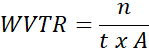
WVTR Test for Edible Films. WVTR test was performed using the method of Fahrullah et al. (2020). Initially, 36.5 g of NaCl was homogenized with 100 mL of distilled water and poured into a Petri dish (150 × 25 mm), where it was subsequently placed in a desiccator. In a separate vial bottle, 10 g of CaCl₂ was homogenized with 10 mL of distilled water. An edible film sample was placed on the mouth of the vial and sealed with parafilm. The first weight of the vial on an analytical balance. The vial was weighed again after 24 hr, and the weight change was used to calculate the water vapor transmission rate. WVTR was calculated by the formula below:
Description:
n : Change in weight of the edible film
t : Time (hours)
A : Surface area of the edible film (m²)
Antimicrobial activity test
Antimicrobial activity of bacteriophages incorporated into edible films was assessed through both in vitro and in vivo tests according to Akdemir Evrendilek (2026) method with some modifications. In vitro test: Edible film samples (2 × 2 cm) without or with bacteriophages were placed into Eppendorf tubes. 1 mL of a Vibrio parahaemolyticus culture (3 log CFU/mL) prepared in TSB medium was inoculated into each tube. Samples were then incubated for 24 hours at room temperature, with bacterial counts being determined at the time points of 0 and 24 hours. Aliquots (100 µL) were plated on TCBS agar and incubated at 35°C for 18 h. Colonies were counted and reported as log CFU/mL. For the in vivo experiment, 100 µL of V. parahaemolyticus suspension (104-105 CFU/mL) was inoculated into samples of whiteleg shrimp (Litopenaeus vannamei, 1 × 1 cm). The pieces of shrimp were wrapped with edible films containing bacteriophages (50 mg/cm 2) and with no bacteriophages, sealed in PP plastic, and stored at 4°C. Bacterial growth was tracked during storage on day 0, day 4, and day 7. To check bacterial survival, samples were plated on Thiosulfate Citrate Bile Salts Sucrose (TCBS) agar. All formulation ranges, bacteriophage concentrations, replication numbers, and statistical analyses were cross-checked against raw experimental data to ensure methodological consistency before optimization and validation.
Data analysis
Responses studied in this work included tensile strength, elongation, thickness, color, and water vapour transmission rate (WVTR). Comprehensive ANOVA analysis was conducted to evaluate the adequacy of the response surface model. The ANOVA table includes F-values, p-values, R², adjusted R², predicted R², and lack-of-fit tests. Regression equations for tensile strength, elongation, color, and WVTR were derived to describe the relationship between formulation factors and responses. These outputs confirm the reliability of the quadratic model used in optimization. The ANOVA model in its general form is given as:
Y = f(X1,X2,….., Xk) + e
Description:
Y: response variable
Xi: independent variables (i = 1, 2, …, k)
e: error term
The combination was then optimized using Design Expert software (version 13, Stat-Ease) according to the ANOVA. Based on the input factors and the corresponding responses, the program calculated recommended formulations that predicted optimal values. The best formulation was chosen using the desirability function, with values closer to 1 representing the greatest degree of optimization with respect to the criteria established for the final product . They subsequently carried out verification tests based on the best formulation proposed by the software. If the verification values were permitted a deviation of ±5% from model prediction, then results were deemed to agree with predicted model outcomes.
Result and Discussion
Determination of bacteriophage density
The bacteriophage density is a key indicator that allows estimating the number of active phage particles. For this investigation, bacteriophages were assessed for their density to control the number of phages used during application in the edible film. These are visible obstructions on a double-layer agar medium due to the lysis of bacteria by bacteriophages (Figure 1). When a bacteriophage infects bacteria growing on the plate, it reproduces and lyses the host cells, generating this process. Phages, when used for bacteriophage typing, potentially lyse host bacteria to produce clear plaques on the agar medium as the now-clear bacterial layer has been lysed by phage activity .
Referring to Table 2, at a dilution of 10-1, the plaque count was observed as 143 units on a Petri dish. So, this result falls under the valid range for bacteriophage density calculation, which is 25–250 plaques. Plaque assays yielded a calculated bacteriophage density of 1.43 × 10⁴ PFU/mL, representing the effective concentration in the tested sample. For incorporation into edible films, a stock solution of 10⁸ PFU/mL was used. Dilution and incorporation steps were carefully controlled to ensure reproducibility and consistency between plaque assay results and the applied stock concentration.
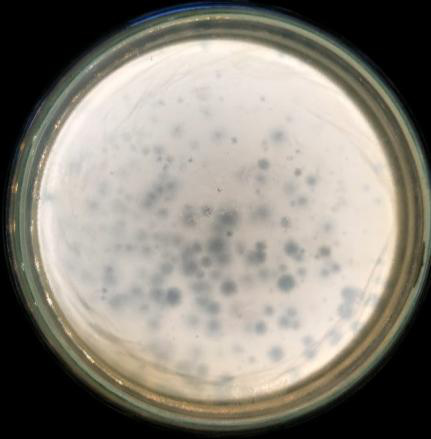
Plaque of bacteriophage observed on double-layer agar. Clear lysis zones indicate phage activity against Vibrio parahaemolyticus. Scale bar = 10 µm; magnification ×10,000.
Table 2: Count the result of bacteriophage density
| Dilution | Total of Plaque | Density (PFU/mL) |
| 10-1 | 143 | 1.43 x 10⁴ |
Edible film formulation optimization
The purpose of this research was to create edible films from carrageenan, gelatin, and glycerol as raw materials with independent quarter formulations determined by the Design Expert 13 application. Design Expert 13 software produced a total of 15 formulations with different concentrations of carrageenan, gelatin, and glycerol according to the specified lower limits and upper limits. The response parameters tensile strength, elongation, colour, and WVTR were evaluated with respect to these three factors. Then the input data were placed into the response variable columns, where each response was attributed to the optimization value of edible film. Table 3 shows the results of edible film responses and their formulation design.
According to Figure 2 found the above tensile strength response values were between 5 and 29.55 MPa. The tensile strength values were determined to exceed JIS
Table 3: The formulation design results of the edible film responses
| No | Carrageenan (%) | Gelatin (%) | Glycerol (%) | Tensile strength (MPa) | Elongation (%) | Color uniformity | WVTR (gr/m2/ day) |
| 1 | 0.5 | 4 | 0.75 | 22.03 | 47.2 | 26.21 | 6.1 |
| 2 | 0.8 | 2 | 1 | 9.99 | 34.23 | 21.45 | 4.78 |
| 3 | 0.8 | 3 | 0.75 | 10.55 | 38.12 | 22.24 | 5.57 |
| 4 | 1.1 | 3 | 0.5 | 15.66 | 42.73 | 20.48 | 5.57 |
| 5 | 0.8 | 4 | 1 | 19.05 | 58 | 24.99 | 6.63 |
| 6 | 0.5 | 3 | 0.5 | 12.65 | 26.29 | 24.94 | 6.9 |
| 7 | 0.8 | 3 | 0.75 | 18.65 | 24.33 | 22.67 | 6.37 |
| 8 | 0.8 | 2 | 0.5 | 14.19 | 19.67 | 19.55 | 4.64 |
| 9 | 0.5 | 4 | 0.5 | 29.55 | 51.11 | 26.47 | 5.44 |
| 10 | 0.8 | 3 | 1 | 11.23 | 40.36 | 23.8 | 6.5 |
| 11 | 1.1 | 2 | 0.75 | 10.68 | 34.77 | 20.56 | 4.25 |
| 12 | 0.5 | 4 | 0.75 | 25.84 | 56.47 | 25.28 | 5.71 |
| 13 | 1.1 | 3 | 0.75 | 10.98 | 36.7 | 24.69 | 5.31 |
| 14 | 0.8 | 3 | 1 | 5 | 42.24 | 23.73 | 5.71 |
| 15 | 0.5 | 2 | 0.75 | 9.1 | 27.83 | 19.97 | 3.85 |
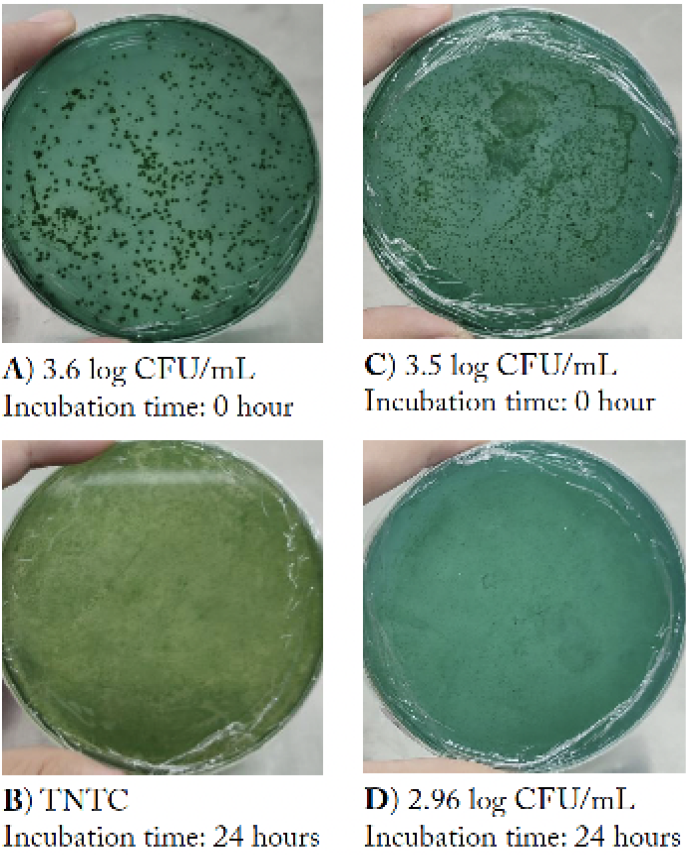
The antibacterial in vitro test. A, B) control and C, D) edible film in addition to bacteriophage.
Note: TNTC: Too numerous to count
(Japanese Industrial Standards, which require > 0.39 MPa) з in the test results. The tensile strength is an important mechanical parameter of edible films because it is directly linked to the protection capability of the coated product. When used as food packaging, edible films must have high tensile strength to protect the packaged product during handling, and distribution together with marketing .
The extensional response values obtained lay between 19.67% and 56.47%. This test is used to measure the increase in length of edible film compared to its initial length . One of the edible film parameters determined by JIS is elongation testing. Percentage of elongation, which is less than 10% is considered poor whilst between 10% and 50% it is classified as good and more than a percentage of 50% it is termed very good. The tensile strength values obtained in this study ranged from 5 to 29.55 MPa, exceeding the minimum requirement of JIS standards (≥0.39 MPa). These values are comparable to carrageenan–gelatin films reported by Rusli et al. (2017), who observed tensile strengths between 10–25 MPa, and Gumilar et al. (2025), who reported similar ranges. Elongation values (19.67–56.47%) were consistent with JIS standards and aligned with findings by Nurdiani et al. (2022), who reported elongation between 20–50%. The variation in elongation is likely due to differences in gelatin concentration, which strongly influences film flexibility. WVTR values (3.85–6.63 g/m²·day) were within the JIS limit (≤7 g/m²·day) and comparable to Setyaningrum et al. (2017), who reported WVTR values of 4–7 g/m²·day for similar formulations. These comparisons confirm that carrageenan–gelatin films in this study exhibit mechanical and barrier properties consistent with previously published edible films, validating their suitability for food packaging applications.
The obtained color response values were between 19.55 and 26.47. This screen displayed the differences in color between the samples and the control used. The greater the value of color similarity obtained, the more distinct the observed difference in color. In contrast, this test does not impact the mechanical properties of edible film but rather affects consumer acceptance, as it is well known that visual attributes are the first focus for consumers .
The WVTR ranged from 3.85 to 6.63 g/m²·day, meeting the JIS standard (≤7 g/m²·day). Units were standardized to g/m²·day throughout the manuscript for consistency. WVTR test is a parameter in determining the ability of film to overcome transmission of water vapor over time, and one of the factors influencing edible film character .
The responses analysis
A quadratic mathematical model was employed for the tensile strength, elongation, color, and WVTR responses. Since this study investigated three factors: Carrageenan, gelatin, and glycerol that influenced one another, the quadratic model was selected. Statistical significance testing for the ANOVA test results and mathematical equations was deemed significant when the p-value 50% indicates very good quality, hence verifying that the optimized formulation performed excellently in terms of mechanical properties.
The p-value of ANOVA analysis using the quadratic model was 0.018 (p < 0.05), which means that carrageenan, gelatin, and glycerol concentrations significantly affected the edible film color. Carrageenan and gelatin interaction showed that, as illustrated by the blue areas in the contour plots, a mixture of 1.1% carrageenan with 2% gelatin obtained the most desirable color. Gelatin (according to its purity) gives a yellowish tone to the films with lower L* values (darker) and increased b* values (yellow; . On the other hand, carrageenan improves transparency and neutrality that can raise L* values and lower a* and b* values . There were slight variations in the interaction between carrageenan and glycerol, which is in line with Larasati et al. (2024); glycerol does not affect the coloration of a film, given its chemical property, which is hydrophilic and not chromophoric. On the contrary, higher concentrations of glycerol led to lower values on all color intensity parameters used, with 2% gelatin combined with 0.5% glycerol resulting in the lowest values. The naturally yellowish brown color of gelatin may darken films, while glycerol, as a transparent material, can improve clarity and neutralize filming ; .
Based on the ANOVA analysis with Design Expert 13, a mean WVTR value of 5.56 g/m²/day was obtained, which had a p value of 0.043 (<0.05), suggesting that the quadratic model and combinations of formulation significantly influenced the WVTR. The interaction of carrageenan and gelatin showed that the lowest WVTR (3.83 g/m²/day), which met the JIS standard (≤7 g/m²/day), was found in 1.1% carrageenan with 2% gelatin. An increasing concentration of gelatin generally increases WVTR, due to a more porous film structure permitting greater water vapor diffusion . WVTR decreased for higher carrageenan concentrations, while it was observed to be increased for higher glycerol concentrations. Carrageenan is thought to reduce WVTR by filling the pores in the film matrix, and thus slows down the diffusion of vapor ; . On the other hand, glycerol, being a hydrophilic plasticizer, reduces the intermolecular tension and opens water vapor paths. This is similar to the behavior of gelatin and glycerol, where increasing both components increases WVTR. This is in accordance with Fahrullah et al. (2023). According to reports, the hydrophilic and hygroscopic character of glycerol attracts water molecules that bind together by complexing with glycerol, promoting vapor transmission through the film.
The optimization of edible film formulation
The processed data generated an optimized formulation predicted to provide the best results based on the analyzed factors and responses. Design Expert 13 produced 50 possible formulations, with the most optimal selected according to the desirability index, which ranges from 0 to 1. A higher desirability value indicates closer alignment with the desired outcomes. The optimization criteria included four key parameters: tensile strength, elongation, color, and WVTR. Tensile strength was selected for maximization (range: 5–29.55 MPa; JIS minimum standard is ≥ 0.39 MPa). Also, elongation was maximized in this range between 19.67 and 58%, below 10% poor, from 10–50% good, and above >50% very good by JIS. Color (ΔE) was reduced within the range 19.55–26.21, where less is more in terms of transparency. The minimum WVTR was found to be 3.83–6.9 g/m²/day, within the JIS maximum of 7 g/m²/day; this parameter indicates that the film is capable enough to act as a moisture barrier.
According to these criteria, the best formulations are identified as 1.1% carrageenan, 3.98% gelatin, and 0.5% glycerol as recommended by Design Expert. The predicted tensile strength was 29.55 MPa, whereas the experimental validation produced 9.08 MPa. Although lower than the predicted value, the experimental result still fell within the prediction interval (6.74–20.04 MPa). The discrepancy may be explained by experimental variability, limitations of the quadratic model, or differences in preparation conditions. The prediction error was calculated at ~69%, indicating that while the model captured general trends, further refinement is needed for precise mechanical property prediction.
Experimental Validation. Fluidic injection was carried out in the laboratory to compare experimental findings with predictions from Design Expert 13. The observed response values were compared with the prediction ranges from the software during verification. The recommended solution was determined to be dependable for the generation of optimum edible films if the experimental values were within these ranges.
Confirmatory results indicated that the Design Expert predictions accurately projected lab performance. For tensile strength, the measured value of 9.08 MPa was in the predicted range of (6.74 to 20.04) MPa. The elongation of this polymer film was 43.06%, again within the expected range, which is from 20.93 to 45.16%. The response to the color was 23.91, well within the predicted range of 21.15–25.25. Finally, WVTR was obtained as 5.55 g/m²/day which agreed with predicted values. In conclusion, all parameters tested were found to be within the predicted range, confirming that the formulated model recommended by Design Expert was able to predict an effective and reliable formulation. These results validate the optimization process and show the model can confidently be applied for predicting and optimizing edible film production.
Antimicrobial test: in vitro
Antibacterial testing is an important parameter to evaluate the effectiveness of edible films in inhibiting bacterial growth. In vitro assays were conducted by measuring bacterial counts at 0 and 24 hours after treatment. Vibrio parahaemolyticus (3 log CFU/mL) was inoculated onto prepared edible film sheets, incubated, and then plated on TCBS agar for colony enumeration. The results of the antibacterial in vitro test could be seen in Figure 2.
In the control sample, bacterial growth increased 3.6 log CFU/mL at 0 hours to too numerous to count (TNTC) at 24 hours. This finding is in agreement with Jaja et al. (2021), who found that the inclusion of edible films with no antibacterial agents has increased bacterial loads compared to clove oil-supplemented films. Additionally, visible growth was observed in the liquid surrounding the edible films at 24 hours of exposure (0.054 Log CFU/mL), the bacteriophage-loaded edible films reduced bacterial counts from 3.5 log CFU/mL at 0 h to 2.96 log CFU/mL at 24 h, corresponding to a reduction of ~0.56 log. Although modest, this reduction demonstrates measurable antimicrobial activity. Previous studies on phage-incorporated films reported higher log reductions (e.g., 1–2 log), which may be attributed to differences in phage stability, film composition, and matrix interactions. The present findings highlight the potential of phage films for seafood packaging, while also indicating the need for further optimization to enhance efficacy. Akdemir Evrendilek (2026) reported a reduction of pathogenic bacteria after 24 h during testing on bacteriophage-treated films. In general, the antibacterial performance of edible films enriched with bacteriophages was modest, possibly due to the low amount of carried bacteriophages. Edible films will show improved performance in preventing bacterial growth, with higher levels of bacteriophage.
Antimicrobial test: in vivo
In vivo antibacterial testing was performed by wrapping shrimp samples with edible films and monitoring bacterial growth for seven days. This duration was chosen to reflect typical storage periods before spoilage occurs. The aim was to determine whether shrimp inoculated with Vibrio parahaemolyticus (3 log CFU/mL) would show reduced bacterial counts when wrapped with bacteriophage-supplemented edible films. The results of the antibacterial in vivo test can be seen in Figure 3.
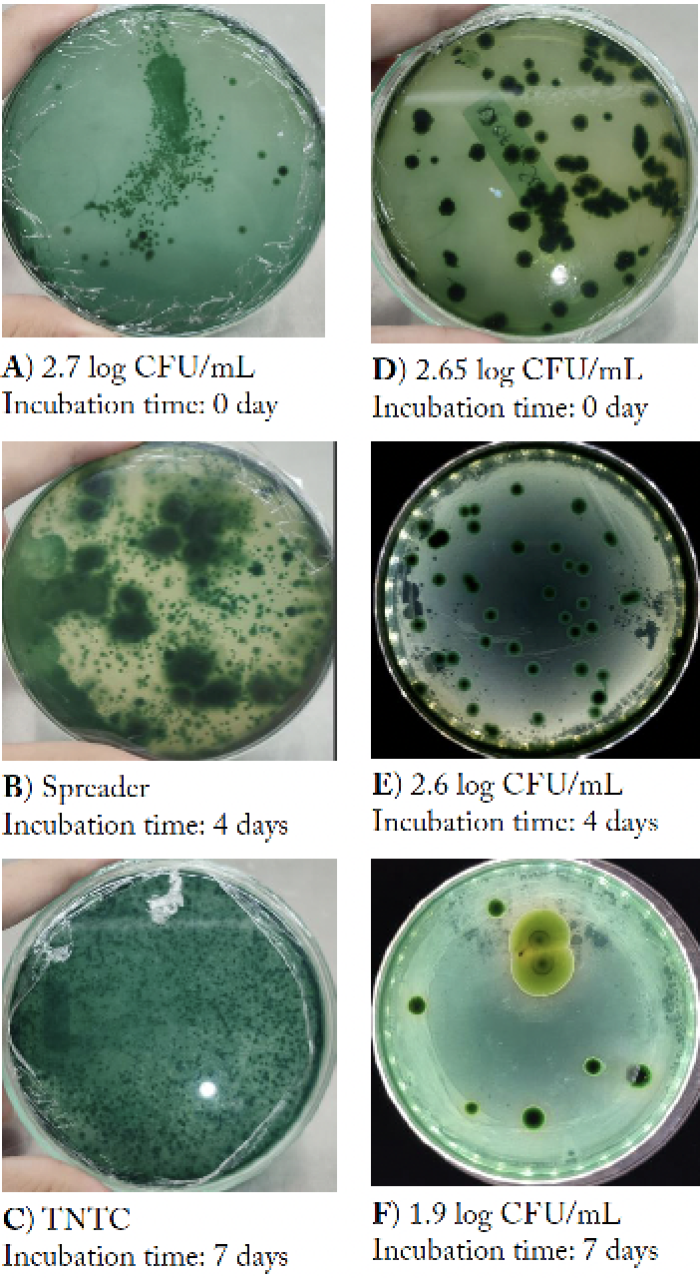
The antibacterial in vivo test. A, B, C) control and D, E, F)edible film in addition to bacteriophage.Note: TNTC: Too numerous to count
Bacterial growth in the control was time-dependent. Aerotolerant colonies at day 0 were present in counts of 2.7 log CFU/mL; however, by day 4, growth was excessive (classified as spreader), and by day 7, plates were TNTC. This suggests that V. parahaemolyticus would grow quickly in the absence of antibacterial compounds. Compared with bacteriophage-encapsulating films, shrimp wrapped with bacteriophage coated films showed a progressive decrease in bacterial counts over time: 2.65 log CFU/mL on day 0, 2.6 log CFU/mL on day 4 and 1.9 log CFU/mL on day at day seven. This decline indicates that the bacteriophages have shifted toward a lytic cycle—causing host cell lysis—or integrated their viral DNA into the bacterial chromosome via the lysogenic pathway , a biological mechanism increasingly leveraged for targeted bacterial biocontrol in agricultural systems .
Our findings agree with Akdemir Evrendilek (2026), who observed similar reductions of V. parahaemolyticus stored at 4°C on fish fillets wrapped with bacteriophage-fed films. The falling number of bacteria can be explained by a phenomenon called the bacteriophage effect, combined with cold storage, which retards growth. Nevertheless, bacteriophages need host bacteria to reproduce and are unable to metabolize outside of the host , which may limit their stability after long periods in a dried film. Therefore, though bacteriophage-treated edible films significantly reduce the bacterial loads present on tested food surfaces, they do not seem to eliminate bacteria from these surfaces, and their action seems maximally effective within seven days of being stored.
Conclusions and Recommendations
An experimental design showed that the optimum carrageenan, gelatin and glycerol composition for producing edible films had 1.1% carrageenan, 3.98% (w/w) gelatin and 0.5% glycerol, which was able to produce film with a tensile strength of 9.08 MPa, an elongation rate of 43%, a color value of 23.92 and WVTR of deliverance was found to be at 5.55 g/m²/day respectively from this study finding. Moreover, the addition of bacteriophages to edible films effectively prevented Vibrio parahaemolyticus in vitro and in vivo, confirming them as antimicrobial agents for food packaging. In the future, toxicity tests can be performed to ensure consumer protection and evaluate the stability of bacteriophage in the edible film matrix. These investigations will provide significant contributions to understanding the long-term efficacy and safety of bacteriophage-supplemented edible films, which in turn support their use as novel functional packaging materials. A comprehensive methodological audit was conducted to ensure consistency across formulation levels, phage concentration calculations, replication structure, ANOVA outputs, and validation results. This strengthens the reliability of the findings and supports the application of bacteriophage-incorporated carrageenan–gelatin films in antimicrobial food packaging.
Acknowledgements
The authors would like to express their sincere gratitude to colleagues at the Department of Fisheries Product Technology, Faculty of Fisheries and Marine Sciences, for their valuable support and collaboration throughout this research.
Novelty Statement
In summary, this study addresses a critical research gap by incorporating bacteriophages into carrageenan–gelatin edible films. This innovation provides a targeted antimicrobial strategy while offering an eco-friendly alternative to plastic packaging, thereby contributing to both food safety and sustainability.
Authors’ Contribution
Mahendra Wendy Pratama: Was responsible for writing the manuscript and conducting data analysis.
Asep Awaludin Prihanto: Contributed to the preparation of the final draft and the overall journal concept.
Abdul Aziz Jaziri: Designed and detailed the methodological framework of the study.
Nur Hanisah Azmi: Provided support in data interpretation and emphasized the novelty of the research.
Generative AI and AI-assisted technology statement
The authors declare that no generative AI and AI assisted technology was used in the creation of this manuscript.
Conflict of interest
The authors declare that they have no financial or personal relationships that could inappropriately influence the work reported in this paper.
References
- Akdemir Evrendilek, G. 2026. Bacteriophage applications for controlling pathogens in seafood processing and storage. Appl. Bios., 5(1): 15. [CrossRef]
- Akilie, M.S. 2024. Tren kemasan edible sebagai kemasan pangan terkini dan masa depan. Agric. Rev., 3(1): 49–60. [CrossRef]
- Alves, D., A. Marques, C. Milho, M.J. Costa, L.M. Pastrana, M.A. Cerqueira and S.M. Sillankorva. 2019. Bacteriophage ϕIBB-PF7A loaded on sodium alginate-based films to prevent microbial meat spoilage. Int. J. Food Microbiol., 291: 121–127. [CrossRef]
- Arifin, H.R., R. Indiarto and D. Ciptaningtiyas. 2020. Physical characteristics of edible film from modified breadfruit starch (Artocarpus atilis F.) with glycerol. IOP Conference Series: Earth Environ. Sci., 443(1): 012028. [CrossRef]
- Arivo D, and J. Sjahriani. 2019. Isolation, effectiveness, and characterization of Salmonella enterica lytic bacteriophage for biocontrol of gastroenteritis. Mandala of Health, 12 (2): 169-182
- Bestari, N.G., E. Saputra and D.Y. Pujiastuti. 2024. Penambahan glukosa terhadap karakteristik fisik edible film dari kappa-karagenan dengan plasticizer sorbitol. J. Marin. Coast. Sci., 13(3).
- Corputty, A.M., M.R. Wenno and S. Lewerissa. 2025. Sifat fisik edible film karagenan rumput laut Eucheuma cottonii. INASUA: J. Teknologi Hasil Perikanan, 5(1): 16–23. [CrossRef]
- Damayanti, N., E. Wulandari and J. Gumilar. 2023. Pengaruh konsentrasi sorbitol terhadap warna, transmisi cahaya, dan transparansi film edible dari gelatin usus ayam. J. Teknologi Hasil Peternakan, 4(2): 243–255.
- Darmawan, B.D. and O.E. Rohaendi. 2014. Zoonosis: Infeksi penyakit ikan terhadap manusia akibat kesalahan manajemen dan penanganan ikan maupun produk olahannya. J. Aquatropica Asia., 1(1).
- Fahrullah, F., D. Kisworo, B. Bulkaini, H. Haryanto, B.R.D. Wulandani, W. Yulianto, A. Noersiddiq and V. Maslami. 2023. The effects of plasticizer types on properties of whey–gelatin films. J. Biologi Tropis., 23(3): 414–421. [CrossRef]
- Fahrullah, F., L.E. Radiati and D. Rosyidi. 2020. The physical characteristics of whey-based edible film added with konjac. Curr. Res. Nutrit. Food Sci. J., 8(1): 333–339.
- Fera, M. and Nurkholik. 2018. Kualitas fisik edible film yang diproduksi dari kombinasi gelatin kulit domba dan agar (Gracilaria sp). J. Food Life Sci., 2(1).
- Gumilar, J., A. Pratama, E. Wulandari, L. Tavares and R. Maharani. 2025. Effect of glycerol on physical, mechanical and color properties of chicken intestine gelatin films. Asian J. Dairy Food Res., 44(1).
- Hardanti, S., A.K. Wardani and W.D.R. Putri. 2018. Isolasi dan karakterisasi bakteriofag spesifik Salmonella typhi dari kulit ayam. J. Teknologi Pertanian, 19(2): 107–111. [CrossRef]
- Hayati, Z., S.N. Jannah and A. Suprihadi. 2016. Isolasi bakteriofag spesifik Pseudomonas sp. Da1 dari biofilm pada sistem pengisian air minum isi ulang. J. Akademika Biologi, 5(3): 29–35.
- Hidayat, I.R., A. Zuhrotun and I. Sopyan. 2021. Design-expert software sebagai alat optimasi formulasi sediaan farmasi. Majalah Farmasetika., 6(1): 99–120. [CrossRef]
- Hijriawati, M. and Febrina, E. 2016. Edible film antimikroba. Farmaka., 14(1): 816.
- Isnaeni, R., A. Fitri, D. Nurandini, A. Tirtana and M.Z. Prayitno. 2022. Characteristics of edible film (layer by layer) from carrageenan–chitosan with the addition of belimbing wuluh leaf extract as antioxidant substance. Konversi., 11(1).
- Jaafar, R.S., S.A. Gmais and O.A. Al-Badran. 2025. Bacteriophages: Their possible application to wastewater treatment systems. Novel R. Microbiol. J., 9(5): 417-425 [Full text] [CrossRef]
- Jaja, A., R.M.S. Putri and J. Jumsurizal. 2021. Edible film dari karagenan dan minyak cengkeh sebagai antimikroba pada ikan segar. Marinade., 4(1): 32–39. [CrossRef]
- Jatmiko, Y.D., A.P. Purwanto and T. Ardyati. 2018. Uji aktivitas bakteriofage litik dari limbah rumah tangga terhadap Salmonella typhi. J. Biodjati., 3(2): 134–147. [CrossRef]
- Kong, I., I.G. Lamudji, K.J. Angkow, R.M.S. Insani, M.A. Mas and L.P. Pui. 2023. Application of edible film with Asian plant extracts as an innovative food packaging: a review. Coatings., 13(2): 245.
- Kusmarwati, A., Y. Yenni and N. Indriati. 2017. Resistensi antibiotik pada Vibrio parahaemolyticus dari udang vaname asal pantai utara Jawa untuk pasar ekspor. Jurnal Pascapanen dan Bioteknologi Kelautan dan Perikanan, 12(2): 91–106.
- Larasati, W.A., Y. Rahmawati, F. Taufany, S. Susianto, A. Altway and S. Nurkhamidah. 2024. Pengaruh gliserol sebagai plasticizer terhadap karakterisasi edible film dari kappa-karagenan. Eksergi, 21(3): 173–180.
- Mahmood, T., M. Naeem, K. Mahmood, I. Bodlah, et al. 2023. European honey bee (Apis mellifera L.) foraging activities, impacts and potential factors of decline- A review. Sarhad J. Agric., 39(1): 39-49. [Full text] [CrossRef]
- Maruddin, F., A. Ako and M. Taufik. 2017. Karakteristik edible film berbahan whey dan kasein yang menggunakan jenis plasticizer berbeda. Jurnal Ilmu dan Teknologi Peternakan, 5(2): 97–101.
- Nasution, S., H.A. Pangastuti, I. Marvie, A.N. Sari, C. Risdiana, F.F. Fadilla and L.I.T. Lubis. 2025. Pengembangan edible film dari pati singkong dengan penambahan berbagai rempah sebagai kemasan kopi instan untuk meningkatkan sifat fungsional minuman kopi. Pro Food., 11(1): 1–15. [CrossRef]
- Notonegoro, H., D. Syaputra and H. Djamaludin. 2024. Pengaruh karagenan pada sifat mekanik dan gugus fungsi formulasi edible film pati jagung. Media Teknologi Hasil Perikanan, 12: 163–171.
- Nurdiani, R., A.A. Prihanto, M. Firdaus, A. N. Aini, F.A. Nabilah, R.A., Talib, and N. Huda. 2024. Physicochemical characteristics of Pangasius sp. skin-gelatin-based-edible film enriched with silver nanoparticles. F1000Res., 12: 160 [CrossRef]
- Nurdiani, R., R.D.A. Ma’rifah, I.K. Busyro, A.A. Jaziri, A.A. Prihanto, M. Firdaus, R.A. Talib, and N. Huda. 2022. Physical and functional properties of fish gelatin-based film incorporated with mangrove extracts. Peer. J., 10: e13062. [CrossRef]
- Nurmiah, S., R. Syarief, S. Sukarno, R. Peranginangin and B. Nurmata. 2013. Aplikasi response surface methodology pada optimalisasi kondisi proses pengolahan alkali treated Cottonii (ATC). Jurnal Pascapanen dan Bioteknologi Kelautan dan Perikanan, 8(1): 9–22. [CrossRef]
- Proaño, J.L., P.R. Salgado, R.E. Cian, A.N. Mauri and S.R. Drago. 2020. Physical, structural and antioxidant properties of brewer’s spent grain protein films. J. Sci. Food Agric., 100(15): 5458–5465.
- Purbasari, H., S.K.M. Sudiadnyana, I. Wayan, S.K.M. Yulianti, and A. Elly. 2020. Hubungan tingkat pengetahuan hygiene sanitasi makanan dengan perilaku pengelola kantin sekolah dasar di Kecamatan Kuta Selatan Kabupaten Badung tahun 2020 (Doctoral dissertation, Poltekkes Kemenkes Denpasar).
- Puspandari, N. 2010. Survey kontaminasi bakteri patogen pada makanan dan minuman yang dijual di sekitar gedung perkantoran di Jakarta. Jurnal Komunikasi Kesehatan, 1(2).
- Rahmi, Q.F., E. Wulandari and J. Gumilar. 2022. Pengaruh konsentrasi gliserol pada gelatin kulit kelinci terhadap kadar air, ketebalan film, dan laju transmisi uap air edible film. Jurnal Teknologi Hasil Peternakan, 3(1): 19–31. [CrossRef]
- Ritonga, B.F. and M. Savira. 2023. Isolasi bakteriofag dari limbah cair dengan aktivitas litik terhadap Escherichia coli. Jurnal Kedokteran Syiah Kuala, 23(1).
- Rusli, A., S. Metusalach and M.M. Tahir. 2017. Karakterisasi edible film karagenan dengan pemlastis gliserol. Jurnal Pengolahan Hasil Perikanan Indon., 20(2): 219–229.
- Savitri, A.M. and S.G. Ningrum. 2024. Isolasi bakteriofag dari limbah burung walet menggunakan metode plaque assay. Prosiding Seminar Nasional Kusuma, 2: 474–481.
- Setyaningrum, A., N.K. Sumarni and J. Hardi. 2017. Sifat fisiko-kimia edible film agar–agar rumput laut (Gracilaria sp.) tersubstitusi gliserol. Natural Science: J. Sci. Technol., 6(2).
- Supeni, G. 2012. Pengaruh formulasi edible film dari karagenan terhadap sifat mekanik dan barrier. Jurnal Kimia Kemasan, 34(2). [CrossRef]
- Wijayani, K.D., Y.S. Darmanto and Susanto, E. 2021. Karakteristik edible film dari gelatin kulit ikan yang berbeda. Jurnal Ilmu dan Teknologi Perikanan, 3(1): 59–64. [CrossRef]

Services
Article usage statistics
Loading…
Related articles
- Physical and Mechanical Characteristics of Edible Film Based on Lesser Yam Starch with Addition of Glycerol and Sodium TripolyphosphateSarhad Journal of Agriculture · 2021
- Phosphorylated Banggai Yam Starch Edible Film: Effect of Glycerol Concentration on Its Mechanical and Functional PropertiesSarhad Journal of Agriculture · 2025
- Pithecellobium dulce (PD) and Cassia senna alata (CA) Incorporated Food Packaging Films with Antioxidant PropertiesPakistan Journal of Agricultural Research · 2024
- Development of Betalains Incorporated Starch Films as Ph Sensor Smart PackagingPakistan Journal of Agricultural Research · 2025
- An Overview on Antioxidants Activity of Polysaccharide Edible Films and Coatings Contains Essential Oils and Herb Extracts in Meat and Meat ProductsAdvances in Animal and Veterinary Sciences · 2020
- Characterization of Edible Films Based on Cordia lutea LamSarhad Journal of Agriculture · 2023