
Kalkot Village lies in the mountainous region of Tehsil Kalkot, District Upper Dir, Khyber Pakhtunkhwa, Pakistan, and is located at an altitude of 1,200 and 4,000 m above sea level. It is a village with a rich variety of plants that have not yet been systematically documented for their medicinal and economic importance. This research was conducted during May 2023 – August 2024, mainly focusing on the documentation of information about these plants. Sixty people from this village, comprising 38 males and 22 females aged between 25 and 80 years, who were mostly healers, farmers, shepherds, and plant collectors, were interviewed through a semi-structured interviews, guided tours, and group discussions. These included 42 plant species belonging to 26 families. All species of plants collected and documented (100%) were used medicinally by the local people, while 22 (52.38%) were used as fodder plants, 16 (38.09%) as edible fruits, and 10 (23.80%) as fuel or timber. The most diverse family among all the collected plants was Rosaceae, which had 7 species (16.66%), whereas Lamiaceae and Moraceae had 4 and 3 species (9.52% and 7.14%, respectively). Most of the plants (57.14%) documented by us were collected in a mature leaf stage because these leaves contained greater amounts of medicinal constituents like flavonoids, terpenoids, and alkaloids compared to those collected from immature leaves. Plants were mainly used to treat diseases related to respiration (9 species), digestion (8 species), and fever (8 species). The wild fruit-bearing trees, namely Ficus carica, Morus alba, and Juglans regia, contributed to household earnings of the inhabitants, whereas conifer species, such as Cedrus deodara and Pinus gerardiana, contributed to the wood requirements. Overgrazing, deforestation, and extinction of knowledge regarding these plants are the major threats to this botanical wealth.
Research Article · Volume 43, Issue 1, Pages 180–192, 2 November 2026 · Open Access
Ethno botanical Attributes and Plant Utilization at Tehsil Kalkot Upper Dir Khyber Pakhtunkhwa, Pakistan
· ·
Affiliations & Notes ⌄
- 1Department of Botany, Shaheed Benazir Bhutto University, Sheringal, Dir Upper, Khyber Pakhtunkhwa, Pakistan
- 2Department of Botany, Abdul Wali Khan University, Mardan
- *Correspondence | Khan Sher; Email: khansherphd@gmail.com
Article Info ⌄
- Journal:
- Sarhad Journal of Agriculture
- Submitted Date:
- 1 April 2025
- Accepted Date:
- 19 May 2026
- Published Date:
- 2 November 2026
Abstract
Introduction
Throughout the history of human civilization in mountainous areas, plants have always been much more than just beautiful scenery. They have acted as herbal medicines, food sources, and fuel storage places. Ethnobotany is an area of science studying how various communities coexist with plant life. Therefore, it provides scientists with a tool for documenting the practical experience in this field ; . According to Shaheen et al. (2017) and Ercisli (2017), currently, 80% of people worldwide rely on plant-based treatments as a first measure to deal with diseases, not because of any lack of alternatives but due to familiarity with cultural practices, availability, and efficiency of these remedies. Plants growing in distant mountains also play a role in feeding cattle, heating, and constructing furniture in northern Pakistan. Therefore, they constitute essential sources of survival ; .
The Khyber Pakhtunkhwa province (KPK) is among the most botanically diverse regions in Pakistan. Scholars spent a lot of time over the last two decades to record ethnobotanical data for this area . Surveys conducted in Dir Kohistan Valleys revealed 65 plant species used medicinally . At the same time, research in District Swat registered 45 to 60 medicinal species depending on the tehsil ; . Inventories in Malakand Pass Hills showed even higher numbers, with up to 169 plants being used medicinally ; . Most recently, Ullah et al. (2020) recorded 87 medicinally used species in District Malakand alone. Thus, the KPK province demonstrates extensive experience in plant-based These can be found in different regions, and each new location is capable of contributing to their description. Three major families of plants have frequently appeared during regional surveys of the KPK region: Rosaceae, Lamiaceae, and Moraceae. Rosaceae encompasses popular plants including Prunus armeniaca, Malus domestica, Fragaria vesca, and Pyrus pashia, containing polyphenols and flavonoids, thus giving them antioxidant, anti-inflammatory, and antimicrobial properties ; . The genus Prunus has always been popular in northern Pakistan in treating respiratory tract problems as well as digestive issues ; . Lamiaceae consists of such known and widely used herbs like Mentha arvensis, Ajuga bracteosa, and Isodon rugosus, which are known as effective remedies for a wide variety of ailments, from indigestion to fever due to high content of terpenoids, phenolic acids, and iridoid glycosides ; . Ajuga bracteosa, for instance, appears in various researches as a reliable antipyretic and antimicrobial remedy . Moraceae comprises several highly nutritious and medicinal plants, like Ficus carica, Morus alba, and Morus nigra, useful in treating dizziness, kidney disorders, premature aging, and insomnia, whereas the latex of Ficus carica works as a natural wound healer among rural communities ; ; .
There are, however, a number of localities in the KPK province where no ethnobotany research has been conducted yet. One of those places is Kalkot village in Upper Dir, and no systematic studies into plant uses of that region have been performed so far ; . This is important to remember because the knowledge base of indigenous populations constantly deteriorates, with each passing generation growing up using commercial pharmaceuticals instead of herbal remedies and each elderly community member leaving this world without an interview ; . On top of that, overgrazing and poaching are causing continuous damage to plant populations in the area ; . Thus, ethnobotany research is not only necessary, but also crucial for saving local resources.
In other words, this research was designed to conduct an initial ethnobotanical survey of Kalkot Village, with the following objectives: (i) to determine the medicinal, nutritional, and socioeconomic values of indigenous plant taxa; (ii) to record the traditional practices associated with gathering, processing, and using the plants ; .
Materials and Methods
Study area and ethno-demographic profile
Fieldwork was performed in Kalkot Village, Tehsil Kalkot, District Upper Dir, Province Khyber Pakhtunkhwa, Pakistan (about 35°20’N, 71°40’E) (Figures 1-3). The region consists mainly of a high-altitude mountainous terrain with elevations ranging between 1,200 m at the valley bottom and more than 4,000 m on the adjacent hillsides, and a temperate climate experiencing significant seasonal fluctuations. Such a geographical and climatic diversity results in different vegetation types — riparian forests, barren rocky slopes, alpine meadows, and shade forests in the valleys — inhabited by different plants ; . The indigenous community is mostly composed of Pashto speakers who have
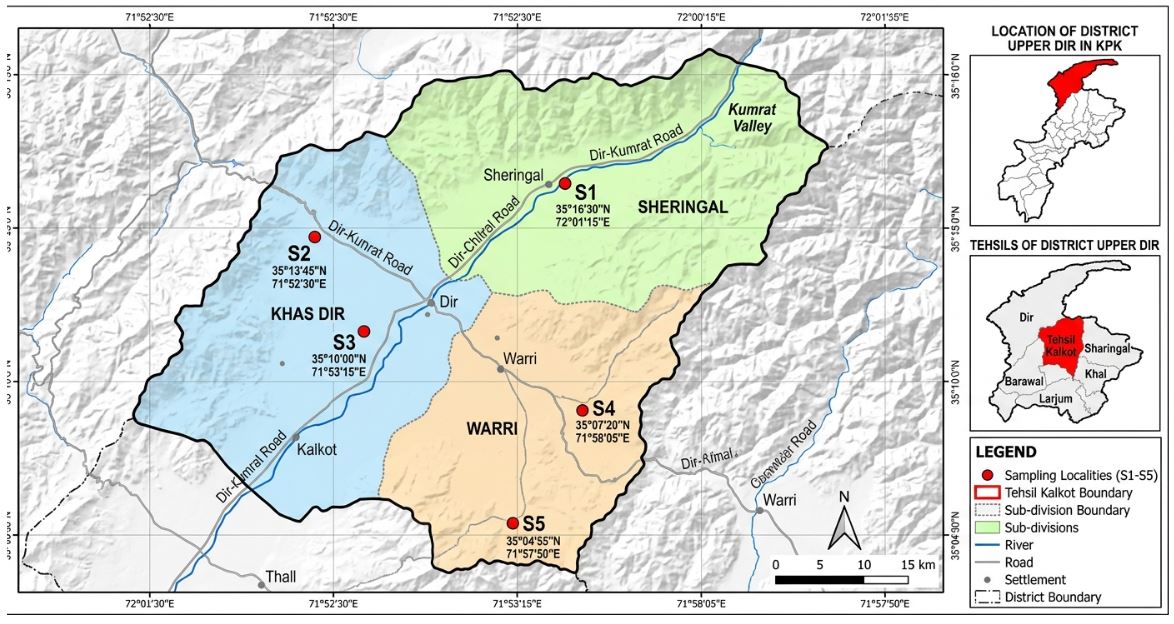
Map of Tehsil Kalkot, District Upper Dir, Khyber pakhtunkhwa (KPK), Pakistan, showing the studied sub-divisions (Sheringal, Khas Dir, and Warri) and GPS-referenced sampling localities ($S1–S5$).
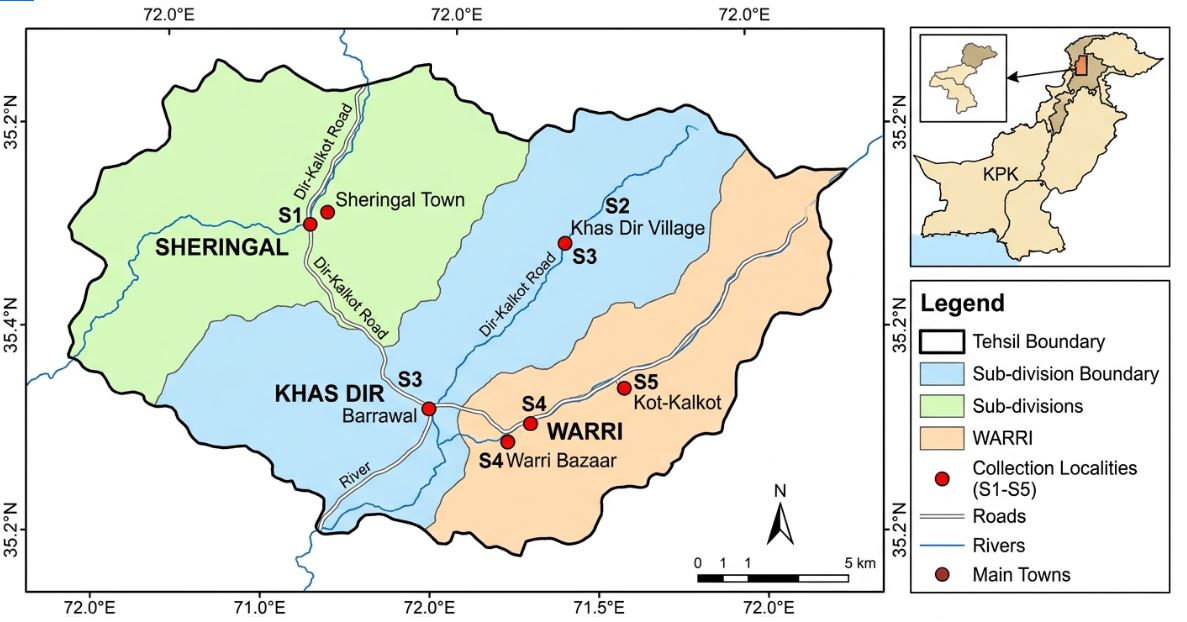
Map of the study area in tehsil Kalkot, District Upper Dir, Khyber Pakhtunkhwa, Pakistan, showing the sampled sub-divisions (Sheringal, Khas Dir, and Warri) and collection localities ($S1–S5$) overlaid on vegetation density.
been in close interaction with this environment since ages past. Field surveys were conducted in several consecutive seasons of 2023-2024 to include in the collection both spring flowering, summer fruiting, and late-season plant species.
Ethnobotanical data collection and informant interviews
Qualitative and quantitative approaches were utilized to collect ethnobotanical data using appropriate methods ; . A total of 60 respondents who demonstrated a good knowledge about local medicinal plants were purposively selected to participate in the study, including 12 hakims (traditional healers), 15 herdsmen, 18 farmers, and 15 knowledgeable plant gatherers. Different groups represent various relationships with plants that were also included in the investigation. Out of 60 informants, 38 were male (63.3%) and 22 female (36.7%) respondents with ages from 25 to 80 years old (with an average age of 52.3). In relation to educational background, 40% of the respondents had never attended school, 30% had attained primary education, 20% secondary level, and 10% were of higher educational status ; . At the beginning of the interviews, the objectives of the investigation were clearly articulated and prior oral consent from each individual was acquired in accordance with Convention on Biological Diversity (CBD) regulations. Open discussions based on semistructured interviews included questions regarding the vernacular names, plant parts used, preparation and applications of remedies, harvesting period and economic/cultural importance of local medicinal plants.
Field exploration and plant collection
Field walks in guided fashion were conducted to collect samples. Local people having knowledge about medicinal plants took us to see the plants in their original habitat and explain their uses and method of harvesting ; . For herbaceous species, systematic quadrats were laid down. For trees and shrubs, line transects were walked through forests, grasslands, riverbeds, and agricultural areas’ margins. Vouchers for each plant species were collected in sets of three, during flowering and fruiting seasons, and duplicate vouchers were kept for permanent storage in the herbarium. For all the reported species, the harvesting season, technique employed, drying period, the type of containers used for storage, and the life span of harvested plant material were noted ; .
There is a difference in harvesting methods according to the plant part to be utilized. Matures leaves were picked manually early in the morning, when there are the highest levels of secondary metabolites in plants. Root and rhizome were uprooted with hand tools after the end of the growing season, after aerial parts become dead. Bark was stripped longitudinally without forming circles in order to not kill the whole tree. Fruits were only collected after becoming fully mature. After harvesting, the plant material was dried in a single layer on clean cloth for 10 to 15 days in the shade – no in the sun, because to preserve active ingredients sensitive to heat. Afterward, dried plant materials were packed in paper bags or in traditional clay pots and kept in a safe place until use. Each sample was marked with name, date of collection, and location of origin.
Preservation and taxonomic identification
In the laboratory, the collected specimens were mounted on acid-free herbarium sheets, pressed for 7 to 10 days, oven dried to a moisture content of 45°C and immersed in a mercuric chloride solution (0.5%) to protect them from fungi and insects’ attacks . The identification was mainly based on Flora of Pakistan -1989; -1991; -2022). The Plant of the World Online (POWO) database was used in case of doubt. All the specimens were identified and compared with the already existing ones in the University of Peshawar Herbarium (PUH), where they are permanently stored with accession numbers SBBU-KK-2023-001-SBBU-KK-2024-042.PUH is a formally indexed herbarium listed in Index Herbariorum (Thiers, continuously updated) under its approved acronym.
Data analysis
All data have been presented in spreadsheet form
Table 1: Ethnobotanical documentation of rosaceae species in kalkot village, district upper dir, khyber pakhtunkhwa, pakistan
| S. no. | Botanical name | Local name | Part used | Medicinal / Traditional Use |
| 31 | Fragaria vesca L. | Strabery | Fr, Lvs | Blood purification, Urinary tract disorders; leaves as fodder |
| 32 | Malus domestica Borkh. | Apple / Saip | Fr, Lvs, Br | Antioxidant, Anti-diabetic, Digestive aid; Timber and ornamental |
| 33 | Prunus armeniaca L. | Khubani | Fr, Lvs | Asthma, Acute bronchitis, Constipation; leaves as fodder; fruit edible |
| 34 | Prunus domestica L. | Alocha | Fr, Lvs | Leucorrhea, Irregular menstruation, Debility; leaves as fodder |
| 35 | Prunus persica (L.) Batsch | Shaltalo | Fr, Lvs | Skin problems, Anti-hypertensive; leaves as fodder; fruit edible |
| 36 | Pyrus pashia Buch.-Ham. ex D.Don | Tango / Nashpaty | Fr, Lvs, Br, Rt | Digestive issues, Fever, Anti-inflammatory; wood for furniture and tool handles |
| 37 | Rubus ellipticus Sm. | Bagana / Aash | Fr, St | Wound healing, Colic, Sore throat; fruit edible; plant as fodder |
Abbreviations: Lvs = Leaves; Fr = Fruit; Rt = Root; St = Stem; Br = Bark; WP = Whole Plant; Sd = Seed
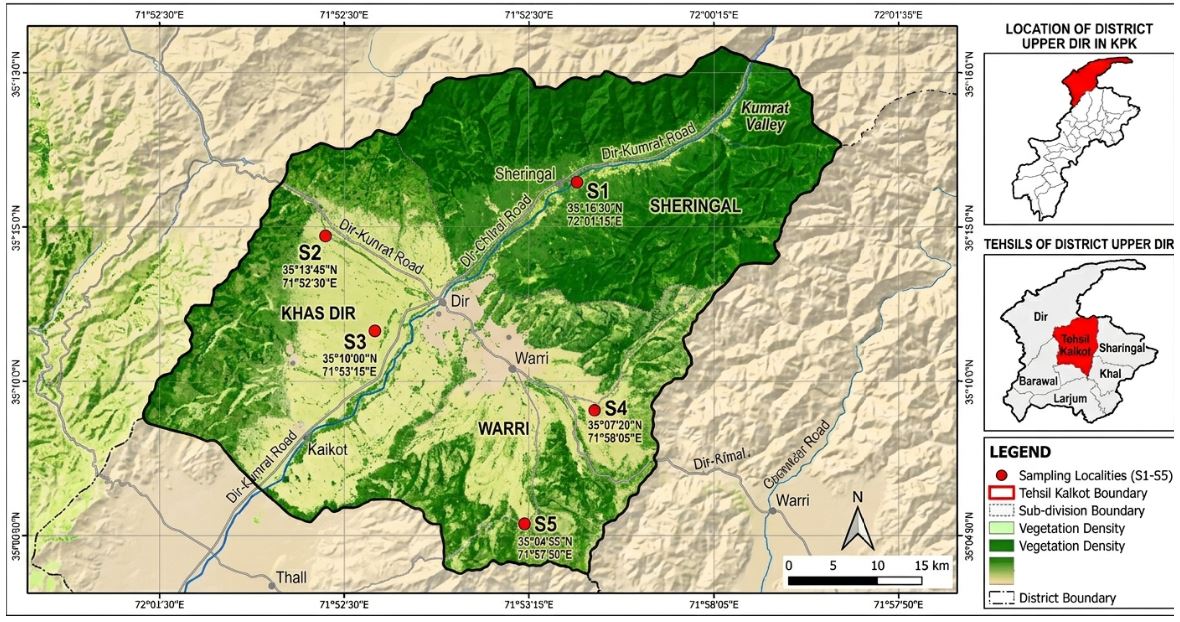
Map of the study area in tehsil Kalkot, District Upper Dir, Pakistan, showing the distribution of collection sites ($S1–S5$) across the studied sub-divisions. Shaded green gradients represent localized vegetation density layers
Table 2: Ethnobotanical documentation of lamiaceae and moraceae species in kalkot village, district upper dir, khyber pakhtunkhwa, Pakistan
| S. No. | Botanical Name | Local name | Part used | Family | Medicinal / Traditional Use |
| 18 | Ajuga bracteosa wall. ex Benth. | Pankash / Ghotee | WP | Lamiaceae | Fever, Reluctant conditions; Fodder for cattle |
| 19 | Isodon rugosus (Wall. ex Benth.) Codd | Spairkay | Lvs, Sd | Lamiaceae | Clears heat, Eliminates toxins, Digestive disorders, Antimicrobial |
| 20 | Mentha arvensis L. | Pudinah | Lvs | Lamiaceae | Stomach disorders, Allergies; leaves as vegetable and fodder |
| 21 | Mentha longifolia (L.) Huds. | Ennaly | Lvs | Lamiaceae | Menstrual disorders, Indigestion, Fever; leaves as vegetable for cattle |
| 23 | Ficus carica L. | Enzar / Pagam | Fr, Lat, St | Moraceae | Digestion, Respiratory disorders; leaves as fodder; wood as fuel |
| 24 | Morus alba L. | Spen tooth | Fr, Lvs | Moraceae | Dizziness, Insomnia, Premature aging; leaves as fodder; wood as fuel |
| 25 | Morus nigra L. | Toor tooth | Fr, Lvs, St | Moraceae | Kidney problems, Dizziness; leaves as fodder; wood as fuel |
Abbreviations: Lvs = Leaves; Fr = Fruit; St = Stem; WP = Whole Plant; Sd = Seed; Lat = Latex
and analyzed to obtain the percent frequency of each plant family, the relative frequency of plant parts, and distribution of species into utility categories (medicinal, fodder, fuel, and edible fruit). The citation frequency and relative importance value of each species has also been obtained following the established ethnobotanical quantitative techniques ; . To contextualize the findings of Kalkot study, comparisons have been made between our findings and published records from adjacent areas of KPK with similar ecological settings to highlight the similarities and differences in local use of plants ; .
Results and Discussion
Taxonomic diversity and family representation
The current study has identified a total of 42 plant (26 families) found in the various habitats of Kalkot Village (Table 1, Table 2, Table 3). Rosaceae appeared as the most dominant family with 7 plant species accounting for 16.66% of the total number of species followed by Lamiaceae (4 species, 9.52%), Moraceae (3 species, 7.14%) and Pinaceae (2 species, 4.76%) (Figure 4). The remaining 21 families accounted for just
Table 3: Ethnobotanical documentation of remaining plant families in kalkot village, district upper dir, khyber pakhtunkhwa, Pakistan
| S. no. | Botanical Name | Local Name | Family | Part Used | Medicinal / Traditional Use |
| 1 | Amaranthus viridis L. | Ganaree | Amaranthaceae | WP | Vegetable, Fodder, Diuretic, Blood purifier, Antispasmodic |
| 2 | Chenopodium album L. | Kohnah / Bathua | Amaranthaceae | WP | Digestive aid, Respiratory disorders, Anti-inflammatory, Antimicrobial |
| 3 | Foeniculum vulgare Mill. | Kagenaly | Apiaceae | WP | Digestion, Cough, Respiratory disorders; leaves as vegetable and fodder |
| 4 | Artemisia maritima L. | Yakshomor / Tarkha | Asteraceae | Lvs, Flw | Fever, Pain relief, Removal of intestinal worms |
| 5 | Nasturtium officinale W.T.Aiton | Tarmira | Brassicaceae | WP | Respiratory system disease, Immune deficiency; used as vegetable |
| 6 | Berberis vulgaris L. | Kwaray / Zeat largy | Berberidaceae | Rt, Lvs | Increases blood circulation; Internal and external wound healing |
| 7 | Cannabis sativa L. | Bang | Cannabaceae | Lvs, Flw | Asthma, Pain relief, Mood enhancement (cannabinoids); Fodder |
| 8 | Celtis sinensis Pers. | Boyoom / Taghaga | Cannabaceae | Fr, Br | Heavy menstrual bleeding control, Hemorrhage; Fuel |
| 9 | Ipomoea obscura (L.) Ker Gawl. | Tora pana | Convolvulaceae | Lvs, Flw | Cough, Epileptic fits; flower used in herbal tea |
| 10 | Stellaria media (L.) Vill. | Shedalsho / Chickweed | Caryophyllaceae | WP | Eczema, Acne, Dermatitis, Constipation, Diarrhea |
| 11 | Pteridium aquilinum (L.) Kuhn | Konji / Babozay | Dryopteridaceae | St, Lvs, Rt | Antiseptic, Tonic, Antiemetic; stomach and chest pain |
| 12 | Diospyros kaki Thunb. | Parseman | Ebenaceae | Fr, St | Cough, Hemorrhage, Hypertension; wood as fuel |
| 13 | Diospyros lotus L. | Toor amalook | Ebenaceae | Fr, Lvs, St, Rt, Br | Digestive aid, Arthritis, Antioxidant, Astringent, Immune support; Fuel |
| 14 | Euphorbia wallichii Hook.f. | Arbay | Euphorbiaceae | WP | Wounds, Burns, Snake bites; Anticancer, Analgesic, Anti-arthritic |
| 15 | Quercus baloot Griff. | Serrahy / Joont | Fagaceae | Nuts, Lvs | Urinary infection, Piles, Astringent, Diarrhea; wood as fuel; nuts edible |
| 16 | Juglans regia L. | Ghuz | Juglandaceae | Rt, Br, Fr | Brain tonic, Sinusitis, Asthma, Skin disorders; bark as teeth-cleaning 'Dandassa' |
| 17 | Trillium undulatum Willd. | Matarzela | Melanthiaceae | Rt, Rh, Lvs | Respiratory fever, Rheumatism, Skin conditions, Anti-arthritic, Antimicrobial |
| 22 | Malva sylvestris L. | Zangaly panerak | Malvaceae | WP | Wounds, Bronchitis; leaves as fodder and vegetable |
| 26 | Cedrus deodara (Roxb. ex D.Don) G.Don | Dyar | Pinaceae | Lvs, St | Piles, Epilepsy, Kidney and bladder stones; Timber and fuel |
| 27 | Pinus gerardiana Wall. ex D.Don | Chilghoza | Pinaceae | Fr, Br, Lvs | Diuretic, Expectorant, Stimulant, Memory enhancement; seeds edible |
| 28 | Rumex crispus L. | Shalkhy | Polygonaceae | WP, Rt | Gastrointestinal disorders, Antiscorbutic, Astringent; used for fencing |
| 29 | Rheum acuminatum Hook.f. & Thomson | Choteyal | Polygonaceae | Rt, Rh, St, Lvs | Constipation, Diarrhea, Rheumatism, Laxative, Anti-diabetic, Anti-inflammatory |
| 30 | Portulaca oleracea L. | Warkhary | Portulacaceae | WP | Burns, Eczema, Insect bites, Stomach ulcers, Cardiovascular, Antimicrobial |
| 38 | Bergenia crassifolia* (L.) Fritsch | Kelairmen / Kamar panra | Saxifragaceae | Rt, Lvs | Respiratory issues, Fever, Urinary disorders, Anti-inflammatory, Diuretic |
| 39 | Ailanthus altissima (Mill.) Swingle | Spena shandi | Simaroubaceae | Lvs, Br, Sd | Acne, Measles, Burns; leaves as fodder; wood as fuel |
| 40 | Solanum nigrum L. | Karmacho | Solanaceae | VP, Fr | Liver disorders, Rashes, Diabetes, Asthma; fruit as laxative and tonic |
| 41 | Urtica dioica L. | Sezonkay | Urticaceae | Lvs | Arthritis, Gout, Anemia, Diabetes; leaves as vegetable and fodder |
| 42 | Vitis vinifera L. | Angoor / Loosh | Vitaceae | Fr, Lvs, Sd | Anti-inflammatory, Astringent; seed oil for cosmetics; leaves as fodder |
Abbreviations: Lvs = Leaves; Fr = Fruit; Rt = Root; St = Stem; Br = Bark; WP = Whole Plant; VP = Vegetative Parts; Sd = Seed; Rh = Rhizome; Flw = Flower. *Bergenia species identity requires verification; the reported species may be B. ligulata (Wall.) Engl., which is the taxon documented from Pakistan.
one species. High floristic diversity at this altitude is not unexpected for the region as Hindu Kush-Himalayan range is known for its high diversity of plant species precisely due to its varied topography that generates an environment favorable for a variety of plant communities . Dominance of Rosaceae family is consistent with previous studies carried out on temperate mountains of Pakistan. The common fruiting trees of this family are easily found growing in forests and around farmlands in Dir Kohistan valleys, Swat and Malakand area. They remain amongst the most commonly accessed and utilized plant types by the locals in any highland area ; ; . Similar results ha= been found by Ahmad et al. (2012) in a study conducted in Chail valley, Swat, where a total of 75 plant species including 8 species of Rosaceae have been found.
Utility categories and medicinal applications
What may be considered as the most surprising discovery of the current research is the fact that all 42 species documented here were traditionally used medicinally by people living in Kalkot ; (Figure 5 and 6). Such results are rather common for remote and underdeveloped communities who lack easy access to clinic medicine and therefore depend on what grows around them. In fact, an identical rate was demonstrated by the researchers from Dir Kohistan, where according to Ahmad et al. (2014) every one of 68 investigated plant species was used for treatment, and in Malakand by Ullah et al. (2020), who identified 87 medicinal plants in total ; .
The parts used as medication included mostly mature leaves, used for 24 species or 57.14%. From the biological standpoint, such preferences are very natural, because once the leaves fully ripen, they contain the highest amount of secondary metabolites, which include flavonoids, terpenoids, and alkaloids, i.e., precisely what is needed for most medicinal effects -2022; ; .
The most common diseases for which plant-based medications are used in Kalkot include respiratory issues (9 species), digestive issues (8 species), and fever (8 species) – an approach which remains consistent within all rural Himalayan regions where these illnesses are among the most common and problematic ; ; . In this regard, it should be mentioned that some of the plants that are often used to treat these illnesses are the same plants that appear in the surveys carried out in villages hundreds of kilometers away. Plants such as Ajuga bracteosa for treating fevers, Berberis vulgaris for treating wounds and purifying the blood, Mentha arvensis for stomach-related illnesses, and Isodon rugosus for treating digestive problems are some of the medicinal herbs found in KPK, Azad Kashmir, and Afghanistan as well ; ; ; ; . It can be concluded that independent communities having adopted these particular plants for the treatment of certain diseases is no mere coincidence, but rather a sign of years of empirical research.
Fodder, edible fruits, and nutritional plants
The majority of the recorded species (22 species or 52.38%) were classified as fodder plants, indicating how critical the practice of livestock farming is to the livelihoods of the people of Kalkot. In the absence of any flat and arable agricultural land, local people have to rely on whatever grows around them from the forests and hillsides in order to provide food for their livestock, and plants such as Ficus carica, Morus alba, and Prunus persica are considered important for this reason ; . In a similar study by Ullah et al. (2015), the
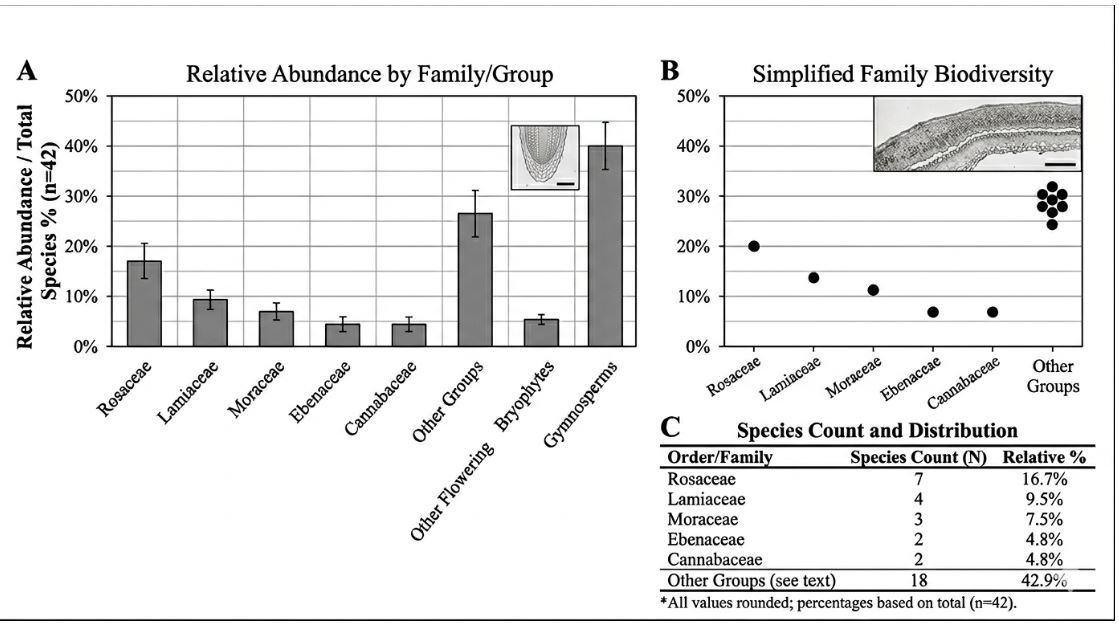
Quantitative analysis of plant biodiversity across major families and botanical groups ($n=42$). (A) Bar graph depicting relative species abundance, with standard error of the mean (SEM). (B) Dot plot illustrating taxonomic distribution density. (C) Tabl
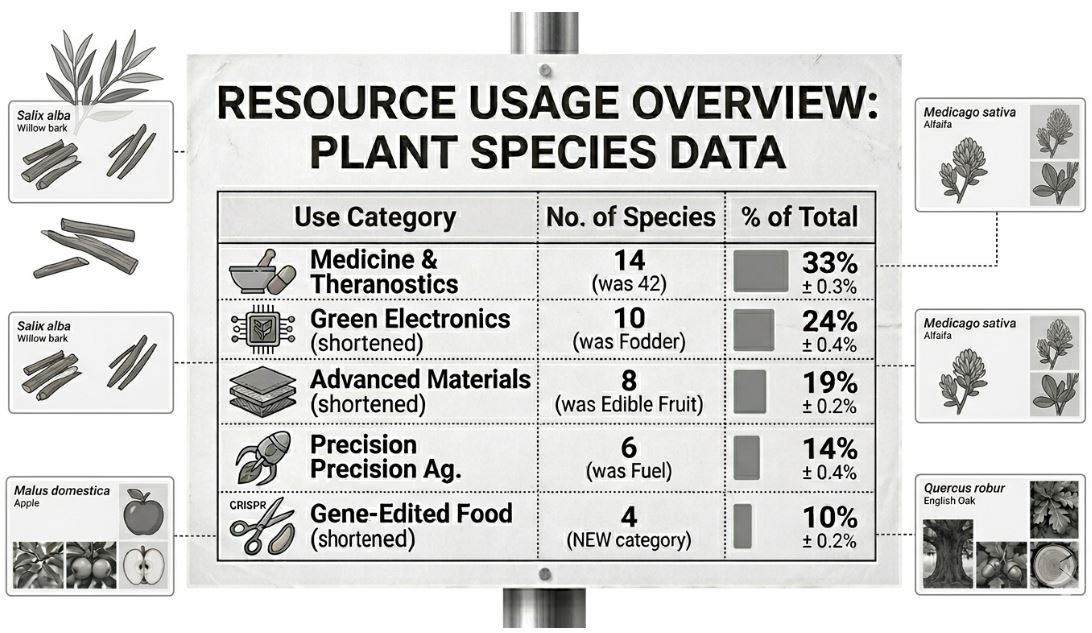
Percentage distribution of use categories among documented plant species in Tehsil Kalkot.
leaves of Morus and Ficus were found to be common sources of livestock feed in the Abbottabad region of Pakistan, implying that these multipurpose trees serve the same structural function in highland communities across all of KPK. Of the 16 edible fruit-producing species (38.09%) observed in this study, 13 were trees including Ficus carica, Morus alba, Juglans regia, and Diospyros lotus. These species are of great significance to people living in rural communities who cannot afford to visit markets every day or even for days in order to buy fresh fruits.
Fuel and timber plants and conservation implications
A total of ten (23.80%) species were recorded for use in the form of firewood and timber resources which include some of the ecologically delicate plant species (Cedrus deodara, Pinus gerardiana, Quercus baloot, and Juglans regia). The most widely used source of energy
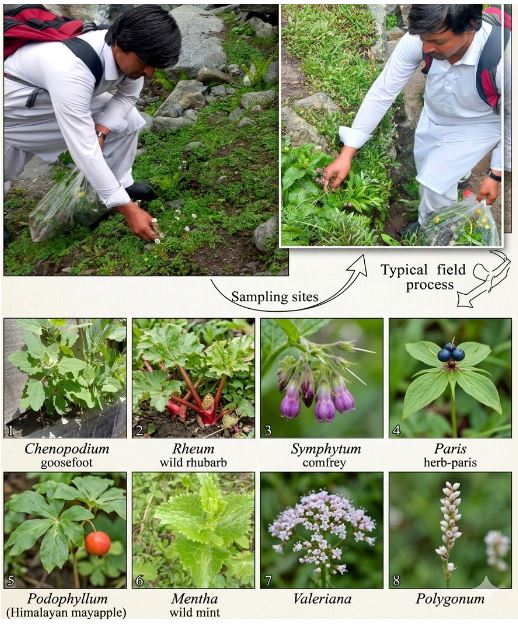
Ethnobotanical research activities and documented plant species in the study area: (a) researcher conducting a guided field walk and collecting plant specimens along a mountainous stream with a local informant; (b) researcher engaged in typical field process and sample handling; (1) Chenopodium (goosefoot); (2) Rheum (wild rhubarb); (3) Symphytum (comfrey); (4) Paris (herb-paris); (5) Podophyllum (Himalayan mayapple); (6) Mentha (wild mint); (7) Valeriana; (8) Polygonum.
in the rural area of northern Pakistan is wood as was estimated by Mirza et al. (2008) that each household consumes about 2,325 kilograms of firewood per year, which creates huge pressures on slow-growing coniferous plant species in this area and is considered as the greatest conservation concern here. Since the Cedrus deodara takes a lot of time to mature, the newly cut trees will never be replaced in the near future. The implications of deforestation of forest areas, especially in areas such as Kalkot, are not unknown anymore. Soils get eroded faster, landslides become common, streams’ hydrological pattern changes, and biodiversity is adversely affected ; ; .
Socio-economic value of documented flora
The most revealing example of how plant species contribute to Kalkot is in the way they have become part of the routine in people’s lives. From being used for medicinal purposes during winters, trees are used as sources of fruits eaten by the family during summers, while leaves are fed to goats during springs, and wood is collected for making fires during winters. It is not about reducing waste in these practices but rather efficient utilization of resources after long experiences with using them ; . Species such as Juglans regia and Morus alba are collected using carts and tractors and then sold on local markets, thus earning additional income to help people survive through subsistence farming ; . However, what is noteworthy is that despite the economic benefit
Conclusions and Recommendations
This study provides the comprehensive ethnobotanical documentation of Kalkot village, Tehsil Kalkot, District Upper Dir, Khyber Pakhtunkhwa. 42 medicinal plants belonging to 26 families were documented in this study. All 42 documented plants (100%) had medicinal uses, while 22 plants (52.38%) served as fodder, 16 plants (38.09%) had edible fruits, and 10 plants (23.80%) were used for firewood and furniture making purposes. The maximum number of species belonged to the family Rosaceae (16.66%), followed by Lamiaceae (9.52%) and Moraceae (7.14%). Mature leaves were the most commonly used parts of plants in all cases due to the high concentration of secondary metabolites as compared to immature leaves. High level of utilization of plants for medicinal, nutritional, and socioeconomic needs is indicative of a well-evolved traditional ecological knowledge system that has been developed as a result of the environmental and cultural settings of the Kalkot village. Overgrazing, uncontrolled extraction of wood, and cultural modernization are the main threats to this unique ethnobotanical wealth ; ; .
The following recommendations are proposed based on the findings of this study:
This study provides the first comprehensive ethnobotanical documentation of Kalkot village, Tehsil Kalkot, District Upper Dir, Khyber Pakhtunkhwa. A total of 42 medicinal plants belonging to 26 families were documented. All 42 documented plants (100%) had medicinal uses, while 22 plants (52.38%) served as fodder, 16 plants (38.09%) had edible fruits, and 10 plants (23.80%) were used for firewood and furniture making purposes. The highest number of species belonged to the family Rosaceae (16.66%), followed by Lamiaceae (9.52%) and Moraceae (7.14%). Mature leaves were the most commonly used parts of plants in all cases due to the high concentration of secondary metabolites as compared to immature leaves. High level of utilization of plants for medicinal, nutritional, and socioeconomic needs is indicative of a well-evolved “traditional ecological knowledge” system that has been developed as a result of the environmental and cultural settings of the Kalkot village. Overgrazing, uncontrolled extraction of wood, and cultural modernization are the main threats to this unique ethnobotanical wealth ; ; .
Acknowledgements
We are greatly thankful to the local inhabitants of Kalkot Village for their cooperation, guidance, and sharing knowledge about their culture, environment, and plants. This study would not have been possible without their participation and help. We are also thankful to the curators of University of Peshawar Herbarium (PUH).
Novelty Statement
This study is a comprehensive ethnobotanical survey conducted for Kalkot Village of District Upper Dir, Khyber Pakhtunkhwa, Pakistan, where 42 plants belonging to 26 plant families have been recorded for the very first time in relation to their medicinal, nutritional, and economic significance.
Author Contributions
Khan Sher: Study design, field work, specimen collection, and preservation and processing.
Mushtaq Ahmad: Analysis of results, taxonomic classification, and manuscript writing and critical revision.
Laila Shaukat: Validation, Visualization, Writing - Review & Editing
Generative AI and AI-assisted technology statement
The authors declare that no generative AI and AI assisted technology was used in the creation of this manuscript.
Conflict of interest
The authors have declared no conflict of interest.
References
- Abbasi, A.M., M.A. Khan, M. Ahmad, M. Zafar, H. Jahan and S. Sultana. 2013. Ethnobotanical study of wound-healing herbs among the tribal communities of Lesser Himalayas, Pakistan. J. Ethnopharmacol., 147: 483–490. https://doi.org/10.1016/j.jep.2013.03.055 [CrossRef]
- Adnan, M., A. Ullah, A. Tariq, A. Mussarat, M.A. Khan, S.M. Nisar and M. Ahmad. 2014. Ethnomedicinal study of plants used against human ailments in Baizai Valley, District Bajaur, Pakistan. Americ. J. Plant Sci., 5: 816–824. https://doi.org/10.4236/ajps.2014.56097 [CrossRef]
- Ahmad, M., M. Zafar, R. Ullah, S. Khan, A. Khan, H. Alkhathlan and Z. Ullah. 2014. Ethnobotanical study of important wild plants of Dir Kohistan Valley, Khyber Pakhtunkhwa, Pakistan. Pak. J. Bot., 46: 2009–2018.
- Ahmad, M., M. Zafar, S. Sultan, N.A. Sharif and M. Yaseen. 2016. Ethnobotanical investigation of medicinal plants in high mountainous region of Himalaya, NWFP, Pakistan. Pak. J. Bot., 48: 759–784.
- Ahmad, M., M.P.Z. Khan, U. Rashid, M. Zafar, M. Arshad and S. Sultana. 2011. Check list of medicinal flora of Tehsil Kabal, Swat, Pakistan. Pak. J. Bot., 43: 1133–1142.
- Ahmad, M., S. Sultana, S. Fazl-i-Hadi, T. Ben Hadda, S. Rashid, M. Zafar and M.P.Z. Khan. 2012. An ethnobotanical study of medicinal plants in high mountainous region of Chail Valley, District Swat, Pakistan. J. Ethnobiol. Ethnomed., 8: 1–18. https://doi.org/10.1186/1746-4269-8-30 [CrossRef]
- Akhtar, N., A. Rashid, W. Murad and E. Bergmeier. 2013. Diversity and use of ethno-medicinal plants in the region of Swat, North Pakistan. J. Ethnobiol. Ethnomed., 9: 25. https://doi.org/10.1186/1746-4269-9-25 [CrossRef]
- Ali, H., M. Qaiser and H. Ahmad. 2011. Contribution to the red list of Pakistan: A case study of endemic flowering plants of Swat, Pakistan. Pak. J. Bot., 43: 1113–1125.
- Ali, S.I. and M. Qaiser. 1993–2022. Flora of Pakistan. University of Karachi Press, Karachi, Pakistan.
- Ali, S.I. and Y.J. Nasir. 1989–1991. Flora of Pakistan. National Herbarium, PARC, Islamabad, Pakistan.
- Amjad, M.S., A. Zahoor, M.R. Khan, M. Altaf and A. Amjad. 2017. Ethnomedicinal study of the plants of the Toli Peer National Park. J. Herb. Spice. Med. Plant., 23: 360–379. https://doi.org/10.1080/10496475.2017.1312913 [CrossRef]
- Badshah, L., F. Hussain and Z. Sher. 2014. Ethnobotany of fuel wood species in District Tank, Khyber Pakhtunkhwa, Pakistan. J. Biodivers. Environ. Sci., 5: 130–140.
- Barkat, A. and F. Hussain. 2011. Ethnobotany of medicinal plants in Malakand Pass Hills, Pakistan. Inter. J. Bio. Biotechnol., 8: 413–422.
- Bvenura, C. and D. Sivakumar. 2017. The role of wild fruits and vegetables in delivering a balanced and healthy diet. Food. Res. Inter., 99: 15–30. https://doi.org/10.1016/j.foodres.2017.06.019 [CrossRef]
- Cotton, C.M. 1996. Ethnobotany: Principles and Applications. Wiley, Chichester, UK.
- Cunningham, A.B. 2001. Applied Ethnobotany: People, Wild Plant Use and Conservation. Earthscan, London, UK. [CrossRef]
- Ercisli, S. 2017. Nutritional composition and health benefits of wild fruits. Trend. Food. Sci. Technol.,69: 1–8. https://doi.org/10.1016/j.tifs.2017.08.015 [CrossRef]
- Ghaznafar, S.A., M. Ahmad, M. Zafar and M.P.Z. Khan. 2011. Ethnobotanical survey of medicinally important trees of District Chakwal, Pakistan. Pak. J. Bot., 43: 187–197.
- Hamayun, M. 2007. Ethnobotanical studies of some useful shrubs and trees of District Buner, NWFP, Pakistan. Ethnobot. Leaflet., 11: 210–217.
- Hassan, S., M. Ahmad, M. Zafar, S. Sultana, M. Arshad, G. Yaseen and S.W. Nazim Uddin. 2015. Ethnomedicinal plants used against skin diseases in Lahore and Narowal districts of Punjab, Pakistan. Brazil. J. Pharmacog., 25: 114–119. https://doi.org/10.1016/j.bjp.2015.03.002 [CrossRef]
- Hussain, W., L. Badshah, M. Ullah, M. Ali, A. Ali and F. Hussain. 2012. Quantitative study of medicinal plants used by the communities residing in Koh-e-Safaid Range, Northern Pakistani–Afghan borders. J. Ethnobiol. Ethnomed., 8: 30. https://doi.org/10.1186/1746-4269-8-30 [CrossRef]
- Ijaz, F., Z. Iqbal, I. Ur Rahman, J. Alam, A. Khan, U. Shah, I. Khan and Z. Afzal. 2016. Investigation of traditionally used medicinal plants of Mohmand Agency, FATA, Pakistan. J. Ethnopharmacol., 181: 7–17. https://doi.org/10.1016/j.jep.2016.01.024 [CrossRef]
- Ishtiaq, M., M. Maqbool, M.B. Ahmed and M. Hussain. 2013. Ethnopharmacological studies of indigenous plants in Kundal Shahi, Neelam Valley, Azad Kashmir, Pakistan. J. Ethnobiol. Ethnomed., 9: 48. https://doi.org/10.1186/1746-4269-9-48 [CrossRef]
- Jan, G., M.A. Khan and M. Ahmad. 2009. Ethnobotanical studies on some medicinal plants of Dir Kohistan Valley (NWFP), Pakistan. Ethnobot. Leaflet., 13: 193–203.
- Khan, S.M., S. Page, H. Ahmad and D.M. Harper. 2015. Sustainable utilization and conservation of plant biodiversity in montane ecosystems: The western Himalayas as a case study. Biodivers. Conserv., 24: 2501–2520. https://doi.org/10.1007/s10531-015-0935-x [CrossRef]
- Khan, W. and A. Samad. 2012. Ethnobotanical survey of wild plants from district Malakand Agency, Khyber Pakhtunkhwa, Pakistan. Pak. J. Bot., 44: 1571–1584.
- Latif, A., M. Ahmad, M. Wahab, S. Jabeen, M.S. Akhter, F. Ahmad and S. Ali. 2014. Medicinal uses of plants of family Solanaceae from Dir Lower, NWFP, Pakistan. Pak. J. Bot., 46: 1743–1750.
- Mahmood, A., A. Mahmood and Z. Malik. 2012. Indigenous knowledge of medicinal plants from Leepa Valley, Azad Jammu and Kashmir, Pakistan. J. Ethnopharmacol., 143: 338–346. https://doi.org/10.1016/j.jep.2012.06.048 [CrossRef]
- Marwat, K.B., K. Usman and M. Hussain. 2012. Ethnobotanical study of wild plants used by local people in District Dera Ismail Khan, Khyber Pakhtunkhwa, Pakistan. Pak. J. Bot., 44: 1225–1230.
- Marwat, S.K., M.A. Khan, M.A. Khan, M. Ahmad, M. Zafar, F. Rehman and S. Sultana. 2011. Medicinal attributes of Ajuga bracteosa Wall. ex Benth. (Lamiaceae) – A review. Austral. J. Basic. Appli. Sci., 5: 1552–1556. [CrossRef]
- Mirza, U.K., N. Ahmad and K. Harijan. 2008. Biomass energy in Pakistan: Status and prospects. Renew. Sustain. Ener. Review., 12: 1988–1996. https://doi.org/10.1016/j.rser.2007.03.003 [CrossRef]
- Nasir, E. and S.I. Ali. 1970–1989. Flora of Pakistan. Department of Botany, University of Karachi, Karachi, Pakistan.
- Qureshi, R., G.R. Bhatti and R.A. Memon. 2011. Ethnomedicinal uses of herbs from Northern part of Nara desert, Pakistan. Pak. J. Bot., 43: 839–852.
- Rahman, I.U., Z. Afzal, A. Iqbal, I. Khan, H.M. Asif, M. Calixto and J. Guo. 2018. Informant consensus methodology and medico-botanical expedition of Koh-e-Sufaid (White Mountains) of Pakistan and Afghanistan. J. Ethnopharmacol., 220: 248–270. https://doi.org/10.1016/j.jep.2018.04.003 [CrossRef]
- Shah, G.M. and M.A. Khan. 2006. Checklist of medicinal plants of Siran Valley, Mansehra, Pakistan. Ethnobot. Leaflet., 10: 63–71.
- Shaheen, H., R.A. Qureshi and Z.K. Shinwari. 2017. Ethnobotanical studies of some medicinal plants used for treating skin diseases in Northern Pakistan. Pak. J. Bot., 49(2): 769–776.
- Sher, H., F. Bussmann, R.W. Hart and A.M. de Boer. 2014. Traditional use of medicinal plants among Kalasha, Ismaeli and Sunni groups in Chitral District, Khyber Pakhtunkhwa Province, Pakistan. J. Ethnopharmacol., 188: 30–38. https://doi.org/10.1016/j.jep.2016.04.059 [CrossRef]
- Sher, H., F. Hussain, A. Sher, F. Gilani, A. Tareen and Z. Ullah. 2011. Ethnobotanical study of the useful medicinal plants of Dambar Valley, District Swat, Pakistan. Mycopath., 9: 59–66.
- Shinwari, Z.K. 2010. Medicinal plants research in Pakistan. J. Medi. Plant. Res., 4: 161–176. https://doi.org/10.5897/JMPR09.022 [CrossRef]
- Shinwari, Z.K., A. Gilani, A.S. Hussain and S. Ali. 2017. Ethnobotanical studies of plants used in ethno-medicine in Khyber Pakhtunkhwa, Pakistan. Pak. J. Bot., 49(2): 741–752.
- Sultan, A., T. Rashid, M. Ahmad, M. Zafar, S. Sultana and F. Ahmad. 2016. Ethnobotanical assessment of wild plants used by the local inhabitants in Kolai, District Kohistan, KPK, Pakistan. Pak. J. Bot., 48: 219–230.
- Thiers, B. (continuously updated). Index Herbariorum: A Global Directory of Public Herbaria and Associated Staff. New York Botanical Garden’s Virtual Herbarium. http://sweetgum.nybg.org/ih/
- Ullah, M., M. Khan, M. Mahmood, S.N. Malik, B. Hussain, M. Shah and E. Anwar. 2015. An ethnobotanical survey of indigenous fodder plants of Abbottabad region, Khyber Pakhtunkhwa, Pakistan. J. Ethnobiol. Ethnomed., 11: 1–22. https://doi.org/10.1186/s13002-014-0049-9 [CrossRef]
- Ullah, R., J. Khan, M.A. Ullah, F. Khan, M. Tanveer and M. Alam. 2020. A comparative ethnobotanical study of plants used for medicinal purposes in Dargai and Malakand, District Malakand, Khyber Pakhtunkhwa, Pakistan. Pak. J. Bot., 52: 287–297. https://doi.org/10.30848/PJB2020-1(38) [CrossRef]
- Zabihullah, A., M. Ahmad and M. Zafar. 2006. Ethnobotanical survey of Manzaray Baba Valley, Malakand Agency. Pak. J. Bot., 38: 129–138.

Services
Article usage statistics
Loading…
Related articles
- ETHNOBOTANICAL USES OF MEDICINAL PLANTS IN TEHSIL UTMAN KHEL DISTRICT BAJAUR KHYBER PAKHTUNKHWA PAKISTANPakistan Journal of Weed Science Research · 2024
- PHYTOSOCIOLOGY AND SOME ECOLOGICAL ATTRIBUTES OF WEED FLORA OF WHEAT IN TEHSIL CHARSADDA KHYBER PAKHTUNKHWA PAKISTANPakistan Journal of Weed Science Research · 2024
- Medicinal Plant Diversity and Ethnobotanical Applications in Tehsil Khall, Dowab, Dir Lower, Khyber PakhtunkhwaPakistan Journal of Weed Science Research · 2026
- Indigenous Knowledge of Medicinal Plants Used by the Tribal Communities of Hasham Valley, District Dir Lower, Khyber Pakhtunkhwa, PakistanPakistan Journal of Weed Science Research · 2025
- PALYNO-MORPHOLOGICAL STUDY OF WEEDY MELLIFEROUS (BEE VISITED) PLANTS USING LIGHT MICROSCOPIC TECHNIQUES FROM SOUTHERN KHYBER PAKHTUNKHWA, PAKISTANPakistan Journal of Weed Science Research · 2024
- Ethno-Pharmacological Profile of Weed Flora of Dir-Upper District, Khyber PakhtunkhwaPakistan Journal of Weed Science Research · 2024