
Effective communication channels are essential for improving farmers’ willingness to adopt recommended dairy farming practices (RDFPs), particularly in arid and resource-constrained regions. This study examined the association between access to advisory sources and dairy farmers’ willingness to adopt RDFPs in Tharparkar District, Sindh, Pakistan. A cross-sectional survey was conducted with 430 dairy farmers selected through a multistage sampling procedure. Data were collected using a structured questionnaire covering socio-demographic characteristics, farm profile, advisory-source accessibility, perceived effectiveness, and adoption willingness. Pearson’s chi-square test and Cramér’s V were used to compare the strength of association across nine advisory sources, while linear-by-linear association, Spearman’s rho, and Kendall’s tau-b were applied to account for the ordinal nature of the data. An exploratory ordinal logistic regression was also conducted to assess adjusted associations. Results showed that mobile phones had the strongest association with adoption willingness (V = .349), followed by television (V = .341) and FM radio (V = .298). Extension/veterinary officers, newspapers, neighbour/contact farmers, and private clinics showed moderate positive associations. Research bulletins showed weak ordinal consistency, while research institution/artificial insemination centre access showed an inverse ordinal relationship. The findings suggest that mobile and broadcast channels may be useful for awareness and reinforcement, whereas technical practices may require expert-mediated support. As the study is cross-sectional, the results should be interpreted as association-based evidence for pilot testing rather than causal proof of channel effectiveness.
Research Article · Volume 43, Issue 1, Pages 86–100, 26 October 2026 · Open Access
Ranking Communication Channels for Technology Adoption: A Cramer’s V–Based Multi-Channel Analysis in Arid-Zone Dairy Farming
· · · · · ·
Affiliations & Notes ⌄
- 1Sindh Agriculture University, Tando Jam, Pakistan
- 2Universiti Putra Malaysia, Malaysia
- 3Adamawa State University, Mubi, Nigeria
- *Correspondence | Zaheeruddin Mirani; Email: zamirani@sau.edu.pk
Article Info ⌄
- Journal:
- Sarhad Journal of Agriculture
- Submitted Date:
- 10 December 2025
- Accepted Date:
- 2 May 2026
- Published Date:
- 26 October 2026
From the article
- Research institution/AI centre access showed a significant but negative ordinal relationship, indicating that this source should not be interpreted as a positive adoption-willingness channel despite its significant Cramér’s V value.
- Farmers reporting no mobile access (B = -3.425, p < .001, OR = .033) or only some access (B = -2.035, p < .001, OR = .131) had substantially lower odds of being in a higher adoption-willingness category than those with greater mobile access.
- The findings showed that mobile phones, television, and FM radio were the advisory sources most strongly and positively associated with adoption willingness, while extension/veterinary officers, newspapers, neighbour/contact farmers, and private clinics/organizations showed moderate positive associations.
- Research bulletins showed weak ordinal consistency, whereas research institution/artificial insemination centre access showed an inverse ordinal pattern, indicating that institutional and technical channels should be interpreted cautiously in this context.
Selected from the article's own text.
Abstract
Introduction
Dairy farming constitutes a cornerstone of Pakistan’s rural economy, contributing substantially to the national gross domestic product (GDP), household food security, and the socio-economic resilience of rural communities ; . According to the latest government figures, the livestock sector contributes 14.97% of Pakistan’s GDP and 63.6% of agriculture’s value added . More than eight million rural households are engaged in dairy-related activities, deriving nearly 35% of their total income from this sub-sector . Approximately 90% of dairy farms operate at a small scale, with the Sindh province hosting the majority of these enterprises . In semi-arid regions such as Tharparkar, dairy farming is not only a vital livelihood but also a critical survival mechanism that offsets the risks of climatic variability and recurrent crop failures . The district possesses the highest cattle population in Sindh and is home to the indigenous Tharparkar breed, which is well adapted to heat stress and feed scarcity, serving both milking and draught functions . Despite its economic and social centrality, dairy productivity remains low, primarily due to the limited adoption of Recommended Dairy Farming Practices (RDFPs), encompassing milking hygiene, animal health care, reproductive management, balanced nutrition, animal welfare, and systematic record-keeping ; ; . This limitation in adoption holds back agricultural productivity, food safety, animal health, and economic opportunities for small-scale farmers, thereby hindering progress toward SDG 2 (Zero Hunger), SDG 3 (Good Health and Well-being), and SDG 8 (Decent Work and Economic Growth) (UN, 2015). In particular, practices related to milking hygiene, animal health care, disease prevention, and safe milk handling are directly relevant to SDG 3 because they contribute to healthier animals, safer dairy products, and reduced public-health risks.
Dairy farmers of Tharparkar district sustain their herd and household livelihood in a consistent setting of information constraints which critically influence their decisions regarding recommended dairy management practices. Empirical evidence from livestock and crop systems shows that farmers rely on multiple information sources, including public extension services, veterinary experts, input dealers, mass and digital media, and peer networks. Access to accurate and timely information is also associated with improved farm management and greater adoption of dairy practices .
The successful diffusion of RDFPs depends not only on technical availability but also on farmers’ behavioral readiness to adopt them. Grounded in the Technology Acceptance Model (TAM) and Diffusion of Innovations (DOI), this study views adoption willingness as an important pre-adoption construct that reflects farmers’ readiness to adopt RDFPs based on perceived usefulness and channel credibility. This study is conceptually informed by two complementary perspectives, DOI and TAM. DOI emphasizes that communication channels are central to the spread of innovations because they influence how information reaches potential adopters and how uncertainty is reduced during the innovation-decision process . In agricultural extension contexts, communication channels and the identity of information providers are particularly important because ICT-based advisory services, extension agents, and other messengers can shape farmers’ awareness, persuasion, and adoption-related decisions ; .
In this study, DOI supports the role of information sources and advisory-source accessibility in shaping farmers’ exposure to RDFP-related information. TAM complements this perspective by explaining that individuals are more likely to accept and use innovations when they perceive them as useful, relevant, and effective ; . Accordingly, the conceptual framework presented in Figure 1 links information-source accessibility, perception variables, and adoption willingness of RDFPs. Information-source accessibility is treated as the main explanatory construct, perceived effectiveness/usefulness as a perception-related construct, and adoption willingness as an intention-based construct, while actual adoption refers to the observable implementation of RDFPs on the farm. Therefore, the findings should be interpreted as evidence of farmers’ readiness to adopt, not as confirmed adoption behavior.
Recent dairy studies show that technology adoption in dairy farming is shaped by farmer characteristics, farm conditions, advisory contact, and perceptions of usefulness, with frequent interaction with veterinarians, fellow farmers, and advisory systems often associated with improved adoption and farm performance ; . Moreover, the advisory systems incorporating the public, private, cooperative, and hybrid channels improve access to a wide range of information about animal health and feed management by farmers, which leads to increased innovation and perceptions of better performance . Furthermore, digital (mobile) communication technologies have further extended advisory reach through reducing transaction costs and facilitating frequent interactions between farmer and advisor and thus improving behavioural attitudes towards adoption . Social networks also play an important role in disseminating information. Studies identifying “key communicators” show that farmers in a central position hasten the flow of knowledge and this combination of bonding, bridging and linking ties ensures what information is communicated and how quickly it is used ; . However, the effectiveness of particular sources is highly contingent on local agro-ecology, trust and relevance of message. For instance, mass-media and public forms of communication resulted in better impacts in irrigated areas, however, when the content was not localized, their effects were weak in rain-fed zones . Together, these results show that access to, credibility of, and contextual alignment to sources of advice drive behavioural responses in dairy systems.
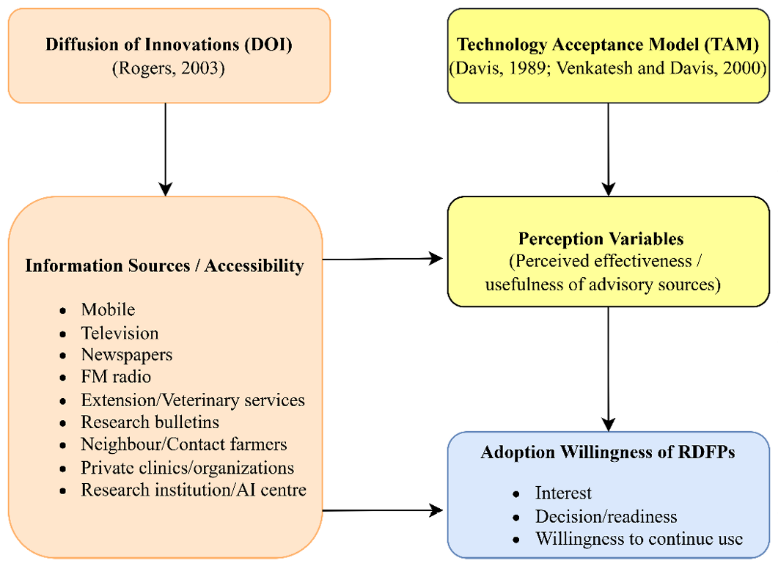
Conceptual framework integrating diffusion of innovations and technology acceptance model for explaining dairy farmers’ willingness to adopt RDFPs.
Note: doi = diffusion of innovations; tAM = Technology Acceptance Model; RDFPs = recommended dairy farming practices; AI = artificial insemination. The direct pathway from information-source accessibility to adoption willingness represents the main association tested in this study. The perception pathway reflects the conceptual role of perceived effectiveness/usefulness and was summarized descriptively, not tested as a mediation model.
Within the drought-prone environment of Tharparkar, farmers access several advisory channels, including television, newspapers, FM radio, extension and veterinary services, research bulletins, neighbour/contact farmers, private clinics, and research or artificial insemination centres. However, it remains unclear which of these channels are most strongly associated with farmers’ willingness to adopt RDFPs. Previous studies show that advisory contact, veterinary interaction, public information sources, media-based communication, and peer networks can influence adoption-related outcomes ; ; . However, these findings are often context-specific and rarely focused on arid dairy systems such as Tharparkar. As a result, extension and livestock service providers lack comparative source-specific evidence for prioritizing communication channels in this region . Similarly, network-based studies show the accelerating effect of centrally located farmers in disseminating but evidence is lacking on whether peer communication is more persuasive than formal advisories in influencing behavioural intentions in South Asian dairy systems . As a result, extension and service providers in Tharparkar do not have comparative, source specific evidence to prioritise the most effective communication channels for increasing adoption willingness.
Despite substantial work on dairy extension and agricultural information systems, several empirical and methodological gaps remain. First, previous studies often examine farmers’ access to information using broad or aggregated indicators, with less attention to source-specific accessibility and perceived utility within the same dairy-farming population ; . Second, willingness to adopt is rarely examined as a distinct pre-adoption outcome, even though it reflects farmers’ readiness before actual implementation . Third, many studies report statistical significance without comparable effect-size indicators that can help extension planners prioritize among communication sources. Fourth, although peer networks, veterinarians, extension agents, and digital advisory services have each been linked to adoption-related outcomes, few studies compare their relative association with adoption willingness in arid dairy systems ; . Finally, mobile, broadcast, printed, institutional, and expert-mediated channels remain insufficiently benchmarked together in drought-prone livestock contexts such as Tharparkar.
To address these gaps, this paper describes dairy farmers’ accessibility to specific communication sources in Tharparkar, tests the association between
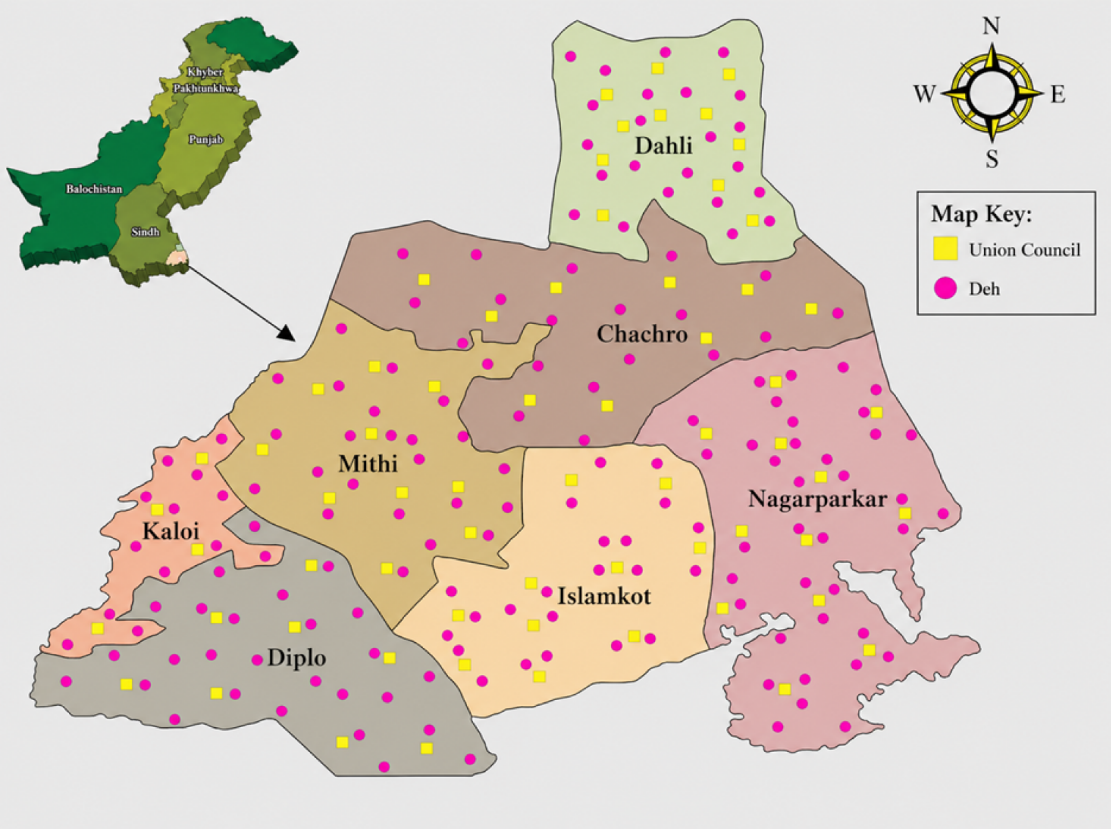
Map of Tharparkar district showing the selected talukas, union councils, and dehs included in the study.
source accessibility and willingness to adopt recommended dairy farming practices using Pearson’s chi-square, Cramér’s V, and ordinal trend statistics, and develops an exploratory prioritization of advisory channels for arid-zone dairy extension.
Materials and Methods
Study area
The study was carried out in Tharparkar district, located in southeastern Sindh province, Pakistan (24.87° N, 70.24° E) (Figure 2). The district is characterized by an arid to semi-arid climate, intermittent rainfall, and rain-fed agriculture. It is predominantly rural, with smallholder households relying heavily on dairy cattle and other livestock for their livelihoods. Because of its ecological fragility, climatic vulnerability, and strong dependence on livestock, Tharparkar provides a relevant setting for examining communication channels and willingness to adopt recommended dairy farming practices.
Research design
This study employed a cross-sectional design grounded in diffusion of innovations to examine whether accessibility to specific advisory sources is associated with farmers’ willingness to adopt RDFPs. The advisory sources assessed were mobile phone, television, newspapers, FM radio, extension/veterinary services, research bulletins, neighbour/contact farmers, private clinics/organizations, and research institution/artificial insemination (AI) centre. Primary analyses were based on cross-tabulations of source accessibility and adoption willingness. Pearson’s chi-square test was used to test independence, while Cramér’s V was used as a standardized effect-size index for comparing the relative strength of association across sources. Because both source accessibility and adoption willingness were ordinal variables, the linear-by-linear association test, Spearman’s rho, and Kendall’s tau-b were used as ordinal robustness checks. Therefore, the channel ranking was interpreted through a combined reading of Cramér’s V and ordinal trend consistency rather than Cramér’s V alone. The study is observational and cross-sectional; therefore, it estimates associations, not causal effects. The null hypothesis was that accessibility to each advisory source has no significant association with adoption willingness of RDFPs among dairy farmers.
Sampling procedure
A multistage sampling procedure was used. Tharparkar District was selected purposively because of its large cattle population and strong dependence on dairy farming as a livelihood source. The sampling frame covered seven talukas, 66 union councils, and 168 dehs to ensure broad geographical representation. In the final stage, three dairy farmers were randomly selected from each deh using lists obtained from the local Livestock Department. Based on Cochran’s sample-
Table 1: Measurement constructs and items
| Construct | Item code | Measurement Items | Response Scale |
| Communication Sources | CS1–CS9 | Television, Cell phone, Newspaper, FM Radio, Extension/Veterinary Officer, Research Bulletin, Neighbor/contact Farmer, Private Organization/Clinic, Research Institute/Artificial Insemination (AI) Centre | 1= Very low/Not effective →5= Very high/Highly effective |
| Adoption willingness | AW1–AW3 | I am interested in implementing RDFPs; I have decided to adopt RDFPs; I am willing to continue using RDFPs. | 1= Strongly disagree →5= Strongly agree |
Note. CS = Communication source; AW = Adoption willingness
size approach and field feasibility, 504 farmers were contacted. After data screening, 430 valid responses were retained for analysis, yielding a response rate of 85.3%.
Data collection instrument
A structured questionnaire contained four sections: (i) socio-demographics and farm characteristics; (ii) accessibility of specific communication sources; (iii) perceived effectiveness of those sources; and (iv) adoption willingness of recommended dairy farming practices (RDFPs). The source list included mobile phone, television, newspapers, FM radio, extension/veterinary services, research bulletins, neighbors/Contact farmers, private clinics/organizations, and research institutes/artificial insemination (AI) centre. Face and content validity were ensured through review by a panel of five experts in agricultural extension, rural sociology, and animal sciences. A pilot with 50 dairy farmers drawn from the seven talukas (excluded from the main sample) assessed clarity and reliability; minor wording adjustments followed. Multi-item indices demonstrated strong internal consistency (Cronbach’s α ≥ 0.70), including Perceived Effectiveness (α = 0.96) and the Source-Accessibility index (α = 0.84); α is not applicable to single-item categorical variables such as the final adoption willingness measure.
Measurement of variables
For each source listed above, respondents rated access and perceived effectiveness (CS1 – CS9) on a five-point Likert scale (1 = “Very low/Not effective” to 5 = “Very high/Highly effective”). Additionally, adoption willingness (AW1–AW3) captured interest, decision, and willingness to continue using RDFPs (1=Strongly Disagree to 5=Strongly Agree) as mentioned in (Table 1). The study measured adoption willingness as an overall willingness to adopt RDFPs rather than as separate willingness scores for each individual practice category. Therefore, the analysis estimates associations between advisory-source accessibility and general RDFP adoption willingness, not channel-specific effects for individual practices such as milking hygiene, animal health care, balanced nutrition, or artificial insemination. Perceived effectiveness of each source was retained for descriptive summaries only (not used in hypothesis testing). Reliability was adequate (Communication Sources α=0.96; Adoption Willingness α=0.84).
Data preparation
Data were screened for missing values, coding errors, and outliers before analysis. Reliability of multi-item scales was assessed using Cronbach’s alpha. For descriptive and inferential analysis, five-point responses were collapsed into three ordered categories: low/no access, moderate/limited access, and high/full access. Sensitivity checks using the linear-by-linear association test, Spearman’s rho, Kendall’s tau-b, and ordinal regression were conducted to account for the ordinal structure of the variables.
Statistical analysis
The data were analyzed using IBM SPSS Statistics Version 29.0.1.0. Descriptive statistics, including frequencies, percentages, means, and standard deviations, were used to summarize respondents’ socio-demographic characteristics, farm profiles, advisory-source accessibility, perceived effectiveness, and adoption willingness.
To examine the association between access to each advisory source and adoption willingness, Pearson’s chi-square test of independence was applied. Cramér’s V was retained as a standardized comparative effect-size index because it allows the relative magnitude of association to be compared across multiple contingency tables. However, because both source accessibility and adoption willingness were ordinal variables, Cramér’s V was not treated as the sole basis of interpretation. The linear-by-linear association test, Spearman’s rho,
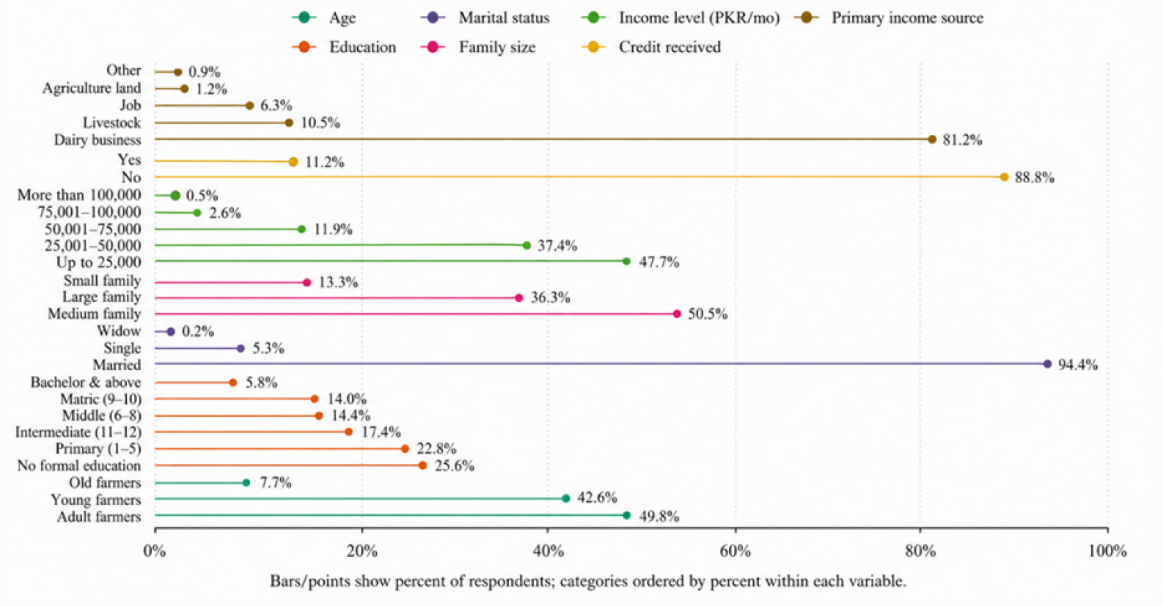
Demographic composition of dairy farmers in Tharparkar district (N = 430).
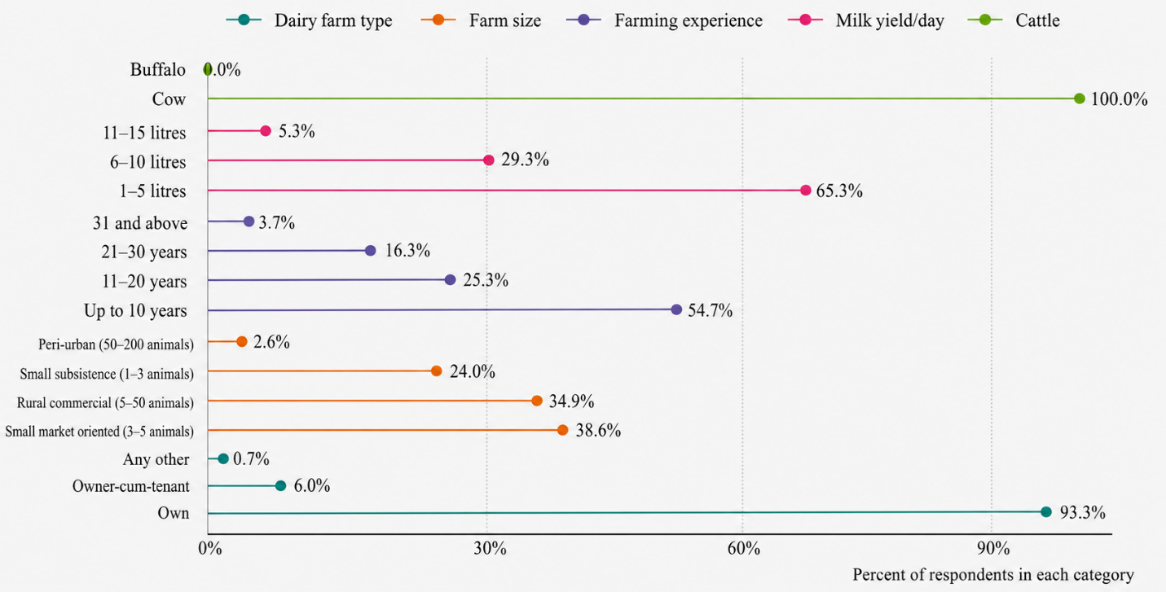
Farm and herd characteristics of dairy farmers in Tharparkar District (N = 430).
and Kendall’s tau-b were used to assess ordinal trend consistency. Thus, the final interpretation combined Pearson’s chi-square, Cramér’s V, and ordinal trend evidence. To complement the bivariate analysis, an ordinal logistic regression model was estimated with adoption willingness as the ordered dependent variable. Advisory-source accessibility variables were entered simultaneously as categorical predictors. Model fit was assessed using the likelihood-ratio chi-square test and pseudo-R² values, while the proportional odds assumption was evaluated using the test of parallel lines. Because the proportional odds assumption was not fully satisfied, the ordinal regression was interpreted as an exploratory multivariate sensitivity analysis rather than a definitive predictive model.
Results
Socio-demographic profile of respondents
Farm profile of respondents
Accessibility of information sources
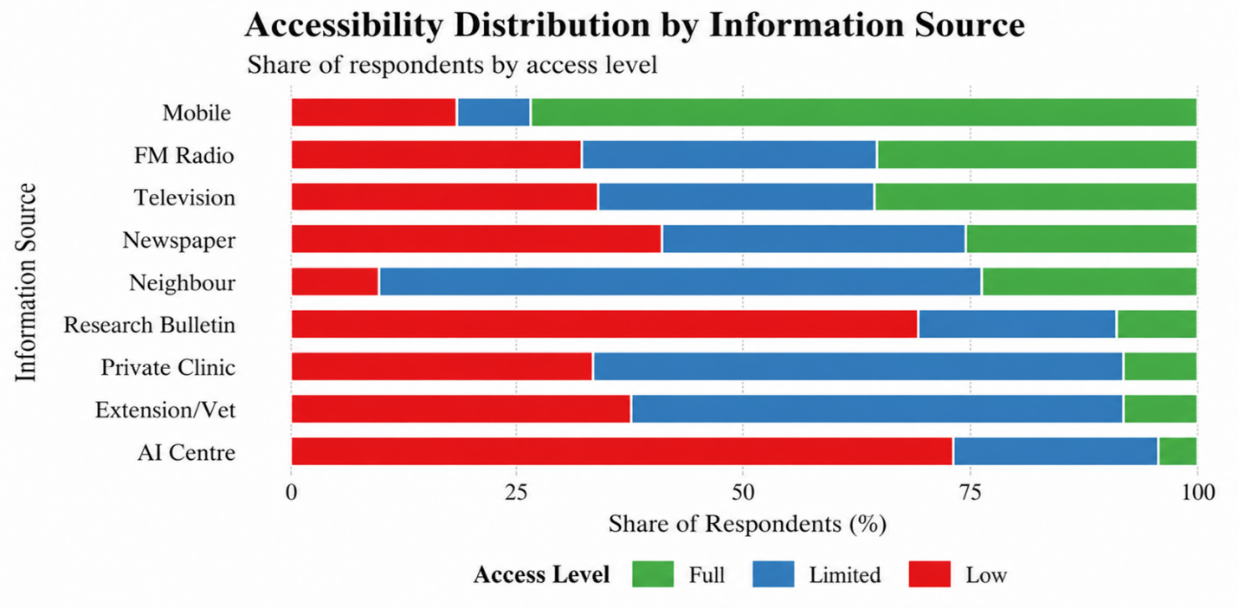
shows clear variation in access across
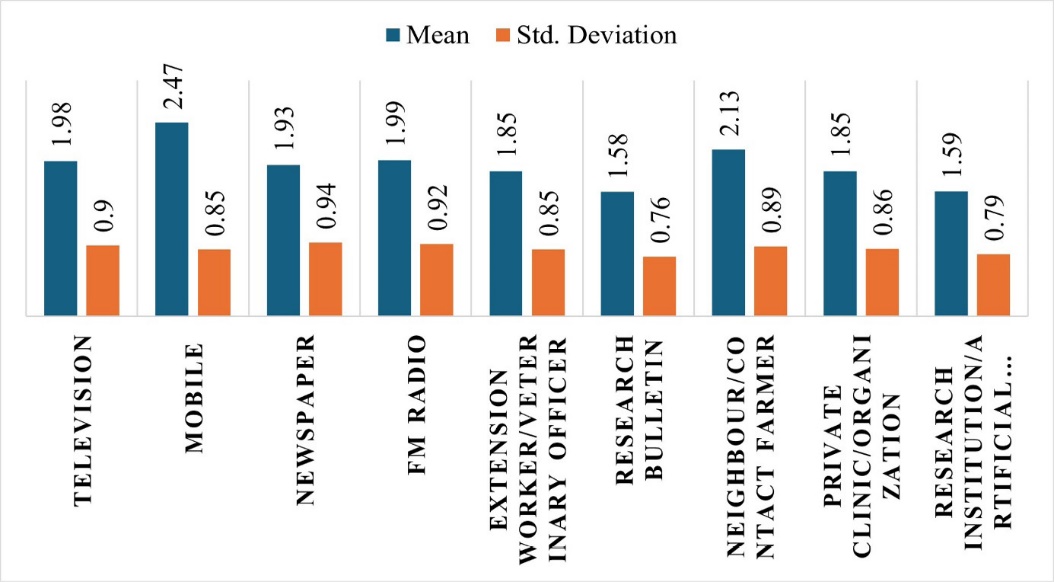
Perceived effectiveness of advisory information sources for recommended dairy farming practices.
Table 2: Thresholds for composite means (5-point Likert) collapsed to 3 categories
| 5-Point composite mean (Original scale) | 3-Point category (Collapsed Code 1–3) | CS (Accessibility) (IV) | CS (Effectiveness) (IV) | Adoption willingness (DV) |
| 1.00 – 2.33 | 1 | No Access | Low | Low |
| >2.33 – 3.67 | 2 | Limited access | Moderate | Moderate |
| >3.67 – 5.00 | 3 | Full access | High | High |
advisory sources. Mobile phones had the widest full access, while neighbour/contact farmers were widely available but mostly through limited access. Formal and technical sources, particularly research bulletins and research institution/AI centres, showed restricted reach. These patterns suggest that mobile and interpersonal channels offer practical entry points for extension communication, whereas institutional channels require stronger last-mile delivery.
Perceived effectiveness of information sources
Perceived effectiveness means were interpreted using the collapsed 1–3 scale shown in Table 2. Mobile phones received the highest mean effectiveness rating (≈2.47), followed by neighbour/contact farmers (≈2.13). Broadcast media occupied a middle tier (FM radio ≈1.99; TV ≈1.98), while newspapers were slightly lower (≈1.93). Formal advisories were viewed as less effective: extension/veterinary officers and private clinics were both ≈1.85, while research institutions/AI cetntres (≈1.59) and research bulletins (≈1.58) ranked lowest (Figure 6). The higher perceived effectiveness of mobile and peer-based channels suggests that immediacy, familiarity, and social proximity may influence perceived usefulness in this context.
Adoption willingness
Adoption willingness clustered around the moderate category: nearly two-thirds of respondents fell in the moderate range (63.0%; n = 271), while about one quarter reported high willingness (24.2%; n = 104) and only a small minority indicated low willingness (12.8%; n = 55). The overall central tendency (mean = 2.11, SD = 0.60) corroborates a mid-level propensity to adopt, consistent with an audience that is receptive but not yet fully convinced (Table 3).
Table 3: Adoption willingness (AW scale): item mean±SD., scale distribution, reliability
| Level | Frequency | % | Mean | Standard deviation |
| Low (1.00 - 2.33) | 55 | 12.8 | 2.1140 | .59801 |
| Moderate (>2.33 - 3.67) | 271 | 63.0 | ||
| High (>3.67 - 5.00) | 104 | 24.2 | ||
| Total | 430 | 100 |
Association between source accessibility and adoption willingness
Accessibility to advisory sources was significantly associated with adoption willingness across all nine tested sources based on Pearson’s chi-square tests (Table 4). However, the magnitude and ordinal consistency of these associations varied across channels. Based on Cramér’s V, mobile phone access showed the strongest association with adoption willingness (χ² = 104.860, V = .349), followed by television (χ² = 100.076, V = .341), FM radio (χ² = 76.300, V = .298), extension/veterinary officers (χ² = 60.975, V = .266), newspapers (χ² = 60.530, V = .265), research institution/AI centres (χ² = 26.037, V = .246), neighbour/contact farmers (χ² = 50.359, V = .242), research bulletins (χ² = 49.036, V = .239), and private clinics/organizations (χ² = 44.103, V = .226).
Because both source accessibility and adoption willingness were ordinal variables, the Cramér’s V ranking was interpreted together with ordinal-sensitive statistics. The linear-by-linear association test was significant for all nine sources, indicating evidence of ordered association. Spearman’s rho and Kendall’s tau-b further confirmed positive ordinal relationships for mobile phone, television, FM radio, extension/veterinary officers, newspapers, neighbour/contact farmers, and private clinics/organizations. However, research bulletins showed non-significant Spearman’s rho and Kendall’s tau-b, indicating that the association was not clearly monotonic. Research institution/AI centre access showed a significant but negative ordinal relationship, indicating that this source should not be interpreted as a positive adoption-willingness channel despite its significant Cramér’s V value. Therefore, the ranking should be interpreted as an exploratory Cramér’s V–based prioritization supported and qualified by ordinal trend evidence. Figure 7 visually summarizes the cross-tabulation pattern between advisory-source accessibility and adoption willingness, showing that the distribution of willingness differs across access levels.
Table 4: Association between access to advisory source
| Source | Pearson χ² | df | Cramér’s V | LBL χ² | LBL p | Spearman’s ρ | Kendall’s τb | V Rank |
| Mobile | 104.86 | 4 | .349 | 61.59 | < .001 | .343*** | .321*** | 1 |
| Television | 100.08 | 4 | .341 | 31.79 | < .001 | .248*** | .235*** | 2 |
| FM radio | 76.30 | 4 | .298 | 34.38 | < .001 | .265*** | .248*** | 3 |
| Extension/Vet Officer | 60.97 | 4 | .266 | 20.34 | < .001 | .176*** | .169*** | 4 |
| Newspaper | 60.53 | 4 | .265 | 38.42 | < .001 | .275*** | .256*** | 5 |
| Research institution/AI centre | 26.04 | 2 | .246 | 11.41 | < .001 | −.185*** | −.177*** | 6 |
| Neighbour/contact farmer | 50.36 | 4 | .242 | 16.75 | < .001 | .183*** | .174*** | 7 |
| Research bulletin | 49.04 | 4 | .239 | 5.30 | .021 | .042ns | .042ns | 8 |
| Private clinic/organization | 44.10 | 4 | .226 | 19.18 | < .001 | .180*** | .171*** | 9 |
Note: χ² = Pearson chi-square; LBL χ² = linear-by-linear association/Mantel-Haenszel trend test; ρ = Spearman’s rho; τb = Kendall’s tau-b. All Pearson χ² tests were significant at p < .001. Pearson χ² df = 4 for all sources except research institution/AI centre (df = 2); LBL χ² df = 1 for all sources. Cramér’s V indicates comparative association strength, while LBL χ², ρ, and τb assess ordinal trend consistency. ***p < .001; *p < .05; ns = not significant. Research bulletin showed non-significant ordinal correlations, and research institution/AI centre showed an inverse ordinal association.
Table 5: Ordinal regression predicting higher adoption willingness from advisory-source accessibility
| Predictor | Access contrast | B | SE | Wald χ² | p | OR |
| Mobile phone | Low vs Full | -3.425 | 0.415 | 68.284 | < .001 | 0.033 |
| Mobile phone | Limited vs Full | -2.035 | 0.410 | 24.626 | < .001 | 0.131 |
| Television | Low vs Full | .451 | 1.156 | .152 | .697 | 1.570 |
| Television | Limited vs Full | -1.205 | 1.093 | 1.214 | .270 | 0.300 |
| Newspaper | Low vs Full | -1.919 | 0.616 | 9.721 | .002 | 0.147 |
| Newspaper | Limited vs Full | -.910 | 0.405 | 5.037 | .025 | 0.402 |
| FM radio | Low vs Full | 2.176 | 1.164 | 3.494 | .062 | 8.811 |
| FM radio | Limited vs Full | 1.237 | 1.093 | 1.280 | .258 | 3.445 |
| Extension/Vet officer | Low vs Full | -1.555 | 0.828 | 3.526 | .060 | 0.211 |
| Extension/Vet officer | Limited vs Full | -1.711 | 0.720 | 5.651 | .017 | 0.180 |
| Research bulletin | Low vs Full | -.576 | 0.564 | 1.041 | .308 | 0.562 |
| Research bulletin | Limited vs Full | -.749 | 0.597 | 1.574 | .210 | 0.473 |
| Neighbour/contact farmer | Low vs Full | .522 | 0.542 | .926 | .336 | 1.685 |
| Neighbour/contact farmer | Limited vs Full | -.214 | 0.395 | .294 | .587 | 0.807 |
| Private clinic/organization | Low vs Full | -.915 | 0.699 | 1.715 | .190 | 0.401 |
| Private clinic/organization | Limited vs Full | -.561 | 0.580 | .936 | .333 | 0.571 |
| Research institution/AI centre | Low vs Limited | 1.145 | 0.346 | 10.930 | < .001 | 3.142 |
Note: DV = adoption willingness coded as low, moderate, and high; OR = odds ratio [Exp(B)]. Access contrasts are coded as Low = not at all, Limited = to some extent, and Full = to a greater extent. Full access was the reference category for all sources except research institution/AI centre, where Limited access was the reference. Positive coefficients indicate higher adjusted odds of higher adoption willingness. Model fit: χ²(17) = 164.162, p < .001; Cox and Snell R² = .317, Nagelkerke R² = .370, McFadden R² = .196. Because the test of parallel lines was significant, results are interpreted as exploratory adjusted associations.
A multivariate ordinal logistic regression was conducted to examine whether advisory-source accessibility remained associated with adoption willingness when all nine sources were considered simultaneously (Table 5). The model significantly improved over the intercept-only model, χ²(17) = 164.162, p < .001, indicating that the advisory-source variables jointly explained variation in adoption willingness. The pseudo-R² values suggested moderate explanatory power, with Cox and Snell R² = .317, Nagelkerke R² = .370, and McFadden R² = .196.
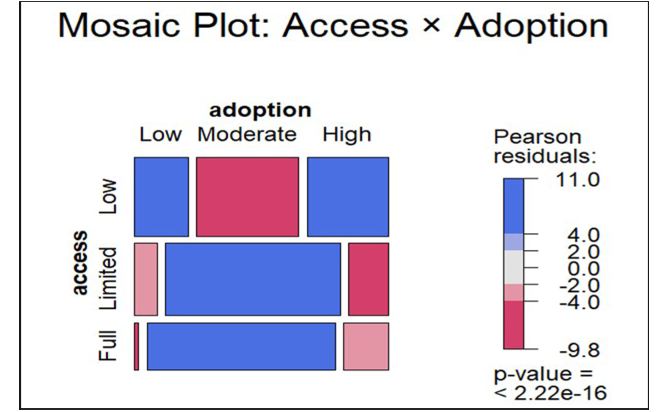
Mosaic plot showing the association between advisory-source accessibility and adoption willingness.
In the adjusted model, mobile phone access remained the strongest predictor. Farmers reporting no mobile access (B = -3.425, p < .001, OR = .033) or only some access (B = -2.035, p < .001, OR = .131) had substantially lower odds of being in a higher adoption-willingness category than those with greater mobile access. Newspaper access also remained significant, with lower access associated with lower odds of higher adoption willingness. Limited access to extension/veterinary officers was also negatively associated with higher adoption willingness (B = -1.711, p = .017, OR = .180). Research institution/AI centre access showed an inverse pattern, where farmers reporting no access had higher odds of being in a higher willingness category than those reporting some access (B = 1.145, p < .001, OR = 3.142), consistent with the earlier finding that this channel requires cautious interpretation. Television, FM radio, research bulletins, neighbour/contact farmers, and private clinics were not statistically significant after adjustment for other sources.
Because the test of parallel lines was significant and the SPSS output indicated several zero-frequency cells, these ordinal regression findings should be interpreted cautiously as exploratory multivariate
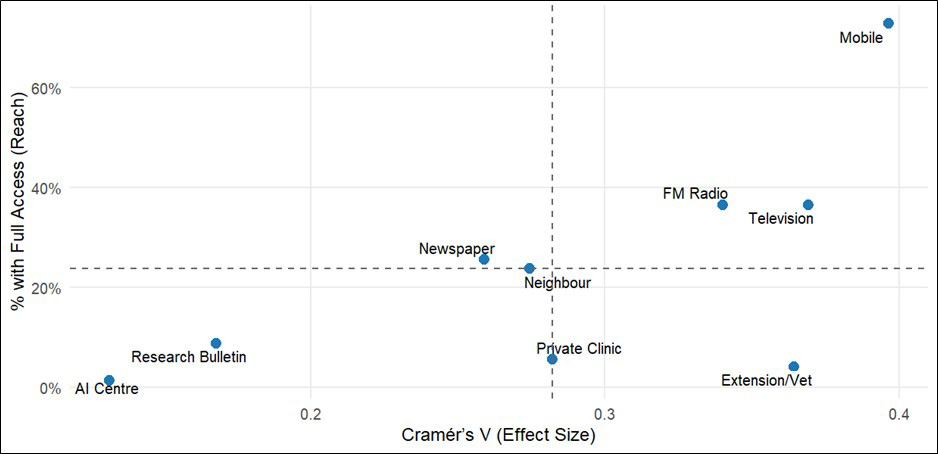
Reach–Effect Matrix of advisory sources based on full access and Cramér’s V effect size.
associations rather than definitive predictive or causal estimates.
Strategic Prioritization: The Reach-Effect Matrix
To guide programmatic interpretation, the findings were synthesized into a Reach–Effect Matrix (Figure 8), which maps association strength, represented by Cramér’s V, against practical reach. The Reach–Effect Matrix was used as an exploratory investigative tool rather than as a causal impact model. Three criteria guided its interpretation: reach, defined as the percentage of farmers reporting full access to an advisory source; effect, defined as the Cramér’s V value indicating the comparative strength of association with adoption willingness; and ordinal consistency, assessed using the linear-by-linear association test, Spearman’s rho, and Kendall’s tau-b. Sources with high reach, stronger Cramér’s V, and positive ordinal consistency were interpreted as promising candidates for pilot testing, whereas sources with weak or inverse ordinal patterns were flagged for cautious interpretation. Mobile phones remained the strongest and most consistent source, combining the highestCramér’s V with positive ordinal trend evidence. Television and FM radio also showed relatively strong and positive ordinal relationships, suggesting their usefulness as reinforcement channels for awareness and message repetition. Extension/veterinary officers, newspapers, neighbour/contact farmers, and private clinics/organizations showed moderate but positive ordinal associations, indicating their potential value as complementary channels rather than stand-alone diffusion pathways.
Two sources require cautious interpretation. Research bulletins showed a significant chi-square association but non-significant Spearman’s rho and Kendall’s tau-b, suggesting weak ordinal consistency. Research institution/AI centre access showed a significant but inverse ordinal relationship with adoption willingness, indicating that greater reported access did not correspond with higher willingness in the expected direction. Therefore, the Reach–Effect Matrix should be interpreted as an exploratory prioritization tool rather than evidence of causal channel effectiveness.
Discussion
This study identified which advisory sources were most strongly associated with dairy farmers’ willingness to adopt recommended dairy farming practices (RDFPs) in Tharparkar’s semi-arid context. The revised ordinal-sensitive analysis provides a more nuanced interpretation than Cramér’s V alone. Mobile phones, television, and FM radio showed the strongest comparative association values and positive ordinal trends, indicating that higher accessibility to these channels generally aligned with higher adoption willingness. Extension/veterinary officers, newspapers, neighbour/contact farmers, and private clinics/organizations also showed positive ordinal relationships, although their effect sizes were more moderate.
In contrast, research bulletins and research institution/AI centres require cautious interpretation. Research bulletins had a significant chi-square association but non-significant Spearman’s rho and Kendall’s tau-b, suggesting that the relationship did not follow a clear monotonic pattern. Research institution/AI centre access showed a significant inverse ordinal association with adoption willingness, indicating that this channel may not operate as a straightforward positive diffusion pathway in the study context. These findings reinforce the importance of combining general association measures with ordinal-specific statistics when ranking communication channels for extension planning.
Synthesis with prior evidence
The prominence of mobile phones, television, and extension/veterinary services is consistent with evidence that timely, credible, and accessible advisory channels are often associated with stronger adoption-related responses. The high perceived effectiveness and accessibility of mobile phones suggest that frequent use may reduce information frictions and perceived uncertainty. In line with this interpretation, Mobile-based advisory services can reduce search costs, improve information flows, and support agricultural decision-making in developing-country contexts , while evidence from India similarly shows that mobile phones improve farmers’ access to production and market information and support ICT adoption in agriculture , 2016). Similarly, the relatively strong association for television is consistent with evidence that video-mediated extension can improve farmers’ knowledge and technology uptake when messages are locally relevant and visually demonstrable .
However, the human element remains important. Professional advisors and peers may influence adoption willingness through credibility, trust, problem-solving support, and social learning ; ; . This explains why extension/veterinary officers, neighbour/contact farmers, and private clinics still showed positive associations, even when their reach was lower than mobile or broadcast channels. The weaker pattern for research bulletins and institution-centred channels suggests that technical information may be less persuasive when it is delivered in static, low-interaction formats. These findings support the need to repackage technical content through mobile, audiovisual, and interpersonal formats rather than relying on printed or institutional channels alone ; ; .
Mechanisms underlying the pattern
Three mechanisms may help explain the observed ranking. First, mobile channels provide timeliness and opportunities for two-way follow-up, allowing just-in-time reminders and question-and-answer support. Second, television and video-based communication can improve salience by showing concrete practices and outcomes, which may be especially useful for low-literacy farmers. Third, extension/veterinary officers and private clinics provide credibility and problem-solving capacity for technical issues such as animal health, disease diagnosis, and reproductive management. In contrast, research bulletins and research institution/AI centres appear to have limited reach and weaker interaction with farmers, which may explain their weaker or inverse ordinal patterns. Interpersonal contact resolves context-specific constraints, for example disease management , and builds trust, which helps explain why extension or veterinary advice ranks alongside mobile and television despite lower reach. In contrast, research bulletins and AI centres are low-reach, low-interaction modes in this setting. Without repackaging, these supply-driven (“push”) channels fail to match the on-demand (“pull”) nature of mobile inquiries and are therefore unlikely to shift behavior.
Heterogeneity and channel–reach trade-offs
The findings highlight a clear channel–reach trade-off. Mobile phones combined relatively high reach with the strongest positive association with adoption willingness, while extension/veterinary services showed moderate association but limited full access. Peer networks were common but uneven, suggesting that neighbour/contact farmers may support diffusion but are unlikely to provide uniform coverage across dispersed settlements. These patterns suggest that mobile and broadcast channels may be useful for broad awareness and reinforcement, whereas extension/veterinary officers, private clinics, and other expert-mediated channels may be more appropriate for technical or service-dependent RDFPs. Such a differentiated approach is consistent with the “best-fit” perspective in agricultural advisory services, which argues that extension systems should be adapted to local institutional capacity, farmer needs, service complexity, and resource constraints . Therefore, the Reach–Effect Matrix should be interpreted as an exploratory planning tool for identifying channels suitable for pilot testing, not as evidence that one channel should replace another.
Information-seeking bias and reverse causality
A key limitation of the cross-sectional design is the possibility of information-seeking bias and reverse causality. While this study shows an association between access to advisory sources and willingness to adopt RDFPs, it cannot confirm the direction of this relationship. Farmers who are already more progressive or willing to adopt improved dairy practices may be more likely to seek information through mobile phones, television, extension/veterinary officers, private clinics, or peer networks. Thus, higher channel access may partly reflect farmers’ pre-existing willingness rather than directly causing it. This self-selection may inflate the observed Cramér’s V values, as the same farmers may fall into both higher-access and higher-willingness categories. Therefore, the effect sizes should be interpreted as measures of association, not causal evidence of channel effectiveness. Future longitudinal, experimental, or quasi-experimental studies are needed to confirm whether improved access to communication channels increases adoption willingness or actual adoption behavior.
Practice complexity and aggregation of RDFPs
A further limitation is that RDFPs were analyzed as an aggregate construct, although individual practices differ in cost, technical complexity, risk, and service requirements. Adoption literature shows that farmers’ responses to innovations vary according to resource endowments, risk, information availability, and technology characteristics . Low-cost practices, such as milking hygiene, housing sanitation, and record-keeping, may mainly require awareness, reminders, and behavioral reinforcement through mobile phones, radio, television, or peer communication. In contrast, complex or service-dependent practices, such as artificial insemination, disease diagnosis, vaccination, balanced ration formulation, and reproductive management, may require expert advice, veterinary services, demonstrations, and follow-up support. Therefore, the observed channel rankings should be interpreted as associations with overall RDFP willingness, not as evidence that the same channels are equally suitable for all practice types.
The significant but inverse association for research institution/AI centre access further suggests that technical channels may function differently from general information channels. In arid and resource-constrained settings, distance, cost, limited service quality, weak trust, or lack of follow-up may weaken farmers’ willingness even when some access is reported. Future studies should measure practice-specific willingness or actual adoption and compare channel effects across low-complexity, management-intensive, and capital-intensive RDFPs. Such disaggregated analysis would better support SDG 2 by identifying channels linked to productivity-enhancing practices and SDG 8 by identifying feasible pathways for livelihood-improving dairy technologies.
Programmatic implications for arid-zone development
Mobile phones, television, and FM radio may be used for awareness, reminders, and reinforcement of low-cost RDFPs such as milking hygiene, sanitation, and record-keeping. This is consistent with evidence that mobile technologies can support sustainable agricultural information delivery and adoption-related decision-making among farmers . Technical or service-dependent practices such as vaccination, disease treatment, balanced feeding, reproductive management, and artificial insemination may be tested through extension/veterinary officers, private clinics, village demonstrations, and scheduled outreach visits. This differentiated model follows a best-fit extension logic, where communication channels are matched to local constraints, farmer capacity, and practice complexity . For scalability, district livestock and extension agencies should first test integrated mobile-broadcast-veterinary packages in selected villages, monitor farmer exposure and feedback, and assess changes in willingness, actual adoption, milk productivity, and household income.
Relation to the study’s objectives and hypotheses
The results address the study objectives directly. Communication sources were ranked using Cramér’s V as a standardized comparative effect-size index, while the linear-by-linear association test, Spearman’s rho, and Kendall’s tau-b were used to determine whether the associations followed the expected ordinal direction. This combined approach confirmed that mobile phones, television, and FM radio were the strongest positive channels, while research bulletins lacked ordinal consistency and research institution/AI centre access showed an inverse ordinal trend. Therefore, the study provides an exploratory but statistically more robust prioritization of advisory channels for arid-zone dairy extension.
Conclusions
This study examined the association between advisory-source accessibility and dairy farmers’ willingness to adopt recommended dairy farming practices (RDFPs) in the arid context of Tharparkar. The findings showed that mobile phones, television, and FM radio were the advisory sources most strongly and positively associated with adoption willingness, while extension/veterinary officers, newspapers, neighbour/contact farmers, and private clinics/organizations showed moderate positive associations. Research bulletins showed weak ordinal consistency, whereas research institution/artificial insemination centre access showed an inverse ordinal pattern, indicating that institutional and technical channels should be interpreted cautiously in this context.
Overall, the findings suggest that mobile and broadcast channels may serve as promising entry points for awareness creation and reinforcement, while expert-mediated channels may remain important for technical or service-dependent RDFPs. However, because the study used a cross-sectional design and measured adoption willingness rather than actual adoption behavior, the results should be interpreted as association-based evidence, not causal proof of channel effectiveness. Information-seeking bias may also have contributed to some associations if farmers with higher pre-existing willingness were more likely to access multiple advisory sources. Therefore, the findings provide a basis for designing and pilot-testing differentiated communication strategies rather than definitive evidence for reallocating extension resources.
Recommendations
The findings suggest several strategic directions for pilot testing in arid-zone dairy extension. First, extension agencies may test mobile-supported and broadcast-assisted advisory packages for low-cost and awareness-based RDFPs, while using extension/veterinary officers, private clinics, and field demonstrations for technical or service-dependent practices. Second, any resource shift toward mobile or broadcast channels should be preceded by small-scale pilots that compare channel combinations, monitor farmer exposure and feedback, and assess changes in willingness, actual adoption, milk productivity, and household income. Third, research bulletins and institutional content should be repackaged into farmer-friendly mobile, audiovisual, or field-based formats before wider dissemination. Finally, future studies should use longitudinal, experimental, or quasi-experimental designs and measure willingness and actual adoption separately for major RDFP categories, including hygiene, animal health, feeding, reproductive management/artificial insemination, animal welfare, and record-keeping.
Acknowledgments
We express our sincere gratitude to the Higher Education Commission (HEC) Pakistan, Universiti Putra Malaysia (UPM), and Sindh Agriculture University, Tandojam for their valuable support and the institutional, logistical, and technical assistance they provided. Their contribution was essential in making this research possible.
Novelty Statement
This study provides a context-specific comparison of advisory channels associated with dairy farmers’ willingness to adopt recommended dairy farming practices in the arid-zone context of Tharparkar. It applies a Reach–Effect Matrix as an exploratory extension-planning framework by combining reported channel access, Cramér’s V effect size, and ordinal trend consistency to identify channels suitable for pilot testing.
Authors’ Contribution
Imam Bux: Conceptualization, methodology, data collection, formal analysis, and original manuscript drafting.
Zaheeruddin Mirani and Jasmin Arif Shah: Conceptualization, methodology design, supervision, and manuscript review.
Ubedullah Kaka, Nur Bahiah Mohamed Haris, Arathy Biju Sindhu and Bala Abubakar Shelleng: Visualization, manuscript review, and editing.
All authors have read and agreed to the published version of the manuscript.
Generative AI and AI-assisted technology statement
The authors declare that no generative AI and AI assisted technology was used in the creation of this manuscript.
Conflict of interest
The authors declare no conflict of interest.
References
- Abate, G.T., T. Bernard, S. Makhija and D.J. Spielman. 2023. Accelerating technical change through ICT: Evidence from a video-mediated extension experiment in Ethiopia. World Dev., 161: 106089. https://doi.org/10.1016/j.worlddev.2022.106089 [CrossRef]
- Abbasi, S. and K. Nawab. 2021. Determinants of the dairy technology adoption by the rural milk producers in district Muzaffarabad, Azad Jammu and Kashmir. Sarhad J. Agric., 37(3): 921-929. https://doi.org/10.17582/journal.sja/2021/37.3.921.929 [Full text] [CrossRef]
- Afzal, A., S. Kilpatrick and L.R. Turner. 2022. Tasmanian dairy farmers’ attitudes towards using e-extension methods; strengthening the dairy extension system for a sustainable dairy industry in Tasmania, Australia. Sustain., 14(21): 14585. https://doi.org/10.3390/su142114585 [CrossRef]
- Aker, J.C. 2011. Dial “A” for agriculture: A review of information and communication technologies for agricultural extension in developing countries. Agric. Econ., 42(6): 631-647. https://doi.org/10.1111/j.1574-0862.2011.00545.x [CrossRef]
- Arslan, C., M. Wollni, J. Oduol and K. Hughes. 2022. Who communicates the information matters for technology adoption. World Dev., 158: 106015. https://doi.org/10.1016/j.worlddev.2022.106015 [CrossRef]
- Asghar, S., I. Ashraf, V.E. Cabrera, K.M. Chaudhary and M.Q. Bilal. 2021. Perception and correlation of dairy cattle farmers concerning electronic media as a source of information in Punjab, Pakistan. Dairy., 2(3): 489-499. https://doi.org/10.3390/dairy2030039 [CrossRef]
- Balasundram, S.K., R.R. Shamshiri, S. Sridhara and N. Rizan. 2023. The role of digital agriculture in mitigating climate change and ensuring food security: An overview. Sustain., 15(6): 5325 https://doi.org/10.3390/su15065325. [CrossRef]
- Bellinguez, A. and J. Menon. 2022. Sindh’s livestock: Getting to know an important but neglected sector. World Bank, Washington, DC, USA. https://doi.org/10.1596/38354 [CrossRef]
- Birner, R., K. Davis, J. Pender, E. Nkonya, P. Anandajayasekeram, J. Ekboir, A. Mbabu, D.J. Spielman, D. Horna, S. Benin and M. Cohen. 2009. From best practice to best fit: A framework for designing and analyzing pluralistic agricultural advisory services worldwide. J. Agric. Educ. Ext., 15(4): 341-355. https://doi.org/10.1080/13892240903309595 [CrossRef]
- Choruma, D.J., T.L. Dirwai, M.J. Mutenje, M. Mustafa, V.G.P. Chimonyo, I. Jacobs-Mata and T. Mabhaudhi. 2024. Digitalisation in agriculture: A scoping review of technologies in practice, challenges, and opportunities for smallholder farmers in sub-Saharan Africa. J. Agric. Food Res., 18: 101286. https://doi.org/10.1016/j.jafr.2024.101286 [CrossRef]
- Cofré-Bravo, G., L. Klerkx and A. Engler. 2019. Combinations of bonding, bridging, and linking social capital for farm innovation: How farmers configure different support networks. J. Rural Stud., 69: 53-64. https://doi.org/10.1016/j.jrurstud.2019.04.004 [CrossRef]
- Davis, F.D. 1989. Perceived usefulness, perceived ease of use, and user acceptance of information technology. MIS Q., 13(3): 319-340. https://doi.org/10.2307/249008 [CrossRef]
- Ding, J., X. Jia, W. Zhang and L. Klerkx. 2022. The effects of combined digital and human advisory services on reducing nitrogen fertilizer use: Lessons from China’s national research programs on low carbon agriculture. Int. J. Agric. Sustain., 20(6): 1136-1149. https://doi.org/10.1080/14735903.2022.2057643 [CrossRef]
- Erdem, M. and H.B. Ağır. 2024. Enhancing dairy farm welfare: A holistic examination of technology adoption and economic performance in Kahramanmaraş Province, Turkey. Sustain., 16(7): 2989. https://doi.org/10.3390/su16072989 [CrossRef]
- Feder, G., R.E. Just and D. Zilberman. 1985. Adoption of agricultural innovations in developing countries: A survey. Econ. Dev. Cult. Chan., 33(2): 255-298. https://doi.org/10.1086/451461 [CrossRef]
- Feyissa, A.A., F. Senbeta, A. Tolera and D.D. Guta. 2023. Unlocking the potential of smallholder dairy farm: Evidence from the central highland of Ethiopia. J. Agric. Food Res., 11: 100467. https://doi.org/10.1016/j.jafr.2022.100467 [CrossRef]
- Ghafar, A., D. McGill, M.A. Stevenson, M. Badar, A. Kumbher, H.M. Warriach, R.B. Gasser and A. Jabbar. 2020. A participatory investigation of bovine health and production issues in Pakistan. Front. Vet. Sci., 7: 248. https://doi.org/10.3389/fvets.2020.00248 [CrossRef]
- GoP. 2025. Pakistan economic survey 2024-25: Agriculture. Finance Division, Government of Pakistan, Islamabad, Pakistan.
- IBM Corp. 2022. IBM SPSS statistics for Windows, version 29.0. IBM Corp., Armonk, NY, USA.
- Khan, N., R.L. Ray, H.S. Kassem and S. Zhang. 2022. Mobile internet technology adoption for sustainable agriculture: Evidence from wheat farmers. Appl. Sci., 12(10): 4902. https://doi.org/10.3390/app12104902 [CrossRef]
- Krishnan, P. and M. Patnam. 2014. Neighbors and extension agents in Ethiopia: Who matters more for technology adoption? Am. J. Agric. Econ., 96(1): 308-327. https://doi.org/10.1093/ajae/aat017 [CrossRef]
- Mittal, S. and M. Mehar. 2012. How mobile phones contribute to growth of small farmers? Evidence from India. Q. J. Int. Agric., 51(3): 227-244.
- Mittal, S. and M. Mehar. 2016. Socio-economic factors affecting adoption of modern information and communication technology by farmers in India: Analysis using multivariate probit model. J. Agric. Educ. Ext., 22(2): 199-212. https://doi.org/10.1080/1389224X.2014.997255 [CrossRef]
- Munyua, H. and C. Stilwell. 2010. A mixed qualitative-quantitative-participatory methodology: A study of the agricultural knowledge and information system of small-scale farmers in Kirinyaga district, Kenya. Libr. Manag., 31(1/2): 5-18. https://doi.org/10.1108/01435121011013359 [CrossRef]
- Nikam, V., A. Ashok and S. Pal. 2022. Farmers’ information needs, access and its impact: Evidence from different cotton producing regions in the Maharashtra state of India. Agric. Syst., 196: 103317. https://doi.org/10.1016/j.agsy.2021.103317 [CrossRef]
- Nyokabi, S., P.A. Luning, I.J.M. de Boer, L. Korir, E. Muunda, B.O. Bebe, J. Lindahl, B. Bett and S.J. Oosting. 2021. Milk quality and hygiene: Knowledge, attitudes and practices of smallholder dairy farmers in central Kenya. Food Cont., 130: 108303. https://doi.org/10.1016/j.foodcont.2021.108303 [CrossRef]
- Ögür, A.Y. 2021. Factors affecting the adoption of technology in dairy farms in the Konya region of Turkey. New Medit., 20(3): 145-157. https://doi.org/10.30682/nm2103j [CrossRef]
- Oulmane, A., F. Ameur, K. Boudedja and A. Bouzid. 2024. Impact of agricultural advisory services and innovativeness on perceived farms’ performance: Case of dairy milk farms in Northern Algeria. New Medit., 2024(2): 71-82. https://doi.org/10.30682/nm2402e. [CrossRef]
- Razzaq, A., S. Qin, M. Anwar and Y. Zhou. 2025. Technical efficiency, economic sustainability, and environmental implications of dairy farms in Pakistan. Pol. J. Environ. Stud., 34(2): 1285-1297. https://doi.org/10.15244/pjoes/187116 [CrossRef]
- Rogers, E.M. 2003. Diffusion of innovations. 5th edn. Free Press, New York, USA.
- Spielman, D., E. Lecoutere, S. Makhija and B. Van Campenhout. 2021. Information and communications technology and agricultural extension in developing countries. Annu. Rev. Resour. Econ., 13(1): 177-201. https://doi.org/10.1146/annurev-resource-101520-080657 [CrossRef]
- Trendov, N.M., S. Varas and M. Zeng. 2019. Digital technologies in agriculture and rural areas. FAO, Rome.
- Ullah, S., B. Brümmer and U.I. Ahmed. 2021. Role of extension services in enhancing efficiency of market oriented dairy farmers: An evidence from Punjab, Pakistan. Sarhad J. Agric., 37(4): 1314-1322. https://doi.org/10.17582/journal.sja/2021/37.4.1314.1322 [Full text] [CrossRef]
- UN. 2015. Transforming our world: The 2030 agenda for sustainable development. United Nations. https://sdgs.un.org/2030agenda
- Van Campenhout, B. 2021. The role of information in agricultural technology adoption: Experimental evidence from rice farmers in Uganda. Econ. Dev. Cult. Chan., 69(3): 1239-1272. https://doi.org/10.1086/703868 [CrossRef]
- Venkatesh, V. and F.D. Davis. 2000. A theoretical extension of the technology acceptance model: Four longitudinal field studies. Manag. Sci., 46(2): 186-204. https://doi.org/10.1287/mnsc.46.2.186.11926 [CrossRef]
- Yamini, T., P. Venkatesan, V. Jyothi, M.R. Devy, V.S. Rao and K. Suseela. 2024. Social network analysis approach to identify agricultural key communicators. J. Environ. Biol., 45(6): 788-797. https://doi.org/10.22438/jeb/45/6/MRN-5366 [CrossRef]

Services
Article usage statistics
Loading…
Related articles
- Farmers’ Perception Analysis about the Use of Information and Communication Technologies (ICT) in Agriculture Extension services of Khyber PakhtunkhwaSarhad Journal of Agriculture · 2020
- Ranking of Internet of Things (IOT) Applications in Dairy Cattle Industry Productivity: A Multi Criteria Decision Making Approach and Thematic AnalysisPakistan Journal of Zoology · 2023
- Farmers Perceptions and Adoption of Information and Communication Technologies (ICTs) in Peach (Prunus persica L.) Production and MarketingSarhad Journal of Agriculture · 2020
- Cost-Benefit Analysis and Adoption Prospects of Selected Moisture Conservation Technologies in Pothwar, PunjabPakistan Journal of Agricultural Research · 2022
- The Role of Farm Service Centre (FSC) in Adoption of Improved Wheat Seed Technology in Khyber Pakhtunkhwa: A Logistic Regression AnalysisSarhad Journal of Agriculture · 2019
- Intensity, Purposes and Drivers of Digital Technologies Adoption: Lessons from Shallot Farmers at Various Agroecological Zones in Yogyakarta Province, IndonesiaPakistan Journal of Agricultural Research · 2025