
Synthetic antibiotics used in livestock production raise concerns related to antimicrobial resistance and chemical residues in animal-derived food products. As a natural alternative, plant-derived bioactive compounds such as Alpinia officinarum (red galangal) have gained increasing attention; however, their functional potential is often constrained by limited extraction efficiency and processing methods. This study aimed to evaluate the effects of microbial fermentation using Lactobacillus plantarum and Rhizopus oligosporus, individually and in combination, along with ethanol and distilled water extraction, on the phytochemical composition, antioxidant activity, and secondary metabolite profile of A. officinarum rhizomes. Fermented A. officinarum powder was extracted using a maceration method and analyzed for extraction yield, total phenolic content, total flavonoid content, and antioxidant activity using the DPPH assay (IC₅₀). Co-fermentation treatment produced the highest total phenolics (1 145.55 mg GAE 100 g-¹), flavonoids (85.89 mg QE 100 g-¹), and antioxidant activity (IC₅₀ = 166.14 µg mL-¹). GC–MS analysis confirmed the presence of various secondary metabolites, including propionic acid, pentanoic acid 4-oxo ethyl ester (ethyl levulinate), tetradecanoic acid ethyl ester (ethyl myristate), hexadecanoic acid ethyl ester (ethyl palmitate), 2,4-di-tert-butylphenol, tetradecanoic acid (myristic acid), and n-hexadecanoic acid (palmitic acid), which have been previously reported to possess antibacterial-related properties. These findings demonstrate that dual microbial fermentation enhances the functional properties of A. officinarum, supporting its potential application as a natural antioxidant source rich in bioactive metabolites. This approach contributes to sustainable livestock production and aligns with Sustainable Development Goals (SDGs), particularly SDG 3 (Good Health and Well-being) and SDG 12 (Responsible Consumption and Production).
Research Article · Volume 43, Issue 1, Pages 101–110, 26 October 2026 · Open Access
Microbial Co-Fermentation and Solvent Extraction Enhance the Phenolic Profile, Antioxidant Activity, and Antibacterial Potential of Alpinia officinarum
· · · · ·
Affiliations & Notes ⌄
- 1University of Brawijaya, Malang 65145, East Java, Indonesia
- 2University of Muhammadiyah Malang, Malang 65144, East Java, Indonesia
- 3University of Malakand, Chakdara, Khymber Pakhtunkhwa 18800, Pakistan
- *Correspondence | Osfar Sjofjan; Email: osfar@ub.ac.id
Article Info ⌄
- Journal:
- Sarhad Journal of Agriculture
- Submitted Date:
- 16 April 2026
- Accepted Date:
- 16 June 2026
- Published Date:
- 26 October 2026

Abstract
Introduction
There is growing global interest in green bioprocessing technologies for the production of natural antioxidant and bioactive compounds as alternatives to synthetic chemicals . Microorganisms play a critical role in sustainable bioprocessing of plant-derived materials by facilitating the release and transformation of bioactive compounds (Chihomvu et al., 2024; . Microbial fermentation of plant substrates represents an environmentally friendly approach that can reduce reliance on synthetic antioxidants and antibiotics while addressing challenges such as antimicrobial resistance and adverse effects associated with chemical additives ; Rachwał and Gustaw, 2025).
Alpinia officinarum Hance (red galangal) is a medicinal rhizome widely used in traditional medicine and culinary applications, known to be rich in phenolic compounds with various pharmacological effects . Phytochemical investigations have identified flavonoids, diarylheptanoids, phenylpropanoids, and essential oils that contribute to antioxidant activity and potential antimicrobial relevance ; ; .
Despite these promising bioactivities, a major limitation of A. officinarum is the low bioavailability of its phenolic compounds. Polyphenols often exhibit poor solubility, limited stability, and low intestinal absorption, resulting in reduced in vivo bioaccessibility (Patir et al., 2025).
Microbial fermentation has emerged as a promising strategy to overcome these limitations by enhancing the bioactive profile and bioavailability of plant-derived compounds. Lactic acid bacteria such as Lactobacillus plantarum produce enzymes including β-glucosidase, esterase, and tannase, which hydrolyze glycosidic and ester bonds in polyphenol conjugates, releasing free phenolics with higher solubility and bioactivity , . Similarly, fungal fermentation using Rhizopus oligosporus produces hydrolytic enzymes such as cellulases and pectinases that degrade plant structural components and release phenolic compounds.
Despite increasing interest in fermentation-based enhancement of herbal materials, studies on
A. officinarum using dual microbial fermentation remain limited. Previous research has mainly focused on single-strain fermentation, leaving a gap in understanding the effects of fungal fermentation and bacterial–fungal co-fermentation on antioxidant activity and secondary metabolite profiles.
Therefore, this study aimed to evaluate the effects of L. plantarum, R. oligosporus, and their co-fermentation on the phytochemical composition, antioxidant activity, and secondary metabolite profile of
A. officinarum using different extraction solvents. It was hypothesized that co-fermentation would produce synergistic effects, resulting in higher phenolic and flavonoid contents, enhanced antioxidant activity, and improved bioactive metabolite profiles associated with potential antimicrobial relevance, thereby supporting Sustainable Development Goals (SDGs), particularly SDG 3 (Good Health and Well-being) and SDG 12 (Responsible Consumption and Production).
Materials and Methods
Study location
This study was conducted in several accredited laboratories in Indonesia. Microbial culture rejuvenation was performed at the Industrial Microbiology Laboratory. Fermentation and maceration processes were carried out at the Food Engineering Laboratory, while solvent evaporation using a rotary evaporator was conducted at the Chemistry Laboratory, Universitas Tribhuwana Tunggadewi, Malang (S 7° 55’ 51,74” and 112° 35’ 53,54” E). Analyses of total phenolic content, total flavonoid content, antioxidant activity, and GC–MS
profiling were performed at the Integrated Agricultural Laboratory, Universitas Brawijaya
S 7°57’22.2552” and E 112°36’52.8948”).
Preparation and standardization of microbial cultures
All culture media and glassware were sterilized using an autoclave at 121 °C for 15 min prior to use.
L. plantarum was cultivated in de Man, Rogosa, and Sharpe (MRS) broth and agar, whereas R. oligosporus was cultured on Potato Dextrose Agar/Broth (PDA/PDB). The cultures were incubated at 37 °C for 24 h
to 48 h. Serial dilutions ranging from 10-¹ to 10-⁶ were subsequently prepared, and optical density was measured at 600 nm to standardize microbial populations equivalent to the 0.5 McFarland standard (1.5 × 10⁸ CFU mL-¹) according to McFarland (2002).
Materials and experimental design
A. officinarum powder was obtained from Balai Materia Medica, Batu, East Java, Indonesia (S 7°51′55.386″ and E 112°31′8.238″). Proximate composition analysis of the powder revealed 92.8 % dry matter, 4.5 % crude protein, 1.9 % crude fat, 13.9 % crude fiber, 7.8 % ash, and 3617.17 kcal kg-¹ gross energy. Pure cultures of Lactobacillus plantarum FNCC 0026 and Rhizopus oligosporus FNCC 6010 were obtained from the Center for Food and Nutrition Studies, Universitas Gadjah Mada, Yogyakarta, Indonesia
(S 7°46′16.1″ and E 110°22′32.9″).
The experiment was arranged in a completely randomized nested design (CRD) with three replications, in which extraction solvent was nested within the fermentation treatment. The solvent extraction step was applied within each fermented substrate to characterize the extractable bioactive fraction. The primary treatment consisted of three fermentation groups: L. plantarum fermentation (P), R. oligosporus fermentation (R), and co-fermentation using both microorganisms (K). Within each fermentation treatment, extraction was performed using two solvents, namely 70 % ethanol (E) and distilled water (A). The detailed treatment combinations are presented in Table 1, and each treatment was conducted in triplicate.
Table 1: Detail combination of the experiment
| Code | Treatments |
| PE | Fermented galangal L. plantarum extracted using ethanol |
| PA | Fermented galangal L. plantarum is extracted using distilled water |
| RE | Fermented galangal R. oligosporus extracted using ethanol |
| RA | Fermented galangal R. oligosporus extracted using distilled water |
| KE | Galangal fermentation Co-L. plantarum + R. oligosporus extracted using ethanol |
| KA | Galangal fermentation Co-L. plantarum + R. oligosporus extracted using distilled water |
Note:
Factor A: Type of microorganism (L. plantarum, R. oligosporus, and a combination of both at 1:1).
Factor B: Extraction solvent (ethanol 70 %, distilled water).
Fermentation of A. officinarum
Fermentation was carried out following a modified method described by Lim et al. (2022). A. officinarum powder (60 mesh) was mixed with distilled water at a ratio of 1:7 (w v-¹) and inoculated with 10 %
(v w-¹) microbial culture consisting of L. plantarum,
R. oligosporus, or co-fermentation treatment containing 5 % L. plantarum culture and 5 % R. oligosporus culture. The samples were incubated under semi-anaerobic conditions at 35 °C ± 2 °C for 6 d. After fermentation, the samples were oven-dried at 50 °C and stored in airtight containers until further analysis.
Extraction procedure
Fermented and non-fermented powders were extracted using the maceration method following a modified procedure described by Bounyavong et al. (2014). Extraction was performed using 70 % ethanol or distilled water at a ratio of 1:10 (w v-¹) for 24 h at room temperature under dark conditions, followed by remaceration at a ratio of 1:5 (w v-¹) for an additional 24 h. The combined filtrates were concentrated using a rotary evaporator at 50 °C. For aqueous extracts, the concentrates were stored overnight at 5 °C, centrifuged at 5 000 rpm for 8 min – (1 rpm = 0.1047 rad/s,
and subsequently reconcentrated. Extraction yield (%) was calculated using Equation (1):
 .......(1)
Determination of total phenolic content (TPC).
Total phenolic content was determined using the Folin–Ciocalteu method according to Aryal et al. (2019) and Damat et al. (2024). Briefly, 1 mL of extract solution (100 µg mL-¹ to 500 µg mL-¹) was mixed with 2.5 mL of 10 % Folin–Ciocalteu reagent and incubated for 5 min. Subsequently, 2 mL of 7.5 %
Na₂CO₃ solution was added, and the mixture was incubated at 50 °C for 10 min. Absorbance was measured at 765 nm using a spectrophotometer (Genesys 10S UV–Vis, Thermo Scientific, USA The results were expressed as mg gallic acid equivalent per 100 g dry weight (mg GAE100 g-¹).
Determination of total flavonoid content (TFC).
Total flavonoid content was determined using the aluminum chloride colorimetric method according to Aryal et al. (2019). The reaction mixture consisted of 1 mL extract, 0.2 mL of 10 %
AlCl₃, 0.2 mL of 1 M CH₃COOK, and 5.6 mL distilled water. The mixture was incubated for 30 min
at room temperature, and absorbance was measured at 415 nm using a spectrophotometer (Genesys 10S UV–Vis, Thermo Scientific, USA). The results were expressed as mg quercetin equivalent per 100 g dry weight (mg QE 100 g-¹).
Antioxidant activity (DPPH assay)
Antioxidant activity was evaluated‑ using the DPPH radical scavenging method . Equal volumes (2 mL) of 0.1 mM DPPH solution and extract (1 to 100 µg mL-¹) were mixed and incubated for 30 min in the dark. Absorbance was measured at 517 nm using a spectrophotometer (Genesys 10S UV–Vis, Thermo Scientific, USA). IC₅₀ values were determined from linear regression. Ascorbic acid was used as a positive control.
GC–MS analysis
Secondary metabolites were identified using Gas Chromatography–Mass Spectrometry (GC–MS) (Shimadzu QP2020NX, Japan). Compound identification was carried out by comparing the obtained mass spectra with those available in the National Institute of Standards and Technology (NIST) library database.
Statistical analysis
Data were analyzed using nested analysis of variance (nested ANOVA), followed by Duncan’s multiple range test at p < 0.05. Statistical analyses were performed using SPSS version 24.
Results and Discussion
Percentage weight yield compared to simplex weight
The percentage weight yield of fermented
A. officinarum extract under different microbial and solvent treatments is presented in Figure 1. The average percentage weight yield ranged from 20.47 %
to 32.19 %. Ethanol extraction generally produced higher yield percentages (29.37 % to 32.19 %)
than distilled water extraction (20.47 % to 26.04 %).
Statistical analysis showed that fermentation treatment significantly affected extraction yield (p < 0.01),
particularly in co-fermentation treatments.
The higher extraction yield observed in ethanol extracts may be associated with improved extraction efficiency of phenolic and semi-polar compounds. Previous studies have similarly reported that microbial fermentation enhances the release of bound phenolics through enzymatic degradation of plant cell wall structures ; Yang et al., 2023). Ethanol is also known to extract a broader range of phytochemicals compared with water due to its polarity characteristics.
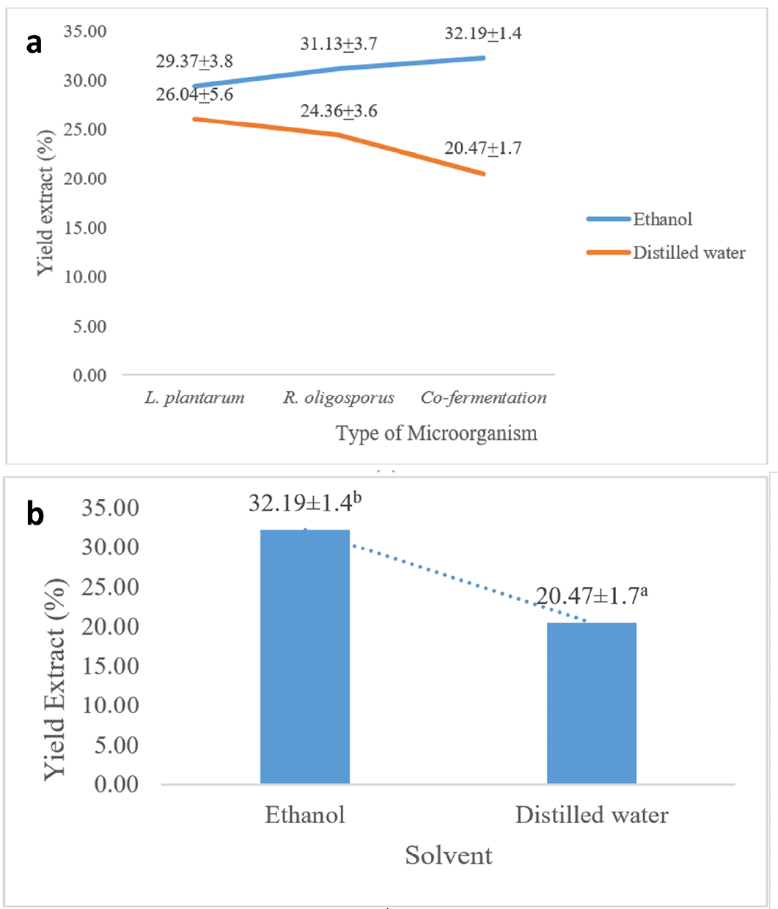
Percentage weight yield of fermented
A. officinarum extract
Co-fermentation using L. plantarum and R. oligosporus likely promoted synergistic enzymatic activity, resulting in enhanced degradation of structural components and increased release of extractable bioactive compounds.
Total phenolic content of fermented A. officinarum extract
The total phenolic content of fermented A. officinarum extract is presented in Figure 2. Microbial treatment significantly affected total phenolic content (p < 0.05). Co-fermentation produced the highest phenolic content, particularly in distilled water extracts
(1 145.55 mg GAE 100 g-¹), which exceeded the values observed in non-fermented controls.
The increase in phenolic content may be attributed to microbial enzymatic activity during fermentation. Enzymes such as cellulases, pectinases, esterases, and glycosidases facilitate degradation of plant cell wall structures and release bound phenolic compounds into more soluble forms ; Yang et al., 2023). In addition, β-glucosidase activity produced by L. plantarum contributes to the conversion of glycosidic phenolics into more bioactive aglycone forms.
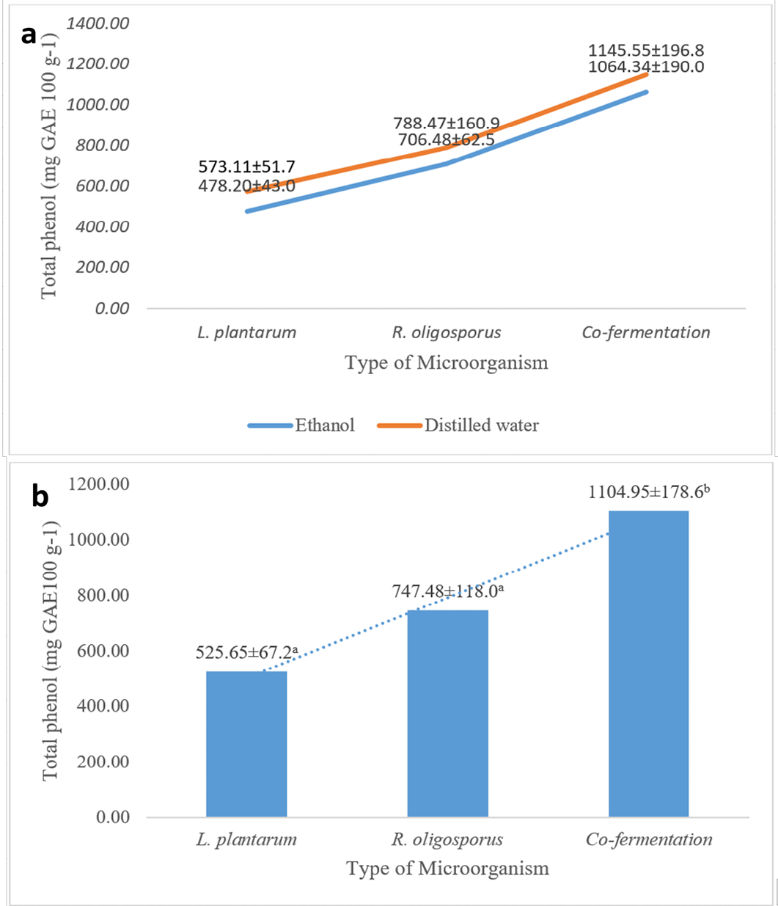
Total phenolic content of fermented
A. officinarum extract
These findings are consistent with previous reports demonstrating that co-fermentation improves phenolic release and antioxidant-related phytochemical content in plant substrates ; Stodolak et al., 2020).
Total flavonoid content of fermented A. officinarum extract
The total flavonoid content of fermented A. officinarum extract is presented in Figure 3. Microbial treatment significantly influenced total flavonoid content
(p < 0.05). Co-fermentation resulted in the highest flavonoid levels, with ethanol extraction yielding 85.89 mg QE 100 g-¹ and distilled water extraction yielding 83.99 mg QE 100 g-¹.
The enhancement of flavonoid content is likely related to the hydrolytic activity of enzymes such as β-glucosidase, tannase, and feruloyl esterase produced during fermentation. These enzymes facilitate the breakdown of flavonoid conjugates and release more bioactive aglycone forms.
The synergistic interaction between R. oligosporus and L. plantarum may further enhance the liberation and transformation of flavonoid compounds. Similar increases in flavonoid content following microbial fermentation have been reported in previous studies ; Stodolak et al., 2020).
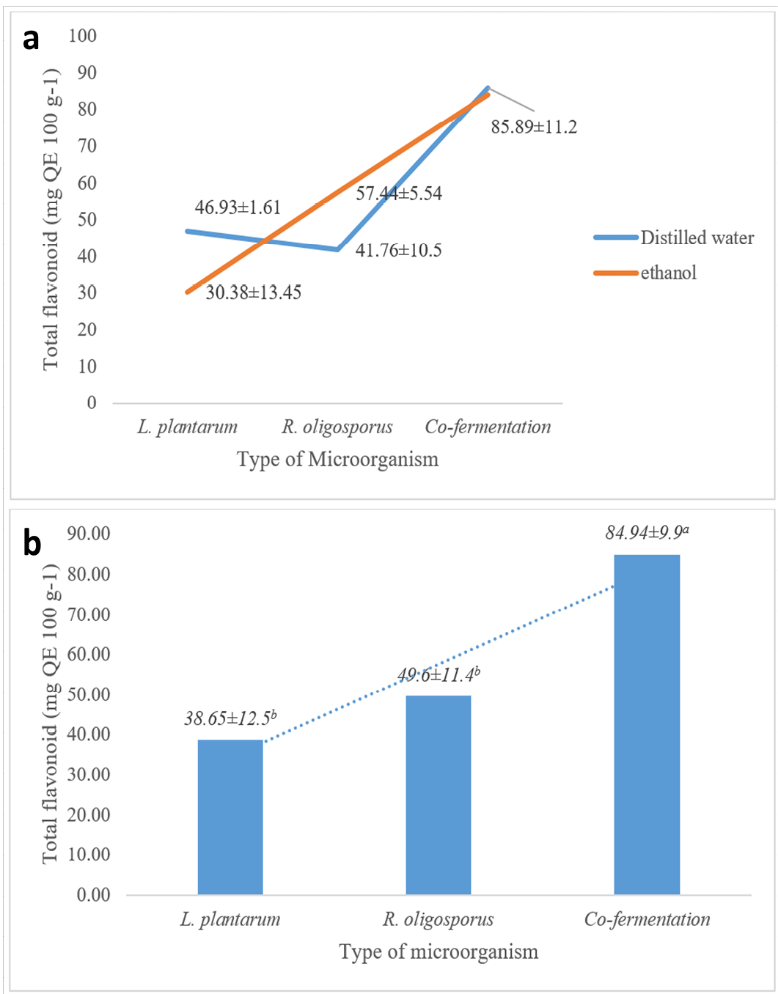
Total flavonoid content of fermented
A. officinarum extract
Antioxidant activity of fermented A. officinarum extract
The antioxidant activity of fermented A. officinarum extract is presented in Figure 4. Microbial treatment significantly improved antioxidant activity (p < 0.05), as indicated by reduced IC₅₀ values. The lowest IC₅₀ value (166.14 µg mL-¹) was observed in the distilled water extract of co-fermented A. officinarum, indicating the strongest radical scavenging activity.
Lower IC₅₀ values indicate stronger antioxidant activity because smaller concentrations are required to neutralize DPPH radicals (Gulcin and Alwasel, 2023). The improved antioxidant activity observed in co-fermented extracts is likely associated with increased phenolic and flavonoid contents.
Distilled water extracts showed antioxidant activity comparable to or slightly better than ethanol extracts, possibly due to improved extraction of polar antioxidant compounds. Similar findings have been reported in previous studies evaluating aqueous extraction of phenolic-rich materials . Identification of secondary metabolites in co-fermented A. officinarum extract.
The identified secondary metabolites in co-fermented A. officinarum extract are presented in Table 2, while the GC–MS chromatogram is shown in Figure 5.
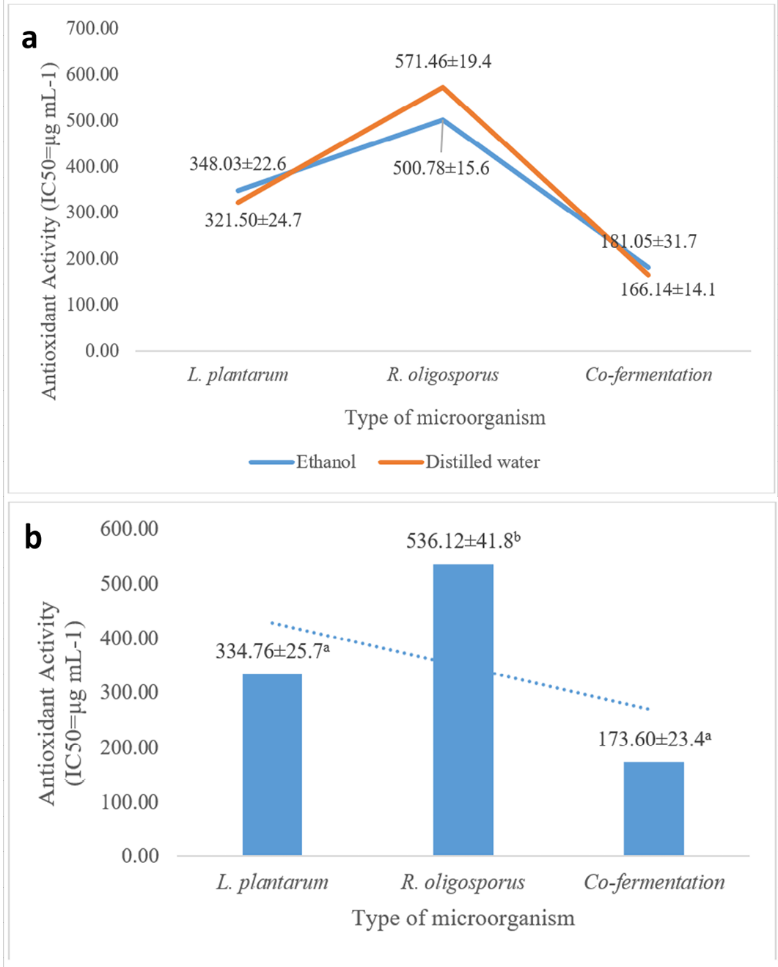
Antioxidant activity (IC₅₀) of fermented
A. officinarum extract
GC–MS analysis revealed the presence of several fatty acids, esters, and phenolic-related compounds generated during microbial fermentation. Several compounds identified in this study, including propionic acid and 2,4-di-tert-butylphenol (2,4-DTBP), have been previously reported to possess antibacterial-related properties.
Long-chain fatty acids such as myristic acid and palmitic acid have also been associated with reported antibacterial effects, particularly against Gram-positive bacteria. Ethyl ester derivatives detected in the extract may result from esterification reactions during fermentation and contribute additional biological relevance.
Overall, the GC–MS results indicate that co-fermentation not only enhances the release of phenolic compounds but also contributes to the formation of new bioactive metabolites through microbial biotransformation, supporting the formation of metabolites previously associated with antimicrobial relevance in fermented A. officinarum extract.
Considering that A. officinarum is a rhizome crop cultivated in direct contact with soil environments, attention should also be given to the potential risk of microplastic contamination throughout the production chain of plant-based raw materials and fermented extracts. Previous studies have reported the occurrence of microplastics in agricultural soils and tuber crops, indicating that root- and rhizome-based commodities may act as entry points of microplastics into the feed and food chain (Setyobudi et al., 2024a, 2024b, 2025).
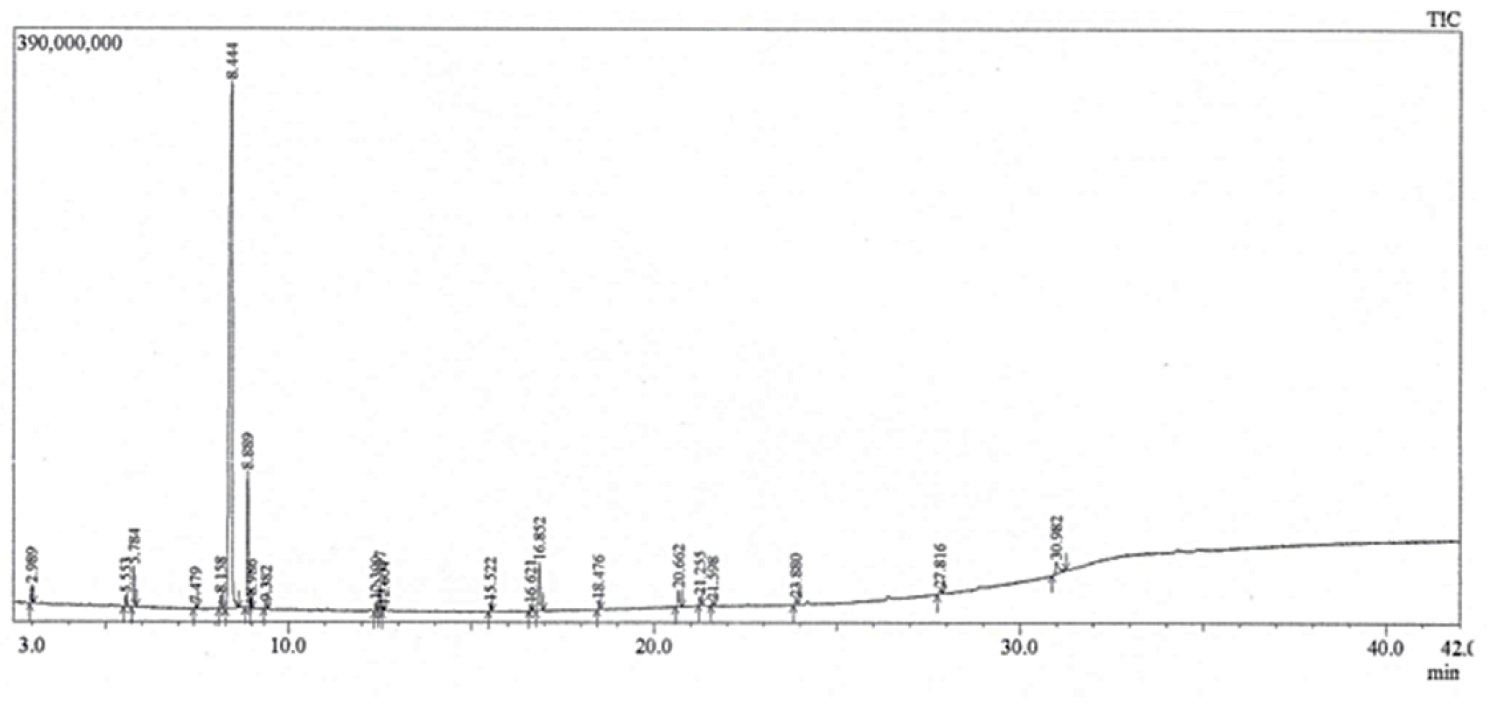
GC–MS chromatogram of co-fermented A. officinarum extract
Table 2: Percentage weight yield of fermented A. officinarum extract under different microbial and solvent treatments
| Compound name | Compound class | Main biological activity | Reference |
| Diethyl sulfate | Synthetic alkylating agent (ethyl sulfate) | None – known mutagen/carcinogen (no antimicrobial use) | (National Toxicology Program, 2021) |
| 4-Methyl-oxazole-5-carboxylic acid | Heterocyclic oxazole carboxylic acid (synthetic) | None reported; oxazole derivatives often bioactive | (Wipf et al., 2005) |
| Cyclohexasiloxane, dodecamethyl | Cyclic siloxane (volatile silicone, synthetic) | Inert – no inherent bioactivity; used in cosmetics | (IMAP Single Assessment Report, 2016) |
| Cycloheptasiloxane, tetradecamethyl | Cyclic siloxane (volatile silicone, synthetic) | Inert – no inherent bioactivity; used in cosmetics | (IMAP Single Assessment Report, 2016) |
| Propanoic acid | Short-chain fatty acid | Broad-spectrum antimicrobial (antibacterial & antifungal); food preservative | (Antone et al., 2023; Da Costa et al., 2024) |
| Diethyl malinate (Diethyl malonate) | Diethyl ester of malonic acid (synthetic ester) | None known – used as synthetic intermediate | (Libre Texts OpenStax, 2025) |
| Pentanoic acid 4-oxo ethyl ester (Ethyl levulinate) | Levulinic acid ester (bio-derived keto-ester) | Broad antimicrobial (preservative in foods/cosmetics) | (Zbaqchem, 2024) |
| Butanedioic acid diethyl ester (Diethyl succinate) | Diethyl ester of succinic acid (ester) | None known (no reported antimicrobial activity) | - |
| Cyclononasiloxane, octadecamethyl | Cyclic siloxane (volatile silicone) | Inert – no antimicrobial role (GC-MS artifact) | (IMAP Single Assessment Report, 2016) |
| 2,3-Diethoxypropionic acid ethyl ester | Ethyl diester of 2,3-dihydroxypropionic acid (synthetic) | None known (likely artifact) | - |
| 5-Bromovaleric acid but-3-yn-2-yl ester | Halogenated unsaturated ester (synthetic) | None known (likely artifact) | - |
| Butanedioic acid hydroxy-diethyl ester (Diethyl malate) | Diethyl ester of malic acid (synthetic/plant) | None known – no reported antimicrobial action | - |
| Tetradecanoic acid ethyl ester (Ethyl myristate) | Ethyl ester of myristic acid (fatty acid ester) | Weak antibacterial (saturated fatty ester). | (Okukawa et al., 2021) |
| Cyclooctasiloxane, hexadecamethyl | Cyclic siloxane (volatile silicone) | Inert – no antimicrobial role (cosmetic contaminant | (IMAP Single Assessment Report, 2016) |
| Hexadecanoic acid ethyl ester (Ethyl palmitate) | Ethyl ester of palmitic acid (fatty acid ester) | Anti-inflammatory (TNF-α, IL-6 inhibitor); no significant antibacterial | (Saeed et al., 2012) |
| 2,4-Di-tert-butylphenol | Alkylated phenolic compound | Broad antimicrobial (antibacterial, antifungal); antioxidant, antiinflamasi, sitotoksik, antivirus, insektisida, dan nematisida | (Nwobodo et al., 2022; Rouvier et al., 2024; Gupta et al., 2023; Mishra et al., 2020; Sundar et al., 2025). |
| Tetradecanoic acid (Myristic acid) | Saturated fatty acid | Selective antibacterial (strong against Gram-positives) | (Jua´rez-Rodrı´guez et al., 2021; Okukawa et al., 2021) |
| n-Hexadecanoic acid (Palmitic acid) | Saturated fatty acid | Antibacterial and antifungal (broad-spectrum) | (Idris et al., 2018; Nabi et al., 2022; Ghfil et al., 2025) |
This issue is particularly important because the present study aims to explore the potential use of fermented A. officinarum as a functional feed-related ingredient. Without adequate monitoring and mitigation strategies, microplastic contamination may negatively affect livestock productivity and animal health, while also facilitating the transfer of microplastics
and associated contaminants into humans through animal-derived food products ; ; . Such conditions may ultimately threaten food safety and food security, especially in developing countries that rely heavily on sustainable livestock production systems.
Therefore, future investigations are required to evaluate the occurrence, distribution, and potential transfer of microplastics during fermentation and downstream processing in order to ensure the safety, sustainability, and environmental integrity of fermentation-based functional products. These efforts are also aligned with Sustainable Development Goals (SDGs), particularly SDG 2 (Zero Hunger), SDG 3 (Good Health and Well-being), and SDG 12 (Responsible Consumption and Production).
Conclusions and Recommendations
This study demonstrated that co-fermentation using L. plantarum and R. oligosporus significantly enhanced extraction yield, total phenolic content, total flavonoid content, and antioxidant activity of A. officinarum extract compared with single-microbe fermentation and non-fermented treatments. Distilled water also showed comparable or superior performance to ethanol in several parameters, indicating its potential as an environmentally friendly extraction solvent.
GC–MS analysis confirmed that microbial fermentation promoted the formation of bioactive metabolites, including compounds previously reported to possess antimicrobial-related properties. These findings highlight the potential of co-fermentation as a sustainable strategy for developing functional
A. officinarum-based products for food, feed, and health-related applications.
Acknowledgements
The authors would like to express their gratitude to the Rector of Universitas Tribhuwana Tunggadewi and the Faculty of Animal Husbandry, Universitas Brawijaya for their support and encouragement that made this research possible.
Novelty Statement
This study presents a novel approach combining microbial co-fermentation and solvent selection to enhance the functional properties of A. officinarum. The findings demonstrated that co-fermentation using L. plantarum and R. oligosporus, together with distilled water extraction, effectively improved phenolic content, flavonoid levels, antioxidant activity, and bioactive metabolite formation. In addition, this study introduces a future-oriented perspective regarding potential microplastic contamination in rhizome-based raw materials intended for feed-related applications.
Author’s Contribution
Eka Fitasari: Designed the study, conceptualized and elaborated the intellectual content, performed literature search, manuscript preparation, and manuscript revision.
Osfar Sjofjan: Supervisor, project administration, and manuscript review.
Eko Widodo, Lilik Eka Radiati, and Mohammad Zahoor: Manuscript review.
Roy Hendroko Setyobudi: Manuscript review, manuscript revision, template-layout, and guarantor.
All authors have read and approved the final manuscript.
Generative AI and AI-assisted technology statement
The authors declare that no generative AI was used in the generation, analysis, or interpretation of research data. AI-assisted tools were used solely for language editing and improving clarity of the manuscript.
Conflict of interest
The authors have declared no conflict of interest.
References
- Aljobair, M.O. 2022. Chemical composition, antimicrobial properties and antioxidant activity of galangal rhizome. Food Sci. Technol. Campin., 42: 1–8. https://doi.org/10.1590/fst.45622. [CrossRef]
- Aryal, S., M.K. Baniya, K. Danekhu, P. Kunwar, R. Gurung and N. Koirala. 2019. Total phenolic content, flavonoid content and antioxidant potential of wild vegetables from western Nepal. Plant., 8(96): 1–12. https://doi:10.3390/plants8040096. [CrossRef]
- Bounyavong, S., S. Sangmaneedet, G. Rungpiriyadej, S. Settavakin, N. Hirunsirapat, W. Taweenan, P Sukon and J. Aiemsaard. 2014. Efficacy of galangal (Alpinia galanga) extracts against caecal coccidiosis in broilers. KKU Vet. J., 24 (1): 1–10. CABI Digital Library. cabidigitallibrary.org
- Chatepa, L.E.C., B. Mwamatope, I. Chikowe and K.G. Masamba. 2024. Effects of solvent extraction on the phytoconstituents and in vitro antioxidant activity properties of leaf extracts of the two selected medicinal plants from Malawi. BMC Complement. Med. Ther., 24(317): 1–12. https://doi.org/10.1186/s12906-024-04619-7. [CrossRef]
- Chihomvu, P., A. Ganesan, S. Gibbons, K. Woollard and M.A. Hayes. 2024. Phytochemicals in drug discovery—A confluence of tradition and innovation. Int. J. Mol. Sci., 25(8792): 1–23. https://doi.org/10.3390/ijms25168792. [CrossRef]
- Damat, D., R.H. Setyobudi, J. Burlakovs, Z.V. Gaile, D.D. Siskawardani, R. Anggriani and A. Tain. 2021. Characterization properties of extruded analog rice developed from arrowroot starch with addition of seaweed and spices. Sarhad J. Agric. 37(Sp. Is.1): 159–170. https://dx.doi.org/10.17582/journal.sja/2021.37.s1.159.170 [Full text] [CrossRef]
- Damat, D., R.H. Setyobudi, S. Anwar, M.A. Wedyan, Z. Vincevica-Gaile, Y.A. Nugroho, T. Liwang, T.D.N. Subchi, A. Fauzi, H.A. Manshur, D.D. Siskawardani, .A. Wahyudi, Y.M. Ananda and H.A. Rachmawati. 2024. Coffee pulp characterization and utilization in coffee cherry flour for circular economy improvement. Sarhad J. Agri., 39 (Sp. Is. 1): 71–83. https://dx.doi.org/10.17582/journal.sja/2023/39/s1.7 [CrossRef]
- Darina, V., V. Gegechkori, D.W. Morton and S. Agatonovic‑Kustrin. 2025. The impact of spontaneous fermentation on phenolic and antioxidant profiles of selected aromatic plant extracts. J. Planar Chromatogr. Mod. TLC, 38(4): 391–399. https://doi.org/10.1007/s00764-025-00340-4. [CrossRef]
- Dhiman, S., S. Kaur, B. Thakur, P. Singh and M. Tripathi. 2025. Nutritional enhancement of plant-based fermented foods: Microbial innovations for a sustainable futuree. Ferment., 11(346): 1–45. https://doi.org/10.3390/fermentation11060346. [CrossRef]
- Echegaray, N., B. Yilmaz, H. Sharma, M. Kumar, M. Pateiro, F. Ozogul and J.M. Lorenzo. 2023. A novel approach to Lactiplantibacillus plantarum: From probiotic properties to the omics insights. Microbiol. Res., 268 (127289): 1–13. https://doi.org/10.1016/j.micres.2022.127289. [CrossRef]
- Fitasari, E., O. Sjofjan and E. Widodo. 2024. Extraction and identification of polyphenol compounds from red galangal rhizome (Alpinia officinarum) fermented by Lactobacillus plantarum using GC-MS method. In: Novianti, I., S. Suyadi and D. Boyd, (Eds.). Proceedings of the 5th International Conference on Environmentally Sustainable Animal Industry (ICESAI 2024). Advances in Biological Sciences Research (ABSR) 45, Atlantis Press Int. BV. pp. 143–150. https://doi.org/10.2991/978-94-6463-670-3_15 [CrossRef]
- Gulcin, I. and S. H. Alwasel. 2023. DPPH radical scavenging assay. Proces., 11(2248): 1–20. https://doi.org/10.3390/pr11082248. [CrossRef]
- He, J., Y. Chen and C. Yang. 2025. A review on the pharmacological effects of Alpinia offiinarum Hance and its active ingredients. J. Holist. Integr. Pharm., 6: 74–82. https://doi.org/10.1016/j.jhip.2025.03.006. [CrossRef]
- Lei, X., J. Wang, K. Zuo, T. Xia, J. Zhang, X. Xu, Q. Liu and X. Li. 2024. Alpinia of ficinarum Hance: A comprehensive review of traditional uses, phytochemistry, pharmacokinetic and pharmacology. Front. Pharmacol., 15(1414635): 1–25. https://doi.org/10.3389/fphar.2024.141463 [CrossRef]
- Lim, J., T.T.H. Nguyen, K. Pal, C.G. Kang, C. Park, S.W. Kim and D. Kim. 2022. Phytochemical properties and functional characteristics of wild turmeric (Curcuma aromatica) fermented with Rhizopus oligosporus. Food Chem., 13(100198): 1–9. https://doi.org/10.1016/j.fochx.2021.100198. [CrossRef]
- Mcfarland Standard. 2002. Mcfarland standard, for in vitro use only. Catalogue No. TM50-TM60. December 2002 Revised, Reviewed at October 2014. Dalynn Biolocicals. https://www.dalynn.com/dyn/ck_assets/files/tech/TM53.pdf. Retrieved in January 10, 2024
- Ozturk, T., M.A. Ávila-Gálvez, S. Mercier, F. Vallejo, A. Bred, D. Fraisse, C. Morand, E. Pelvan, L.E. Monfoulet and A. González-Sarrías. 2024. Impact of lactic acid bacteria fermentation on (poly) phenolic profile and in vitro antioxidant and anti-inflammatory properties of herbal infusions. Antioxid., 13(562): 1–17. https://doi.org/10.3390/antiox13050562. [CrossRef]
- Patır İ., B. Karkar and S. Şahin. 2025. Enhancement of in vitro bioaccessibility of Alpinia officinarum Hance extract with dual-coated liposomes. Food Sci. Nutr., 13(70438): 1–13. https://doi.org/10.1002/fsn3.70438. [CrossRef]
- Qumsani, A.T. 2024. The contribution of microorganisms to sustainable development: Towards a green future through synthetic biology and systems biology. J. Umm Al-Qura Univ. Appl. Sci., 1.(0123456789): 1–17. https://doi.org/10.1007/s43994-024-00180-8. [CrossRef]
- Rachwał, K. and K. Gustaw, K. 2025. Plant-derived phytobiotics as emerging alternatives to antibiotics against foodborne pathogens. Appl. Sci., 15(6774): 1–46. https://doi.org/10.3390/app15126774. [CrossRef]
- Ramachandraiah, K., K. Ameer, G. Jiang and G.P. Hong. 2022. Micro- and nanoplastic contamination in livestock production: Entry pathways, potential effects and analytical challenges. Sci. Total Environ., 844: 157234. https://doi.org/10.1016/j.scitotenv.2022.157234 [CrossRef]
- Setyobudi, R.H., S. Anwar, I. Iswahyudi, S. Husen, D. Damat, M.P. Garfansa, P.G. Adinurani, M. Mel, T. Liwang, R. Aprilianti, T.D.N. Subchi, M. Setiawan, D. Hermayanti, D. Mariyam, B.A. Prahardika, Z. Vincevica-Gaile, S.K. Wahono, T.N. Punjungsari, A. Fauzi, I. Andini, N.R. Malihah, I. Ekawati, D.D. Sulistyoningrum and Y.A.C. Ekalaturrahmah. 2024a. Identification and quantification of microplastics contamination in potato from Malang Raya, Indonesia. Bio Web Conf., 104(00036): 1–15. https://doi.org/10.1051/bioconf/202410400036 [CrossRef]
- Setyobudi, R.H., I. Iswahyudi, D. Damat, M.P. Garfansa, D. Hermayanti, S.D. Ramadani, Z. Vincevica-Gaile, L.R. Nurfadilah, E.S. Savitri and Z. Meylanzharie. 2024b. Presence of microplastics in water, soil, organic fertilizer, and potato plants on potato plantations. Environ. Qual. Manage., 34(2): e70001. https://doi.org/10.1002/tqem.70001 [CrossRef]
- Setyobudi, R.H., D. Hermayanti, S. Husen, M.P. Garfansa, T.D.N. Subchi, S. Suherman, S. Anwar, I. Iswahyudi, Y. Sincihu, A. Anekawati, M.S. Susanti, M. Anwar, T.A. Pakarti and S.A.A. Putra. 2025. Bioremediation using microorganisms and earthworms in reducing the impact of microplastics in potato cultivation. Sarhad J. Agric., 39 (Sp.Iss.1): 171–184. https://dx.doi.org/10.17582/journal.sja/2023/39/s1.171.184 [Full text] [CrossRef]
- Setyobudi, R.H. 2026. The journey of microplastics: From synthetic polymers to food systems and human exposure. In: Setyobudi, R.H. (Ed.). Microplastics threaten human health. UMM Press, Malang, Indonesia.
- Shen, L., C. Li, W. Wang, X. Wang, D. Tang, F. Xiao, T. Xia. 2024. Buckwheat extracts rich in flavonoid aglycones and flavonoid glycosides significantly reduced blood glucose in diabetes mice. J. Funct. Food., 113(106029): 1–11. https://doi.org/10.1016/j.jff.2024.106029. [CrossRef]
- Stodolak, B., A. Starzyńska-Janiszewska, M. Mika and A. Wikiera. 2020. Rhizopus oligosporus and Lactobacillus plantarum co-fermentation as a tool for increasing the antioxidant potential of grass pea and flaxseed oil-cake tempe. Molecul., 25(4759): 1–13. https:// doi:10.3390/molecules25204759. [CrossRef]
- Wahyudi, A., D. Pamungkas, R.H. Setyobudi, L.I. Hendraningsih and Z. Vincēviča-Gaile. 2017. Organic acid and nutrient composition of lactic acid bacteria inoculated total mixed ration silage under tropical condition: Organic acids and nutrients composition of lactic. Proc Pakistan Acad. Sci. B., 54(1): 41–45.
- Wahyudi, A., R.H. Setyobudi, I. Iswahyudi, M.P. Garfansa, E.S. Savitri, B.A. Prahardika, P. Patmawati, R.D. Putri, R.A.D. Sukma, N.S. Putra, E. Yunita and S.K. Wahono. 2025. Determination and quantification of microplastics in goat farms. Bioresour. Technol. Rep., 31: 102199. https://doi.org/10.1016/j.biteb.2025.102199 [CrossRef]
- Widodo, W., I.D. Rahayu, A. Sutanto, R.H. Setyobudi and M. Mel. 2019. The effectiveness of curcuma (Curcuma xanthorriza Roxb.) addition in the feed toward super kampong chicken performances. Proc. Pakistan Acad. Sci. B., 56(4): 39–46
- Yang, F., C. Chen, D. Ni, Y. Yang, J. Tian, Y. Li, S. Chen, X. Ye and L. Wang. 2023. Effects of fermentation on bioactivity and the composition of polyphenols contained in polyphenol-rich foods: a review. Food., 12(3315): 1–32. https://doi.org/10.3390/foods12173315. [CrossRef]

Services
Article usage statistics
Loading…
Related articles
- Antibacterial Activity of Alkaloids, Phenols Extracts, Estimation of Active Compounds and Profile of Bioactive Compounds by HPLC Method of Rosmarinus officinalisPakistan Journal of Agricultural Research · 2026
- Assessment of Phytochemical Profiling and Therapeutic Potential of the Ethanolic Extract of Vitex negundo (L.)Sarhad Journal of Agriculture · 2024
- Evaluations of Phytochemical Contents, Antibacterial and Antioxidant Potential of Methanolic Leaves Extract of Tanacetum camphoratum Less. (Camphor tansy).Sarhad Journal of Agriculture · 2022
- Extracts from unripe and ripened peels of Citrus limon reveal variation in composition of bioactive compounds and exhibit antibacterial activity in relation to different extraction solventsBiologia (Lahore) · 2023
- Phytochemical Profiling, Antimicrobial Potential, and Biological Activity of Cuscuta reflexa from Semi-Arid Regions of PakistanSarhad Journal of Agriculture · 2025
- Effects of Extraction Solvents and Drying Techniques on Antioxidant Content and Radical Scavenging Activity of Roselle (Hibiscus sabdariffa) CalyxSarhad Journal of Agriculture · 2024