
The aim of this study was to evaluate the individual and combined effects of laserpuncture and Fermented Mother Liquor (FML) on the growth performance of meat-type pigeons (Columba livia) to provide applicable insights for farmers. A total of 24 male pigeons were randomly assigned to four groups: P0 (control), P1 (laserpuncture, 0.5 J), P2 (laserpuncture 0.5 J + 1% FML), and P3 (1% FML only). Feed consumption, weight gain, and feed conversion ratio (FCR) were assessed over three weeks. The results showed that P2 consistently demonstrated the highest feed consumption and weight gain (p < 0.05), while also achieving the lowest and most efficient FCR. P1 and P3 produced intermediate improvements relative to the control, although P3 was not significantly different from P0 in some parameters. These findings indicate that both laserpuncture and FML can enhance pigeon performance, with the combination treatment (P2) yielding the strongest synergistic effect.
Research Article · Volume 14, Issue 12, Pages 2784–2789, 5 November 2026 · Open Access
Synergistic Effects of Laserpuncture and Fermented Mother Liquor on Feed Efficiency and Growth in Meat Type Pigeons (Columba livia)
· · · · ·
Affiliations & Notes ⌄
- 1Reproductive Biology Division, Faculty of Veterinary Medicine, Universitas Airlangga, Surabaya, Indonesia
- 2Veterinary Clinical Division, Faculty of Veterinary Medicine, Universitas Airlangga, Surabaya, Indonesia
- 3Animal Husbandry Division, Faculty of Veterinary Medicine, Universitas Airlangga, Surabaya, Indonesia
- 4Veterinary Anatomy Division, Faculty of Veterinary Medicine, Universitas Airlangga, Surabaya, Indonesia
- *Correspondence | Elfina Dinyyatika Arifin; Email: elfinadinyyar16@gmail.com
Article Info ⌄
- Journal:
- Advances in Animal and Veterinary Sciences
- Submitted Date:
- 21 November 2025
- Accepted Date:
- 30 January 2026
- Published Date:
- 5 November 2026

Abstract
Introduction
Laserpuncture is a technique involving the application of a laser beam at a certain point as a biological receptor in the body of living creatures to improve the functioning of organs . Laserpuncture relies on activating acupuncture points using laser light, and its effects are most pronounced when the stimulation is applied directly to the designated acupoints . These acupoints possess unique electrical characteristics namely high potential and low resistance, allowing them to conduct energy efficiently toward corresponding organs. Previous studies suggest that increasing body weight and growth rate in poultry, can be achieved through the stimulation of growth-related acupoints. Several key points was identified in poultry: Hu Men (associated with digestive function), Bei Ji (related to cardiac and pulmonary activity), Gou Hou (linked to hormonal regulation), and Wei-Gen (as the body resistance point) . Based on this rationale, further research is warranted evaluate the effects of laserpuncture on weight gain and growth rate in pigeon.
Additional feed supplements are needed to improve the performance of pigeons. An alternative could be made by using the side results of Monosodium Glutamate (MSG), which is a liquid waste Fermented Mother Liquor (FML). Meat type pigeons require 15-16% daily protein while FML has 22.98% protein content . Meat type pigeon performance enhancements include feed consumption, weight gain and feed conversion. Feed consumption, measured as the difference between feed offered and feed refused, together with weight gain obtained from repeated measurements, determines the feed conversion ratio (FCR), which reflects the efficiency of converting feed intake into body mass.
Materials and Methods
This study employed an experimental research design using a Completely Randomized Design (CRD) consisting of four treatment groups, with six pigeons assigned to each group (n= 6) (Figure 1). The sample size was determined based on the Federer formula (t−1)(r−1)≥15, which confirmed that using four treatments with six replications (total n= 24 male meat-type pigeons, Columba livia) met the minimum requirement for valid experimental analysis. Fourteen-day-old pigeons were individually weighed and randomly allocated into treatment groups using simple random sampling (Figure 2). Only male pigeons were used to reduce variability caused by sex-related hormonal differences that may influence growth, metabolism, and feed efficiency, allowing for more controlled interpretation of treatment effects. The sample size of six birds per treatment followed the standard sample range commonly
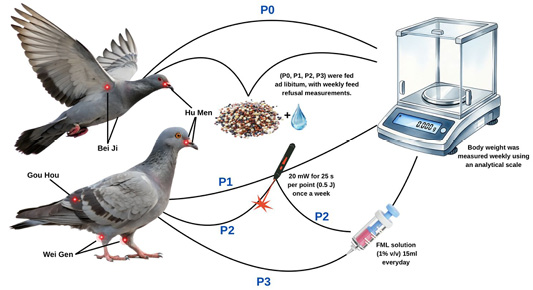
Schematic diagram of the experimental design.
Twenty-four male meat-type pigeons (Columba livia) were randomly assigned to four treatment groups (P0–P3). All groups received feed and water ad libitum, with weekly measurements of feed refusals to determine intake. Body weight was recorded weekly using an analytical balance.
Laserpuncture was applied to P1 and P2 at four acupoints (Hu Men/ST-4, Bei Ji/HT-1–BL-13–BL-15, Gou Hou/BL-64, and Wei Gen/GV-2) using a 20 mW semiconductor laser for 25 seconds per point (total energy 0.5 J), administered once weekly. Fermented Mother Liquor (FML) was administered to P2 and P3 as a 1% (v/v) solution, delivered orally at a volume of 15 mL daily.
used in avian physiology and performance studies due to space and handling limitations .

Individual experimental animal cages used in this study, constructed from metal wire frames and arranged in a controlled indoor facility to ensure standardized housing conditions.
Experimental Treatments P1 (laserpuncture, 0.5 J), P2 (laserpuncture 0.5 J + 1% FML)” → ”P1 (laserpuncture at 0.5 J), P2 (laserpuncture at 0.5 J + 1% FML)” Acupoint detection for P1 and P2 was conducted using anatomical landmarks corresponding to growth and immunity-related regions previously described in avian acupuncture studies (Table 1 and Figure 3).
Table 1: Group and sample treatments.
| Gro-ups | Treatment(s) |
| P0 | Samples are injected 0 Joule semiconductor laser puncture for 25 seconds at the growth point (Hu-Men, Bei-Ji, Gou-Hou) and the resistance point (Wei-Gen) |
| P1 | Samples are injected 0,2 Joule semiconductor laser puncture for 25 seconds at the growth point (Hu-Men, Bei-Ji, Gou-Hou) and the resistance point (Wei-Gen) |
| P2 | Samples are injected 0,2 Joule semiconductor laser puncture for 25 seconds at the growth point (Hu-Men, Bei-Ji, Gou-Hou) and the resistance point (Wei-Gen) and Fermented Mother Liquor (FML) was administered as much as 1% of drinking water given orally. |
| P3 | Samples are administered by Fermented Mother Liquor (FML) of as much as 1% of drinking water given orally |
Measurement data of feed consumption, weight gain and feed conversion are presented in table form and analyzed using ANOVA test (Analysis of variance). Further Duncan analysis is performed when the treatment shows significant differences (p<0.05).
The acupoints included:
Hu-Men (ST-4): located at the caudoventral angle of the beak
Bei-Ji (HT-1, BL-13, BL-15): located at the axillary region along the base of the wing
Gou-Hou (BL-64): located on the volar aspect of the tarsometatarsal joint
Wei-Gen (GV-2): located dorsally at the sacrococcygeal joint near the bursa of Fabricius
Laserpuncture was administered using a semiconductor laser device with a power output of 20 mW (Figure 3). Each acupoint was stimulated for 25 seconds, delivering a total energy of 0.5 Joules (Energy = Power × Time = 0.02 W × 25 s). Treatment was applied once weekly for three consecutive weeks.
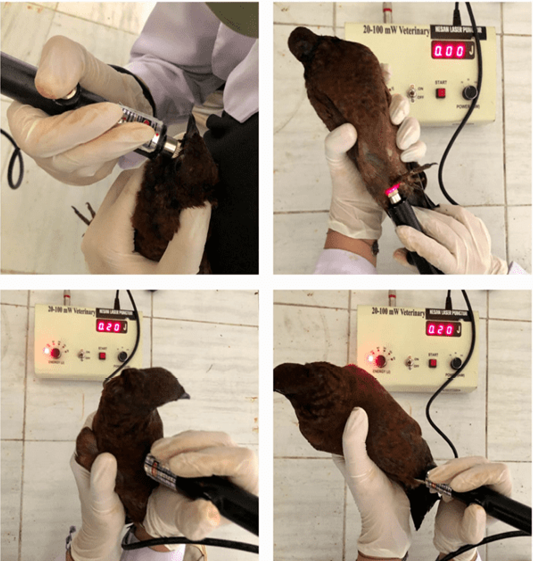
Administration of laserpuncture treatment at each designated acupoint, performed using a low-level veterinary laser device while the animal was gently restrained to ensure accurate point stimulation.
FML was prepared as a 1% v/v solution by diluting 0.15 ml of FML in 15 ml of water. To ensure homogeneous dosing and guarantee that each pigeon received the full intended amount, the 15 ml solution was administered orally using a syringe once daily for three weeks. This volume represents approximately one-third of the daily water requirement for pigeons (35–50 ml/day), ensuring controlled and equal intake across all birds in P2 and P3.
Results and Discussion
Feed consumption
The results showed significant differences in feed consumption among all treatment groups (p < 0.05). P0 had the lowest feed intake, followed by P1 and P3, while P2 demonstrated the highest consumption (Table 2). Feed intake increased in P1 compared to P0, increased further in P3, and reached the highest value in the combination group (P2) (Figure 4). Feed consumption was calculated by subtracting feed refusals from the total feed offered, following standard poultry feeding protocols. Similar approaches have been recommended in recent studies for accurate measurement of feed intake and evaluation of growth performance ; .
Table 2: Mean and standard deviation value of food consumption (grams) of meat type pigeon (Columba livia) for three weeks.
| Group(s) | Mean of food consumption ± SD (grams) |
| P0 | 150.27a ± 2,26 |
| P1 | 167.20b ± 1,78 |
| P2 | 206.63d ± 1.15 |
| P3 | 172.43c ± 1.95 |
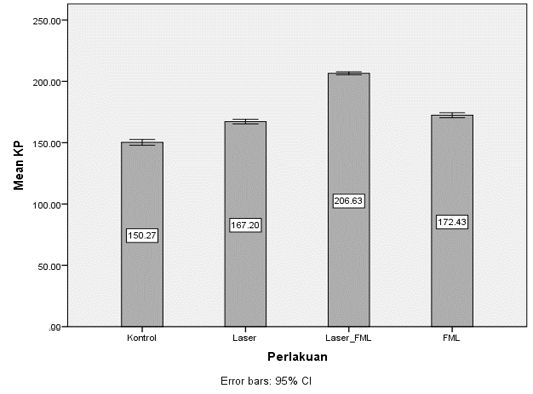
Mean and standard deviation value of food consumption (grams) of meat type pigeon (Columba livia) for three weeks.
Stimulation of the Hu-men acupoint can boost apetite and water intake, as well as enhance
The use of fermented feed or fermented feed-derived supplements has been reported to improve nutrient digestibility, gut health, and feed utilization in poultry. Fermented Mother Liquor (FML), a by-product of monosodium glutamate fermentation, contains amino acids including lysine produced by Brevibacterium lactofermentum. Supplementation with amino acids such as lysine has been associated with increased feed intake and growth performance, potentially through improvements in dietary protein quality and palatability ; Soglia et al., 2024). Laserpuncture at specific acupoints has also been reported to influence digestive activity and physiological responses in poultry. Although the underlying mechanisms were not measured in the present study, the increased feed intake observed in P1 and P2 may reflect treatment-related effects on digestive or metabolic processes. The combination treatment (P2) produced the highest feed consumption, suggesting a potential additive effect between laserpuncture and FML administration.
Weight gain
The highest weight gain was observed in P2, followed by P1, P3, and P0 (Table 3). P1 showed a significantly higher weight gain than P3 (p < 0.05), while the combination treatment in P2 produced greater improvements than either single treatment. Weight gain represents the difference between final and initial body weight and reflects the overall efficiency of nutrient utilization (Figure 5).
Table 3: Mean and standard weight gain deviation values (grams) of meat type pigeon (Columba livia) for three weeks.
| Group(s) | Mean of weight gaining ± SD (grams) |
| P0 | 67.47a ± 6.07 |
| P1 | 100.70c ± 1.67 |
| P2 | 122.68d ± 3.97 |
| P3 | 95.20b ± 4.62 |
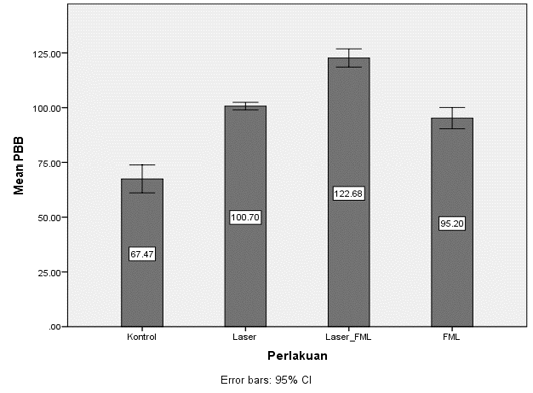
Mean and standard weight gain deviation values (grams) of meat type pigeon (Columba livia) for three weeks.
The use of fermented feed or fermented feed–derived supplements has been shown to enhance growth performance and nutrient absorption in poultry . Adequate amino acid availability, including essential amino acids that are typically increased in fermented products, supports protein synthesis and tissue accretion, thereby contributing to improved growth . Although the physiological mechanisms underlying laserpuncture were not measured in the present study and remain largely speculative, previous reports indicate that functional feed additives and alternative stimulation methods may improve feed utilization and growth by supporting gut health and nutrient bioavailability .
Thus, the increased weight gain observed in P1 and P2 may reflect the combined effects of nutrient enhancement (FML) and potential physiological stimulation (laserpuncture). The superior performance of P2 compared with the single-treatment groups suggests that integrating nutritional and stimulatory interventions may improve growth more effectively than applying either strategy alone.
Feed conversion
The results showed differences in feed conversion ratio (FCR) between several treatment groups (p < 0.05) (Figure 6). P2 had the lowest (best) FCR, indicating the most efficient conversion of feed into body weight, while P0 and P3 showed higher values, and P1 produced an intermediate response (Table 4). P0 differed significantly from P1 and P2 but not from P3 (p > 0.05). P1 differed significantly from P0 and P2 but not from P3 (p > 0.05). P3 differed significantly from P2 (p < 0.05) but not from P0 or P1 (p > 0.05). P2 differed significantly from all other groups (p < 0.05).
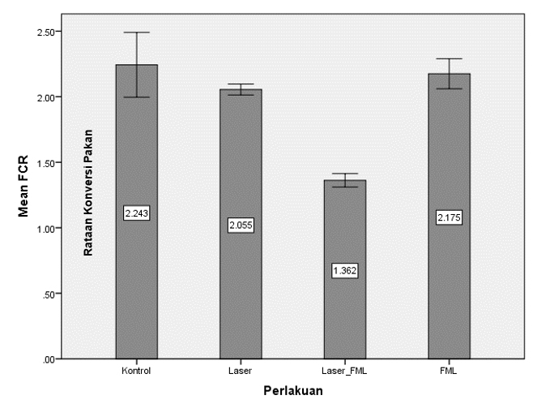
Mean and standard deviation feed conversion of meat type pigeon (Columba livia) for three weeks.
Table 4: Mean and standard deviation feed conversion of meat type pigeon (Columba livia) for three weeks.
| Group(s) | Mean of feed conversion ± SD |
| P0 | 2.24c ± 0.23 |
| P1 | 2.05b ± 0.04 |
| P2 | 1.36a ± 0.49 |
| P3 | 2.17bc ± 0.11 |
The ideal feed conversion ratio (FCR) for pigeons is around 5.7
Feed conversion ratio is calculated by dividing feed intake by weight gain and reflects the efficiency with which birds utilize feed for growth. A lower FCR indicates more efficient nutrient utilization ; . The markedly lower FCR in P2 suggests that the combination of laserpuncture and FML supplementation enhanced feed efficiency more effectively than either treatment alone. The relatively higher FCR in P3 compared with P1, despite higher feed intake, may be associated with lower weight gain in this group, resulting in less efficient feed utilization. Previous research has shown that dietary composition, nutrient bioavailability, and physiological status can influence FCR in poultry with improved nutrient digestibility and metabolic efficiency contributing to lower values . Overall, the combination treatment in P2 demonstrated the most favorable FCR, indicating that integrating laserpuncture with FML supplementation may provide complementary benefits for improving production efficiency in meat-type pigeons.
Conclusions
Laserpuncture stimulation or FML administration individually increased feed consumption and body weight and decreased the feed conversion ratio. However, the combination of laserpuncture and FML had the best effect.
Acknowledgments
The author gratefully acknowledges Dr. Nusdianto Triakoso, drh., M.Kes. and Dr. Emy Koestanti Sabdoningrum, drh., M.Kes. for their guidance and supervision throughout the research. Appreciation is also extended to Dr. Yeni Dhamayanti, drh., M.Kes., Prof. Dr. Widjiati, drh., M.Si., and Dr. Sunaryo Hadi Warsito, drh., M.P. for their valuable feedback. The author thanks Mr. Adi for providing access to the pigeon samples, and all individuals who supported this study.
Novelty Statement
This study provides novel insights into the effects of these interventions, both individually and in combination, on feed consumption, body weight gain, and feed conversion efficiency.
Author’s Contribution
Elfina Dinyyatika Arifin was responsible for the conceptualization, methodology, investigation, data curation, formal analysis, visualization, and for writing both the original draft and the revised version of the manuscript. Yeni Dhamayanti contributed to the initial conceptual framework of the study. Emy Koestanti Sabdoningrum and Nusdianto Triakoso provided methodological guidance, supervision, and contributed to the review and editing of the manuscript. Widjiati and Sunaryo Hadi Warsito were involved in the validation process and provided critical insights for improving the final version of the manuscript.
Ethical approval
This study involving experimental animals was ethically reviewed and approved by the Health Research Ethical Clearance Commission, Faculty of Dental Medicine, Universitas Airlangga, Surabaya, Indonesia. The research was declared ethically appropriate in accordance with WHO 2011 guidelines. Ethical Clearance Certificate Number: 1068/HRECC.FODM/VIII/2023.
Generative AI and AI assisted technology statement
The authors declare that no generative AI and AI assisted technology was used in the creation of this manuscript.
Conflict of interest
The authors have declared no conflict of interest.
References
- Abbas BA, Nurdianti RR (2025). Feed additives used in nutrition and improve the poultry performance and health: A review. Iraqi J. Vet. Med., 49(1): 31-44. https://doi.org/10.30539/kyt5dj31 [CrossRef]
- Adawy AMG, Abdel-Wareth AAA (2023). Productive performance and nutritional of domesticated pigeons: Present status and future concerns. SVU-Int. J. Agric. Sci., 5(2): 160–167. https://doi.org/10.21608/svuijas.2023.226150.1305 [CrossRef]
- Hidanah S, Sabdoningrum EK, Wahjuni RS, Arimbi (2017). Implementation of Meniran extract (Phyllanthus niruri Linn) on the performance of broiler chickens infected by Mycoplasma gallisepticum causing chronic respiratory disease. Vet. Med. Int. Conf., 3(6): 1138. https://doi.org/10.18502/kls.v3i6.1138 [CrossRef]
- Jie Y, Wen C, Huang Q, Gu S, Sun C, Li G, Yan Y, Wu G, Yang N (2024). Distinct patterns of feed intake and their association with growth performance in broilers. Poult. Sci., 103: 103974. https://doi.org/10.1016/j.psj.2024.103974 [CrossRef]
- Katu JK, Tóth T, Ásványi B, Hatvan Z, Varga L (2025). Effect of fermented feed on growth performance and gut health of broilers: A review. Animals, 15(13): 1957. https://doi.org/10.3390/ani15131957 [CrossRef]
- Li Y, Ma R, Qi R, Li H, Li J, Liu W, Wan Y, Li S, Sun Z, Xu J, Zhan K (2024). Novel insight into the feed conversion ratio in laying hens and construction of its prediction model. Poult. Sci., 103(10): 104013. https://doi.org/10.1016/j.psj.2024.104013 [CrossRef]
- Nisa HK, Budiarto Adikara, RTS, Hermadi HA, Soeharsono Mustofa I (2020). The stimulation of reproduction point with a semiconductor laserpuncture to estrous synchronization of Bali cattle (Bos sondaicus). J. Basic Med. Vet. Sci., 9(1): 1–6. https://doi.org/10.20473/.v9i1.21088 [CrossRef]
- Putri S, Abdullah F, Septiyaningsih R, Aulia F, Rahayu T (2025). Nutrisi seimbang untuk unggas: Memahami pentingnya protein dan serat (Balanced nutrition for poultry: Understanding the importance of protein and fiber). J. Ilmiah Ilmu-Ilmu Petern., 28(1): 1–11. https://doi.org/10.22437/jiiip.v28i1.35982 [CrossRef]
- Quintana-Ospina GA, Alfaro-Wisaquillo MC, Oviedo-Rondon EO, Ruiz-Ramirez JR, Bernal-Arango LC, Martinez-Bernal GD (2023). Data analytics of broiler growth dynamics and feed conversion ratio of broilers raised to 35 d under commercial tropical conditions. Anim. Open Access J. MDPI, 13(15): 2447. https://doi.org/10.3390/ani13152447 [CrossRef]
- Soglia F, Zampiga M, Baldi G, Malila Y, Thanatsang KV, Srimarut Y, Tatiyaborworntham N, Unger O, Klamchuen A, Laghi L, Petracci M, Sirri F (2021). Lysine depletion during different feeding phases: Effects on growth performances and meat quality of broiler chickens. Animals, 11(6): 1499. https://doi.org/10.3390/ani11061499 [CrossRef]
- Sugiharto S, Ranjitkar S (2018). Recent advances in fermented feeds towards improved broiler chicken performance, gastrointestinal tract microecology and immune responses: A review. Anim. Nutr., 5, Article 2018. https://doi.org/10.1016/j.aninu.2018.11.001 [CrossRef]
- Taylor-Bowden T, Bhogoju S, Khwatenge CN, Nahashon SN (2024). The impact of essential amino acids on the gut microbiota of broiler chickens. Microorganisms, 12(4): 693. https://doi.org/10.3390/microorganisms12040693 [CrossRef]
- Warsito SH, Adikara TS, Megasari S, Pratama IR, Lamid M, Hermadi HA (2021). Increasing quantity and internal quality of Japanese quail (Coturnix coturnix japonica) eggs by shooting laser puncture at reproductive acupuncture points. Vet. Med. Int., 2021(1): Article 6621965. https://doi.org/10.1155/2021/6621965 [CrossRef]
- Xu F, Wu H, Xie J, Zeng T, Hao L, Xu W, Lu L (2023). The effects of fermented feed on the growth performance, antioxidant activity, immune function, intestinal digestive enzyme activity, morphology, and microflora of yellow-feather chickens. Anim. Open Access J. MDPI, 13(22): 3545. https://doi.org/10.3390/ani13223545 [CrossRef]
- Yi Z, Li X, Luo W (2018). Feed conversion ratio, residual feed intake and cholecystokinin type A receptor gene polymorphisms are associated with feed intake and average daily gain in a Chinese local chicken population. J. Anim. Sci. Biotechnol., 9: 50. https://doi.org/10.1186/s40104-018-0261-1 [CrossRef]
- Zhu X, Tao L, Liu H, Yang G (2023). Effects of fermented feed on growth performance, immune organ indices, serum biochemical parameters, cecal odorous compound production, and the microbiota community in broilers. Poult. Sci., 102(6): 102629. https://doi.org/10.1016/j.psj.2023.102629 [CrossRef]

Services
Article usage statistics
Loading…
Related articles
- Growth Performance, Meat Quality and Economic Efficiency of Chickens Fed Fermented Cassava Root by Saccharomyces cerevisiaeJournal of Animal Health and Production · 2025
- Aframomum Chrysanthum Seed Meal Modulated Cytokine Gene Expression and Improved Sensory Attributes of Meat without Altering Feed Efficiency in Meat-Type ChickensAdvances in Animal and Veterinary Sciences · 2024
- Effect of Fermented Silkworm (Bombyx mori) Pupae on Growth Performance, Immune Index and Meat Quality in Lingnan Yellow Broiler ChickensPakistan Journal of Zoology · 2023
- Synergistic Effects of Fermented Young Coconut Water and Trichoderma sp. on the Growth and Productivity of Shallots from Botanical SeedsSarhad Journal of Agriculture · 2025
- Assessing the Effects of AZOMITE Supplementation on Growth Performance, Nutrient Digestibility, and Meat Quality in Male Goats: A Novel Approach to Mineral-Based Feed EnhancementJournal of Animal Health and Production · 2026
- Date Waste and Whey in Broiler Diets: Effects on Growth, Feed Efficiency, and Water Intake in AlgeriaAdvances in Animal and Veterinary Sciences · 2026