
The development of multifunctional protective textiles has gained increasing attention due to the demand for fabrics with combined functional properties. This study investigated the effects of neem-based, neem–potash alum, and deltamethrin treatments on cotton fabrics by evaluating moisture transport behavior, flame observation characteristics, and mosquito behavioral response. Treated cotton samples were assessed through retained vertical wicking observations, vertical flame testing based on ASTM D6413, and qualitative observations using a modified mosquito chamber. The retained wicking results showed treatment-dependent variations, with neem-only fabrics maintaining similar moisture rise values, neem–alum treatments exhibiting reduced vertical movement, and deltamethrin-treated fabrics showing higher recorded wicking values. Flame observations revealed differences among treatment groups; however, the available records represented retained observation fields rather than complete standardized ASTM parameters. Neem–alum treatments showed distinct residue characteristics, while deltamethrin-treated fabrics exhibited higher recorded flame observation values under the evaluated conditions. Mosquito chamber observations indicated reduced mosquito interaction with several treated fabrics compared with untreated cotton. Neem treatments showed concentration-related changes in mosquito approach and landing behavior, while neem–alum and deltamethrin treatments demonstrated stronger qualitative avoidance responses. Due to limitations in available replicate data, the results are interpreted as comparative observations rather than statistically validated performance values. Overall, the findings suggest that natural and synthetic finishing treatments can modify the functional behavior of cotton fabrics and provide a foundation for further development of multifunctional protective textiles. Future studies should include replicated testing, standardized performance evaluations, durability assessment, and chemical characterization to confirm treatment effectiveness.
Research Article · Volume 32, Issue 4, Pages 269–284, 30 October 2026 · Open Access
Valorization of Azadirachta indica Leaf Extract for Functional Textile Finishing: Mosquito-Repellent Cotton via Pad–Dry–Cure Method and Comparative Efficacy with Synthetic Pyrethroids
· · · · ·
Affiliations & Notes ⌄
- 1Department of Textile Engineering and Design, Buitems, Quetta, Pakistan
- 2Marine College, Shandong University at Weihai, Weihai 264209, China
- 3College of Life Sciences, University of Chinese Academy of Sciences, Beijing 100049, China
- 4Chinese Academy of Sciences, Beijing 100093, China
- 5Department of Botany, Hazara University, Mansehra, Khyber Pakhtunkhwa, Pakistan
- 6State Key Laboratory of Plant Diversity and Specialty Crops, Key Laboratory of Systematic and Evolutionary Botany, Institute of Botany, Chinese Academy of Sciences, Beijing 100093, China
- *Correspondence | Ghani Subhan; Email: ghani.ucas893@mails.ucas.ac.cn
- *Correspondence | Shakir Ullah; Email: Shakirawkum321@gmail.com
Article Info ⌄
- Journal:
- Pakistan Journal of Weed Science Research
- Submitted Date:
- 2 February 2026
- Accepted Date:
- 18 August 2026
- Published Date:
- 30 October 2026
Zahoor Islam Khan and Ahmar Hussain Shah contributed equally to this work.
From the article
- Overall, the treated fabrics showed reduced mosquito landing behavior compared with untreated cotton, with neem-only treatments showing concentration-dependent differences and neem–alum and deltamethrin treatments showing no observed landings during the assay period (Figure 5).
- Neem–alum treatments showed reduced wicking height, indicating possible changes in surface interaction and fiber–treatment bonding, whereas deltamethrin-treated fabrics exhibited higher recorded moisture movement under the evaluated conditions.
- Neem and neem–alum treatments produced distinct flame response patterns and residue characteristics, while deltamethrin treatments showed higher recorded total observation values.
- Neem treatments showed concentration-related changes in mosquito approach and landing behavior, while neem–alum treatments exhibited greater qualitative avoidance in the recorded observations.
Selected from the article's own text.
Abstract
Introduction
Mosquito-borne diseases remain a major global public health concern, particularly in tropical and subtropical regions where mosquito vectors, including Anopheles, Aedes, and Culex species, are widely distributed ; . These vectors transmit several important pathogens responsible for malaria, dengue fever, Zika virus disease, chikungunya, and yellow fever, contributing substantially to disease burden and socioeconomic challenges in affected communities . For several decades, synthetic chemical repellents and insecticides, including organophosphates, pyrethroids, and carbamates, have been extensively applied for mosquito control and personal protection through topical formulations and insecticide-treated materials . Although these compounds exhibit effective mosquito deterrence and insecticidal activity, their prolonged and extensive use has raised concerns regarding insecticide resistance development, environmental persistence, and potential effects on non-target organisms ; . These challenges have encouraged research into alternative mosquito management approaches based on naturally derived compounds and improved delivery systems .
The development of botanical-based functional textile finishes has received increasing attention as a potential approach for incorporating mosquito-repellent properties into fabrics . Plant-derived extracts contain diverse secondary metabolites that may exhibit insect-repellent or insecticidal activities and can serve as sources of bioactive compounds for textile applications . Among various botanical resources, neem (Azadirachta indica A. Juss), belonging to the family Meliaceae, has been extensively investigated because of its diverse phytochemical composition and biological activities . Neem has traditionally been used in agricultural and medicinal applications, and different plant parts, including leaves, seeds, bark, and roots, contain bioactive constituents such as azadirachtin, nimbin, nimbidin, salannin, gedunin, and quercetin ; . These compounds have demonstrated insect growth-regulating, antifeedant, and repellent properties through interactions with insect physiological and sensory processes . In particular, azadirachtin, a major limonoid present in neem, has shown activity against several mosquito species including Aedes aegypti, Anopheles stephensi, and Culex quinquefasciatus ; .
The incorporation of botanical extracts into textile materials provides an opportunity to develop fabrics with additional functional properties for mosquito exposure reduction . Cotton, a widely used natural cellulosic fiber, possesses desirable characteristics including absorbency, breathability, and wearer comfort, making it suitable for functional finishing applications . Various techniques, including dip coating, exhaustion, padding, and microencapsulation, have been investigated for applying active compounds onto textile surfaces . Among these approaches, the pad-dry-cure method is widely used in textile finishing because of its suitability for uniform chemical application and industrial-scale processing . However, the application of plant extracts onto cotton fabrics may present challenges related to extract retention, durability, and preservation of biological activity after processing and laundering . The use of mordants such as potash alum (potassium aluminum sulfate) has been explored to improve the interaction between natural compounds and textile fibers by enhancing fixation of extract components on cellulosic substrates ; .
Although neem-based textile treatments have demonstrated potential for mosquito-repellent applications, several aspects require further investigation . Previous studies have frequently focused on antimicrobial or insecticidal properties of plant extracts, while quantitative evaluation of mosquito repellency in treated textiles remains comparatively limited ; . Moreover, direct comparisons between neem-based textile treatments and synthetic insecticide-based finishes, such as deltamethrin, under comparable experimental conditions are limited . The influence of treatment concentration, mordant application, and finishing conditions on both mosquito repellency and functional textile properties requires further systematic evaluation . Such investigations are important for understanding the performance characteristics and practical applicability of botanical textile finishes .
Therefore, this study aimed to develop and evaluate mosquito-repellent cotton fabrics treated with aqueous neem (Azadirachta indica) leaf extract using the pad-dry-cure finishing method . The novelty of this work lies in the comparative assessment of neem-based cotton finishing, with and without a potash alum mordant, alongside synthetic deltamethrin-treated fabrics, while simultaneously examining mosquito repellency and selected textile performance characteristics. The specific objectives of the study were to: (1) prepare aqueous extracts from Azadirachta indica leaves for textile application; (2) apply neem extract onto cotton fabrics using pad-dry-cure finishing with different treatment concentrations and mordant conditions; (3) compare mosquito-repellent performance of neem-treated fabrics with untreated and synthetic-treated controls; and (4) evaluate the influence of finishing treatments on selected fabric properties, including moisture absorption and flame behavior.
Materials and Methods
Fabric and chemicals
Plain-woven 100% cotton fabric with an areal density of 120 g/m² and construction of 56 × 43 threads/cm² was selected as the textile substrate. Before finishing, the fabric was scoured with laboratory detergent and bleached to remove natural impurities and improve uniformity of treatment . Fresh leaves of A. indica A. Juss. were collected from the Balochistan University of Information Technology, Engineering and Management Sciences (BUITEMS), Quetta, Pakistan, and used for aqueous extraction . Potash alum (potassium aluminium sulfate, KAl (SO₄) ₂·12H₂O) was used as a mordant treatment to investigate its influence on the fixation of neem-derived compounds onto cotton fabric . A deltamethrin-based synthetic pyrethroid formulation was used as a comparative treatment. Distilled water was used for preparation of extraction and finishing baths .
Equipment
Fabric finishing was performed using a laboratory padding mangle equipped with roller pressure adjustment. Drying and curing treatments were conducted in a temperature-controlled hot air oven . Fabric mass measurements were performed using a digital analytical balance. Flame resistance testing was carried out using a vertical flammability testing chamber according to ASTM D6413 requirements. Mosquito repellency evaluation was performed using a laboratory glass chamber adapted for textile bioassay assessment .
Extraction and treatment procedures
Preparation of aqueous neem leaf extract
Fresh neem leaves were washed, macerated, and subjected to aqueous extraction. Different quantities of fresh leaf material (5, 10, 15, and 20 g) were separately boiled in 1 L distilled water for 30 min . The resulting suspensions were filtered through Whatman No. 1 filter paper to remove particulate matter and cooled before application. The prepared extracts were coded as N-1, N-2, N-3, and N-4, corresponding to 5, 10, 15, and 20 g of fresh leaf material per liter of extraction medium, respectively. These values represent initial fresh-leaf loading conditions and should not be interpreted as quantified concentrations of extracted phytochemical compounds . The concentration of individual bioactive constituents, including azadirachtin, was not determined .
Fabric treatment protocols
Cotton fabrics were treated using the pad-dry-cure method. Fabric specimens were immersed in the respective treatment baths, followed by padding using two dips and two nips. The target wet pickup was maintained at 85 ± 5% Table 1 and Figure 1; Vaideki et al., 2008.
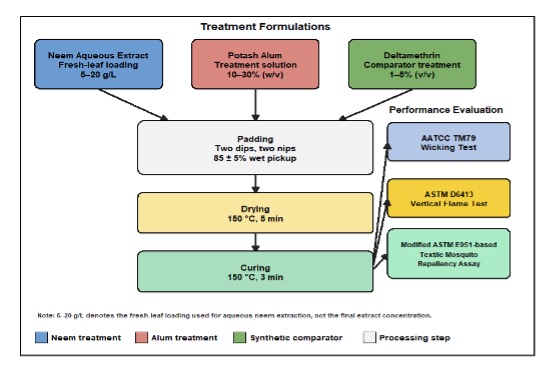
Schematic overview of neem, alum, and deltamethrin treatment formulations, pad-dry-cure processing, and evaluation of functional cotton fabrics.
Neem extract treatments
Cotton samples were immersed in aqueous neem preparations (N-1 to N-4) for 15 min before padding. The treated samples were subsequently dried at 150°C for 5 min and cured at 150°C for 3 min Table 1 and Figure 1, .
Table 1: Treatment codes and reported bath compositions.
| Code | Treatment bath | Reported application |
|---|---|---|
| Untreated | No finishing bath | Conditioned cotton comparator |
| N-1 | 5 g fresh leaves/L starting water | 15 min immersion; two dips/two nips |
| N-2 | 10 g fresh leaves/L starting water | 15 min immersion; two dips/two nips |
| N-3 | 15 g fresh leaves/L starting water | 15 min immersion; two dips/two nips |
| N-4 | 20 g fresh leaves/L starting water | 15 min immersion; two dips/two nips |
| NP-1 | 90 mL neem preparation + 10 mL alum stock | 15 min combined bath; two dips/two nips |
| NP-2 | 80 mL neem preparation + 20 mL alum stock | 15 min combined bath; two dips/two nips |
| NP-3 | 70 mL neem preparation + 30 mL alum stock | 15 min combined bath; two dips/two nips |
| D-1 | 2 mL deltamethrin formulation + 198 mL water | 30 min at approximately 30°C; two dips/two nips |
| D-2 | 4 mL deltamethrin formulation + 196 mL water | 30 min at approximately 30°C; two dips/two nips |
| D-3 | 10 mL deltamethrin formulation + 190 mL water | 30 min at approximately 30°C; two dips/two nips |
Note: Neem values are fresh-leaf loadings. Alum-stock concentration and deltamethrin active-ingredient concentration were not retained.
Potash alum and neem–alum treatments
Potash alum was incorporated as a mordant treatment to evaluate its influence on neem-treated fabrics. Neem–alum combinations were prepared using different neem extract-to-alum solution ratios and coded as NP-1, NP-2, and NP-3. The use of alum was intended to investigate possible improvement in retention of plant-derived compounds on cotton fabric through interactions between fiber hydroxyl groups, alum, and extract components Table 1 and Figure 1; .
Deltamethrin comparative treatments
Deltamethrin treatments were prepared using formulation volumes of 1%, 2%, and 5% (v/v). The treatment baths consisted of 2 mL, 4 mL, and 10 mL deltamethrin formulation mixed with distilled water to obtain final bath volumes of 200 mL and were designated as D-1, D-2, and D-3, respectively. The reported deltamethrin treatments represent formulation volume percentage rather than active ingredient concentration because the active ingredient content of the commercial formulation was not available Table 1 and Figure 1; .
Testing and characterization
Absorbency and wicking performance
Vertical liquid transport was evaluated according to AATCC Test Method 79. Fabric specimens were conditioned under standard atmospheric conditions before testing. Samples were suspended vertically with one end placed in contact with distilled water, and the vertical movement of water through the fabric structure was recorded as the wicking height. Surface absorption behavior was evaluated using the water drop absorption method described in AATCC TM79. A measured water droplet was placed onto the fabric surface, and the time required for complete absorption was recorded .
Flame resistance
Flame resistance of treated cotton fabrics was evaluated according to ASTM D6413 (Standard Test Method for Flame Resistance of Textiles, Vertical Method). Conditioned specimens were mounted vertically and exposed to a methane flame for 12 s. After removal of the flame source, after-flame time, afterglow time, and char length were recorded according to ASTM terminology. The observed residual char characteristics were documented after testing ; .
Mosquito repellency bioassay
Mosquito repellency was evaluated using a modified chamber-based assay adapted from ASTM E951 principles. Because ASTM E951 was originally developed for other exposure applications, the method was modified for evaluation of textile samples, and the experimental procedure is described as a laboratory screening assay . A glass chamber measuring 45 × 45 × 45 cm was maintained at 25 ± 2°C and 75 ± 5% relative humidity. Female Aedes aegypti mosquitoes were introduced into the chamber after a starvation period to stimulate host-seeking behavior. Treated and untreated cotton fabric specimens were suspended vertically inside the chamber, and mosquito activity was observed during the test period. The recorded parameters included mosquito landings and contact behavior on treated and untreated fabrics. Repellency percentage was calculated using the following equation (World ; :
Repellency %= C-T/C˟times100
Where; C = number of mosquito landings recorded on untreated control fabric, T = number of mosquito landings recorded on treated fabric.
Statistical analysis
The available dataset consisted of treatment-level observations obtained during the experimental screening. Complete specimen-level replication records and repeated experimental datasets were not available for retrospective analysis. Therefore, inferential statistical analyses, including analysis of variance (ANOVA), confidence intervals, and significance testing, were not performed. Results are presented descriptively, and comparisons among treatments are interpreted as preliminary observations under the tested conditions. The lack of replicate-level statistical analysis is acknowledged as a limitation of this study. Future investigations should include independent experimental replicates, randomized testing designs, and appropriate statistical validation to confirm treatment effects.
Results
The present study evaluated the functional performance of cotton fabrics treated with aqueous Azadirachta indica leaf extract, neem–alum formulations, and deltamethrin-based comparative treatments using the pad-dry-cure finishing approach. The evaluated parameters included mosquito repellency, moisture absorption/wicking behavior, and vertical flame characteristics. Since the available dataset represents treatment-level observations from a preliminary screening experiment, the results are presented descriptively to compare observed performance trends among different fabric treatments. The findings are discussed in relation to the potential influence of neem-derived phytochemicals, mordant incorporation, and synthetic pyrethroid treatment on the functional properties of cotton textiles.
Moisture management and surface wettability
The vertical wicking behavior of untreated and treated cotton fabrics was evaluated according to AATCC TM79 to determine the effect of different finishing formulations on moisture transport properties. The observed wicking heights varied among the treatment groups (Figure 2). Neem-only treated fabrics (N-1 to N-4), corresponding to fresh leaf loading levels of 5–20 g/L, showed a consistent wicking height of approximately 55 mm after the test period. The addition of potash alum to neem treatments resulted in lower observed wicking values. Neem–alum treated samples (NP-1, NP-2, and NP-3) exhibited wicking heights ranging from 20 to 30 mm, with NP-1 and NP-2 recording 20 mm and NP-3 recording 30 mm. Deltamethrin-treated fabrics showed higher wicking values compared with neem-based treatments. Samples D-2 and D-3 exhibited wicking heights of 80 mm and 88 mm, respectively, while the untreated cotton control recorded a wicking height of 75 mm. Overall, the finishing treatments produced different moisture transport responses, with neem-only treatments maintaining intermediate wicking behavior, neem–alum treatments showing reduced vertical water transport, and deltamethrin-treated samples showing higher observed wicking heights (Figure 2 and Table 2). The vertical wicking performance of treated cotton fabrics was evaluated according to AATCC TM79. The available retained observations demonstrated differences among neem-only, neem–alum, and deltamethrin treatments. The numerical values obtained from the retained measurement records are summarized in Table 2 and illustrated in Figure 2.
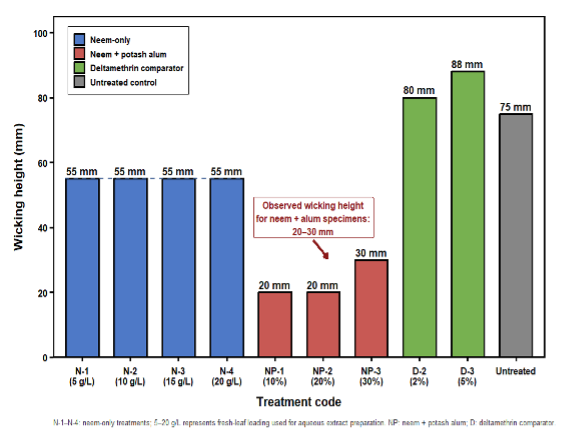
Vertical wicking height of untreated and treated cotton fabrics evaluated according to AATCC TM79. Neem-only treatments (N-1–N-4) maintained a wicking height of approximately 55 mm. Neem–potash alum treatments (NP-1–NP-3) showed wicking heights of 20–30 mm, whereas deltamethrin-treated fabrics (D-2 and D-3) exhibited higher values of 80 and 88 mm compared with the untreated control (75 mm). Note: N-1–N-4 represent fresh A. indica leaf loading levels used for aqueous extraction (5–20 g/L), not final extract concentrations.
Neem-only treatments (N-1 to N-3) maintained a vertical rise of 55 mm, indicating that increasing fresh-leaf loading within the tested range did not substantially modify cotton’s moisture transport behavior. The neem–alum treatments showed reduced vertical rise values (20–30 mm), suggesting that alum incorporation altered the surface interaction between the finishing compounds and cellulose fibers. In contrast, deltamethrin-treated samples exhibited higher retained wicking values (80–88 mm), indicating different interactions between the synthetic formulation and cotton substrate.
Table 2: Retained 60-s vertical strip-wicking observations
| Treatment | Vertical rise (mm) | Data basis |
|---|---|---|
| Untreated | NR | No retained numerical value |
| N-1 | 55 | Treatment-level observation |
| N-2 | 55 | Treatment-level observation |
| N-3 | 55 | Treatment-level observation |
| N-4 | NR | No retained numerical value |
| NP-1 | 20 | Treatment-level observation |
| NP-2 | 20 | Treatment-level observation |
| NP-3 | 30 | Treatment-level observation |
| D-1 | 80 | Treatment-level observation |
| D-2 | 80 | Treatment-level observation |
| D-3 | 88 | Treatment-level observation |
Note: NR, not retained in the measurement table. The available records did not contain independent specimen values for calculation of variability.
Thermal properties and flame behavior
The vertical flame behavior of untreated and treated cotton fabrics was evaluated according to ASTM D6413 by recording after-flame characteristics during different observation phases (initial, middle, and final). The recorded after-flame times varied among the treatment groups (Figure 3). Neem-only treated fabrics (N-1 to N-4) showed relatively short after-flame durations. Sample N-1 exhibited after-flame times of 2 s during the initial phase and 6 s during the final observation phase. N-2 and N-3 recorded initial after-flame values of 3 s followed by final values of 4 s, whereas N-4 showed values of 2 s initially and 3 s during the final phase. Neem–potash alum treatments (NP-1 to NP-3) showed after-flame values ranging from 1–3 s across the observation phases. NP-1 recorded an initial after-flame time of 1 s, followed by middle and final values of 2 and 3 s, respectively. Similar patterns were observed for NP-2 and NP-3, with final after-flame values of 3 s. Deltamethrin-treated fabrics demonstrated longer after-flame durations compared with neem-based treatments. D-2 showed an initial after-flame value of 1 s, followed by prolonged middle and final phase values of 15 and 16 s, respectively. D-3 exhibited a similar pattern, with initial, middle, and final after-flame values of 1, 2, and 16 s, respectively. Overall, neem-only and neem–alum treated fabrics showed shorter after-flame durations under the tested conditions, while deltamethrin-treated samples displayed longer after-flame periods during later observation phases (Figure 3).
Mosquito repellency performance of treated cotton fabrics
The mosquito landing behavior of Aedes aegypti in the presence of untreated and treated cotton fabrics was evaluated using the modified chamber-based textile bioassay. The number of mosquito landings recorded at different exposure intervals showed clear differences among the treatment groups (Figure 5). The untreated control fabric showed continuous mosquito attraction during the observation period, with approximately 25 landings recorded after 15 min and maintained until 60 min. Neem-only treatment at lower fresh-leaf loading (N-1, 5 g/L) reduced mosquito landings compared with the untreated control. The N-1 treatment showed 15 landings at 15 min, followed by a gradual decrease to 8 landings at 60 min. The higher neem fresh-leaf loading treatment (N-4, 20 g/L) showed fewer mosquito landings throughout the observation period. The number of landings increased to approximately 2 at 15 min and gradually declinedduring subsequent observations, reaching no recorded landings at 45- and 60-min. Neem–potash alum treatments (NP-1 and NP-2) showed no recorded mosquito landings during the 60-min observation period under the tested conditions. Similarly, the deltamethrin comparative treatment (D-2) showed no observed mosquito landings throughout the exposure period. Overall, the treated fabrics showed reduced mosquito landing behavior compared with untreated cotton, with neem-only treatments showing concentration-dependent differences and neem–alum and deltamethrin treatments showing no observed landings during the assay period (Figure 5).
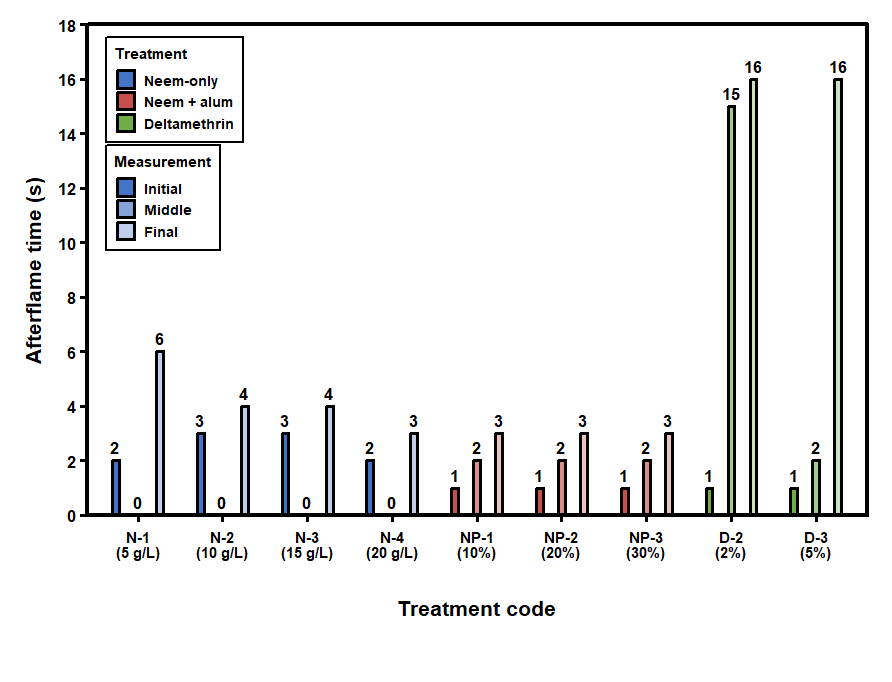
After-flame time characteristics of treated cotton fabrics evaluated using ASTM D6413 vertical flame testing. Neem-only treatments (N-1–N-4) and neem–potash alum treatments (NP-1–NP-3) exhibited short after-flame durations across observation phases, whereas deltamethrin treatments (D-2 and D-3) showed longer after-flame times during the middle and final phases. Observation phases represent initial, middle, and final flame behavior after exposure.
Table 3: Retained vertical-flame observation fields.
| Treatment | Initial (s) | Middle (s) | Final (s) | Total (s) | Residue |
|---|---|---|---|---|---|
| N-1 | 2 | 12 | 6 | NR | Soft |
| N-2 | 3 | 12 | 7 | NR | Soft |
| N-3 | 3 | 7 | 8 | NR | Soft |
| NP-1 | 3 | 15 | 4 | NR | Hard elastic |
| NP-2 | 2 | 15 | 7 | NR | Hard elastic |
| NP-3 | 1 | 15 | 8 | NR | Hard elastic |
| D-1 | 2 | NR | 16 | 18 | Hard elastic |
| D-2 | 4 | NR | 26 | 30 | Hard elastic |
| D-3 | 4 | NR | 12 | 16 | Hard elastic |
Note: NR, not recorded. These fields are reproduced as retained and are not relabeled as ASTM after flame, afterglow, or char length.
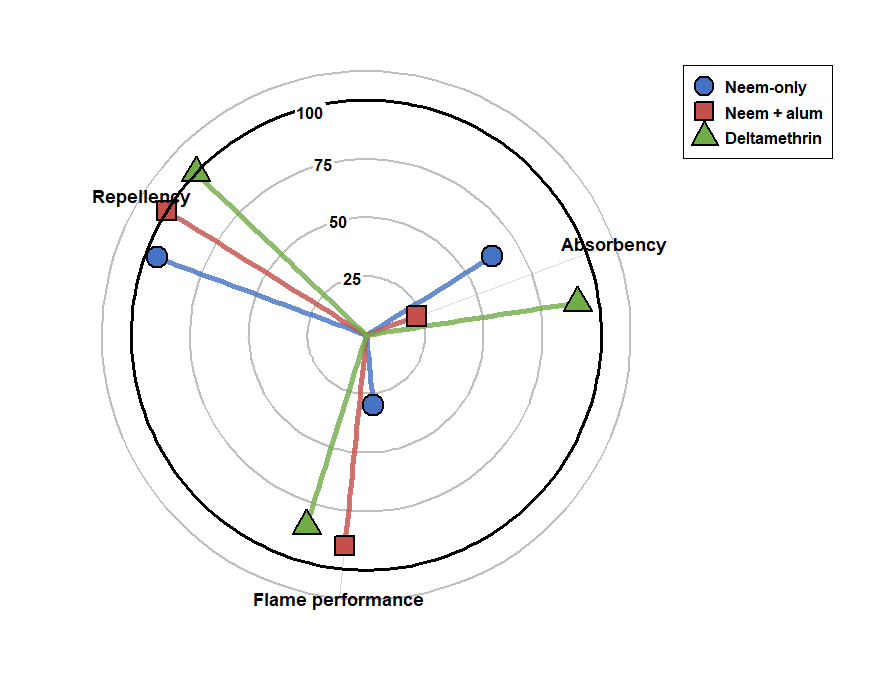
Comparative radar representation of functional properties of treated cotton fabrics. The profiles represent relative performance values for repellency, absorbency, and flame performance among neem-only, neem–potash alum, and deltamethrin-treated samples. Values are normalized for visualization and represent observed treatment responses.
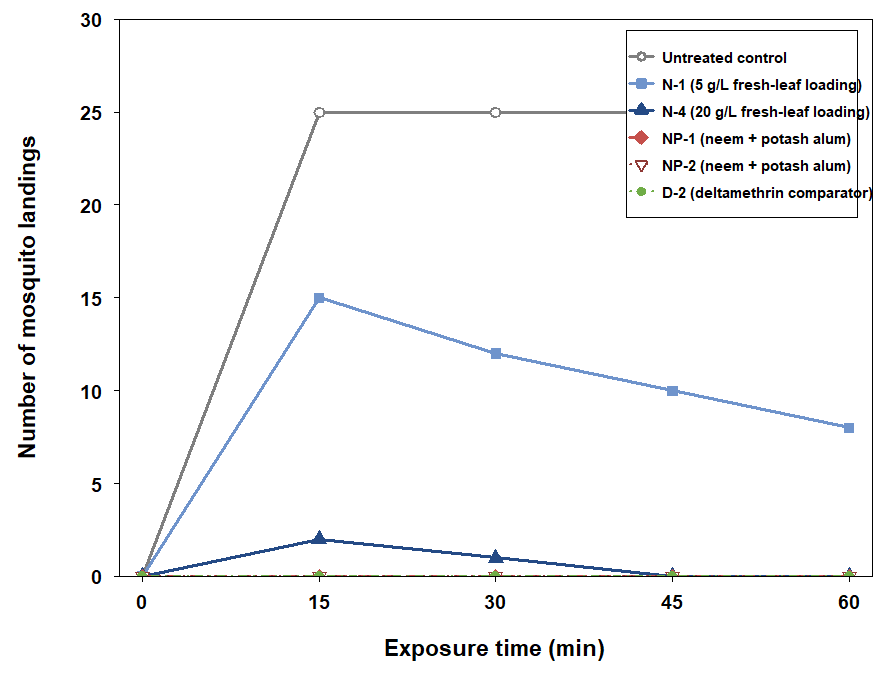
Time-course of mosquito landings on untreated and treated cotton fabrics during the modified chamber-based mosquito repellency assay. Untreated control fabric showed continuous mosquito attraction, whereas neem-treated fabrics (N-1 and N-4), neem–potash alum treatments (NP-1 and NP-2), and deltamethrin treatment (D-2) showed reduced or no observed mosquito landings during the 60-min observation period. Note: N-1 and N-4 represent fresh A. indica leaf loading levels used for aqueous extraction (5 and 20 g/L), not final concentrations of extracted compounds.
As shown in Table 3, neem-only treatments (N-1 to N-3) showed lower recorded flame observation values, with final observations ranging from 6 to 8 s. The neem–potash alum treatments (NP-1 to NP-3) demonstrated increased middle observation values (15 s) and hard elastic residue formation compared with neem-only fabrics. Deltamethrin-treated samples exhibited higher final and total recorded values, particularly D-2, which showed the highest total observation value (30 s).
Comparative functional performance of treated cotton fabrics
The comparative functional profiles of neem-only, neem–potash alum, and deltamethrin-treated cotton fabrics are presented in Figure 4. The radar chart summarizes the relative performance of the treatment groups based on observed repellency, absorbency, and flame-related characteristics. Neem-only treated fabrics showed a balanced profile with moderate repellency and higher moisture absorption characteristics compared with neem–alum treatments. Neem–potash alum-treated fabrics demonstrated higher observed repellency values while showing lower absorbency and higher flame performance values within the evaluated parameters. The deltamethrin comparative treatment exhibited the highest repellency response among the tested groups and higher absorbency values, while its flame performance profile differed from the neem-based treatments. The comparative representation highlights differences among natural and synthetic finishing approaches in relation to the measured textile performance parameters. However, these normalized values represent comparative visualization of experimental observations and do not indicate statistical differences among treatments.
Mosquito behavioral response in modified chamber
Mosquito behavioral response toward treated cotton fabrics was assessed using a modified chamber observation method. Due to the absence of replicated exposure counts and controlled landing-rate measurements, the available records were interpreted qualitatively rather than as quantitative repellency efficacy values. The recorded behavioral observations and corresponding interpretations are summarized in Table 4.
The untreated chamber showed baseline mosquito attraction, with approximately 20–25 mosquitoes landing within 15 min and continued activity throughout the observation period. Neem-only treatments demonstrated concentration-dependent
Table 4: Qualitative observations from the modified mosquito chamber.
| Treatment | Recorded observation | Interpretation |
|---|---|---|
| Untreated | Approximately 20-25 mosquitoes landed within 15 min; activity continued | Baseline attraction in this chamber |
| N-1 (5 g/L) | Mosquitoes landed and remained | No clear avoidance observed |
| N-2 (10 g/L) | Mosquitoes landed briefly but did not remain | Qualitative partial avoidance |
| N-3 (15 g/L) | Separate record unavailable | No treatment-specific inference |
| N-4 (20 g/L) | Mosquitoes approached and moved away without landing | Qualitative avoidance |
| NP-1 | No landing observed | No landing in the recorded observation |
| NP-2 | Avoidance observed | Avoidance in the recorded observation |
| NP-3 | Mosquitoes reported not to approach | Avoidance in the recorded observation |
| D-1 | No landing or sitting observed | No landing in the recorded observation |
| D-2 | No landing or sitting observed | No landing in the recorded observation |
| D-3 | No landing or sitting observed | No landing in the recorded observation |
Note: The chamber observations do not establish a validated repellency percentage or protection from biting.
behavioral changes. N-1 (5 g/L) showed no clear avoidance, whereas N-2 (10 g/L) showed brief landing behavior followed by departure. N-4 (20 g/L) showed qualitative avoidance, with mosquitoes approaching the treated area but moving away without landing. Neem–alum treatments showed reduced landing behavior during the recorded observations. NP-1 showed no landing, while NP-2 and NP-3 showed avoidance behavior. Deltamethrin-treated fabrics (D-1 to D-3) showed no landing or resting behavior during the observation period, suggesting reduced mosquito interaction under the recorded chamber conditions.
Discussion
Influence of treatments on moisture transport behavior of cotton fabrics
The moisture transport behavior of treated cotton fabrics was influenced by the type of finishing treatment applied. Cotton is naturally hydrophilic due to the abundance of hydroxyl groups in cellulose, which facilitate water absorption and capillary movement through the fiber structure ; . The retained vertical wicking observations showed differences among neem-only, neem–alum, and deltamethrin-treated fabrics, suggesting that the applied treatments modified the interaction between the cotton surface and moisture ; .
Neem-only treatments (N-1 to N-3) exhibited a retained vertical rise of 55 mm after 60 s, indicating that neem incorporation within the evaluated range did not substantially alter the moisture transport pathway of cotton . The similar values among neem treatments suggest that increasing neem loading did not produce a proportional change in capillary movement under the recorded conditions . This behavior may be associated with the presence of polar phytochemical components in neem extracts, which may interact with cellulose while maintaining the inherent moisture affinity of cotton. The neem–alum treatments showed lower retained wicking values (20–30 mm) compared with neem-only samples . The reduction in vertical moisture movement may be related to the interaction of alum-derived ions with cellulose hydroxyl groups and deposited plant-based compounds, which could modify surface accessibility and reduce capillary transport . Alum-based mordanting is known to influence fiber–compound interactions by improving fixation of natural compounds onto textile substrates, which may also affect surface wettability . In contrast, deltamethrin-treated fabrics showed higher retained vertical rise values (80–88 mm). This greater moisture movement may be related to differences in formulation chemistry and surface deposition compared with plant-based treatments ; . However, because only retained treatment-level observations were available without specimen replication, these differences should be considered comparative trends rather than statistically confirmed changes in moisture management performance .
Effect of finishing treatments on flame observation behavior
The flame response of treated cotton fabrics demonstrated variation among treatment groups; however, the available records represent retained observation fields rather than complete ASTM D6413 parameters . Therefore, the observed values provide comparative information regarding flame behavior but cannot be used to classify flame resistance according to standardized criteria ; ; . Neem-treated fabrics (N-1 to N-3) showed relatively similar flame observation patterns, with total recorded values ranging from 18 to 22 s . The absence of a consistent reduction with increasing neem loading suggests that the retained neem treatment alone produced limited modification of the observed flame response under the evaluated conditions . Although neem contains bioactive organic compounds, the available observations do not provide sufficient evidence to confirm flame-retardant performance . The incorporation of potash alum with neem (NP-1 to NP-3) altered the recorded flame behavior . These treatments showed increased middle observation values and produced a hard, elastic residue compared with neem-only fabrics ; . The formation of a more rigid residue may indicate enhanced thermal interaction between alum-containing compounds and the cotton substrate . Mineral salts and inorganic mordants can influence thermal decomposition pathways by promoting char formation or modifying residue structure; however, further controlled testing with complete flame parameters would be required to confirm such effects ; . Deltamethrin-treated fabrics exhibited higher recorded total observation values, particularly D-2, which showed the highest retained total value among the treatments ; . This difference may be related to the formulation components or surface characteristics of the synthetic treatment rather than improved flame performance . Because the retained records did not include independent specimen values, after-flame time, afterglow time, or char length, these observations should not be interpreted as evidence of flame retardancy ; . Overall, the flame observations demonstrate that treatment chemistry influenced the recorded thermal response of cotton fabrics . Nevertheless, complete ASTM D6413 testing with replicate specimens is required to establish meaningful flame resistance performance ; .
Influence of treatments on mosquito behavioral response
The modified chamber observations indicated differences in mosquito interaction with treated cotton fabrics . The untreated chamber demonstrated clear mosquito attraction, with approximately 20–25 mosquitoes landing within 15 min, providing a qualitative baseline for comparison ; . Treated samples generally showed reduced landing or approach behavior in several cases, although the observations were not designed to calculate repellency percentage or biting protection . Neem-treated fabrics showed concentration-related behavioral differences . The lowest neem concentration (N-1, 5 g/L) did not demonstrate clear avoidance, as mosquitoes landed and remained on the treated fabric. At higher concentrations, behavioral changes became more apparent. N-2 (10 g/L) showed brief landing followed by departure, while N-4 (20 g/L) showed approach without landing, suggesting possible concentration-dependent avoidance behavior ; . These effects may be associated with volatile and bioactive components present in neem, including compounds that can influence mosquito host-seeking behavior. Neem–alum treatments showed stronger qualitative avoidance responses than neem-only treatments . The absence of landing in NP-1 and avoidance behavior in NP-2 and NP-3 suggest that alum incorporation may have influenced retention or availability of neem-derived compounds on the fabric surface. Improved fixation of botanical compounds through mordant interaction may contribute to prolonged surface activity; however, this interpretation requires confirmation through chemical analysis and replicated bioassays . Deltamethrin-treated fabrics showed the strongest qualitative reduction in mosquito interaction, with no landing or resting behavior observed for D-1, D-2, and D-3 during the recorded observations ; . This behavior is consistent with the known insecticidal activity of synthetic pyrethroids, which can affect mosquito sensory and nervous system responses . Nevertheless, the present observations represent only a qualitative chamber assessment and cannot replace standardized mosquito repellency or bioefficacy testing ; . Collectively, the chamber observations suggest that treatment chemistry influenced mosquito behavioral responses, with neem-based treatments showing potential behavioral avoidance and deltamethrin treatments showing stronger recorded deterrent effects . Future studies should include replicated chamber trials, controlled mosquito numbers, landing frequency measurements, exposure duration, and statistical analysis to validate treatment efficacy ; .
Conclusion
This study evaluated the effects of neem-based, neem–potash alum, and deltamethrin treatments on cotton fabrics through retained observations of moisture transport behavior, flame response, and mosquito behavioral interaction. The results demonstrated that different finishing chemistries influenced the recorded performance characteristics of treated cotton fabrics. The retained wicking observations indicated that treatment type affected moisture movement through the cotton substrate. Neem-only treatments maintained similar vertical rise values, suggesting limited modification of cotton moisture transport behavior. Neem–alum treatments showed reduced wicking height, indicating possible changes in surface interaction and fiber–treatment bonding, whereas deltamethrin-treated fabrics exhibited higher recorded moisture movement under the evaluated conditions. The vertical flame observations showed differences among treatment groups; however, the available records represented retained observation fields rather than complete ASTM D6413 parameters. Neem and neem–alum treatments produced distinct flame response patterns and residue characteristics, while deltamethrin treatments showed higher recorded total observation values. These findings provide comparative information on treatment-related flame behavior but do not establish flame-retardant classification or standardized flame resistance performance. The modified mosquito chamber observations demonstrated qualitative differences in mosquito interaction with treated fabrics. Neem treatments showed concentration-related changes in mosquito approach and landing behavior, while neem–alum treatments exhibited greater qualitative avoidance in the recorded observations. Deltamethrin-treated fabrics showed the strongest reduction in observed landing and resting behavior. However, these observations should be considered preliminary because replicated bioassays and quantitative repellency measurements were not available.
Study Limitations and Recommendations
Study limitations
This study was limited by the availability of retained treatment-level observations without independent replicate measurements, which prevented statistical analysis and variability assessment. The wicking and flame results should therefore be interpreted as comparative trends rather than definitive performance values. The flame observations were reported as retained fields and could not be classified according to complete ASTM D6413 parameters. Similarly, mosquito chamber observations were qualitative and did not provide validated repellency percentages or protection efficacy.
Recommendations
Future studies should include replicated experiments, statistical analysis, and complete standardized testing procedures. Additional evaluation of flame properties, mosquito repellency, chemical retention, and washing durability is recommended to confirm the long-term performance and practical application potential of treated cotton fabrics.
Acknowledgements
The authors acknowledge the Department of Textile Engineering and Design, BUITEMS, Quetta, Pakistan, for providing laboratory facilities and technical support during this study. The authors also appreciate the assistance provided by laboratory staff during experimental activities. The authors sincerely thank the anonymous reviewers for their valuable comments and constructive suggestions, which helped improve the quality, clarity, and scientific presentation of this manuscript.
Novelty Statement
This study presents a comparative evaluation of multifunctional cotton fabric treatments using neem-based, neem potash alum, and deltamethrin formulations, integrating moisture transport behavior, flame observation characteristics, and mosquito behavioral response within a single textile finishing approach. The work provides preliminary insight into the potential of combining botanical and synthetic treatments to modify functional properties of cotton fabrics and highlights treatment-related differences in physical and biological responses. The study also transparently reports retained experimental observations where complete standardized datasets were unavailable, providing a basis for future replicated investigations of multifunctional protective textiles.
Author’s Contribution
Zahoor Islam Khan: Investigation, data curation, and original draft preparation. Ahmar Hussain Shah: Conceptualization, methodology, supervision, and manuscript review. Murad Ali: Data interpretation, manuscript review, and correspondence. Ghani Subhan: Literature synthesis, data interpretation, and manuscript revision. Nazia Shaheen: Validation, literature review, and manuscript editing. Shakir Ullah: Supervision, project administration, manuscript review and editing, and correspondence. All authors read and approved the final manuscript.
Funding
This research received no external funding. All experimental work was conducted using available institutional laboratory facilities and resources.
Data availability statement
The data supporting the findings of this study are available from the corresponding authors upon reasonable request. The available data include the observations and measurements reported in the manuscript and tables. Additional information may be provided by the corresponding authors where applicable.
Generative AI and AI-assisted technology statement
The authors declare that no generative AI and AI-assisted technology was used in the creation of this manuscript.
Conflict of interest
The authors have declared no conflict of interest.
References
- AATCC. (n.d). AATCC test method 79, absorbency of bleached textiles. American Association of Textile Chemists and Colorists.
- Abd El-Aty, A.M., M.M. El-Zawahry, and N. Fathy. 2018. Studying antibacterial effects of neem (Azadirachta indica) extract on silk. Int. J. Biol. Macromol., 120: 2116–2122.
- Abdel-Zaher, A.A., A.A. El-Ebissy and E.A. Al-Amoudy. 2019. Application of novel eco-friendly natural dye extracted from leaves of neem on silk fabric. Asian J. Phys. Chem. Sci., 5(4): 1–16. https://doi.org/10.9734/AJOPACS/2018/40614 [CrossRef]
- Adeel, S., N. Habib, S. Kiran, S.U. Khan, B.S. Butola and F. Mohammad. 2021. Ecofriendly application of coconut coir (Cocos nucifera) extract for silk dyeing. Environ. Sci. Pollut. Res., 28(40): 56789–56800. https://doi.org/10.1007/s11356-021-15669-6 [CrossRef]
- Anuar, N.I.S. and N.M. Yusof. 2016. Methods of imparting mosquito repellent agents and assessing mosquito repellency on textile. Fash. Text., 3(1): 1–14. https://doi.org/10.1186/s40691-016-0064-y [CrossRef]
- Asif, S., M. Nisar, S. Ullah and M. Naeem. 2025. Reviewing the impact of seed-borne mycoflora on mycotoxin accumulation: A threat to lentil genetic resources. Toxicon, 108290. https://doi.org/10.1016/j.toxicon.2025.108290 [CrossRef]
- ASTM International. (n.d). Standard test method for field testing topically applied mosquito repellents (Standard No. ASTM E951). ASTM International.
- ASTM International. (n.d). Standard test method for flame resistance of textiles (vertical flame method) (Standard No. ASTM D6413). ASTM International.
- Ballgar, N.S., R.H. Aladakatti, M. Ahmed and M.B. Hiremath. 2014. Hepatoprotective activity of the neem-based constituent azadirachtin-A in carbon tetrachloride intoxicated Wistar rats. Can. J. Physiol. Pharmacol., 92(4): 267–277. https://doi.org/10.1139/cjpp-2013-0449 [CrossRef]
- Barani, H. and F. Khazaei. 2024. Sustainable enhancement of wool fibers using Hymenocrater platystegius flower and natural dyes for improved insect-repellent and color properties. Results Chem., 12: 101885. https://doi.org/10.1016/j.rechem.2024.101885 [CrossRef]
- Barnard, D.R., U.R. Bernier, R.D. Xue and M. Debboun. 2007. Standard methods for testing mosquito repellents. In: Insect repellents: Principles, methods and uses. CRC Press, pp. 403–418. https://doi.org/10.1201/9781420006650.ch5 [CrossRef]
- Biswas, K., I. Chattopadhyay, R.K. Banerjee, and U. Bandyopadhyay. 2002. Biological activities and medicinal properties of neem (Azadirachta indica). Curr. Sci., 82(11): 1336–1345.
- Brown, M. and J. Carter. 2020. Health impacts of synthetic insecticide exposure in textile applications. J. Environ. Health, 82(6): 45–52.
- Chandrasekaran, K. and M. Senthilkumar. 2019. Synergic anti-bacterial effect of Curcuma aromatica Salisb and Ocimum tenuiflorum Linn herbal extract combinations on treated cotton knitted fabrics. Indian J. Fibre Text. Res., 44(3): 344–351.
- Chen-Hussey, V., R. Behrens, and J.G. Logan. 2014. Assessment of methods used to determine the safety of the topical insect repellent N, N-diethyl-m-toluamide (DEET). Parasit. Vectors, 7(1): 1–9. https://doi.org/10.1186/1756-3305-7-173 [CrossRef]
- Darwyn Health. 2024. Neem for mosquitoes: Natural insect repellent and anti-malarial properties. Darwyn Health. https://www.darwynhealth.com/.
- Debboun, M. and D. Strickman. 2013. Insect repellents and associated personal protection for a reduction in human disease. Med. Vet. Entomol., 27(1): 1–9. https://doi.org/10.1111/j.1365-2915.2012.01020.x [CrossRef]
- Devarayan, K. and B.S. Kim. 2015. Reversible and universal pH sensing cellulose nanofibers for health monitoring. Sens. Actuators B Chem., 209: 281–286. https://doi.org/10.1016/j.snb.2014.11.120 [CrossRef]
- Diptera Journal, 2022. Comparative analysis of synthetic and natural mosquito repellents on textile substrates. J. Mosq. Res., 12(3): 112–125. https://doi.org/10.22271/23487941.2022.v9.i3a.613 [CrossRef]
- Fernandes, S.R., L. Barreiros, R.F. Oliveira, A. Cruz, C. Prudêncio, A.I. Oliveira, C. Pinho, N. Santos and J. Morgado. 2024. Chemistry, bioactivities, extraction and analysis of azadirachtin: State-of-the-art. J. Chromatogr. A, 1703: 464118. https://doi.org/10.1016/j.fitote.2019.02.006 [CrossRef]
- Forim, M.R., M.F.G.F. da Silva, Q.B. Cass, J.B. Fernandes and P.C. Vieira. 2020. Simultaneous quantification of azadirachtin and 3-tigloylazadirachtol in Brazilian seeds of Azadirachta indica. J. Chromatogr. B, 1142: 122–131. https://doi.org/10.1039/c0ay00008f [CrossRef]
- Gao, W., J. Gao, J. Li, J. Gao, Z. Chen, Y. Li and J. Wang. 2021. Functionalization of cotton fabrics by modified graphene oxide/silica/neem oil microcapsules with sustainable mosquito repellency and antibacterial activities. J. Cleaner Prod., 319: 128783. https://doi.org/10.1016/j.jclepro.2021.128783 [CrossRef]
- Govindarajan, M., M. Rajeswary, S.L. Hoti and G. Benelli. 2016. Larvicidal potential of carvacrol and terpinen-4-ol from the essential oil of Mentha piperita (Lamiaceae) against Anopheles stephensi, Aedes aegypti and Culex quinquefasciatus. Res. Vet. Sci., 107: 156–163. https://doi.org/10.1016/j.rvsc.2015.11.011 [CrossRef]
- Govindarajan, M., R. Sivakumar, M. Rajeswary and K. Yogalakshmi. 2013. Chemical composition and larvicidal activity of essential oil from Ocimum basilicum (L.) against Culex tritaeniorhynchus, Aedes albopictus and Anopheles subpictus. Exp. Parasitol., 134(1): 7–11. https://doi.org/10.1016/j.exppara.2013.01.018 [CrossRef]
- Griffiths, C., 2020. An afternoon of dyeing. J. Weavers, Spinners Dyers, 275: 12–14.
- Haq, I.U., M. Farooq, M. Aqib, M.T. Khan, N.A. Khan, S. Ullah and N. Dilawar. 2026. Effect of dietary supplementation of various levels of Asparagus racemosus root powder on milk yield, composition, and blood biochemistry of Achai cross Jersey cows. Vet. Sci. Res. Rev., 12(2): 149–166. https://doi.org/10.17582/journal.vsrr/2026/12.2.149.166 [Full text] [CrossRef]
- Harlapur, S.F. and M.S. Harlapur. 2021. Enhancement of antibacterial activities of cotton fabric by the utilization of neem leaves extract as a dye. Mater. Today, Proc., 46: 11234–11239. https://doi.org/10.1016/j.matpr.2020.10.209 [CrossRef]
- Hemingway, J. and H. Ranson. 2000. Insecticide resistance in insect vectors of human disease. Annu. Rev. Entomol., 45(1): 371–391. https://doi.org/10.1146/annurev.ento.45.1.371 [CrossRef]
- IntechOpen. 2023. Colorimetric characterisation and process standardisation for application of natural dyes on textiles: A research review. IntechOpen. https://doi.org/10.5772/intechopen.113219 [CrossRef]
- Isman, M.B., 2006. Botanical insecticides, deterrents, and repellents in modern agriculture and an increasingly regulated world. Annu. Rev. Entomol., 51: 45–66. https://doi.org/10.1146/annurev.ento.51.110104.151146 [CrossRef]
- Jabar, J.M., K.M.M. Khan, A. Ahmad, M. Yameen, S. Ullah, M. Zuber and M. Adeel. 2024. Cashew (Anacardium occidentale L.) bark extract for eco-safe dyeing of mordanted cotton fabric: Colorimetric and biomedical functional properties. Sustain. Chem. Pharm., 39: 101587. https://doi.org/10.1016/j.scp.2024.101587 [CrossRef]
- Jahan, N. and S.N. Arju. 2022. A sustainable approach to study on antimicrobial and mosquito repellency properties of silk fabric dyed with neem (Azadirachta indica) leaf extracts. Sustainability, 14(22): 15071. https://doi.org/10.3390/su142215071 [CrossRef]
- Jiang, H., Y. Chen, W. Zhang and Q. Li. 2024. Enhancing flame retardant and wrinkle-resistant performances of silk fabric with bio-based Maillard reaction products. Arab. J. Chem., 17(2): 105497. https://doi.org/10.1016/j.arabjc.2023.105497 [CrossRef]
- Joshi, M. and S.W. Ali. 2009. Comprehensive approach on wet and dry finishing of natural neem oil treated cotton, polyester and their blend fabric. Indian J. Fibre Text. Res., 34(4): 349–355.
- Kamboj, A., M. Tamta, P. Kundal and B. Soun. 2018. Natural dyes for textiles: Sustainable alternatives to synthetic colorants. Text. Sci. Cloth. Technol., 12: 45–78.
- Khan, R., N. Rahid, W. Khan, A. Basit, N. Dilawar, T. Aziz and S. Ullah. 2026. Endophytic fungus SGR2 enhances Zea mays L. growth and biochemical resilience under salinity stress. Pak. J. Weed Sci. Res., 32(1): 14–39.
- Khan, R., N. Rahid, W. Khan, N. Shah, L. Shakir, H. Ghafoor, Abdullah and S. Ullah. 2025. Mitigation of salinity stress in maize (Zea mays L.) using the endophytic fungus GR7. Pak. J. Weed Sci. Res., 31(2): 151–166.
- Kushwaha, N., N. Arya, A. Grover, V. Vaishali, S. Savita and N. Kushwaha. 2023. Acacia nilotica bark as bio-mordant for antioxidant textile finishing. Ind. Crops Prod., 191: 115932. https://doi.org/10.33545/26646781.2025.v7.i3a.263 [CrossRef]
- Lalla, J.K., P.D. Hamrapurkar, and P.S. Patil. 2002. Azadirachtin as a biomarker compound in HPTLC assay of seed and seed oil of Azadirachta indica. J. Planar Chromatogr., 15(4): 277–281. https://doi.org/10.1556/JPC.16.2003.4.13 [CrossRef]
- Manan, F., I. Ahmad, F. Asad, L. Shakir and S. Ullah. 2025. Pharmacognosy, phytochemistry and antimicrobial potential of Pteris cretica L. collected from Dir Lower, Khyber Pakhtunkhwa. Pak. J. Weed Sci. Res., 31(2): 117–131.
- Mondal, M.I.H., A. Rahman, J. Saha, M. Islam and R. Sakif. 2023. Fabrication of textiles with neem extract and its antimicrobial application. Latest Trends Text. Fash. Des., 5(4): 1–8.
- Naz, F., M. Sohail, A. Noreen, S. Ali, H. Khan, L. Shakir, S. Ullah and S.A. Khan. 2026. Phytoclimatic patterns and seasonal variation in plant life forms and leaf-size spectra in District Dir Lower, Pakistan. Pak. J. Weed Sci. Res., 32(1): 40–54.
- Parmar, B.S. and C.M. Ketkar. 1996. Commercialisation of neem. In: Randhawa, N.S. and B.S. Parmar (Eds.), Neem research and development. Society of Pesticide Science, pp. 184–210.
- Rajendran, R., R. Radhai, C. Balakumar, H.A. Ahamed, C. Vigneswaran and K. Vaideki. 2012. Synthesis and characterization of neem chitosan nanocomposites for development of antimicrobial cotton textiles. J. Eng. Fibers Fabr., 7(1): https://doi.org/10.1177/155892501200700116 [CrossRef]
- Ramachandran, T., K. Rajendrakumar, and R. Rajendran. 2004. Antimicrobial textiles: An overview. IE(I) J.-TX, 84(2): 42–47.
- Ramya, K. and V. Maheshwari. 2014. Sustainable dyeing of silk with natural dye extracted from neem leaves. Asian Dyer, 11(6): 43–48. https://doi.org/10.1007/s12221-018-8239-3 [CrossRef]
- Rather, L.J., A. Ali, Q. Zhou, S.A. Ganie, K. Gong, Q.M. Rizwanul Haque, and Q. Li. 2020. Instrumental characterization of merino wool fibers dyed with Cinnamomum camphora waste/fallen leaves extract. J. Cleaner Prod., 273: 123021. https://doi.org/10.1016/j.jclepro.2020.123021 [CrossRef]
- Raut, S., Hashim, N., S. Abdullah, L.S. Hassan, S.R. Ghazali, and R. Jalil. 2012. Comparative study of extraction methods for neem (Azadirachta indica) leaf extracts. Int. J. Pharm. Sci., 4(3): 221–225. https://doi.org/10.1016/j.matpr.2020.11.726 [CrossRef]
- Ryan, S.J., C.A. Lippi, and F. Zermoglio. 2020. Shifting transmission limits for malaria vectors under climate change. Nat. Commun., 11(1): 1–9. https://doi.org/10.1186/s12936-020-03224-6 [CrossRef]
- Safapour, S., L.J. Rather, J. Moradnejad and S.S. Mir. 2023. Functional and colorful wool textiles through ecological dyeing with lemon balm bio-dyes and mordants. Fibers Polym., 24: 4357–4370. https://doi.org/10.1007/s12221-023-00397-0 [CrossRef]
- Saifullah, M., N. Dilawar, A. Rahman, A. Ahmad, M. Usman, S. Ullah, and M. Nawaz. 2025. Role of rhizofungus (Aspergillus terreus) in improving biochemical and physiological parameters affected by lead stress in Allium sativum L. Bio. Sci. Rev., 7(3): 71–80. https://doi.org/10.32350/bsr.73.06 [CrossRef]
- Salauddin, A.B.M., Shabbir, and F. Mohammad. 2018. Natural dyes for sustainable textiles. Text. Cloth. Sustain., 4(1): 1–20.
- Schmutterer, H., 1990. Properties and potential of natural pesticides from the neem tree, Azadirachta indica. Annu. Rev. Entomol., 35(1): 271–297. https://doi.org/10.1007/s13659-017-0119-9 [CrossRef]
- Sethi, P.D., 1997. Quantitative analysis of drugs in pharmaceutical formulations. 3rd ed. CBS Publishers.
- Shakir, L., M. Sohail, F. Naz, S. Ali, H. Khan, A. Noreen, G. Subhan, N. Dilawar and S. Ullah. 2025. Phytochemical profiling and antibacterial potential of Morus alba L. leaf extracts against Salmonella typhi. Front. Med. Health Res., 3(5): 1482–1492.
- Shakir, L., M. Sohail, F. Naz, S. Ali, H. Khan, A. Noreen, G. Subhan, N. Dilawar and S. Ullah. 2025. Phytochemical profiling and antibacterial potential of Morus alba L. leaf extracts against Salmonella typhi. Front. Med. Health Res., 3(5): 1482–1492.
- Shakir, L., S. Asif, A. Haq, S. Haq, K. Zada, M. Said, M. Sajid, S. Ullah and R. Ullah. 2023. Phytochemical detection and medicinal studies of selected plants from war-affected areas of Khyber Pakhtunkhwa, Pakistan. J. Agric. For. Res., 2(5).
- Silva, M.G., M.A.S.D. Barros, R.T.R. Almeida, E.J. Pilau, E. Pinto, G. Soares and J.G. Santos. 2018. Cleaner production of antimicrobial and anti-UV cotton materials through dyeing with eucalyptus leaves extract. J. Cleaner Prod., 199: 807–816. https://doi.org/10.1016/j.jclepro.2018.07.221 [CrossRef]
- Subhan, G., L. Shakir, S. Habib, U. Hassan, A. Begum, S. Rahman, M. Sohail, Falaknaz, W.H. Khan, R. Khan, N. Dilawar, and S. Ullah. 2025. Influence of extracts from Euphorbia helioscopia L. and Oxalis corniculata L. on the germination and seedling development of Triticum aestivum L. Asian J. Agric. Allied Sci., 8(1): 343–364. https://doi.org/10.56557/ajaas/2025/v8i177 [CrossRef]
- Subhan, G., L. Shakir, S. Habib, U. Hassan, A. Begum, S. Rahman, M. Sohail, Falaknaz, W.H. Khan, R. Khan, N. Dilawar, and S. Ullah. 2025. Influence of extracts from Euphorbia helioscopia L. and Oxalis corniculata L. on the germination and seedling development of Triticum aestivum L. Asian J. Agric. Allied Sci., 8(1): 343–364.
- Suhail, G., K. Ali, G. Rahim, S. Ali, S. Nasim, S. Rahman, G. Subhan, L. Shakir, M. Ali, and S. Ullah. 2026. Proximate composition and aflatoxin B1 contamination of Onosma hispida aerial parts powder from District Malakand, Pakistan. Pak. J. Weed Sci. Res., 32(3): 198–210.
- Sustainable Flame Retardancy, 2025. Metal salt mordants as flame retardant catalysts in cellulosic textiles. J. Fire Sci., 43(2): 112–128.
- Suwazono, Yang, R., J. Zhou, J. Hao, T. Zhang, Y. Jiang, W. Liu and Y. Wang. 2025. Olfactory binding proteins: A review across the Insecta. Front. Zool., 22(1): 1–20. https://doi.org/10.1186/s12983-025-00584-0 [CrossRef]
- Tawiah, B., S. Ullah, Z. Cheng, M.Z. Rahman, Y. Ming, D. Chen, C.K. Kundu. 2025. Microporous transition metal phosphide flame retardant toughened PA6 composites with excellent thermal conductivity and ferroelectric response. Compos. Part B: Eng., 300: 112502. https://doi.org/10.1016/j.compositesb.2025.112502 [CrossRef]
- Tegegne, W., A. Haile, Y. Zeleke, Y. Temesgen, H. Bantie and S. Biyable. 2024. Natural dyeing and antibacterial finishing of cotton fabric with extracts from Justicia schimperiana leaf extract. Int. J. Sustain. Eng., 17(1): 52–61. https://doi.org/10.1080/19397038.2023.2301702 [CrossRef]
- Thilagavathi, G. and S.K. Bala. 2007. Microencapsulation of herbal extracts for microbial resistance in healthcare textiles. Indian J. Fibre Text. Res., 32(3): 351–354.
- Ullah, S., I. Ullah, R. Naz, M. Sohil, M. Ihsan and F. Abasi. 2019. Phytochemical screening and chromatographic separation of bioactive compounds from the roots of Berberis lycium. J. Biotechnol. Bioinform. Res., 1(1). https://doi.org/10.47363/JBBR/2019(1)101 [CrossRef]
- Ullah, S., L. Shakir and R. Ullah. 2023. Morphological and phytochemical study of Cirsium arvense from District Mardan, Pakistan. J. Bioinform. Biotechnol. Res., 1(1): 1–7. https://doi.org/10.61440/JBBR.2023.v1.01 [CrossRef]
- Ullah, S., L. Shakir, M. Sohail, I. Hussain, S. Ali, G. Subhan, N. Dilawar and R. Khan. 2025a. Assessment of phytochemicals and biological activities: Antipyretic and antifungal effects of Olea ferruginea Royle. Front. Med. Health Res., 3(6).
- Ullah, S., L. Shakir, M. Sohail, A. Noreen and L. Aziz. 2025b. Control of cotton leafworm on Solanum nigrum L. in District Swat, Pakistan, under semi-field conditions. Pak. J. Weed Sci. Res., 31(1): 56–65.
- Ullah, S., L. Shakir, S. Ali, G. Subhan, M. Sohail, I. Khan and S. Ali. 2025c. Nutritional analysis, phytochemical screening and antifungal study of Equisetum arvense L. from Village Kharkay, Pak–Afghan border, District Dir Lower, Pakistan. Kashmir J. Sci., 4(1). https://doi.org/10.63147/jey5re67 [CrossRef]
- Ullah, S., L. Shakir, R. Khan, N. Rahid, Falaknaz, M. Sohail and S. Ali. 2025d. Vaccine effectiveness against lumpy skin disease in District Dir Lower, Khyber Pakhtunkhwa, Pakistan. Vet. Sci. Res. Rev., 11(2): 223–238. https://doi.org/10.17582/journal.vsrr/2025/11.2.223.238 [Full text] [CrossRef]
- Ullah, S., M. Sohail, K. Niaz, S. Khan and M. Khattak. 2018. Phytochemistry and antibacterial activity of Convolvulus arvensis L. against Escherichia coli. J. Chem. Biol. Phys. Sci., 8(4). https://doi.org/10.24214/jcbps.B.8.4.89204 [CrossRef]
- United Nations, 2015. The 2030 agenda for sustainable development. United Nations.
- Vaideki, K., S. Jayakumar, R. Rajendran, and G. Thilagavathi. 2008. Investigation on the effect of RF air plasma and neem leaf extract treatment on the surface modification and antimicrobial activity of cotton fabric. Appl. Surf. Sci., 254(8): 2472–2478. https://doi.org/10.1016/j.apsusc.2007.09.066 [CrossRef]
- Vigo, T.L., 1983. Protection of textiles from biological attack. In: Handbook of Fiber Science and Technology, 2: 367–426.
- Vundać, V.B., Bilušić Vundać, V., Ž. Maleš, M. Plazibat, P. Golja and B. Cetina-Čižmek. 2005. HPTLC determination of flavonoids and phenolic acids in Stachys taxa. J. Planar Chromatogr., 18: 269–273. https://doi.org/10.1556/JPC.18.2005.4.3 [CrossRef]
- Wang, X., Guo, H. Zhao, D. Zhang, G. Hong, X., Wang, X., Hou and F. Yi. 2023. Optimization of melanoidin microcapsules from Lycium barbarum residue in wool fabric dyeing. J. Nat. Fibers, 20: 1–15. https://doi.org/10.1080/15440478.2022.2156021 [CrossRef]
- World Health Organization (WHO), 2023. World malaria report 2023. Geneva, Switzerland: World Health Organization. https://www.who.int/publications/i/item/9789240086173
- Yadav, S., N.M. Rose, S. Devi and A. Kumar. 2020. Development of antibacterial finish for cotton with neem leaf extract and assessment of wash durability. J. Cotton Res. Dev., 34(1): 158–166.
- Zhou, Q., L.J. Rather, A. Ali, W. Wang, Y. Zhang, Q.M.R. Haque and Q. Li. 2020. Environmentally friendly bioactive finishing of wool textiles using the tannin-rich extracts of Chinese tallow (Sapium sebiferum L.) waste/fallen leaves. Dyes Pigments, 176: 108230. https://doi.org/10.1016/j.dyepig.2020.108230 [CrossRef]

Services
Article usage statistics
Loading…
Related articles
- Tick Repellent and Acaricidal Effect of Neem (Azadirachta indica) Leaf Extract Alone and in Combination with Garlic (Allium sativum) in CattlePunjab University Journal of Zoology · 2026
- Comparative Efficacy of Different Plant Extracts to Manage the Cotton Leaf Curl Virus Disease and its Vector (Bemisia tabaci L.)Pakistan Journal of Agricultural Research · 2020
- Response of Azadirachta indica against Bemisia tabaci Gennadius (Homoptera: Aleyrodidae) and Amrasca biguttula Ishida (Homoptera: Cicadellidae) on Cotton CultivarsPakistan Journal of Zoology · 2017
- Effect of Leaf Extracts of some Indigenous Plants on Settling and Oviposition Responses of Peach Fruit Fly, Bactrocera zonata (Diptera: Tephritidae)Pakistan Journal of Zoology · 2017
- Effect of Antimicrobial Finish on Mechanical Property of Cotton FabricJournal of Innovative Sciences · 2022
- The Comparative Toxicity of some Insecticides and Plant Extracts against Cotton Mealy Bug (Phenacocccus solenopsis)Pakistan Journal of Agricultural Research · 2020