
Extensive research has been done on Tylosin, a common veterinary antibiotic in use since the 1960s. This work proposes a bibliometric analysis of tylosin research, its evolution, trends, relevant contributors, topics of highly cited works, current and emerging themes, and international cooperation. Systematic bibliometric analysis was carried out using the Scopus database for literature published between 1960 and 2025. Data analysis was performed using the Bibliometrix R package and VOSviewer. Bibliometric analysis of 899 articles reveals that research on tylosin has high impact and sustained annual yield. Most cited articles are concentrated on the topics dealing with the environmental behavior of tylosin such as sorption on soils and manures, mobility, interaction with emerging contaminants (e.g., microplastics), and degradation and remediation techniques (mainly photocatalysis and oxidation-based technologies). The thematic and temporal analysis indicates a change in the focus of the early studies from antibiotic production, Streptomyces fradiae characterization, and veterinary pharmacology, to food safety, antimicrobial resistance, persistence in the environment, novel materials sorption and ecological risk. China and the United States lead global production of articles. The case study of tylosin shows a shift in research priorities from developing a pharmaceutical for veterinary applications to broader concerns about its environmental impact. It is essential to boost international and cross-sector collaboration between academia and the regulatory sector for better animal welfare without harming the environment.
Research Article · Volume 15, Issue 1, Pages 09–20, 14 November 2026 · Open Access
A Bibliometric Perspective on Tylosin Research: Scientific Development and Emerging Trends Over Six Decades
, , , ,
Affiliations & Notes ⌄
- 1Department of Biomedical Sciences, College of Veterinary Medicine, King Faisal University, 31982 Al-Ahsa, Saudi Arabia
- 2Office of Research Planning, University Research Administrator, Gifu Pharmaceutical University, 1-25-4 Daigaku-nishi, Gifu 501-1196, Japan
- 3Professor Emeritus, Gifu University, 1-1 Yanagido, Gifu 501-1193, Japan
- 4e-NA Biotec Inc., OKB Gifu University Plaza 101, 1-1 Yanagido, Gifu 501-1112, Japan
- 5Delta University for Science and Technology, Faculty of Medicine, Gamasa 11152, Egypt
- 6Department of Veterinary Public Health, College of Veterinary Medicine, King Faisal University, 31982 Al-Ahsa, Saudi Arabia
- *Correspondence | Mahmoud Kandeel; Email: mkandeel@kfu.edu.sa
Article Info ⌄
- Journal:
- Journal of Animal Health and Production
- Submitted Date:
- 10 February 2026
- Accepted Date:
- 9 September 2026
- Published Date:
- 14 November 2026

Abstract
Introduction
Tylosin is a macrolide antibiotic that is naturally produced by Streptomyces fradiae. It has been widely used in veterinary medicine ; . Tylosin is used primarily for the treatment of bacterial infections in livestock and poultry . To date, it remains one of the most commonly used veterinary antibiotics in the world, especially in beef cattle and swine production and poultry systems ; ; . Its primary applications include treatment of respiratory diseases , and control of enteric diseases e.g., swine dysentery .
In addition to its therapeutic applications, tylosin was also used as a growth promoter in livestock animals, although some regulatory bodies began to impose restrictions on this practice in the last decades of the 20th century, related to environmental pollution and potential for emergence of drug resistance ; . The application of tylosin as a veterinary antibiotic has generated considerable interest in the scientific community through interdisciplinary approaches. From a veterinary medicine perspective, researchers have extensively studied the pharmacokinetics, therapeutic applications, safety and dosage protocols for a wide variety of pathogens and animal species ; ; . From an environmental perspective, the fate and transport of tylosin residues in soil, water and manure-amended agricultural systems have been addressed, considering that a large proportion of the antibiotics administered to livestock is excreted into the environment with little or no metabolic alterations ; . From a food safety perspective, researchers have developed analytical methodologies for the detection and quantitation of tylosin residues in animal-derived foods such as meat, milk and honey, and adherence to maximum residue limits defined in regulations is controlled to ensure consumer safety .
Tylosin has the same binding site and mode of action as the human macrolides, binding to the 50S ribosomal subunit and inhibiting bacterial protein synthesis via interaction with 23S rRNA . Tylosin resistance can be mediated by methylation of the A2058, which affects the binding pocket of clinically important macrolides . Application of tylosin could therefore lead to selection of cross-resistance, resulting in reduced sensitivity to both tylosin and other macrolides. The common ribosomal binding site for tylosin and macrolides used in human medicine provides a clear molecular mechanism to explain cross-resistance due to the application of veterinary tylosin. This One Health context warrants further investigation.
Macrolides contain a macrolide lactone ring with 12-, 14-, 15-, or 16-membered rings, with different amino and neutral sugars and side-chain substitutions. These variations influence ribosome interactions, membrane permeability, pharmacokinetics, and susceptibility to various resistance mechanisms ; . Azithromycin, for example, is a 15-membered azalide derived from 14-membered erythromycin but has an additional nitrogen in the macrolide ring . Several veterinary macrolides, such as tylosin, spiramycin, and midecamycin, are 16-membered with different substitutions . These structural peculiarities might account for binding differences that result in different resistance patterns to certain macrolide drugs . A recent study, however, showed that the ring structure of macrolides affects certain resistance determinants . In Salmonella, for example, certain resistance determinants conferred different resistance to 14-, 15-, and 16-membered macrolides. 23S rRNA mutations in Campylobacter resulted in significantly elevated MICs to all macrolides . Therefore, macrolides are cross-resistant to one another to some extent, and a One Health perspective on resistance selection and spread due to macrolide use is a major concern. The concern is that using a distinct class of macrolides in food-producing animals might select for resistance genes that are used in human macrolides.
However, no bibliometric analysis has been performed to date to provide a systematic overview of the research trends on tylosin based on the vast pool of available literature. Bibliometric analysis is a quantitative research method used to examine publication and citation patterns, collaboration networks, and thematic trends and evolution across scientific disciplines . It provides valuable insights into knowledge construction and identifies the most influential factors, emerging research areas, and gaps in a particular research domain that require further exploration.
This study aimed to: (i) assess annual publication trends and leading journals; (ii) identify productive authors and institutions; (iii) determine and analyze the most highly cited studies; (iv) examine global authorship and international collaboration; (v) trace major research trends over time; (vi) map relationships among countries, institutions, sources, and topics; (vii) classify core, niche, and emerging themes; and (viii) evaluate thematic clusters and their evolution. For this purpose, we retrieved article data from Scopus, a multidisciplinary database with broad coverage, high-quality indexing, and comprehensive citation reporting, making it one of the most appropriate bibliographic databases for bibliometric studies.
Materials and Methods
Data source and search strategy
The bibliometric analysis of research on tylosin was undertaken using the Scopus database. It was searched to cover all publications on the subject from inception till August 2025. Only English-language articles were included, and the dataset was restricted to research articles to ensure methodological coherence. The search query included (Title (tylosin) and (Limit-To (Language,”English”)) AND (Limit-To (Doctype,”ar”))). Scopus was selected as the sole data source because of its broad multidisciplinary coverage, standardized citation metadata, and compatibility with bibliometric analysis tools, ensuring a consistent dataset without cross-database duplication.
Data extraction
Bibliometric metadata such as title, authors, corresponding author’s institutional address, country, year of publication, journal name, citation count, keywords, and references were extracted. At the author level, information regarding the number of publications, institutions, co-authors, etc., was systematically obtained for the analysis of productivity and collaboration.
Bibliometric indicators
To facilitate a comprehensive analysis, primary bibliometric parameters were computed, such as the annual research output, mean document age, mean citation per article, co-authorship rate and international collaboration. Publications were classified as single-country publications (SCP) and multi-country publications (MCP) to capture global collaborative effort. The total number of publications at the author-level, fractional contribution, and weighted metrics were generated.
Thematic and trend analysis
Keyword analysis was performed to identify the centrality and density values of the motor, niche, basic, and rising/declining research topics. Trend analysis recognized the sequence of top topics that appeared over time, such as pharmacokinetics, antimicrobial resistance, environmental fate and behavior, and analytical methods. Journals, institutions, and countries were studied to evaluate comparative productivity and collaboration.
Analytical tools and visualization
Bibliometric analysis and network visualization were performed through the Bibliometrix version 5.4.1 in R package and VOSviewer(version 1.6.20), respectively ; .
Results
The bibliometric dataset encompassed 899 tylosin-related articles published between 1960 and 2025, derived from 389 distinct sources, with an annual growth rate of 4.87%. The 2025 records covered the range January–August at the time of search, which was included in the annual growth-rate calculation. The literature exhibited a document average age of 21.5 years and a mean of 23.85 citations per article (Table 1).
Table 1: Summary characteristics of the research articles on tylosin published from 1960 to 2025.
| Description | Results |
| Timespan | 1960:2025 |
| Sources (Journals, Books, etc) | 389 |
| Documents | 899 |
| Annual Growth Rate % | 4.87 |
| Document Average Age | 21.5 |
| Average citations per doc | 23.85 |
| References | 21620 |
| Keywords Plus (ID) | 5653 |
| Author's Keywords (DE) | 1465 |
| Authors | 2867 |
| Co-Authors per Doc | 4.7 |
| International co-authorships % | 13.46 |
Annual scientific production and leading journals
The scientific trajectory of tylosin-related research has been marked by a stable record over the last 65 years, starting with one publication in 1960 and slowly gaining pace through the years. A relatively low number in the 1960s and 1970s; a higher pace was observed during the 1980s and 1990s. However, from the end of the 1990s and the beginning of the 2000s, the number of publications per year surpassed 20. The last years marked surge, with 2024 having 38 publications and 2022–2023 with 33–36 articles each (Figure 1).
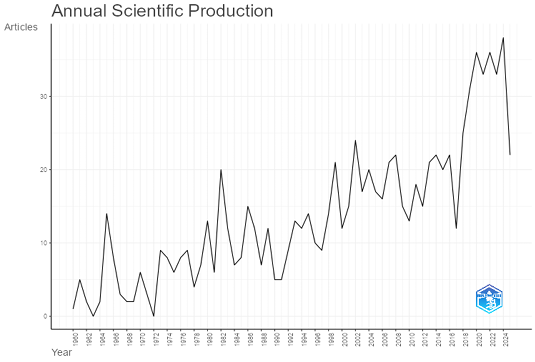
Annual scientific production of the research articles on tylosin published from 1960 to 2025.
Author productivity and affiliation
The top author of the publications is Cundliffe with 24 publications. Currently active researchers from China are Wang Y (19 articles), Guo X (18), and Li Y (16), who are major players among others (Figure 2).
Kansas State University has the highest volume of output at 86 publications. The other key institutions in China are Northeast Agricultural University (66 publications), South China Agricultural University (65 publications) and Huazhong Agricultural University (46 publications). University of Leicester (51 publications) and Northwest A&F University (31 publications) (Figure 3).
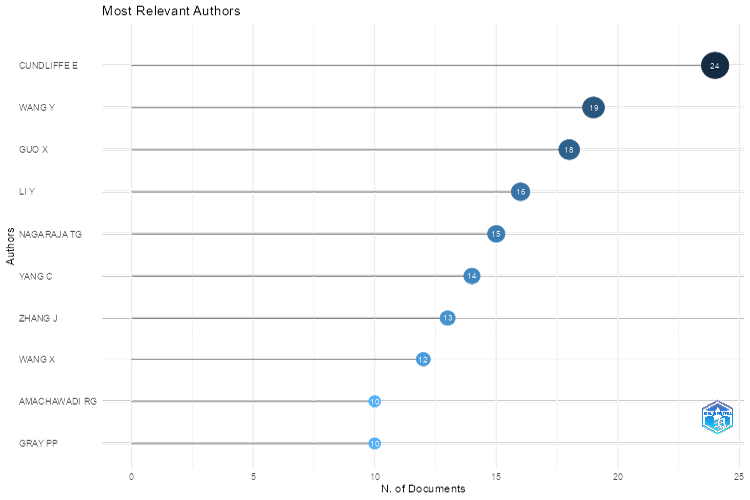
Most productive authors in tylosin research ranked by the number of published articles.
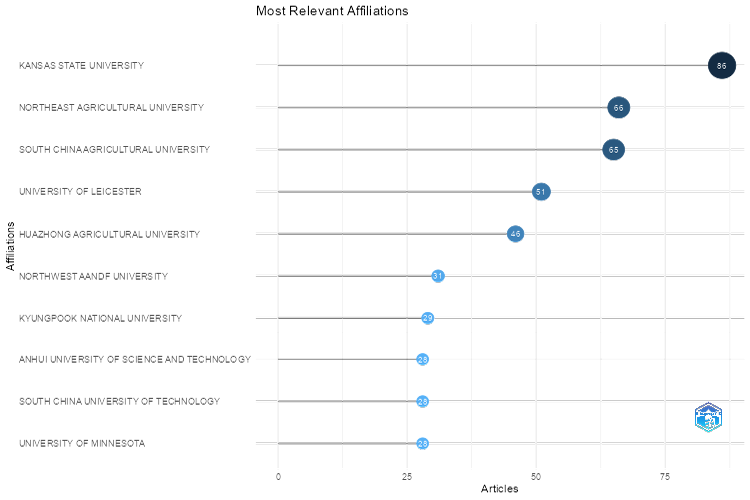
Leading institutional affiliations in tylosin research ranked by publication frequency.
The most highly cited tylosin research
Rabølle and Spliid (2000), with 401 total citations, tested tylosin’s sorption and mobility in soil . Guo et al. (2018), with 378 citations, examined tylosin sorption on microplastics, addressing emerging pollutant interactions . Keatinge-Clay (2007) explained that ketoreductase domains control chirality in polyketide synthesis . De Liguoro et al. (2003, 272 citations) evaluated tylosin transfer from intensive calf farming to manure and soil . Dong et al. (2018, 265 citations) synthesized g‑C₃N₄ via a burning explosion method and the photocatalytic degradation of tylosin . Kim et al. (2012, 216 citations) showed that tylosin as a growth promoter caused microbial population shifts in swine gut microbiomes . Ter Laak (2006, 210 citations) investigated the effect of pH and ionic strength on soil sorption of tylosin (ter . Loke et al. (2002, 199 citations) characterized tylosin distribution coefficient in manure . Finally, Aust et al. (2008, 191 citations) [] studied tylosin distribution in Canadian feedlot manure and soil (Table 2).
Global authorship patterns and international collaboration
The United States has the highest publication frequency, followed by China. These two countries dominate in research production. Japan is third, followed by the United Kingdom (Figure 5).
For corresponding authors’ countries, China leads the list with 140 contributions, including 121 as SCP and 19 MCP. The USA has 126 contributions, including 112 SCP and 14 MCP. Other significant contributors include Korea (21), the United Kingdom (21), and Canada (20) (Figure 5).
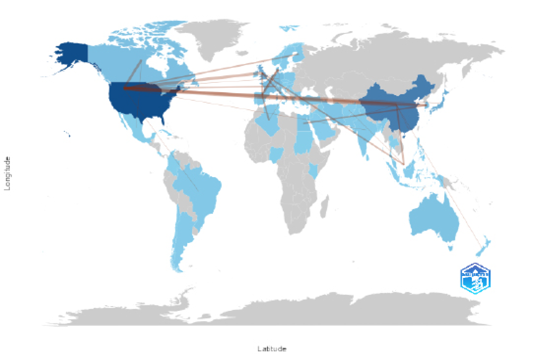
ranks countries according to their frequency across the affiliations of all co-authors, whereas Figure 5 ranks countries based exclusively on the corresponding author’s affiliation and distinguishes between single-country (SCP) and multiple-country publications (MCP). Consequently, the rankings differ because they represent different authorship units and counting methods. The revealed collaboration map shows partnerships between the economic-geographic axes: USA–China (11 collaborations), USA–United Kingdom (7 collaborations), and USA–Korea (8 collaborations) (Figure 4).
Trend topics
The early period (1996-2002) was characterized by a microbiology focus. Characterization of Streptomyces fradiae (28 papers, median year of appearance 1998) and optimization of tylosin production (9 papers) were the most important topics. The next period (2002-2010) showed enrichment of research themes by pharmacokinetics
Table 2: The most highly cited tylosin-related articles ranked by total citations, with their publication details, DOI, annual citation rate, and normalized citation score (TC, total citations). Normalized TC was calculated by dividing the total citations received by each article by the mean total citations of all articles published in the same year.
| Paper | DOI | Total citations | TC per year | Normalized TC |
| RABØLLE M, 2000, CHEMOSPHERE | 10.1016/S0045-6535(99)00442-7 | 401 | 15.42307692 | 4.945529291 |
| GUO X, 2018, CHEMOSPHERE | 10.1016/j.chemosphere.2018.06.100 | 378 | 47.25 | 7.411764706 |
| KEATINGE-CLAY AT, 2007, CHEM BIOL | 10.1016/j.chembiol.2007.07.009 | 281 | 14.78947368 | 7.21393643 |
| DE LIGUORO M, 2003, CHEMOSPHERE | 10.1016/S0045-6535(03)00284-4 | 272 | 11.82608696 | 5.296678121 |
| DONG H, 2018, APPL CATAL B ENVIRON | 10.1016/j.apcatb.2018.02.044 | 265 | 33.125 | 5.196078431 |
| KIM HB, 2012, PROC NATL ACAD SCI U S A | 10.1073/pnas.1205147109 | 216 | 15.42857143 | 5.364238411 |
| TER LAAK TL, 2006, ENVIRON TOXICOL CHEM | 10.1897/05-232R.1 | 210 | 10.5 | 4.397905759 |
| LOKE M-L, 2002, CHEMOSPHERE | 10.1016/S0045-6535(02)00078-4 | 199 | 8.291666667 | 5.521387283 |
| AUST M-O, 2008, ENVIRON POLLUT | 10.1016/j.envpol.2008.03.011 | 191 | 10.61111111 | 5.70923913 |
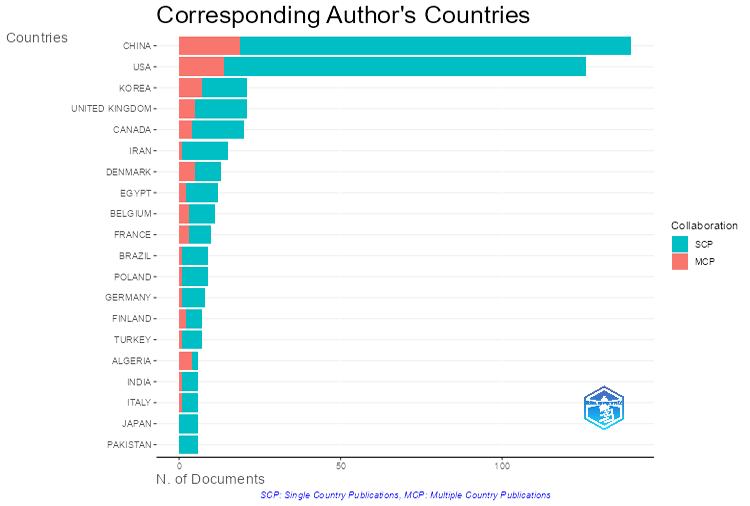
Countries of corresponding authors ranked by research output and divided into single-country publications (SCP) and multiple-country publications (MCP) to demonstrate national productivity and international collaboration.
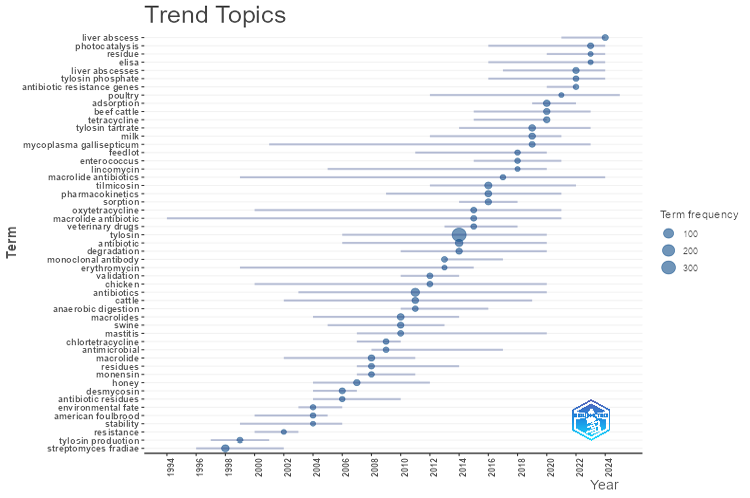
Temporal evolution of major research topics in the tylosin literature.
and environmental factors, as well as the growing importance of some research topics such as macrolide (14 papers), methods for the detection of drug residues in food matrices, such as honey (13 papers, median year of appearance 2007), and evaluation of drug stability in different conditions. The most recent third period (2014-2024) is characterized by a clear reorientation of research to environmental degradation and resistance issues. It concerns first and foremost the drug itself (total number of papers on tylosin 323, median year of appearance 2014). As for the latter, it concerns drug degradation (12 papers, median year of appearance 2014), adsorption (16 papers, median year of appearance 2020), photocatalytic decomposition (9 papers, median year of appearance 2023), antibiotic resistance genes (6 papers, median year of appearance 2021) (Figure 6).
Relationship among countries, institutions, sources, and research topics
The co-occurrence analysis of tylosin data showed the interconnectedness of countries, institutions, and research themes. China was the dominant country, followed by the USA. The leading institutions were Northeast Agricultural University, Kansas State University, and Huazhong Agricultural University. The research focus of tylosin as an emergent term was further explored and expanded into the fields of veterinary medicine (liver abscesses, tilmicosin), microbiology (Streptomyces fradiae, antimicrobial resistance), livestock industry (swine, cattle) and pharmacology (pharmacokinetics, residues). In terms of the publication patterns, the prominent journals were identified, such as Journal of Animal Science, Chemosphere, and Applied Animal Science. Keywords provided crucial insights into the prominent research themes in the tylosin domain, including environmental issues (degradation, sorption, adsorption), food safety (residues, honey, milk), and therapeutic uses, confirming that the tylosin research is highly interdisciplinary and involves well-established collaborations among institutions (Figure 7).
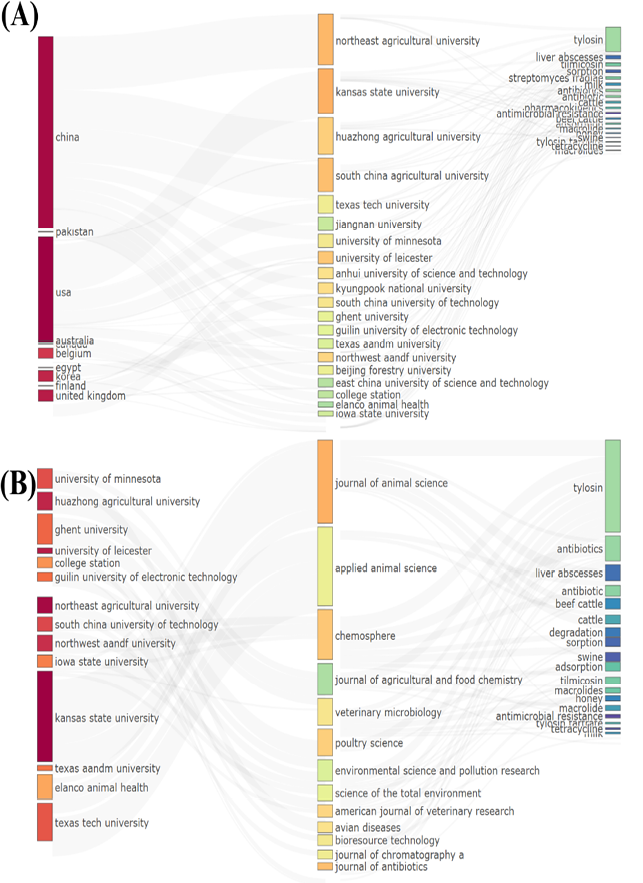
Three-field relationship among countries, institutions, publication sources, and research topics.
Core, niche, and emerging themes
The thematic map organizes the tylosin research themes based on development and centrality. The motor themes (top right), such as macrolides, swine, and antibiotic resistance, are the most developed and central themes in the research and are the main topics in the field to which the others are linked. The basic themes (bottom right) as liver abscesses, cattle, pharmacokinetics, and Streptomyces fradiae are connected to the basic themes and are relevant, but less developed. The niche themes (top left), such as copper biochar, nano-hydroxyapatite, and photocatalytic applications, correspond to the most developed and specialized research themes but are found in a peripheral position. Finally, the emerging or declining themes (bottom left) as tylosin production, glycosyltransferase, kinetics, and biodegradation (Figure 8).
Thematic clustering and evolution
The keyword co-occurrence network indicates the presence of different research themes or clusters in the research done on tylosin. We can distinguish several research clusters, which include the veterinary cluster (swine, cattle, liver abscess, monensin), the environmental fate cluster (sorption, adsorption, degradation, biochar, photocatalytic), the analytical methods cluster (HPLC, pharmacokinetics, ELISA, validation), food safety cluster (milk, honey, residue), and related antibiotics cluster (tetracycline, oxytetracycline, macrolides, tilmicosin).
Temporal analysis shows the evolution of publications. In the first stage of research (blue nodes), studies were about classical veterinary uses, such as treatments for livestock. In the second stage (green, 2010-2015), investigations were centered on processes related to the environmental fate and development of analytical methods. Finally, in the last period of research (yellow), publications focused on new topics that received due attention, such as antibiotic resistance genes, technologies for environmental remediation (photocatalysis, biochar), residue monitoring in food, etc. (Figure 9).
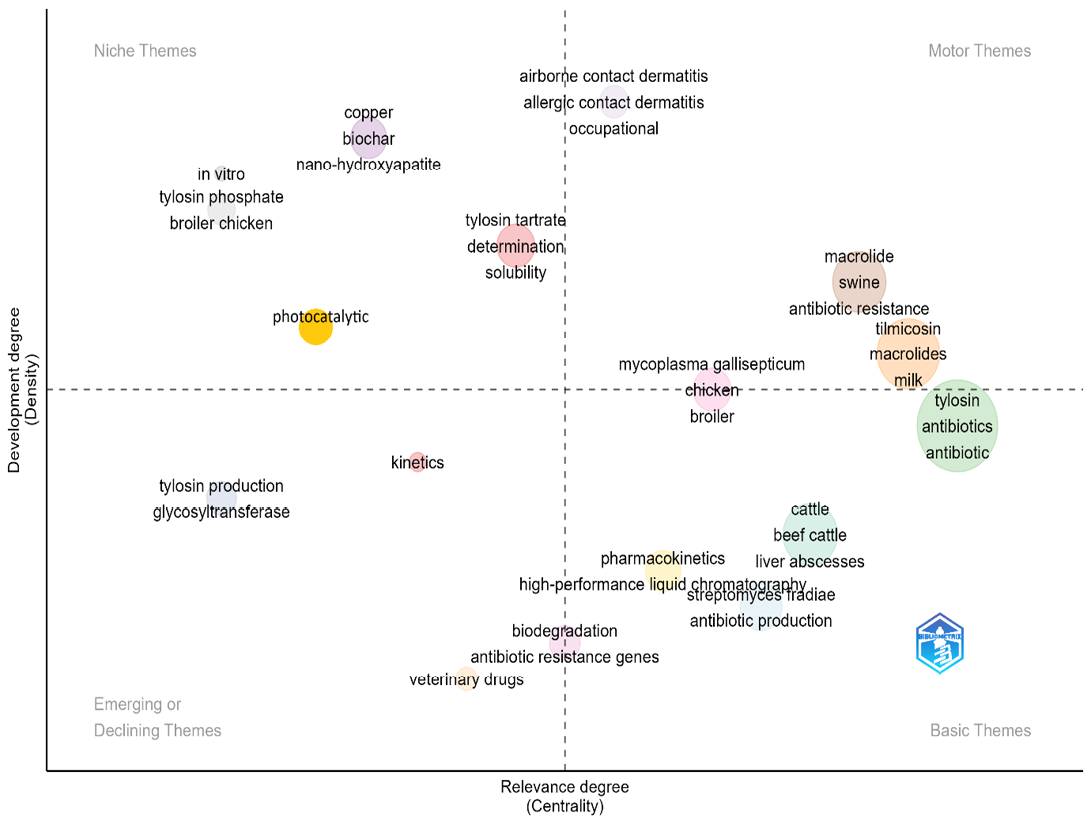
Thematic map of tylosin research based on topic centrality and density, classifying identified themes as motor, basic, niche, or emerging/declining research areas.
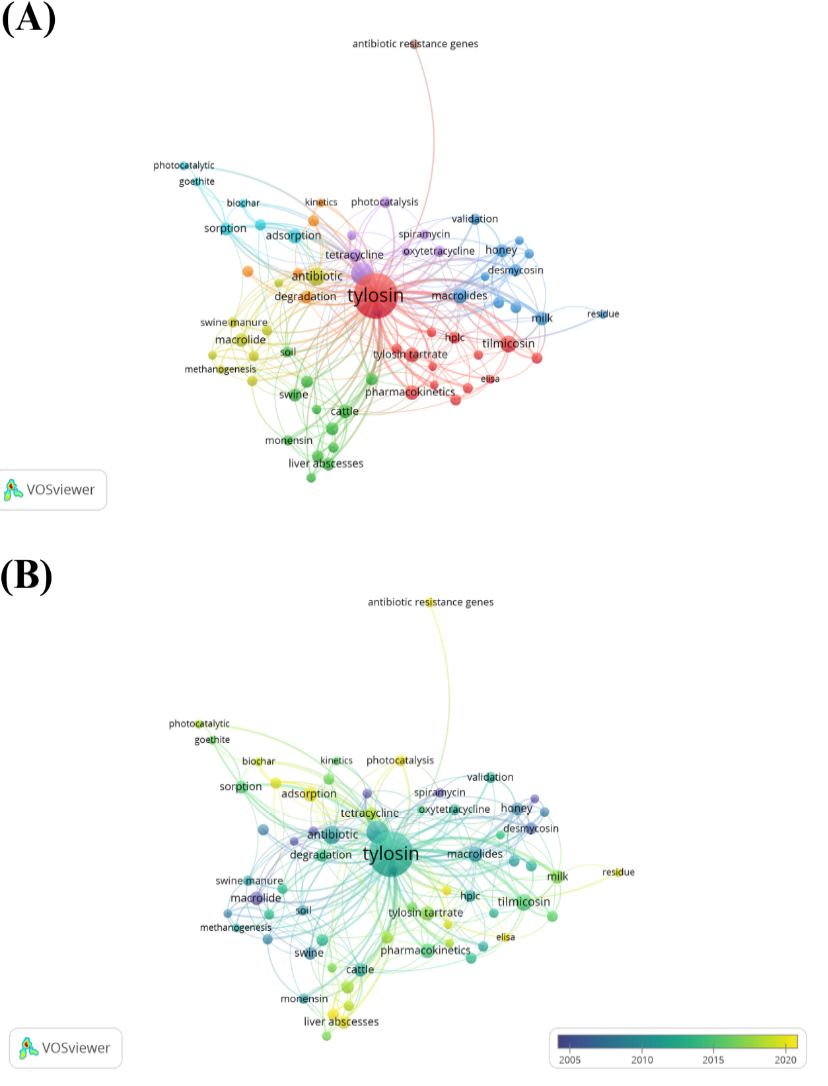
Keyword co-occurrence network showing the major thematic clusters in tylosin research (A) and its overlay visualization (B).
Discussion
Based on this bibliometric study, the findings and perspectives from 899 publications in this 65-year research field reveal a comprehensive transformation process. The field maintains an annual growth of 4.87%. This is not only academic growth but also an evolution in the understanding that veterinary antibiotics are part of complex, interlinked systems whose impacts extend to animal well-being, environmental health, and human welfare. The increasing number of publications after 2000, 38 articles for the 2024 estimate, correlates with the onset of a decisive stage of perception of antibiotic resistance not as a clinical probability issue. It reflects global cooperation in deserving a multidisciplinary approach of top priority . Among the high-impact papers, interest focuses on the degradation of tylosin and the environmental fate and impacts ; ; .
The implications of our results are consistent with other recent bibliometric studies. Sweileh and Moh’d Mansour (2020) surveyed 2,611 articles on antimicrobial resistance in the environment (2000–2019) from the SciVerse Scopus database and reported an average of 22 citations per document and more than 600% increase in publications between 2011–2019 . Our average of 23.85 citations per article is similar, and both studies listed resistance detection as top research themes. Zheng et al. (2022) analyzed articles during the period of 1946–2016 from Web of Science about antibiotics in the soil and reported that the USA and China are top contributors to research on antibiotics in soil, tetracycline was the most-studied antibiotic, and research focuses on resistance bacteria, genes, interactions/fate in soil and transport . Similarly, they listed leading research themes for tylosin as resistance bacteria, environmental interactions/fate, transport and remediation. Sun et al. (2022) determined that top contributors to antibiotic research from 2010 to 2020, as retrieved from the Web of Science, were the Chinese Academy of Sciences and the journal Science of the Total Environment . In our study, top research contributors were Kansas State University, Northeast Agricultural University and the journal Chemosphere. This demonstrates that environmental journals and research institutes are leading contributors to antibiotics research. Evolving pathways, such as photocatalysis for tylosin remediation, are paralleled in studies of nanomaterials for antimicrobial research. Ashraf et al. (2023) studied antibiotics and pharmaceuticals in the environment from 1996 to 2020 and listed theme clusters that correspond to clusters for tylosin research in veterinary medicine, environmental fate, analytical methods, and food safety .
The implications of the thematic development from our analysis resonate with the various stakeholders in the veterinary pharmaceutical landscape. Regulatory policy should take notice of the paradigm shift from production-related research to the emphasis on environmental fate and resistance mechanisms. Therefore, environmental risk assessment can be applied in an integrated manner - one that considers the long-term impact of antibiotic agents not only on therapeutic efficacy, but on ecological variables as well. Furthermore, the widespread emergence of photocatalytic degradation and advanced oxidation research in the most recent years offers technological promise for the reduction of the environmental stability of tylosin, which may in turn be used to inform breakthroughs in wastewater treatments for livestock facilities ; .
The major contribution of this study is its breadth of coverage over time. Its robust bibliometric focus allows researchers to glean insights from 65 years of tylosin-related research efforts. The study considered articles in multiple fields, patterns of authorship, institutional collaboration, thematic shifts, and citation impact. In terms of limitations, reliance on the Scopus database and the restriction to research-related articles in English constrained overall coverage of the relevant literature across multiple databases and languages.
Conclusions
This bibliometric analysis illustrates the evolution of tylosin research from its pharmaceutical uses as a veterinary antibiotic to complex socio-ecological concerns. The growing body of evidence over the years highlights the positive impact of tylosin in chemotherapy and the negative effects on the environment and the spread of resistance. This renders the One Health concept of antibiotic resistance applicable, though not prescribed in humans, mediated by the conserved binding site on the 50S ribosomal subunit, cross-resistance to important medical macrolides, and facilitated by entry into humans via animal-based food sources. In this sense, the proposed research priorities should consolidate knowledge and advance functional applications and rigorous design principles at the One Health level. International collaboration should be strengthened through enhanced intersectoral engagement and improved predictive and analytical tools through monitoring and environmental aspects. Echoed across the identified subject clusters, themes of antimicrobial resistance, residues, decay, and release into the environment illustrate the need for strengthened surveillance of resistance and contamination in relevant sectors, monitoring of residues along the food chain, and environmentally sustainable remediation methods. Beyond these, the relatively limited apparent international collaboration and the ongoing prominence of pharmacokinetic and veterinary application studies call for highly collaborative efforts and broad-scale coordination between countries in developing formulations, targeting, delivery, and regulatory frameworks.
Acknowledgments
We appreciate the financial support from the Deanship of Scientific Research, Vice Presidency for Graduate Studies and Scientific Research, King Faisal University, Saudi Arabia (Grant No. KFU260703).
Novelty Statement
Despite tylosin’s important applications, little is known about the existing scholarly output on its use. This is the first bibliometric study that examines the past, present, and future trajectories of tylosin research. This study provides an extensive bibliometric analysis of research themes, international collaborations, trends, publication counts, and citations on the application of tylosin, as well as a research roadmap within a One Health concept. The study also identifies established and emerging specialized themes, as well as those that have declined in popularity.
Authors’ Contribution
Conceptualization: RN, YK, MM, AK, MK. Data curation: MM, MK. Formal analysis: RN, AK, YK. Funding acquisition, methodology, resources, software and writing original draft: MK. Investigation, project administration: YK. Writing review and editing: RN, YK, MM, AK.
Funding
This work was supported by the Deanship of Scientific Research, Vice Presidency for Graduate Studies and Scientific Research, King Faisal University, Saudi Arabia (Grant No. KFU260703).
Generative AI and AI assisted technology statement
The authors declare that no generative AI and AI assisted technology was used in the creation of this manuscript.
Conflicts of interest
The authors have declared no conflict of interest.
References
- Ashraf M, Ahammad, SZ, Chakma, S (2023). Advancements in the dominion of fate and transport of pharmaceuticals and personal care products in the environment: A bibliometric study. Environ. Sci. Pollut. Res., 30: 64313-64341. https://doi.org/10.1007/s11356-023-26796-7 [CrossRef]
- Aust MO, Godlinski, F, Travis, GR, Hao, X, McAllister, TA, Leinweber, P, Thiele-Bruhn, S (2008). Distribution of sulfamethazine, chlortetracycline and tylosin in manure and soil of Canadian feedlots after subtherapeutic use in cattle. Environ. Pollut., 156: 1243-1251. https://doi.org/10.1016/j.envpol.2008.03.011 [CrossRef]
- Borang M, Rathish, R, Deepa, P, Pradeep, M, Vijayakumar, K (2023). Comparison of marbofloxacin and Tylosin for treatment of goats affected with Mycoplasma ovipneumoniae. J. Vet. Anim. Sci., 54: 988-993. https://doi.org/10.51966/jvas.2023.54.4.988-993 [CrossRef]
- Cattoir V, Leclercq, R (2017). Resistance to macrolides, lincosamides, and streptogramins. In: D.L. Mayers, J.D. Sobel, M. Ouellette, K.S. Kaye and D. Marchaim (Eds): Antimicrobial Drug Resistance: Mechanisms of Drug Resistance, Volume 1. Springer International Publishing, Cham, pp. 269-280. https://doi.org/10.1007/978-3-319-46718-4_18 [CrossRef]
- Cazer CL, Eldermire, ERB, Lhermie, G, Murray, SA, Scott, HM, Gröhn, YT (2020). The effect of tylosin on antimicrobial resistance in beef cattle enteric bacteria: A systematic review and meta-analysis. Prev. Vet. Med., 176: 104934. https://doi.org/10.1016/j.prevetmed.2020.104934 [CrossRef]
- Cybulski P, Gajda, A, Kuśmierz, A (2025). Determination of tylosin concentration in sow’s milk after intramuscular administration. J. Vet. Res., 69: 387-393. https://doi.org/10.2478/jvetres-2025-0008 [CrossRef]
- Darvish H (2019). Bibliometric analysis using bibliometrix an R package. J. Scientometr. Res., 8: 156-160. https://doi.org/10.5530/jscires.8.3.32 [CrossRef]
- De Liguoro M, Cibin, V, Capolongo, F, Halling-Sørensen, B, Montesissa, C (2003). Use of oxytetracycline and tylosin in intensive calf farming: Evaluation of transfer to manure and soil. Chemosphere, 52: 203-212. https://doi.org/10.1016/S0045-6535(03)00284-4 [CrossRef]
- Dong H, Guo, X, Yang, C, Ouyang, Z (2018). Synthesis of g-C 3 N 4 by different precursors under burning explosion effect and its photocatalytic degradation for tylosin. Appl. Catal. B. Environ., 230: 65-76. https://doi.org/10.1016/j.apcatb.2018.02.044 [CrossRef]
- Donthu N, Kumar, S, Mukherjee, D, Pandey, N, Lim, WM (2021). How to conduct a bibliometric analysis: An overview and guidelines. J. Bus. Res., 133: 285-296. https://doi.org/10.1016/j.jbusres.2021.04.070 [CrossRef]
- Gingerich DA, Baggot, JD, Kowalski, JJ (1977). Tylosin antimicrobial activity and pharmacokinetics in cows. Can. Vet. J., 18: 96-100.
- Guo X, Pang, J, Chen, S, Jia, H (2018). Sorption properties of tylosin on four different microplastics. Chemosphere, 209: 240-245. https://doi.org/10.1016/j.chemosphere.2018.06.100 [CrossRef]
- Gürel Yücel M, Seçilmiş, H, Taşçı, F (2023). Investigation of tylosin and tilmicosin residues in meat by high-performance liquid chromatography method. Pol. J. Vet. Sci., 26: 39-46. https://doi.org/10.24425/pjvs.2023.145005 [CrossRef]
- Keatinge-Clay AT (2007). A tylosin ketoreductase reveals how chirality is determined in polyketides. Chem. Biol., 14: 898-908. https://doi.org/10.1016/j.chembiol.2007.07.009 [CrossRef]
- Kim HB, Borewicz, K, White, BA, Singer, RS, Sreevatsan, S, Tu, ZJ, Isaacson, RE (2012). Microbial shifts in the swine distal gut in response to the treatment with antimicrobial growth promoter, tylosin. Proc. Natl. Acad. Sci. U.S.A., 109: 15485-90. https://doi.org/10.1073/pnas.1205147109 [CrossRef]
- Kunz D, Laza, H, Sharma, J, Sanchez, M, Williams, C, Simpson, C (2025). Tylosin in hydroponic systems: Assessing growth and antibiotic residue in lettuce cultivation. HortScience, 60: 2264-2269. https://doi.org/10.21273/HORTSCI18919-25 [CrossRef]
- Lee EB, Lee, GY, Hossain, MA, Awji, EG, Park, SC (2024). Gut microbiome perturbation and its correlation with tylosin pharmacokinetics in healthy and infected pigs. Sci. Rep., 14: 18670. https://doi.org/10.1038/s41598-024-69566-2 [CrossRef]
- Li J, Liu, L, Zhang, H, Guo, J, Wei, X, Xue, M, Ma, X (2023). Severe problem of macrolides resistance to common pathogens in China. Front. Cell. Infect. Microbiol., 13: 2023. https://doi.org/10.3389/fcimb.2023.1181633 [CrossRef]
- Liu M, Douthwaite, S (2002). Resistance to the macrolide antibiotic tylosin is conferred by single methylations at 23S rRNA nucleotides G748 and A2058 acting in synergy. Proc. Natl. Acad. Sci. U.S.A., 99: 14658-63. https://doi.org/10.1073/pnas.232580599 [CrossRef]
- Loke M-L, Ingerslev, F, Halling-Sørensen, B, Tjørnelund, J (2000). Stability of Tylosin A in manure containing test systems determined by high performance liquid chromatography. Chemosphere, 40: 759-765. https://doi.org/10.1016/S0045-6535(99)00450-6 [CrossRef]
- Loke ML, Tjørnelund, J, Halling-Sørensen, B (2002). Determination of the distribution coefficient (log Kd) of oxytetracycline, tylosin A, olaquindox and metronidazole in manure. Chemosphere, 48: 351-361. https://doi.org/10.1016/S0045-6535(02)00078-4 [CrossRef]
- Mithuna R, Tharanyalakshmi, R, Jain, I, Singhal, S, Sikarwar, D, Das, S, Ranjitha, J, Ghosh, D, Rahman, MM, Das, B (2024). Emergence of antibiotic resistance due to the excessive use of antibiotics in medicines and feed additives: A global scenario with emphasis on the Indian perspective. Emerg. Contam., 10: 100389. https://doi.org/10.1016/j.emcon.2024.100389 [CrossRef]
- Muteeb G, Rehman, MT, Shahwan, M, Aatif, M (2023). Origin of antibiotics and antibiotic resistance, and their impacts on drug development: A narrative review. Pharmaceuticals (Basel), 16: 1615. https://doi.org/10.3390/ph16111615 [CrossRef]
- Nor Amdan NA, Shahrulzamri, NA, Hashim, R, Mohamad Jamil, N (2024). Understanding the evolution of macrolides resistance: A mini review. J. Glob. Antimicrob. Resist., 38: 368-375. https://doi.org/10.1016/j.jgar.2024.07.016 [CrossRef]
- Rabølle M, Spliid, NH (2000). Sorption and mobility of metronidazole, olaquindox, oxytetracycline and tylosin in soil. Chemosphere, 40: 715-22. https://doi.org/10.1016/S0045-6535(99)00442-7 [CrossRef]
- Rasoulifard M, Majidzadeh, H, Demneh, F, Babaei, E, Rasoulifard, M (2012). Photocatalytic degradation of tylosin via ultraviolet-activated persulfate in aqueous solution. Int. J. Ind. Chem., 3: 16. https://doi.org/10.1186/2228-5547-3-16 [CrossRef]
- Ronaghinia AA, Birch, JM, Frandsen, HL, Toutain, P-L, Damborg, P, Struve, T (2021). Evaluating a tylosin dosage regimen for treatment of Staphylococcus delphini infection in mink (Neovison vison): A pharmacokinetic-pharmacodynamic approach. Vet. Res., 52: 34. https://doi.org/10.1186/s13567-021-00906-0 [CrossRef]
- Singh R, Mukherjee S, Harrision LB, McDermott PF, Ge B, Gilbert JM, Li C, Whichard JM, Fortenberry GZ, Dessai U, Zhao S (2025). Cross-resistance to 14-, 15- and 16-membered ring macrolides in Salmonella and Campylobacter. J. Antimicrob. Chemother., 80: 1445-1452. https://doi.org/10.1093/jac/dkaf094 [CrossRef]
- Sun G, Zhang Q, Dong Z, Dong D, Fang H, Wang C, Dong Y, Wu J, Tan X, Zhu P, Wan Y (2022). Antibiotic resistant bacteria: A bibliometric review of literature. Front Publ. Health, 10: 1002015. https://doi.org/10.3389/fpubh.2022.1002015 [CrossRef]
- Sweileh WM, Moh’d Mansour A (2020). Bibliometric analysis of global research output on antimicrobial resistance in the environment (2000–2019). Glob. Health Res. Policy, 5: 37. https://doi.org/10.1186/s41256-020-00165-0 [CrossRef]
- ter Laak TL, Gebbink, WA, Tolls, J (2006). The effect of pH and ionic strength on the sorption of sulfachloropyridazine, tylosin, and oxytetracycline to soil. Environ. Toxicol. Chem., 25: 904-911. https://doi.org/10.1897/05-232R.1 [CrossRef]
- van Eck NJ, Waltman, L (2010). Software survey: VOSviewer, a computer program for bibliometric mapping. Scientometrics, 84: 523-538. https://doi.org/10.1007/s11192-009-0146-3 [CrossRef]
- Wallgren P (2024). Control of swine dysentery at national level in Sweden. Acta Vet. Scand., 66: 44. https://doi.org/10.1186/s13028-024-00769-3 [CrossRef]
- Wang Y, Zhao, B, Zhang, J, Kong, L, Muhammad, I, Liang, X, Yu, X, Gao, Y (2025). Efficient degradation of tylosin by Kurthia gibsonii TYL-A1: performance, pathway, and genomics study. Microbiol Spectr, 13: e0002525. https://doi.org/10.1128/spectrum.00025-25 [CrossRef]
- Zheng C, Liao H, Tu C (2022). An improved bibliometric analysis on antibiotics in soil research. Bull. Environ. Contam. Toxicol., 108: 276-283. https://doi.org/10.1007/s00128-021-03395-1 [CrossRef]

Services
Article usage statistics
Loading…
Related articles
- Shifting Paradigms in Tilmicosin Research in Veterinary Medicine: A Bibliometric Perspective on Emerging Risks and InnovationsAdvances in Animal and Veterinary Sciences · 2026
- New perspectives in forestry research and problems of its Management in Developing countriesPakistan Journal of Forestry · 2024
- New perspectives in forestry research and problems of its management in developing countriesPakistan Journal of Forestry · 2024
- Research Trends on Cage-Free Housing System in Laying Hens: A Bibliometric AnalysisAdvances in Animal and Veterinary Sciences · 2024
- Extruded Feed in Poultry: A Bibliometric Analysis of Research Trends (1968-2025)Advances in Animal and Veterinary Sciences · 2025
- Sustainability Transitions and Knowledge Fragmentation in Smallholder Beef Cattle Systems: A Four-Decade Bibliometric AnalysisJournal of Animal Health and Production · 2026