
Rumen fermentation causes energy losses in ruminants, particularly through methane production and excessive protein degradation, which reduce feed efficiency and growth performance. Plant-based bioactive feed resources containing tannins have been widely studied for their potential to support nutrient utilization in ruminants. This study aimed to formulate complete feed wafers based on fermented sugarcane tops and Tithonia diversifolia supplemented with mangrove plants containing natural tannins, and to evaluate their impact on feed intake, growth performance, and nutrient digestibility in Kacang goats. The experiment employed a Randomized Block Design (RBD) with three dietary treatments and eight replications using 24 Kacang goats. The experiment lasted 45 days, consisting of an adaptation period, a preliminary period, and a faecal collection period. The treatments consisted of T1 (complete feed wafer), T2 (complete feed wafer supplemented with 4% mangrove leaves), and T3 (complete feed wafer supplemented with 4% mangrove fruits). The measured variables included feed intake, average daily gain (ADG), feed efficiency ratio (FER), feed conversion ratio (FCR), and nutrient digestibility. Results showed that mangrove supplementation significantly affected growth performance and nutrient digestibility (P<0.05). Goats receiving 4% mangrove fruit (T3) exhibited the highest ADG (61.07 g/day), improved FER (0.110), reduced FCR (8.98), and superior digestibility compared to both the control and mangrove leaf treatments. Although dry matter intake was numerically lower in T3, nutrient utilization efficiency was enhanced, nutrient utilization efficiency appeared to be improved. Under the conditions of this study, supplementation with 4% mangrove fruit showed potential to improve nutrient utilization and growth performance in Kacang goats.
Research Article · Volume 15, Issue 1, Pages 265–277, 24 November 2026 · Open Access
Comparative Effects of Mangrove Leaves and Fruits Supplementation in Complete Feed Wafers on Growth Performance and Nutrient Digestibility of Kacang Goats
, , , , , , ,
Affiliations & Notes ⌄
- 1Graduate Program, Faculty of Animal Science, Universitas Andalas, Padang, West Sumatra, Indonesia
- 2Department of Animal Nutrition and Feed Technology, Faculty of Animal Husbandry, Universitas Andalas, Padang, West Sumatra, Indonesia
- 3Research Centre for Animal Husbandry, National Research and Innovation Agency, Cibinong Sciences Center, Jl. Raya Jakarta–Bogor, Cibinong 16915, West Java, Indonesia
- 4Department of Agricultural Extension, Faculty of social, science and education, Prima Nusantara Bukittinggi University, Postal code: 26122, Indonesia
- *Correspondence | Novirman Jamarun; Email: novirman55@gmail.com
Article Info ⌄
- Journal:
- Journal of Animal Health and Production
- Submitted Date:
- 5 March 2026
- Accepted Date:
- 8 September 2026
- Published Date:
- 24 November 2026
From the article
- In addition to moderate tannin levels, the similarity in fibre fraction intake among treatments also indicates that the inclusion of 4% mangrove leaves or fruits did not significantly alter the physical characteristics or overall structure of the diet.
- The improvement in nutrient digestibility in treatment T3 indicates that the inclusion of 4% mangrove fruit enhanced nutrient utilization more effectively than both the control and treatment T2.
- Therefore, the present findings suggest that the moderate tannin level in mangrove fruit may contribute to improved fibre fraction digestibility while maintaining normal feed intake in Kacang Goats.
- Supplementation of 4% mangrove fruit (Sonneratia alba) in complete feed wafers resulted in the best response among treatments, as indicated by higher average daily gain, feed efficiency, and nutrient digestibility in Kacang goats (P < 0.05).
Selected from the article's own text.
Abstract
INTRODUCTION
The livestock sector plays an important role in providing high-quality animal protein and supporting food security. However, one of the major challenges in ruminant production is the unstable availability of feed, both in quantity and quality. Forages and agricultural by-products generally have high moisture content, are bulky, and deteriorate rapidly during storage, which reduces their shelf life, complicates handling, and limits their efficiency in distribution and utilization . Therefore, feed processing technology is needed to improve storage stability, facilitate handling, and maintain nutrient uniformity in the rations.
One promising approach is the use of complete feed wafers, which allow forage, concentrate, and feed additives to be mixed homogeneously into a compact, dense, and practical form ; . In addition to improving physical quality and storage stability, this technology may enhance transportation efficiency and reduce nutrient losses during storage ; . The use of locally available feed resources, such as fermented sugarcane tops as a fibre source ; ; and Tithonia diversifolia as a local protein source , 2024b; ; ; , provides an opportunity to develop a more efficient and sustainable complete feed system based on local biomass.
Beyond feed preservation and handling, ruminant production also faces biological inefficiencies related to rumen fermentation. A portion of dietary energy is lost as methane during fermentation, thereby reducing the amount of metabolizable energy available for growth and production ; ; . This energy loss contributes to lower feed efficiency and reduced animal performance. Consequently, nutritional strategies are required not only to provide feed in a more practical and durable form, but also to optimize rumen fermentation so that nutrient utilization efficiency can be improved and energy losses minimized .
One potential nutritional strategy is the use of natural tannin-containing materials, such as mangrove plants. Indonesia has the largest mangrove forest area in the world, covering approximately 3.2-3.6 million hectares, or about 21% of the global mangrove area. Among the usable plant parts, mangrove leaves and fruits have attracted attention as bioactive feed resources containing natural tannins ; . Mangrove leaves contain 11.10% tannins , whereas mangrove fruits contain 28.02% tannins . Tannins have been reported to influence rumen fermentation characteristics, including methanogenesis, and may help reduce energy losses in the form of methane . They may also improve nutrient utilization efficiency by regulating the rate of feed degradation in the rumen . However, the effects of tannins are highly dependent on their source and inclusion level. At high levels, tannins may reduce feed intake and digestibility, whereas at moderate levels they may exert beneficial functional effects.
Although complete feed wafer technology has been widely studied for improving the physical quality and shelf life of feed and tannins have also been extensively evaluated as bioactive compounds in ruminant nutrition, the integration of these two approaches into a single feeding system remains limited. In particular, there is still little information regarding the use of mangrove leaves and mangrove fruits as natural tannin sources in complete feed wafers based on fermented sugarcane tops and Tithonia diversifolia, especially in Kacang goats. Moreover, comparative information on the effectiveness of different mangrove plant parts within this system is still scarce.
Therefore, this study aimed to evaluate the effects of supplementing mangrove leaves and mangrove fruits in complete feed wafers based on fermented sugarcane tops and Tithonia diversifolia on feed intake, nutrient digestibility, feed efficiency, feed conversion, and average daily gain in Kacang goats.
MATERIALS AND METHODS
Experimental design
This study employed a Randomized Block Design (RBD) consisting of three treatments with eight replications. The treatments were as follows: T1= complete feed wafer (control); T2= complete feed wafer supplemented with 4% mangrove leaves; T3= complete feed wafer supplemented with 4% mangrove fruits.
The experimental animals were grouped based on their initial body weight. The parameters measured included feed intake, body weight gain, feed efficiency ratio (FER), feed conversion ratio (FCR), nutrient intake (proximate and fibre fractions), and nutrient digestibility. Proximate analysis was conducted according to , whereas fibre fraction analysis was performed according to .
Animal maintenance
Twenty-four male Kacang goats, aged 14-16 months, with an average initial body weight of 16 ± 1.57 kg, were used in the study. All animals were in a healthy growing physiological condition and were housed individually in metabolic pens measuring 1.5 × 2 m and equipped with feeding and drinking troughs. The pen floor was approximately one meter above the ground. Complete feed wafers were prepared by mixing forage and concentrate and pressing the mixture using a complete feed wafer press. The forage consisted of Tithonia diversifolia and fermented sugarcane tops. The concentrate consisted of tofu pulp, molasses, corn, tapioca flour, and minerals. The ratio of forage to concentrate was 60:40. The forage feed consisted of 50% Tithonia diversifolia and 50% fermented sugarcane tops. Before treatment allocation, all goats were weighed individually to determine their initial body weight. The animals were then ranked according to initial body weight and grouped into eight blocks of relatively similar body weight, with each block consisting of three goats. Within each block, the three dietary treatments were randomly assigned to individual animals. The experiment consisted of three periods: Adaptation, preliminary, and data collection. The adaptation period lasted 15 days and was used to accustom the goats to the experimental ration and housing conditions. The preliminary period lasted 25 days and was used to evaluate the animals’ response to the dietary treatment under normal feeding conditions. The data collection period lasted 5 days and was used to collect faecal samples for nutrient digestibility determination. Body weight gain was calculated after the adaptation period, while feed intake was recorded daily and final body weight was measured at the end of the experiment.
Feed formulation
Forage (Tithonia diversifolia and fermented sugarcane tops) and concentrate (tapioca flour, corn, bran, molasses, minerals, tofu pulp), and mangrove plant material were processed into complete feed wafers. Complete feed wafers were administered twice daily at 08:00 and 17:00, with feed amounts equivalent to 4% of the goats’ body weight on a dry matter basis, in accordance with National Research Council (NRC, 1981). Drinking water was provided ad libitum. The nutrient composition of the individual feed ingredients used in the complete feed wafer formulation is presented in Table 1. The total feed composition for each treatment is presented in Table 2, and the nutrient content of each treatment is shown in Table 3.
Experimental procedure
Fermentation of sugarcane tops
Sugarcane tops were fermented according to the procedure described by Pazla et al. (2021). Sugarcane tops were collected from the Puncak Lawang sugarcane plantation area in Agam District, West Sumatra. The collected tops were separated from the stems and sun-dried to reduce moisture content. Once dried, the tops were chopped using a chopper and evenly spread on a tarpaulin. They were then thoroughly mixed with 10% Pleurotus ostreatus (based on dry matter). The mixture was packed tightly into plastic bags, sealed to maintain anaerobic conditions, and incubated for 21 days. After incubation, the fermented sugarcane tops were dried and ground into fine particles, ready for use as feed material.
Preparation of complete feed wafer
Complete feed wafers were prepared according to the procedure described by Ikhlas et al. (2024a). All feed ingredients consisting of forage (Tithonia diversifolia and fermented sugarcane tops) and concentrate (rice bran, corn, tapioca flour, tofu waste, mineral mix, and molasses) were purchased from Sinar Animal Feed Store in Padang City, and formulated at a forage to concentrate ratio of 60:40. Each ingredient was weighed according to the predetermined treatment formulation and thoroughly mixed until a homogeneous mixture was obtained. The mixture was placed into a wafer press machine and processed for 20 min at a temperature of 120 °C. The resulting complete feed wafers were cooled, stored in airtight containers, and used in the feeding trial.
Table 1: Nutrient contents of feed ingredients.
| Nutrient contents | FST | Tithonia | TP | Bran | Corn | TF | MF | ML |
| Dry Matter | 92.32 | 90.89 | 85.91 | 87.5 | 87.20 | 86.13 | 85.82 | 84.15 |
| Organic matter | 91.8 | 86.72 | 94.4 | 89.44 | 96.22 | 99.94 | 94.82 | 94.6 |
| Ash | 10.57 | 13.28 | 5.6 | 10.56 | 3.78 | 0.06 | 5.18 | 0.92 |
| Crude protein | 8.36 | 21.88 | 19.26 | 11.09 | 11.23 | 4.40 | 8.70 | 8.75 |
| Crude fiber | 37.98 | 18.32 | 16.8 | 9.23 | 10.29 | 4.60 | 22.76 | 13.61 |
| Crude fat | 2.90 | 3.06 | 2.8 | 6.28 | 6.00 | 1.90 | 1.44 | 2.46 |
| Nitrogen free extract | 41.75 | 43.46 | 55.54 | 62.83 | 68.38 | 89.04 | 55.92 | 63.0 |
| Total digestible nutrients | 49.05 | 63.15 | 70.22 | 74.87 | 78.72 | 82.00 | 57.53 | 63.0 |
| Acid detergent fiber | 52.63 | 41.78 | 27.37 | 23.08 | 34.66 | 9.64 | 54.01 | 54.0 |
| Neutral detergent fiber | 80.87 | 60.72 | 44.6 | 48.11 | 58.62 | 2.1 | 62.20 | 62.2 |
| Cellulose | 33.8 | 35.07 | 25.67 | 11.05 | 19.7 | 1.61 | 22.61 | 22.6 |
| Hemicellulose | 28.24 | 18.94 | 17.28 | 25.03 | 23.96 | 7.54 | 8.19 | 8.18 |
| Lignin | 8.79 | 4.8 | 5.95 | 3.78 | 7.5 | 1.11 | 23.55 | 23.5 |
| Tannin | - | - | - | - | - | - | 28.34 | 12.8 |
Fermented sugarcane tops (FST), Tofu pulp (TP), Tapioca flour (TF), Mangrove fruit (MF), Mangrove leaves (ML).
Table 2: Ration composition.
| Feed Ingredient | Ration composition | ||
| T1 | T2 | T3 | |
| Tapioca starch | 10 | 10 | 10 |
| Fermented sugarcane tops | 30 | 30 | 30 |
| Tithonia diversifolia | 30 | 30 | 30 |
| Bran | 4 | 4 | 4 |
| Corn | 15 | 15 | 15 |
| Tofu Dreags | 6 | 6 | 6 |
| Molasses | 4 | 4 | 4 |
| Salt | 0.5 | 0.5 | 0.5 |
| Mineral | 0.5 | 0.5 | 0.5 |
| Mangrove leaves | - | 4 | - |
| Mangrove Fruit | - | - | 4 |
T1= ration control, T2= ration control + 4% leaves mangrove, T3= ration +4% fruit mangrove.
Table 3: Nutrient composition of the experimental rations.
| Nutrient content | Ration nutrient content | ||
| T1 | T2 | T3 | |
| Dry matter | 85.37 | 88.74 | 88.80 |
| Organic matter | 86.52 | 90.30 | 90.31 |
| Crude fat | 3.39 | 3.49 | 3.45 |
| Crude protein | 12.62 | 12.97 | 12.97 |
| Ash | 13.48 | 9.83 | 9.69 |
| Crude fiber | 20.02 | 19.19 | 20.93 |
| Nitrogen free extract | 50.22 | 53.01 | 52.69 |
| Total digestible nutrients | 60.62 | 63.14 | 62.92 |
| Acid detergent fiber | 35.92 | 37.68 | 37.52 |
| Neutral detergent fiber | 55.20 | 57.69 | 57.69 |
| Cellulose | 24.49 | 25.20 | 25.39 |
| Hemicellulose | 20.79 | 21.52 | 21.68 |
| Lignin | 5.44 | 5.98 | 5.99 |
| Tannin | - | 0.51 | 1.13 |
T1= ration control, T2= ration control + 4% leaves mangrove, T3= ration +4% fruit mangrove.
Tannin analysis
Tannin content was determined spectrophotometrically using the Folin-Ciocalteu method coupled with polyvinyl polypyrrolidone (PVPP) according to Makkar (2003). Finely ground dried sample (200 mg) was extracted with 10 mL of 70% aqueous acetone, sonicated for 20 min at room temperature, and centrifuged at approximately 3000 × g for 10 min. The supernatant was used for total phenolic determination. For total phenols, an appropriate aliquot of the extract (0.02-0.10 mL) was transferred into a test tube, the volume was adjusted to 0.5 mL with distilled water, followed by the addition of 0.25 mL Folin-Ciocalteu reagent (1 N) and 1.25 mL sodium carbonate solution (20%). After vortexing, the mixture was allowed to stand for 40 min, and absorbance was read at 725 nm. Total phenolics were expressed as tannic acid equivalents using a tannic acid standard curve. For non-tannin phenolics, 100 mg PVPP was mixed with 1.0 mL distilled water and 1.0 mL sample extract, vortexed, kept at 4°C for 15 min, vortexed again, and centrifuged at approximately 3000 × g for 10 min. The phenolic content of the supernatant was then measured by the same Folin-Ciocalteu procedure. Total tannins were calculated as the difference between total phenolics and non-tannin phenolics, and expressed as tannic acid equivalents on a dry matter basis.
Variable analysis
Nutrient consumption
Nutrient consumption was determined by calculating the difference between the total amount of ration offered to the animals and the residual ration remaining after the feeding period. The obtained value represents the actual ration intake consumed by the animals during the experimental period. Based on this intake, nutrient consumption was subsequently calculated using standard equations as described by ECDG .
Dry matter intake was calculated by subtracting the dry matter content of the remaining ration from the dry matter content of the ration offered. Organic matter intake was determined by multiplying dry matter intake by the organic matter proportion of the ration. Crude protein intake was calculated by multiplying dry matter intake by the crude protein content of the ration. These calculations enabled an accurate estimation of the amount of nutrients actually consumed by the animals.
Nutrient digestibility
Nutrient digestibility was evaluated to assess the efficiency of nutrient utilization in the digestive system. Digestibility coefficients for dry matter, organic matter, crude protein, crude fibre, crude fat, neutral detergent fibre (NDF), acid detergent fibre (ADF), hemicellulose, and cellulose were calculated based on the difference between nutrient intake and nutrient excretion in the faeces.
The digestibility of each nutrient was determined by subtracting the amount of nutrients excreted in the faeces from the total nutrient intake, and then dividing the result by the total nutrient intake. The final value was expressed as a proportion, representing the fraction of nutrients that were digested and absorbed by the animals. This approach provides a comprehensive evaluation of nutrient digestibility and reflects the effectiveness of the dietary treatments on nutrient utilization.
Statistical analysis
Statistical analysis was performed using a Randomized Block Design (RBD), with initial body weight serving as the blocking factor. The statistical model used was:

Where Yij is the observed variable, µ is the overall mean, Ti is the fixed effect of dietary treatment, Bj is the random effect of block (initial body weight), and εij is the residual error.
Prior to analysis, all data were tested for normality using the Shapiro–Wilk test and for homogeneity of variance using Levene’s test. Data meeting these assumptions were subjected to analysis of variance (ANOVA) using IBM SPSS Statistics (version 21.0, IBM Corp., USA). When significant treatment effects were detected (P< 0.05), mean comparisons were performed using Duncan’s Multiple Range Test (DMRT). Results are presented as mean ± standard error of the mean (SEM), and differences were considered statistically significant at (P < 0.05).
RESULTS
Dry matter, organic matter, crude protein, crude fat, and crude fibre intake
The analysis revealed that dry matter intake (DMI), organic matter intake (OMI), crude protein intake, crude fat intake, and crude fibre intake did not differ significantly (P>0.05). The highest DMI was recorded in T1 (565.73 g/day), while the lowest value was observed in T3 (561.56 g/day) (Table 4). OMI was highest in T1 (504.75 g/day) and lowest in T3 (501.03 g/day). Crude protein intake was highest in T1 (69.25 g/day) and lowest in T3 (68.54 g/day). Crude fibre intake was highest in T1 (129.39 g/day) and lowest in T3 (128.40 g/day). Crude fat intake was highest in T1 (19.41 g/day) and lowest in T3 (19.27 g/day).
Fibre fraction intake
Intake of ADF, NDF, cellulose, and hemicellulose was not significantly affected (P>0.05) by treatments. The highest NDF intake was found in T2 (339.05 g/day), followed by T1 (338.59 g/day) and T3 (336.09 g/day) (Table 5). Although the differences were not statistically significant, numerical values showed the highest ADF intake in T2 (202.96 g/day), cellulose intake in T2 (94.27 g/day), and hemicellulose intake in T2 (149.59 g/day). The lowest values were recorded in T3 for ADF (201.19 g/day), cellulose (93.45 g/day), and hemicellulose (148.28 g/day).
Digestibility of dry matter, organic matter, crude protein, crude fat, and crude fibre
The digestibility of dry matter, organic matter, crude protein, crude fat, and crude fibre increased significantly (P<0.05) in treatments supplemented with mangrove plants (Table 6). DMRT results showed that T1 did not differ significantly (P>0.05) from T2 but differed significantly (P<0.05) from T3 for both DM and OM digestibility. Crude fibre digestibility in T1 was significantly different (P>0.05) from T2 and T3, whereas T2 and T3 did not differ significantly (P>0.05). T3 consistently showed the highest digestibility values across nutrients, indicating better nutrient digestibility in the mangrove fruit treatment.
Table 4: Nutrient consumption of complete mangrove-based feed wafers as a source of tannin in Kacang goats.
| Parameter | Treatment | SEM | P-Value | ||
| T1 | T2 | T3 | |||
| dry matter consumption (g/day) | 565.73±2.33 | 566.51±2.85 | 561.56±1.42 | 0.002 | 0.188 |
| Organic matter consumption (g/day) | 504.75±1.99 | 505.44±2.21 | 501.03±3.54 | 0.003 | 0.098 |
| Crude Protein consumption (g/day) | 69.25±3.53 | 69.41±1.46 | 68.54±1.75 | 0.002 | 0.786 |
| Crude fiber consumption (g/day) | 129.39±2.10 | 129.53±1.89 | 128.40±0.89 | 0.004 | 0.854 |
| Crude fat consumption (g/day) | 19.41±1.34 | 19.44±1.44 | 19.27±1.28 | 0.001 | 0.854 |
T1= ration control, T2= ration control + 4% leaves mangrove, T3= ration +4% fruit mangrove, SEM= Standard Error of the Mean
Table 5: Consumption of fibre fraction from mangrove-based complete feed wafers as a source of tannin in Kacang goats.
| Parameter | Treatment | SEM | P-Value | ||
| T1 | T2 | T3 | |||
| ADF consumption (g/day) | 202.74±2.70 | 202.96±1.58 | 201.19±4.71 | 0.003 | 0.924 |
| NDF consumption (g/day) | 338.59±2.07 | 339.05±1.98 | 336.09±2.19 | 0.003 | 0.777 |
| cellulose consumption (g/day) | 94.14±4.93 | 94.27±2.07 | 93.45±2.67 | 0.003 | 0.964 |
| Hemicellulose consumption (g/day) | 149.38±0.55 | 149.59±0.67 | 148.28±0.44 | 0.001 | 0.073 |
T1= ration control, T2= ration control + 4% leaves mangrove, T3= ration +4% fruit mangrove, ADF= acid Detergent Fiber, NDF= neutral detergent fiber, SEM= Standard Error of the Mean.
Table 6: Digestibility of nutrients in complete mangrove-based feed wafers as a source of tannin in goats.
| Parameter | Treatment | SEM | P-Value | ||
| T1 | T2 | T3 | |||
| Digestibility of dry matter (%) | 68.30±0.23b | 68.88±0.86b | 70.12±0.78a | 0.313 | 0.030 |
| Digestibility of organic matter (%) | 68.90±0.75b | 69.49±0.71b | 70.73±0.47a | 0.323 | 0.013 |
| Digestibility of crude protein (%) | 66.93±0.34c | 68.76±0.35b | 69.36±0.51a | 0.200 | 0.001 |
| Digestibility of crude fat (%) | 66.24±2.49b | 67.95±2.04b | 72.05±1.26a | 0.966 | 0.010 |
| Digestibility of crude fiber (%) | 66.10±1.25b | 68.69±2.16a | 69.97±3.13a | 1.090 | 0.007 |
T1= ration control, T2= ration control + 4% leaves mangrove, T3= ration + 4% fruit mangrove, SEM= Standard Error of the Mean, a, b, c Means with different superscript letters within the same row are significantly different (P ≤ 0.05).
Table 7: Digestibility of fibre fractions in complete mangrove-based feed wafers as a source of tannin in goats.
| Parameter | Treatment | SEM | P-Value | ||
| T1 | T2 | T3 | |||
| Digestibility of ADF (%) | 57.86±0.41b | 58.02±0.58b | 59.01±0.04a | 0.172 | 0.023 |
| Digestibility of NDF (%) | 60.37±0.41b | 61.85±0.42ab | 63.51±0.63a | 0.245 | 0.001 |
| Digestibility of hemicellulose (%) | 65.10±1.13c | 66.83±0.14b | 69.13±0.32a | 0.295 | 0.001 |
| Digestibility of cellulose (%) | 64.67±0.75b | 65.91±0.76ab | 66.25±0.98a | 0.256 | 0.030 |
T1= ration control, T2= ration control + 4% leaves mangrove, T3= ration +4% fruit mangrove, ADF= acid Detergent Fiber, NDF= neutral detergent fiber, SEM= Standard Error of the Mean, a, b, c Means with different superscript letters within the same row are significantly different (P ≤ 0.05).
Fibre fraction digestibility
The digestibility of ADF, NDF, hemicellulose, and cellulose increased with the addition of mangrove fruit (Table 7). Statistical analysis showed that NDF, hemicellulose, and cellulose digestibility were significantly affected (P < 0.05). NDF digestibility in T1 was not significantly different (P>0.05) from T2 but differed significantly (P<0.05) from T3. ADF digestibility in T1 was not significantly different (P>0.05) from T2 but differed significantly (P<0.05) from T3, T2 and T3 differed significantly (P<0.05). Hemicellulose digestibility in T1 was significantly lower (P<0.05) than T2 and T3. Cellulose digestibility in T1 was not significantly different (P>0.05) from T2 but differed significantly (P<0.05) from T3.
Body weight gain, feed efficiency ratio, and feed conversion ratio
The inclusion of mangrove leaves and fruits in the feed wafer had a significant effect (P<0.05) on the growth performance of goats. The highest average daily gain (ADG) was obtained in treatment T3 (61.07 g/day), followed by T2 (56.07 g/day) and T1 (54.64 g/day) (Figure 1). The Duncan’s Multiple Range Test (DMRT) showed a significant difference (P < 0.05) among treatments (T3 > T2 > T1). The feed efficiency ratio (FER) was also significantly affected (P<0.05) by the treatments. DMRT analysis indicated that T1 did not differ significantly (P>0.05) from T2, but differed significantly (P<0.05) from T3, T2 also differed significantly (P<0.05) from T3. The highest FER was observed in T3 (0.110) compared to T1 (0.099) and T2 (0.101) (Figure 2). In contrast, the feed conversion ratio (FCR) significantly decreased (P<0.05) in T3 (8.98) compared to T1 and T2 (9.93; 10.11) (Figure 3). DMRT analysis indicated that T1 did not differ significantly (P>0.05) from T2, but differed significantly (P<0.05) from T3, T2 also differed significantly (P<0.05) from T3. The reduction in FCR indicates improved feed utilization efficiency, meaning that less feed was required to achieve the same body weight gain.
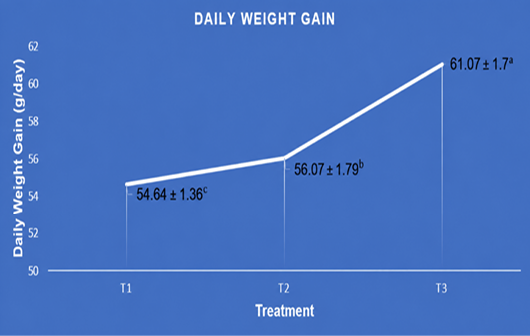
Average daily gain of Kacang goats fed complete feed wafers supplemented with mangrove leaves or fruits.
T1= complete feed wafer (control); T2= complete feed wafer supplemented with 4% mangrove leaves; T3= complete feed wafer supplemented with 4% mangrove fruits. Data points bearing different superscript letters differ significantly (P < 0.05). Error bars represent the standard error of the mean (SEM).
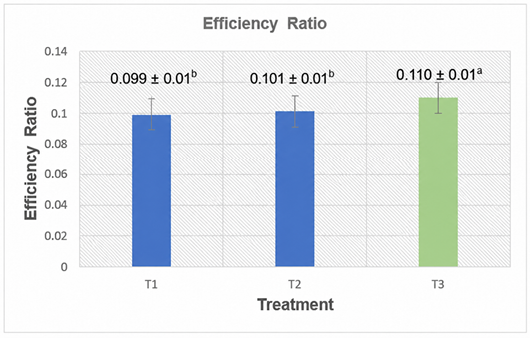
Feed efficiency ratio of Kacang goats fed complete feed wafers supplemented with mangrove leaves or fruits.
T1 = complete feed wafer (control); T2 = complete feed wafer supplemented with 4% mangrove leaves; T3 = complete feed wafer supplemented with 4% mangrove fruits. Bars bearing different superscript letters differ significantly (P < 0.05). Error bars represent the standard error of the mean (SEM).
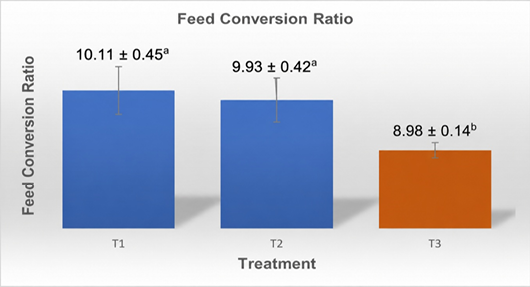
Feed conversion ratio of Kacang goats fed complete feed wafers supplemented with mangrove leaves or fruits.
T1= complete feed wafer (control); T2 = complete feed wafer supplemented with 4% mangrove leaves; T3 = complete feed wafer supplemented with 4% mangrove fruits. Bars bearing different superscript letters differ significantly (P < 0.05). Error bars represent the standard error of the mean (SEM).
DISCUSSION
Dry matter, organic matter, crude protein, crude fat, and crude fibre intake
Based on the results presented in Table 4, the inclusion of 4% mangrove leaves or 4% mangrove fruits in the complete feed wafer had no significant effect on dry matter, organic matter, crude protein, crude fat, or crude fibre intake. These findings indicate that the inclusion level of mangrove material used in this study was not sufficient to alter the feeding pattern of the animals compared with the control treatment. Physiologically, feed intake in ruminants is strongly influenced by the balance between nutrient requirements, digestive tract capacity, and the general characteristics of the diet. Since all treatments were formulated with a relatively similar basal composition and differed only in the addition of 4% mangrove leaves or fruits, the animals tended to consume comparable amounts of feed to meet their daily nutritional requirements. Therefore, differences in mangrove source at the 4% inclusion level were not large enough to significantly affect nutrient intake.
The absence of a significant effect of mangrove leaves and fruits on nutrient intake may also be related to the similarity in nutrient composition among treatments, particularly in terms of dry matter, crude protein, and fibre fractions. Because the experimental diets were formulated to provide a comparable nutritional profile, the animals likely regulated their feed intake based on their energy and protein requirements rather than differences in feed ingredients. Treatment T2, supplemented with 4% mangrove leaves, contained 0.51% tannin, whereas T3, supplemented with 4% mangrove fruit, contained 1.13% tannin. At these levels, the inclusion of tannin-containing mangrove materials may not be sufficient to negatively affect palatability or voluntary feed intake, especially when the overall nutrient composition of the diets remains balanced. Nikkhah et al. (2008) explained, the factors that influence feed intake are feed type, feed composition, and feed nutrient content.
Furthermore, the lack of differences in nutrient intake among the control, mangrove leaf, and mangrove fruit treatments suggests that the primary effect of mangrove supplementation at the 4% level was not related to feed consumption. Instead, the relatively similar nutrient composition across treatments may be attributed to the comparable nutrient composition of diets, which likely resulted in similar feeding responses among animals. This indicates that differences in animal performance observed in this study are more likely associated with differences in nutrient efficiency rather than nutrient intake. However, it should be noted that the present study did not directly evaluate rumen fermentation parameters or metabolic pathways associated with nutrient utilization. Avila et al. (2020) reported that the inclusion of tannins derived from Acacia mearnsii up to 20 g/kg DM had no significant effect on nutrient intake, suggesting that supplementation at this level can be applied without negatively affecting feed consumption.
Fibre fraction intake
The absence of significant differences in fibre fraction intake indicates that treatment T2 and treatment T3 were not sufficient to alter the amount of fibre consumed by the animals. This finding is likely related to the similar fibre composition among the experimental diets, particularly in terms of NDF, ADF, Cellulose, and hemicellulose, which resulted in comparable intake across treatment. According to Alhidary et al. (2024), similar levels of dietary fibre, particularly neutral detergent fibre (NDF), tend to result in comparable feed intake and rumen activity, as fibre fractions play a key role in regulating rumen fill levels, chewing behaviour, and digestive dynamics in ruminants
Mangrove leaves and fruits are natural feed resources containing various bioactive compounds, including phenolic compounds and tannins. In the present study, treatment T2 contained 0.51% tannin, whereas treatment T3 contained 1.13% tannin. The inclusion of 4% mangrove leaves or fruits in the diet did not reduce crude fibre intake. In general, tannins present in natural feed ingredient may interact with proteins and fibre component; however, at moderate inclusion levels, these interactions do not necessarily depress feed intake or fibre consumption . This finding is consistent with the study of , who reported that tannin supplementation at levels up to 3% of dietary dry matter did not significantly compromise fibre intake, indicating that tannin inclusion within this range can be applied without adversely affecting voluntary feed consumption
In addition to moderate tannin levels, the similarity in fibre fraction intake among treatments also indicates that the inclusion of 4% mangrove leaves or fruits did not significantly alter the physical characteristics or overall structure of the diet. Fibre intake in ruminants is not solely influenced by bioactive compounds but is also governed by rumen fill, digesta passage rate, and the balance between energy requirements and rumen fermentation capacity . Since the basal diet was relatively similar across treatments, the supply of fibre fractions entering the rumen remained comparable. Under these conditions, animals tend to maintain a stable intake pattern, while tannins play a more prominent role in modulating post-ingestive fermentation processes rather than influencing the quantity of fibre consumed.
Digestibility of dry matter, organic matter, crude protein, crude fat, and crude fibre
The improvement in nutrient digestibility in treatment T3 indicates that the inclusion of 4% mangrove fruit enhanced nutrient utilization more effectively than both the control and treatment T2. In the present study, T3 contained 1.13% tannin, whereas T2 contained 0.51%. The observed improvement in digestibility may be associated with the bioactive compounds present in mangrove fruit, including tannins. Previous studies have suggested that tannin-containing feed materials may influence nutrient degradation and protein utilization in ruminants, particularly when included at moderate levels ; . Mechanistically, tannins act by forming reversible complexes with feed proteins under ruminal pH conditions (Van . Such complexes may reduce excessive microbial protein degradation in the rumen and allow a portion of dietary protein to be digested in the lower digestive tract . This mechanism has been commonly proposed to explain the potential role of moderate tannin levels in improving nitrogen utilization and may support more efficient nutrient utilization in ruminants
In addition, previous studies have suggested that tannin-containing feed materials may influence nutrient utilization through their interactions with dietary proteins and carbohydrate fractions . At moderate levels, these bioactive compounds may contribute to more efficient nutrient use without necessarily depressing feed intake or digestibility. Several reviews have also reported that tannin-containing feed resources can support nutrient utilization efficiency in ruminants, depending on their source, concentration, and diet composition . Therefore, the tannin content of 1.13% in treatment T3 appeared to be within a moderate level that could support more efficient nutrient utilization. At this level, the bioactive compounds present in mangrove fruit, including tannins, may exert a balanced regulatory effect on the digestive process, thereby improving nutrient digestibility without negatively affecting feed intake.
The absence of a significant difference in nutrient digestibility between the control treatment and the mangrove leaf treatment suggests that the inclusion of 4% mangrove leaves was not sufficient to produce a marked improvement in nutrient digestion and utilization. In the present study, treatment T2 contained 0.51% tannin, which was lower than the tannin content in T3. This lower level may explain why the response in T2 was less pronounced than that observed in the mangrove fruit treatment. In addition, differences in nutrient digestibility between T2 and T1 may have been limited because both diets had relatively similar nutrient composition and intake levels. Therefore, the digestibility values in T2 remained comparable to those in the control treatment.
The lower digestibility response observed in T2 may be related to its lower tannin content compared with T3. In the present study, T2 contained 0.51% tannin, whereas T3 contained 1.13%. This difference may explain why the improvement in nutrient digestibility in T2 was less pronounced than in the mangrove fruit treatment. Previous studied have reported that the effects of tannin-containing feed materials on nutrient utilization are highly dependent on tannin concentration, source, chemical structure, and diet composition ; ; . At relatively low levels, tannin-containing materials may not produce a clear biological response, whereas moderate levels may support nutrient utilization without negatively affecting intake or digestibility. In addition, the relatively similar nutrient composition and intake among treatments may also have contributed to the comparable digestibility values observed between T1 and T2.
Although previous studies, including Gunun et al. (2022), showed that tannin supplementation at approximately 0.8–1.6% did not significantly affect nutrient digestibility, the present study demonstrated that 1.13% tannin increased nutrient digestibility. This difference may be related to variations in tannin source, diet composition, and rumen fermentation conditions, suggesting that 1.13% in the present studymay have provided more favourable conditions for nutrient utilization, thereby improving nutrient utilization.
Fibre fraction digestibility
The improvement in fibre fraction digestibility observed in treatment T3 indicates that the inclusion of 4% mangrove fruit was able to enhance the utilization of NDF, ADF, cellulose, and hemicellulose more effectively than the control, whereas treatment T2, with the inclusion of 4% mangrove leaves, produced a more limited response. In the present study, the tannin content in T2 was 0.51%, whereas T3 contained 1.13% tannin. This difference indicates that T3 provided a higher tannin level while still remaining within a moderate range. Previous studies have reported that the effects of tannin-containing feed materials on fibre fraction digestibility are influenced by tannin concentration, chemical structure, and interactions with dietary components . At moderate levels, tannin-containing feed materials may support fibre utilization without negatively affecting digestibility . Therefore, the higher fibre fraction digestibility observed in T3 may be related to the tannin content of 1.13%, which remained within a moderate level and may improve fibre fraction digestibility without negatively affecting feed intake.
In addition, the relatively similar nutrient composition and fibre intake among treatments indicate that differences in fibre fraction digestibility were not primarily caused by differences in feed consumption. The inclusion of mangrove fruit at 4% may have provided a more suitable balance of bioactive compounds that supported the digestion of fibre fraction such as NDF, ADF, cellulose, and hemicellulose. This condition may explain why T3 consistently showed highest digestibility values compared with T1 and T2. Similar findings were reported by Min et al. (2003), who stated that moderate levels of tannin-containing feed resources can be utilized in ruminant diets without negatively affecting fibre digestibility. Therefore, the present findings suggest that the moderate tannin level in mangrove fruit may contribute to improved fibre fraction digestibility while maintaining normal feed intake in Kacang Goats.
On the other hand, the absence of significant differences between T1 and T2 in several fibre fraction digestibility parameters suggests that the tannin concentration in T2, which was 0.51%, may not have been sufficient to produce a clear improvement in fibre fraction digestibility (ADF, NDF, Cellulose and hemicellulose). The relatively similar digestibility values observed between T1 and T2 may also be associated with the comparable nutrient composition and fibre intake among treatments. Previous studies have reported that the response of fibre digestibility to tannin containing feed materials depends on tannin concentration and dietary composition . Therefore, the mangrove fruit treatments were more effective in improving fibre fraction digestibility because it provided a higher tannin content while still remaining within a moderate range.
Body weight gain, feed efficiency, and feed conversion ratio
In treatments T1 and T2, feed efficiency and feed conversion showed no significant differences. This condition may be related to the relatively similar nutrient composition of the diets used in both treatments, which likely resulted in comparable feed utilization efficiency and feed conversion values. Diets with relatively similar energy and protein contents generally do not produce marked differences in feed efficiency or feed conversion as long as the nutrient requirements of the animals are adequately met . In addition to the similarity in nutrient composition, the lack of significant differences may also be associated with relatively low tannin content in T2, which was only 0.51%. At this level, the tannin content may not have been sufficient to produce a clear improvement in feed utilization efficiency. Therefore, feed efficiency and feed conversion in both treatments remained relatively comparable in both treatments. These findings are consistent with previous studies reporting that the effects of tannin-containing feed materials on animal performance are influenced by tannin concentration and dietary conditions ; . At relatively low levels, tannin-containing feed materials may not produce a marked response in feed efficiency or feed conversion.
The improvement in feed efficiency and feed conversion observed in treatment T3 may be associated with better nutrient utilization in animals receiving the mangrove fruit treatment.
In the present study, T3 contained 1.13% tannin, which remained within a moderate range. At moderate levels, tannin-containing feed materials may support nutrient utilization without negatively affecting feed intake. Previous studies have suggested that tannins may interact with dietary proteins and help reduce excessive protein degradation in the rumen, thereby increasing the opportunity for protein to be utilized post-ruminally ; . In addition, moderate levels of tannins have been reported to support the utilization of dry matter, organic matter, protein, and fibre fraction more efficiently.
The higher body weight gain observed in T3 may also be related to the moderate tannin level in the mangrove fruit treatment. At appropriate inclusion level, tannins may enhance body weight gain acting as may support growth performance by supporting more efficient nutrient utilization, particularly through better protein use and may support more efficient nutrient utilization. This condition allows a greater proportion of consumed nutrients to be utilized more efficiently for growth rather than being lost through inefficient digestion. At appropriate levels, tannins may enhance body weight gain by acting as may support growth performance through improved nutrient utilization with antimicrobial and antioxidant properties, while also improving gastrointestinal health and nutrient utilization efficiency ; . Therefore, the higher average daily gain in T3 may be associated with the ability of moderate tannin-containing feed materials to improve nutrient utilization efficiency, which subsequently supports better growth performance.
According to Pathak et al. (2017), tannin-containing feed supplementation at moderate levels increased body weight gain lambs. In the present study, supplementation with 4% mangrove fruit containing 1.13% tannin was also associated with higher body weight gain compared with the control treatment. These findings indicate that tannin-containing feed materials at moderate levels may support growth performance when nutrient utilization efficiency is improved.
Relationship between reduced intake and increased body weight gain
Numerically lower nutrient intake does not necessarily correspond to lower average daily gain (ADG), particularly when nutrient utilization efficiency increases. In this study, despite numerically lower nutrient intake in the mangrove fruit treatment, ADG increased significantly (P<0.05). This finding suggests that the better performance observed in the mangrove fruit treatment may be associated with more efficient nutrient utilization rather than differences in nutrient intake. Previous studies have reported that tannin-containing feed materials at moderate levels may support protein utilization efficiency in ruminants ; .
These findings indicate that treatment T3 was able to improve the efficiency of nutrient utilization for growth. With relatively similar nutrient intake among treatments, animals in T3 showed higher body weight gain and feed efficiency values. This result is also consistent with the higher feed efficiency and lower feed conversion ratio observed in T3 compared with the other treatments. Previous studies have suggested that tannin-containing feed materials at moderate levels may contribute to improved nutrient utilization efficiency and animal performance . Therefore, the higher ADG observed in the mangrove fruit treatment may be more closely associated with improved nutrient utilization efficiency rather than differences in feed intake.
CONCLUSION
Supplementation of 4% mangrove fruit (Sonneratia alba) in complete feed wafers resulted in the best response among treatments, as indicated by higher average daily gain, feed efficiency, and nutrient digestibility in Kacang goats (P < 0.05). Under the conditions of this study, the inclusion of mangrove fruit at this level showed potential to improve nutrient utilization and growth performance.
ACKNOWLEDGEMENT
This research was funded by Andalas University under the Doctoral Dissertation Research scheme with decree number 32/UN16.19/KPT/PT.01.00/2025 and contract number 102/UN16.19/PT.01.03/PDD/2025.
NOVELTY Statement
This study introduces a novel feeding strategy by integrating mangrove leaves and mangrove fruits as bioactive feed resources at the same inclusion level (4%) into a complete feed wafer system based on fermented sugarcane tops and Tithonia diversifolia. Unlike previous studies that generally evaluated tannin-containing feed materials or feed wafer technology separately, this study provides a comparative evaluation of two mangrove plant parts within the same feeding system. The results indicate that mangrove fruit supplementation was associated with better nutrient digestibility, feed efficiency, and growth performance. This integrative model combining local feed resources, bioactive compounds, and feed processing technology provides new information on the use of mangrove-based bioactive feed materials in complete feed wafers for Kacang goats.
AUTHOR’s CONTRIBUTION
NJ contributed to the conceptual development of the study, methodology design, data curation, supervision, and manuscript review and editing. ZI was involved in conceptualization, supervision, and data curation. MZ contributed to conceptualization, data curation, and validation. RP performed formal analysis and prepared the original manuscript draft. WN and GY contributed to conceptualization, data curation, validation, and original draft preparation. YF participated in formal analysis as well as manuscript review and editing. BVU contributed to manuscript review and editing.
Ethical approval
All animal experimental procedures were conducted in accordance with the guidelines for the care and use of experimental animals and were approved by the Animal Ethics Committee of the Faculty of Animal Science, Universitas Andalas, Indonesia (Approval No.: 95/UN16.10.D.KEOK-FF/2025). The protocol ensured that animal welfare was maintained throughout the experiment, and all efforts were made to minimize discomfort and stress during handling, feeding, and sampling.
Generative AI and AI assisted technology statement
The authors declare that no generative AI and AI assisted technology was used in the creation of this manuscript.
Conflict of interest
The authors declare that there is no conflict of interest.
References
- AOAC (2005). Official methods of analysis. 18th ed. Arlington, VA, USA: Association of Official Analytical Chemists.
- Avila AS, Zambom MA, Faccenda A, Werle CH, Almeida ARE, Schneider CR, Grunevald DG, Faciola AP (2020). Black Wattle (Acacia mearnsii) condensed tannins as feed additives to lactating dairy cows. Animals, 10(4): 662. https://doi.org/10.3390/ani10040662 [CrossRef]
- Azzahra F, Susanto I, Nahrowi N, Rohmatussolihat R, Fidriyanto R, Widyastuti Y, Yanza Y, Niderkorn V, Ridwan R, Jayanegara A (2025). Synergistic effects of Lactiplantibacillus plantarum and Acacia mangium leaf tannin extract on the fermentation quality, digestibility, and metabolomic profile of Indigofera zollingeriana silage. Vet. World, 18: 3571-3593 https://doi.org/10.14202/vetworld.2025.3571-3593. [CrossRef]
- Besharati M, Maggiolino A, Palangi V, Kaya A, Jabbar M, Eseceli H, De Palo P, Lorenzo JM (2022). Tannin in ruminant nutrition: A review. Molecules, 27(23): 8273. https://doi.org/10.3390/molecules27238273 [CrossRef]
- Chelopo GM, Marume U (2024). The effect of Vachellia eriolaba leaf meal inclusion on growth performance, blood parameters and methane gas emission in lambs fed diets containing ammoniated maize stover. Trop. Anim. Health Prod., 56: 323. https://doi.org/10.1007/s11250-024-04149-x [CrossRef]
- Chen L, Bao X, Guo G, Huo W, Xu Q, Wang C, Li Q, Liu Q (2021). Effects of hydrolysable tannin with or without condensed tannin on alfalfa silage fermentation characteristics and in vitro ruminal methane production, fermentation patterns and microbiota. Animals, 11(7): 1967 https://doi.org/10.3390/ani11071967. [CrossRef]
- Cuervo W, Gomez-Lopez C, DiLorenzo N (2025). Methane synthesis as a source of energy loss impacting microbial protein synthesis in beef cattle: A review. Methane, 4(2): 10 https://doi.org/10.3390/methane4020010. [CrossRef]
- Elihasridas, Pazla R, Ikhlas Z, Yanti G, Martaguri I, Fitri Y, Sari R. (2025). Improving feed quality through the addition of mangrove fruit (Sonneratia alba) on Indigofera (Indigofera zollingeriana). Andalasian Livest., 2(1): 71-85. https://doi.org/10.25077/alive.v2.n1.p71-85.2025 [CrossRef]
- Fonseca N, Cardoso A, De Souza Bahia A, Messana J, Vicente E, Reis R (2023). Additive tannins in ruminant nutrition: An alternative to achieve sustainability in animal production. Sustainability, 15(5): 4162. https://doi.org/10.3390/su15054162 [CrossRef]
- Frutos P, Hervás G, Giráldez FJ, Mantecón ÁR (2004). Review. Tannins and ruminant nutrition. Spanish J. Agric. Res., 2(2): 191-202. https://doi.org/10.5424/sjar/2004022-73 [CrossRef]
- Gado HM, Ahmed DA, Elghandour MMMY (2026). Influence of energy supplementation on mitigating energy deficit and enhancing dairy performance in Holstein Friesian cows. Trop. Anim. Health Prod., 58: 19. https://doi.org/10.1007/s11250-025-04816-7 [CrossRef]
- Getachew G, Pittroff W, Putnam DH, Dandekar A, Goyal S, DePeters EJ (2008). The influence of addition of gallic acid, tannic acid, or quebracho tannins to alfalfa hay on in vitro rumen fermentation and microbial protein synthesis. Anim. Feed Sci. Technol., 140(3-4): 444-461. https://doi.org/10.1016/j.anifeedsci.2007.03.011 [CrossRef]
- Gunun P, Cherdthong A, Khejornsart P, Wanapat M, Polyorach S, Kang S, Kaewwongsa W, Gunun N (2022). The effect of phytonutrients in Terminalia chebula Retz. on rumen fermentation efficiency, nitrogen utilization, and protozoal population in goats. Animals, 12(16): 2022. https://doi.org/10.3390/ani12162022 [CrossRef]
- Harahap RM, Harahap AE, Febrina D (2021). Kualitas fisik wafer dengan penambahan berbagai level tepung tapioka serta tepung daun pepaya yang diolah dengan teknik berbeda. J. Triton., 12(2): 92-103. https://doi.org/10.47687/jt.v12i2.214 [CrossRef]
- Huhtanen P, Detmann E, Krizsan S. (2016). Prediction of rumen fibre pool in cattle from dietary, fecal, and animal variables. J. Dairy Sci., 99(7): 5345-5357. https://doi.org/10.3168/jds.2015-10842 [CrossRef]
- Ikhlas Z, Jamarun N, Zain M, Pazla R, Yanti G (2023a). Impact of mangrove leaves in limewater on nutrients digestibility, rumen ecosystem and in vitro methane production. Am. J. Anim. Vet. Sci., 18(1): 40-46. https://doi.org/10.3844/ajavsp.2023.40.46 [CrossRef]
- Ikhlas Z, Jamarun N, Pazla R, Welan R, Yanti G, Sari RWW (2023b). Blood metabolite status of peanut goats given basal ration of sugarcane and Tithonia fermentation. In: Development of modern livestock production in tropical countries. pp. 68-71. https://doi.org/10.1201/9781003370048-17 [CrossRef]
- Ikhlas Z, Jamarun N, Zain M, Pazla R, Yanti G, Utami BV (2024a). Physical properties of sugarcane and Tithonia shoot-based wafers with different adhesive types. Online J. Anim. Feed Res., 14(3): 287-294.
- Ikhlas Z, Jamarun N (2024b). Effect of soaking mangrove fruit (Sonneratia alba) with lime water on crude protein, crude fibre and nitrogen free extract content as a ruminant feed. IOP Conf. Ser. Earth Environ. Sci., 1341(1): 012063. https://doi.org/10.1088/1755-1315/1341/1/012063 [CrossRef]
- Jamarun N, Pazla R, Yanti G (2021). Effect of boiling on in-vitro nutrients digestibility, rumen fluid characteristics, and tannin content of mangrove (Avicennia marina) leaves as animal feed. IOP Conf. Ser. Earth Environ. Sci., 733: 012106. https://doi.org/10.1088/1755-1315/733/1/012106 [CrossRef]
- Jamarun N, Ikhlas Z, Zain M, Negara W, Yanti RPG (2024). Feed wafers from fermented sugarcane tops and Tithonia diversifolia with added tapioca starch: Effects on physical quality and in vitro parameters. Open Vet. J., 14(12): 3599-3608. https://doi.org/10.5455/OVJ.2024.v14.i12.41 [CrossRef]
- Jamarun N, Pazla R, Jayanegara A, Yanti G, Ikhlas Z, Ardani LR (2025). Evaluation of lime treatment in reducing tannin content and enhancing nutrient utilization of mangrove fruits (Sonneratia alba) as an animal feed ingredient. Emirat. J. Food Agric., 37: 1-11. https://doi.org/10.3897/ejfa.2025.126901 [CrossRef]
- Jamarun N, Pazla R, Yanti G, Sari RWW, Ikhlas Z. (2023). The impact of mangrove leaves hay and fermented Tithonia diversifolia on intake, nutrient digestibility and body weight gain of goat. Adv. Anim. Vet. Sci., 11(9): 1441-1450. https://doi.org/10.17582/journal.aavs/2023/11.9.1441.1450 [Full text] [CrossRef]
- Kumar K, Chaudhary LC, Kumar S (2014). Exploitation of tannins to modulate rumen ecosystem and ruminant performance: A review. Indian J. Anim. Sci., 84(6): 609-618. https://doi.org/10.56093/ijans.v84i6.41560 [CrossRef]
- Li X, Sun R, Liu Q, Gong Y, Ou Y, Qi Q, Xie, Wang X, Hu C, Jiang S, Zhao G, Wei L (2023). Effects of dietary supplementation with dandelion tannins or soybean isoflavones on growth performance, antioxidant function, intestinal morphology, and microbiota composition in Wenchang chickens. Front. Vet. Sci., 9. https://doi.org/10.3389/fvets.2022.1073659 [CrossRef]
- Loregian K, Pereira D, Rigon F, Magnani E, Marcondes M, Baumel E, Branco R, Del Bianco Benedeti P, Paula E (2023). Effect of tannin inclusion on the enhancement of rumen undegradable protein of different protein sources. Ruminants, 3(4): 34. https://doi.org/10.3390/ruminants3040034 [CrossRef]
- Makkar HPS. (2003). Quantification of tannins in tree and shrub foliage: A laboratory manual. Dordrecht: Springer. https://doi.org/10.1007/978-94-017-0273-7 [CrossRef]
- McDonald P, Edwards RA, Greenhalgh JFD, Morgan CA. (2011). Animal nutrition. 7th ed. Harlow, UK: Pearson.
- Min BR, Barry TN, Attwood GT, McNabb WC (2003). The effect of condensed tannins on the nutrition and health of ruminants fed fresh temperate forages: A review. Anim. Feed Sci. Technol., 106(1-4): 3-19. https://doi.org/10.1016/S0377-8401(03)00041-5 [CrossRef]
- Morgavi DP, Cantalapiedra-Hijar G, Eugène M, Martin C, Nozière P, Popova M, Ortigues-Marty I, Muñoz-Tamayo R, Ungerfeld E (2023). Review: Reducing enteric methane emissions improves energy metabolism in livestock: Animal, 17: 100830. https://doi.org/10.1016/j.animal.2023.100830 [CrossRef]
- Mueller-Harvey I, Bee G, Dohme-Meier F (2019). Benefits of condensed tannins in forage legumes fed to ruminants: Importance of structure, concentration and diet composition. Crop Sci., 59(3): 861-883. https://doi.org/10.2135/cropsci2017.06.0369 [CrossRef]
- National Research Council (NRC) (1981). Nutrient requirements of goats: Angora, dairy, and meat goats in temperate and tropical countries. Washington, DC: National Academy Press. https://doi.org/10.17226/30 [CrossRef]
- Naumann HD, Tedeschi LO, Zeller WE, Huntley NF (2017). The role of condensed tannins in ruminant animal production: Advances, limitations and future directions. Rev. Brasil. Zoot., 46(12): 929-949. https://doi.org/10.1590/s1806-92902017001200009 [CrossRef]
- Nikkhah A, Furedi CJ, Kennedy AD, Crow GH, Plaizier JC (2008). Effects of feed delivery time on feed intake, milk production, and blood metabolites of dairy cows. J. Dairy Sci., 91(11): 4249–4260. https://doi.org/10.3168/jds.2008-1075 [CrossRef]
- Niu X, Xing Y, Wang J, Bai L, Xie Y, Zhu S, Sun M, Yang J, Li D, Liu Y (2024). Effects of Caragana korshinskii tannin on fermentation, methane emission, community of methanogens, and metabolome of rumen in sheep. Front. Microbiol., 15: 1334045. https://doi.org/10.3389/fmicb.2024.1334045 [CrossRef]
- Pathak AK, Dutta N, Pattanaik AK, Chaturvedi VB, Sharma K (2017). Effect of condensed tannins from Ficus infectoria and Psidium guajava leaf meal mixture on nutrient metabolism, performance and wool yield in lambs. Small Rumin. Res., 153: 85–91.
- Pazla R, Antonius A, Ikhlas Z (2025). The potential of tannin from Sonneratia alba fruit in defaunation of rumen protozoa and reducing methane gas production. Czech J. Anim. Sci., 70(6): 223-233. https://doi.org/10.17221/130/2024-CJAS [CrossRef]
- Pazla R, Jamarun N, Agustin F, Arief A, Elihasridas E, Ramaiyulis R, Yanti G, Ardani LR, Sucitra LS, Ikhlas Z (2024). Nutrition profile and rumen fermentation of Tithonia diversifolia fermented with Lactobacillus bulgaricus. J. Adv. Vet. Anim. Res., 11(1): 146-152. https://doi.org/10.5455/javar.2024.k759 [CrossRef]
- Pazla R, Jamarun N, Elihasridas E, Yanti G, Ikhlas Z (2023). The impact of replacement of concentrates with fermented Tithonia and avocado waste in fermented sugarcane shoots based rations on performance of Kacang goat. Adv. Anim. Vet. Sci., 11(3): 394-403. https://doi.org/10.17582/journal.aavs/2023/11.3.394.403 [Full text] [CrossRef]
- Pazla R, Jamarun N, Warly L, Yanti G, Nasution NA (2021). Lignin content, ligninase enzyme activity and in vitro digestibility of sugarcane shoots using Pleurotus ostreatus. Am. J. Anim. Vet. Sci., 16(3): 192-201. https://doi.org/10.3844/ajavsp.2021.192.201 [CrossRef]
- Piñeiro-Vázquez AT, Jiménez-Ferrer G, Alayon-Gamboa JA, Chay-Canul AJ, Ayala-Burgos AJ, Aguilar-Pérez CF, Ku-Vera JC (2018). Effects of quebracho tannin extract on intake, digestibility, rumen fermentation, and methane production in crossbred heifers fed low-quality tropical grass. Trop. Anim. Health Prod., 50: 29–36. https://doi.org/10.1007/s11250-017-1396-3 [CrossRef]
- Putri EM, Pazla R, Jamarun N (2024). Optimizing ruminant feed efficiency: The synergistic effects of BMR sorghum and Tithonia diversifolia. J. Anim. Behav. Biometeorol., 12(3): 2024022. https://doi.org/10.31893/jabb.2024022 [CrossRef]
- Ranjan P, Kumar S, Kumar K, Singh P, Kumar P, Sinha R, Kumari, R (2023). Effect of dietary supplementation of tannins, probiotics and antibiotic growth promoters on growth performance of broiler chicken. Indian J. Anim. Sci., https://doi.org/10.56093/ijans.v93i6.129139 [CrossRef]
- Retnani Y, Barkah N, Saenab A (2020). Processing technology of feed wafer to increase feed production and efficiency. Indones. Bull. Anim. Vet. Sci., 30(1): 37-50. https://doi.org/10.14334/wartazoa.v30i1.2473 [CrossRef]
- Rira M, Morgavi DP, Popova M, Maxin G, Doreau M (2022). Microbial colonisation of tannin-rich tropical plants: Interplay between degradability, methane production and tannin disappearance in the rumen. Animal, 16(8): 100589. https://doi.org/10.1016/j.animal.2022.100589 [CrossRef]
- Roldan M, Cousins G, Muetzel S, Zeller W, Fraser K, Salminen JP, Blanc A, Kaur R, Richardson K, Maher D, Jahufer ZZ, Woodfield D, Caradus J, Voisey C (2022). Condensed tannins in white clover (Trifolium repens) foliar tissues expressing the transcription factor TaMYB14-1 bind to forage protein and reduce ammonia and methane emissions in vitro. Front. Plant Sci., 12: 777354. https://doi.org/10.3389/fpls.2021.777354 [CrossRef]
- Sultana F, Khatun H, Ali M (2016). Use of potato as carbohydrate source in poultry ration. Chem. Biol. Technol. Agric., 3: 1-7. https://doi.org/10.1186/s40538-016-0081-5 [CrossRef]
- Tedeschi LO, Ramírez-Restrepo CA, Muir JP (2014). Developing a conceptual model of possible benefits of condensed tannins for ruminant production. Animal, 8(7): 1095-1105. https://doi.org/10.1017/S1751731114000974 [CrossRef]
- Thompson J, Cristóbal-Carballo O, Yan T, Lawther K, Dimonaco N, Zeller W, Zhang Z, Huws S, Safo L, Southam A, Ludwig C, Lloyd G, Stergiadis S, Theodoridou K (2025). Unlocking the potential of willow condensed tannins: Effects on rumen fermentation, microbiome, and metabolome for sustainable ruminant nutrition. Anim. Microbiome, 7: 44. https://doi.org/10.1186/s42523-025-00444-6 [CrossRef]
- Tseten T, Sanjorjo R, Kwon M, Kim S (2022). Strategies to mitigate enteric methane emissions from ruminant animals. J. Microbiol. Biotechnol., 32(3): 269-277. https://doi.org/10.4014/jmb.2202.02019 [CrossRef]
- Valcl N, Lavrenčič A (2025). Effect of tannins and drying methods on in vitro dry matter and crude protein degradability and digestibility of soybean meal for ruminants. Sci. Rep., 15: 14678. https://doi.org/10.1038/s41598-025-14678-6 [CrossRef]
- Van Den Bossche T, Goossens K, Haesaert G, Wambacq E, Vandaele L, De Boever J (2023). Autumn grass treated with a hydrolysable tannin extract versus lactic acid bacteria inoculant: Effects on silage fermentation characteristics and nutritional value and on performance of lactating dairy cows. J. Anim. Physiol. Anim. Nutr., 107(3): 827-840. https://doi.org/10.2139/ssrn.4332351 [CrossRef]
- Van Soest PJ, Robertson JB, Lewis BA (1991). Methods for dietary fibre, neutral detergent fibre and nonstarch polysaccharides in relation to animal nutrition. J. Dairy Sci., 74(10): 3583-3597. https://doi.org/10.3168/jds.S0022-0302(91)78551-2 [CrossRef]

Services
Article usage statistics
Loading…
Related articles
- Effect of Supplementation of Dried Chicory (Cichorium Intybus L.) Herb Leaves in Diets of Growing Kids on their Growth Performance, Blood Parameters and Hematological ProfileJournal of Animal Health and Production · 2022
- Effects of Dietary Bypass Fat Supplementation and Varying NDF Levels on Growth Performance, Feed Efficiency, Blood Metabolites and Nutrients Digestibility in Beetal Goat BucksSarhad Journal of Agriculture · 2025
- Assessing the Effects of AZOMITE Supplementation on Growth Performance, Nutrient Digestibility, and Meat Quality in Male Goats: A Novel Approach to Mineral-Based Feed EnhancementJournal of Animal Health and Production · 2026
- The Effect of Using Gliricidia sepium Leaves as a Source of Protein in the Complete Feed on the Performance of Fattened Male Bali Cattle in West Timor, IndonesiaAdvances in Animal and Veterinary Sciences · 2022
- Dietary Supplementation Effect of Alfalfa and Prangos pabularia Hay on Feed Intake, Growth, and Nutrient Degradability in Kari SheepPakistan Journal of Zoology · 2021
- Effect of Phaleria macrocarpa Fruit Extract and Inulin Supplementation in Quail Feed on Ileal Microbial Population and Egg Production PerformanceJournal of Animal Health and Production · 2026