
Omega-3 fatty acids are important components of poultry nutrition because dietary supplementation can modify fatty-acid composition and enhance the nutritional value of poultry products for human consumption. Although research in this area has expanded substantially, an integrated quantitative assessment of its global development, scientific structure, and emerging themes remains limited. This study provides a comprehensive bibliometric mapping of global research on omega-3 fatty acids in poultry nutrition using data retrieved from the Scopus database. The final dataset comprised 1,980 research articles published between 1962 and 2025 and was analyzed using Bibliometrix (R) and VOSviewer. Scientific production showed an annual growth rate of 8.32%, with the highest output recorded in 2025 (154 articles). The dataset comprised 407 sources and 6,651 authors, with an average of 26.48 citations per document. China (638 articles), the United States (362), and Poland (340) were the most productive countries. Egypt exhibited the highest proportion of international collaboration among the leading corresponding-author countries, with 69.4% of its publications classified as multiple-country publications. Poultry Science was the most productive source, with 343 articles. Thematic evolution revealed a progression from fundamental fatty-acid and lipid research toward poultry product quality, production performance, oxidative stability, and diverse omega-3 dietary sources. The findings provide a comprehensive overview of the intellectual and collaborative development of omega-3 research and highlight future priorities related to sustainable omega-3 sources, fatty-acid bioavailability, oxidative stability, and nutritional enrichment of poultry products.
Review · Volume 15, Issue 1, Pages 124–139, 16 November 2026 · Open Access
Global Research Trends on Omega-3 Fatty Acids in Poultry Nutrition: A Bibliometric Analysis
, , ,
Affiliations & Notes ⌄
- 1Department of Animal Nutrition and Feed Technology, Faculty of Animal Science, IPB University, Bogor 16680, Indonesia
- 2Center for Tropical Animal Studies (CENTRAS), IPB University, Bogor 16680, Indonesia
- *Correspondence | Muhammad Ridla; Email: hmridla@apps.ipb.ac.id
Article Info ⌄
- Journal:
- Journal of Animal Health and Production
- Submitted Date:
- 24 April 2026
- Accepted Date:
- 6 October 2026
- Published Date:
- 16 November 2026

Abstract
INTRODUCTION
Poultry production is an important component of global livestock agriculture because poultry meat and eggs provide affordable sources of high-quality protein, essential amino acids, vitamins, and minerals. Increasing consumer interest in foods that provide benefits beyond basic nutrition has stimulated research into the production of functional poultry products enriched with health-promoting nutrients, including omega-3 fatty acids .
Omega-3 polyunsaturated fatty acids (n-3 PUFA), particularly alpha-linolenic acid (ALA), eicosapentaenoic acid (EPA), and docosahexaenoic acid (DHA), have important physiological functions related to cardiovascular health, immune modulation, and metabolic processes ; . Because the endogenous synthesis of long-chain omega-3 fatty acids is limited, dietary intake represents an important source of EPA and DHA. Marine-derived ingredients have traditionally been important sources of long-chain omega-3 fatty acids, but concerns regarding resource sustainability and fluctuations in supply have encouraged the development of alternative dietary strategies .
In poultry nutrition, dietary manipulation can effectively modify the fatty-acid composition of meat and eggs . A range of dietary sources, including fish oil, flaxseed, chia seed, and algae, has therefore been investigated for omega-3 enrichment. Beyond modifying fatty-acid composition, omega-3 supplementation has been associated with effects on growth performance, egg quality, immune responses, and oxidative stability, although responses may depend on the dietary source and supplementation strategy ; . Increasing the proportion of polyunsaturated fatty acids can also increase susceptibility to lipid oxidation, creating an important challenge for maintaining the quality and shelf life of enriched poultry products. At the same time, increasing attention to sustainable feed resources has stimulated interest in alternatives such as microalgae as sources of EPA and DHA .
The increasing volume and multidisciplinary nature of research in this area make it increasingly difficult to characterize the development of the field through conventional narrative synthesis alone. Bibliometric analysis provides a quantitative approach for evaluating scientific productivity, influential publications, collaboration patterns, intellectual structures, and thematic development . A comprehensive mapping of these dimensions can help clarify how omega-3 research in poultry nutrition has developed, which research communities have shaped the field, and which topics are becoming increasingly prominent.
Accordingly, this study applies a comprehensive bibliometric approach to characterize the global research landscape of omega-3 fatty acids in poultry nutrition. The analysis addresses the following questions: How has global research productivity evolved? Which authors, institutions, journals, and countries have contributed most substantially to the field? What are the principal knowledge structures and research themes? How extensive are international collaboration patterns? Which emerging topics indicate potential directions for future research in sustainable poultry nutrition?
By addressing these questions, this study provides a data-driven assessment of the development, intellectual structure, and international collaboration of research on omega-3 fatty acids in poultry nutrition, while identifying emerging priorities related to poultry performance, product quality, sustainable omega-3 sources, and fatty-acid bioavailability.
MATERIALS AND METHODS
Data source and search strategy
This study employed a bibliometric approach to analyze global scientific publications related to omega-3 fatty acids in poultry nutrition. Bibliographic data were retrieved from the Scopus database on August 26, 2026. Scopus was selected for its extensive journal coverage and compatibility with science-mapping tools. To ensure replicability, a structured Boolean search query was applied within the TITLE-ABS-KEY (title, abstract, and keywords) fields (Table 1).
The search was restricted to English-language research articles published between 1959 and 2025. No initial subject area restrictions were applied to ensure a comprehensive capture of interdisciplinary studies.
Screening and data selection criteria
The PRISMA (Preferred Reporting Items for Systematic Reviews and Meta-Analyses) framework was chosen for this bibliometric analysis to ensure methodological transparency and replicability (Moher et al., 2010). Although originally developed for clinical reviews, it was adapted for this study to systematically document the transition from a broad database search to a highly specialized, curated dataset. This adaptation focuses on filtering bibliographic metadata, ensuring that every document analyzed specifically addresses omega-3 supplementation in poultry diets rather than unrelated lipid research.
Table 1: Syntax: Advanced search query on omega-3 fatty acids in poultry nutrition.
| Boolean-based advanced search query applied to the scopus database |
| TITLE-ABS-KEY (("omega-3" OR "omega 3" OR "n-3" OR "n3" OR "n-3 PUFA*" OR "omega-3 PUFA*" OR "polyunsaturated fatty acid*" OR "alpha-linolenic acid" OR ALA OR "eicosapentaenoic acid" OR EPA OR "docosahexaenoic acid" OR DHA) AND (poultry OR broiler* OR chicken* OR layer* OR hen* OR duck* OR turkey*) AND (diet* OR feed* OR nutrition* OR supplement* OR feeding OR dietary)) AND PUBYEAR > 1958 AND PUBYEAR < 2025 AND LANGUAGE (english) AND DOCTYPE (ar) |
To minimize selection bias, the process involved two stages. First, data were exported in CSV format and curated to remove duplicates and incomplete records. Second, titles and abstracts were manually screened by two independent reviewers (RM and MR), with a third reviewer (NH) resolving disagreements.
Inclusion criteria
Original research articles published in English between 1959 and 2025 were included if they investigated omega-3 fatty acids, n-3 polyunsaturated fatty acids (PUFA), or omega-3-rich dietary sources in domesticated poultry species (e.g., broilers, laying hens, ducks, turkeys, quails). Studies had to examine these fatty acids within a dietary, physiological, metabolic, production, or product-quality context. No specific outcome measure (e.g., growth performance, immune response, meat/egg quality) was mandatory for inclusion.
Records were excluded if they were non-original research, targeted non-poultry species or humans, or lacked a substantive poultry nutrition focus. Studies evaluating standard feedstuffs (e.g., flaxseed, soybean, maize) were retained if conducted within a relevant poultry feeding context.
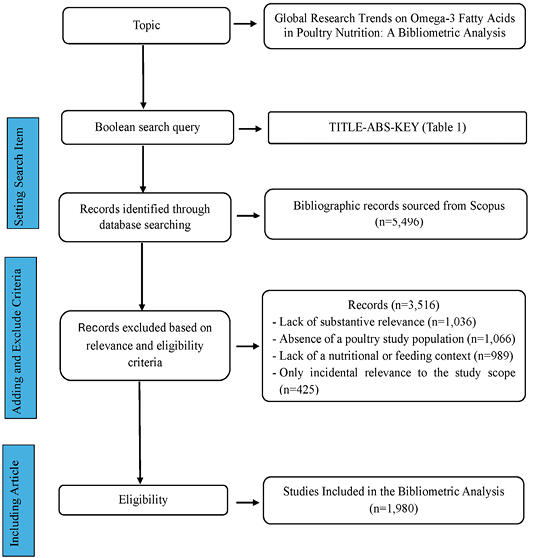
PRISMA of the data screening process on omega-3 fatty acids in poultry nutrition.
Numerical flow of records
The Scopus search identified 5,496 records published between 1959 and 2025. All retrieved articles underwent eligibility screening for substantive relevance to omega-3 fatty acids in poultry nutrition. Records were excluded if they lacked a direct dietary context, did not involve a poultry study population, or mentioned the keywords only incidentally. In total, 3,516 records were excluded, leaving a final bibliometric dataset of 1,980 eligible research articles spanning 1962 to 2025. Thus, although the initial search window opened in 1959, no eligible articles published between 1959 and 1961 met the inclusion criteria (Figure 1).
Bibliometric and science mapping analysis
Analysis was conducted using the Bibliometrix package in R . Performance indicators included annual scientific production, leading authors, journals, and country-level contributions. To map intellectual structures, VOSviewer was used for network visualization. Keyword co-occurrence based on author keywords identified major research themes, while network maps illustrated thematic clusters, including fatty acid supplementation, product enrichment, and functional poultry foods.
RESULTS
Main information
The bibliometric dataset comprises 1,980 research articles published between 1962 and 2025, originating from 407 sources (journals) (Table 2). The field shows an annual growth rate of 8.32%, indicating a sustained expansion of research on omega-3 fatty acids in poultry nutrition. The documents have an average age of 10.8 years and received an average of 26.48 citations per document, reflecting a substantial level of scholarly impact. Collectively, the articles contain 160,778 cited references, demonstrating a broad knowledge base underlying research in this field.
The dataset includes 5,154 keywords-plus and 3,493 author keywords, reflecting considerable thematic diversity. A total of 6,651 authors contributed to the publications, while only 49 documents were single-authored, involving 45 authors of single-authored documents. The average number of co-authors per document was 5.53, and 19.44% of the publications involved international co-authorship, indicating a predominantly collaborative research structure with a substantial level of international scientific cooperation. All 1,980 documents were research articles, ensuring consistency in document type for the subsequent bibliometric analyses.
Annual scientific production
The annual scientific production reveals a clear long-term expansion of research on omega-3 fatty acids in poultry nutrition from 1962 to 2025 (Figure 2). Research activity was very limited during the early period, with only isolated publications between 1962 and 1986. The number of publications began to increase in the late 1980s, reaching 3 articles in 1988 and 5 in 1989, followed by a gradual rise during the 1990s. A more evident expansion occurred after 1995, with annual production increasing from 7 articles in 1995 to 16 in 1997 and 24 in 2000.
Research output continued to increase during the 2000s, although with some annual fluctuations. Publications rose from 32 articles in 2001 to 48 in 2010 and reached 72 articles in both 2011 and 2012. During 2013–2018, annual production remained relatively high, ranging from 61 to 86 articles, with 86 articles published in 2018. A stronger growth phase emerged from 2019 onward, when annual publications increased to 104 in 2019 and 119 in 2020. Although production declined slightly to 111 articles in 2021, it increased to 139 articles in 2022, reached 147 in 2023, decreased marginally to 139 in 2024, and attained the highest annual output of 154 articles in 2025. The trend demonstrates sustained and accelerating scientific interest in omega-3 fatty acids in poultry nutrition, particularly during the most recent decade.
Most productive source
The distribution of publications across sources demonstrates that research on omega-3 fatty acids in poultry nutrition is concentrated in several prominent journals spanning poultry science, animal nutrition, and food science (Figure 3). Poultry Science was by far the most productive source, publishing 343 articles, representing approximately 17.3% of the total dataset. This was followed by Animals with 81 articles and British Poultry Science with 65 articles. Other important sources included Foods (46 articles), Journal of Animal Physiology and Animal Nutrition and Journal of Applied Poultry Research (40 articles each), and Asian-Australasian Journal of Animal Sciences (38 articles).
Table 2: Main information about data on omega-3 fatty acids in poultry nutrition.
| Description | Results |
| Timespan | 1962:2025 |
| Sources (journals) | 407 |
| Documents | 1980 |
| Annual growth rate % | 8.32 |
| Document average age | 10.8 |
| Average citations per doc | 26.48 |
| References | 160778 |
| Document contents | |
| Keywords plus (id) | 5154 |
| Author's keywords (de) | 3493 |
| Authors | |
| Authors | 6651 |
| Authors of single-authored docs | 45 |
| Authors collaboration | |
| Single-authored docs | 49 |
| Co-authors per doc | 5.53 |
| International co-authorships % | 19.44 |
| Document types | |
| Article | 1980 |
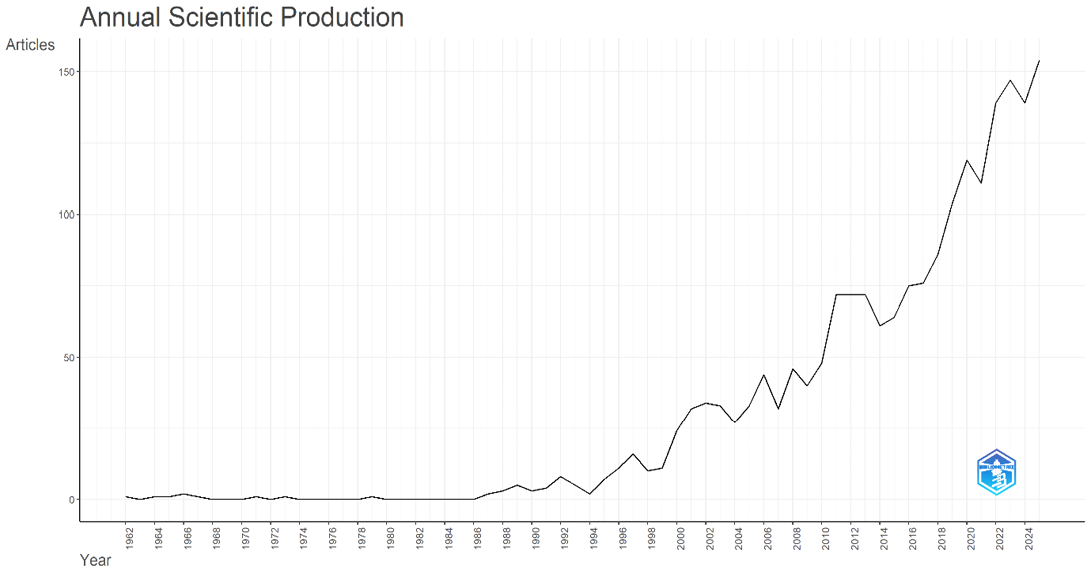
Annual scientific production on omega-3 fatty acids in poultry nutrition.
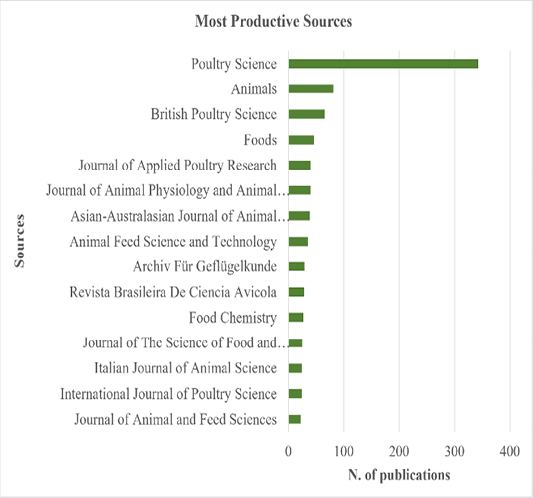
Most productive source of omega-3 fatty acids in poultry nutrition.
Additional contributions came from Animal Feed Science and Technology (35 articles), Archiv für Geflügelkunde (29 articles), and Revista Brasileira de Ciência Avícola/Brazilian Journal of Poultry Science (28 articles). Food-oriented journals also made substantial contributions, including Food Chemistry (27 articles) and Journal of the Science of Food and Agriculture (25 articles). International Journal of Poultry Science and Italian Journal of Animal Science each published 24 articles, while Journal of Animal and Feed Sciences contributed 22 articles.
The 15 most productive sources accounted for 867 articles, or approximately 43.8% of the 1,980 publications, indicating a substantial concentration of research output in a relatively small group of specialized journals. The dominance of poultry-specific journals, particularly Poultry Science and British Poultry Science, alongside animal nutrition and food science outlets, further reflects the multidisciplinary nature of omega-3 research in poultry nutrition.
Most productive affiliation
The analysis of institutional productivity reveals broad international participation in research on omega-3 fatty acids in poultry nutrition (Figure 4). Universiti Putra Malaysia was the most productive affiliation, contributing 73 articles, followed by Zagazig University with 60 articles. Josip Juraj Strossmayer University of Osijek and Oregon State University each contributed 48 articles, while China Agricultural University produced 46 articles. Universidade de Lisboa ranked next with 43 articles, followed by the University of Manitoba (37 articles) and the University of Life Sciences in Lublin (33 articles).
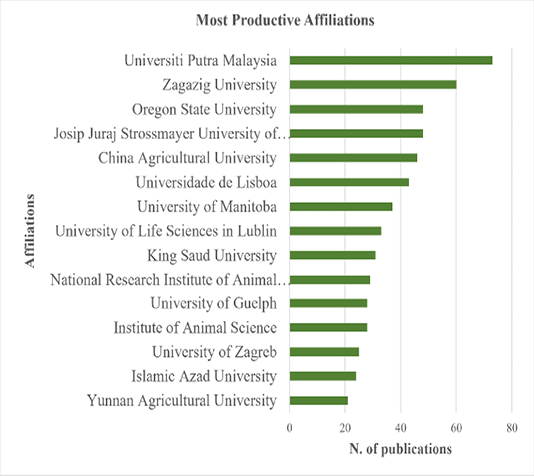
Most productive affiliation on omega-3 fatty acids in poultry nutrition.
Other productive affiliations included King Saud University (31 articles), National Research Institute of Animal Production (29 articles), Institute of Animal Science and University of Guelph (28 articles each), University of Zagreb (25 articles), Islamic Azad University (24 articles), and Yunnan Agricultural University (21 articles).
The leading affiliations represent institutions from Asia, Europe, North America, and the Middle East, highlighting the international distribution of research capacity in omega-3 fatty acids and poultry nutrition. The prominence of universities and research institutes specializing in animal science, poultry production, and agricultural research indicates their important contribution to the development of this research field.
Most productive authors
Analysis of author productivity highlights the top 15 most prolific researchers contributing to omega-3 fatty acid studies in poultry nutrition (Figure 5). Cherian, G. emerged as the most productive author with 47 articles, leading the field by a substantial margin. Panaite, T. D. ranked second with 26 articles, followed by Barroeta, A.C. and Kralik, G. with 21 articles each.
Other key contributors within this top tier include Prates, J.A.M., Sim, J.S., and Turcu, R.P. (20 articles each); Lordelo, M. M. and Vlaicu, P.A. (19 articles each); Kralik, Z, and Świątkiewicz, S. (17 articles each); and Baucells, M.D. and Gibson, R.A. (16 articles each).
The publication distribution among these leading authors reflects core research clusters driving the field. Their regional diversity underscores an active, international effort focused on key thematic areas, including dietary supplementation, fatty-acid deposition, product enrichment, and overall poultry performance.
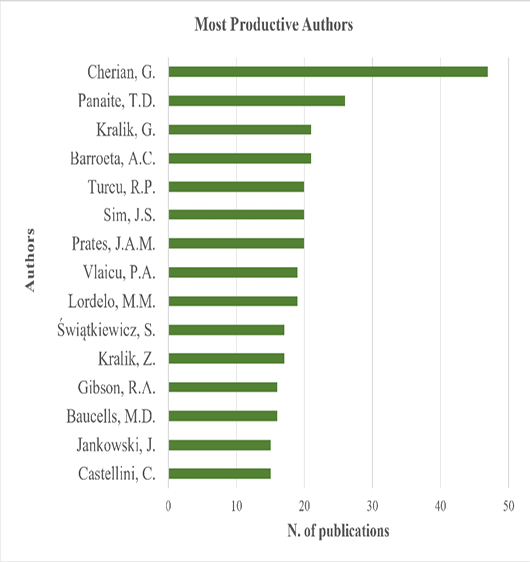
Most productive authors on omega-3 fatty acids in poultry nutrition.
Most cited documents
The citation analysis identified several highly influential publications within the literature on omega-3 fatty acids in poultry nutrition (Table 3). Hashemipour et al. (2013), published in Poultry Science, was the most highly cited document, with 450 total citations (TC), 32.14 citations per year (TCY), and a normalized total citation (NTC) of 11.49. Botsoglou et al. (2002) in British Poultry Science ranked second with 391 citations, followed by Crespo and Esteve-Garcia (2001) in Poultry Science with 292 citations. Lasekan et al. (2013), published in Waste Management, received 289 citations, with 20.64 citations per year and an NTC of 7.38.
Other highly cited documents included Rule et al. (2002) with 237 citations, Leskanich and Noble (1997) with 235 citations, Jung et al. (2010) with 218 citations, and Özogul et al. (2007) with 215 citations. Baucells et al. (2000) and Grobas et al. (2001), both published in Poultry Science, received 205 and 204 citations, respectively. Hargis and Van Elswyk (1993) accumulated 201 citations, while López-Ferrer et al. (2001a) and Scheideler et al. (1996) each received 200 citations.
Two publications by López-Ferrer et al. (2001b) were among the most cited documents, with 200 and 190 citations, respectively. These represent two distinct articles published in Poultry Science and are differentiated by their respective DOIs (10.1093/ps/80.6.741 and 10.1093/ps/80.6.753). Starčević et al. (2015) completed the top 15 with 186 citations and the second-highest normalized citation value among the listed recent publications (NTC= 7.05). Collectively, the 15 most cited documents accumulated 3,713 citations, illustrating the substantial influence of foundational and applied studies on fatty-acid enrichment, poultry product composition, lipid metabolism, and nutritional manipulation.
Table 3: Citation analysis of omega-3 fatty acids in poultry nutrition.
| Rank | Paper | TC | TCY | NTC | DOI | |||
| 1 | Hashemipour H, 2013, Poult Sci | 450 | 32.14 | 11.49 | 10.3382/ps.2012-02685 | |||
| 2 | Botsoglou NA, 2002, Brit Poult Sci | 391 | 15.64 | 5.95 | 10.1080/00071660120121436 | |||
| 3 | Crespo N, 2001, Poult Sci | 292 | 11.23 | 5.09 | 10.1093/ps/80.1.71 | |||
| 4 | Lasekan A, 2013, Waste Manage | 289 | 20.64 | 7.38 | 10.1016/j.wasman.2012.08.001 | |||
| 5 | Rule DC, 2002, J Anim Sci | 237 | 9.48 | 3.61 | 10.2527/2002.8051202x | |||
| 6 | Leskanich CO, 1997, World's Poult Sci J | 235 | 7.83 | 3.39 | 10.1079/wps19970015 | |||
| 7 | Jung S, 2010, Meat Sci | 218 | 12.82 | 4.84 | 10.1016/j.meatsci.2010.06.007 | |||
| 8 | Özogul Y, 2007, Food Chem | 215 | 10.75 | 5.63 | 10.1016/j.foodchem.2006.08.009 | |||
| 9 | Baucells MD, 2000, Poult Sci | 205 | 7.59 | 3.57 | 10.1093/ps/79.1.51 | |||
| 10 | Grobas S, 2001, Poult Sci | 204 | 7.85 | 3.55 | 10.1093/ps/80.8.1171 | |||
| 11 | Hargis PS, 1993, World's Poult Sci J | 201 | 5.91 | 2.34 | 10.1079/WPS19930023 | |||
| 12 | López-Ferrer S, 2001, Poult Sci | 200 | 7.69 | 3.48 | 10.1093/ps/80.6.741 | |||
| 13 | Scheideler SE, 1996, Poult Sci | 200 | 6.45 | 2.44 | 10.3382/ps.0751221 | |||
| 14 | López-Ferrer S, 2001, Poult Sci | 190 | 7.31 | 3.31 | 10.1093/ps/80.6.753 | |||
| 15 | Starčević K, 2015, J Sci Food Agric | 186 | 15.50 | 7.05 | 10.1002/jsfa.6805 | |||
Note: TC = Total Citations, TCY = TC per Year, NTC = Normalized TC.
Country scientific production
The distribution of scientific production across countries indicates broad international participation in research on omega-3 fatty acids in poultry nutrition (Figure 6). China was the most productive country, contributing 638 publications, followed by the United States with 362 publications and Poland with 340 publications. Turkey ranked fourth with 266 publications, followed by Italy (224), Canada (199), and Egypt (189). Iran also demonstrated substantial research activity, with 186 publications, while Spain and Brazil contributed 155 and 148 publications, respectively.
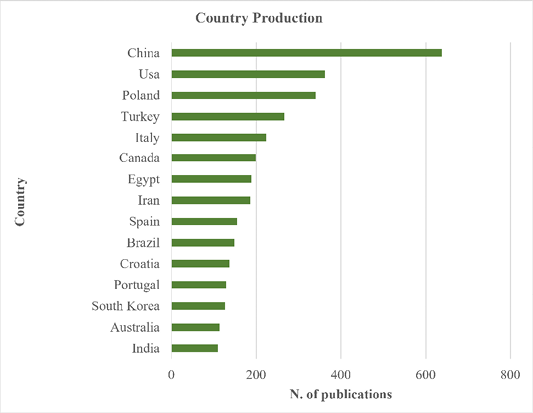
Country scientific production of omega-3 fatty acids in poultry nutrition.
Other notable contributors included Croatia with 137 publications, Portugal with 129, South Korea with 126, Australia with 114, and India with 110 publications. Overall, the distribution demonstrates that research on omega-3 fatty acids in poultry nutrition is geographically diverse, with strong contributions from Asia, Europe, North America, South America, and Oceania. The high publication output from China, the United States, and Poland indicates their prominent roles in advancing research in this field, while substantial contributions from countries such as Turkey, Italy, Canada, Egypt, and Iran further demonstrate the growing global interest in omega-3 nutrition and poultry production.
Corresponding author countries
The distribution of publications according to the corresponding author’s country demonstrates substantial international participation in research on omega-3 fatty acids in poultry nutrition (Figure 7). China was the leading corresponding-author country, with 267 articles (13.5%), followed by the United States with 136 articles (6.9%) and Poland with 120 articles (6.1%). Turkey ranked fourth with 99 articles (5.0%), followed by Italy with 91 articles (4.6%) and Iran with 80 articles (4.0%). Spain and Canada contributed 69 (3.5%) and 68 articles (3.4%), respectively. Brazil and Korea each produced 43 articles (2.2%), while Romania, India, Egypt, Australia, and Indonesia contributed 41 (2.1%), 40 (2.0%), 36 (1.8%), 35 (1.8%), and 35 articles (1.8%), respectively.
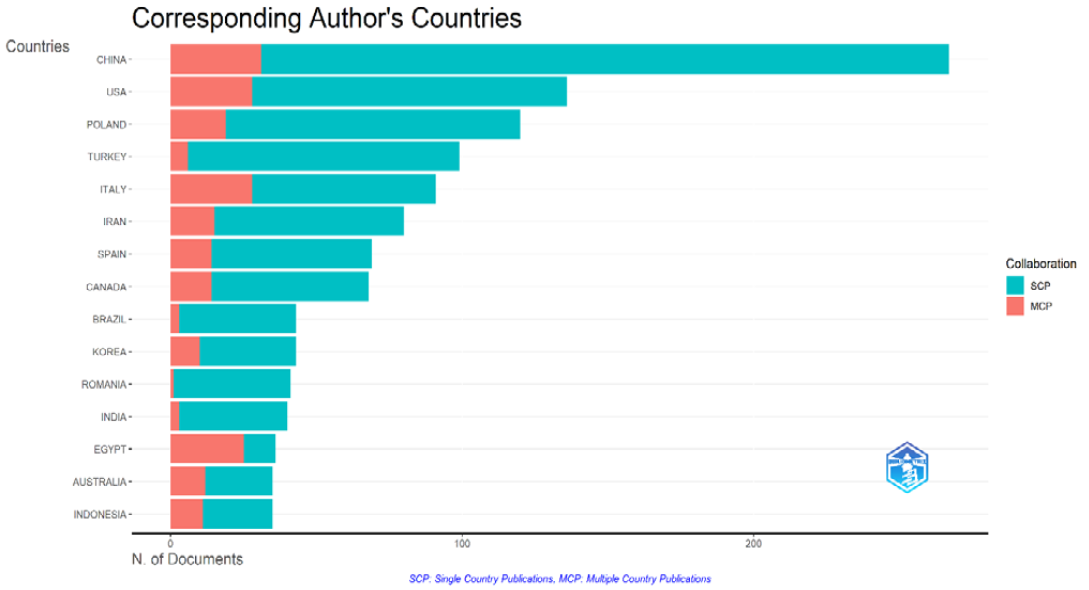
Corresponding authors’ countries on omega-3 fatty acids in poultry nutrition.
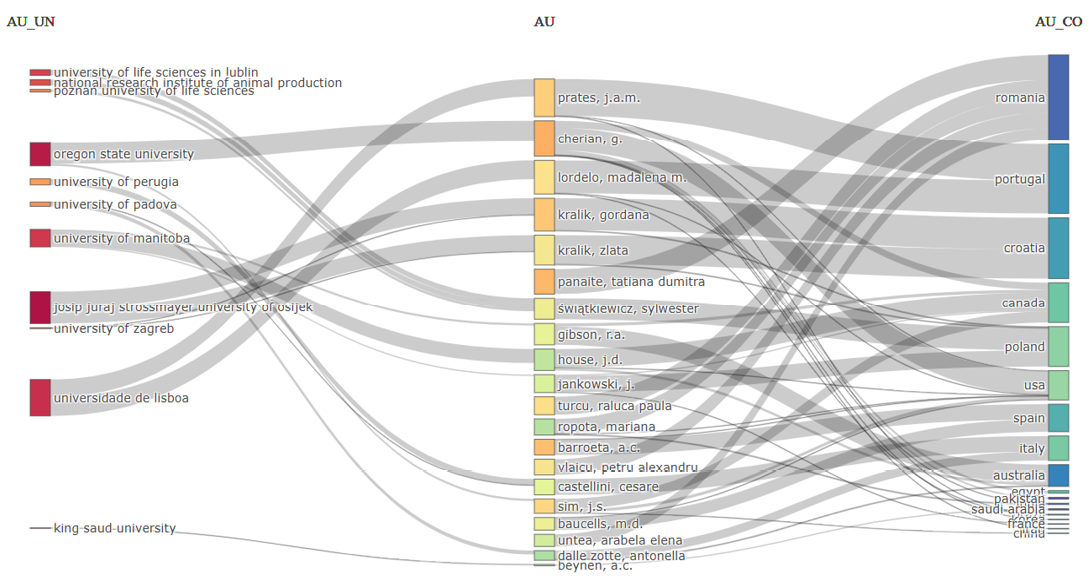
Three-field plot relationships among authors’ affiliations (AU_UN), leading authors (AU), and their respective countries (AU_CO) on omega-3 fatty acids in poultry nutrition.
The publication structure indicates a strong predominance of single-country publications (SCP) among most leading countries. China produced 236 SCP and 31 MCP, corresponding to an MCP rate of 11.6%. Similarly, the United States recorded 108 SCP and 28 MCP (20.6% MCP), while Poland had 101 SCP and 19 MCP (15.8% MCP). Turkey showed an even stronger domestic publication pattern, with 93 SCP and only 6 MCP, resulting in an MCP rate of 6.1%. Iran, Spain, and Canada had MCP rates of 18.8%, 20.3%, and 20.6%, respectively.
Italy demonstrated a comparatively higher level of international collaboration, with 28 MCP among 91 publications, corresponding to an MCP rate of 30.8%. Among the countries listed, Egypt showed the highest degree of international collaboration, with 25 of its 36 publications classified as MCP, yielding an MCP rate of 69.4%. Australia and Indonesia also showed relatively high levels of international collaboration, with MCP rates of 34.3% and 31.4%, respectively. Korea recorded an MCP rate of 23.3%, whereas Brazil and India showed lower levels of international collaboration, with MCP rates of 7.0% and 7.5%, respectively. Romania had the lowest MCP rate among the listed countries, with only 1 of 41 publications classified as MCP (2.4%).
Overall, the 15 countries presented in Figure 7 accounted for 1,203 publications, comprising 983 single-country publications (SCP) and 220 multiple-country publications (MCP). Thus, SCP represented approximately 81.7% of the publications, whereas MCP accounted for 18.3%. These findings indicate that research on omega-3 fatty acids in poultry nutrition is predominantly conducted within national research networks, particularly in the most productive countries such as China, the United States, Poland, and Turkey. However, the substantially higher MCP proportions observed in countries such as Egypt, Australia, Indonesia, and Italy demonstrate that international collaboration plays an important role in several research communities. The marked variation in MCP rates, ranging from 2.4% in Romania to 69.4% in Egypt, highlights differences in international research engagement across countries.
Three-field plot
The three-field plot (Figure 8) illustrates the relationships among institutional affiliations (AU_UN), authors (AU), and corresponding-author countries (AU_CO), providing an overview of the structure of international research participation in omega-3 fatty acids in poultry nutrition. The institutional field includes several prominent affiliations, particularly Oregon State University, Josip Juraj Strossmayer University of Osijek, Universidade de Lisboa, University of Life Sciences in Lublin, National Research Institute of Animal Production, and University of Zagreb.
The author field is dominated by several established contributors, including Prates, J.A.M., Cherian, G., Lordelo, M. M., Kralik, G., Kralik, Z., Świątkiewicz, S., Gibson, R.A., Jankowski, J., Barroeta, A.C., Castellini, C., Sim, J.S., and Baucells, M.D. The connections between affiliations and authors demonstrate that productive institutions are associated with specific research groups contributing repeatedly to the development of omega-3 poultry nutrition.
The corresponding-author country field shows broad geographical representation, including Portugal, Croatia, Poland, the United States, Spain, Canada, Australia, Italy, Egypt, Brazil, Korea, and India. Several authors are connected with more than one country, illustrating the international dimension of the research network. In particular, the plot highlights links between European institutions and countries such as Portugal, Croatia, and Poland, as well as connections involving research communities in North America, Australia, and Asia.
The three-field plot demonstrates a structured relationship between productive institutions, influential authors, and their corresponding countries. The network indicates that research productivity is concentrated within several established institutional–author groups, while the connections extending toward multiple countries demonstrate the international and collaborative nature of omega-3 fatty acid research in poultry nutrition.
Keyword co-occurrence and research themes
The keyword co-occurrence network reveals several closely interconnected research themes in omega-3 fatty acids in poultry nutrition (Figure 9). The central position and large node size of “fatty acids” indicate that fatty-acid metabolism and composition represent the core of the research field. “Egg quality,” “growth performance,” and “nutrition” are also prominent and highly connected terms, demonstrating the strong emphasis on both poultry performance and product quality.
A major thematic concentration links dietary lipid sources with poultry products, including soybean oil, linseed oil, flax, sunflower oil, fish oil, and n-3 eggs. This group reflects continued interest in dietary strategies for enriching poultry products with omega-3 fatty acids. Another prominent theme centers on DHA, n-3 fatty acids, liver, tocopherol, and vitamin E, indicating research on fatty-acid metabolism and oxidative protection.
The network also highlights themes related to poultry production and carcass characteristics, including breast meat, carcass quality, carcass traits, thigh, fat deposition, and amino acids. In addition, antioxidant activity, antioxidant status, and lipid metabolism form an important connected research area, emphasizing the relationship between omega-3 enrichment and oxidative stability. The co-occurrence structure demonstrates that research has become increasingly integrated, linking dietary omega-3 sources with fatty-acid metabolism, poultry performance, product quality, and antioxidant protection.
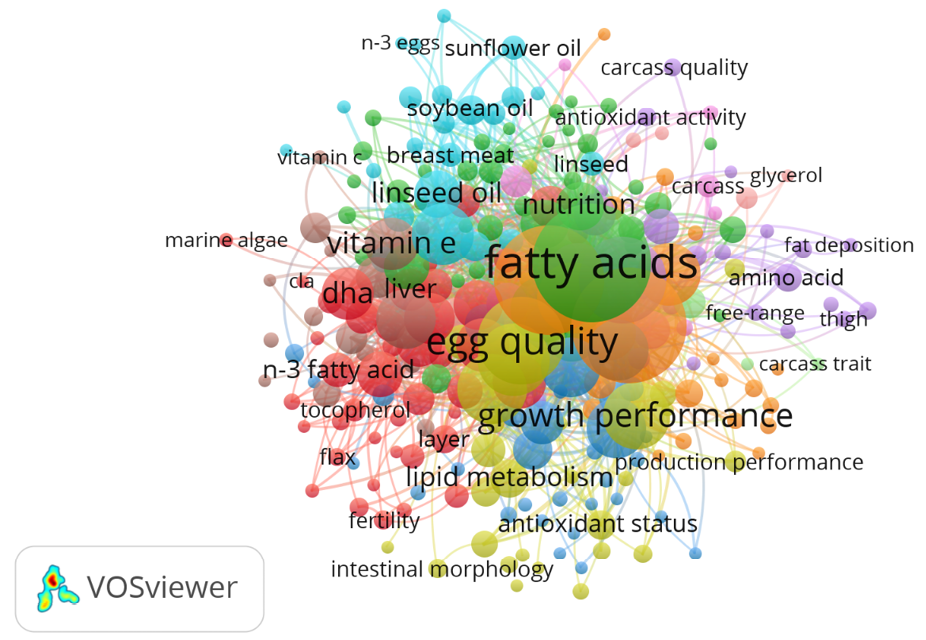
Keyword co-occurrence network and research themes on omega-3 fatty acids in poultry nutrition.
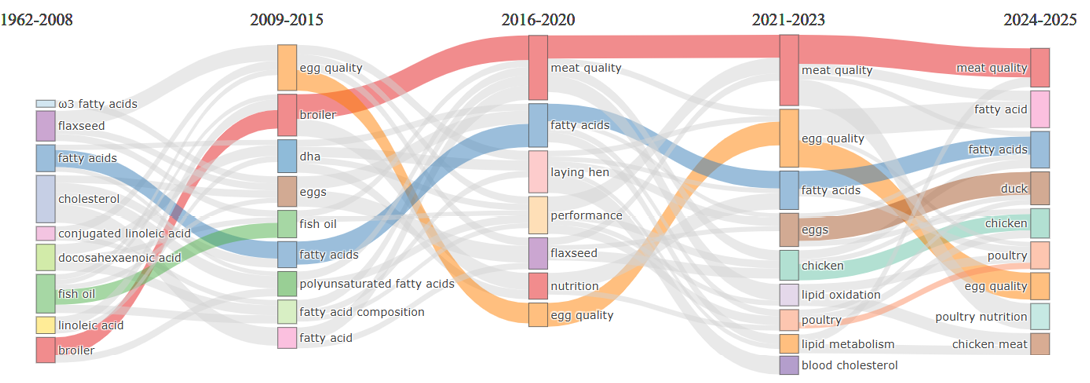
Thematic evolution of omega-3 fatty acids in poultry nutrition.
Thematic evolution
The thematic evolution map illustrates the progressive development of research on omega-3 fatty acids in poultry nutrition from 1962 to 2025 (Figure 10). The earliest period (1962–2008) was characterized by fundamental research on omega-3 fatty acids and lipid-related topics, with prominent themes including omega-3 fatty acids, fatty acids, cholesterol, docosahexaenoic acid (DHA), linoleic acid, conjugated linoleic acid, fish oil, and flaxseed. Broilers also emerged during this period, indicating an early focus on dietary fatty-acid sources and their effects on poultry lipid composition and metabolism.
During 2009–2015, the thematic structure shifted toward poultry product quality and fatty-acid enrichment. Egg quality became a prominent theme, accompanied by broiler, eggs, DHA, fish oil, fatty acids, polyunsaturated fatty acids, fatty-acid composition, and fatty acid. This transition indicates increasing attention to the application of omega-3 supplementation for modifying the fatty-acid composition and quality of poultry products, particularly eggs. The continued presence of fish oil and flaxseed-related themes also demonstrates the importance of dietary omega-3 sources during this period.
The 2016–2020 period showed further diversification toward production performance and product quality. Meat quality emerged as the most prominent theme, while fatty acids, laying hen, performance, flaxseed, nutrition, and egg quality also became strongly represented. The persistence of egg quality together with the emergence of meat quality suggests that research expanded from fatty-acid enrichment of eggs toward a broader evaluation of poultry products and productive responses to dietary omega-3 supplementation.
Between 2021 and 2023, the thematic structure became increasingly integrated, with meat quality and egg quality remaining central themes alongside fatty acids, eggs, chicken, poultry, lipid oxidation, lipid metabolism, and blood cholesterol. The emergence of lipid oxidation indicates growing attention to the oxidative stability of omega-3-enriched poultry products, which is particularly relevant because increased polyunsaturated fatty acids may increase susceptibility to oxidation. At the same time, the appearance of chicken and poultry reflects a broader application of omega-3 research across poultry production systems.
In the most recent period (2024–2025), meat quality remained the dominant theme, alongside fatty acids, duck, chicken, poultry, egg quality, poultry nutrition, and chicken meat. The appearance of duck alongside chicken and poultry indicates increasing diversification of the species investigated, while the persistence of poultry nutrition suggests a stronger emphasis on dietary strategies as a means of influencing product characteristics.
The thematic evolution demonstrates a clear transition from early research centered on basic fatty-acid and lipid metabolism toward integrated research addressing dietary nutrition, poultry performance, egg and meat quality, oxidative stability, and multiple poultry species.
This evolution suggests that the field has moved from identifying and manipulating dietary omega-3 sources toward a more comprehensive approach that links nutritional intervention with poultry production and the quality and stability of animal-derived food products.
Countries’ collaboration
The country collaboration network illustrates extensive international partnerships in research on omega-3 fatty acids in poultry nutrition (Figure 11). The strongest collaboration was observed between Egypt and Saudi Arabia, with 32 joint publications, representing the most
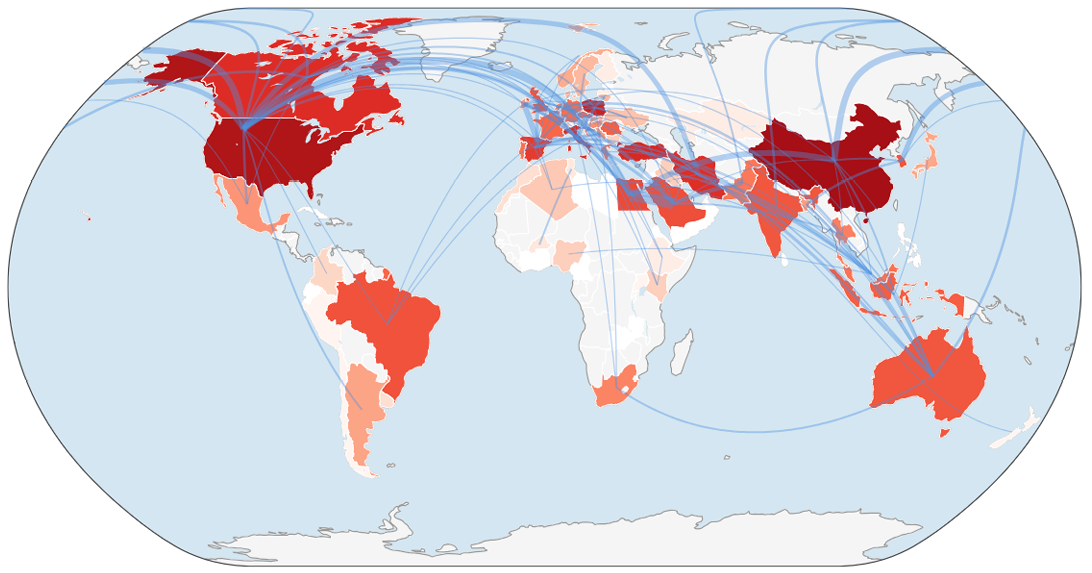
Countries’ collaboration world map on omega-3 fatty acids in poultry nutrition.
prominent bilateral link in the network. Other strong collaborations were identified between the United States and Egypt (13 publications), the United States and Canada (11), China and Egypt (11), and France and Ireland (11). These links indicate the presence of well-established research partnerships connecting major research communities across different regions.
Several other notable collaborations were observed. Iran collaborated with Malaysia in 6 publications, while Egypt collaborated with Ireland in 6 publications. Australia showed strong links with Indonesia (5 publications) and Bangladesh (4), whereas Italy demonstrated multiple international connections, including collaborations with Saudi Arabia and Spain (5 publications each) and with Australia, the Czech Republic, Egypt, France, Ireland, and the United Kingdom (3–4 publications). Poland also maintained notable partnerships with Italy (5 publications), Lithuania (4), Canada (3), and Ukraine (3). China collaborated with Canada (4), Indonesia and Korea (3 each), and several other countries, while the United States maintained substantial collaborations with Canada (11), Egypt (13), Iran and Korea (9 each), and the United Kingdom (7).
The collaboration network demonstrates that research on omega-3 fatty acids in poultry nutrition is highly international, involving countries from Asia, Europe, Africa, North and South America, and Oceania. Although several strong bilateral partnerships, particularly Egypt–Saudi Arabia, USA–Egypt, USA–Canada, China–Egypt, and France–Ireland, dominate the network, numerous lower-frequency connections create a broad and interconnected global collaboration structure. These patterns indicate that international research partnerships have become an important component of scientific development in omega-3 poultry nutrition.
DISCUSSION
Growth and development of research on omega-3 fatty acids in poultry nutrition
The bibliometric analysis demonstrates a sustained expansion of research on omega-3 fatty acids in poultry nutrition between 1962 and 2025. The final dataset comprised 1,980 research articles, with an annual growth rate of 8.32%, indicating a substantial long-term increase in scientific activity. Publication output was extremely limited during the early decades, with only isolated studies appearing between 1962 and the mid-1980s. Research activity became more visible in the late 1980s and expanded progressively throughout the 1990s. A marked increase occurred after 2000, followed by stronger growth during the 2010s and a pronounced expansion after 2018. Annual publications increased from 104 articles in 2019 to 119 in 2020 and reached the highest output of 154 articles in 2025. This sustained growth suggests that omega-3 fatty acids have developed from a relatively specialized research topic into an established and multidisciplinary area of poultry nutrition.
The early research trajectory was largely associated with fundamental aspects of fatty-acid composition, lipid metabolism, cholesterol, and dietary fatty-acid manipulation. The importance of dietary intervention for modifying the fatty-acid profile of poultry products was highlighted in early work by Leskanich and Noble (1997), which established a scientific basis for subsequent investigations of omega-3 enrichment in poultry meat and eggs. As research activity expanded, increasing attention was given to omega-3-rich dietary sources, including fish oil, flaxseed, chia seed, and other plant-derived ingredients. López-Ferrer et al. (2001b) demonstrated the potential of dietary fatty-acid manipulation to increase omega-3 content in poultry meat, while Cherian (2015) further emphasized the role of lipid nutrition and metabolism in poultry production. These studies contributed to the transition from basic lipid research toward practical nutritional strategies for producing value-added poultry products.
The continued increase in publication output also reflects growing interest in the broader biological and nutritional functions of omega-3 fatty acids. Research has increasingly considered not only fatty-acid deposition but also bird health, physiological responses, metabolic efficiency, and reproductive performance. Alagawany et al. (2019) reported that omega-3 fatty acids can influence fatty-acid composition as well as health and physiological performance, while Lee et al. (2019) emphasized their potential roles in immune function, metabolic efficiency, and reproductive performance.
Another important driver of research growth is the increasing recognition of the human health value of omega-3 fatty acids. ALA, EPA, and DHA have been associated with cardiovascular, cognitive, and immune benefits, encouraging interest in poultry meat and eggs as alternative dietary sources of these fatty acids ; . This has strengthened the connection between poultry nutrition, functional food production, and human nutrition. At the same time, concerns regarding the sustainability of marine-derived omega-3 sources have stimulated research into alternative sources, particularly plant oils and microalgae. Microalgae have attracted attention as sustainable sources of DHA and EPA, broadening the research agenda toward feed-resource sustainability and improved nutritional efficiency ; .
The publication trajectory indicates a clear transformation from foundational studies of lipid metabolism toward integrated research linking dietary omega-3 supplementation with poultry performance, product enrichment, animal health, functional food development, and sustainable feed resources. This progression is consistent with the increasingly multidisciplinary character of the field and suggests that future research will continue to emphasize sustainable omega-3 sources, efficient fatty-acid deposition, and improved stability and nutritional quality of enriched poultry products.
Scientific impact and leading research contributors
The revised bibliometric results highlight the important contribution of leading journals, institutions, and researchers to the development of research on omega-3 fatty acids in poultry nutrition. Among the 407 sources included in the dataset, Poultry Science was the most productive journal, with 343 articles, followed by Animals (81) and British Poultry Science (65). The prominence of Poultry Science reflects its central role in disseminating research on poultry nutrition, physiology, fatty-acid metabolism, and production systems. Other productive sources, including Foods, Journal of Animal Physiology and Animal Nutrition, Journal of Applied Poultry Research, and Animal Feed Science and Technology, further demonstrate that the field extends beyond specialized poultry journals into broader animal nutrition and food science disciplines.
Institutional productivity was similarly distributed across several international research centers. Universiti Putra Malaysia was the leading affiliation, with 73 articles, followed by Zagazig University (60), Josip Juraj Strossmayer University of Osijek and Oregon State University (48 each), and China Agricultural University (46). The presence of institutions from Asia, Europe, North America, and the Middle East indicates that research capacity in this field is geographically diverse. These institutions have contributed to studies examining dietary omega-3 supplementation, fatty-acid deposition, poultry productivity, and the nutritional quality of meat and eggs.
Author productivity further identifies several established contributors. Cherian, G. was the most productive author, with 47 articles, followed by Panaite, Tatiana Dumitra (26), Barroeta, A.C. and Kralik, Gordana (21 each), and Prates, J.A.M., Sim, J.S., and Turcu, Raluca Paula (20 each). The substantial publication output of Cherian is consistent with the author’s long-standing contribution to poultry lipid nutrition and fatty-acid enrichment. Earlier work by Cherian et al. (2002) examined fatty-acid composition and egg components, while Cherian (2015) further addressed the role of lipids in poultry nutrition and metabolism.
Citation analysis identifies influential studies that helped shape the research direction of the field. The most cited document was Hashemipour et al. (2013), with 450 citations, followed by Botsoglou et al. (2002) with 391 and Crespo and Esteve-Garcia (2001) with 292 citations. Other influential studies include López-Ferrer et al. (2001), Leskanich and Noble (1997), and Baucells et al. (2000), which contributed to understanding dietary fatty-acid manipulation and omega-3 enrichment of poultry products. Ayerza et al. (2002) and Betti et al. (2009a) provided important evidence for the use of omega-3-rich dietary sources to enhance the fatty-acid composition of poultry products without compromising production performance. More recent work by Elkin and Harvatine (2023) has expanded the field toward improved understanding of omega-3 deposition and alternative sources. The combined productivity and citation patterns demonstrate a mature and internationally distributed research field connecting poultry nutrition, lipid metabolism, product quality, and functional food development.
Global research distribution and international collaboration
The geographical distribution of research on omega-3 fatty acids in poultry nutrition demonstrates broad global participation, with particularly strong contributions from Asia, Europe, North America, and the Middle East. China was the most productive country, with 638 publications, followed by the United States (362), Poland (340), Turkey (266), and Italy (224). Canada, Egypt, Iran, Spain, and Brazil also made substantial contributions, with 199, 189, 186, 155, and 148 publications, respectively. These results indicate that research activity is concentrated in several major scientific regions while remaining widely distributed across countries.
Analysis of corresponding-author countries further reveals differences in the extent of international collaboration. China had the highest number of corresponding-author publications, with 267 articles, including 236 single-country publications (SCP) and 31 multiple-country publications (MCP), resulting in an MCP rate of 11.6%. The United States and Poland also showed predominantly domestic research patterns, with MCP rates of 20.6% and 15.8%, respectively. In contrast, Egypt demonstrated the highest proportion of international collaboration among the countries listed, with 25 of 36 publications classified as MCP (69.4%). Australia, Indonesia, and Italy also showed relatively high MCP rates of 34.3%, 31.4%, and 30.8%, respectively. Overall, the 15 leading corresponding-author countries comprised 81.7% SCP and 18.3% MCP, indicating that domestic research remains dominant while international partnerships are increasingly important in several countries.
The country collaboration network further illustrates the interconnected nature of the field. The strongest bilateral collaboration occurred between Egypt and Saudi Arabia, with 32 joint publications, followed by collaborations between the United States and Egypt (13), the United States and Canada (11), China and Egypt (11), and France and Ireland (11). Other notable partnerships included Iran–Malaysia (6), Egypt–Ireland (6), and Australia–Indonesia (5). Such international networks facilitate knowledge exchange and the sharing of research expertise and resources, which can accelerate progress in addressing complex poultry nutrition challenges . Overall, the findings demonstrate that omega-3 poultry nutrition has developed into a strongly international research field, although the intensity of collaboration varies substantially among countries.
Research themes and emerging directions in omega-3 poultry nutrition
The keyword co-occurrence and thematic evolution analyses indicate that research on omega-3 fatty acids in poultry nutrition has progressively expanded from fundamental lipid-related research toward integrated applications in poultry production, product quality, and nutritional value. In the current keyword network, “fatty acids” occupies the central position, with strong connections to “egg quality,” “growth performance,” and “nutrition.” This structure indicates that the field is primarily concerned with understanding fatty-acid metabolism while simultaneously evaluating the practical consequences of omega-3 supplementation for poultry performance and the quality of animal-derived products.
Egg enrichment represents one of the most established research themes. The co-occurrence network links egg quality with laying hens, n-3 eggs, and dietary lipid sources, particularly flaxseed, fish oil, soybean oil, and sunflower oil. Early research demonstrated that dietary manipulation can alter the fatty-acid composition of eggs, establishing the basis for the development of omega-3-enriched eggs . Subsequent research has continued to investigate strategies for increasing omega-3 deposition while maintaining egg production and quality.
A second major theme concerns the enrichment and nutritional improvement of poultry meat. Keywords such as breast meat, carcass quality, carcass traits, thigh, and fat deposition are closely connected with fatty-acid-related terms, indicating increasing interest in extending omega-3 enrichment beyond eggs. Dietary supplementation can modify the fatty-acid composition of broiler meat and improve its nutritional profile, although higher concentrations of polyunsaturated fatty acids may also increase susceptibility to lipid oxidation . Consequently, antioxidant-related terms, including vitamin E, tocopherol, antioxidant activity, and antioxidant status, form an important component of the research network. Previous studies have investigated antioxidant supplementation as a strategy for protecting omega-3-enriched poultry products against oxidative deterioration .
The thematic structure also highlights growing interest in alternative omega-3 sources and improved bioavailability. Microalgae have emerged as promising sources of DHA and EPA because they can provide long-chain omega-3 fatty acids without relying exclusively on marine fish resources ; . Recent work has therefore increasingly linked dietary source selection with the efficiency of omega-3 deposition in poultry products. A meta-analysis by Irawan et al. (2022) showed that omega-3 deposition in eggs varies according to the source and supplementation level, with flaxseed, fish oil, and algae-based ingredients representing important enrichment strategies.
Overall, the emerging research direction is toward an integrated framework connecting dietary omega-3 sources with fatty-acid metabolism, poultry growth and production performance, egg and meat quality, and oxidative stability. The increasing prominence of nutrition, antioxidant status, and alternative omega-3 sources suggests that future research will increasingly emphasize sustainable feed resources, efficient fatty-acid deposition, and preservation of the quality and stability of omega-3-enriched poultry products.
Intellectual structure and research directions
The intellectual structure of omega-3 poultry nutrition research reflects a transition from fundamental lipid biochemistry toward integrated applications in poultry performance and functional food production. The thematic clusters show a close relationship between lipid metabolism and practical outcomes, particularly broiler performance and egg enrichment. This suggests that current research is increasingly focused on translating knowledge of fatty-acid deposition into improvements in poultry productivity and product quality while maintaining bird health.
The cluster addressing alternative omega-3 sources and product stability represents an important emerging direction. Increasing attention to microalgae as sources of long-chain omega-3 fatty acids is linked with research on antioxidants such as vitamin E and selenium, reflecting the need to address oxidative stability alongside omega-3 enrichment. Consequently, the research agenda is expanding from determining how effectively omega-3 can be incorporated into poultry products toward achieving enrichment with greater product stability and environmental sustainability.
The intellectual structure indicates that future research will likely emphasize the integration of dietary strategies, fatty-acid metabolism, poultry performance, functional food development, sustainable omega-3 sources, and oxidative protection. This direction is consistent with growing interest in improving omega-3 bioavailability while maintaining the nutritional quality and stability of enriched poultry products.
CONCLUSION
This bibliometric analysis demonstrates that research on omega-3 fatty acids in poultry nutrition has undergone sustained growth and has developed into a multidisciplinary research field. The revised analysis reveals increasing scientific attention to dietary omega-3 supplementation, poultry performance, fatty-acid enrichment, and the nutritional quality of meat and eggs. The research landscape is shaped by major contributions from established poultry science, animal nutrition, and food science journals, as well as productive institutions and research groups across multiple regions.
The thematic and intellectual analyses further indicate a clear progression from fundamental studies of fatty-acid metabolism toward integrated research addressing poultry performance, egg and meat quality, oxidative stability, and alternative omega-3 sources. International collaboration has also become an important feature of the field, although the extent of collaboration varies substantially among countries. Future research should increasingly focus on sustainable omega-3 sources, efficient fatty-acid deposition and bioavailability, and strategies to maintain the oxidative stability and nutritional quality of omega-3-enriched poultry products.
ACKNOWLEDGEMENTS
The authors would like to express their gratitude to the Department of Animal Nutrition and Feed Technology, Faculty of Animal Science, IPB University, and the Center for Tropical Animal Studies (CENTRAS), IPB University, for providing the necessary facilities and institutional support to conduct this research. Special thanks are extended to the technical staff and colleagues who provided valuable insights during the data collection and investigation stages of this bibliometric study. The authors also wish to thank the anonymous reviewers for their constructive comments, which significantly improved the clarity and scientific rigor of this manuscript.
NOVELTY STATEMENT
This study provides a comprehensive bibliometric mapping of global research on omega-3 fatty acids in poultry nutrition. Unlike conventional narrative reviews, the study quantitatively examines the intellectual structure, research development, and international collaboration within the field using bibliometric and science-mapping approaches. The analysis identifies major research hotspots, productive authors, institutions, countries, influential publications, and emerging thematic areas, providing a data-driven perspective on the evolution of omega-3 research in poultry nutrition. The findings also highlight emerging research directions related to poultry health, product quality, sustainable omega-3 sources, oxidative stability, and fatty-acid bioavailability. This integrated analysis provides useful insights for researchers, nutritionists, and policymakers in identifying research priorities and supporting future developments in poultry nutrition and functional poultry products.
AUTHOR’S CONTRIBUTION
RM contributed to the conceptualization, data curation, formal analysis, visualization, and original draft preparation. MR contributed to the conceptualization, supervision, methodology, validation, and manuscript review and editing. NH contributed to the methodology, data interpretation, and manuscript review. WH contributed to the data collection, investigation, and technical support. All authors read and approved the final manuscript.
Generative AI and AI-assisted technology statement
The authors declare that no generative AI or AI-assisted technologies were used in the design, data collection, analysis, or interpretation of this study. AI-based tools were only used to support language editing and improve the clarity of the manuscript. All content, interpretations, and conclusions are the responsibility of the authors.
Conflict of interest
The authors have declared no conflict of interest.
References
- Alagawany M, Elnesr SS, Farag MR, Abd El-Hack ME, Khafaga AF, Taha AE, Tiwari R, Yatoo MI, Bhatt P, Khurana SK, Dhama K (2019). Omega-3 and omega-6 fatty acids in poultry nutrition: Effect on production performance and health. Animals, 9(8): 573. https://doi.org/10.3390/ani9080573 [CrossRef]
- Aria M, Cuccurullo C (2017). Bibliometrix: An R-tool for comprehensive science mapping analysis. J. Informetr., 11(4): 959–975. https://doi.org/10.1016/j.joi.2017.08.007 [CrossRef]
- Ayerza R, Coates W, Lauria M (2002). Chia seed (Salvia hispanica L.) as an omega-3 fatty acid source for broilers: Influence on fatty acid composition, cholesterol and fat content of white and dark meats, growth performance, and sensory characteristics. Poult. Sci., 81(6): 826–837. https://doi.org/10.1093/ps/81.6.826 [CrossRef]
- Baucells, M. D., Crespo, N., Barroeta, A. C., López-Ferrer, S., & Grashorn, M. A. (2000). Incorporation of different polyunsaturated fatty acids into eggs. Poult. Sci., 79(1), 51–59. https://doi.org/10.1093/ps/79.1.51 [CrossRef]
- Betti M, Perez TI, Zuidhof MJ, Renema RA (2009a). Omega-3-enriched broiler meat: 3. Fatty acid distribution between triacylglycerol and phospholipid classes. Poult. Sci., 88(8): 1740–1754. https://doi.org/10.3382/ps.2008-00449 [CrossRef]
- Betti M, Schneider BL, Wismer WV, Carney VL, Zuidhof MJ, Renema RA (2009b). Omega-3-enriched broiler meat: Effects on production, processing, and sensory characteristics. Poult. Sci., 88(5): 1085–1094. https://doi.org/10.3382/ps.2008-00158 [CrossRef]
- Botsoglou, N. A., Florou-Paneri, P., Christaki, E., Fletouris, D. J., & Spais, A. B. (2002). Effect of dietary oregano essential oil on performance of chickens and on iron-induced lipid oxidation of breast, thigh and abdominal fat tissues. Brit. Poult. Sci., 43(2), 223–230. https://doi.org/10.1080/00071660120121436 [CrossRef]
- Cherian G (2008). Omega-3 fatty acids in poultry products. Indian J. Anim. Sci., 78: 1159–1167. https://doi.org/10.1007/978-1-59745-330-1_13 [CrossRef]
- Cherian G (2015). Nutrition and metabolism in poultry: Role of lipids in early diet. J. Anim. Sci. Biotechnol., 6: 28. https://doi.org/10.1186/s40104-015-0029-9 [CrossRef]
- Cherian G, Holsonbake TB, Goeger MP (2002). Fatty acid composition and egg components of specialty eggs. Poult. Sci., 81(1): 30–33. https://doi.org/10.1093/ps/81.1.30 [CrossRef]
- Crespo, N., & Esteve-García, E. (2001). Dietary fatty acid profile modifies abdominal fat deposition in broiler chickens. Poult. Sci., 80(1), 71–78. https://doi.org/10.1093/ps/80.1.71 [CrossRef]
- Elkin RG, Harvatine KJ (2023). A review of recent studies on the enrichment of eggs and poultry meat with omega-3 polyunsaturated fatty acids. Poult. Sci., 102: 102938. https://doi.org/10.1016/j.psj.2023.102938 [CrossRef]
- Ganesan B, Brothersen C, McMahon DJ (2014). Fortification of foods with omega-3 polyunsaturated fatty acids. Crit. Rev. Food Sci. Nutr., 54(1): 98–114. https://doi.org/10.1080/10408398.2011.578221 [CrossRef]
- Grobas, S., Méndez, J., Lázaro, R., de Blas, C., & Mateo, G. G. (2001). Influence of source and percentage of fat added to diet on performance and fatty acid composition of egg yolks of two strains of laying hens. Poult. Sci., 80(8), 1171–1179. https://doi.org/10.1093/ps/80.8.1171 [CrossRef]
- Hargis PS, Van Elswyk ME (1993). Manipulating the fatty acid composition of poultry meat and eggs for the health-conscious consumer. World’s Poult. Sci. J., 49(3): 251–264. https://doi.org/10.1079/WPS19930023 [CrossRef]
- Hashemipour, H., Kermanshahi, H., Golian, A., & Veldkamp, T. (2013). Effect of thymol and carvacrol feed supplementation on performance, antioxidant enzyme activities, fatty acid composition, digestive enzyme activities, and immune response in broiler chickens. Poult. Sci., 92(8), 2059–2069. https://doi.org/10.3382/ps.2012-02685 [CrossRef]
- Irawan A, Ningsih N, Hafizuddin H, Rusli RK, Suprayogi WPS, Akhirini N, Hadi RF, Setyono W, Jayanegara A (2022). Supplementary n-3 fatty acid sources on performance and formation of omega-3 in eggs of laying hens: A meta-analysis. Poult. Sci., 101: 101566. https://doi.org/10.1016/j.psj.2021.101566 [CrossRef]
- Jung, S., Choe, J. H., Kim, B., Yun, H., Kruk, Z. A., & Jo, C. (2010). Effect of dietary mixture of gallic acid and linoleic acid on antioxidative potential and quality of breast meat from broilers. Meat Sci., 86(2), 520–526. https://doi.org/10.1016/j.meatsci.2010.06.007 [CrossRef]
- Kalakuntla S, Nagireddy NK, Panda AK, Jatoth N, Thirunahari R, Vangoor RR (2017). Effect of dietary incorporation of n-3 PUFA on performance, carcass characteristics, and fatty acid composition in broiler chickens. Poult. Sci., 96: 3850–3861. https://doi.org/10.1016/j.aninu.2017.08.001 [CrossRef]
- Kris-Etherton PM, Grieger JA, Etherton TD (2009). Dietary reference intakes for DHA and EPA. Prostaglandins Leukot. Essent. Fatty Acids, 81(2–3): 99–104. https://doi.org/10.1016/j.plefa.2009.05.011 [CrossRef]
- Kris-Etherton PM, Harris WS, Appel LJ (2002). Fish consumption, fish oil, omega-3 fatty acids, and cardiovascular disease. Circulation, 106(21): 2747–2757. https://doi.org/10.1161/01.CIR.0000038493.65177.94 [CrossRef]
- Lasekan, A., Abu Bakar, F., & Hashim, D. (2013). Potential of chicken by-products as sources of useful biological resources. Waste Manag., 33(3), 552–565. https://doi.org/10.1016/j.wasman.2012.08.001 [CrossRef]
- Lee SA, Whenham N, Bedford MR (2019). Review on docosahexaenoic acid in poultry and swine nutrition. Anim. Nutr., 5: 11–21. https://doi.org/10.1016/j.aninu.2018.09.001 [CrossRef]
- Leskanich CO, Noble RC (1997). Manipulation of the n-3 polyunsaturated fatty acid composition of avian eggs and meat. World’s Poult. Sci. J., 53(2): 155–183. https://doi.org/10.1079/WPS19970015 [CrossRef]
- López-Ferrer, S., Baucells, M. D., Barroeta, A. C., & Grashorn, M. A. (2001a). n-3 enrichment of chicken meat. 1. Use of very long-chain fatty acids in chicken diets and their influence on meat quality: Fish oil. Poult. Sc., 80(6), 741–752. https://doi.org/10.1093/ps/80.6.741 [CrossRef]
- López-Ferrer, S., Baucells, M. D., Barroeta, A. C., Galobart, J., & Grashorn, M. A. (2001b). n-3 enrichment of chicken meat. 2. Use of precursors of long-chain polyunsaturated fatty acids: linseed oil. Poult. Sci., 80(6), 753–761. https://doi.org/10.1093/ps/80.6.753 [CrossRef]
- Moher, D., Liberati, A., Tetzlaff, J., Altman, D. G., & PRISMA Group (2009). Preferred reporting items for systematic reviews and meta-analyses: the PRISMA statement. PLoS medicine, 6(7), e1000097. https://doi.org/10.1371/journal.pmed.1000097 [CrossRef]
- Özogul, Y., Özogul, F., & Alagoz, S. (2007). Fatty acid profiles and fat contents of commercially important seawater and freshwater fish species of Turkey: A comparative study. Food Chem, 103(1), 217–223. https://doi.org/10.1016/j.foodchem.2006.08.009 [CrossRef]
- Rule, D. C., Broughton, K. S., Shellito, S. M., & Maiorano, G. (2002). Comparison of muscle fatty acid profiles and cholesterol concentrations of bison, beef cattle, elk, and chicken. J. Anim. Sci., 80(5), 1202–1211. https://doi.org/10.2527/2002.8051202x [CrossRef]
- Scheideler, S. E., & Froning, G. W. (1996). The combined influence of dietary flaxseed variety, level, form, and storage conditions on egg production and composition among vitamin E-supplemented hens. Poult. Sci., 75(10), 1221–1226. https://doi.org/10.3382/ps.0751221 [CrossRef]
- Simopoulos AP (2000). Human requirement for n-3 polyunsaturated fatty acids. Poult. Sci., 79(7): 961–970. https://doi.org/10.1093/ps/79.7.961 [CrossRef]
- Simopoulos AP (2002). The importance of the ratio of omega-6/omega-3 essential fatty acids. Biomed. Pharmacother., 56(8): 365–379. https://doi.org/10.1016/S0753-3322(02)00253-6 [CrossRef]
- Sprague M, Dick JR, Tocher DR (2017). Impact of sustainable feeds on omega-3 long-chain fatty acids in farmed fish. Sci. Rep., 6: 21892. https://doi.org/10.1038/srep21892 [CrossRef]
- Starčević, K., Krstulović, L., Brozić, D., Maurić, M., Stojević, Z., Mikulec, Ž., Bajić, M., & Mašek, T. (2015). Production performance, meat composition and oxidative susceptibility in broiler chicken fed with different phenolic compounds. J. Sci. Food Agric., 95(6), 1172–1178. https://doi.org/10.1002/jsfa.6805 [CrossRef]
- Turchini GM, Torstensen BE, Ng WK (2009). Fish oil replacement in finfish nutrition. Rev. Aquac., 1(1): 10–57. https://doi.org/10.1111/j.1753-5131.2008.01001.x [CrossRef]
- Van Elswyk ME (1997). Comparison of n-3 fatty acid sources in laying hen rations for improvement of whole egg nutritional quality. Br. J. Nutr., 78(S1): S61–S69. https://doi.org/10.1079/BJN19970135 [CrossRef]
- Van Eck, N. J., & Waltman, L. (2010). Software survey: VOSviewer, a computer program for bibliometric mapping. Scientometrics, 84(2), 523-538. https://doi.org/10.1007/s11192-009-0146-3 [CrossRef]
- Van Elswyk ME, Sams AR, Hargis PS (1992). Composition, functionality, and sensory evaluation of eggs from hens fed dietary menhaden oil. J. Food Sci., 57(2): 342–344. https://doi.org/10.1111/j.1365-2621.1992.tb05490.x [CrossRef]
- Vannice G, Rasmussen H (2014). Position of the Academy of Nutrition and Dietetics: Dietary fatty acids for healthy adults. J. Acad. Nutr. Diet., 114(1): 136–153. https://doi.org/10.1016/j.jand.2013.11.001 [CrossRef]

Services
Article usage statistics
Loading…
Related articles
- Global Trends in Poultry Molting Research: A Bibliometric Analysis (2000 – 2024)Advances in Animal and Veterinary Sciences · 2026
- Extruded Feed in Poultry: A Bibliometric Analysis of Research Trends (1968-2025)Advances in Animal and Veterinary Sciences · 2025
- Global Trends in Agricultural Extension Research: A Bibliometric Analysis Using Scopus DatabaseSarhad Journal of Agriculture · 2025
- Research Trends on Cage-Free Housing System in Laying Hens: A Bibliometric AnalysisAdvances in Animal and Veterinary Sciences · 2024
- Mapping The Scientific Evolution of Phytogenic Feed Additives in Broiler Nutrition: A Bibliometric AnalysisAdvances in Animal and Veterinary Sciences · 2026
- The Impact of Organic Substrate Fatty Acids on the Fatty Acid Composition of Hermetia Illucens Larvae: A Meta-AnalysisAdvances in Animal and Veterinary Sciences · 2025