
This study evaluated the effect of dietary crude protein level on carcass traits, meat quality, and meat amino acids of wandering whistling ducks. A total of 108 wandering whistling ducks were grouped into three treatments, each with nine replications of four ducks. The treatments consisted of diets containing 12% (T1), 15% (T2), and 18% (T3) crude protein. Measured parameters included final body weight, carcass percentage, meat quality characteristics, and amino acid profile. Data were analyzed using analysis of variance (ANOVA), followed by Duncan’s multiple range test to identify significant differences. The results indicated that dietary protein level had no significant (P > 0.05) effect on most carcass traits, including carcass yield, non-carcass components, leg, breast, bone, and meat percentages. However, protein level significantly (P < 0.05) influenced final body weight, with the highest value observed at 18% protein. Protein level also significantly (P < 0.05) affected meat water content, crude protein, ash, cholesterol, water-holding capacity (WHC), and cooking loss. The 15% protein diet resulted in higher water content and WHC, whereas the 12% protein diet produced higher crude protein and ash contents. Meat cholesterol was highest at 18% protein, while cooking loss was highest at 15% protein. Dietary protein level also resulted in variations in meat amino acid concentrations among treatments. In conclusion, a dietary protein level of 12% can be used without adversely affecting carcass characteristics or overall meat quality in wandering whistling ducks.
Research Article · Volume 15, Issue 1, Pages 104–112, 14 November 2026 · Open Access
Influence of Dietary Protein Levels on Carcass Yield, Meat Quality, and Amino Acid Profile of Wandering Whistling Ducks
, , , ,
Affiliations & Notes ⌄
- 1Doctoral Program in the Department of Animal Science, Faculty of Animal and Agricultural Sciences, Diponegoro University, Semarang, 50275, Indonesia
- 2Nonruminant Nutrition Laboratory, Faculty of Animal Science, Hasanuddin University, Makassar, 90245, Indonesia
- 3Department of Animal Science, Faculty of Animal and Agricultural Sciences, Diponegoro University, Semarang, 50275, Indonesia
- *Correspondence | Jamilah Jamilah; Email: jamilah.doma@unhas.ac.id
Article Info ⌄
- Journal:
- Journal of Animal Health and Production
- Submitted Date:
- 7 May 2026
- Accepted Date:
- 31 August 2026
- Published Date:
- 14 November 2026
Abstract
INTRODUCTION
The wandering whistling duck (Dendrocygna arcuata) is a waterfowl spread across Southeast Asia and Australia . In Indonesia, the wandering whistling duck has long been known as a source of highly nutritious animal food. Its meat is believed to increase stamina and provide health benefits. The protein content of wandering whistling duck meat reaches 20.2%, higher than chicken (18.2%), goose (16.4%), and Alabio duck (11.3%) (Ministry of Health of the Republic of Indonesia, 2018). In addition, its low-fat content (4.3%) makes it a healthier alternative to chicken (25%), goose (31.5%), Alabio duck (27%), and duck (28.6%) (Ministry of Health of the Republic of Indonesia, 2018). The distinctive taste of wandering whistling ducks’ meat also increases consumer appeal, so this species has the potential to be developed as an exclusive food source.
Today, the population of wandering whistling ducks in Indonesia is mostly still in the wild, so its production potential is not yet optimal. Research by Khaing and Mya (2019) on wandering whistling ducks showed that, of the 30 nests observed, only 20% hatched eggs, while predators damaged 33.37%, floods damaged 26.66%, 13.33% were abandoned, and 6.66% were lost for no apparent reason. Predation, unstable environmental conditions, competition for food, and shrinking habitat due to land conversion are the main obstacles to developing the wandering whistling duck as a productive poultry species.
Domestication is an important strategy for optimizing the genetic potential of wandering whistling ducks. Domestication studies on Gallus gallus show that although its growth is initially slow, semi-intensive rearing can significantly improve its performance . In the context of domestication, one key factor to consider is the protein content of the feed. Proper protein content regulation can support optimal growth and carcass quality of poultry ; Baeza et al., 2012; , improve carcass composition ; , and improve meat quality ; . Research on the impact of protein on carcass quality and related parameters in wandering whistling ducks remains limited, with the primary references being chickens and ducks. Presently, breeders of wandering whistling ducks continue to utilize commercial chicken or duck feed; however, as the ducks near maturity, this feed is substituted with rice grain, while the rearing system remains semi-intensive. The application of these feeds to wandering whistling ducks is based solely on breeders’ experience and does not align with the specific nutritional requirements necessary for optimal growth, carcass production, or carcass quality. Indeed, data on the nutritional needs of wandering whistling ducks, especially protein, remain scarce. Owing to these conditions, the present study aimed to evaluate the effects of feed protein levels on the carcass quality, nutrient composition, and amino acid profiles of wandering whistling duck meat, as a basis for developing a sustainable, science-based wandering whistling duck farming system. Moreover, this research may serve as a guideline or reference for the development of adult wandering whistling ducks in Indonesia.
MATERIALS AND METHODS
Animals, diet, and housing
The present study employed 108 five-month-old wandering whistling ducks, with an average body weight of 543.77±38.58 g. These ducks were obtained from the wandering whistling ducks community in Demak, Central Java Province, Indonesia. The experimental design was a completely randomized design (CRD). The wandering whistling ducks were divided into three feeding treatment groups, with 9 replications; each replication consisted of 4 wandering whistling ducks (2 males and 2 females). All wandering whistling ducks were reared in a 1×1×0.7 m (length × width ×height) cage. Each cage compartment was equipped with a feeding place, a drinking place, an artificial nest, and a basin of water for bathing, which was provided only in the morning. All feed treatments were given ad libitum, and the rearing was carried out intensively according to animal welfare standards. Brown (1998) indicates that the wandering whistling duck is herbivorous and requires a relatively low protein intake, typically 15%-18% for adults. Based on this information, it was determined that the feed protein level should be set at 15%, with adjustments of ±3%, resulting in a low level of 12% and a high level of 18%.
The feeding treatments comprised T1 (12% protein), T2 (15% protein), and T3 (18% protein). These treatments were formulated from various feed ingredients, with their composition and nutrient content detailed in Table 1. The feeding regimen was implemented over a three-month period. The initial month served as an adaptation phase, during which the wandering whistling ducks were provided with a complete commercial feed for the first two weeks. Subsequently, in the third and fourth weeks, the commercial feed was gradually mixed with the treatment feed. In the second and third months, the wandering whistling ducks were fed the treatment feed ad libitum.
Table 1: Ingredients and chemical composition of the treatment diet.
| Feed ingredients | Treatments | ||
| T1 | T2 | T3 | |
| Corn (%) | 64 | 62 | 59 |
| Rice bran (%) | 27 | 21 | 15 |
| Soybean meal (%) | 2 | 10 | 19 |
| Meat bone meal (%) | 5 | 5 | 5 |
| Dicalcium phosphate (%) | 0.3 | 0.3 | 0.3 |
| Limestone (%) | 1.7 | 1.7 | 1.7 |
| Total (%) | 100 | 100 | 100 |
| Calculated nutrient composition* | |||
| Crude Protein (CP, %) | 12.5 | 15.2 | 18.3 |
| Crude Fat (Cfat, %) | 6.70 | 5.94 | 5.15 |
| Crude Fiber (CFib, %) | 4.55 | 4.33 | 4.13 |
| Metabolizable energy (Kcal/Kg) ** | 2868 | 2858 | 2838 |
| Lysine (%) | 0.53 | 0.72 | 0.94 |
| Methionine (%) | 0.23 | 0.26 | 0.30 |
| Phosphorus (%) | 0.68 | 0.67 | 0.67 |
| Calcium (%) | 1.17 | 1.19 | 1.21 |
* BEC Solution laboratory analysis results. **Calculated based on the Bolton formula EM = 40.81 x (0.87) CP + ((2.25 x CFat) + NFE) + 2.5) cited by Sugiharto et al. (2017).
Performance and carcass yield
Performance data were collected at the end of the rearing period by weighing all wandering whistling ducks. Prior to measurement, the wandering whistling ducks were fasted for 12 hours without feed, but were given access to drinking water. Following the fasting period, the wandering whistling ducks were weighed to determine their final live weight, and subsequently, one male duck per cage (nine ducks per treatment group) was slaughtered in accordance with halal procedures as prescribed by Islamic law. The slaughtering process involved severing the primary blood vessels, after which the ducks’ bodies were allowed to drain until all blood was expelled, and the feathers were then plucked. Post-plucking, the internal organs, head, neck, and legs of the wandering whistling ducks were excised and weighed to ascertain the carcass weight, calculated using the formula from Obajuluwa et al. (2021). The weighed carcasses were then divided into breast and thigh sections, which were weighed to determine their respective weights, and the percentages relative to live weight were calculated. For commercial purposes, the carcasses of wandering whistling ducks are primarily sold as breast and thigh sections; the carcass is bifurcated into these two parts. Each section was further dissected into meat and bones, weighed, and the percentage of live weight was calculated.
Meat quality
Following the separation of meat from the bones of wandering whistling ducks (nine ducks per treatment group), a comprehensive quality assessment was conducted. The evaluation of the meat’s physical attributes, such as water-holding capacity and cooking loss, followed the methodology outlined by Sopian et al. (2020). Concurrently, the meat’s nutrient profile, including moisture, crude fat, crude protein, and ash content, was analyzed using the AOAC (2006) standard procedures. Furthermore, the cholesterol levels in the meat were quantified through the Liebermann-Burchard method, as detailed in Mishra et al. (2024).
Meat amino acid profile
Two meat samples from wandering whistling ducks, representing each treatment group, were collected and analyzed to determine their amino acid profiles. The analysis was conducted utilizing an Ultra-Performance Liquid Chromatography (UPLC) instrument, following the methodology established by Rohman and Gandjar (2007) and Waters (2012).
Data analysis
The data were analyzed using the Statistical Package for Social Sciences (SPSS) version 20. A one-way analysis of variance with a completely randomized design was used. When the treatments had a significant effect (P<0.05) on the measured variables, Duncan’s Multiple Range Test (DMRT) was subsequently utilized for further analysis.
RESULTS AND DISCUSSIONS
Performance and carcass yield
The impact of various feed protein levels on performance and carcass yield is presented in Table 2. The study results showed that feeding with different protein levels significantly affected the final body weight of the wandering whistling ducks (P<0.05). However, they did not affect the percentage of carcass and non-carcass, the percentage of thighs, breasts, or bones, or the meat in the Wandering whistling duck. Adding higher levels of protein allows the conversion of feed into meat, increasing the final weight of the wandering whistling duck. This is in line with research by Wang et al. (2020), which found that ducks fed a high-protein diet (16% higher) performed better than those fed a low-protein diet, findings supported by Joshi et al. (2015) on Khaki Campbell ducks. Protein is an essential nutrient for muscle protein synthesis and body tissue growth .
Table 2: The performance and carcass traits of Wandering Whistling Ducks fed with different protein levels.
| Variable | Treatments (Protein level, %) | ||
| T1 (12) | T2 (15) | T3 (18) | |
| Final body weight (g) | 597.03± 54.47ab | 563.14± 36.83b | 612.41± 28.89a |
| Carcass yield (%) | 69.30±3.17 | 67.82±2.08 | 69.08±2.50 |
| Non carcass (%) | 30.70±3.10 | 32.18±2.00 | 30.92±2.5 |
| Leg (%) | 23.91±1.62 | 23.53±1.08 | 23.35±1.36 |
| Breast (%) | 45.22±1.98 | 44.15±1.57 | 45.59±1.80 |
| Bone (%) | 12.84±2.31 | 14.64±2.36 | 13.86±2.62 |
| Meat (%) | 37.14±3.86 | 36.89±2.21 | 37.53±2.92 |
ab Superscripts in the same row indicate significant differences (P<0.05).
Higher protein levels provide more amino acids needed for this anabolic process. Protein helps form body tissue, repair damaged tissue, and support production needs; its excess is converted into energy for livestock . Poultry performance is determined by genetic ability and adaptation to the environment. This can be one of the factors affecting the final weight of wandering whistling ducks when fed different protein concentrations in their ration. This can serve as a reference for the next domestication steps, where, at the time of the study, wandering whistling ducks that still retain natural characteristics were just beginning to adapt to environmental changes and the type of feed provided.
The percentage of bones, meat, and carcass parts, including the thighs and breast, is not affected by the provision of protein with different levels in wandering whistling ducks’ feed. Previous research on Peking ducks conducted by Wu et al. (2024) showed no effect of feed protein levels on carcass percentage. Moreover, the wandering whistling ducks used at the end of the study, after the disturbance, showed that their reproductive organs had developed, whereas in poultry, when they reach adulthood, their metabolism shifts from muscle growth to fat enlargement and the development of reproductive organs. Research by Liu et al. (2017) showed that increasing dietary protein levels can increase carcass protein content while reducing fat content. However, once a threshold is reached, further increases in protein do not significantly affect carcass composition. The average percentage of wandering whistling ducks carcasses was 67.82-69.30; this carcass percentage is higher when compared to Hybrid Ducks of 59.65% - 63.39% (Sofjan et al., 2020) and Cihateup-Alabio (CA) Ducks of 56.05% - 57.36% .
Meat composition
The composition of the wandering whistling ducks’ meat in the study is presented in Table 3. Based on the ANOVA results (Table 3), the level of feed protein had a significant effect (P <0.05) on water content, protein content, ash content, cholesterol content, water holding capacity, and cooking loss in wandering whistling ducks’ meat.
Table 3: The Meat Quality of Wandering Whistling Ducks fed with different protein levels.
| Variable | Treatments (Protein level, %) | ||
| T1 (12) | T2 (15) | T3 (18) | |
| Water content (%) | 70.26±0.83b | 71.70±0.68a | 71.34±1.74ab |
| Crude Protein (%) | 20.77±0.67a | 19.84±0.71b | 20.29±0.30ab |
| Crude Fat (%) | 6.32±0.78 | 5.26±0.79 | 5.63±1.55 |
| Ash (%) | 1.50±0.09a | 1.42±0.14ab | 1.37±0.11b |
| Cholesterol (mg/100 g) | 91.33±12.34b | 96.42±9.45b | 108.40±7.68a |
| Water holding capacity (WHC) (%) | 53.01±0.50a | 52.21±0.82b | 52.83±0.69ab |
| Cooking loss (%) | 29.47±1.06b | 30.58±0.73a | 28.85±0.71b |
ab Superscripts in the same row indicate significant differences (P<0.05).
In terms of water content, higher protein values tend to indicate higher water content. Protein and connective tissue content greatly influence meat’s water content. Protein can bind water (Water Holding Capacity/WHC). A decrease in protein levels, as seen in T2 compared to T1, can increase humidity by reducing the water-binding solid fraction. Low-protein feed can reduce muscle density and increase relative humidity; water in meat is strongly influenced by the myofibril structure, which depends on the muscle’s protein content .
The highest water content was observed at T2, which did not differ from T3. The water content at T2 was higher due to the looseness of the connective tissue in the meat, while the fat content was also lower (Table 3). Jayasena et al. (2013) explained that higher water content is typically found in meat with loose connective tissue and low fat content. Son et al. (2024) reported the opposite: that a decrease in protein levels did not affect the water content of broiler meat. The water content in this study was included in a good value for determining the quality of poultry meat which is usually 65-80% (Forest et al., 1975) and was still in the same range as the water content of wandering whistling ducks meat, which is 70.2% (Ministry of Health of the Republic of Indonesia, 2018), but higher when compared with the results of Hartati et. al (2025) on Magelang ducks, namely between 64.32-65.79%.
Different protein levels influence the crude protein content of wandering whistling ducks’ meat. The lowest value is in the 15% protein treatment, which yields a duplicate protein content of 18%, the same as 12%; however, 12% and 15% protein have significantly different protein content. In general, the protein content of wandering whistling ducks’ meat in this study is still within the range reported by the Ministry of Health of the Republic of Indonesia (2018), namely 20.02. The lowest protein level, namely 12%, can still produce 20.77% meat protein, which means that the wandering whistling ducks’ ability to convert feed into meat protein is very good. The crude fat content of wandering whistling duck meat is not affected (P>0.05) by differences in feed protein levels; a similar result was observed in the study by Ashour et al. (2020) using Egyptian Geese.
The ash content in meat decreases with increasing feed protein levels, likely because soybean meal is used more at higher protein levels. Soybean meal is known to contain phytic acid, a trypsin inhibitor ; . This content can reduce mineral absorption in the body , thereby reducing mineral retention in the meat of wandering whistling ducks. The results of the ash content of wandering whistling ducks’ meat are higher when compared to other poultry such as chickens (0.9 g), ducks (1.1 g), and geese (1 g) (Ministry of Health of the Republic of Indonesia, 2018), which means that the wandering whistling ducks’ meat is rich in mineral sources.
The cholesterol content of wandering whistling ducks’ meat increases with increasing protein levels in the feed, and the same thing also happened in the study of Barteczko and Lazek (2008) conducted on broilers. Increasing the protein level in the feed provides protein/amino acids that can be broken down into acetyl-CoA ; . Acetyl-CoA can be used to synthesize cholesterol in the liver , which is then passed into the blood and into meat. The ability of wandering whistling ducks to fly causes the breast muscles to be very active compared to the thigh muscles so that the resulting meat looks redder on the breast than the thighs (Figure 1), the red color is caused by myoglobin which functions in the transport and storage of oxygen in muscle cells and meat, and gives a distinctive color to the meat.
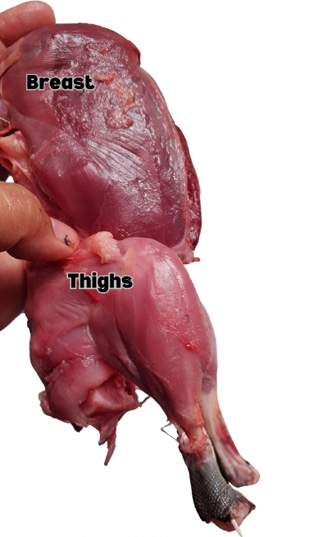
Wandering whistling ducks carcass.
Active muscles have higher cholesterol levels, the results of cholesterol analysis of wandering whistling ducks breast meat are 110.73 mg g-1 and thigh meat is 70.86 mg g-1, these results are in line with the results of cholesterol in turkeys and chickens where the more active part is the opposite of wandering whistling ducks, namely the thigh, has higher cholesterol than the breast (Galves et al., 2018; the mechanism can be seen in Figure 2. Although it is often called dangerous, the role of cholesterol for the wandering whistling ducks’ body is very important because it functions as an important component of cell membranes and is a precursor for steroid hormones, bile acids, and vitamin D, and plays an important role in livestock physiology.
The WHC results at T1 were higher than those at T3 and T2. The WHC value significantly affects meat quality because it reflects the extent of protein damage. The higher the WHC value, the better the meat binds water, preventing nutrient loss . According to Soeparno (2005) in Gultom et al. (2023), one factor affecting WHC meat is feed. This condition is thought to be caused by higher protein absorption, leading to increased WHC content in meat. The high WHC value in P1 is related to the meat’s high protein content. Protein plays an important role in increasing WHC by binding water within muscle fibers .
The highest cooking loss of wandering whistling duck meat was observed at T2, but remained within the standard threshold for poultry meat, as reported by Soeparno (2005), who stated that cooking loss values are generally 15-40%. This is influenced by the ability of wandering whistling ducks to synthesize protein, as the addition of protein to the ration binds much water, resulting in a low cooking loss percentage. Saputro et al. (2024) stated that cooking loss is inversely related to WHC; low WHC values are associated with higher cooking loss.
Amino acid profile
Amino acid profile in wandering whistling ducks’ meat can be seen in Table 4. The quality of wandering whistling ducks’ meat, especially related to amino acid content, is greatly influenced by the protein level in the feed. Proper nutrition has been shown to play an important role in maximizing the growth and health of poultry, including the production of essential amino acids needed for body protein synthesis. Various studies have shown the importance of feed protein composition in achieving optimal poultry meat quality. Amino acids in wandering whistling ducks’ meat with 12-18% protein treatment show data that almost all amino acids in wandering whistling ducks’ meat are higher than those in broiler chickens and cherry valley ducks ; , except for glycine. Glycine levels in broiler chickens are much higher than in all treatments, and in ducks, because broilers exhibit fast growth and a higher muscle composition. Glycine is an amino acid that functions to increase growth and intestinal absorption capacity .

Cholesterol mechanism in wandering whistling ducks breast meat.
Table 4: Meat amino acid of wandering whistling ducks fed with different protein levels.
| Parameter | Unit | T1 | T2 | T3 | Broiler* | Duck** |
| L-Alanine | mg/kg | 11590.02 | 12592.68 | 11924.87 | 9440 | 11250 |
| L-Arginine | mg/kg | 15775.09 | 16803.71 | 14590.98 | 9710 | 11310 |
| L-Aspartic acid | mg/kg | 14637.59 | 15101.57 | 13842.57 | 6170 | 17150 |
| Glycine | mg/kg | 10380.41 | 11016.49 | 10489.05 | 17120 | 7660 |
| L-Glutamic acid | mg/kg | 25940.37 | 26832.35 | 25006.06 | 11830 | 26500 |
| L-Histidine | mg/kg | 10251.09 | 9420.35 | 9027.37 | 3040 | 4970 |
| L-Isoleucine | mg/kg | 10241.71 | 11130.41 | 10601.11 | 5110 | 8180 |
| L-Leucine | mg/kg | 18328.65 | 20414.84 | 19263.93 | 9870 | 15100 |
| L-Lysine | mg/kg | 14671.81 | 16588.77 | 15056.45 | 8800 | 16270 |
| L-Valine | mg/kg | 11327.96 | 12036.5 | 11527.54 | 6010 | 9210 |
| L-Phenylalanine | mg/kg | 13321.5 | 12438.93 | 12021.08 | 4930 | 6680 |
| L-Proline | mg/kg | 7718.5 | 8590.795 | 8107.945 | 12360 | 6570 |
| L-Serine | mg/kg | 9912.24 | 10559.15 | 10017.71 | 6400 | 7050 |
| L-Threonine | mg/kg | 11902.63 | 12424.86 | 11996.77 | 5180 | 8610 |
| L-Tyrosine | mg/kg | 9476.475 | 8926.18 | 8223.635 | 3820 | 5840 |
* reference values were reported by He and Wu (2021). Reference values were reported by ** Zhang et al (2023). These reference values from the cited literature are presented for descriptive comparison only and were not statistically compared with T1–T3.
The amino acid that is most abundant in wandering whistling ducks’ meat is glutamate, the same as in ducks (Table 4). Glutamate (Glu) is an amino acid known to increase the umami taste in meat, including duck meat. This amino acid significantly affects the sensory properties and quality of meat. Research shows that glutamate is one of the amino acids that contribute to meat flavor and can provide important nutritional benefits when present at adequate concentrations ; . One of the main functions of glutamate is to improve taste. Research by Huo et al. (2021) found that glutamate improves meat flavor by optimizing its amino acid composition. In addition, Zhou et al. (2022) found that several amino acids, including glutamate, play a key role in meat aroma and taste. Further research also shows that the use of glutamate-containing food supplements in duck feed can improve meat quality .
The amino acid composition of wandering whistling ducks’ meat is also influenced by the maintenance process. For example, research by Inayat et al. (2023) found that different rearing methods can affect the fatty acid profile and meat quality of Pekin ducks, indicating a complex relationship between feed, environment, and meat nutrient composition. In addition, Zhou et al. (2022) reported that Liancheng duck meat contains distinct umami compounds and is enriched in glutamic acid, offering a new perspective on taste variation among duck species. The importance of glutamate is not only limited to the flavor profile, but also to the nutritional balance. Glutamate can serve as a safe and effective flavor enhancer in food, thereby improving the palatability of duck meat, thereby positively impacting consumer acceptability . The presence of glutamic acid in the meat of wandering whistling ducks provides a unique, appealing taste that consumers find appealing. However, not only glutamine; several amino acids can affect taste, including Arginine, Leucine, Isoleucine, Valine, Phenylalanine, Methionine, and Histidin, which impart a bitter taste; Glutamic acid and Aspartic, a pleasant fresh taste; and Glycine, Alanine, and Serine, a sweet taste .
CONCLUSION
Based on the research results, it can be concluded that a protein level of 12% can be fed to wandering whistling ducks without significantly disrupting carcass and meat quality. This indicates that a 12% protein level has the potential to serve as an alternative in wandering whistling ducks feed formulation while maintaining the quality of the resulting meat. Future research is recommended to evaluate combinations of different protein and energy levels to determine a more efficient protein level.
ACKNOWLEDGMENTS
The author would like to thank for funding this research through the Beasiswa Pendidikan Indonesia (BPI)/ The Indonesian Education Scholarship Program (202101121554), by Pusat Pelayanan Pembiayaan dan Asesmen Pendidikan Tinggi (Center for Higher Education Funding and Assessment), Ministry of Higher Education, Science, and Technology of Republic Indonesia and Lembaga Pengelola Dana Pendidikan (Endowment Fund for Education Agency), Ministry of Finance of Republic Indonesia.
Novelty Statement
The novelty of this study lies in providing new evidence on the relationship between dietary protein level and meat quality in Dendrocygna arcuata, a wild waterfowl species that remains relatively under-researched in terms of nutritional management. The findings demonstrate that dietary protein at 12% can maintain meat quality, providing a basis for further development of practical feeding strategies for Dendrocygna arcuata.
Author’s Contribution
Jamilah Jamilah: Conceptualization, Investigation, Data curation, Formal analysis, Writing original draft, and Project administration.
Lutfi Djauhari mahfudz: Conceptualization, Methodology, Supervision ,Writing original draft, and Writing review and editing.
Edjeng Suprijatna: Supervision, Methodology, Writing original draft, and Writing review and editing.
Hanny Indrat wahyuni: Supervision, Methodology , Writing review & editing, and providing suggestions during the research and manuscript preparation.
Sugiharto Sugiharto: Supervision, Writing review & editing, and providing critical input on the preparation and organization of the manuscript.
All authors contributed to the manuscript preparation, reviewed and approved the final version of the manuscript.
Ethical clearance
The Animal Research Ethics Committee, Faculty of Animal and Agricultural Sciences, Universitas Diponegoro (No. 59-01/A-05/KEP-FPP) reviewed and approved all experimental procedures.
Generative AI and AI assisted technology statement
The authors declare that no generative AI and AI assisted technology was used in the creation of this manuscript.
Conflict of interest
The authors have declared no conflict of interest.
References
- Adetunji A, Olarotimi O, Adu O, Oladeji I, Onibi G (2019). Meat quality and consumer acceptability of broiler chickens fed different levels of monosodium glutamate (MSG). Tavukçuluk Araştırma Dergisi, 16(1): 1–6. https://doi.org/10.34233/jpr.483081 [CrossRef]
- AOAC International. (2006). Official methods of analysis, 18th ed. AOAC International. Gaithersburg.
- Ashour EA, Abou-Kassem DE, Abd El-Hack ME, Alagawany M (2020). Effect of dietary protein and TSAA levels on performance, carcass traits, meat composition and some blood components of Egyptian geese during the rearing period. Open Access J., 10(4): 549. https://doi.org/10.3390/ani10040549 [CrossRef]
- Baéza E, Bernadet MD, Lessire M (2012). Protein requirements for growth, feed efficiency, and meat production in growing mule ducks. J. Appl. Poult. Res., 21(1): 21-32. https://doi.org/10.3382/japr.2010-00301 [CrossRef]
- Barteczko J, Lasek O (2008). Effect of varied protein and energy contents in mixture on meat quality of broiler chicken. Slovak J. Anim. Sci., 41(4): 173–178. Retrieved from https://sjas.ojs.sk/sjas/article/view/450
- Benahmed S, Askri A, de Rauglaudre T, Létourneau-Montminy MP, Alnahhas N (2023). Effect of reduced crude protein diets supplemented with free limiting amino acids on body weight, carcass yield, and breast meat quality in broiler chickens. Poult. Sci., 102 (11): 103041. https://doi.org/10.1016/j.psj.2023.103041 [CrossRef]
- Brown D (1998). Pheasants and waterfowl. ABK Publications. Burleigh BC. Australia.
- Carboneras C, Kirwan GM (2020). Wandering Whistling-Duck (Dendrocygna arcuata), version 1.0. In Birds of the World (del Hoyo J, Elliott A, Sargatal J, Christie DA, de Juana E. Editors). Cornell Lab of Ornithology, Ithaca, NY, USA. https://doi.org/10.2173/bow.wawduc1.01 [CrossRef]
- Depawole RR, Sudarma MA (2020). The effect of giving different protein levels on the production performance of ducks aged 2-10 weeks in East Sumba. J. Sain Petern. Indones., 15(3): 320–326. https://doi.org/10.31186/jspi.id.15.3.320-326 [CrossRef]
- Dwiloka B, Rusdiansyah R, Pramono YB (2021). Characteristics of unsaturated fatty acids and cholesterol of turkey sausage based on chest and thigh parts. J. Pangan Dan Agroindustri, 9(3): 173–180. https://doi.org/10.21776/ub.jpa.2021.009.03.5 [CrossRef]
- Forrest JC, Aberle ED, Hedrick HB, Judge MD, Markell RA (1975). Principles of meat science. W.H. Freeman and Co., San Francisco.
- Gálvez F, Domínguez R, Pateiro M, Carballo J, Tomasevic I, Lorenzo JM (2018). Effect of gender on breast and thigh turkey meat quality. Br. Poult. Sci., pp. 408-415. https://doi.org/10.1080/00071668.2018.1465177 [CrossRef]
- Gultom R, Ilmania LA, Rinca KF, Bollyn YMF, Luju MT, Achmadi PC (2023). Evaluation of the supplementation of bitter melon flour (momordica charantia) as a feed additive to physical and chemical content of broiler meat. J. Ilmiah Peternakan Terpadu, 11(2): 82. https://doi.org/10.23960/jipt.v11i2.p82-93 [CrossRef]
- Guo Q, Kong X, Hu C, Zhou B, Wang C, Shen Q (2019). Fatty acid content, flavor compounds, and sensory quality of pork loin as affected by dietary supplementation with L-arginine and glutamic acid. J. Food Sci., 84(12): 3445–3453. https://doi.org/10.1111/1750-3841.14959 [CrossRef]
- Hartati L, Hardyta G, Rahayu TP, Maulana AI (2025). Physical quality of male Magelang ducks meat (Anas platyrhynchos) by adding inulin in their diet. J. Nutr. Ternak Trop., 8(1): 26–33. https://doi.org/10.21776/ub.jnt.2025.008.01.3 [CrossRef]
- He W, Li P, Wu G (2021). Amino acid nutrition and metabolism in chickens. Adv. Exp. Med. Biol., 1285: 109–131. https://doi.org/10.1007/978-3-030-54462-1_7 [CrossRef]
- Huo W, Weng K, Gu T, Luo X, Zhang Y, Zhang Y, Xu Q, Chen G (2021). Effects of integrated rice-duck farming system on duck carcass traits, meat quality, amino acid, and fatty acid composition. Poult. Sci., 100(6): 101107. https://doi.org/10.1016/j.psj.2021.101107 [CrossRef]
- Inayat M, Abbas F, Rehman M, Mahmud A (2023). Physico-chemical parameters, oxidative stress, and fatty acid profile of American Pekin ducks (Anas platyrhynchos domesticus) raised under different production systems. Braz. J. Poult. Sci., 25(1). https://doi.org/10.1590/1806-9061-2022-1724 [CrossRef]
- Jayasena DD, Jung S, Kim HJ, Bae YS, Yong HI, Lee JH, Jo C (2013). Comparison of quality traits of meat from Korean native chickens and broilers used in two different traditional Korean cuisines. Asian-Australas J. Anim. Sci., 26(7): 1038–1046. https://doi.org/10.5713/ajas.2012.12684 [CrossRef]
- Joshi SK, Sahoo SK, Babu LK, Giri SC, Mondal D (2015). Effects of feeding different levels of proteins on the performance in Khaki Campbell ducks during starter stage. Indian J. Anim. Res., 49(1): 70–76. https://doi.org/10.5958/0976-0555.2015.00015.1 [CrossRef]
- Khaing NN, Mya KM (2019). Nest, egg and breeding success of Dendrocygna javanica (Lesser whistling duck) in Paleik in (lake), Sinkaing township, Mandalay division, Myanmar. Int. J. Sci. Res. Eng. Dev., 2(2): 625-630. https://doi.org/10.29322/IJSRP.9.06.2019.p9050 [CrossRef]
- Kumari A (2023). Cholesterol synthesis in sweet biochemistry: Remembering structures, cycles, and pathways by mnemonics (Kumari, A.). Academic Press, 2023. https://doi.org/10.1016/B978-0-443-15348-8.00026-0 [CrossRef]
- Leeson S, Summers JD (2005). Commercial poultry nutrition. 3rd ed. University Books, Ontario. Canada. 398 pp.
- Liu S, Niu Z, Min Y, Wang Z, Zhang J, He Z, Li H, Sun T, Liu F (2015). Effects of dietary crude protein on the growth performance, carcass characteristics, and serum biochemical indexes of Lueyang black-boned chickens from seven to twelve weeks of age. Braz. J. Poult. Sci., 17(1): 103–108. https://doi.org/10.1590/1516-635x1701103-108 [CrossRef]
- Liu SY, Selle PH, Raubenheimer D, Gous RM, Chrystal PV, Cadogan DJ, Cowieson AJ (2017). Growth performance, nutrient utilisation, and carcass composition respond to dietary protein concentrations in broiler chickens, but responses are modified by dietary lipid levels. Br. J. Nutr., 118(4): 250–262. https://doi.org/10.1017/S0007114517002070 [CrossRef]
- Manangi MK, Coon CN (2006). Evaluation of phytase enzyme with chicks fed basal diets containing different soybean meal samples. J. Appl. Poult. Res., 15(2): 292–306. https://doi.org/10.1093/japr/15.2.292 [CrossRef]
- Ministry of Health of the Republic of Indonesia (2018). Indonesian Food Composition Table 2017. Ministry of Health, Republic of Indonesia, Directorate General of Public Health.
- Mishra R, Tripathi M, Tripathi N, Singh J, Tiwari S (2024). Nutritional and anti-nutritional factors in soybean. Acta Sci. Agric., 8: 46–63. [CrossRef]
- Nath H, Samtiya M, Dhewa T (2022). Beneficial attributes and adverse effects of major plant-based foods anti-nutrients on health: A review. Hum. Nutr. Metab., 28: 200147. https://doi.org/10.1016/j.hnm.2022.200147 [CrossRef]
- Nuningtyas YF, Aulanni’am A, Sjofjan O, Nurgiartiningsih VMA, Furqon A, Lestari SP, and Natsir MH (2024). Dietary protein levels in the small intestine and carcass traits of cross-breed chickens. J. World Poult. Res., 14(1): 89-97. https://doi.org/10.36380/jwpr.2024.9 [CrossRef]
- Obajuluwa OV, Sanwo KA, Egbeyale LT, Fafiolu AO (2021). Carcass characteristics and meat quality of broiler chicken fed diets supplemented with Pausynistalia yohimbe and larvicide (Cyromazine). J. Anim. Health Prod., 9(1): 40-46. https://doi.org/10.17582/journal.jahp/2021/9.1.40.46 [CrossRef]
- Prasetyo B, Mahfudz LD, Nasoetion MH (2021). Physical quality of broiler meat kept in closed house at different altitudes. J. Sain Petern. Indones., 16(1): 61–67. https://doi.org/10.31186/jspi.id.16.1.61-67 [CrossRef]
- Purnamasari, Erwan, Syamsuhaidi, Sumiati, Wiryawan KG, Maslami dan Salsabila G (2024). Study of feed nutrition quality on super kampung chicken productivity in East Lombok Regency. J. Sains Teknol. Lingkungan 10(1): 162. https://doi.org/10.29303/jstl.v10i1.643 [CrossRef]
- Purslow PP, Oiseth S, Hughes J, Warner RD (2020). The structure and water-holding capacity of muscle tissues: A review. Meat Sci., 174: 108365
- Putra A, Rukmiasih, R, Afnan R (2015). Percentage and carcass quality of Cihateup-Alabio (CA) Ducks at different slaughtering ages. J. Anim. Prod. Process. Technol., 3(1): 27-32. https://journal.ipb.ac.id/index.php/ ipthp/article/view/10810, https://doi.org/10.29244/3.1.27-32 [CrossRef]
- Rahayu I (2001). Characteristics and behavior of Red Junglefowl (Gallus gallus spadiceus) in captivity. Med. Pet., 24(2): 45–50.
- Rohman A, Gandjar IG (2007). Chromatography methods for food analysis. Pustaka pelajar, Jogjakarta.
- Saputro WS, Darmawan MA, Saraswati PN, Yano AA, Akhirini N, Setyono W, Suprayogi WPS (2024). Influence of the dietary thermo-mechanically fermented soybean meal on chicken meat quality of Jawa Super male chicken. Anim. Prod., 26(3): 230-236. https://doi.org/10.20884/1.jap.2024.26.3.302 [CrossRef]
- Shi L, Tu BP (2015). Acetyl-CoA and the regulation of metabolism: mechanisms and consequences. Curr. Opin. Cell Biol., 33: 125–131. https://doi.org/10.1016/j.ceb.2015.02.003 [CrossRef]
- Sjofjan O, Adli DN, Muflikhien FA (2020). Concept replacing feeding of rice bran on hybrid duck with hump flour on carcass percentage, internal organ and abdominal fat. J. Nutr. Ternak Trop. Ilmu Pakan, 2(2): 78-85. https://doi.org/10.24198/jnttip.v2i2.28561 [CrossRef]
- Soeparno (2005). Meat science and technology, 4th ed. Gajah Mada University Press, Jogjakarta.
- Son J, Lee WD, Kim CH, Kim H, Hong EC, Kim HJ (2024). Effect of dietary crude protein reduction levels on performance, nutrient digestibility, nitrogen utilization, blood parameters, meat quality, and welfare index of broilers in welfare-friendly environments. Animals, 14(21): 3131. https://doi.org/10.3390/ani14213131 [CrossRef]
- Sopian Y, Wattanachant C, Wattanasit S (2020). Carcass characteristics and meat quality of Betong chicken fed with diets supplemented with crude glycerin. J. Poult. Sci., 57(4): 291–296. https://doi.org/10.2141/jpsa.0190071 [CrossRef]
- Sugiharto, S., T. Yudiarti, I. Isroli, E. Widiastuti dan F. D. Putra. 2017. Effect of feeding cassava pulp fermented with Acremonium charticola on growth performance, nutrient digestiblity and meat quality of broiler chicks. South African Journal of Animal Science. 47 (2): 130-138. https://doi.org/10.4314/sajas.v47i2.4 [CrossRef]
- Tahuk PK, Dethan AA, Sio S (2020). Meat and fat color characteristics of male Bali cattle fattened with green feed in smallholder farms. J. Trop. Anim. Sci. Technol., 2(2): 17–25. https://doi.org/10.32938/jtast.v2i2.592. [CrossRef]
- Wang QD, Zhang KY, Zhang Y, Bai SP, Ding XM, Wang JP, Peng HW, Tian G, Xuan Y, Su ZW, Zeng QF (2020). Effects of dietary protein levels and protease supplementation on growth performance, carcass traits, meat quality, and standardized ileal digestibility of amino acid in Pekin ducks fed a complex diet. Poult. Sci., 99(7): 3557–3566. https://doi.org/10.1016/j.psj.2020.03.047 [CrossRef]
- Wang XQ, Chen X, Tan HZ, Zhang DX, Zhang HJ, Wei S, Yan HC (2013). Nutrient density and slaughter age have differential effects on carcass performance, muscle and meat quality in fast and slow growing broiler genotypes. Br. Poult. Sci., 54(1): 50–61. https://doi.org/10.1080/00071668.2012.745927 [CrossRef]
- Wang Y, Yang H, Geerts C, Furtos A, Waters P, Cyr D, Wang S, Mitchell GA (2023). The multiple facets of acetyl-CoA metabolism: Energetics, biosynthesis, regulation, acylation and inborn errors. Mol. Genet. Metab., 138(1): 106966. https://doi.org/10.1016/j.ymgme.2022.106966 [CrossRef]
- Waters (2012). Acquity UPLC H-class and H-class bio amino acid analysis. Acquity UPLC H-Class and HClass Bio Amino Acid Analysis, pp. 4–9.
- Wu Y, Feng Y, Cao J, Jiang Y, Wang Q, Hou S, Wen Z (2024). Dietary crude protein reduction with addition of crystalline amino acids in growing pekin ducks housed in cascading cages: Influence on growth performance, carcass traits, and apparent nutrient digestibility. Agriculture, 14(7): 1102. https://doi.org/10.3390/agriculture14071102 [CrossRef]
- Yin L, Xu M, Huang Q, Zhang D, Lin Z, Wang Y, Liu Y (2023). Nutrition and flavor evaluation of amino acids in Guangyuan grey chicken of different ages, genders and meat cuts. Animals, 13(7): 1235. https://doi.org/10.3390/ani13071235 [CrossRef]
- Zhang X, Deng Y, Hu S, Hu X, Ma J, Hu J, Hu B, He H, Li L, Liu H, Wang J (2023). Comparative analysis of amino acid content and protein synthesis-related genes expression levels in breast muscle among different duck breeds/strains. Poult. Sci., 102(1): 102277. https://doi.org/10.1016/j.psj.2022.102277 [CrossRef]
- Zhou H, Yang Y, Wang L, Ye S, Liu J, Gong P, Qian Y, Zeng H, Chen X (2022). Integrated multi-omic data reveal the potential molecular mechanisms of the nutrition and flavor in Liancheng white duck meat. Front. Genet., 13: 939585. https://doi.org/10.3389/fgene.2022.939585 [CrossRef]

Services
Article usage statistics
Loading…
Related articles
- Effect of Dietary Selenium Conjugated Protein Black Soldier Fly Larvae Meal on Carcass Characteristics and Meat Fatty Acid Profiles in Broiler DuckAdvances in Animal and Veterinary Sciences · 2024
- Assessing the Effect of Dietary Protease Supplementation with Low Amino Acid Diet on Growth, Gut Enzyme Activity, Immunity, Meat Quality and Bone Morphometry in Broiler ChickenJournal of Animal Health and Production · 2025
- Effect of Flaxseed Supplementation of Feed on Growth, Carcass Yield, Meat and Fatty Acids Profile of Rabbit CarcassPakistan Journal of Zoology · 2018
- Feed Restriction in Kacang Goats: Major Impacts on Carcass Yield and Metabolic Gene Expression, but not Meat Fatty Acid ProfileAdvances in Animal and Veterinary Sciences · 2026
- Investigation of Tenebrio molitor Larvae as a Substitute for Imported Fish Meal: Impacts on Carcass Yield, Organ Health, Lipid Metabolism, and Thigh Meat Fatty Acid Content of BroilerJournal of Animal Health and Production · 2026
- Fatty Acid Profile, Carcass and Meat Quality Attributes of Rabbit Breeds in Ghana Fed Diets with Graded Levels of Palm (Elaeis guineensis) Kernel Oil ResidueAdvances in Animal and Veterinary Sciences · 2020