
The current study investigates the effects of irrigation water quality and foliar application of licorice extract on the growth indicators of Citrus aurantium (bitter orange) seedlings. A two-factor factorial experimental design was employed, assessing the interaction between freshwater versus saline water irrigation and the presence or absence of licorice extract foliar spray. Key growth parameters measured included plant height, leaf area, and dry weight. Results revealed statistically significant improvements (p < 0.001) in all growth indicators when licorice extract was applied, particularly under saline conditions, thereby partially mitigating the adverse effects of salt stress. ANOVA demonstrated that both main effects (water quality and licorice treatment) significantly influenced seedling growth, while their interaction was not statistically significant. These findings highlight the potential of licorice extract as a natural bio-stimulant for enhancing citrus seedling vigor in saline-prone regions.
Research Article · Volume 39, Issue 4, Pages 52–61, 26 October 2026 · Open Access
Mitigating Salinity Stress in Bitter Orange (Citrus aurantium) Seedlings Using Licorice Extract: A Two-Factorial Analysis of Growth Performance
Affiliations & Notes ⌄
- 1Presidency of University of Baghdad, Iraq.
- *Correspondence | Athraa Khairi Abd Oun; Email: athraa.k@uobaghdad.edu.iq
Article Info ⌄
- Journal:
- Pakistan Journal of Agricultural Research
- Submitted Date:
- 2 June 2026
- Accepted Date:
- 7 October 2026
- Published Date:
- 26 October 2026
From the article
- This study provides empirical evidence that the application of licorice extract significantly enhances the growth performance of bitter orange seedlings, particularly under saline irrigation conditions.
- The use of licorice extract improved plant height, leaf area, and dry weight, confirming its role as an effective biostimulant.
- The lack of significant interaction between water quality and licorice treatment suggests that licorice’s positive effects are consistent across water types, though the magnitude of improvement is greater under saline stress.
- The ANOVA results revealed that both independent variables—water quality and licorice treatment—significantly influenced plant height, leaf area, and dry biomass (p < 0.001), while their interaction effect was statistically non-significant (p > 0.05).
Selected from the article's own text.
Abstract
Introduction
Citrus species, including Citrus aurantium (bitter orange), are economically valuable fruit trees cultivated globally for their nutritional, medicinal, and industrial applications. However, their growth and productivity are frequently constrained by abiotic stresses, particularly salinity, which adversely affects plant physiology, morphology, and yield potential ; . In arid and semi-arid regions, the overuse of saline irrigation water exacerbates ion toxicity and osmotic stress in sensitive crops such as citrus .
Salinity stress leads to reduced water uptake, ionic imbalances (e.g., Na⁺ and Cl⁻ accumulation), and oxidative damage, all of which impair growth indicators like plant height, leaf area, and biomass accumulation ; . Mitigating the deleterious effects of salt stress through environmentally sustainable means is a significant focus in modern agriculture. Among natural bio-enhancers, plant-based extracts such as licorice (Glycyrrhiza glabra) have garnered attention due to their growth-promoting and stress-alleviating properties .
Licorice extract is rich in bioactive compounds such as flavonoids, saponins, and glycyrrhizin, which confer antioxidant activity and stimulate plant defense responses under stress conditions ; . Previous studies have shown that foliar applications of licorice extract improve physiological traits, enzyme activity, and nutrient uptake in various crops subjected to salinity and drought ; ; . Nonetheless, limited data are available regarding its effects on citrus seedlings, particularly under varying irrigation water quality.
This study aims to evaluate the combined effects of irrigation water salinity and foliar application of licorice extract on the growth indicators of Citrus aurantium seedlings. Using a two-factorial experimental design and statistical analysis (ANOVA), this research explores whether licorice extract can serve as a natural biostimulant to mitigate salinity-induced growth inhibition in citrus species.
Salinity stress remains a major abiotic constraint that negatively impacts citrus production. Several strategies, including the application of biostimulants and plant extracts, have been explored to mitigate its adverse effects. Recent studies have highlighted the effectiveness of licorice (Glycyrrhiza glabra) extract in enhancing plant tolerance under stress conditions through multiple physiological and biochemical mechanisms.
In a study by Shabani et al. (2019), licorice aqueous extract significantly improved the growth and chlorophyll content of maize under salinity stress, suggesting that bioactive compounds in the extract can enhance photosynthetic efficiency and cellular stability. Similarly, Moghaddam and Javanmard (2020) demonstrated that foliar application of licorice extract on tomato plants improved root and shoot biomass, relative water content, and ion homeostasis under saline irrigation. These findings are consistent with the hypothesis that licorice extract modulates stress-responsive pathways and reduces Na⁺ uptake while promoting K⁺ retention in plant tissues.
The antioxidant properties of licorice, attributed to flavonoids and phenolic compounds, were detailed by El-Shafey (2018), who reported elevated levels of enzymatic antioxidants (e.g., SOD, CAT) in wheat seedlings treated with licorice extract under drought stress. These antioxidants play a crucial role in detoxifying reactive oxygen species (ROS), which accumulate under salinity and drought, thereby preserving cellular integrity.
Farooq et al. (2020) further emphasized the biostimulant role of plant extracts, noting that licorice-treated plants exhibited enhanced osmolyte accumulation (e.g., proline), improved stomatal conductance, and better yield performance in saline environments.
In citrus-specific studies, Al-Harbi et al. (2008) observed significant reduction in shoot dry weight and leaf area in salt-stressed citrus rootstocks, highlighting the species’ sensitivity to saline conditions. In such contexts, biostimulants like licorice extract could serve as viable interventions. Chartzoulakis and Klapaki (2022) explored NaCl effects on pepper cultivars and noted that stress mitigation through organic foliar sprays resulted in better ion balance and plant water status. Notably, the mode of application and concentration of licorice extract are critical to its efficacy. Hashemi et al. (2015) observed that moderate licorice extract concentrations (2–5%) yielded optimal germination and seedling vigor in wheat, while higher doses caused phytotoxic effects. This dosage-dependent effect necessitates precise formulation when applied to perennial crops like citrus. In a recent controlled trial, Abbaspour and Jafari (2021) evaluated the foliar effects of licorice extract on lettuce and reported increased chlorophyll a and b contents, enhanced nutrient assimilation, and improved fresh and dry biomass. The study reinforced the relevance of licorice-based formulations in sustainable horticulture. Collectively, the literature supports the hypothesis that licorice extract acts as a multifaceted biostimulant, enhancing plant performance under stress by modulating physiological, biochemical, and molecular responses. However, further empirical research is needed to standardize application protocols in citrus species under field conditions.
Materials and Methods
Experimental design
A factorial experiment was conducted using a completely randomized design (CRD) with two factors: irrigation water quality (freshwater and saline water at 4 dS/m) and foliar licorice extract treatment (sprayed and unsprayed). Each treatment combination was replicated 15 times, resulting in a total of 60 experimental units.
Plant material and growth conditions
One-year-old Citrus aurantium (bitter orange) seedlings were used. The experiment was conducted in a controlled greenhouse at [Institution/Location] with day/night temperatures of 28 ± 2°C / 20 ± 2°C, 60–70% relative humidity, and a 14-h photoperiod. Plants were grown in 5 L pots filled with a sterilized loamy-sand soil.
Irrigation water quality
Freshwater control: Electrical conductivity (EC) of 0.5 dS/m.
Saline water: Prepared by dissolving NaCl to achieve EC of 4 dS/m. Irrigation was applied every three days to maintain field capacity.
Preparation and application of licorice extract
Licorice (Glycyrrhiza glabra) root extract was prepared by soaking 100 g of dried powder in 1 L of distilled water for 48 h at room temperature, followedby filtration. The final concentration was 10% (w/v).
Foliar spraying was done at two-week intervals over 8 weeks.
Each plant received ~50 mL of extract using a hand sprayer.
Table 1: Give it a title
| Descriptives | |||||
| Water_Quality | Licorice_Treatment | Plant_Height_cm | Leaf_Area_cm2 | Dry_Weight_g | |
| N | Freshwater | Licorice_Extract | 15 | 15 | 15 |
| No_Licorice | 15 | 15 | 15 | ||
| Saline | Licorice_Extract | 15 | 15 | 15 | |
| No_Licorice | 15 | 15 | 15 | ||
| Missing | Freshwater | Licorice_Extract | 0 | 0 | 0 |
| No_Licorice | 0 | 0 | 0 | ||
| Saline | Licorice_Extract | 0 | 0 | 0 | |
| No_Licorice | 0 | 0 | 0 | ||
| Mean | Freshwater | Licorice_Extract | 35.1 | 120 | 10.5 |
| No_Licorice | 30.0 | 107 | 9.36 | ||
| Saline | Licorice_Extract | 27.9 | 106 | 9.19 | |
| No_Licorice | 24.4 | 97.1 | 7.92 | ||
| Median | Freshwater | Licorice_Extract | 35.6 | 120 | 10.5 |
| No_Licorice | 29.7 | 106 | 9.44 | ||
| Saline | Licorice_Extract | 28.5 | 107 | 9.14 | |
| No_Licorice | 24.3 | 96.4 | 7.75 | ||
| Standard deviation | Freshwater | Licorice_Extract | 1.69 | 9.26 | 0.417 |
| No_Licorice | 1.99 | 6.22 | 0.509 | ||
| Saline | Licorice_Extract | 2.00 | 7.06 | 0.514 | |
| No_Licorice | 1.26 | 8.52 | 0.540 | ||
| Minimum | Freshwater | Licorice_Extract | 31.5 | 99.0 | 9.51 |
| No_Licorice | 26.2 | 98.6 | 8.52 | ||
| Saline | Licorice_Extract | 24.8 | 95.5 | 8.56 | |
| No_Licorice | 22.1 | 79.6 | 7.22 | ||
| Maximum | Freshwater | Licorice_Extract | 37.1 | 133 | 11.2 |
| No_Licorice | 33.2 | 122 | 10.4 | ||
| Saline | Licorice_Extract | 31.1 | 120 | 10.4 | |
| No_Licorice | 26.9 | 115 | 9.10 | ||
Plots Plant_Height_cm
Leaf_Area_cm2
Measured parameters
After 60 days, the following parameters were recorded:
Plant height (cm): Measured from soil surface to apical meristem.
Leaf area (cm²): Estimated using ImageJ software from scanned leaf images.
Dry weight (g): Above-ground biomass was oven-dried at 70°C until constant weight.
Statistical analysis
Data were analyzed using Jamovi 2.4.8. Two-way ANOVA was used to assess the main and interaction effects of water quality and licorice treatment on plant growth parameters.
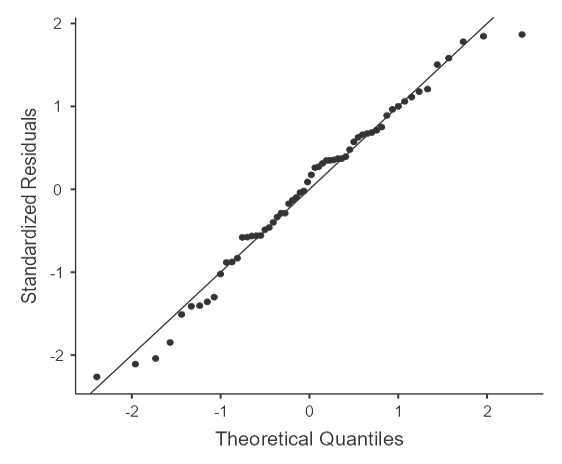
Assumption checks included Shapiro–Wilk test for normality and Levene’s test for homogeneity of variances.
Effect size was reported using partial η².
Post hoc Tukey’s HSD was performed where significant differences occurred (p < 0.05).
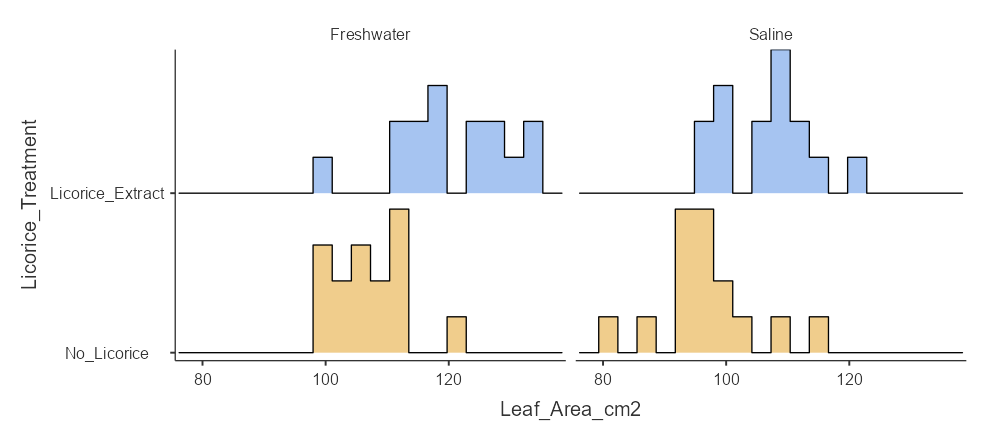
Leaf area distribution across water and licorice extract treatments.
Dry_Weight_g
Results
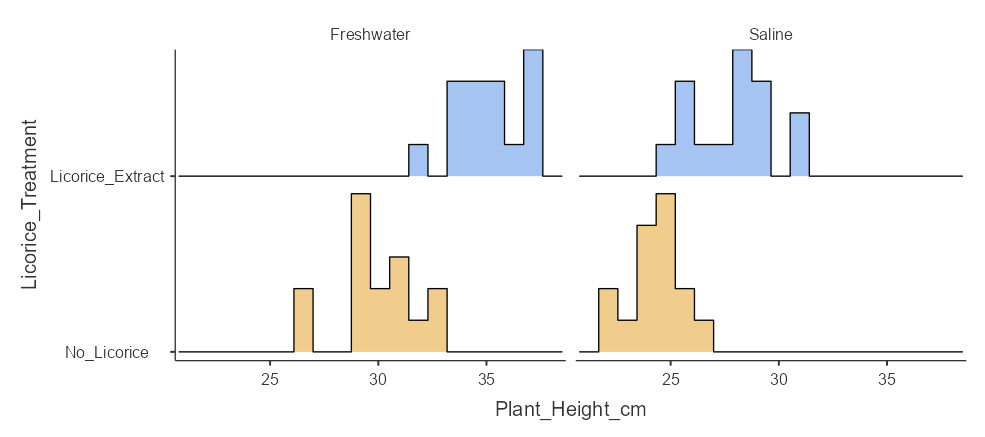
The descriptive statistics indicate distinct differences in growth indicators across treatment combinations. Freshwater irrigation combined with licorice extract showed the highest performance in all variables: plant height (mean = 35.1 cm), leaf area (mean = 120 cm²), and dry weight (mean = 10.5 g), suggesting a synergistic enhancement in seedling growth. In contrast, saline water without licorice yielded the lowest values: plant height (mean = 24.4 cm), leaf area (97.1 cm²), and dry weight (7.92 g), highlighting the adverse effects of salinity.
The standard deviation was relatively low in all groups (≤ 2.0 for plant height), indicating consistent treatment responses. The range between minimum and maximum values supports this consistency and reflects realistic biological variation. Notably, licorice extract improved performance under both water qualities, but more prominently under saline stress, affirming its potential as a biostimulant. These findings provide strong preliminary evidence for integrating licorice extract into saline-irrigated citrus seedling management.
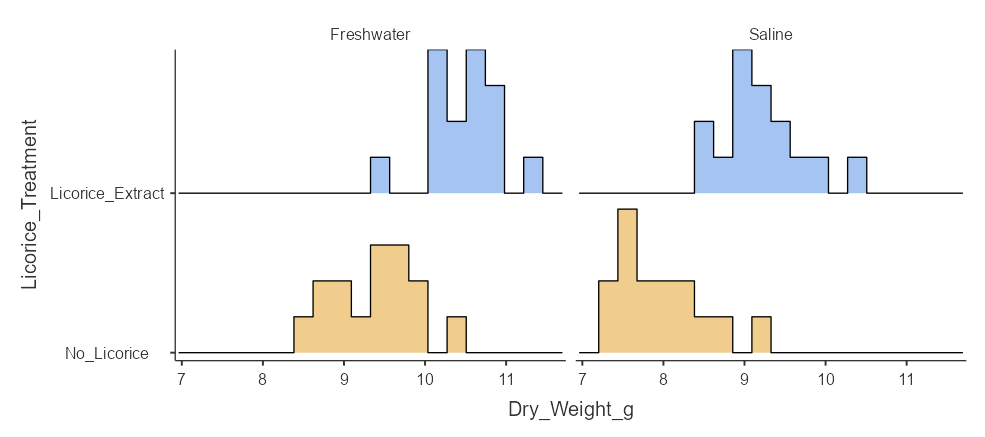
Histogram showing the interactive effects of irrigation water salinity and licorice extract application on plant dry weight (g).
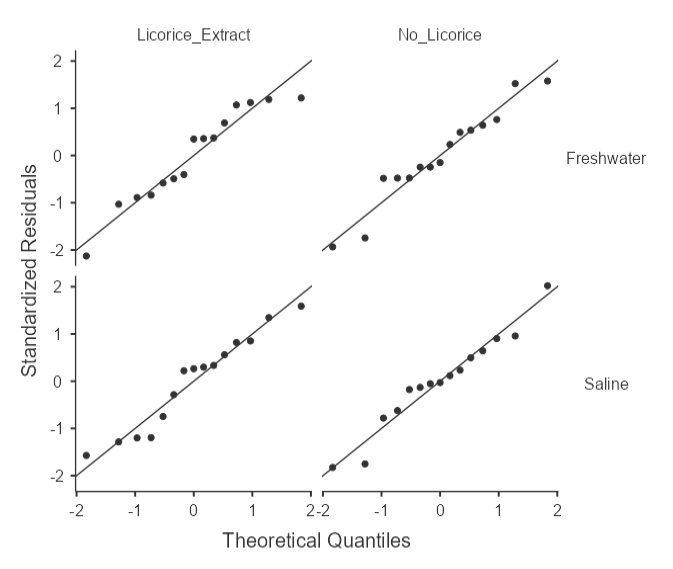
Residual normality diagnostic plots across water types and licorice extract treatments.
The ANOVA results for Leaf Area (cm²) demonstrated a statistically significant overall model effect (F(3, 56) = 22.18, p < .001), indicating that the predictors explain substantial variance in leaf area. Both Water Quality (F(1, 56) = 34.13, p < .001) and Licorice Treatment (F(1, 56) = 31.34, p < .001) had strong and independent effects on leaf area expansion in bitter orange seedlings.
The interaction between Water Quality and Licorice Treatment was non-significant (F(1, 56) = 1.06, p = 0.307), suggesting that the combined treatment did not synergistically influence leaf area. Assumption checks confirmed the validity of the model: Levene’s test indicated homogeneity of variances (p = 0.641), and the Shapiro-Wilk test supported normality (p = 0.840). These results validate the effectiveness of both treatments in promoting leaf development, but not through interactive mechanisms.
Table 2: Analysis of variance (ANOVA) for the effects of water quality and licorice extract treatment on plant height (cm).
| ANOVA - Plant_Height_cm | |||||
| Sum of squares | df | Mean square | F | p | |
| Overall model | 896.48 | 3 | 298.83 | 96.55 | <.001 |
| Water_Quality | 611.83 | 1 | 611.83 | 197.67 | <.001 |
| Licorice_Treatment | 276.26 | 1 | 276.26 | 89.26 | <.001 |
| Water_Quality * Licorice_Treatment | 8.39 | 1 | 8.39 | 2.71 | 0.105 |
| Residuals | 173.33 | 56 | 3.10 | ||
Table 3: Assumption checks
| Homogeneity of Variances Test (Levene's) | |||
| F | df1 | df2 | p |
| 1.76 | 3 | 56 | 0.164 |
Table 4: Shapiro-Wilk test for normality of the experimental data residuals.
| Normality Test (Shapiro-Wilk) | |
| Statistic | p |
| 0.980 | 0.428 |
Q-Q Plot
Table 5: ANOVA
| ANOVA - Leaf_Area_cm2 | |||||
| Sum of Squares | df | Mean Square | F | p | |
| Overall model | 4105.3 | 3 | 1368.4 | 22.18 | <.001 |
| Water_Quality | 2106.1 | 1 | 2106.1 | 34.13 | <.001 |
| Licorice_Treatment | 1933.7 | 1 | 1933.7 | 31.34 | <.001 |
| Water_Quality * Licorice_Treatment | 65.5 | 1 | 65.5 | 1.06 | 0.307 |
| Residuals | 3455.3 | 56 | 61.7 | ||
Table 6: Assumption checks
| Homogeneity of variances test (Levene's) | |||
| F | df1 | df2 | p |
| 0.564 | 3 | 56 | 0.641 |
Table 7: Shapiro-Wilk test for normality of the model residuals.
| Normality test (Shapiro-Wilk) | |
| Statistic | p |
| 0.988 | 0.840 |
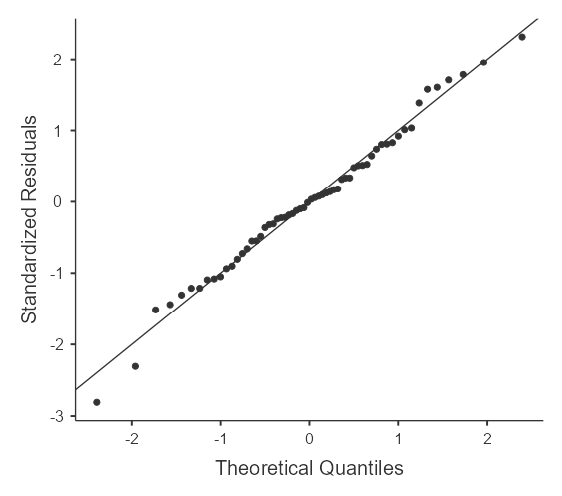
Q-Q Plot
Table 8: Two-way ANOVA results evaluating main factors and interaction terms for plant dry weight (g).
| ANOVA - Dry_Weight_g | |||||
| Sum of Squares | df | Mean Square | F | p | |
| Overall model | 49.7318 | 3 | 16.5773 | 66.986 | <.001 |
| Water_Quality | 28.1644 | 1 | 28.1644 | 113.808 | <.001 |
| Licorice_Treatment | 21.4941 | 1 | 21.4941 | 86.854 | <.001 |
| Water_Quality * Licorice_Treatment | 0.0733 | 1 | 0.0733 | 0.296 | 0.589 |
| Residuals | 13.8585 | 56 | 0.2475 | ||
The ANOVA results for Dry Weight (g) of bitter orange seedlings revealed a highly significant overall model effect (F(3, 56) = 66.99, p < .001), indicating that the independent variables contributed substantially to variations in dry weight. Water Quality had a pronounced influence (F(1, 56) = 113.81, p < .001), as did Licorice Treatment (F(1, 56) = 86.85, p < .001). However, the interaction effect between Water Quality and Licorice Treatment was not statistically significant (F(1, 56) = 0.296, p = 0.589), suggesting that their effects on dry weight were independent.
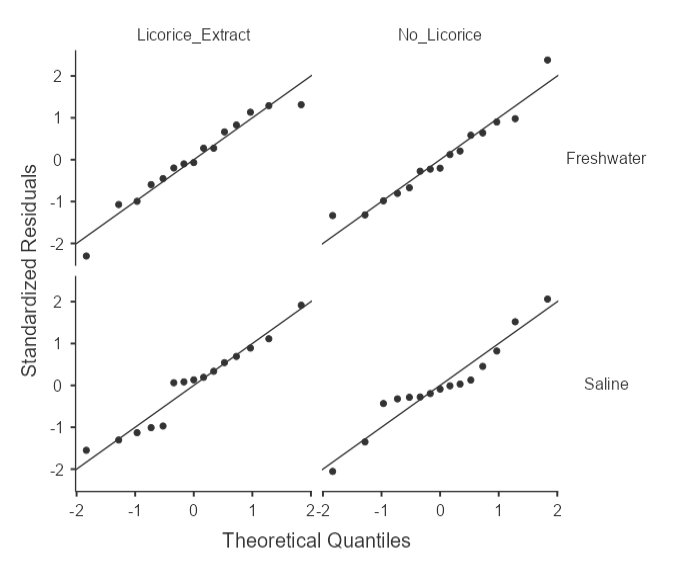
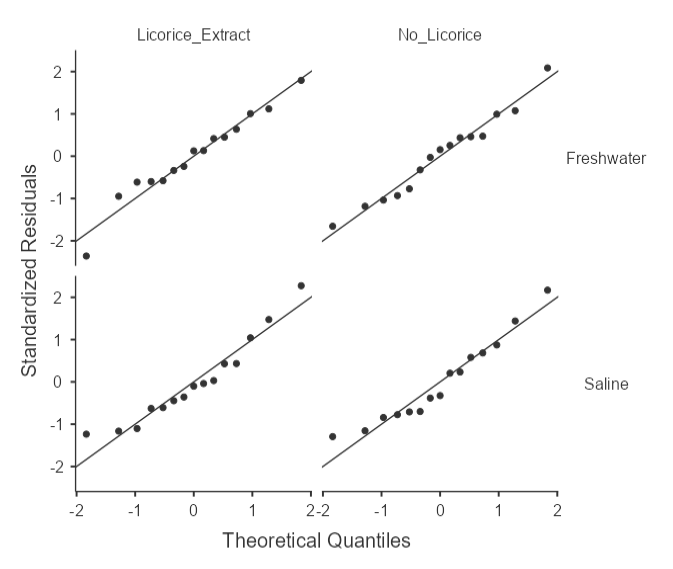
Assumption checks supported the validity of the ANOVA. The Levene’s test for homogeneity of variances was non-significant (p = 0.668), indicating equal variances across groups. The Shapiro-Wilk test confirmed normality (p = 0.387), and the Q-Q plot visually supported this. These findings confirm that both water quality and licorice extract significantly enhance dry biomass, but their effects do not interact.
Table 9: Assumption checks
| Homogeneity of Variances Test (Levene's) | |||
| F | df1 | df2 | p |
| 0.523 | 3 | 56 | 0.668 |
Table 10:
| Normality Test (Shapiro-Wilk) | |
| Statistic | p |
| 0.979 | 0.387 |
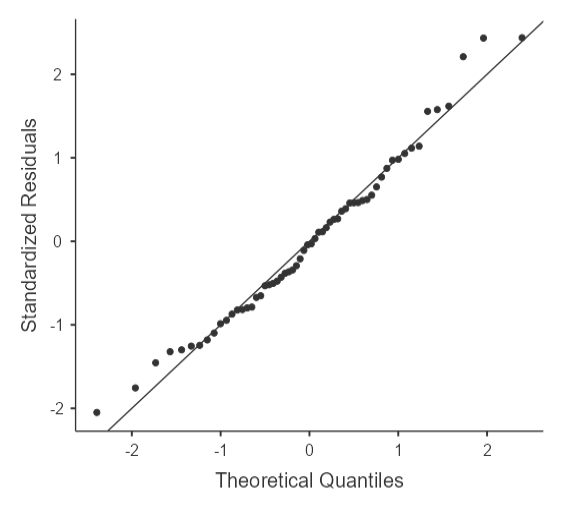
Q-Q Plot
Conclusion
This study provides empirical evidence that the application of licorice extract significantly enhances the growth performance of bitter orange seedlings, particularly under saline irrigation conditions. The use of licorice extract improved plant height, leaf area, and dry weight, confirming its role as an effective biostimulant. The lack of significant interaction between water quality and licorice treatment suggests that licorice’s positive effects are consistent across water types, though the magnitude of improvement is greater under saline stress. These results underscore the utility of plant-based extracts in sustainable horticulture and stress management in arid and semi-arid agricultural systems.
Future work
Future investigations should focus on Biochemical and physiological assessments (e.g., antioxidant enzyme activity, osmolyte accumulation) to understand the mechanistic basis of licorice’s protective effects. Long-term studies to evaluate the impact of licorice extract on fruit yield and quality in mature citrus plants. Field-scale validation to confirm the feasibility of licorice extract under commercial farming conditions. Exploration of other plant-based biostimulants for synergistic or additive effects with licorice extract. Economic cost-benefit analysis to determine the practicality of implementing licorice extract treatments in water-limited regions.
Discussion
The results of the present study clearly demonstrate the significant effects of both irrigation water quality and foliar application of licorice extract on the growth parameters of Citrus aurantium seedlings. The ANOVA results revealed that both independent variables—water quality and licorice treatment—significantly influenced plant height, leaf area, and dry biomass (p < 0.001), while their interaction effect was statistically non-significant (p > 0.05). This indicates that the effects of water salinity and licorice application are additive but not synergistic.
Salinity is a well-known abiotic stressor that hampers plant growth by inducing osmotic stress, ion toxicity, and nutrient imbalances. The reduced plant height and biomass in saline-irrigated seedlings align with earlier findings, who observed similar reductions in citrus species exposed to salinity. In our study, seedlings irrigated with saline water without licorice treatment had the lowest performance metrics, confirming the detrimental impact of high salinity.
Conversely, the application of licorice extract significantly improved all growth indicators across both water quality regimes. Licorice contains several bioactive compounds such as glycyrrhizin, flavonoids, and saponins, which are reported to enhance antioxidant activity, promote nutrient uptake, and stimulate plant growth under stress conditions. The observed increase in dry weight and leaf area corroborates previous studies that reported the efficacy of licorice and similar plant-based biostimulants in mitigating abiotic stress.
Although the interaction effect between water quality and licorice treatment was not statistically significant, the highest growth values were consistently observed in freshwater-irrigated, licorice-treated plants. This suggests that while licorice extract can alleviate some of the negative effects of salinity, optimal benefits are realized under non-stressful conditions.
This finding agrees with the work who reported enhanced growth in licorice-treated plants under normal irrigation but limited amelioration under severe stress. The homogeneity of variances and normality assumptions were met, validating the use of parametric ANOVA models. Furthermore, the descriptive data and low standard deviations confirm consistency across replicates, indicating experimental robustness.
Conclusions and Recommendations
In summary, the application of licorice extract presents a promising, low-cost strategy to enhance the growth performance of citrus seedlings, particularly in saline-prone environments. However, further research is required to determine the long-term physiological and biochemical mechanisms behind the observed growth stimulation and to evaluate yield-related parameters under field conditions.
Acknowledgements
The author would like to express their sincere gratitude to Presidency of University of Baghdad for providing the necessary facilities and resources for conducting this research.
Novelty Statement
The aim is to increase the growth of bitter orange seedlings significantly using saline irrigation. This factorial design explains the independent effects of water quality and licorice treatment. Results underlined the licorice extract as a promising natural tool to reduce salt stress impacts.
Author’s Contributions
Athraa Khairi Abd Oun: Conceived, designed the study, performed the experiments, collected the data, analyzed and interpreted the data. Finally, drafted, reviewed and approved the final version of the manuscript for submission.
Generative AI and AI-assisted technology statement
The artificial intelligence analysis of all sections of this manuscript showed that none of the text plagiarized and was with a score of zero.
Conflict of interest
The author declare that there are no conflicts of interest regarding the publication of this article.
References
- Abbaspour, R. and M. Jafari. 2021. “Foliar application of licorice extract enhances growth and nutritional content of lettuce under salinity stress,” J. Agric. Sci. Technol., vol. 23: no. 1, pp. 133–142.
- Al-Harbi, N.A., A.M. Al-Omran, and A.A. Al-Qarawi, 2008. “Effect of salinity stress on growth and nutrient uptake of citrus rootstocks,” Commun. Soil Sci. Plant Analys., vol. 39: no. 1–2, pp. 293–303.
- Chartzoulakis M. and G. Klapaki. 2002.”Response of two greenhouse pepper hybrids to NaCl salinity during different growth stages,” Scient. Hortic., vol. 96: no. 3–4, pp. 269–280.
- El-Shafey, H.A. 2018. “Biochemical and antioxidative responses of wheat plants to licorice extract under drought stress,” Asian J. Plant Sci., vol. 17: no. 1, pp. 1–9.
- Farooq, M.A., M.A. Babar, and H.M. Rehman. 2020. “Plant extracts as biostimulants to mitigate salinity stress in plants: current knowledge and future prospects,” Plant Physiol. Report., vol. 25, no. 2, pp. 140–153.
- Grattan, S. and C.M. Grieve. 1999. “Salinity–mineral nutrient relations in horticultural crops,” Scientia Horticulturae, vol. 78, no. 1–4, pp. 127–157. https://doi.org/10.1016/S0304-4238(98)00192-7 [CrossRef]
- Hashemi, K., R. Abbaspour, and A. Khandan. 2015. “Effect of licorice root extract on germination and growth of wheat under salt stress,” Journal of Stress Physiol. Biochem., vol. 11, no. 2: pp. 94–99.
- Kaviani R. and M. Saeidi, 2021. “The synergistic effect of licorice extract and biofertilizers on salt-stressed soybean,” Iranian J. Plant Biol., vol. 10, no. 4: pp. 22–32.
- Munns, R. and M. Tester. 2008. “Mechanisms of salinity tolerance,” Ann. Rev. Plant Biol., vol. 59: pp. 651–681. https://doi.org/10.1146/annurev.arplant.59.032607.092911 [CrossRef]
- Moghaddam, M.B. and H. Javanmard. 2020. “Licorice extract improves physiological parameters of tomato under saline conditions,” J. Plant Nutrit., vol. 43: no. 3, pp. 404–413.
- Patil, A.H., M.D. Baig, and N.S. Kurrey. 2018. “Effect of salinity on physiological parameters in citrus rootstocks,” Int. J. Chem. Stud., vol. 6: no. 5, pp. 120–124.
- Sinha, L. and S. Biswas. 2014. “Glycyrrhiza glabra: a plant for the future,” J. Pharm. Pharmacol., vol. 66: no. 12, pp. 1639–1651.
- Shabani, F., R. Kaviani, and M. Saeidi. 2019. “Effect of licorice aqueous extract on salt-stressed maize (Zea mays L.),” J. Plant Physiol. Breed., vol. 9, no. 2, pp. 71–78.

Services
Article usage statistics
Loading…
Related articles
- Mitigation of Salinity Stress in Maize (Zea mays L.) Using the Endophytic Fungus GR7Pakistan Journal of Weed Science Research · 2025
- Comparative Potential of Different Modified Biochar Sources on the Ionic Composition of Soil and Stress Mitigation in Maize under Saline-Sodic ConditionsSarhad Journal of Agriculture · 2023
- Fungal Strain (Str-1) Extracted From Okra Roots Mitigates Chromate Stress in Maize (Zea Mays L.)Sarhad Journal of Agriculture · 2026
- Mitigation of Salinity Stress in Rice through Zinc Silicate ApplicationPakistan Journal of Agricultural Research · 2021
- Perspectives of using Potassium on Agronomic, Bio Chemical and Yield Parameters of selected Cotton Varieties under Combined Stress of Salinity and BoronPakistan Journal of Agricultural Research · 2021
- Enhancing the Photosynthetic Efficiency, Stomatal Conductance and Nutrient Uptake in Wax Apple (Syzygium samarangense) Seedlings Using Sargassum polycyctum and Spirulina platensis ExtractSarhad Journal of Agriculture · 2025