
Mung bean (Vigna radiata L.) is an important legume crop whose productivity depends on cultivar selection and sowing timing optimization. This study evaluated the performance of three mung bean cultivar (AZRI-06, Bahawalpur, and NM-11) across five sowing dates (June 10, 20, 30 and July 10, 20) using a split-plot design in a randomized complete block arrangement with three replications. Key agronomic parameters assessed included plant density, height, pod characteristics, biomass production, and grain yield, significant cultivar difference (p<0.01) were observed across most traits. AZRI-06 demonstrated support performance with the heights plant density (565.9 plants/plot), plant height (28.7 cm), pod number (15.3 per plot), biomass yield (2782.4 kg/ha), and seed yield (750.7 kg/ha). NM-11 produced the largest pods (8.1 cm), while Bahawalpur achieved the highest seed index (5.0 g). Sowing date significantly influenced all parameters except plant density and seed index. June 20 emerged as the optimal sowing date, producing maximum plant height (30.0 cm), pod number (16.2), pod length (8.2 cm), biomass yield (2900 kg/ha), and seed yield (787.6 kg/ha). Delayed sowing until July 20 resulted in substantial yield reductions across all measured parameters. No significant cultivar × sowing date interactions were detected. These findings provide practical guidance for mung bean production optimization through appropriate cultivar selection and sowing date management.
Research Article · Volume 39, Issue 4, Pages 62–71, 2 November 2026 · Open Access
Optimizing Mung Bean (Vigna radiata L.) Productivity: Cultivar Performance and Sowing Date Effects on Yield and Agronomic Traits
· · ·
Affiliations & Notes ⌄
- 1Department of Botany, Sardar Bahadur Khan Women’s University, 87300, Quetta, Pakistan
- 2PARC-Balochistan Agriculture Research and Development Centre (BARDC), Quetta, 87300, Pakistan
- 3Department of Chemistry, Sardar Bahadur Khan Women’s University, Quetta, 87300, Pakistan
- 4College of Natural Resources and Environment, Northwest AandF University, Yangling, Shaanxi 712100, China
- *Correspondence | Muhammad Iqbal Jakhro; Email: mijakhro@parc.gov.pk
Article Info ⌄
- Journal:
- Pakistan Journal of Agricultural Research
- Submitted Date:
- 10 July 2025
- Accepted Date:
- 14 August 2026
- Published Date:
- 2 November 2026
From the article
- The mean values presented in (Supplementary Table S3A) showed how different sowing dates affected the number of pods per plant in mung bean cultivars.
- The interaction analysis indicated that the combination of the AZRI-06 variety and T2 sowing date produced the most pods per plant (17.7), while the combination of the Bahawalpur variety and T5 sowing date resulted in the fewest pods per plant (11.7).
- The average data demonstrated that mung bean cultivars’ biological yield was significantly influenced by different sowing dates, as detailed in the variance analysis (Supplementary Table S6B).
- The findings indicated that both the mung bean cultivar and the sowing date significantly impacted seed yield.
Selected from the article's own text.
Abstract
Introduction
Mung bean (Vigna radiata L.) is a crucial pulse crop in South Asia, providing an essential and affordable source of vegetable protein, comprising 22-24%, along with vital vitamins ; . As the population in Asia continues to grow, so does the demand for food, making it imperative to enhance mung bean yields through improved agronomic practices and the development of stress-resilient varieties. This approach is essential for ensuring both nutritional and food security . In Pakistan, the average mung bean yield is 475 kg/ha, significantly lower than its potential yield of 1971 kg/ha . One of the key factors in maximizing yield is timely sowing, with research indicating that sowing during the first week of July can result in optimal seed yields . However, early sowing carries the risk of poor germination and weak plant stands ; . Balochistan, the largest province of Pakistan, presents both unique challenges and opportunities for mung bean cultivation due to its diverse topography and climatic variations . The region includes arid landscapes as well as fertile irrigated lands and wetland loss characteristics , which require region-specific research to determine the most effective cultivation practices to achieve more yield per water drop (Laghari et al., 2024). Quetta, the provincial capital, is situated in a valley surrounded by mountains and experiences a semi-arid climate characterized by hot summers and cold winters. These distinctive agro-ecological conditions necessitate tailored research to optimize mung bean cultivation practices in this area. Although mung bean is primarily cultivated in the Punjab province during the Kharif season, there is considerable potential to expand and optimize its cultivation in other regions, including Balochistan . The crop’s ability to fix atmospheric nitrogen and its drought resistance ; make it particularly suited to the semi-arid conditions of Quetta. Despite the crop’s significance, research on optimizing sowing dates for different mung bean varieties in the specific agro-ecological conditions of Quetta, Balochistan, remains limited. This study seeks to fill this knowledge gap by exploring the impact of various sowing dates on multiple mung bean varieties in this region. The research aims to compare conventional and alternative sowing dates to identify those that lead to higher yields and better-quality mung beans under Quetta’s unique climatic conditions.
The specific objectives of this study include examining the effect of sowing dates on the growth and yield attributes of mung bean varieties in Quetta, Balochistan, and determining the optimal sowing date for maximizing mung bean yields in this area. By addressing the challenges and opportunities associated with each sowing date within this specific agro-ecological zone, this research intends to provide valuable insights for farmers aiming to improve their mung bean cultivation practices in Quetta and other similar regions in Balochistan.
Materials and Methods
Study site, experimental design, and plot layout
The field experiment was conducted at the Pulses Research Directorate at the Agriculture Research Institute in Quetta during the Kharif season (Supplementary Figure S1). The study site is in the semi-arid region of Balochistan province, characterized by continental climate with hot, dry summers and moderate rainfall patterns typical of pulse cultivation zones. A split-plot design was implemented within a randomized complete block framework, with three replications to systematically evaluate the interactive effects of sowing dates and mung bean cultivars on agronomic performance and yield parameters. The experimental layout comprised two factors: Factor A (main plot) included five sowing dates consisting of T1 (June 10), T2 (June 20), T3 (June 30), T4 (July 10), and T5 (July 20), while Factor B (subplot) encompassed three mung bean varieties including V1 (AZRI-06) V2 (Bahawalpur), and V3 (NM-2011). Each individual experimental unit measured 4 × 5 m (20 m²), resulting in a total of 45 plots (5 sowing dates × 3 varieties × 3 replications). This factorial arrangement enabled comprehensive assessment of temporal planting decisions and genetic diversity effects on Vigna radiata L. productivity under regional agro-climatic conditions. Plot spacing maintained adequate buffer zones to minimize inter-plot interference and ensure independent treatment evaluation.
Crop management and cultural practices
Sowing operations were executed using a single-row hand drill to ensure uniform seed placement and optimal plant establishment across all experimental units. Considering the nitrogen-fixing capacity of leguminous crops, a reduced nitrogen fertilization strategy was implemented with 8-10 kg N ha-¹ applied at sowing to support initial seedling establishment without interfering with biological nitrogen fixation processes. Phosphorus fertilizer was applied at 20-25 kg P₂O₅ ha-¹ to enhance root development, nodulation efficiency, and reproductive growth during critical developmental stages. Both nitrogen and phosphorus nutrients were supplied through diammonium phosphate (DAP) fertilizer application, distributed uniformly across all plots following recommended agronomic practices for pulse cultivation in the region. Standard agronomic practices including weed management, irrigation scheduling, and pest monitoring were maintained consistently across all treatments to eliminate confounding variables and ensure treatment-specific effects on measured parameters.
Data collection and morpho-physiological assessment
Comprehensive data collection was conducted throughout the growing season, focusing on key agronomic parameters that influence mung bean productivity and adaptation. Plant population density was quantified by counting total plants per plot to assess establishment success and stand uniformity across treatments. Plant height measurements were recorded in centimeters from ground level to the highest growing point using standardized measuring techniques. Pod-related parameters included pod number per plant through systematic counting procedures and pod length measurements in centimeters to evaluate reproductive success and pod development characteristics. The seed index was determined by weighing 1000 seeds (expressed in grams) to assess seed size consistency and genetic variation effects. Biological yield was quantified by measuring total above-ground biomass production (kg ha-¹) at physiological maturity, while seed yield was calculated as the total weight of harvested seeds per hectare (kg ha-¹). All measurements were conducted using calibrated instruments with consistent protocols across replications. Harvesting operations were performed at physiological maturity when pods exhibited characteristic color changes and moisture content reached optimal levels for accurate yield determination.
Statistical analysis and data processing
Statistical analyses were performed using Statistix software (version 10.0, 2013) employing analysis of variance (ANOVA) procedures appropriate for split-plot experimental designs. The statistical model incorporated the main effects of sowing dates, mung bean varieties, and their interaction effects on measured agronomic parameters. Treatment means comparisons were conducted using the Least Significant Difference (LSD) test at α = 0.05 significance level to identify statistically significant differences between treatments. Data normality and homoscedasticity assumptions were verified prior to statistical analysis through appropriate diagnostic procedures. Results were presented as mean values with standard errors, and graphical representations were generated to illustrate treatment effects and facilitate interpretation of experimental outcomes.
Results
Plant population per plot-1
The data on the average plant population of mung bean cultivars (Figure 1) and (Supplementary Table S1B) present the impact of different sowing dates on plant population. The analysis of variance revealed a significant difference (P<0.05) in plant population among the varieties. However, the effects of sowing dates and their interaction with varieties were not statistically significant (P>0.05). As shown in (Supplementary Table S1A), the highest plant population was observed in the AZRI-06 cultivar (565.9), followed closely by the Bahawalpur cultivar (563.6), with the NM-11 cultivar having the lowest plant population (559.3). Among the sowing dates, T3 resulted in the highest plant population (564.3), followed by T2 (563.1), T5 (562.8), and T4 (562.3), while T1 had the lowest plant population (562.2). The interaction analysis revealed that the combination of the AZRI-06 variety and T3 sowing date produced the highest plant population (568.7), whereas the combination of the NM-11 variety and T2 sowing date resulted in the lowest plant population (558.0).
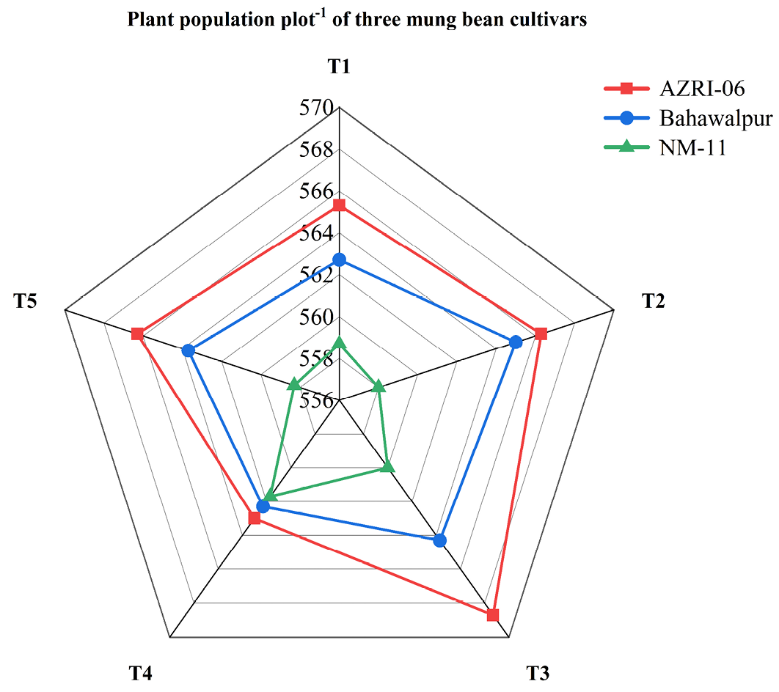
Plant population plot of three mung bean cultivars evaluated during the Kharif season.
Plant height
The plant height of mung beans was notably affected by varying sowing dates, as shown by the analysis of variance (Supplementary Table S2B). Significant differences (p<0.05) in plant height were observed with respect to both sowing dates and varieties (Figure 2). However, the interaction between sowing dates and varieties did not have a statistically significant impact on plant height (P>0.05). Supplementary Table S2A reveals that the highest plant height (28.7 cm) was recorded in the AZRI-06 cultivar, followed by the Bahawalpur cultivar (26.6 cm), with the lowest height observed in the NM-11 cultivar (24.4 cm). Among the sowing dates, T2 produced the tallest plants (30.0 cm), with T1 following closely (26.9 cm), then T3 (26.1 cm), and T4 (25.0 cm). The shortest plants were recorded in T5 (24.8 cm). The interaction analysis showed that the combination of the AZRI-06 variety and T2 sowing date resulted in the tallest plants (32.6 cm), while the combination of the NM-11 variety and T5 sowing date produced the shortest plants (22.7 cm).
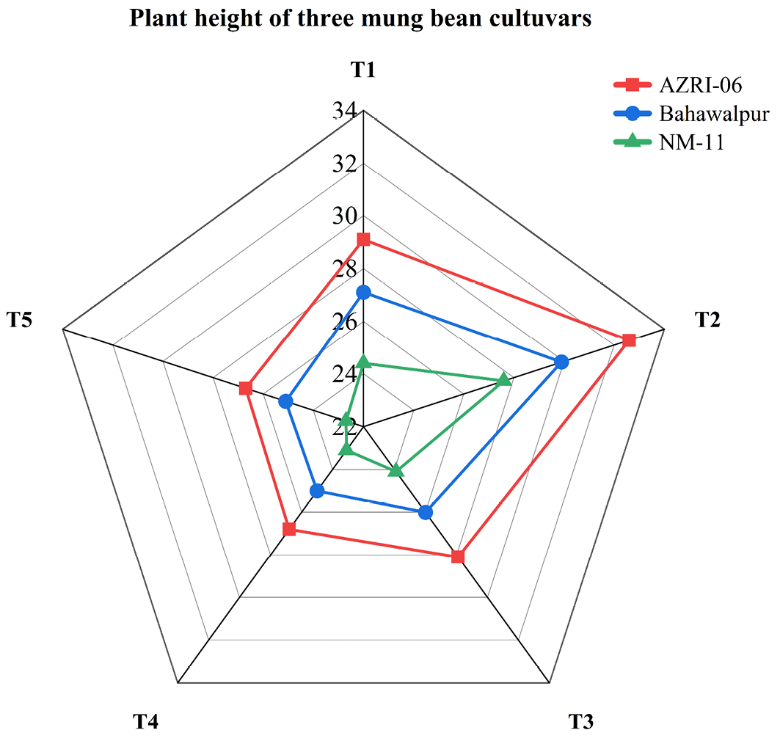
Plant height comparison of three mung bean cultivars measured at different growth stages during the evaluation year. The data highlights variations in growth patterns among the cultivars under similar environmental conditions.
Number of pods per plant
The variance analysis for the number of pods per plant in mung bean (Supplementary Table S3B) demonstrated a highly significant effect of both sowing dates and varieties (p<0.05) (Figure 3). Nonetheless, the interaction between sowing dates and varieties did not show a statistically significant impact on the number of pods per plant (P>0.05). The mean values presented in (Supplementary Table S3A) showed how different sowing dates affected the number of pods per plant in mung bean cultivars. The highest number of pods per plant was recorded in the AZRI-06 cultivar (15.3), followed by NM-11 (14.1), with the lowest number observed in the Bahawalpur variety (13.0). Among the sowing dates, T2 resulted in the highest number of pods per plant (16.2), followed by T1 (14.8), T3 (13.9), and T4 (13.4), with the lowest number recorded in T5 (12.5). The interaction analysis indicated that the combination of the AZRI-06 variety and T2 sowing date produced the most pods per plant (17.7), while the combination of the Bahawalpur variety and T5 sowing date resulted in the fewest pods per plant (11.7).
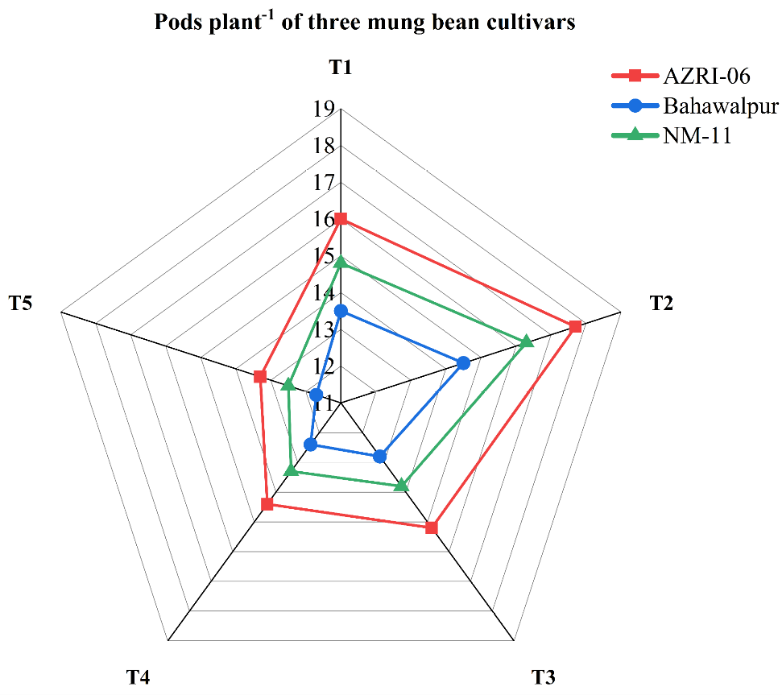
Pods per plant of three mung bean cultivars recorded during the evaluation year. The figure illustrates the differences in pod production among the cultivars, reflecting their potential yield performance under the tested conditions
Pod size
The average data revealed that the pod size of mung bean cultivars was significantly (Supplementary Table S4A) illustrates that pod size was affected by different sowing dates. The analysis of variance provided in (Supplementary Table S4B) revealed a highly significant variation (p<0.05) in pod size due to both sowing dates and varieties (Figure 4). Nevertheless, the interaction among sowing dates and varieties did not have a statistically significant effect on pod size (P>0.05), the NM-11 cultivar recorded the largest pod size (8.1), followed by AZRI-06 (7.2), with the smallest pod size observed in the Bahawalpur variety (6.7). Among the sowing dates, T2 resulted in the largest pod size (8.2), followed by T1 (7.8) and T3 (7.4), while the smallest pod sizes were recorded in T4 and T5 (6.6). The interaction analysis showed that the combination of the NM-11 variety and T2 sowing date produced the largest pod size (9.0), whereas the combination of the AZRI-06 variety and T5 sowing date resulted in the smallest pod size (6.5).
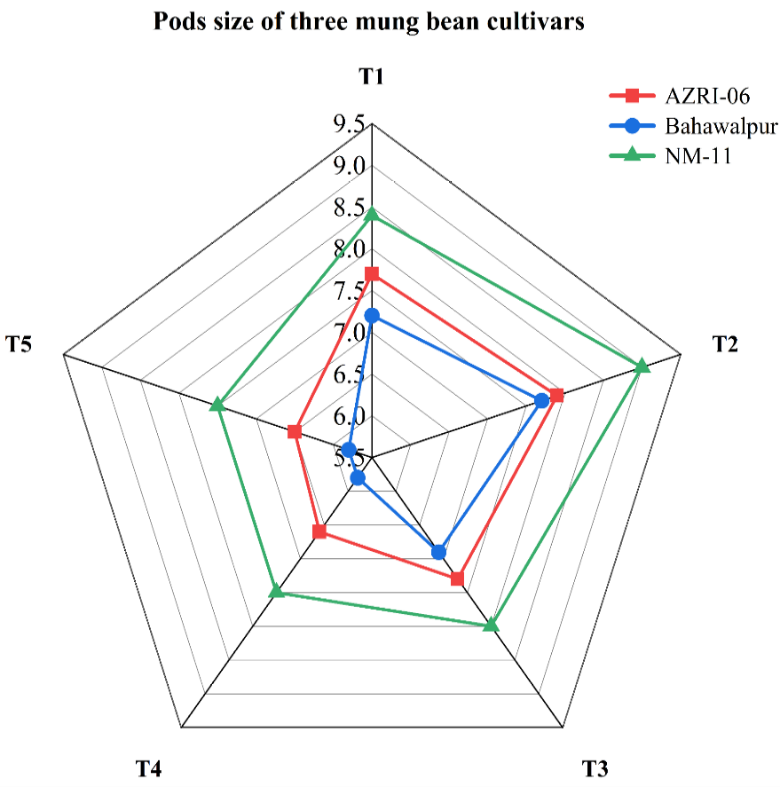
Pod size of three mung bean cultivars measured during the evaluation year. This figure shows the variation in pod length and width among the cultivars, indicating their distinct morphological characteristics.
Seed index
The data revealed that mung bean cultivars were notably affected by varying sowing dates. According to the analysis of variance detailed in (Supplementary Table S5B), there was a significant variation (P<0.05) in the seed index across different mung bean varieties (Figure 5). However, neither the sowing dates nor the interaction among varieties and sowing dates had a statistically significant impact on the seed index (P>0.05). This information is further detailed in (Supplementary Table S5A), the highest seed index was recorded for the Bahawalpur variety (5.0), followed by AZRI-06 (4.6), with the NM-11 variety having the lowest seed index (4.5). Among the sowing dates, T2 resulted in the highest seed index (4.8), closely followed by T1 and T3 (4.7), while the lowest seed index was observed in T4 (4.6). The interaction analysis revealed that the combination of the Bahawalpur variety and T2 sowing date produced the highest seed index (5.1), while the combination of the NM-11 variety and T4 sowing date resulted in the lowest seed index (4.3).
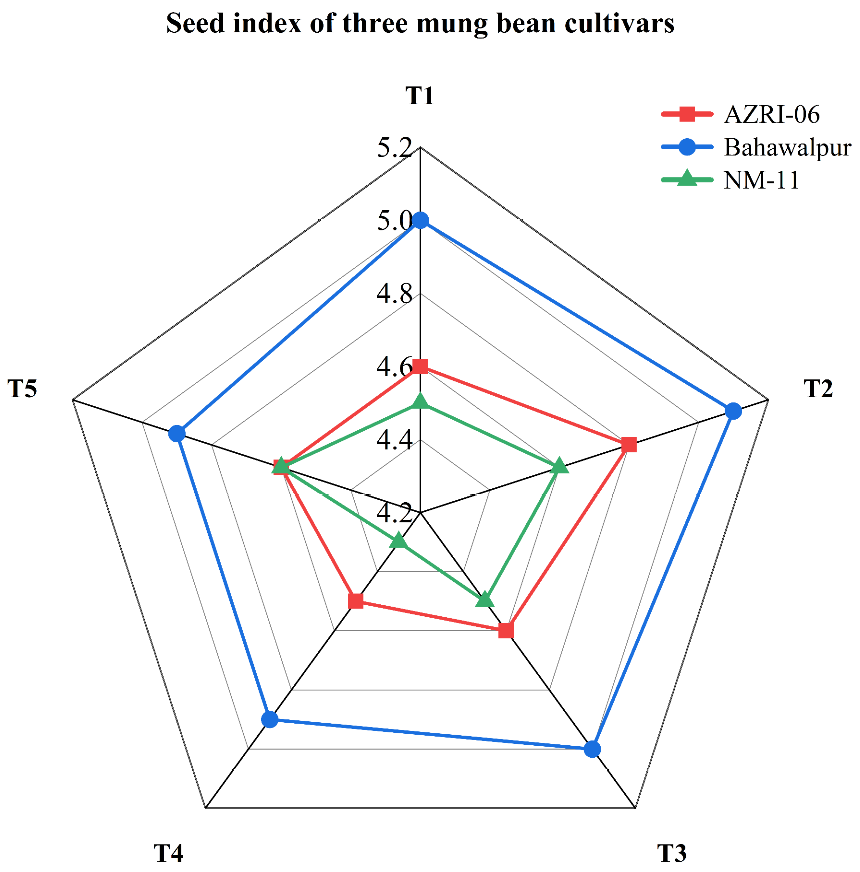
Seed index of three mung bean cultivars evaluated during the year. The figure displays the differences in seed weight (100-seed weight) among the cultivars, reflecting their potential contribution to overall yield.
Biological yield
The average data demonstrated that mung bean cultivars’ biological yield was significantly influenced by different sowing dates, as detailed in the variance analysis (Supplementary Table S6B). There was a highly significant variation (p<0.05) in biological yield attributed to both sowing dates and varieties, although the interaction effect between these factors was not statistically significant (P>0.05) (Figure 6). As shown in (Supplementary Table S6A), the AZRI-06 cultivar yielded the highest biological output of 2782.4 kg/ha, followed by Bahawalpur with 2573.7 kg/ha, and NM-11 with the lowest at 2337.9 kg/ha. Among the sowing dates, T2 produced the greatest biological yield of 2900 kg/ha, followed by T1 (2591.3 kg/ha), T3 (2525 kg/ha), and T4 (2407.9 kg/ha), with T5 resulting in the lowest yield of 2398.9 kg/ha. The interaction analysis showed that the combination of the AZRI-06 variety and T2 sowing date produced the maximum biological yield (3165.4 kg/ha), while the combination of the NM-11 variety and T5 sowing date resulted in the lowest biological yield (2176.9 kg/ha).
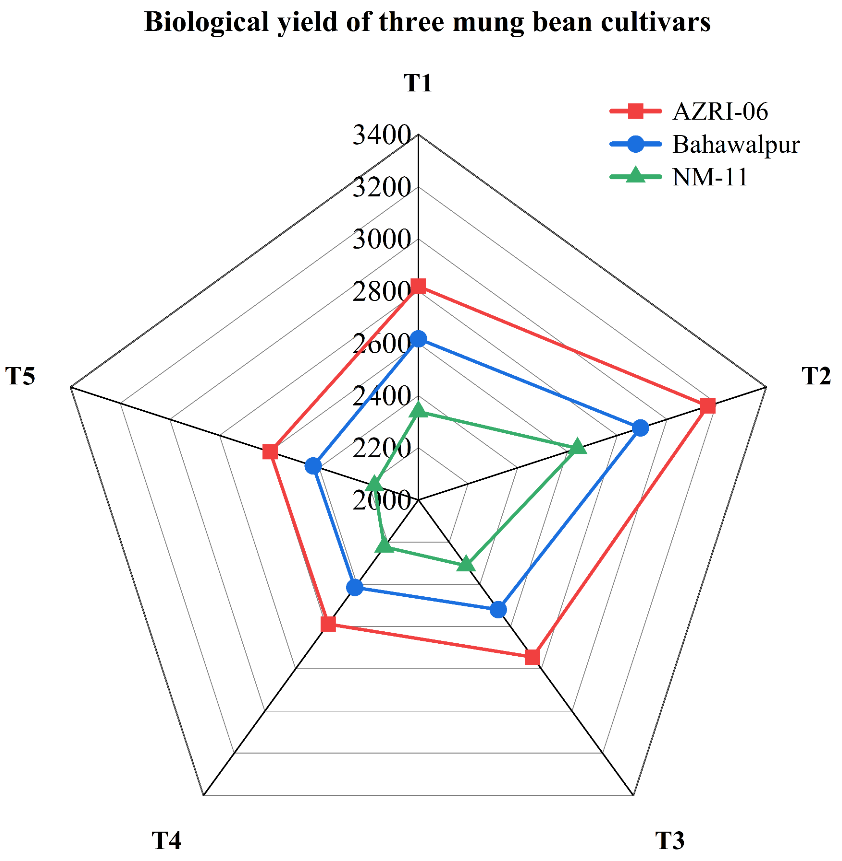
Biological yield of three mung bean cultivars assessed during the evaluation year. This figure compares the total biomass production among the cultivars, providing insight into their growth performance and productivity.
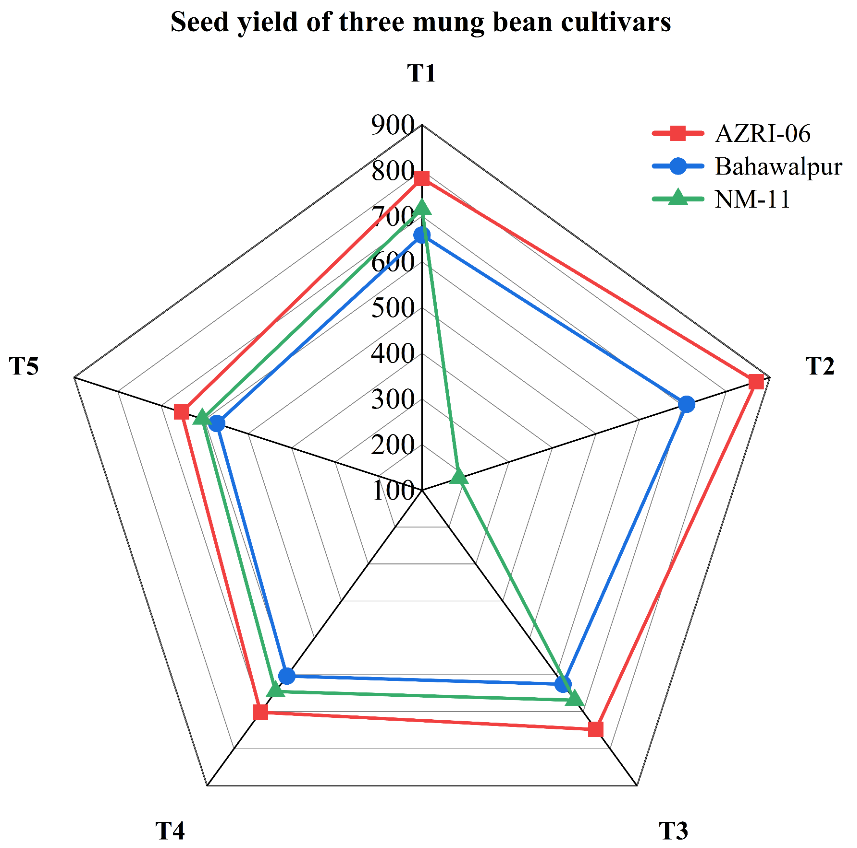
Seed yield of three mung bean cultivars evaluated during the year. The figure highlights the differences in seed production among the cultivars, offering insights into their potential for grain yield under the given conditions.
Seed yield
The findings indicated that both the mung bean cultivar and the sowing date significantly impacted seed yield. According to the variance analysis (Supplementary Table S7B), there were substantial differences in seed yield across various sowing dates and cultivars (p<0.05) (Figure 7). However, the interaction between sowing dates and cultivars did not significantly affect seed yield (P>0.05). Supplementary Table S7A illustrates that the AZRI-06 cultivar achieved the highest seed yield of 750.7 kg/ha, followed by NM-11 with 683.7 kg/ha, while Bahawalpur had the lowest yield at 633.5 kg/ha. Among the sowing dates, T2 (June 20th) produced the highest seed yield of 787.6 kg/ha, with subsequent yields from T1 (718.8 kg/ha), T3 (680.3 kg/ha), and T4 (649.6 kg/ha), and the lowest yield recorded in T5 (610.2 kg/ha). The interaction analysis showed that the combination of AZRI-06 with the T2 sowing date resulted in the highest seed yield of 868.9 kg/ha, whereas Bahawalpur with the T5 sowing date had the lowest yield of 572.1 kg/ha.
Discussion
The study found that the AZRI-06 variety had the highest plant population, averaging 565.9 plants, whereas the NM-11 variety had the lowest at 559.3 plants. The effects of sowing dates and their interactions were not statistically significant. Faraz et al. (2006) reported that the peak plant population of 28.15 plants occurred in the third week of July, with the first week of July showing a close second at 27.66 plants. This aligns with who noted that early sowing led to lower initial plant stands, with interaction effects being non-significant. Malik et al. (2006) highlighted that early sowing was linked to severe YMV disease, impacting plant populations. The study also recorded the highest plant height for AZRI-06 at 28.7 cm and the lowest for NM-11 at 24.4 cm. Among different sowing dates, the tallest plants, reaching 30.0 cm, were observed on June 20th, while the shortest, at 24.8 cm, were on July 20th. These findings corroborate , who found that plant height was significantly affected by sowing dates, with earlier sowing resulting in shorter plants. Amin et al. (2006) also reported a reduction in mung bean plant height due to delayed sowing. Dhanjal et al. (2000) found that early sowing of mung bean resulted in larger seeds compared to later sowing dates. Soomro and Khan (2003) observed that sowing dates significantly impacted plant height, with early sowing (5th July) producing the tallest plants (79 cm), whereas height decreased with later sowing (62 cm on 15th July). Ghafoor et al. (2003) similarly observed that variations in sowing dates had a substantial impact on plant height. The study revealed that the AZRI-06 variety had the highest number of pods per plant at 15.3, whereas the Bahawalpur variety had the fewest with 13 pods per plant. The June 20 sowing date (S2) yielded the most pods at 16.2 per plant, while the July 20 sowing date (S5) resulted in the fewest at 12.5. Although sowing date had a significant impact, the interaction effect was not statistically significant. Ahmad et al. (2004) found while planting patterns and sowing dates significantly influenced pod numbers, their interaction did not, aligning with who reported that later sowing dates produced more pods compared to earlier dates. Malik et al. (2006) noted the importance of planting geometry and late sowing in increasing pod numbers. In terms of biological yield, the AZRI-06 variety yielded the highest at 2782.4 kg/ha, while NM-11 had the lowest yield at 2337.9 kg/ha. The Sayad cultivar demonstrated a notably higher biological yield of 10,969 kg/ha compared to the local variety, which was largely due to favorable environmental conditions and optimal growth parameters throughout the growing season. This aligns with findings by Raymer et al. (1998), who also noted significant effects of planting pattern and sowing dates on biological and seed yield, with no significant interaction effects. Early planting led to higher biological yields (4530.86 kg/ha), as reported by Rabbani et al. (2013) who linked this to better nutrient availability and optimal growing conditions. Khan et al. (2000) observed that flat sowing led to reduced seed and biological yield due to poorer mineral nutrient availability, while the P3 treatment resulted in the highest seed and biological yield. The study also indicated that the AZRI-06 variety achieved the highest seed yield of 750.7 kg/ha, whereas the Bahawalpur variety had the lowest yield at 683.7 kg/ha. Similarly, Miah et al. (2009) found that in summer mung bean, seed yield was significantly influenced by sowing dates, with the highest yield recorded on the 2nd of March, followed by a decrease in yield with later sowing dates. Singh et al. (2013) also found that early sowing resulted in higher yields. The study revealed that different mung bean varieties showed significant variations in harvest index and straw yield, while test weight, grains per pod, and biological yield exhibited no significant differences. Singh et al. (2010), Sadeghipour (2008) observed that timely sowing conditions had a positive impact on both biological and grain yields. In contrast, delayed sowing affected the crop’s life cycle and grain translocation, leading to a lower stover yield in BARIMung-3, while BARIMung-4 exhibited the highest stover yield due to increased plant height. Kabir and Srakar (2008) noted that the lowest harvest index was found in BARIMung-2, like BARIMung-4, while BARIMung-2 showed the highest index, attributed to its higher seed yield.
Conclusion
The study demonstrates that cultivar selection and sowing date optimization are critical determinants of mung bean (Vigna radiata L.) productivity and agronomic performance. Among the three-cultivar evaluated, AZRI-06 consistently exhibited superior performance across multiple agronomic traits, achieving the highest seed yield of 750.7 kg/ha along with optimal plant density planting window, yield 787.6 kg/ha representing substantial improvement over delayed sowing schedules. The progressive decline in yield parameters with delayed sowing, particularly evident in July 20 treatment, underscores the sensitivity of mung bean cultivation to temporal management decisions. The absence of cultivar × sowing date interactions suggests that the optimal sowing period (mid-June) remains consistent across genotypes, providing practical flexibility for producers. These findings indicate that early sowing strategies, particularly during the mid-June period, capitalize on favorable environmental conditions characteristic of the Quetta region, enabling enhanced photosynthetic efficiency, extended reproductive phases, and improved resource utilization during critical growth stages. The research provides evidence-based recommendations for mung bean production optimization in semi-arid environments, emphasizing the synergistic benefits of appropriate cultivar (AZRI-06) combined with strategic sowing timing (June 20). The findings contribute to sustainable legume production systems by offering practical guidelines for maximizing productivity while maintaining crop quality. Future research should investigate the underlying physiological mechanisms driving these cultivar-specific responses and evaluate the broader applicability of these timing recommendations across diverse agro-ecological zones.
Acknowledgements
The authors sincerely appreciate the research facilities provided to conduct this study. We are also thankful for the insightful comments from anonymous reviewers, which assisted in enhancing this work.
Novelty Statement
This study uniquely integrates cultivar selection and sowing time optimization to evaluate their independent and combined effects on mung bean productivity under field conditions. Unlike previous works that often emphasize either cultivar performance or planting time in isolation, our research identifies the superior performance of AZRI-06 and highlights June 20 as the critical sowing window, offering region-specific, evidence-based recommendations to maximize yield and resource efficiency in mung bean cultivation.
Author’s Contribution
Maliha Habib: Conducted field research, data collection and supervised the whole research study. Muhammad Iqbal Jakhro: Provided technical inputs, Methodology and set format the paper and gave final shape for publication.
Saba Habib: Helped with collected data from study area, initially revised manuscript and formal analysis. Mukesh Kumar Soothar: Helped with statistical analysis and helped with layout.
Generative AI and AI-assisted technology statement
Generative AI and AI-assisted technologies were not used in the conception, design, data collection, analysis, or interpretation of this study. AI tools were employed only to improve the clarity and readability of the manuscript text, with all intellectual contributions, scientific interpretations, and conclusions being solely those of the authors.
Supplementary material
There is supplementary material associated with this article. Access the material online at:
Conflict of interest
The authors have declared no conflict of interest.
References
- Ahmad, R., I. Mahmood, J. Kamal and S.A.H. Bakhari. 2004. Growth and yield response of three mung bean (Vigna radiata L.) cultivars to varying seeding rates. Int. J. Agric. Biol., 6(3): 538-540.
- Ali, A., M.A. Nadeem, M. Tayyab, M. Tahir and M. Sohail. 2001. R. Determining suitable planting geometry for two mung bean (Vigna radiata L.) cultivars under Faisalabad conditions. Pak. J. Biol. Sci., 4: 344-450.
- Ali, M., I.A. Malik and H.M. Sabir. 2001. Mung bean (Vigna radiata L. Wilczek) in Pakistan: Production, problems and prospects. Pak. J. Biol. Sci., 4(12): 1566-1569.
- Ali, M.A., G. Abbas, Q. Mohy-ud-Din, K. Ullah, G. Abbas and M. Aslam. 2021. Impact of climate change on the agro-ecological zones of Balochistan, Pakistan. Ecol. Indicat., 123: 107368.
- Amanullah, S. Ahmed, M.I. Jakhro, M. Ahmed, N. Sadiq, M. Yaqub and S. Ahmed. 2018a. Influence of Row Spacing and Yield Attributes of Black Gram (Vigna mungo L. Heepper) variety Chakwal in Baluchistan. Res. Article Pure Appl. Biol., 7(2): 413-418. https://doi.org/10.19045/bspab.2018.70051 [CrossRef]
- Amanullah, A. Sattar, M. Ahmed. M.I. Jakhro, R.Z. Ali, J.M. Hassan, N.N. Samad, S. Ahmed and N. Sadiq. 2018b. Production efficiency of mung bean (Vigna radiate L.) through seed inoculation and NP application in Balochistan. Pure Appl. Biol., 7: 700-705.
- Amin, M., A. Razzaq, R. Ullah and M. Ramzan. 2006. Effect of planting methods, seed density and nitrogen phosphorus (NP) fertilizer levels on sweet corn (Zea mays L.). Rep. J. Res. (Sci.), 17(2): 83–89.
- Dhanjal, R.O., Parkash and I.P.S. Ahlawat. 2000. Response of spring green gram to dates of sowing. Ann. Agric. Res., 21: 550-571.
- Faraz, R.A., J. Iqbal and M.A.A.H.A. Bakhsh. 2006. Effect of sowing dates and planting pattern on growth and yield of mung bean (Vigna radiate L.) cv.M-6. Int. J. Agric. Biol., 8(3): 363-365.
- Ghafoor, A. and Z. Ahmad. 2003. Exploitation of Vigna mungo (L.) Hepper germplasm using multivariate analysis based on agronomic traits. Pak. J. Bot., 35(2): 187-196.
- Ghafoor, A., Z. Ahmad, A.S. Qureshi and M. Bashir. 2003. Genetic diversity in black gram (Vigna mungo L. Hepper). Field Crops Res., 83(2): 147-153.
- Jan, A., S.A. Kaleem, F.H. Taj and H. Khan. 2000. Response of mung bean cultivars to different seeding densities at dry land conditions. Pak. J. Biol. Sci., 3(12): 2030-2032. https://doi.org/10.3923/pjbs.2000.2030.2032 [CrossRef]
- Kabir, M.H. and M.A.R. Sarkar. 2008. Seed yield of mung bean as affected by variety and plant spacing in Kharif-I season. J. Bangladesh Agric. Univ., 6(2): 239-244. https://doi.org/10.3329/jbau.v6i2.4817 [CrossRef]
- Khan, H., M.A. Malik, M.F. Saleem, M.A. Cheema and A. Ahmad. 2000. Effect of different seeding times and seed rates on the growth yield and quality of ricebean. Int. J. Agric. Biol., 1(2): 104-106.
- Khattak, G.S.S., M. Ashraf and M.S. Khan. 2004. Assessment of genetic variation for yield and yield components in mung bean (Vigna radiata (L.) Wilczek) using generation mean analysis. Pak. J. Bot., 36(3): 583-588. https://doi.org/10.1111/j.1601-5223.2001.00211.x [CrossRef]
- Khattak, G.S.S., M. Ashraf and R. Zamir. 2019. Genetic variability and correlation analysis for yield and yield components in mung bean (Vigna radiata L. Wilczek). Pak. J. Bot., 51(2): 557-564.
- Kumar, R., J.S. Mishra, S.K. Dwivedi, R. Kumar, K.K. Rao, S.K. Samal, A.K. Choubey and B.P. Bhatt. 2021. Genetic enhancement in mung bean (Vigna radiata L.) for yield, nutritional quality and climate resilience: Status and opportunities. Front. Plant Sci., 12: 671288.
- Leghari, S.J., W. Han, K. Hu, Y. Laghari, Y. Wei and L. Cui. 2024. What should we do for water security? A technical review on more yield per water drop. J. Environ. Manage., 370: 122832. https://doi.org/10.1016/j.jenvman.2024.122832 [CrossRef]
- Lipton, M., 2001. Reviving global poverty reduction: what role for genetically modified plants. J. Int. Dev., 13(7): 823-846. https://doi.org/10.1002/jid.845 [CrossRef]
- Malik, M.A., M.F. Saleem, A. Ali and R.A. Ishaq. 2005. Effect of sowing date and planting patterns on growth and yield of mung bean, Vigna radiate L. J. Agric. Res., 44(2).
- Malik, M.A., F. Zahoor, S.H. Abbas and M. Ansar. 2006. Comparative study of different herbicides for control of weeds in rainfed maize (Zea mays L.). WSSP Absts. Weed Sci. Soc. Pak., pp. 62.
- Miah, A.K., P. Anwar, M. Begum, A.S. Juraimi and A. Islam. 2009. Influence of sowing dates on growth and yield of summer mung bean varieties. J. Agric. Soc. Sci., 5(3): 73-76.
- Poehlman, J.M., R.J. Schnell and J.A. Silva. 1991. Mungbean breeding. In: R.J. Schnell and J.A. Silva (Eds.), Mung bean. Westview Press. pp. 125-156.
- Rabbani, M.G., A.K. Chowdhury, M.S.H. Bari and M.A. Saleem. 2013. Effect of variety and sowing date on the growth and yield of summer mung bean (Vigna radiate L. wilczek). J. Agrof. Environ., 7(1): 27-30.
- Raymer, P.L., J.L. Day, A.E. Coy, S.H. Baker, W.D. Branch, S.H. La and Hue. 1998. Field crops performance tests: Soybean, peanut, cotton, tobacco, sorghum, and summer annual forages. Res. Rep. Univ. Georgia, Athens. pp. 644.
- Sadeghipour, O., 2008. Response of mung bean varieties to different sowing dates. Pak. J. Biol. Sci., 11(16): 2048-2050. https://doi.org/10.3923/pjbs.2008.2048.2050 [CrossRef]
- Sharar, M.S., M. Ayub, M.A. Nadeem and N. Ahmad. 2001. Effect of different row spacings and seeding densities on the growth and yield of mung bean (Vigna radiata L.). Pak. J. Agric. Sci., 38(3-4): 62-64.
- Singh, A.K., P. Kumar and N. Chandra. 2013. Studies on seed production of mung bean (Vigna radiata L.) sown at different dates. J. Environ. Biol., 34: 1007-1011.
- Singh, G., H.S. Sekhon and P. Sharma. 2013. Effect of irrigation and biofertilizer on water use, nodulation, growth and yield of mung bean (Vigna radiata L.) genotypes. J. Food Legumes, 26(3-4): 75-80.
- Singh, G., H.S. Sekhon, H. Ram, K.K. Gill and P. Sharma. 2010. Effect of date of sowing on nodulation, growth, thermal requirement and grain yield of Kharif mung bean genotypes. J. Food Leg., 23: 132-134.
- Soomro, N.A. and H. Khan. 2003. Response of mungbean genotypes to different dates of sowing in Kharif season under rainfed condition. Asian J. Plant Sci., 2(4): 377-379. https://doi.org/10.3923/ajps.2003.377.379 [CrossRef]
- Statistix, 2006. Statistics 8 user guide, version 1.0. Analytical software, P.O. Box 12185, Tallahassee 32317 USA. Copyright 2006 by Analytical software.
- Yadav, R.S., R.B. Khare and A.K. Pandey. 1998. Response of water logging on carbohydrate accumulation and seed yield of mung bean (Vigna radiata (L.) Wilczek). Agric. Sci. Digest Karnal, 18: 157–160.
- Zhengda, W., H. Lizhu, J.L. Shah and L. Yaseen. 2025. Efficient removal of nitrogen and phosphorus contamination in urban stormwater by coupling woodchips with zero-valent iron. J. Water Proc. Eng., 76: 108264. https://doi.org/10.1016/j.jwpe.2025.108264 [CrossRef]

Services
Article usage statistics
Loading…
Related articles
- Optimizing the Growth and Yield of Mungbean (Vigna radiata L.) Cultivars by Altering Sowing DatesPakistan Journal of Agricultural Research · 2021
- Effect of Different Sowing Dates and Cultivars on Growth and Productivity of Mungbean CropJournal of Innovative Sciences · 2021
- Effect of Sowing Dates and Genotypes on Yield and Yield Contributing Traits of Upland Cotton (Gossypium hirsutum L.)Sarhad Journal of Agriculture · 2021
- Efficacy of different Rhizobium Strains on Nodulation and Seed Yield in Mungbean (Vegna radiata L.) Cultivar Inqalab MungSarhad Journal of Agriculture · 2019
- New High Yielding Mungbean [(Vigna radiata (L.) Wilczek] Variety "Inqalab Mung" for the Agro-Climatic Conditions of KPKPakistan Journal of Agricultural Research · 2017
- Effect of Sowing Methods on Growth, Yield, and Quality of Kidney Bean in the Pothohar RegionSarhad Journal of Agriculture · 2025