
Pineapple (Ananas comosus (L.) Merr.) fruit contains diverse phytochemicals with antioxidant po-tential and may play an important role in oxidative stress-related pathways. This study evaluated the antioxidant activity of pineapple fruit extract using the DPPH assay, characterized its phytochemical composition by liquid chromatography–high-resolution mass spectrometry (LC–HRMS) and Fourier transform infrared spectroscopy (FTIR), and predicted the interactions of selected metabolites with Kelch-like ECH-associated protein 1 (KEAP1) and sirtuin 1 (SIRT1) through molecular docking. Antioxidant activity was quantified using a four-parameter logistic (4PL) regression model to provide a robust estimation of the IC₅₀ value. The extract exhibited measurable antioxidant activity with an IC₅₀ value of 221.53 µg mL⁻¹ and excellent model fitting (R² > 0.999). LC–HRMS tentatively identified 33 metabolites, including organic acids, phenolics, sugars, and unsaturated fatty acids that may collectively contribute to the observed antioxidant activity. Among the identified compounds, α-linolenic acid demonstrated the strongest predicted binding affinity toward both KEAP1 and SIRT1, whereas 4-coumaric acid also exhibited promising binding affinity toward KEAP1. Although these molecular interactions remain predictive and require experimental validation, the integrated in vitro and in silico findings highlight the potential of A. comosus as a natural antioxidant source. These findings provide a scientific basis for future translational research, including preclinical and clinical validation and the development of functional pineapple-derived products such as functional confectionery and effervescent candy. Future studies should also investigate microplastic contamination throughout the pineapple production chain and explore the utilization of pineapple peel as a value-added livestock feed ingredient to support a circular bioeconomy while evaluating its potential role in limiting microplastic circulation within integrated crop–livestock systems. Collectively, these research directions may contribute to the achievement of Sustainable Development Goal 3 (Good Health and Well-being) and Sustainable Development Goal 12 (Responsible Consumption and Production).
Research Article · Volume 43, Issue 2, Pages 231–243, 24 November 2026 · Open Access
Phytochemical Profiling and Antioxidant Evaluation of Ananas comosus Extract: An Integrated In Vitro and In Silico Approach Targeting KEAP1 and SIRT1
, , , , , ,
Affiliations & Notes ⌄
- 1Department of Clinical Pathology, University of Muhammadiyah Malang, Malang 65145, East Java, Indonesia
- 2Department of Agriculture, Graduate Program, University of Muhammadiyah Malang, Malang 65144, East Java, Indonesia
- 3Department of Internal Medicine, University of Muhammadiyah Malang
- 4Department of Histology, University of Muhammadiyah Malang
- 5Department of Pharmacy, University of Muhammadiyah Malang
- 6Department of Chemical Engineering and Sustainability, International Islamic University Malaysia, 50728 Kuala Lumpur, Malaysia
- *Correspondence | Diah Hermayanti; Email: hermayanti@umm.ac.id
Article Info ⌄
- Journal:
- Sarhad Journal of Agriculture
- Submitted Date:
- 11 December 2025
- Accepted Date:
- 11 April 2026
- Published Date:
- 24 November 2026
From the article
- These results suggest that several pineapple metabolites, particularly citric acid, 4-coumaric acid, and α-linolenic acid, may potentially be associated with antioxidant-related pathways through partial or allosteric interaction with the KEAP1 target despite their moderate binding affinities.
- Among these compounds, α-linolenic acid demonstrated the most similar interaction topology to the native ligand, suggesting it potential interaction with SIRT1, although this remains predictive and requires further validation.
- Phytochemical profiling revealed diverse metabolites, including organic acids, phenolics, sugars, and unsaturated fatty acids, which may collectively contribute to the observed antioxidant activity.
- Molecular docking analysis further suggested that α-linolenic acid and 4-coumaric acid are promising candidates for interaction with KEAP1 and SIRT1, although these computational predictions require further biological validation.
Selected from the article's own text.
Abstract
Introduction
The excessive generation of free radicals in the human body can lead to oxidative stress , a condition associated with various degenerative diseases such as neurological, renal, hepatic, and cardiovascular disorders ; ; . When the body produces more reactive oxygen species (ROS) than its natural antioxidant defense system can handle, oxidative stress occurs .
The Nrf2/KEAP1 signalling pathway (nuclear factor erythroid 2-related factor 2/Kelch-like ECH-associated protein 1) is one of the fundamental pathways involved in cellular antioxidant defense. Under basal conditions, KEAP1 binds to Nrf2 and promotes its degradation, whereas under oxidative stress conditions, Nrf2 is released and activates antioxidant response pathways (Alzain et al., 2023; ; Tonolo et al., 2020). Furthermore, Sirtuin 1 (SIRT1) increases cellular antioxidant capacity and promotes mitochondrial biogenesis by deacetylating transcription factors, thereby reducing oxidative stress (Iside et al., 2020; Sellitto et al., 2022).
Pineapple (Ananas comosus (L.) Merr.) is a tropical fruit widely cultivated in Indonesia and has various reported health benefits ; . Previous studies have reported DPPH IC₅₀ values for pineapple extracts from different plant parts, including the pulp and peel, which are known to differ in phytochemical composition. Pineapple pulp contains various secondary metabolites, including steroids, phytosterols, flavonoids, tannins, polyphenols, terpenoids, saponins, and alkaloids ; . Methanolic extracts of
A. comosus pulp have been reported to show IC₅₀ values of 7.56 mg mL-¹, 8.19 mg mL-¹, and 2.90 mg mL-¹, respectively . Another study reported that 50 % methanolic extracts of A. comosus, from three different varieties cultivated in Malaysia (Josephine, Morris, and Sarawak), exhibited DPPH IC₅₀ values of 29.0 mg mL-¹, 12.4 mg mL-¹, and 18.4 mg mL-¹, respectively .
Hermayanti et al. (2025) reported that A. comosus extract can reduce adverse health effects in laboratory rats exposed to microplastics (MPs), specifically PET. This finding is supported by previous in vivo studies on MPs-contaminated potatoes conducted by Garfansa et al. (2024) and Hermayanti et al. (2024). In addition, our research team has reported that food ingredients in Indonesia are contaminated with MPs, including potatoes (Setyobudi et al., 2024a, 2024c, 2025),
33 brands of edible oil ; Setyobudi et al., 2024b), five brands of commercial red palm oil , goat milk and water drinking, as well as livestock production facilities ; , and paddy . These findings highlight the broader context of food-derived exposures and reinforce the importance of investigating natural antioxidant sources.
Therefore, this study aims to characterize the profile of bioactive compounds in A. comosus ethanolic fruit extract using liquid chromatography–high-resolution mass spectrometry (LC–HRMS), identify functional groups using Fourier Transform Infrared Spectroscopy (FTIR), evaluate antioxidant activity using the DPPH assay, and predict potential interactions between selected metabolites and the proteins KEAP1 and SIRT1 through molecular docking.
Materials and Methods
Extraction of pineapple fruits
An amount of 1 kg of A. comosus fruit was cleaned, the pulp was separated, cut into small pieces, homogenized in a blender (GETRA Heavy Duty Blender
KS-778, Indonesia), and then mixed with 3.0 L of 95 % ethanol. The mixture was stirred (Eberbach e7200 universal lab stir, Germany) until homogeneous. The mixture was incubated at 4 °C for 24 h, then filtered to separate the filtrate from the residue. The filtrate was evaporated at 40 °C with a rotation speed of 10 rpm to 20 rpm (1rpm = 1/60 Hz) using a rotary evaporator (Rotavapor® R-180, USA) under reduced pressure, until no further ethanol condensation was observed in the receiving flask. The resulting concentrated extract was collected and used for further analyses.
Antioxidant activity assay using the DPPH method
The antioxidant activity of A. comosus fruit extract and vitamin C (as positive control) was determined using the 2,2-diphenyl-1-picrylhydrazyl (DPPH) radical scavenging method. A 0.1 mM DPPH solution was prepared by dissolving an accurately weighed amount of DPPH powder in ethanol p.a., adjusting to the desired volume, and incubating for 30 min in the dark to ensure radical stabilization. The maximum absorbance wavelength was determined by scanning the DPPH solution from 500 nm to 540 nm, and the wavelength corresponding to the maximum absorbance was used for subsequent measurements .
A stock solution of A. comosus extract was prepared at a concentration of 1 000 mg L–1 by accurately weighing the sample and dissolving it in ethanol p.a. The stock was diluted in series to obtain five concentration levels for analysis. Each concentration was prepared in triplicate to ensure reproducibility. For each concentration, 1 mL of the sample solution was mixed with 1 mL of a 0.1 mM DPPH solution in a closed container and incubated at room temperature in the dark for 30 min. The concentration range used for the analysis was adjusted to adequately capture the full dose–response relationship required for IC₅₀ determination.
The absorbance of each solution was measured at the maximum wavelength using a UV–Vis spectrophotometer (New UV-1900 UV-Vis Spectrophotometer, Japan). The percentage of DPPH radical scavenging activity was calculated according to Equation (1):
% Inhibition = (A₀ − As) / A₀ × 100 ..... (1)
Where:
A0 = Absorbance of the control (DPPH solution without sample)
As = Absorbance of the sample or vitamin C solution
The relationship between sample concentration and DPPH radical scavenging activity (%) was analyzed using a four-parameter logistic (4PL) model to determine the IC₅₀ value (the concentration required to achieve 50 % inhibition) ; . The 4PL model was selected due to its suitability in describing sigmoidal dose–response relationships commonly observed in antioxidant assays. All absorbance values were corrected using appropriate solvent blanks prior to analysis. The model fitting was performed using the SciPy library in Python (curve fit function) , based on the following Equation (2):
Y = D + (A-D)/(1+(x/C)^B ) ..... (2)
Where:
y = response (% inhibition),
x = sample concentration (mg L–1),
A = minimum asymptote (lower response limit),
D = maximum asymptote (upper response limit),
C = inflection point corresponding to the IC₅₀ value, and
B = slope or Hill coefficient describing the curve’s steepness.
The parameters A, B, C, and D were estimated using the nonlinear least squares regression method. The coefficient of determination (R2) was calculated to assess the goodness-of-fit between the experimental data and the predicted curve. Data were visualized using Matplotlib with error bars representing the standard deviation (SD) of the measurements . A horizontal and vertical reference line was added to indicate the predicted IC₅₀ value on the fitted curve.
FTIR analysis of pineapple extract
Functional group analysis of the pineapple fruit extract was performed using Fourier Transform Infrared Spectroscopy (FTIR, Shimadzu ATR; Shimadzu IRSpirit). The sample was placed on the ATR crystal, ensuring optimal contact, and then pressed using a rotary press. The instrument recorded the infrared spectrum to identify the functional groups present in the extract.
Bioactive compound analysis using LC– HRMS
The bioactive compounds in pineapple extract were analyzed using a Vanquish™ UHPLC system coupled with a Q Exactive™ Hybrid Quadrupole-Orbitrap™ HRMS detector (Thermo Scientific™, Germany). Chromatographic separation was performed on a Thermo Scientific™ Accucore™ Phenyl-Hexyl column (100 mm × 2.1 mm, 2.6 µm) with MS-grade solvents. The mobile phases consisted of 0.1 % formic acid in water (A) and 0.1 % formic acid in acetonitrile (B), at a flow rate of 0.3 mL min–1. The phase B gradient was programmed to increase from 5 % to 90 % over 16 min, held for 4 min, and then returned to 5 % by minute 25. HRMS analysis was carried out in positive ion mode (m/z 66.7–1000) with a resolution of 70 000 using XCalibur 4.4. Data were processed using Compound Discoverer 3.2 and identified through the mzCloud and ChemSpider databases. Only compounds with confirmed names and structures in the databases were included in the results. As MS/MS fragmentation analysis was not performed, the identified compounds should be considered as tentatively assigned.
Molecular docking
The target protein structures were obtained from the Protein Data Bank (http://rcsb.org) with PDB IDs 4L7B (Keap1) and 5BTR (Sirt1) . Protein preparation was performed using Biovia Discovery Studio Visualizer 2021 to obtain a single protein and its native ligand for docking. The validation of the docking method was performed by redocking the native ligand into its respective protein (Table 1). The validation results are summarized in Table 5. The method was considered valid if the RMSD value was < 2 Å . The 3D structures of ligands were retrieved from PubChem (https://pubchem.ncbi.nlm.nih.gov) and prepared using the GFN-xTB . The docking result selected was the conformation with the lowest binding energy within the most populated cluster . The interactions between ligands and target proteins were analyzed using LigPlot+ 2.3.1 . Then, the hydrogen bond and hydrophobic interaction were analyzed with Matplotlib and Seaborn in Python. The docking results were interpreted as predictive models to estimate potential ligand–protein interactions and do not represent direct evidence of biological activity.
Table 1: Docking parameter for each protein
| Docking parameter | KEAP1 | SIRT1 |
Grid box coordinates x y z |
-3.687 2.183 -28.014 |
-18.588 57.871 6.360 |
| Grid box dimension | 50 | 45 |
| Number of GA runs | 100 | 100 |
| Maximal number of energy evaluations | 2500000 | 2500000 |
Results and Discussion
Antioxidant activity assay
The antioxidant activity of A. comosus fruit extract and vitamin C was analyzed using the DPPH radical scavenging method (Table 2), and the concentration–response relationship was modelled using the four-parameter logistic (4PL) regression (Table 3 and Figure 1). The fitted equations and correlation coefficients (R²) demonstrated excellent agreement between the experimental and predicted values for both samples (R² > 0.999), confirming the suitability of the 4PL model for describing the dose–response behaviour. The relatively moderate IC₅₀ value suggests that the concentration of active phenolic and flavonoid constituents in the fruit portion may be lower compared to other pineapple parts, such as the peel, which have been reported to contain higher levels of antioxidant compounds (García et al., 2021). However, the extract still has a detectable capacity to scavenge radicals. This potential could be further explored through purification or combination with other pineapple fractions rich in antioxidants.
The curves represent the four-parameter logistic (4PL) regression fit to the experimental data, showing the relationship between concentration and the percentage of DPPH inhibition. The horizontal and vertical dashed lines indicate the IC₅₀ values predicted from the fitted model. Error bars represent the standard deviation (n = 3).
FTIR analysis of pineapple extract
The FTIR spectrum of the pineapple extract shows several characteristic absorption bands (Figure 2). A broad band at 3 282.95 cm-¹ indicates O–H stretching vibrations, corresponding to hydroxyl groups commonly found in organic acids and sugars. The absorption peak at 2 926.79 cm-¹ corresponds to aliphatic C–H stretching, while the strong band at
1 708.97 cm-¹ represents C=O stretching, characteristic of carboxylic acids or aldehydes. The band observed at 1 634.29 cm-¹ is attributed to C=C stretching or O–H bending vibrations. Additionally, absorption bands in the range of 1 249 cm-¹ to 1 002 cm-¹ correspond to C–O or C–O–C stretching, indicating the presence of ether or alcohol functional groups within the compound structures.
Table 2: DPPH assay result of A. comosus and vitamin C as a control
| Sample | Concentration (mg L–1) | Replication | Average | SD | ||
| 1 | 2 | 3 | ||||
| A. comosus | 273.7319 | 53.6455 | 54.3094 | 54.5009 | 54.15193 | 0.448914 |
| 129.7489 | 42.0154 | 41.9516 | 41.9133 | 41.9601 | 0.051578 | |
| 61.501 | 37.2791 | 37.2281 | 37.2025 | 37.23657 | 0.038996 | |
| 29.1515 | 34.7003 | 34.7514 | 34.7769 | 34.74287 | 0.039006 | |
| 13.8178 | 34.2408 | 34.8152 | 34.9046 | 34.65353 | 0.360222 | |
| Vitamin C | 2.7655 | 70.4763 | 70.4016 | 70.439 | 70.43897 | 0.03735 |
| 1.3108 | 57.1776 | 57.1776 | 57.2647 | 57.20663 | 0.050287 | |
| 0.6213 | 49.3951 | 49.3453 | 49.3453 | 49.3619 | 0.028752 | |
| 0.2945 | 44.8252 | 44.8127 | 44.8626 | 44.8335 | 0.025965 | |
| 0.1396 | 42.2974 | 42.285 | 42.3223 | 42.30157 | 0.018996 | |
Table 3: IC50 predicted result from 4PL regression
| A | B | C | D | R2 | IC50 predicted | |
| Vitamin C | 39.1254 | 0.8003 | 40.0997 | 336.6362 | 0.9999 | 0.6726 mg L–1 |
| A. comosus | 34.0674 | 1.3868 | 908.3413 | 160.1159 | 0.9991 | 225.3471 mg L–1 |
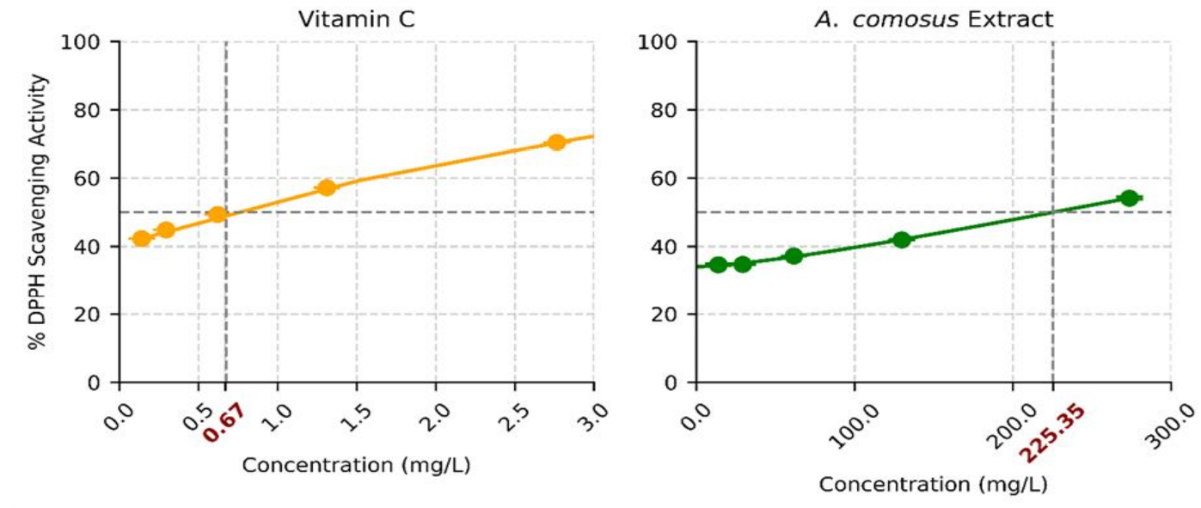
DPPH radical scavenging activity of A. comosus fruit extract and vitamin C.
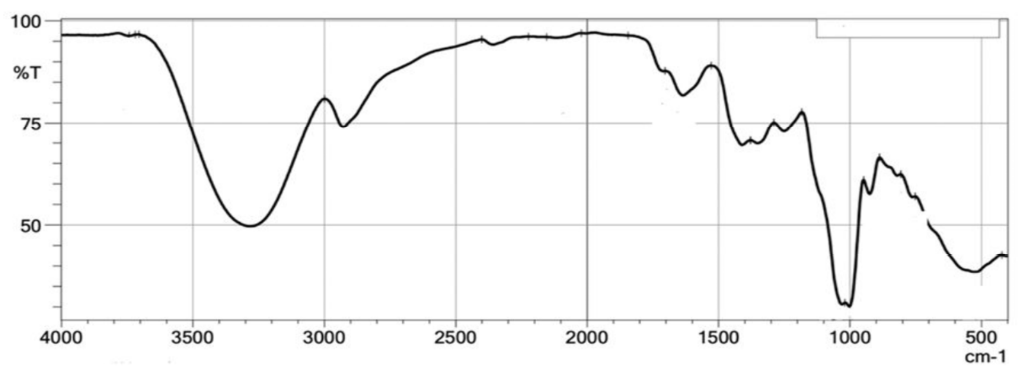
Infrared spectra of A. comosus ethanolic extract
Table 4: LC–HRMS-based identification of bioactive compounds in A. comosus fruit extract
| No | Retention time (min) | % Area | Measured m/z | Proposed metabolite | Pubchem ID |
| 1 | 0.767 | 10.21 | 103.09982 | Choline | 305 |
| 2 | 0.783 | 16.37 | 342.11596 | Α,α-Trehalose | 7427 |
| 3 | 0.809 | 0.43 | 115.0634 | D-(+)-Proline | 8998 |
| 4 | 0.844 | 4.41 | 137.04758 | Methyl isonicotinate | 227085 |
| 5 | 0.893 | 30.58 | 192.02635 | Citric acid | 311 |
| 6 | 1.046 | 0.34 | 122.04803 | Nicotinamide | 936 |
| 7 | 1.071 | 0.12 | 131.09455 | L-Isoleucine | 6306 |
| 8 | 1.252 | 4.14 | 206.04208 | 3-Hydroxy-3-(methoxycarbonyl)pentanedioic acid | 12566215 |
| 9 | 1.298 | 2.07 | 228.02432 | 2-(2-thienyl)-4H-chromen-4-one | 240093 |
| 10 | 1.358 | 0.28 | 165.07891 | L-Phenylalanine | 6140 |
| 11 | 1.645 | 2.31 | 126.03167 | 5-Hydroxymethyl-2-furaldehyde | 237332 |
| 12 | 2.441 | 0.67 | 242.03998 | 10-methoxy-4H-benzo[,]cyclohepta[b]thiophen-4-one | 2825162 |
| 13 | 3.405 | 0.68 | 216.08939 | 2,3,4,9-Tetrahydro-1H-β-carboline-3-carboxylic acid | 98285 |
| 14 | 4.487 | 0.82 | 224.06815 | Sinapinic acid | 1549091 |
| 15 | 5.238 | 2.37 | 164.04726 | 4-Coumaric acid | 322 |
| 16 | 8.451 | 0.09 | 201.20894 | N,N-Dimethyldecylamine N-oxide | 62452 |
| 17 | 8.906 | 0.92 | 157.14655 | 2,2,6,6-Tetramethyl-1-piperidinol (TEMPO) | 549976 |
| 18 | 11.143 | 0.54 | 266.15529 | Dodecyl sulfate | 8778 |
| 19 | 11.417 | 0.38 | 414.20397 | Bis(4-ethylbenzylidene)sorbitol | - |
| 20 | 11.75 | 0.70 | 211.04521 | Acridine-9(10H)-thione | 2818474 |
| 21 | 11.989 | 2.57 | 356.2919 | Monoolein | - |
| 22 | 12.689 | 0.24 | 234.16178 | 3,5-di-tert-Butyl-4-hydroxybenzaldehyde | 73219 |
| 23 | 14.069 | 0.74 | 354.27658 | 1-Linoleoyl glycerol | 5283469 |
| 24 | 14.275 | 1.33 | 255.25594 | N,N-Diethyldodecanamide | 18783 |
| 25 | 14.349 | 2.61 | 278.22433 | Α-Linolenic acid | 5280934 |
| 26 | 14.673 | 2.57 | 356.2919 | Monoolein | 5283468 |
| 27 | 15.316 | 4.63 | 358.30751 | 1-Stearoylglycerol | 22035687 |
| 28 | 15.604 | 3.06 | 283.28725 | Stearamide | 31292 |
| 29 | 16.093 | 0.74 | 292.23982 | 9(Z),11(E),13(E)-Octadecatrienoic Acid methyl ester | 21718552 |
| 30 | 16.554 | 0.16 | 306.25539 | Linolenic acid ethyl ester | 5367460 |
| 31 | 16.876 | 0.27 | 270.25566 | Methyl palmitate | 8181 |
| 32 | 17.182 | 0.24 | 296.27114 | Cis-12-Octadecenoic acid methyl ester | 12963317 |
| 33 | 17.282 | 2.41 | 390.27645 | Bis(2-ethylhexyl) phthalate | 8343 |
The LC–HRMS analysis of A. comosus extract identified 33 major compounds with retention times ranging from 0.7 min to 17.3 min (Table 4).
The most abundant metabolites were citric acid (30.58 %), α,α-trehalose (16.37 %), and choline (10 %).
The dominant presence of citric acid is consistent with previous research, which supports its antioxidant potential . α,α-Trehalose and choline, as abundant sugars and quaternary ammonium compounds, respectively, play important physiological roles in osmoprotection and membrane stabilization, which may also contribute to antioxidant defense. However, as compound identification was based on accurate mass analysis without MS/MS confirmation, these compounds should be considered as tentatively identified.
Overall, the LC–HRMS results indicate that the antioxidant activity observed in the DPPH assay may be associated with the synergistic effects of multiple metabolites, particularly organic acids, phenolics, and unsaturated fatty acids. The coexistence of both polar and non-polar compounds in the ethanolic extract supports the broad spectrum of antioxidant mechanisms in pineapple, ranging from radical scavenging to modulation of redox-related signalling proteins.
Table 5: Results of docking method validation for KEAP1 and SIRT1 proteins.
| RMSD range (Å) | KEAP1 | SIRT1 |
| 0.0 to 1.0 | 5 | 33 |
| 1.0 to 2.0 | 91 | 67 |
| 2.0 < | 4 | 0 |
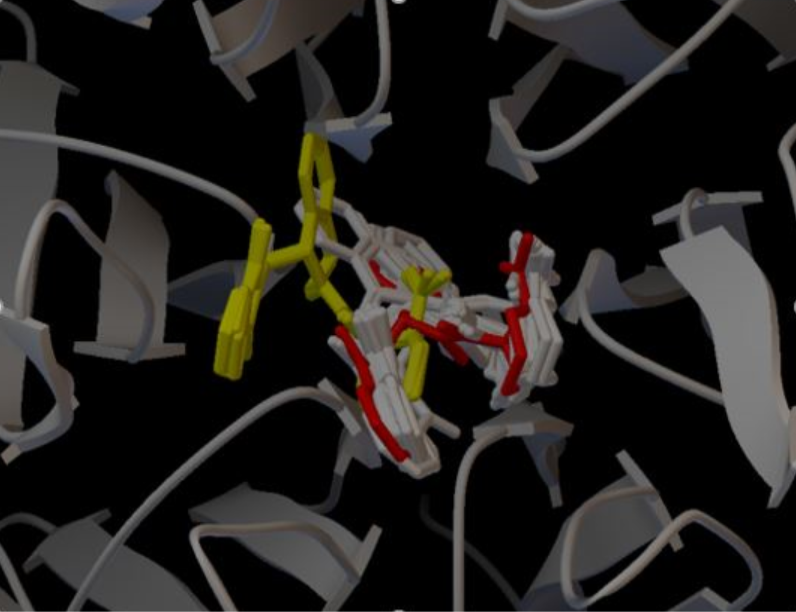
The result of the re-docking of the native ligand into the KEAP1 protein.
The red color represents the original crystallographic position of the native ligand, the white color indicates the 96 poses that met the RMSD criteria, and the yellow color shows the 4 poses that did not meet the RMSD criteria.
The red color represents the original crystallographic position of the native ligand, while the white color indicates the 100 poses that met the RMSD criteria.
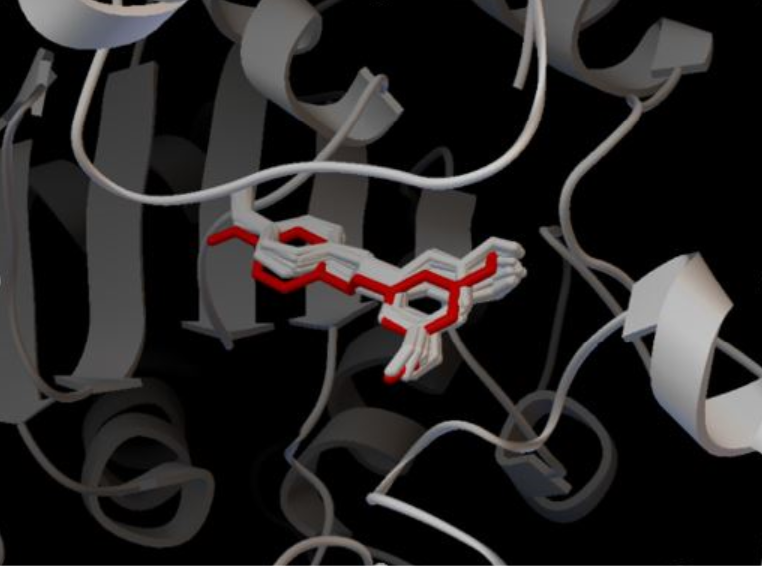
The result of the re-docking of the native ligand into the SIRT1 protein.
Six representative compounds were selected based on their relative abundance, structural diversity, and previously reported relevance to antioxidant-related activity. Molecular docking results showed that the native ligands exhibited the highest binding affinities toward both target proteins (Table 6). Among the six tested metabolites, α-linolenic acid demonstrated the strongest affinity toward both targets, with ΔG = −5.94 kcal·mol-¹ (Ki ≈ 44.24 µM) for KEAP1 and ΔG = −5.66 kcal·mol-¹ (Ki ≈ 70.98 µM) for SIRT1. 4-Coumaric acid ranked second against KEAP1 with ΔG = −5.06 kcal·mol-¹ (Ki ≈ 195.35 µM). The other compounds (citric acid, α,α-trehalose, choline, and 5-hydroxymethyl-2-furaldehyde) exhibited weaker binding energies, with Ki values ranging from hundreds of micromolar to the millimolar range.
Table 6: Result of molecular docking analysis from six sselected A. comosus secondary metabolites to KEAP1 and SIRT1 proteins
| Molecules | KEAP1 | SIRT1 | ||
| Binding Energy (kcal mol–1) | Ki | Binding Energy (kcal mol–1) | Ki | |
| Citric acid | -4.48 | 522.77 µM | -3.68 | 1.99 mM |
| α,α-Trehalose | -2.24 | 22.96 mM | -3.65 | 2.10 mM |
| Choline | -2.33 | 19.67 mM | -3.12 | 5.14 mM |
| α-Linolenic acid | -5.94 | 44.24 µM | -5.66 | 70.98 µM |
| 4-Coumaric acid | -5.06 | 195.35 µM | -4.43 | 562.01 µM |
| 5-Hydroxymethyl-2- furaldehyde | -3.87 | 1.46 mM | -4.32 | 683.91 µM |
| Native ligand* | -8.56 | 531.09 nM | -7.14 | 5.80 µM |
Native ligand*: KEAP1 (1S,2R)-2-{[(1S)-1-[(1,3-dioxo- 1,3-dihydro-2H-isoindol-2-yl)methyl]-3,4-dihydroisoquinolin-2(1H)-yl]carbonyl}cyclohexanecarboxylic acid, Sirt1 Resveratrol
These binding affinities are within the micromolar range, indicating moderate interactions and should therefore be interpreted with caution.
All tested ligands bound in the same binding pocket as the native ligand, forming both hydrophobic and hydrogen-bond interactions, as shown in the molecular docking interaction map for KEAP1 (Figure 5). Citric acid and 4-coumaric acid had the most similar interaction profiles to the native ligand, as indicated by the heatmap and hierarchical clustering. Meanwhile, α-linolenic acid exhibited distinct interaction features dominated by hydrophobic contacts, suggesting a different binding orientation within the same pocket. These results suggest that several pineapple metabolites, particularly citric acid, 4-coumaric acid, and α-linolenic acid, may potentially be associated with antioxidant-related pathways through partial or allosteric interaction with the KEAP1 target despite their moderate binding affinities.
From the SIRT1 clustering result (Figure 6), α,α-Trehalose exhibited an almost identical interaction profile to the native ligand. α-linolenic acid and
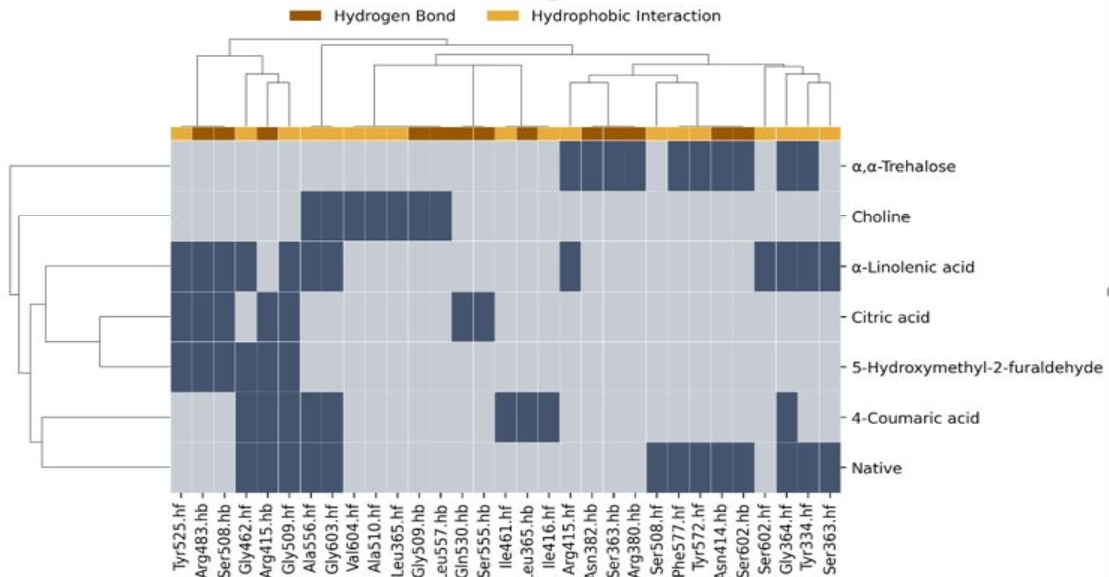
Hydrogen binding and hydrophobic interaction result from molecular docking analysis and the clustering against the KEAP1 protein. Dark grey indicated interaction, and light grey indicated no interaction.
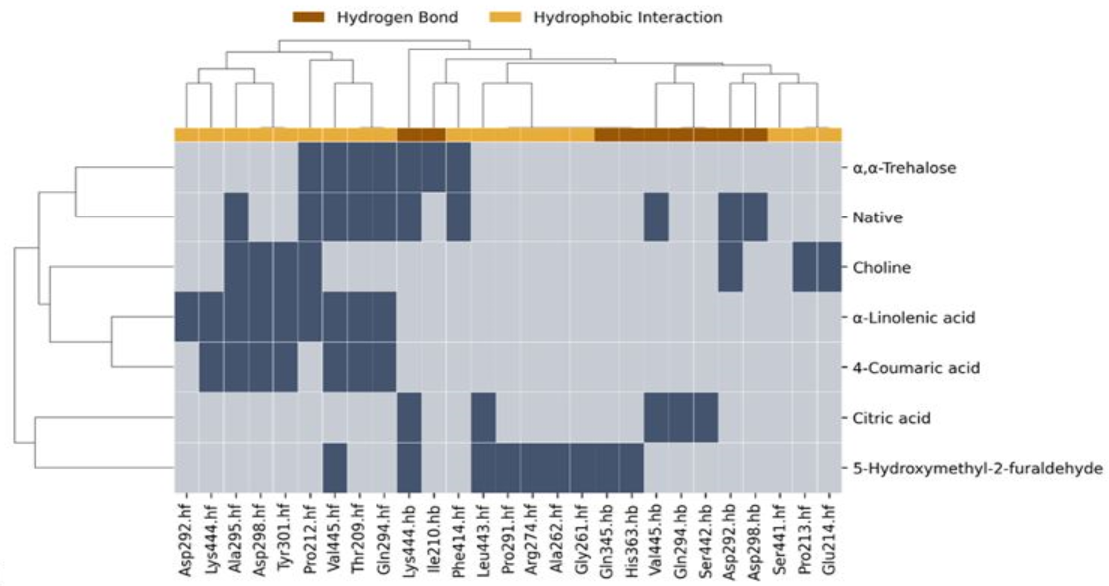
Hydrogen binding and hydrophobic interaction result from molecular docking analysis and the clustering against the SIRT1 protein. Dark grey indicated interaction, and light grey indicated no interaction.
4-coumaric acid showed broader interactions with key residues, including Asp292, Lys444, Ala295, Asp298, and Tyr301. Among these compounds, α-linolenic acid demonstrated the most similar interaction topology to the native ligand, suggesting it potential interaction with SIRT1, although this remains predictive and requires further validation.
From this molecular docking study, α-linolenic acid and 4-coumaric acid emerged as the most promising candidates for interaction with KEAP1, while α-linolenic acid also showed moderate affinity toward SIRT1. This result is in accordance with previous studies reporting that α-linolenic acid can inhibit KEAP1 in Leydig cells of male chicken testes and activate SIRT1 in mice . However, these findings are based on animal models and should be interpreted with caution, as their relevance to human systems remains to be established.
Conclusions
This study demonstrated that Ananas comosus fruit extract possesses measurable antioxidant activity, as confirmed by the DPPH assay and supported by LC–HRMS phytochemical profiling and FTIR characterization. The application of a four-parameter logistic (4PL) model provided a robust and reliable approach for IC₅₀ determination, enabling accurate characterization of the concentration–response relationship. Phytochemical profiling revealed diverse metabolites, including organic acids, phenolics, sugars, and unsaturated fatty acids, which may collectively contribute to the observed antioxidant activity. Molecular docking analysis further suggested that α-linolenic acid and 4-coumaric acid are promising candidates for interaction with KEAP1 and SIRT1, although these computational predictions require further biological validation. Overall, this study provides an inte-grated experimental and computational framework supporting the potential of A. comosus fruit as a natural antioxidant source for oxidative stress-related applications.
Future Perspectives
Future studies should extend these findings through dose optimization, pharmacokinetic evaluation, safety assessment, and well-designed clinical studies to facilitate the translation of pineapple-derived antioxidants into functional food and health-related products. Further investigation is also warranted to isolate and characterize the principal bioactive compounds and to develop innovative formulations with improved consumer acceptability and stability, including functional confectionery and effervescent candy, which may provide practical and convenient delivery systems for pineapple-derived antioxidants .
Considering the increasing concern regarding environmental contamination of agricultural products, future research should also evaluate the occurrence and characteristics of microplastic contamination throughout the pineapple production chain, including agricultural soils, cattle manure used as organic fertilizer, irrigation water, and harvested fruits . Such investigations are essential to ensure that pineapple-derived functional foods do not inadvertently become carriers of microplastics to humans.
In addition, pineapple peel, which represents a major agro-industrial by-product, deserves further investigation as a sustainable source of bioactive compounds and as a potential livestock feed ingredient. Valorization of pineapple peel could reduce environmental pollution while supporting a circular bioeconomy. Future studies should also evaluate whether its utilization in livestock feeding systems can contribute to minimizing microplastic transfer throughout the food chain, including into cattle-derived products such as milk, meat, and manure . Such integrated research will not only accelerate the development of pineapple-derived antioxidant products but also promote a circular bioeconomy through sustainable utilization of pineapple biomass, strengthen food safety, and contribute to the achievement of Sustainable Development Goals 3 (Good Health and Well-being) and Sustainable Development Goals 12 (Responsible Consumption and Production).
Acknowledgements
This research was funded by the Directorate of Research and Community Service, Directorate General of Research and Development, Ministry of Higher Education, Science and Technology of the Republic of Indonesia in 2025. The authors express their gratitude to the Research and Community Service Institute, University of Muhammadiyah Malang, which has distributed the research funds through letters of consent 017/LL7/DT.05.00/PL/2025 and E.5.c/122.02/PNL/LPPM-UMM/V/2025, dated May 28, 2025. Heartfelt thanks are also extended to Materia Medika Laboratory, the Central Laboratory of the Faculty of Agricultural Engineering Brawijaya University, and the Kawasan Yogyakarta Laboratory.
Novelty Statement
This study presents an integrated approach combining LC–HRMS-based phytochemical profiling, FTIR analysis, quantitative antioxidant modelling using a four-parameter logistic (4PL) model, and molecular docking targeting KEAP1 and SIRT1 in Ananas comosus. While previous studies have primarily focused on antioxidant activity, this work provides a combined experimental and computational perspective to explore potential molecular interactions associated with oxidative stress-related pathways.
Author’s Contribution
Diah Hermayanti: Conceptualized and designed the study, elaborated the intellectual content, performed literature search, manuscript preparation, and manuscript revision.
Roy Hendroko Seyobudi: Performed literature search, materials research, manuscript preparation, review, and manuscript revision.
Meddy Setiawan and Maizirwan Mel: Research supervision and manuscript review
Desy Andari, Muhammad Artabah Muchlisin, and Engrid Juni Astuti: Analytical laboratory and manuscript review
All authors have read and approved the final manuscript.
Generative AI and AI-assisted technology statement
The authors declare that no generative AI was used in the generation, analysis, or interpretation of research data. AI-assisted tools were used solely for language editing and improving clarity of the manuscript.
Conflict of interest
The authors have declared no conflict of interest.
References
- Alzain, A.A., R.M. Mukhtar, N. Abdelmoniem, T.H. Shoaib, W. Osman, M. Alsulaimany, A.K.B. Aljohani, S.A. Almadani, B.H. Alsaadi, M.M. Althubyani, S.G.A. Mohamed, G.A. Mohamed and S.R.M. Ibrahim. 2023. Modulation of NRF2/KEAP1-mediated oxidative stress for cancer treatment by natural products using pharmacophore-based screening, molecular docking, and molecular dynamics studies. Molecul., 28(6003). https://doi.org/10.3390/molecules28166003 [CrossRef]
- Anggraeni, A.D., N.Y.F. Putri, S.D. Amalia and M.A. Muchlisin. 2023. Bioavailability and molecular docking prediction of secondary metabolite of curcuma zedoaria as potential MPRO SARS COV-2 inhibitor. Medical Sains., 8(4): 1345–1354. https://doi.org/10.37874/ms.v8i4.805 [CrossRef]
- Baj, T., G. Kowalska, R. Kowalski, J. Szymanska, G. Kai, H.D.M. Coutinho and E. Sieniawska, 2023. Synergistic antioxidant activity of four — component mixture of essential oils: Basil, cedarwood , citronella and thyme for the use as medicinal and food ingredient. Antioxid., 12(577). https://doi.org/10.3390/antiox12030577 [CrossRef]
- Bannwarth, C., S. Ehlert and S. Grimme. 2019. GFN2-xTB - An accurate and broadly parametrized self-consistent tight-binding quantum chemical method with multipole electrostatics and density-dependent dispersion contributions. J. Chem. Theory Comput., 15(3): 1652–1671. https://doi.org/10.1021/acs.jctc.8b01176 [CrossRef]
- Bossio, S., A. Perri, R. Gallo, A.D. Bartolo, V. De, V, Rago, D.L Russa, M.D. Dio, S.L. Vignera, A.E. Calogero, G. Vitale and A. Aversa. 2023. Alpha-lipoic acid reduces cell growth, inhibits autophagy, and counteracts prostate cancer cell migration and invasion: Evidence from in vitro studies. Int. J. Mol. Sci., 24(17111). https://doi.org/10.3390/ijms242317111 [CrossRef]
- Cao, D., M. Wang, X. Qiu, D. Liu, H. Jiang, N. Yang and R.M. Xu. 2015. Structural basis for allosteric, substratedependent stimulation of SIRT1 activity by resveratrol. Genes Dev., 29(12): 1316–1325. https://doi.org/10.1101/gad.265462.115 [CrossRef]
- Chaudhary, P., P. Janmeda, A.O. Docea, B. Yeskaliyeva, A.F.A. Razis, B. Modu, D. Calina and J. Sharifi-Rad. 2023. Oxidative stress, free radicals and antioxidants: Potential crosstalk in the pathophysiology of human diseases. Front. Chem., 11(1158198). https://doi.org/10.3389/fchem.2023.1158198 [CrossRef]
- Damat, D., R.H. Setyobudi, J. Burlakovs, Z.V. Gaile, D.D. Siskawardani, R. Anggriani and A. Tain. 2021. Characterization properties of extruded analog rice developed from arrowroot starch with addition of seaweed and spices. Sarhad J. Agric. 37(Special issue 1): 159–170. https://dx.doi.org/10.17582/journal.sja/2021.37.s1.159.170 [Full text] [CrossRef]
- Damat, D., R.H. Setyobudi, I. Iswahyudi, S. Suherman, Y. Sincihu, H.A. Manshur, A. Anekawati, S.K. Wahono, M. Anwar, M.P. Garfansa, R.A. Saputri and S.A. Amani. 2025. Determination and quantification of microplastics in cooking oil sold in Indonesia. Sarhad J. Agric., 39 (Sp. Iss.1): 198–207. https://dx.doi.org/10.17582/journal.sja/2023/39/s1.198.207 [Full text] [CrossRef]
- García, A.V., M.I.D. Martínez, M.P. Landete, M.S.P. Moya and A.B. Sanahuja. 2021. Potential of industrial pineapple (Ananas comosus (L.) Merrill) by-products as aromatic and antioxidant sources. Antioxidant., 10(1767). https://doi.org/10.3390/antiox10111767 [CrossRef]
- Hopkins, A.L. 2008. Network pharmacology: The next paradigm in drug discovery. Nat. Chem. Biol., 4(11): 682–690. https://doi.org/10.1038/nchembio.118 [CrossRef]
- Garfansa, M.P., R.H. Setyobudi, I. Iswahyudi, S. Anwar, D. Damat, T. Liwang, M.S. Susanti, D. Hermayanti, M. Setiawani, T.D.N. Subchi, D. Mariyam, Y.M. Ananda, S.K. Wahono, A. Basir, M. Musrif, and A.S. Khan. 2024. Potential impact microplastic polyethylene terephthalate on mice. Sarhad J. Agri. 39(1): 47–60. https://dx.doi.org/10.17582/journal.sja/2023/39/s1.47.60 [Full text] [CrossRef]
- Hermayanti, D., R.H. Setyobudi, S. Anwar, M.P. Garfansa, I. Iswahyudi, M. Setiawan, T. Liwang, T.D.N. Subchi, L. Zalizar and P.G. Adinurani. 2024. The effect of polyethylene terephthalate microplastics on the growth of mice. Bio Web Conf., 104(00005): 1–17. https://doi.org/10.1051/bioconf/202410400005 [CrossRef]
- Hermayanti, D., R.H. Setyobudi, M. Setiawan, S. Suherman, M.A. Wedyan, M.I.S. Massadeh, N.I.D. Faradinah, R. Nisrina, R.P. Sanusi and H. Tsabita. 2025. Effectiveness of pineapple extract in improving microplastic hepatotoxicity in male white rats of Wistar strain. Sarhad. J. Agric., 39 (Sp. Iss.1): 220–231. https://dx.doi.org/10.17582/journal.sja/2023/39/s1.220.231 [Full text] [CrossRef]
- Hossain, M.F. 2016. World pineapple production: An overview. Afr. J. Food Agric. Nutr. Dev., 16(4): 11443–11456. https://doi.org/10.18697/ajfand.76.15620 [CrossRef]
- Hunter, J.D. 2007. Matplotlib: A 2D graphics environment. Comput. Sci. Eng. 9(3): 90–95. https://doi.org/10.1109/MCSE.2007.55 [CrossRef]
- Iside, C., M. Scafuro, A. Nebbioso and L. Altucci. 2020. SIRT1 activation by natural phytochemicals: An overview. Front. Pharmacol., 11(1225). https://doi.org/10.3389/fphar.2020.01225 [CrossRef]
- Iswahyudi, I., W. Widodo, W. Warkoyo, R.H. Setyobudi, D. Damat, D. Roeswitawati, S. Anwar, T.D.N. Subchi, I.R. Utarid, M.P. Garfansa, M.S. Sholeh, I. Ekawati, R. Tonda, W.A. Mujianti, D.R.A. Sukma, S.U. Lestari and C. Anam. 2024. Sarhad J.Agri., 39 (Sp.Iss.1): 61–70. https://dx.doi.org/10.17582/journal.sja/2023/39/s1.61.70 [Full text] [CrossRef]
- Iswahyudi, I., S.A. Amani, M.P. Garfansa, A. Ahmad, M. Soheh, M.S. Sholeh, A. Sutanto, R.H. Setyobudi and M. Qibtiyah. 2025. Determination and quantification of microplastics in grasslands for feed and possible impacts on livestock. Environ. Qual. Manag., 35(2): e70238. https://doi.org/10.1002/tqem.7023 [CrossRef]
- Jnoff, E., C. Albrecht, J.J. Barker, O, Barker, E. Beaumont, S. Bromidge, F. Brookfield, M. Brooks, C. Bubert, T. Ceska, V. Corden, G. Dawson, S. Duclos, T. Fryatt, C. Genicot, F. Jigorel, J. Kwong, R. Maghames, I. Mushi, R. Pike, Z.A. Sands, M.A Smith, C. C Stimson and J.P. Courade. 2014. Binding mode and structure-activity relationships around direct inhibitors of the Nrf2-Keap1 complex. Chem. Med. Chem., 9(4): 699–705. https://doi.org/10.1002/cmdc.201300525 [CrossRef]
- Jovanović, M., M. MIlutinović, M. Kostić, N. Kitić, S. Brankovič and D. Kitič. 2018. Antioxidant capacity of pineapple methanolic extracts and juice (Ananas comosus (L.) Merr.). Lekovite Sirovine., 38(1): 27–30. https://doi.org/10.5937/leksir1838027j [CrossRef]
- Kıran, T.R., O. Otlu and A.B. Karabulut. 2023. Oxidative stress and antioxidants in health and disease. J. Lab. Med., 47(1): 1–11. https://doi.org/10.1515/labmed-2022-0108 [CrossRef]
- Krueger, D.A., R.G. Krueger and J. Maciel. 1992. Composition of pineapple juice. J. AOAC Int., 75(2): 280–282. https://doi.org/10.1093/jaoac/75.2.280 [CrossRef]
- Laskowski, R.A. and M.B. Swindells. 2011. LigPlot+: Multiple ligand-protein interaction diagrams for drug discovery. J. Chem. Inf. Model., 51: 2778–2786. [CrossRef]
- Li, M., W. Huang, F. Jie, M. Wang, Y. Zhong, Q. Chen and B. Lu. 2019. Discovery of Keap1−Nrf2 small−molecule inhibitors from phytochemicals based on molecular docking. Food Chem. Toxicol., 133: 110758. https://doi.org/10.1016/j.fct.2019.110758 [CrossRef]
- Martemucci, G., C. Costagliola, M. Mariano, L. D’andrea, P. Napolitano and A.G. D’Alessandro. 2022. Free radical properties, source and targets, antioxidant consumption and health. Oxyg., 2(2): 48–78. https://doi.org/10.3390/oxygen2020006 [CrossRef]
- Mohsin, A., A. Jabeen, D. Majid, F.M. Allai, A.H. Dar, B. Gulzar and H.A. Makroo. 2020. Pineapple. pp. 379–396. In: Nayik, G.A. and A. Gull (Eds.). Antioxidants in fruits: Properties and health benefits. https://doi.org/10.1007/978-981-15-7285-2_18 [CrossRef]
- Muchlisin, M.A., W. Firdausiyah, E.J. Astuti and A. Rafikayanti. 2022. Prediction of bioavailability and interaction of secondary metabolite compounds of plum fruit (Prunus domestica) against HMG-CoA reductase in silico. J. Pharmacopol., 5(1): 1–8. https://doi.org/10.36465/jop.v5i1.875 [CrossRef]
- Muchtaridi, M., D. Dermawan and M. Yusuf. 2018. Molecular docking, 3D structure-based pharmacophore modeling, and ADME prediction of alpha mangostin and its derivatives against estrogen receptor alpha. J. Young Pharm., 10(3): 252–259. https://doi.org/10.5530/jyp.2018.10.58 [CrossRef]
- Nakai, K. and D. Tsuruta. 2021. What are reactive oxygen species, free radicals, and oxidative stress in skin diseases? Int. J. Mol. Sci., 22(19): 10799. https://doi.org/10.3390/ijms221910799 [CrossRef]
- Rahman, I.A., S.N. Camalxaman, A.S. Rambely, N. Haron and E. Mohamed. 2020. Ananas comosus (L.) Merr.: A mini review of its therapeutic properties. Health Scope., 3(2): 54–59.
- Saati, E.A., R.H. Setyobudi, I. Iswahyudi, R. Asiyah, M. Taufiq, M. Churochman, M. Aula, S.K. Wahono, A. Hidayati, M.P. Garfansa, F.K. Hartati, A.D. Puspitarini, G.S.P. Diksa, and S.A. Aman. 2025. Number and characteristics of microplastics contamination in commercial red palm oils. Food Human., 5: 100737. https://doi.org/10.1016/j.foohum.2025.100737 [CrossRef]
- Sellitto, C., G. Corbi, B. Stefanelli, V. Manzo, M. Trucillo, B. Charlier, F. Mensitieri, V. Izzo, A. Lucariello, A. Perna, G. Guerra, A. De Luca, A. Filippelli and V. Conti. 2022. Antioxidant supplementation hinders the role of exercise training as a natural activator of SIRT1. Nutrien., 14(2092). https://doi.org/10.3390/nu14102092 [CrossRef]
- Setyobudi, R.H., S. Anwar, I. Iswahyudi, S. Husen, D. Damat, M.P. Garfansa, P.G. Adinurani, M. Mel, T. Liwang, R. Aprilianti, T.D.N. Subchi, M. Setiawan, D. Hermayanti, D. Mariyam, B.A. Prahardika, Z. Vincevica-Gaile, S.K. Wahono, T.N. Punjungsari, A. Fauzi, I. Andini, N.R. Malihah, I. Ekawati, D. D.Sulistyoningrum and Y.A.C. Ekalaturrahmah. 2024a. Identification and quantification of microplastics contamination in potato from Malang Raya, Indonesia. Bio Web Conf., 104(00036): 1–15. https://doi.org/10.1051/bioconf/202410400036 [CrossRef]
- Setyobudi, R.H., S. Anwar, M.P. Garfansa, T. Liwang, I. Iswahyudi, D. Damat, E.S. Savitri, S.K. Wahono, L. Latipun, P.G. Adinurani, T.D.N. Subchi, M. Setiawan, D. Hermayanti, D. Mariyam, A. Fauzi, Z Vincevica-Gaile, M. Churochman, D. Sulistyoningrum, A.R. Farzana and I.O. Dewi. 2024b. Microplastic debris in palm cooking oil: A call for research. Bio Web Conf., 104(00037): 1–17. https://doi.org/10.1051/bioconf/202410400037 [CrossRef]
- Setyobudi, R.H., I. Iswahyudi, D. Damat, M.P. Garfansa, D. Hermayanti, S.D. Ramadani, Z. Vincevica-Gaile, L.R. Nurfadilah, E.S. Savitri and Z. Meylanzharie. 2024c. Presence of microplastics in water, soil, organic fertilizer, and potato plants on potato plantations. Environ. Qual. Manage., 34(2): e70001.https://doi.org/10.1002/tqem.70001 [CrossRef]
- Setyobudi, R.H., D. Hermayanti, S. Husen, M.P. Garfansa, T.D.N. Subchi, S. Suherman, S. Anwar, I. Iswahyudi, Y. Sincihu, A.Anekawati, M.S. Susanti, M. Anwar, T.A. Pakarti and S.A.A. Putra. 2025. Bioremediation using microorganisms and earthworms in reducing the impact of microplastics in potato cultivation. Sarhad J. Agric., 39 (Sp.Iss.1): 171–184. https://dx.doi.org/10.17582/journal.sja/2023/39/s1.171.184 [Full text] [CrossRef]
- Setyobudi, R.H., P. Damayanti, Y. Sincihu, I.W. Saputra, S. Sajariah, H. Nurdiana, D. Hermayanti, R.Y. Primariawan, S.M. Agustini, M.A. Sander and F. Safithri. 2026. Microplastics: Emerging threats to human health. UMM Press, Malang, Indonesia.
- Setyobudi, R.H. 2026. The journey of microplastics: From polymers to food systems. In: Setyobudi, R.H. (Ed.). Microplastics: Emerging threats to human health. UMM Press, Malang, Indonesia
- Sharma, A., L. Kumar, M. Malhotra, A.P. Singh and A.P. Singh. 2024. Ananas comosus (pineapple): A comprehensive review of its medicinal properties, phytochemical composition, and pharmacological activities. J. Drug Deliv. Ther., 14(5): 148–157. https://doi.org/10.22270/jddt.v14i5.6557 [CrossRef]
- Song, N.R., H. Yang, J. Park, J.Y, Kwon, N.J., Kang, Y.S., Heo, K.W. Lee and H.J. Lee. 2012. Cyanidin suppresses neoplastic cell transformation by directly targeting phosphatidylinositol 3-kinase. Food Chem., 133(3): 658–664. https://doi.org/10.1016/j.foodchem.2012.01.045 [CrossRef]
- Tonolo, F., L. Moretto, A. Grinzato, F. Fiorese, A. Folda, V. Scalcon, S. Ferro, G. Arrigoni, M. Bellamio, E. Feller, A. Bindoli, O. Marin and M.P. Rigobello. 2020. Fermented soy-derived bioactive peptides selected by a molecular docking approach show antioxidant properties involving the keap1/nrf2 pathway. Antioxidan., 9(1306). https://doi.org/10.3390/antiox9121306 [CrossRef]
- Tumilaar, S.G., A. Hardianto, H. Dohi and D. Kurnia. 2024. A comprehensive review of free radicals, oxidative stress, and antioxidants: Overview, clinical applications, global perspectives, future directions, and mechanisms of antioxidant activity of flavonoid compounds. J. Chem., 594386. https://doi.org/10.1155/2024/5594386. [CrossRef]
- Virtanen, P., R. Gommers, T.E. Oliphant, M. Haberland, T. Reddy, S.J. Walt, M. Van Der, Brett, J. Wilson and K.J. Millman. 2020. SciPy 1.0: Fundamental algorithms for scientific computing in Python. Nat. Method., 17: 261–272. https://doi.org/10.1038/s41592-019-0686-2 [CrossRef]
- Wahyudi, A., R.H. Setyobudi, I. Iswahyudi, M.P. Garfansa, E.S. Savitri, B.A. Prahardika, P. Patmawati, R.D. Putri, R.A.D. Sukma, N.S. Putra, E. Yunita and S.K. Wahono. 2025. Determination and quantification of microplastics in goat farms. Bioresour. Technol. Rep., 31: 102199. https://doi.org/10.1016/j.biteb.2025.102199 [CrossRef]
- Waskom, M.L. 2021. Seaborn: Statistical data visualization statement of need. J. Open Source Softw., 6(60). https://doi.org/10.21105/joss.03021 [CrossRef]
- Yuris, A. and LF. Siow. 2014. A comparative study of the antioxidant properties of three pineapple (Ananas comosus L.) varieties. J. Food Stud., 3(1): 40–56. https://doi.org/10.5296/jfs.v3i1.4995 [CrossRef]
- Zhao, Z., M. Shang, C., Long, X. Yao, X. Gao and X. Qi. 2023. Alpha-Linolenic acid-regulated testosterone biosynthesis via activation of the JNK-SF-1 signaling pathway in primary rooster Leydig cells. Theriogenol., 209:170–177. https://doi.org/10.1016/j.theriogenology.2023.06.030 [CrossRef]

Services
Article usage statistics
Loading…
Related articles
- Integrated In silico and In vitro Evaluation of the Antiviral Potential of Hibiscus sabdariffa Ethanolic Extract Against Tobacco Mosaic VirusNovel Research in Microbiology Journal · 2026
- Integrated In Vitro and In Silico Assessment of Anti-Quorum Sensing and Anti-Biofilm Activities of Chlorella vulgaris and Spirulina platensis against Acinetobacter baumanniiPunjab University Journal of Zoology · 2026
- In Vitro Anthelmintic Potential of Garlic (Allium sativum) and Ginger (Zingiber officinale) Extracts against Haemonchus contortus: A Phytochemical ApproachJournal of Animal Health and Production · 2026
- Evaluations of Phytochemical Contents, Antibacterial and Antioxidant Potential of Methanolic Leaves Extract of Tanacetum camphoratum Less. (Camphor tansy).Sarhad Journal of Agriculture · 2022
- Microbial Co-Fermentation and Solvent Extraction Enhance the Phenolic Profile, Antioxidant Activity, and Antibacterial Potential of Alpinia officinarumSarhad Journal of Agriculture · 2026
- In vitro Antioxidant and Anticoccidial Studies of Pentaclethra macrophylla Extracts Against Eimeria magna, Eimeria flavescens, Eimeria intestinalis Eimeria stiedae Oocysts and Sporozoites of RabbitsThe Journal of Advances in Parasitology · 2018