
Chronic fluoride exposure is a major public health concern that induces oxidative stress, inflammation, and hematological dysfunction. Although probiotics possess antioxidant and immunomodulatory properties, evidence regarding the protective role of yogurt against fluoride-induced hematotoxicity remains limited. The present study aimed to investigate ameliorating effect of probiotic yogurt on hematological changes caused by fluoride in rabbits. The 28 adult rabbits were randomly assigned to seven groups (n = 4/group): control, fluoride (50 mg/day), yogurt (15 g/day), fluoride (50 mg/day) + yogurt (15 g/day), fluoride (100 mg/day), yogurt (30 g/day), and fluoride (100 mg/day) + yogurt (30 g/day). Oral treatments were given for 30 days. Complete blood count analysis of blood samples collected on days 16 and 31 included total leucocyte count and erythrocytes count, hemoglobin, packed cell volume, platelets count and differential leucocyte count. Exposure to fluoride resulted in dose-dependent hematotoxicity (indicated by significant reductions in total erythrocytes count, hemoglobin, packed cell volume and platelet count, along with disturbances in leucocytes, suggesting systemic inflammation. By day 31, the high dose fluoride group had the greatest hematological impairment. On the other hand, supplementation with yogurt revealed a significant improvement in erythrocytic and thrombocytic indices and a partial restoration of leukocytes homeostasis. The yogurt in 30 g/day was more effective at protecting against injury, as was the longer the supplementation continued, with clear-dose dependent effects. These improvements are similar to the antioxidant and immunomodulatory effects of probiotics. In a rabbit model, probiotic yoghurt proved to be effective in reducing the hematological toxicity caused by fluoride intake and to maintain the integrity of erythrocytes, as well as to promote normalisation of the profiles of immune cells and an improvement in haematopoiesis. The results indicate that the use of probiotics as a food source with high fermentation benefits could be a potential nutritive approach to reduce hematological changes caused by chronic fluoride exposure. These protective effects need to be further explored in humans by means of mechanistic and clinical studies.
Research Article · Online First, 9 November 2026 · Open Access
Protective Effect of Probiotic Yogurt Against Fluoride-induced Haematological Abnormalities in Rabbits
· · · · · ·
Affiliations & Notes ⌄
- 1Department of Veterinary Pharmacology, Sindh Agriculture University, Tandojam
- 2Department of Animal Reproduction, Sindh Agriculture University, Tandojam
- 3Department of Veterinary Medicine, Sindh Agriculture University, Tandojam
- *Correspondence | Rasool Bux; Email: rbux712@gmail.com
Article Info ⌄
- Journal:
- Pakistan Journal of Zoology
- Submitted Date:
- 27 June 2026
- Accepted Date:
- 17 July 2026
- Published Date:
- 9 November 2026

Abstract
Introduction
Fluoride is an important microelement that has beneficial effects on the prevention of denta caries and maintenance of skeletal health when it is used in physiological doses. Chronic fluoride pollution by excessive intake through various sources such as drinking water, food, and industries has now emerged as a global public health problem for its harmful effects on skelal and non-skeletal tissues. In recent times, several systematic reviews have shown that chronic fluoride exposure can cause oxidative stress, mitochondrial dysfunction, DNA damage, inflammation, and apoptosis, which have been seen to disrupt various organ systems such as liver, kidneys, nervous system, and hematopoietic tissues ; . An extra-skeletal manifestation, which has received special interest in fluorosis, is the hematological changes; the blood cells are very sensitive to oxidative injury. Excess fluoride forms reactive oxygen species (ROS), damages antioxidant defense systems and damages mitochondrial function, which causes damage to the cell’s membranes and reduces cell survival. Additionally, experimental animals and human studies have documented alterations in total erythrocyte count (TEC), hemoglobin (Hb) concentration, packed cell volume (PCV), platelet count, and leukocytosis. Oxidative stress-mediated apoptosis and inflammatory responses induced by high fluoride levels have also been reported to cause immune dysregulation and changes in the types of leukocytes. Multiple pieces of evidence indicate oxidative stress is the major mechanism of fluoride toxicity. ROS are increased and lead to lipid peroxidation, protein oxidation, mitochondrial dysfunction and inflammatory pathway activation which in turn cause cellular injury and apoptosis. Improving antioxidant enzyme activities and decreasing oxidative stress biomarkers in experimental animals after exposure to fluoride has been demonstrated by a recent meta-analysis, which has led to the increased interest in dietary interventions that enhance antioxidant capacity and immune homeostasis as potential therapeutic strategies for fluoride toxicity . Therefore, dietary approaches aimed at improving antioxidant capacity and immune homeostasis have gained increasing attention as promising therapeutic strategies
The antioxidant, anti-inflammatory and immunomodulatory properties of probiotics have made them effective nutritional interventions. Probiotic microorganisms have a beneficial effect on intestinal microbial balance, nutrient bioavailability, immune response, and reducing oxidative stress. Furthermore, recent reviews have focused on the therapeutic relevance of probiotics on counteracting toxicological insults by modulation of metabolic pathways and enhancing the endogenous antioxidant defense systems , as well as their ability to regulate cytokine production and maintain leukocytes homeostasis, which improves host resistance against oxidative and inflammatory damage . Fermented dairy products, especially yogurt, are among the most popular natural sources of probiotics and are used as an excellent source of lactic acid bacteria, bioactive peptides, vitamins, and minerals that help maintain physiological homeostasis and decrease oxidative stress. More recently, gut microbiota has been shown to be essential to fluoride toxicity. Exposure to fluoride over time has been linked to dysbiosis and changes in the balance of micro-organisms, potentially leading to increased inflammation and oxidative stress. On the other hand, probiotics can help balance the gut microbiome and boost the body’s antioxidant defenses, which helps protect against the systemic effects of fluoride toxicity in the body and promote overall well-being . While some studies have already explored the toxicological effects of fluoride and the beneficial properties of probiotics alone, there is little information also available on the ameliorative effect of yogurt on fluoride-induced hematological alterations. Furthermore, detailed studies on response of erythrocytic, thrombocytic and leukocytic indices to yogurt supplementation during fluoride intoxication have been limited. Hence the present study aimed to examine the protective effect of yogurt supplementation on the haematological disturbances in rabbits induced by fluoride and the parameters under observation were TEC, Hb, PCV, platelet count, total leucocyte count (TLC) and differential leucocyte profile. Since yogurt exhibits antioxidant and immunomodulatory effects, it was hypothesized that supplementation with yogurt would help reduce the fluoride-induced hematotoxicity and restore the hematological homeostasis.
MATERIALS AND METHODS
Experimental animals and adaptation
Twenty eight adult male and female rabbits,, approximately 1kg body weight purchased from local market were reared in cages in animal house of Sindh Agriculture University, Tandojam. Before start of the study, all animals were dewormed and kept under hygienic condition for two weeks as acclimation period.
Experimental design
All animals were randomly divided into seven groups each of four: Group-A: control, Group B: received fluoride 50mg in 500 ml with drinking water, Group C: yogurt 15 g/rabbit. Group D: fluoride 50 mg /rabbit mixed with 15g of yogurt, Group E: received fluoride 100mg in 500ml with water, Group F: yogurt 30 mg /rabbit. Group G: fluoride 100mg/rabbit mixed with 30g of yogurt. Standard feeding regimen was avaliable and feed and water was available ad libitum to them. Animals in all treated groups received the prescribed treatment once daily orally for 30 days.
Collection of blood samples
Blood samples were collected from the jugular vein xylazine were injected (0.05 c.c s/cut) to rabbits and hair were removed from neck region were held in hyperextended posture and collecting area was sterilized with 70% methyl alcohol. The jugular vein was detected 2 to 4 mm lateral to the sternoclavicular junction and was blue in color. To prevent collapsing these tiny blood vessels a 25 gauge needle was placed in the caudocephalic direction (back to front) and blood was gently extracted. Blood samples were obtained in EDTA containing tube. The blood samples were taken on day 16th and 31st of treatment for evaluation of haematological parameters.
Haematological analysis
The blood samples were analyzed for completed blood picture (CBC), haemoglobin (Hb), hematocrit or packed cell volume (PCV), red blood cells (RBCs), white blood cells (WBC), and platelets by Automatic Haematological analyzer.
Statistical analysis
The collected data were analyzed by using software student edition of statistix USA 8.1 version.
Results and Discussion
Total erythrocytes count
Total erythrocyte count (TEC) was significantly influenced by both fluoride exposure and yogurt administration (Fig. 1). Rabbits receiving fluoride alone exhibited a marked reduction in TEC compared with the control group, and the effect was dose-dependent. Group B (50 mg fluoride) showed TEC values of 6.28 and 5.24 ×10⁶/mm³ on days 16 and 31, respectively, whereas Group E (100 mg fluoride) exhibited the lowest values (5.00 and 4.89 ×10⁶/mm³). In contrast, yogurt supplementation alone significantly increased TEC above the control level, with Group F (30 g yogurt) recording the highest values (8.89 and 10.62 ×10⁶/mm³). Furthermore, co-administration of yogurt with fluoride partially restored erythrocyte counts, particularly in Group G, indicating a dose-dependent protective effect of yogurt against fluoride-induced hematotoxicity. the reduction in TEC observed in fluoride-treated rabbits suggests that fluoride adversely affects erythropoiesis and erythrocyte integrity. Excessive fluoride exposure has been reported to induce oxidative stress, mitochondrial dysfunction, ATP depletion, and apoptosis in non-skeletal tissues, thereby compromising red blood cell survival and causing anemia-like conditions ; . Fluoride-mediated inhibition of glycolytic enzymes and depletion of ATP have been shown to destabilize erythrocyte membranes, increasing susceptibility to hemolysis and shortening erythrocyte lifespan . These mechanisms explain the progressive decline in TEC observed in Groups B and E. Recent systematic reviews further demonstrated that oxidative stress is one of the principal mechanisms responsible for fluoride-induced tissue injury and cellular dysfunction, including hematological disturbances . RBCs are particularly vulnerable to oxidative damage because of their continuous exposure to oxygen and high content of polyunsaturated fatty acids. Excess reactive oxygen species generated by fluoride toxicity can damage membrane lipids and proteins, impair antioxidant defense systems, and reduce erythrocyte viability . Consequently, the lower erythrocyte counts observed in the present study are consistent with previous findings demonstrating that oxidative stress-mediated membrane injury contributes to fluoride-induced hematotoxicity. Conversely, rabbits receiving yogurt alone exhibited significantly higher TEC values than controls, suggesting a stimulatory effect on hematopoiesis. Fermented dairy products such as yogurt are rich sources of probiotics and bioactive peptides with antioxidant and anti-inflammatory properties. Recent reviews have highlighted that probiotic-containing dairy products improve gut microbial balance, enhance nutrient absorption, and increase endogenous antioxidant capacity, thereby promoting overall physiological health . Moreover, synbiotic yogurt supplementation has been shown to improve oxidative stress status and antioxidant biomarkers, supporting its protective role against free radical-mediated tissue injury . The recovery in erythrocyte count observed in Groups D and G indicates that yogurt mitigated fluoride-induced hematological damage. This protective effect may be attributed to probiotic microorganisms and antioxidant metabolites present in yogurt, which enhance endogenous antioxidant defenses and preserve erythrocyte membrane integrity. The greater improvement observed with 30 g yogurt suggests a dose-dependent response, with prolonged supplementation producing more pronounced restoration by day 31. Similar findings have been reported in experimental studies where probiotic-rich foods reduced oxidative stress and attenuated toxic effects induced by environmental contaminants.
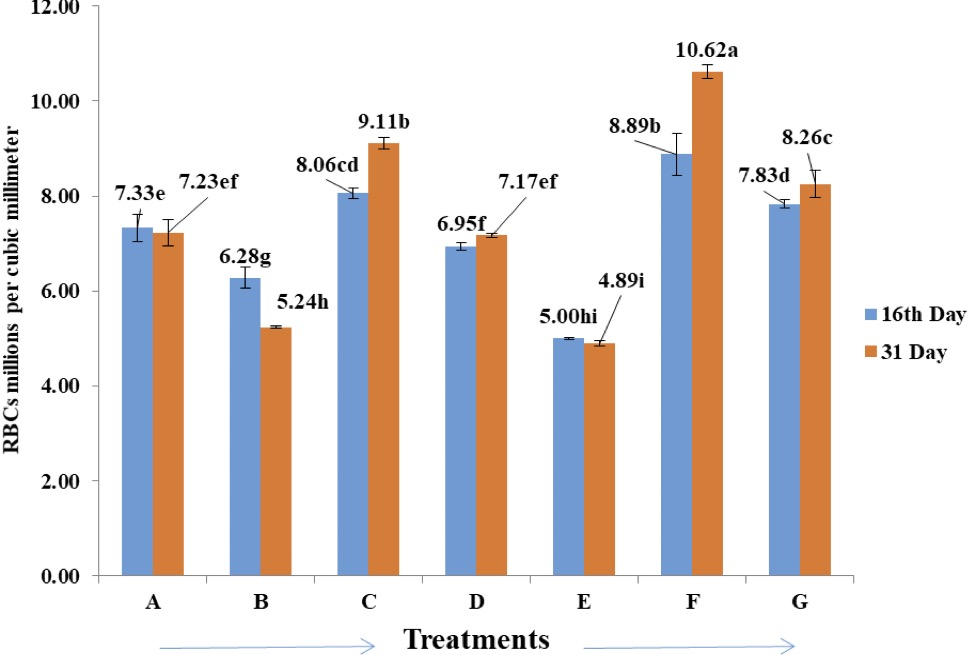
RBCs concentration (per cubic millimeter) in fluoride induced toxicity and yogurt supplement amelioration in rabbit.
Treatment groups: A, control; B, received fluoride 50mg in 500 ml water; C, was given yogurt 15 g/rabbit; D, got fluoride (50 mg) + yogurt (15g); E, received fluoride 100mg in 500ml water; F, yogurt 30 mg; G, received fluoride (100mg) + yogurt (30g).
Haemoglobin
Fluoride exposure and yogurt supplementation had significant effects on hemoglobin (Hb) concentration (Fig. 2). The concentrations of Hb in the control group (A) were 8.16 and 8.20 g/dL on days 16 and 31, respectively. An increasing decline in Hb levels was observed in rabbits treated with fluoride alone in a dose-dependent manner. The Hb levels for Group B (50 mg fluoride) were 7.11 and 6.43 g/dL (Day 16 and Day 31) while in Group E (100 mg fluoride) the lowest level of Hb concentration was 6.20 and 5.58 g/dL (Day 16 and Day 31). In contrast, supplementation with yogurt alone showed significantly elevated values of Hb than the controls, with Group C (15 g yogurt) having values of 9.09 and 9.01 g/dL on days 16 and 31, respectively and Group F (30 g yogurt) showing the highest values of 9.52 and 10.65 g/dL on days 16 and 31, respectively. Moreover, the combination of fluoric acid and yogurt showed a better result on Hb level than the groups fed with fluoride. The values of Hb for Group D (50 mg fluoride + 15 g of yogurt) and group G (100 mg fluoride + 30 g of yogurt) were 7.73 and 8.19 g/dL, respectively, which were significantly recovered (P < 0.05) by the treatment. Yogurt supplementation benefits were more apparent by day 31. The decline in Hb concentration in the fluoride-treated rabbits suggests that there is a decrease in RBC production (erythropoiesis) and enhanced damage to the RBC caused by oxidative stress. Fluoride can also cause generation of ROS, lipid peroxidation and mitochondrial dysfunction, which disrupts heme biosynthesis and result in increased destruction of erythrocytes. Recent studies indicated that chronic fluoride exposure could disrupt iron metabolism and antioxidant defense mechanisms, leading to anemia and impairing Hb synthesis ; . The significant decrease in the level of Hb in Group E as compared to Group B is another evidence of the dose-dependent toxicity of fluoride. The erythrocytes are constantly exposing to free radicals of oxygen and Hb molecules are very sensitive to oxidative damage. High levels of ROS produced by fluoride can oxidize the membrane proteins and Hb molecules, decreasing the capacity to carry oxygen and the lifespan of the erythrocytes. Orrico et al. (2023) reported that oxidative stress causes changes in RBCs that lead to hemolysis and hematological abnormalities. Likewise, ATP depletion and destabilization of the cell membrane caused by fluoride have been linked to poor survival of the erythrocytes and diminished Hb concentration . These mechanisms are in accordance with the reduced Hb value in the present study. On the other hand, there were significantly higher levels of Hb in the rabbits fed yogurt alone compared with the controls, especially in Group F, indicating that consumption of yogurt alone can stimulate hematopoiesis and improve the functional activity of erythrocytes. Probiotic microorganisms, vitamins, amino acids and bioactive peptides with antioxidant and anti-inflammatory properties are found in fermented dairy products. Probiotics have been shown to enhance the uptake of nutrients, such as iron and vitamin B complex, crucial for Hb production and erythropoiesis . Moreover, it has been reported that the intake of synbiotic yogurt also helps to maintain normal hematological functions and protect erythrocyte integrity by improving antioxidant status and reducing oxidative stress markers . The recovery of haemoglobin levels in Group D and G suggest that the haemoglobin levels levels were improved by the effect of yogurt on ameliorating the hematotoxicity caused by fluoride. The antioxidant activity and the improvement of endogenous antioxidant enzymes, inhibition of lipid peroxidation and mineral bioavailability could be the reasons for the protection. Furthermore, probiotics have been reported to influence gut microbiota and improve iron and micronutrient absorption that is important for Hb synthesis. The beneficial effect of supplementation with 30 g of yogurt was more pronounced, indicating a dose-dependent effect. The results are similar to those of Shehzadi et al. (2023), who showed that probiotics supplementation significantly improved the levels of Hb and red blood cell parameters by improving antioxidant activity and nutrient utilization.
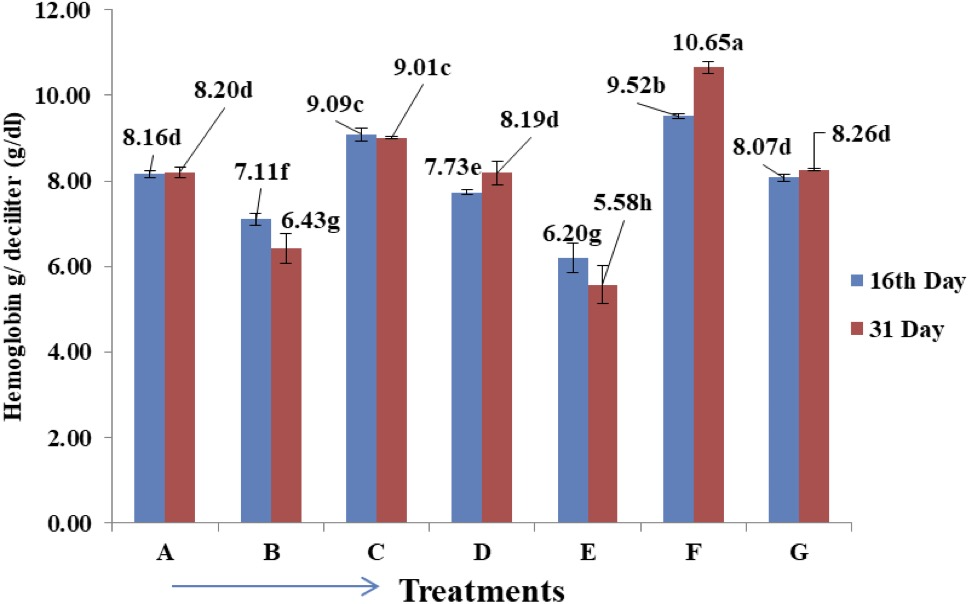
Haemoglobin concentration (g/dL) in fluoride induced toxicity and yogurt supplement amelioration in rabbits.
See Figure 1 for details of treatment groups.
Packed cell volume (PCV)
Fluoride exposure and yogurt supplementation significantly affected PCV (Fig. 3). On day 16 and 31, the PCV of the control group (A) was 30.28% and 30.03%, respectively. The values for PCV in Group B (50 mg fluoride) were 29.46 and 28.23%, which were significantly reduced (P < 0.05) in the group as compared to the control. Group E (100 mg fluoride) had the lowest PCV values of 27.10 and 26.01% on days 16 and 31, respectively. In contrast, rabbits fed with yogurt alone had significantly higher PCV percentages than the control group. Group C (15 g yogurt) exhibited values of 31.08 and 32.04%, while Group F (30 g yogurt) showed the highest values of 34.00 and 35.35% on days 16 and 31, respectively. Administration of yogurt along with fluoride helped to abate fluoride toxicity induced decrease in PCV. However, Group D (50 mg fluoride + 15 g yogurt) had values of 29.22 and 31.03, while the values of Group G (100 mg fluoride + 30 g yogurt) were 31.76 and 32.04, respectively, suggesting that yogurt supplementation was very effective. In general, after 31 days of treatment, the positive effect of yogurt increased. The findings of decrease in PCV in fluoride treated rabbits indicates that the PCV has decreased due to the impairment of erythropoiesis and increase in erythrocyte destruction due to the impact of fluoride induced oxidative stress. Toxic effects of fluoride have been reported to include disturbances in cellular metabolism, generation of ROS and the damage to membrane integrity that leads to a shorter erythrocyte lifespan and lower hematocrit value . High levels of fluoride can also affect the mitochondria and antioxidant mechanisms, leading to oxidative damage and apoptosis of hematopoietic cells, which in turn can lead to anemia-like states and decreased PCV . In the present study, the dose-dependent decrease in the PCV observed in both Groups B and E is in line with these pathological mechanisms. The eryhtrocyte mass is directly proportional to PCV which is an important measure of oxygen carrying capacity as well as of the overall hematological status. Hemolysis and decreased hematocrit values are attributed to the increased fragility of the erythrocyte membrane due to oxidative alteration by lipid peroxidation caused by fluoride. RBCs are very vulnerable to oxidative stress and alterations in the membrane, all of which ultimately affect cell survival and can lead to hematological abnormalities, as shown by Orrico et al. (2023). Likewise, ATP depletion by fluoride has been demonstrated to cause destabilization of erythrocyte membranes and lead to erythrocyte destruction . The reduced PCV values observed in the fluoride-treated rabbits could be related to these mechanisms. On the other hand, administration of yogurt markedly elevated the values of PCV, specifically in groups C and F, suggesting the promotion of erythropoiesis and hematological homeostasis. Yogurt is rich in probiotic bacteria, vitamins, minerals and bioactive peptides that possess strong anti-oxidant and anti-inflammatory properties. Recent reviews have shown the role of probiotics in enhancing gut health and bioavailability of nutrients, not only iron, folate, and vitamin B complex, which are critical for erythrocyte production and hematocrit homeostasis but also calcium and iron . Furthermore, probiotics supplementation was found to enhance antioxidant enzyme activity, decrease oxidative stress markers, and prevent erythrocytes membrane damage and extend their lifespan . The PCV parameters were restored in Groups D and G, indicating that the effect of fluoride-induced hematotoxicity was successfully reduced with the use of yogurt. The protective effect may be explained by the antioxidant activity of lactic acid bacteria, their capacity to inhibit lipid peroxidation, increase the endogenous antioxidant capacity and promoting nutrient absorption. The greater the improvement seen with 30g of yogurt supplementation indicates that a dose dependent effect occurs. In line with this, Shehzadi et al. (2023) reported that probiotics administration enhanced antioxidant status and erythropoietic activity to improve the hematological parameters, including the hematocrit values. In addition, probiotics have been found to preserve the homeostasis of the intestine and to decrease systemic inflammation; this helps with the production of blood cells and resistance.
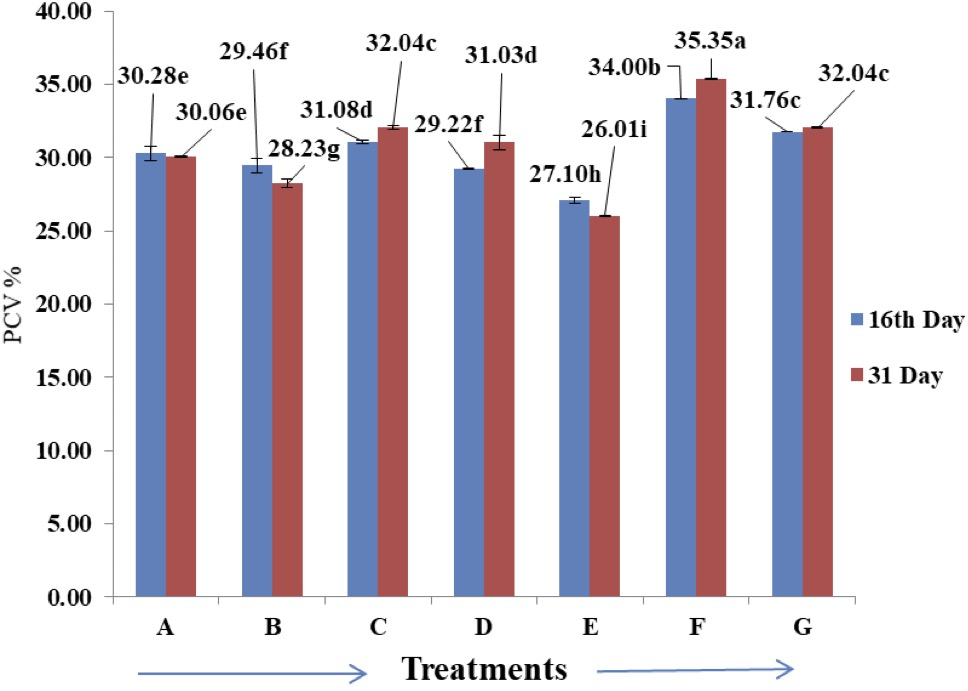
Packed cell volume (%) in fluoride induced toxicity and yogurt supplemented protection in rabbit.
See Figure 1 for details of treatment groups.
Platelets count
Fluoride exposure and yogurt supplementation had significant effects on platelet count (Fig. 4). The control group (A) exhibited platelet counts of 501.75 ×10³/mm³ and 502.25 ×10³/mm³ on days 16 and 31, respectively. Administration of fluoride alone resulted in a marked reduction in platelet count in a dose-dependent manner. Group B (50 mg fluoride) recorded platelet counts of 438.00 ×10³/mm³ and 326.00 ×10³/mm³, whereas Group E (100 mg fluoride) showed the lowest values of 306.00 ×10³/mm³ and 272.00 ×10³/mm³ on days 16 and 31, respectively. Rabbits fed with yogurt alone, however, had significantly higher platelet counts compared to the control rabbits. Group C (15 g yogurt) showed platelet counts of 537.25 ×10³/mm³ and 578.00 ×10³/mm³, while Group F (30 g yogurt) demonstrated the highest values of 547.50 ×10³/mm³ and 664.00 ×10³/mm³ on days 16 and 31, respectively. Co-administration of yogurt with fluoride showed a reduced platelet count with Group D (50 mg fluoride + 15 g yogurt) having platelet count of 491.25 ×10³/mm³ and 505.50 ×10³/mm³ while Group G (100 mg fluoride + 30 g yogurt) had platelet count of 511.00 ×10³/mm³ and 515.50 ×10³/mm³, respectively. These results show that the use of yogurt was found to significantly improve the fluoride-induced thrombocytopenia, especially after 31 days. This significant reduction in platelet numbers in fluoride-treated rabbits suggests that prolonged exposure to fluoride has a negative effect on the survival of platelets and/or thrombopoiesis. Fluoride toxicity is reported to cause oxidative stress, mitochondrial dysfunction, inflammation, which causes disturbances in bone marrow activity and the functions of hematopoietic stem cells . Moreover, fluoride induces generation of reactive oxygen species (ROS) which can injure megakaryocytes and circulating platelets, leading to decreased platelet production and increased platelet destruction. Recent studies have indicated that oxidative stress-induced hematopoietic dysfunction is one of the main mechanisms by which fluoride induces hematological abnormalities . Hence, the marked reduction in platelet count noticed in Groups B and E is a proof of the negative effect of fluoride on the platelets. The platelets are extremely vulnerable to oxidative stress due to rich content of polyunsaturated fatty acids and active mitochondrial metabolism. Overproduction of ROS results in lipid peroxidation of membranes, damage of mitochondria and suppression of platelet apoptosis, leading to decrease in platelets and impaired hemostasis. Oxidative stress has emerged as an important mechanism that is regulating platelet activation, survival and thrombosis and chronic oxidative stress ultimately may lead to thrombocytopenia ; . The decrease in platelets in fluoride treated groups in the present study could therefore be due to the mechanism of oxidative damage, causing platelet dysfunction and platelet life span reduction. On the other hand, platelet counts were significantly elevated in the yogurt supplemented groups, especially in Groups C and F, which suggests stimulation of the hematopoietic function and the prevention of oxidative injury. Fermented dairy products are rich in probiotic bacteria, antioxidant peptides, vitamins and minerals which help to maintain hematological homeostasis. Recent studies have demonstrated that probiotics positively affect the systemic antioxidant status and inflammatory pathways, which lead to the promotion of hematopoiesis and maintenance of the integrity of blood cells . Furthermore, probiotics are associated with better platelet indices and haematological parameters, which are achieved by enhancing nutrient absorption and immune regulation . A recovery of the platelet count was seen in Group D and G indicating that Yogurt had a positive effect in reducing fluoride-induced thrombocytopenia. Lactic acid bacteria have antioxidant properties that can act to neutralize reactive oxygen species, prevent lipid peroxidation and maintain the function of megakaryocytes and platelet production. Moreover, metabolites produced by probiotics have been reported to modulate inflammatory cytokines and the intestinal absorption of micronutrients for hematopoiesis. The intake of synbiotic yogurt has also been correlated with the enhancement of antioxidant status and the decrease in oxidative stress biomarkers, which reflects its protective effect from oxidative stress . This higher supplementation with 30 g of yogurt resulted in higher platelet counts, suggesting a dose-dependent effect.
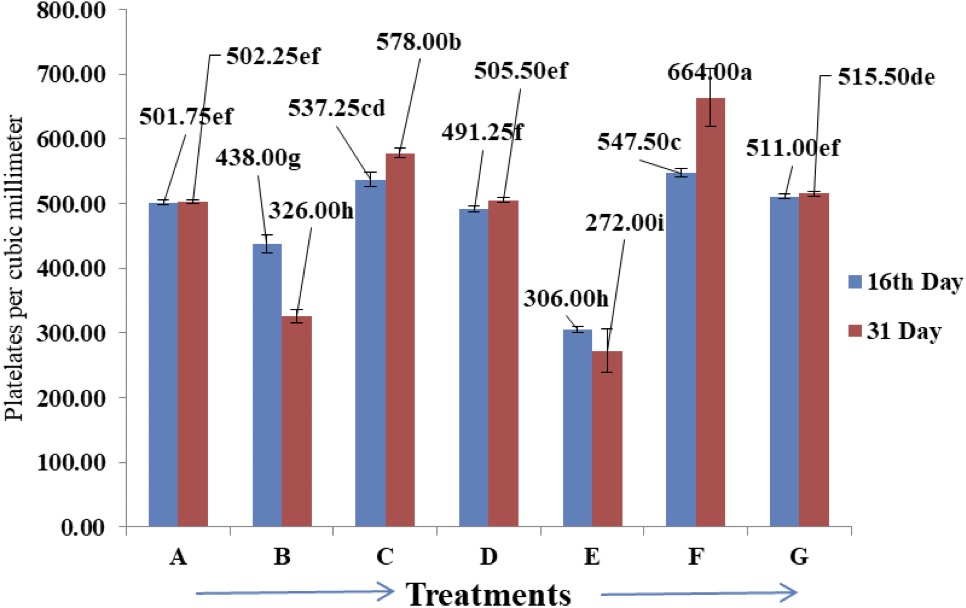
Platelets concentration (Per cubic millimeter) in fluoride induced toxicity and yogurt supplemented betterment in rabbits.
See Figure 1 for details of treatment groups.
Total leukocytes count (TLC)
The total count of leukocytes and differential leukocytic count (lymphocytes, monocytes, and granulocytes) suffered from significant effects of exposure to fluoride and supplementation with yogurt (Fig. 5). The administration of fluoride dose-dependently altered the leukocyte homeostasis. Rabbits of Group E (Exposed to 100mg fluoride) had an increase in total leukocytes count on day 16th (9.33 ×10³ cells/mL) and day 31th (9.75 ×10³ cells/mL), indicating that the total leukocytes count in the rabbits was increased due to inflammatory responses in the body caused by fluoride. Coin administration of yogurt with fluoride (Groups D and G) only partially corrected the changes attributed to fluoride, on the other hand, in Groups C and F, the supplementation with yogurt alone kept the leukocytes in the physiological ranges. The differential leucocyte analysis indicated that the group C and group E had an elevated percentage of lymphocytes, group C, F and G had an elevated percentage of monocytes and the percentage of granulocytes was significantly different among treatment groups. Overall, it is concluded that long term administration of Yogurt brings the leukocytes profile back to normal range and reduces the disturbance of leukocytes profile due to fluoride administration.
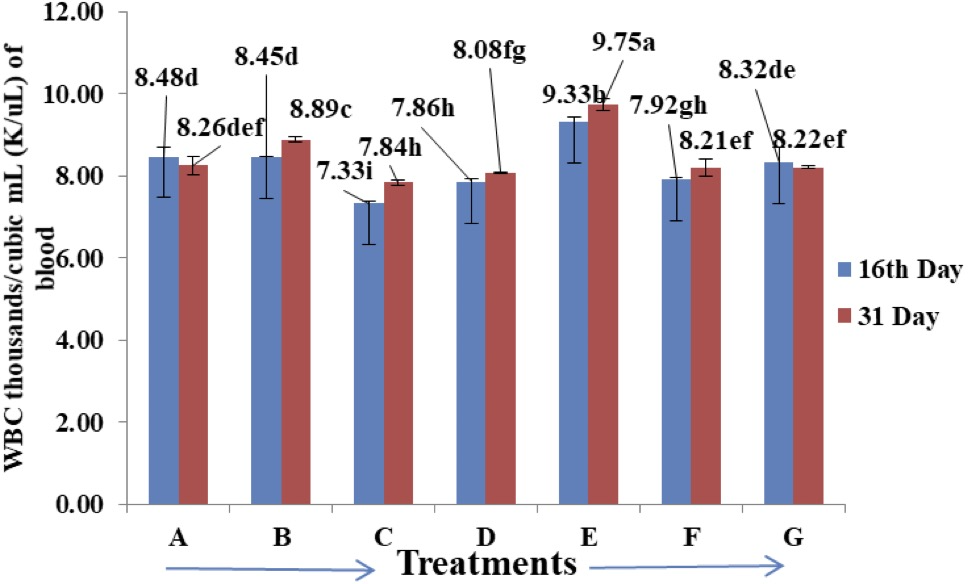
WBC concentration (K/mL) in fluoride induced toxicity and yogurt supplement betterment in rabbits.
See Figure 1 for details of treatment groups.
Lymphocyte
Lymphocytes play an important role in adaptive immunity and are especially susceptible to oxidative stress and inflammatory signals. Increased percentages of lymphocytes in fluoride-treated rabbits could be due to stimulation of lymphocytes proliferation in response to antigenic and oxidative challenges. Recent studies have shown that fluoride has an impact on immune system function, including changes to the activity of T cells, secretion of cytokines, and the regulation of apoptosis pathways, which leads to changes in the dynamics of lymphocytes . High fluoride intake is also linked to immune system disorders and oxidative stress in lymphoid organs. Increased percentages of lymphocytes seen in Group C suggest that probiotic supplementation could improve adaptive immune responses and preserve lymphocytes’ homeostasis.
Monocyte
A comparison of the data presented in Figure 7 shows that percentage of monocytes in the control and treated group of rabbit. The result revealed that the value of monocyte in the control group (Group A) was 1.06%. While on 16th day monocyte % were remained 0.96±0.10, 1.30±0.02, 1.48±0.22, 0.88±0.15, 0.80±0.35, 1.80±0.035 in various group B, C, D, E, F and G, respectively. Whereas, on 31st day mean monocyte concentration % were examined 1.06±0.094, 0.96±0.10, 1.30±0.02, 1.28±0.35, 0.80±0.35, 1.31±0.24, 1.89±0.057 in group A, B, C, D, E, F and G, respectively. The value of monocytes, in group-C and F, was significantly increased (P˂0.05) compared to control on 16th and 31st day. Monocytes play crucial roles in innate immunity and inflammatory regulation and tissue repair. The elevated proportion of monocytes in all groups of animals that consumed yogurt indicates the activation of protective immune mechanisms. The higher percentages of monocytes in all animals fed yogurt indicate activation of protective immune mechanisms. Probiotic bacteria found in yogurt have been documented to have a regulatory effect on the differentiation of macrophages and production of cytokines, which in turn aids host defense mechanisms
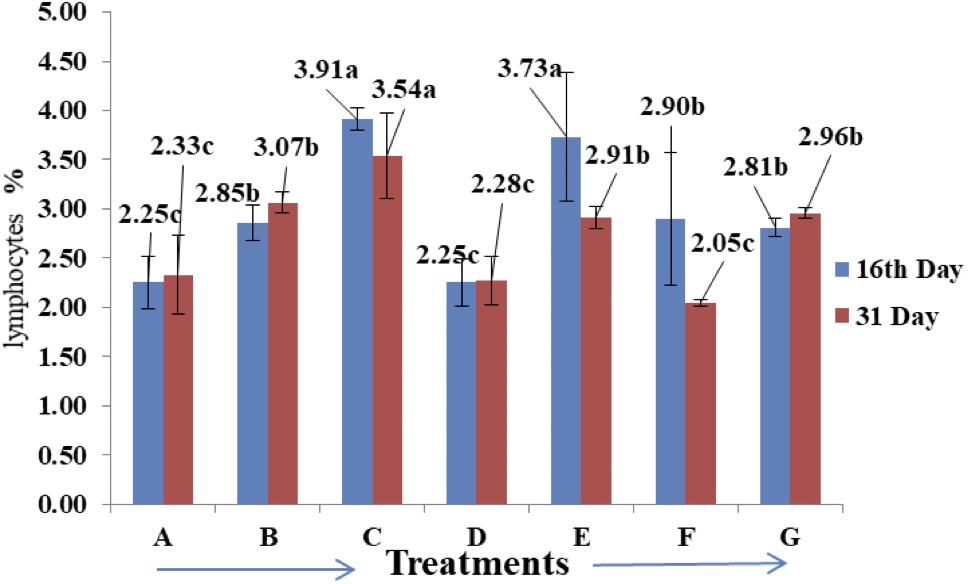
Lymphocyte concentration (%) in fluoride induced toxicity and yogurt supplement amelioration in rabbits.
See Figure 1 for details of treatment groups.
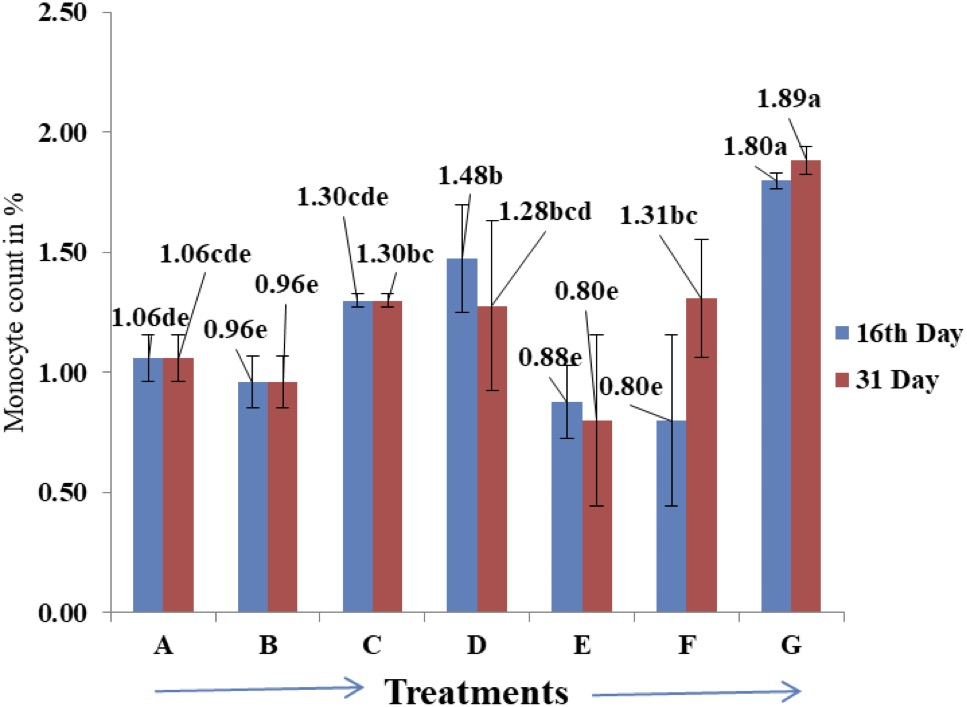
Monocyte concentration (%) in fluoride induced toxicity and yogurt supplement amelioration in rabbits.
See Figure 1 for details of treatment groups.
. Furthermore, metabolites produced by probiotics have been shown to benefit immune surveillance and reduce over-exuberant inflammatory responses. Increased percentage of monocytes in Groups F and G suggests that yogurt supplementation led to enhanced immune competence and may have reduced fluoride induced immunotoxicity.
Granulocyte
The granulocyte percentage data in treatment and control group presented in Figure 8 indicates that. that granulocytes values on 0 day were not affected in control group (Group A) as 3.53%. While on 16th day mean granulocyte concentration was exhibited 3.27±0.62, 4.35±0.25, 3.41±0.07, 4.31±0.41, 4.10±0.2, 3.91±0.07 in group B, C, D, E, F and G respectively. But on 31st day mean granulocyte concentration was perceived 3.51±0.42, 3.99±0.09, 4.06±0.09, 3.61±0.04, 3.83±0.58, 3.05±0.04, 3.95±0.044 in group A, B, C, D, E, F and G, respectively. Statistical analysis exhibited that only in group-C granulocyte level (P˂0.05) were significantly increased in comparison to control. The granulocytes are the first to be recruited for a defense against pathogens and are very sensitive to oxidative stress and inflammatory mediators. Changes in granulocyte percentages noted within the treatment groups might be related to changes in inflammatory status that could have resulted from fluoride exposure. Increased ROS production has been found to stimulate neutrophils and granulocytes, leading to higher levels of inflammatory mediators and oxidative enzymes . The restoration of granulocyte percentages after consumption of yogurt, however, indicates that probiotics have immunomodulatory activity and can regulate inflammatory pathways and maintain the balance of leukocytes. In recent years, it has been shown that fermented dairy products can modulate the gut microbiota, boost antioxidant capacity and strengthen immune function in the body . The benefits found in the yogurt supplemented groups could be a result of the antioxidant and immunomodulatory activity of probiotic microorganisms and bioactive peptides. Probiotics have been shown to improve the integrity of the intestinal barrier, modulate cytokine production, and stimulate the production of endogenous antioxidants, which decreases oxidative stress and inflammation . Moreover, probiotics have been demonstrated to modulate innate and adaptive immune responses, such as activation of macrophages, dendritic cells, and lymphocytes, ultimately contributing to immune homeostasis . After 31 days, there was a more significant normalisation of the leucocyte profile, suggesting that the effects of prolonged yogurt supplementation are beneficial in alleviating the immunological disturbances induced by fluoride.
Fig. 8. Granulocyte concentration (%) in fluoride induced toxicity and yogurt supplement amelioration in rabbits.
See Figure 1 for details of treatment groups.
Conclusion
Chronic fluoride exposure caused severe dose dependent haematological damage in rabbits, such as decrease in erythrocyte count, Haemoglobin, PCV and platelet count, with disorders in the homeostasis of leukocytes. These negative effects were effectively reduced by probiotics as indicated by significant differences between the supplemented and non-supplemented groups, the increased dose (30 g/day) showing more protection after extended administration. The results indicate that yogurt maintains the hematopoietic function and immune balance, probably due to the antioxidant and immunomodulatory effects. Probiotic yogurt is overall a promising nutritional intervention in the alleviation of fluoride induced hematological damage. Further research is needed to clarify the molecular basis of these protective effects and to confirm these findings in long-term animal studies and clinical trials in humans.
Declarations
Acknowledgments
The authors would like to acknowledge the Department of Veterinary Pharmacology Sindh Agriculture University Tando Jam for providing the research facilities.
Funding
The study received no external funding.
IRB approval
IRB of Sindh Agriculture University Tando Jam approved the study (No. DAS/936/2022).
Generative AI and AI assisted technology statement
The authors declare that no generative AI and AI assisted technology was used in the creation of this manuscript.
Statement of conflict of interest
The authors have declared no conflict of interest.
References
- Agalakova, N.I. and Gusev, G.P., 2012. Fluoride induces oxidative stress and ATP depletion in rat erythrocytes in vitro. Environ. Toxicol. Pharmacol., 34: 334–337. https://doi.org/10.1016/j.etap.2012.05.006 [CrossRef]
- Angwa, L.M., Nyadanu, S.D., Kanyugo, A.M., Adampah, T. and Masinde, D.M., 2023. Fluoride-induced apoptosis in non-skeletal tissues of experimental animals: A systematic review and meta-analysis. Heliyon, 9: e18646. https://doi.org/10.1016/j.heliyon.2023.e18646 [CrossRef]
- Chen, Y., Wang, H., Zhang, X., Liu, J. and Zhao, M., 2023. Fluoride-induced immune dysfunction and its underlying molecular mechanisms: A review. Ecotoxicol. Environ. Saf., 257: 114915.
- da Silva, T.F., Glória, R.A., Americo, M.F., Freitas, A.D.S., de Jesus, L.C.L., Barroso, F.A.L., Laguna, J.G., Coelho-Rocha, N.D., Tavares, L.M., Le Loir, Y., Jan, G., Guédon, É. and Azevedo, V.A.C., 2024. Unlocking the potential of probiotics: A comprehensive review on research, production, and regulation of probiotics. Probiot. Antimicrob. Proteins, 16: 1687–1723. https://doi.org/10.1007/s12602-024-10247-x [CrossRef]
- Emegano, D.I., Battal, D. and Kocadal, K., 2024. Metabolomics-based biomarkers of Probiotic efficacy in toxicological settings. Beni-Suef Univ. J. Basic appl. Sci., 13: 85. https://doi.org/10.1186/s43088-024-00546-1 [CrossRef]
- Fuentes, E., Palomo, I. and Alarcón, M., 2022. Oxidative stress and platelet activation in cardiovascular diseases. Antioxidants, 11: 2064.
- Kumar, S., Shenoy, S., Swamy, R.S., Ravichandiran, V. and Kumar, N., 2024. Fluoride-induced mitochondrial dysfunction and approaches for its intervention. Biol. Trace Element. Res., 202: 835–849. https://doi.org/10.1007/s12011-023-03720-1 [CrossRef]
- Liu, Y., Zhang, W. and Li, X., 2023. Oxidative stress-mediated neutrophil and granulocyte responses in inflammatory diseases. Antioxidants, 12: 1542.
- Orrico, F., Laurance, S., Lopez, A.C., Lefevre, S.D., Thomson, L., Möller, M.N. and Ostuni, M.A., 2023. Oxidative stress in healthy and pathological red blood cells. Biomolecules, 13: 1262. https://doi.org/10.3390/biom13081262 [CrossRef]
- Pal, P., Jha, N.K., Pal, D., Jha, S.K., Anand, U., Gopalakrishnan, A.V., Dey, A. and Mukhopadhyay, P.K., 2023. Molecular basis of fluoride toxicities: Beyond benefits and implications in human disorders. Genes Dis., 10: 1470–1493. https://doi.org/10.1016/j.gendis.2022.09.004 [CrossRef]
- Plaza-Díaz, J., Valero-Pérez, M. and Gil, Á., 2024. Mechanisms of action of probiotics in immune regulation and human health. Nutrients, 16: 318.
- Redza-Dutordoir, M. and Averill-Bates, D.A., 2016. Activation of apoptosis signalling pathways by reactive oxygen species. Biochim. Biophys. Acta Mol. Cell Res., 1863: 2977–2992. https://doi.org/10.1016/j.bbamcr.2016.09.012 [CrossRef]
- Seyedi, S.M.R., Jowshan, M.R., Seyedmahalleh, M.H., Imani, H., Karimpour, F. and Asghari, S., 2024. Consumption of a new developed synbiotic yogurt improves oxidative stress status in adults with metabolic syndrome: A randomized controlled clinical trial. Sci. Rep., 14: 20589. https://doi.org/10.1038/s41598-024-71264-y [CrossRef]
- Shehzadi, A., Bibi, Z., Sarwar, M.Q., Ullah, A., Rehman, A. and Bukhari, D.A., 2023. Effect of probiotics on hematological parameters of male and female Wistar rats. Saudi J. biol. Sci., 30: 103794. https://doi.org/10.1016/j.sjbs.2023.103794 [CrossRef]
- Taher, M.K., Momoli, F., Go, J., Hagiwara, S., Ramoju, S., Hu, X., Jensen, N., Terrell, R., Hemmerich, A. and Krewski, D., 2024. Systematic review of epidemiological and toxicological evidence on health effects of fluoride in drinking water. Crit. Rev. Toxicol., 54: 2-34. https://doi.org/10.1080/10408444.2023.2295338 [CrossRef]
- Yasin, M., Zohoori, F.V., Kumah, E.A., Subramanian, M., Dean, P. and Orr, C.H., 2025. Effect of fluoride on gut microbiota: A systematic review. Nutr. Rev., 83: 1853-1880. https://doi.org/10.1093/nutrit/nuae202 [CrossRef]

Services
Article usage statistics
Loading…
Related articles
- Cardio-Protective Effect of Coenzyme Q10 Against Nitrofurantoin-induced Cardiotoxicity in RabbitsAdvances in Animal and Veterinary Sciences · 2024
- Hepato Renal Protective Effect of Origanum Majorana against Adverse Effect of Ivermectin in RabbitsAdvances in Animal and Veterinary Sciences · 2022
- Protective Effect of Astaxanthin on Renal System in Rabbits Treated with LevofloxacinAdvances in Animal and Veterinary Sciences · 2025
- Investigating the Hepatoprotective and Renoprotective Effects of Spirulina in a Rabbit Model of Lead PoisoningAdvances in Animal and Veterinary Sciences · 2025
- Hepato-Nephrotoxic Effects of Induced Fluorosis in Rabbits and BroilersJournal of Animal Health and Production · 2022
- Protective Effects of Ginger Ethanolic Extract, Chitosan Nanoparticles, and Ginger Ethanolic Extract-Loaded Chitosan Nanoparticles on Pancreatic DNA Damage and Histological Changes in Dogs with Alloxan-Nicotinamide Induced Type 2 DiabetesAdvances in Animal and Veterinary Sciences · 2023