
Accurate estimation of live body weight (BW) is essential for effective livestock management, genetic selection, and market decision-making, particularly in smallholder systems where weighing scales are often unavailable. This study aimed to evaluate relationships between BW and body measurements (BM) and to develop practical regression models to predict BW in Bali cattle (Bos javanicus) reared under an extensive management system. A total of 437 one-year-old Bali cattle (210 females and 227 males) were included. Three morphometric traits chest girth (CG), body length (BL), and withers height (WH) were measured and analyzed using simple and multiple linear regression models. Model performance was evaluated using the coefficient of determination (R²), adjusted R², root mean square error (RMSE), and Akaike information criterion (AIC), with analyses conducted separately by sex and for the overall population. All body measurements were strongly positively correlated with BW (r = 0.76–0.95 in males; r = 0.77–0.93 in females; r = 0.74–0.95 overall; P < 0.01). Among the predictors, CG consistently exhibited the highest predictive ability as a single variable (R² ≥ 0.71; RMSE ≤ 11.01; AIC ≤ 7.84). The inclusion of additional BM slightly improved the model fit; however, the increase in accuracy was marginal compared with that of the models using CG alone. Although BL and WH were significantly correlated with BW, their individual predictive performance was relatively low (R² = 0.44–0.66). These findings indicate that chest girth is the most reliable and practical predictor of BW in Bali cattle under extensive conditions. The developed regression equations provide a simple and cost-effective tool for estimating BW in field situations where direct weighing is not feasible, thereby supporting improved livestock management and breeding decisions.
Research Article · Volume 15, Issue 1, Pages 248–255, 21 November 2026 · Open Access
Regression-Based Prediction of Live Body Weight Using Morphometric Traits in Bali Cattle Under Extensive Systems
, , , ,
Affiliations & Notes ⌄
- 1Department of Animal Science, Faculty of Agriculture, Universitas Tanjungpura, West Kalimantan, Indonesia
- 2Department of Animal Production, Faculty of Animal Husbandry, Universitas Padjadjaran, West Java, Indonesia
- 3Department of Animal Science, Faculty of Agriculture, Universitas Khairun, Ternate, Indonesia
- *Correspondence | Yuli Arif Tribudi; Email: yuli.arif.t@faperta.untan.ac.id
Article Info ⌄
- Journal:
- Journal of Animal Health and Production
- Submitted Date:
- 27 March 2026
- Accepted Date:
- 6 October 2026
- Published Date:
- 21 November 2026

Abstract
INTRODUCTION
Bali cattle (Bos javanicus) play important roles in the livelihood of rural communities and the livestock-based economy of Indonesia. This indigenous genetic resource is highly adapted to tropical environments and is capable of surviving, growing, and reproducing under low-input production systems. Bali cattle account for approximately 27% of the total cattle population in Indonesia and are considered pillar breeds for smallholder farmers . However, concerns have been raised regarding the gradual decline in the genetic quality and phenotypic performance of the breed, mainly due to unplanned traditional selection and uncontrolled mating systems . To address this issue, the government has established breed registries to preserve genetic purity and support conservation efforts. In this context, comprehensive information on animal performance and genetic characteristics is essential for designing effective breeding, conservation, and livestock development programs ; ; ; . Furthermore, as emphasized by the Food and Agriculture Organization (FAO, 2011), the sustainable utilization of animal genetic resources requires integrated strategies that combine genetic improvement, nutrition, animal health, and overall farm management.
Body weight (BW) is a key indicator in livestock production systems, as it plays a central role in monitoring animal health, evaluating growth performance, supporting genetic selection, and determining optimal slaughter time ; ; . In large-scale farming systems, BW is typically measured using accurate but expensive weighing scales . However, in rural and smallholder production systems, where such equipment is often unavailable, BW is typically estimated through visual assessment, which is subjective and prone to considerable error . These limitations highlight the need for simple, cost-effective, and reliable methods for estimating BW under field conditions.
One practical approach involves using body measurements (BM), such as chest girth, body length, and withers height, which can be easily obtained with inexpensive measuring tools. Regression techniques have been widely applied to estimate BW from such morphometric traits in various cattle populations ; ; . For instance, Vanvanhossou et al. (2018) developed BW prediction models for West African Savannah Shorthorn cattle using multiple body measurements, whereas Hlokoe and Tyasi (2022) reported that combining several body measurements improved prediction accuracy in Nguni cattle compared with single-trait models. Similarly, demonstrated that heart girth and withers height can be used to estimate BW with reasonable accuracy under small-scale farming conditions. In addition to providing BW estimates, these morphometric traits can help farmers assess animal growth, manage health interventions, and determine market value.
Despite the growing body of research in this field, limited information is available on BW prediction models specifically for Bali cattle reared under extensive management systems, particularly with regard to comparative evaluations of single versus multiple predictor models and potential differences between sexes . Moreover, previous studies have often relied primarily on the coefficient of determination (R²) as a measure of model performance, with less emphasis on complementary evaluation criteria such as the root mean square error (RMSE) and the Akaike information criterion (AIC), which are important for assessing both model accuracy and parsimony.
Therefore, this study was undertaken to (1) determine the association between BW and selected body measurements (chest girth, body length, and withers height), (2) develop and compare simple and multiple linear regression models for predicting BW, and (3) identify the most accurate and practical prediction equations for Bali cattle under an extensive management system, with consideration of sex-specific differences. The results of this study are expected to provide a reliable, field-applicable approach to BW estimation, thereby supporting improved livestock management and breeding decisions for Bali cattle.
MATERIALS AND METHODS
Study site
The study was conducted at the Bali Cattle Breeding Center (locally known as BPTU-HPT Denpasar), Pulukan, Bali Province (latitude 8.4268° S; longitude 114.8639°E), using secondary data from 2021 to 2023. The site covered 102 hectares, of which 70 were used as a paddock. The grazing area contains Bahia grass (Paspalum notatum cv. Competidor), king grass (Pennisetum purpuphoides), and Indigofera (Indigofera zollingeriana). The annual rainfall ranged from 1800 to 1970 mm. The soil was predominantly rocky (10–25% land slope), and the vegetation of this hilly region was dominated by tropical forests and woody and shrub savannas. The annual temperatures ranged from 26–30°C, and the relative humidity ranged from 79–85%. The wet season ran from December to March, while the dry season ran from April to November.
Data collection
In total, 437 Bali cattle (aged one year; 210 females and 227 males) kept under extensive management systems were employed in the study. The data collected included body weight (BW) in kg and three body measurements (BM), such as chest girth (CG) in cm, body length (BL) in cm, and withers height (WH) in cm, as shown in Figure 1. The BW for each animal was determined by using a digital weighing scale calibrated in kilograms (kg) (accuracy of 0.01; True Test Limited, New Zealand). The CG was measured as the circumference of the body immediately around the shoulder along a vertical bone perpendicular to the body’s long axis. A measuring stick (FHK, Japan) was used to measure BL as the horizontal distance from the point of the shoulder blade to the pin bone. The WH was obtained as the distance from the ground to the highest point of the withers. To minimize error, all body measurements were taken at 8.00 a.m. by the same officer, immediately after weighing, when the animals were still in the restrained position, with their legs and heads in an upright position. All Bali cattle were weighed individually in the pens.
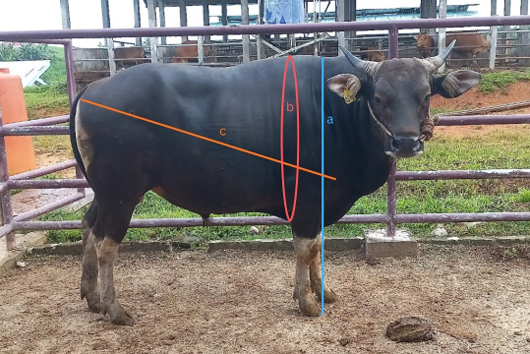
Measurement of withers height (a), chest girth (b), and body length (c) in Bali cattle.
Data analysis
First, the tested animals were grouped into three datasets (males, females, and overall). Different analyses were performed separately for each dataset. The BW and BM of the animals in each dataset were subjected to descriptive statistics, Pearson correlation analysis, and multiple regression analysis to develop predictive models for BW estimation. As shown in Table 1, four goodness-of-fit test criteria, namely, the coefficient of determination (R2), adjusted coefficient of determination (Adj. R2), root mean square error (RMSE), and the Akaike information criterion (AIC) were used to determine the best-fit model ; ; . R2 was used to define the proportion of the variance in the BW that was predictable from the body measurements and ranged from 0 to 1, with higher values (≥ 0.5) indicating lower error variance. The RMSE was also used to determine the accuracy of the regression equations. The lower the RMSE is, the better the model estimation performance. The AIC is an estimator of both the fit of the model and model simplicity. All analyses were performed in SPSS software ver. 22.
RESULTS
Descriptive statistics
Summary statistics for BW and body measurements (BM) of Bali cattle are presented in Table 2. The mean BW was numerically greater in males (140.26 ± 32.95 kg) than in females (134.38 ± 22.31 kg); however, this difference was not statistically significant (P > 0.05). Similarly, no significant sex-related differences were observed for the measured BM. Among the traits, chest girth (CG) was slightly greater in males than in females, whereas body length (BL) and withers height (WH) were comparable between the sexes.
Table 1: Four criteria used to determine best-fit regression models.
| Criteria | Symbol | Formula | Description |
| Coefficient of determination | R2 | 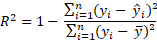 |
Greater is better |
| Adjusted coefficient of determination | Adj. R2 | 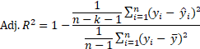 |
Greater is better |
| Root mean-square error | RMSE | 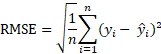 |
Smaller is better |
| Akaike information content | AIC |  |
Smaller is better |
In terms of variability, the CG presented the greatest standard deviation among the measured traits in both sexes, followed by the BL and WH, indicating greater dispersion of thoracic circumference relative to the other body dimensions.
Table 2: Summary statistics for BW and body measurements for males and females of Bali cattle.
| Trait | Unit | N | Mean | SD | Minimum | Maximum |
| Male | ||||||
| Age at weighing | days | 227 | 358.63 | 32.95 | 266.00 | 427.00 |
| BW | kg | 227 | 140.26 | 32.95 | 85.00 | 234.00 |
| CG | cm | 227 | 126.75 | 10.29 | 105.00 | 155.00 |
| WH | cm | 227 | 103.52 | 5.94 | 83.00 | 121.00 |
| BL | cm | 227 | 98.51 | 7.03 | 75.00 | 115.00 |
| Female | ||||||
| Age at weighing | days | 210 | 360.71 | 26.43 | 243.00 | 462.00 |
| BW | kg | 210 | 134.38 | 22.31 | 82.00 | 200.00 |
| CG | cm | 210 | 124.33 | 8.30 | 107.00 | 147.00 |
| WH | cm | 210 | 109.78 | 4.63 | 83.00 | 112.00 |
| BL | cm | 210 | 105.87 | 5.93 | 83.00 | 113.00 |
N: number of observations; BW: body weight; CG: chest girth; WH: withers height; BL: body length; SD: standard deviation.
Phenotypic correlation between BW and body measurements
The phenotypic correlations between BW and body measurements are summarized in Table 3. BW was strongly positively correlated (P < 0.01) with all the measured traits in both sexes and in the overall dataset. The greatest correlation was observed between BW and CG (r = 0.95 in males; r = 0.93 in females), followed by BL (r = 0.87 in males; r = 0.89 in females) and WH (r = 0.76 in males; r = 0.77 in females).
The correlations among the body measurements were also positive, ranging from moderate to high (r = 0.60–0.85), suggesting that these traits are related but not redundant. The overall pattern of correlations was consistent across sex-specific and pooled analyses, indicating stable relationships between BW and morphometric traits across sexes.
Table 3: Phenotypic correlation between BW and body measurement traits of Bali cattle.
| CG | WH | BL | |
| BW | |||
| Overall | 0.95 | 0.74 | 0.88 |
| Males | 0.95 | 0.76 | 0.87 |
| Females | 0.93 | 0.77 | 0.89 |
| CG | |||
| Overall | - | 0.69 | 0.74 |
| Males | - | 0.75 | 0.79 |
| Females | - | 0.60 | 0.65 |
| WH | |||
| Overall | - | - | 0.82 |
| Males | - | - | 0.85 |
| Females | - | - | 0.77 |
All the coefficients were significant at P<0.01. BW: body weight; CG: chest girth; WH: withers height; BL: body length.
Regression of BW from body measurements
The prediction equations of BW from body measurements are reported in Table 4. In terms of sex, the simple regression equations for males resulted in higher model fit values (R2 = 0.60 to 0.88) than those for females (R2 = 0.44 to 0.71). The simple regression results also revealed that CG was the best body measurements for predicting Bali cattle BW in the male and female groups (R2 ≥ 0.71; Adj. R2 ≥ 0.71; RMSE ≤ 11.01; AIC ≤ 7.84). In contrast, both WH and BL, as single predictors, contributed least to explaining the variation in BW in the prediction equations (R2 ≤ 0.66; Adj. R2 ≤ 0.66; RMSE ≥ 18.04; AIC ≥ 8.33). In the pooled analysis without considering sex, CG as a single independent variable was the best predictor of BW (R2 = 0.82) (Figure 2). The R2 values increased slightly with each additional body measurements included in the model. The complete model, which included all the body measurement traits as independent variables and was applied to all the individuals, fit the data better than the complete model, which had fewer independent variables, as indicated by a higher R2 (0.85 vs. 0.65–0.85) and a lower AIC (7.68 vs. 7.71–8.52). Interestingly, although the correlation coefficient between BW and body measurement (BL and WH) was high in all groups (r ≥ 0.74), the coefficient of determination was relatively low to moderate (R2 = 0.44 – 0.66).
Table 4: Simple and multiple regression equations and their assessment criteria for body weight estimation from body measurement in Bali cattle.
| Category | Model | Model assessment criteria | |||
| R2 | Adj. R2 | RMSE | AIC | ||
| Males | BW= -236.937+3.830 BL | 0.66 | 0.66 | 18.12 | 8.75 |
| BW= -303.004+4.281 WH | 0.60 | 0.60 | 18.04 | 8.93 | |
| BW= -241.095+3.008 CG | 0.88 | 0.88 | 11.01 | 7.69 | |
| Females | BW = 218.813+1.48 BL | 0.52 | 0.52 | 18.81 | 8.33 |
| BW= 166.170+1.949 WH | 0.44 | 0.43 | 19.56 | 8.49 | |
| BW= 252.862+0.867 CG | 0.71 | 0.71 | 10.12 | 7.84 | |
| Overall | BW= -212.773+2.764 CG | 0.82 | 0.81 | 11.32 | 7.89 |
| BW= -253.883+3.817 WH | 0.56 | 0.56 | 19.04 | 8.76 | |
| BW= -199.652+3.435 BL | 0.62 | 0.62 | 17.93 | 8.61 | |
| BW= -249.274 + 1.145 BL + 1.495 CG | 0.85 | 0.85 | 11.30 | 7.71 | |
| BW= -271.559 + 2.270 CG + 1.187 WH | 0.84 | 0.84 | 11.23 | 7.73 | |
| BW= -252.564 + 1.574 WH + 2.332 BL | 0.65 | 0.65 | 17.91 | 8.52 | |
| BW= -269.748 + 0.66 WH +0.76 BL + 2.093 CG | 0.85 | 0.85 | 11.31 | 7.68 | |
BW: body weight; CG: chest girth; WH: withers height; BL: body length; R2: coefficient of determination; Adj. R2: adjusted coefficient of determination; RMSE: root mean square error; AIC: Akaike information criterion.
Overall, the results demonstrate that chest girth consistently provides the highest predictive accuracy for BW across sex-specific and pooled datasets, whereas the inclusion of additional morphometric traits results in only marginal improvements in model performance. Although body length and withers height were significantly correlated with BW, their individual predictive capacity was relatively low. These findings highlight the relative importance of different body measurements in BW estimation and provide a basis for further interpretation in relation to biological relevance and practical application under field conditions. Based on these criteria, the sex-specific equations using CG alone are recommended for routine field use: BW = −241.095 + 3.008 CG for males (R²= 0.88, RMSE= 11.01 kg) and BW= −252.862 + 0.867 CG for females (R²= 0.71, RMSE= 10.12 kg). When sex is unknown or a single pooled estimate is preferred, the equation BW= − 212.773 + 2.764 CG (R² = 0.82, RMSE= 11.32 kg) is recommended. These equations should be applied within
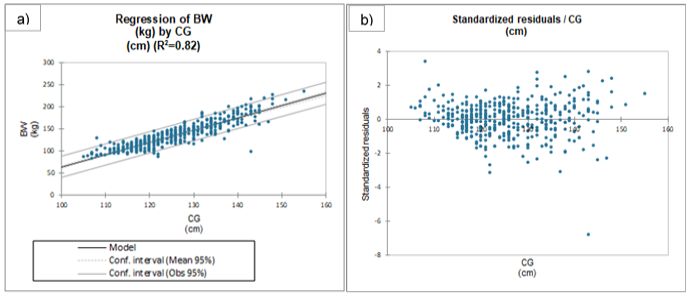
Prediction of BW from CGs alone (a) and standardized predicted BW using CGs in Bali cattle (b).
the CG ranges observed in this study: 105–155 cm for males and 107–147 cm for females (105–155 cm for the pooled dataset). Application outside these ranges may reduce prediction reliability.
DISCUSSION
The present study evaluated the relationships between body weight (BW) and selected body measurements (BM) and developed regression models to identify the most reliable predictors of BW in Bali cattle under an extensive production system. The results demonstrate that chest girth (CG) consistently provides the highest predictive accuracy across both sex-specific and pooled datasets, whereas the inclusion of additional morphometric traits results in only marginal improvements in model performance.
Although compared with females, males presented numerically higher BW, no statistically significant sex-related differences were detected for BW or the measured BM. These findings contrast with those of previous studies ; reporting significant sex effects on growth traits. The absence of significant differences in the present study may be attributed to the relatively homogeneous age group (approximately one year old) and similar management conditions, which likely reduced the phenotypic variability between the sexes. This suggests that at this growth stage, morphometric traits may not yet fully reflect sexual dimorphism in Bali cattle.
The strong positive correlations observed between BW and all measured BM indicate that these traits reflect related aspects of body size and growth. Among them, CG was most strongly correlated with BW across all groups, suggesting that thoracic development is closely associated with overall body mass. This relationship is biologically plausible, as the CG captures not only skeletal dimensions but also muscle mass and body condition around the thoracic cavity. Similar findings have been reported in other cattle breeds, where heart girth is consistently identified as the most reliable morphometric predictor of BW ; ; .
The regression analysis further supported the superiority of CG as a predictor of BW. Models based on CG alone yielded higher coefficients of determination (R²) and lower RMSE values than models using body length (BL) or withers height (WH) individually did. Although BL and WH were significantly correlated with BW, their lower predictive performance indicates that these traits capture a smaller proportion of the variation in BW when used independently (Lakuyu et al., 2016). This apparent discrepancy between correlation strength and predictive capacity highlights the importance of evaluating regression models using multiple criteria, as high correlation alone does not necessarily translate into strong predictive performance.
The inclusion of additional BM in multiple regression models resulted in only modest improvements in model fit . While combining CG with BL and/or WH slightly increased R² and reduced AIC values, the reduction in RMSE was minimal, indicating limited practical gains in prediction accuracy . This suggests that CG alone already explains a substantial proportion of BW variability and that adding more predictors may increase model complexity without providing meaningful improvements. In contrast, some studies in other cattle populations have reported substantial gains in predictive accuracy with multitrait models , which may reflect differences in breed characteristics, body conformation, and production environments.
From a biological perspective, the dominance of the CG as a predictor of BW can be explained by its close association with body volume and mass distribution, particularly in the thoracic region, where major muscle groups and vital organs are located. In contrast, BL and WH primarily reflect skeletal dimensions and may not adequately capture variations in body condition or muscle deposition, both of which are critical components of BW. Therefore, compared with other body measurement traits, the CG provides a more integrative measure of overall body size and condition.
From a practical standpoint, the findings of this study have important implications for livestock management under extensive production systems. The use of CG as a single predictor offers a simple, rapid, and cost-effective method for estimating BW in field conditions where weighing equipment is unavailable or impractical. This is particularly relevant for smallholder farmers, who often face limitations in infrastructure and labor availability. The ability to accurately estimate BW using a single, easily measurable trait can support improved decision-making related to feeding management, health monitoring, and market transactions. For practical field application, farmers and technicians are recommended to use the following equations: BW = −241.095 + 3.008 CG for male cattle and BW = −252.862 + 0.867 CG for female cattle, where CG is measured in centimeters, and BW is expressed in kilograms. When sex cannot be determined, the pooled equation BW = −212.773 + 2.764 CG provides a reliable single-tool estimate. These equations should be applied within the CG ranges over which they were developed: approximately 105–155 cm for males and 107–147 cm for females, corresponding to one-year-old Bali cattle under extensive management conditions. Extrapolation beyond these ranges, or application to other age groups or management systems, should be done with caution until further validation is available.
Nevertheless, some limitations of the present study should be acknowledged. The analysis was based on a single age group and a specific management system, which may limit the generalizability of the developed models to other age classes or production environments. In addition, environmental and nutritional factors, which can influence body conformation and BW, were not explicitly incorporated into the modelling approach. Future studies should consider validating these models across different age groups, management systems, and geographical regions, as well as exploring advanced modelling approaches, such as machine learning techniques, to further improve prediction accuracy.
CONCLUSION
Among the evaluated traits, chest girth (CG) consistently showed the highest correlation with BW and provided the most accurate prediction when used as a single variable. Although body length (BL) and withers height (WH) were significantly associated with BW, their individual predictive performance was relatively poor. These findings indicate that chest girth alone represents a reliable, simple, and practical predictor of BW, particularly in field conditions where access to weighing equipment is limited. For routine field use, the preferred equations are BW = −241.095 + 3.008 CG for males and BW = −252.862 + 0.867 CG for females; when sex is undetermined, BW = −212.773 + 2.764 CG is recommended. These equations are valid for one-year-old Bali cattle with CG ranging from 105–155 cm (males) and 107–147 cm (females) under extensive management conditions. The regression models developed in this study can therefore serve as a cost-effective tool to support livestock management. Further research is recommended to validate and refine these prediction equations across different production systems and animal categories, and to explore advanced modeling approaches to improve predictive performance.
Acknowledgement
The authors thank Bali Cattle Breeding Centre (BPTU-HPT Denpasar) for the permission to conduct research.
Novelty Statement
To the best of our knowledge, this study revealed that chest girth is the most reliable and practical predictor of body weight for Bali cattle in extensive systems. By providing simple regression equations, this research offers a low-cost tool for smallholder farmers to estimate weight and rank their animals without the need for expensive scales.
Author’s Contribution
A conceptualized the study, developed the methodology, performed data curation and formal analysis, and drafted the manuscript. APZNLS contributed to conceptualization, conducted the investigation and data collection, performed validation, and assisted in manuscript drafting and revision. DNHH carried out statistical analysis, interpreted the data, prepared visualizations, and contributed to manuscript review and editing. GLS was responsible for investigation, data collection, laboratory analysis, and data curation. YAT supervised the project, managed administration and funding acquisition, and provided critical review and final approval of the manuscript.
Data availability
The datasets generated and/or analyzed during the current study are not publicly available but are available upon reasonable request from the corresponding author.
Ethics declaration
The design of this study was approved by the Research Ethics Commission, Universitas Brawijaya (018-KEP-UB-2024).
Generative AI and AI assisted technology statement
The authors declare that no generative AI and AI assisted technology was used in the creation of this manuscript.
Conflict of interest
The authors have declared no conflict of interest.
References
- Agung PP, Putra WBP, Anwar S, Wulandari AS (2018). Body weight estimation of Bali Cattle in Banyumulek Techno Park, West Nusa Tenggara using Several Morphometric Parameters. Buletin Petern., 42(1): 20-25. https://doi.org/10.21059/buletinpeternak.v42i1.29840 [CrossRef]
- Astiti NMAGR (2020). Birth weight and growth rate of Bali cattle calf. Technium, 2(7): 436-441.
- Azis R, Ciptadi G, Wahjuningsih S, Hariyono DNH, Tribudi YA, Nurgiartiningsih VMA (2023). Prediction of body weight from body measurements in Bali cattle of Indonesia using regression analysis. Adv. Anim. Vet. Sci., 11(9): 1486-1491. https://doi.org/10.17582/journal.aavs/2023/11.9.1486.1491 [CrossRef]
- Bozkurt Y (2006). Prediction of body weight from body size measurements in Brown Swiss feedlot cattle fed under small-scale farming conditions. J. Appl. Anim. Res., 29(1): 29-32. https://doi.org/10.1080/09712119.2006.9706565 [CrossRef]
- Budiyanto A, Hartanto S, Widayanti R, Setyawan EMN, Haryanto A, Ibrahim A, Pakpahan S (2025). Genetic diversity of Jawa-Brebes cattle based on reproductive traits markers of the growth hormone gene. Int. J. Vet. Sci., 14(20): 351-357.
- Chicco D, Warrens MJ, Jurman G (2021). The coefficient of determination R-squared is more informative than SMAPE, MAE, MAPE, MSE and RMSE in regression analysis evaluation. PeerJ Comp. Sci., 7: e623. https://doi.org/10.7717/peerj-cs.623 [CrossRef]
- Chitra R, Rajendran S, Prasanna D, Kirubakaran A (2012). Prediction of body weight using appropriate regression model in adult female Malabari goat. Vet. World, 5(7): 409-411. https://doi.org/10.5455/vetworld.2012.409-411 [CrossRef]
- FAO (2011). Surveying and monitoring of animal genetic resources, FAO Animal. ed. FAO, Rome, Italy.
- Firdaus F, Atmoko BA, Ibrahim A, Nugroho T, Baliarti E, Panjono P (2024). A first meta-analysis study on body weight prediction method for beef cattle based on digital image processing. J. Adv. Vet. Anim. Res., 11(1): 153. https://doi.org/10.5455/javar.2024.k760 [CrossRef]
- Firdaus F, Atmoko BA, Baliarti E, Widi TSM, Maharani D, Panjono (2023). The meta-analysis of beef cattle body weight prediction using body measurement approach with breed, sex, and age categories. J. Adv. Vet. Anim. Res., 10(4): 630–638. https://doi.org/10.5455/javar.2023.j718 [CrossRef]
- Gruber L, Ledinek M, Steininger F, Fuerst-Waltl B, Zottl K, Royer M, Krimberger K, Mayerhofer M, Egger-Danner C (2018). Body weight prediction using body size measurements in Fleckvieh, Holstein, and Brown Swiss dairy cows in lactation and dry periods. Arch. Anim. Breed., 61(4): 413-424. https://doi.org/10.5194/aab-61-413-2018 [CrossRef]
- Hariyono DNH (2022). Application of microsatellite markers for genetic diversity analysis of Indonesian local cattle. Wartazoa, 32(2): 105-118. https://doi.org/10.14334/wartazoa.v32i2.3040 [CrossRef]
- Hartatik T, Hariyono DNH, Adinata Y (2019). Genetic diversity and phylogenetic analysis of two Indonesian local cattle breeds based on cytochrome b gene sequences. Biodiversitas, 20: 17-22. https://doi.org/10.13057/biodiv/d200103 [CrossRef]
- Hlokoe VR, Mokoena K, Tyasi TL (2022). Using multivariate adaptive regression splines and classification and regression tree data mining algorithms to predict body weight of Nguni cows. J. Appl. Anim. Res., 50(1): 534-539. https://doi.org/10.1080/09712119.2022.2110498 [CrossRef]
- Hlokoe VR, Tyasi TL. (2022). Nguni cattle body weight estimation using regression analysis. J. Anim. Health Prod., 10(3): 375-380. https://doi.org/10.17582/journal.jahp/2022/10.3.375.380 [CrossRef]
- Ibrahim A, Artama WT, Budisatria IGS, Yuniawan R, Atmoko BA, Widayanti R (2021). Regression model analysis for prediction of body weight from body measurements in female Batur sheep of Banjarnegara District, Indonesia. Biodiversitas, 22(7): 2723-2730. https://doi.org/10.13057/biodiv/d220721 [CrossRef]
- Ibrahim A, Baliarti E, Budisatria IGS, Artama WT, Widayanti R, Maharani D, Tavares L, Margawati ET (2023). Genetic diversity and relationship among Indonesian local sheep breeds on Java Island based on mitochondrial cytochrome b gene sequences. J. Genet. Eng. Biotechnol., 21: 34. https://doi.org/10.1186/s43141-023-00491-z [CrossRef]
- Jakaria J, Ulum MF, Priyanto R (2019). Live body weight assessment based on body measurements in Bali cattle (Bos javanicus) at extensive rearing system. Pak. J. Life Soc. Sci., 17(1).
- Jannah ZN, Atmoko BA, Ibrahim A, Harahap MA, Panjono (2023). Body weight prediction model analysis based on the body size of female Sakub sheep in Brebes District, Indonesia. Biodiversitas, 24(7): 3657-3664. https://doi.org/10.13057/biodiv/d240702 [CrossRef]
- Lukuyu MN, Gibson JP, Savage DB, Duncan AJ, Mujibi FDN, Okeyo AM (2016). Use of body linear measurements to estimate liveweight of crossbred dairy cattle in smallholder farms in Kenya. SpringerPlus, 5(1): 63. https://doi.org/10.1186/s40064-016-1698-3 [CrossRef]
- Mäntysaari P, Mäntysaari EA (2015). Modelling of daily body weights and body weight changes of Nordic Red cows. J. Dairy Sci., 98(10): 6992-7002. https://doi.org/10.3168/jds.2015-9541 [CrossRef]
- Moriasi DN, Arnold JG, Van Liew MW, Bingner RL, Harmel RD, Veith TL (2007). Model evaluation guidelines for systematic quantification of accuracy in watershed simulations. Trans. ASABE, 50(3): 885-900. https://doi.org/10.13031/2013.23153 [CrossRef]
- Prihandini PW, Maharani, D, Sumadi S (2020). Body weight, body measurements and slaughter characteristics of Madura cattle raised in Pamekasan District, East Java Province, Indonesia. Biodiversitas, 21(8): 3415-3421. https://doi.org/10.13057/biodiv/d210801 [CrossRef]
- Purwantara B, Noor RR, Andersson G, Rodriguez-Martinez H (2012). Banteng and Bali cattle in Indonesia: Status and forecasts. Reprod. Domest. Anim., 47: 2-6. https://doi.org/10.1111/j.1439-0531.2011.01956.x [CrossRef]
- Ruchay A, Kober V, Dorofeev K, Kolpakov V, Dzhulamanov K, Kalschikov V, Guo H (2022). Comparative analysis of machine learning algorithms for predicting live weight of Hereford cows. Comput. Electron. Agric., 195: 106837. https://doi.org/10.1016/j.compag.2022.106837 [CrossRef]
- Ruchay A, Kober V, Dorofeev K, Kolpakov V, Gladkov A, Guo H (2022). Live weight prediction of cattle based on deep regression of RGB-D images. Agriculture, 12(11): 1794. https://doi.org/10.3390/agriculture12111794 [CrossRef]
- Vanvanhossou SFU, Diogo RVC, Dossa LH (2018). Estimation of live bodyweight from linear body measurements and body condition score in the West African Savannah Shorthorn cattle in North‒West Benin. Cogent Food Agric., 4(1): 1549767. https://doi.org/10.1080/23311932.2018.1549767 [CrossRef]
- Widyas N, Raharjo A, Setiaji R, Prasetiyo D, Hapsari RD, Suparman Y, Prastowo S (2021). Model fit and the accuracy of methods predicting body weight from body measurements in Indonesian Bali cattle (Bos Javaincus D’alton, 1823) population. Appl. Ecol. Environ. Res., 19(5): 3931-3943. https://doi.org/10.15666/aeer/1905_39313943 [CrossRef]

Services
Article usage statistics
Loading…
Related articles
- Prediction of Body Weight from Body Measurements in Bali Cattle of Indonesia Using Regression AnalysisAdvances in Animal and Veterinary Sciences · 2023
- Prediction of Live Weight for Brahman Crossbred Cattle Using Linear Body Measurements in Rural AreaAdvances in Animal and Veterinary Sciences · 2016
- Comparing Predictive Performances of Tree-Based Data Mining Algorithms and MARS Algorithm in the Prediction of Live Body Weight from Body Traits in Pakistan GoatsPakistan Journal of Zoology · 2019
- Morphological Indices and Simple Regression to Predict Live Body Weight from Morphological Traits of Indigenous SheepPakistan Journal of Zoology · 2021
- Regression Model and Correlation Analysis to Predict Body Weight of Rural Area Female Kacang Goat Based on Body MeasurementAdvances in Animal and Veterinary Sciences · 2024
- Nguni Cattle Body Weight Estimation using Regression AnalysisJournal of Animal Health and Production · 2022